4 134 résultats
M14399Vannes , Imprimerie de Bretagne , 1948 , in8 br , 96 pp Envoi de l' auteur
4to (195 x 165 mm). (191) ff., including paste-downs and about 55 blanks. The journal with an engraved view as frontispiece, 15 full-page, 1 nearly full-page and 1 smaller manuscript maps and coastal profiles, plus a small engraved view mounted on 1 page. The lecture notes with a matching pair of engravings of a scull on and facing the title-page, and 27 pencil and/or ink anatomical drawings (including 2 full-page), some also with red. - Including: [Anatomical manuscript]. Morse, Edward George. Lecture Book [notes on anatomical lectures by Joseph Constantine Carpue]. [London], November-December 1828. Contemp, sheepskin parchment. A manuscript ship's journal kept by Edward George Morse (Bromyard 1805?-Deal post 1850?), who no doubt served, among other functions, as the ship's surgeon. Morse reflects on Arabian navigation and Arabian explorers, including the deservedly famous Ibn Battuta. "The Arabians like the Chinese are said to have employed the compass to guide them through the trackless sands of the desert or to enable them at the hours of prayer to direct their faces with precision towards the city of Mecca and tomb of the prophet. In the sixteenth century moreover when the Portuguese first visited the Indian seas they found that the Arabians are the chief navigators of those seas [...]". - Morse made his earliest dated entries in April 1831 at the island Mauritius in the Indian Ocean and others at Madagascar and its surrounding islands from May to August 1831. Those around Madagascar indicate he was on the barque Manchester, but from at least 11 December 1831 to his arrival back in England on 14 March 1833 he was on the barque Sarah, a 600 ton ship sailing out of London. In it he spent a year in the Seychelles 11 December 1831-15 December 1832, including Make Island, Bird Island, Praslin Island and La Digue. - In very good condition. The binding is soiled and rubbed, and the boards slightly warped, but it remains structurally sound. A fascinating and unusual ship's journal with numerous maps, kept in the unused leaves of the author's illustrated anatomical lecture notes of a few years earlier.
8vo. 15 black and white photographs captioned in white, plus one repeat in a smaller print. Original board album, acquired from "M. Arthur, Beyrouth". Paper label to upper cover: "Arab Types. Syria". Small but fascinating collection of portrait photographs showing Arabian nobles as well as commoners, all captioned and the subject often identified by name and tribe. The photos, many of which are executed as highly expressive profile studies, were taken and assembled by Lt. Col. Walter Francis Stirling (1880-1958), Chief of Staff to T. E. Lawrence. While the present photographs were taken during his time with Lawrence, whom Stirling revered, it is not his British comrades but rather the striking features of the sheikhs and bedouins on which this collection is focused. Among the images are "Sheik Gawaileh of Nejd, one of Lawrence's Bodyguard", and "Sheikh Hamondi, Friend of Lawrence"; others are more ominously identified as "Yezidi Shepherd, Devil worshipper" or "Bad type of Hadadiyim Tribesman". Of many noble tribesmen here depicted, such as Fauraz ibn Sha'laan, Emir of the Ruwalla, or Sheikh Daham al-Hadi, Paramount Sheikh of the Shammar tribe, these probably constitute the only photographic record. - Stirling was trained at Sandhurst and served in the Transvaal operation during the Boer War before being seconded to the Egyptian Army in 1906. He spent five years patrolling with an Arab battalion on the Eritrean and Abyssinian borders. Throughout WWI he served at Gallipoli and the Palestinian campaign until he was appointed chief staff officer to Lawrence of Arabia, who called him "Stirling the imperturbable". In 1937, Stirling would reflect on his famous wartime comrade: "From then [early 1918] throughout the final phase of the Arab revolt on till the capture of Damascus, I worked, travelled, and fought alongside Lawrence [...] We sensed that we were serving with a man immeasurably our superior [...] In my considered opinion, Lawrence was the greatest genius whom England has produced in the last two centuries [...] If ever a genius, a scholar, an artist, and an imp of Shaitan were rolled into one personality, it was Lawrence." In 1919 Stirling became advisor to Emir Feisal and Deputy Political Officer in Cairo, then acting governor of Sinai and Governor of the Jaffa district in Palestine before moving to Albania in 1923 to take up a position advising and assisting in the reorganisation of the Albanian Ministry of the Interior.
1920237981920 Encre noire signée en bas à droite du monogramme, (1920), 9 x 12,5 cm., sous Marie-Louise.
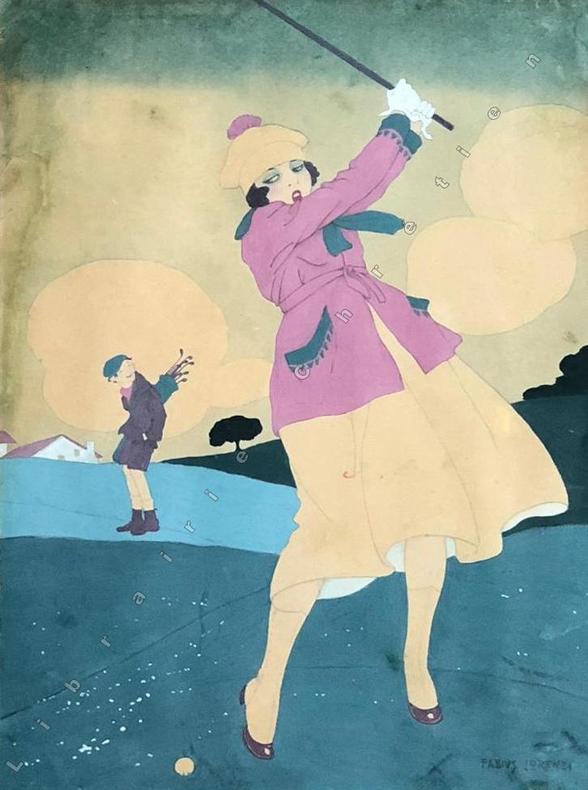
1917233321917 Aquarelle et gouache signée en bas à droite, 1917, 32.3 x 22.8 cm. (format de la feuille), cadre argenté.
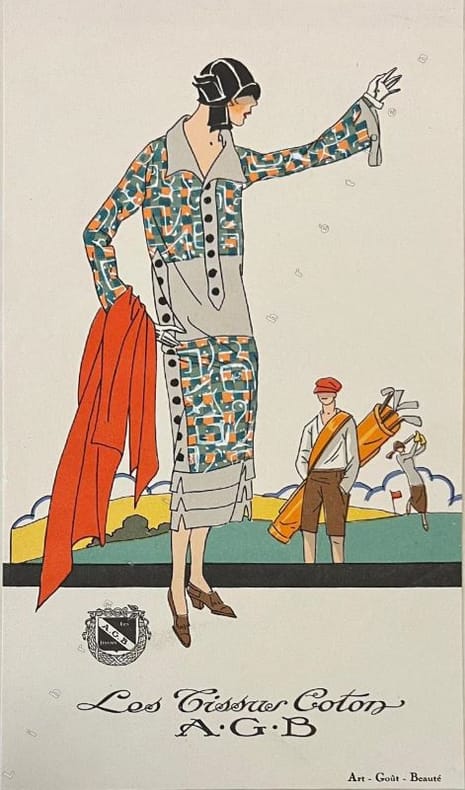
192224714paris 1922 1 in 4 Estampe rehaussée au pochoir, titrée, rehaussée sur la page de Garde. Paris, Successeurs d'Albert Godde, Beddin et Cie, (1922),
176018711Nürnberg, Raspische Buchhandlung, um 1760. Ca. 23 cm x 35,5 cm (Druckplatte).
169117962Frankfurt, Merian, 1691. Ca. 26 cm x 36cm (Bild), 34,5 cm x 40 cm (ganze Blatt).
4to. 22¼ pp. on 12 ff. Extracts from the Arabic historical manuscript "no. 689" by Joseph de Guignes, the famous French sinologist and orientalist, with notes on the history of Egypt during the years 1517-1522 and the Ottoman conquest by Sultan Selim. Guignes's notes start at f. 111 and end at f. 334 of the Arabic manuscript, which is a part of a historical work on Egypt entitled "Bada'I al-Zuhur fi Waqa'I al-Duhur". The "Bada" was written by the famous chronicler of the late Mamluk and early Ottoman period in Egypt, Muhammad Ibn Iyas (1448-after November 1522) and today is kept in the manuscript section of the French Royal library (no. 1825, ancien fonds no. 689). Guignes's extract contains numerous of transcripts in Arabic script. - Today, Joseph de Guignes is best known for his "Histoire générale des Huns, des Turcs, des Mogols, et des autres Tartares occidentaux" (Paris, 1756-1758), for his unsuccessful attempts to decipher Egyptian hieroglyphics (before the 1799 discovery of the Rosetta Stone and Champollion's breakthrough), and for his theory that China was an outpost of Ancient Egypt.
0883635003New. hardcover. New. Satisfaction Guaranteed or your money back. hardcover
1985210331985 Lithographie en couleurs signée en bas à droite et justifiée en bas à gauche, (1985), 75 x 55 cm.
18602490AGNew York, Appleton, 1860 ca. Stahlstich von Wallis nach Stanfield, Darst. 25,5 x 17,2 (excl. Text), Bll. 36,2 x 26 gut erhalten. Auf Wunsch Digitalaufnahme in jpg-Format erhältlich- photo in jpg-format available. Je nach Versandart können die Portokosten bis zu 2 ? weniger als angegeben betragen.+
Oblong 4to. [70] gray, white and blue album ff., containing 67 sketches with accompanying manuscript captions and descriptions. 66 sketches in pen & ink and pencil, mostly signed by Blackwell, depicting Swiss, Burmese and Indian panoramas and domestic scenes, buildings, events, animals and inhabitants, mounted and bound in, most accompanied by manuscript captions and descriptions by Blackwell and sometimes by a later hand. There is also 1 print (ca. 1795/1800?) showing a "rhahan" (priest) drawn by Singey Bey and engraved by Thomas Medland. Half black morocco, black decorated paper sides, gold-tooled ornaments on spine. Sketchbook by the English lieutenant Thomas Eden Blackwell (1803?-45), showing views of India, Burma, and Switzerland, made in the years 1826-30, when India, which is the subject of about 30 of the sketches, and parts of Burma (now Myanmar) were British colonies. The sketches, mostly signed and dated by Blackwell, are mounted on album leaves and accompanied by manuscript captions and descriptions, also by Blackwell and sometimes by a later hand. Some of these remarks are general or contain interesting facts, while others are very personal or describe an event that happened during Blackwell's time as officer. - Blackwell drew some panoramic views and buildings (for example an Indian mosque or a narrow street in Calcutta), but he pays particular attention to Indian culture in his sketches of India and the accompanying explanations. He sketches the Indian population, animals, and scenes representing the everyday life of Indian people. Several animal sketches are exceptionally beautiful, including that of a horse (with notes about Arabian horses). He also draws a camel, compares camels to dromedaries, and outlines the habitat of both species in India. Also included are many sketches of Indian cattle, such as bullocks, which were used as water-carriers, and Bengal cows (whose milk is said to be "inferior" to that of English cows). - Blackwell also drew the inhabitants of the Indian places he visited, including a priest ("rhahan") and an Indian watchman ("chokedar"), but also a "Musselman" and an Indian woman, with remarks concerning the attitude of Indian men towards women. Of particular interest are the Indian "sceneries", as Blackwell calls them, showing the everyday life of Indian people: native cooking, but also how Indian people bathe in Hooghly river, how they wash their clothes, and men smoking a so-called "hubble bubble" (a hookah or water pipe). Blackwell annotatioins to nearly all these sketches provide the reader with rare insights into Indian culture. - of Burma (now Myanmar) fewer sketches were made, and they focus mostly on the coasts and the city of Rangoon's wharfs. These include the royal wharf at Rangoon, with a whole page of explanatory text on the facing page, and a sketch showing a stockade in Burma, where, according to Blackwell's caption, the British killed the Burman general Maha Bundoola (1782-1825) in the First Anglo-Burmese War. Yet there is also a sketch of the so-called Great Bell in Rangoon, which is representative of Burmese bells, which are often located near celestial buildings. The album also includes two views of Tobago in the West Indies: a large two-page panoramic view and a sketch of the government house in Tobago with a garrison in the background; Blackwell's note states that his daughter Eliza was born there on 25 January 1833. - Another part of the sketchbook comprises sketches of Swiss landscapes and panoramas, especially of the region surrounding Basel (of which Blackwell also includes a two-page panoramic view). - With owner's inscription on the front pastedown: "Lieut. Blackwell 13th Light Infantry. Indian, Burmese and Swiss Sketches". Binding a little worn, one quire loose, some occasional spots and somewhat browned, but not affecting the drawings. In good condition.
19307267ALondon, ca. 1930. 53 farbige Karten, 6 x 9 cm und 16-seitiges Regelheft. In OPappschachtel.
Ca. 25 x 30 cm. Black-and-white gelatin silver print (vintage). A letterboard in a Karachi hotel lobby, announcing a "Lunch in Honour of Mr. Ali A. Ansari, Personal Representative of the Ruler of Qatar". Ali ibn Ahmed Al-Ansari served as Minister of Labour and Social Affairs unter HH Sheikh Khalifa bin Hamad Al Thani, Ruler of Qatar. - Provenance: collection of Azhar Abbas Hashmi (1940-2016), Pakistani financial manager and eminent literary patron with close ties to Karachi University. Long with United Bank Limited, Hashmi would serve as the bank's Vice President of Gulf Operations before founding several important cultural organisations and becoming known as a man of letters in his own right.
194826212Vannes Editions & Imprimerie de Bretagne 1948 -in-8 broché un volume, broché (agraphé) gris-bleu in-octavo Editeur (booklet in-8 Editor)(24 x 15,5 cm), dos muet, 1ère de couverture imprimée en noir, toutes tranches lisses, edition illustrée de 23 photographies in-texte en noir + une carte du Golfe du morbihan gravée en noir (en feuillet libre), 96 pages, 1948 Vannes : Editions & Imprimerie de Bretagne Editeur,
Oblong folio (455 x 365 mm). 28 matte photographs (195 x 280 mm or the reverse), individually mounted on cards, recto only. Contemporary sewn red half morocco gilt, flat spine, upper cover titled in gilt and with the photographer's name in gilt. Marbled endpapers. Fine album of 28 black/white mounted photographs showing officials and dignitaries, horse and camel trainers, riders, and races at an unknown celebration or festival during the last days of the Khedivate and Ottoman rule in Egypt. A similar album, comprising merely 24 photographs, is kept at the UC Santa Barbara, Special Research Collections (Bernath Mss 185). - Several mounts loosened or detached. Binding worn at extremeties, some waterstaining to covers.
12mo. 1 p. Manuscript in the form of a folded letter entitled "Sheah Relique" that originally enclosed a so-called turbah, here described as follows: "Turbot. A relique of the Sheah Musulmen when they pray they kiss it. It is formed of the earth of Kerbela or Naguf Ashraf a place consecrated to the Shrine of Hussain son of Ally son in law of Mohamed. They place such faith in this that they believe it will keep them from all evils and I hold it from a Persian's own mouth that if a gale of wind was to arise and the ship in imminent danger of being lost, by throwing the smallest particle of this into the sea it would instantly subside". - A turbah is a small piece of soil or clay, often in the form of a seal with imprints, that is used by Shia Muslims during daily prayers to symbolize their connection to the earth. The most favoured soil for the creation of turbahs is that from the site of the shrine of Husayn ibn Ali in Karbala, Iraq, as mentioned in the manuscript. In contrast to what the description suggests, not only soil from Karbala or Najaf Ashraf, another holy city of Shia Islam in Iraq, can be used for a turbah. However, apotropaic properties such as safeguarding against calamities have been ascribed to the "turbah Karbala". - Two worn pieces of leather that originally held the turbah described in the text are still enclosed. On English paper with watermark from 1828. Minor foxing and stains; traces of folds and several large tears not affecting the text.
Original poster. 51.5 x 34.7 cm, one illustration in a box with titles in grey, signed 'DP' or 'PD' in a monogram in the stone, titles in black on grey, offset lithography. Old horizontal and vertical folds, a small tear on top edge (not affecting image), some trivial browning, worn through on one of the folds. A good, clean copy. A captivating poster from a campaign that redefined the strategy of relief efforts in the 20th century. - When news of the atrocities committed by the Ottoman government against Armenians reached America in 1915, a group of salubrious New Yorkers banded together to form the American Committee for Armenian and Syrian Relief (named American Committee for Relief in the Near East from 1918-1919). After raising $60,000 for direct relief at their first meeting, the committee set about taking their cause to the public. The effort to do so centred around a media campaign of unprecedented ambition and modernity: one that utilised famous speakers, first-hand accounts from the Near East, and an array of visual media. - This poster was part of the imagery that inspired the American people to give over $116 million for direct relief between 1915 and 1930. The work of the committee also saved the lives of over a million refugees. It still exists today as the Near East Foundation and continues to provide support to over 40 countries in the Near East, sub-Saharan Africa, and the Middle East.
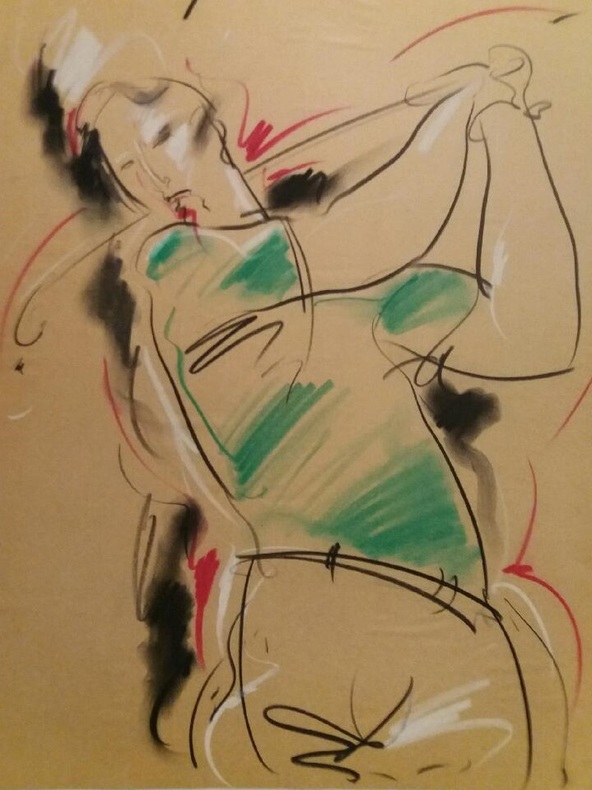
1991224271991 Pastel signé, 1991, 60.5 x 45.5 cm., encadré.
8 engravings, 255 x 180 mm each. Attractive series of horses (and mules) used in Arabia, Germany, England, Spain, Tartary, Turkey, and Hungary. - Captions and four-line descriptions in German and French.
Folio (ca. 200 x 292 mm). French manuscript on lined paper with calligraphed title. (174) pp. on 90 ff. in two loose fascicles (45 ff. each). Stored together with a 1920s typescript copy of the same text, (2) + 39 + 20 pp. on 62 ff., in modern half-calf portfolio with gilt title to spine in a cardboard slipcase. The original manuscript of Jacquesson's travelogue of Egypt and the Levant, written in connection with the preparations for the building of the Suez Canal (1859-69) and published in 1857. The civil engineer Ernest Jacquesson had travelled to Egypt together with Ferdinand de Lesseps, the father of the Suez Canal, and other members of the "Commission Internationale pour le percement de l'isthme de Suez" founded in 1855. In the preface, Jacquesson announces that he shall not write about the Canal project, as his friend, the politician and journalist Jules Barthélemy-Saint-Hilaire, has already published "a series of highly interesting articles" on the subject, but will rather focus on "observations of the country, the mores and customs of its inhabitants, and on gathering interesting peculiarities" that he personally witnessed. The subsequent trip to Palestine is set in a context with the Crimean War: "At the current moment all eyes are directed towards Egypt [...] and towards Palestine considering the reforms that the new state of affairs, resulting from the Crimean War, will bring there imminently". - The journey lasted from November 1855 to April 1856, leading from Alexandria to Cairo, Upper Egypt, Nubia, via Alexandria to Jaffa, Ramla, Jerusalem, Jericho and back to Paris via Jerusalem and Marseille. Jacquesson and his company visited the most important monuments of Egypt and the Holy Land. On 30 November 1855 they enjoyed an audience in Cairo with Mohamed Sa'id Pasha of Egypt, who held a military parade in honour of his French guests. According to Jacquesson, de Lesseps introduced him and his companions individually to Sa'id Pasha. - As Jacquesson states in the preface, his notes had been previously published in the "Journal de la Marne" between June and September 1856, dating the present fair copy to between late 1856 and 1857. - Both covers somewhat dusty and soiled. The first fascicle shows a very minor waterstain affecting the right margin of a few pages; the cover leaf has several tears (partly affecting the title), some of which are restored. Some browning and stains overall, minor tears to the margins. The accompanying typescript is on French typewriter paper watermarked "Johannot et Cie Extra Strong", produced between ca. 1913 and 1936, showing punched holes and occasional light staining. Altogether in excellent state of preservation. E. Jacquesson, Voyage en Égypte et en Palestine: notes et souvenirs (Paris, J. Best, 1857).
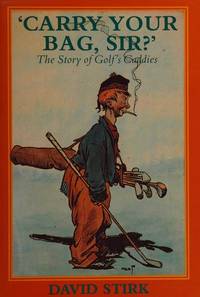
198934165London: H. F. & G. Witherby. Fine in Near Fine dust jacket. 1989. Hardcover. 0854931724 . Illustrated. First edition thus. Fine in a very near fine price clipped dust jacket. . H. F. & G. Witherby hardcover books
8vo. 78, (2) pp. With 7 half-tone photographic illustrations on 2 plates. Orange and white wrappers, titled in black. From a series published in the 1950s whose stated aim was to examine contemporary international political, social, and economic problems from an Egyptian perspective. This twenty-third title in the series focused on the Arabian Gulf and the United Arab Emirates, including chapters on the role of the UAE in the modern world, a chapter on future visions for the Arabian Gulf, and - rather presciently - a chapter on the new era of oil, which at the time had barely begun. - Preceding this volume were books on the Suez Canal (which had just been nationalized) and the Southeast Asia Treaty Organization (SEATO). Discussed in simple terms are the histories of Oman and the Emirates; in addition to the above, brief chapters are included on Sa‘id bin Sultan (1791-1856), Thuwaini bin Said al-Busaidi (1821-1866), Salim bin Thuwaini al Busaidi, Azzan bin Qais, Faisal bin Turki (1864-1913), and Abd al-Aziz ibn Saud (1875-1953). - Some leaves uncut, others slightly stuck together. Includes four pages of photographic illustrations of contemporary daily life. OCLC 316086724.
Folio (240 x 350 mm). Vol. 1 (of 3). (52), 590, 583-982 pp. Title-page and half-title printed in red and black; half-title with an engraved border showing great medical practitioners. Further with woodcut device on title, a nearly full-page woodcut diagram of the ocular anatomy, and 2 full-page woodcuts with a total of 6 illustrations showing the practice of osteopathy. Near-contemporary full calf with giltstamped label to gilt spine. Marbled endpapers. All edges sprinkled red. Rare, early illustrated edition of "the most famous medical text ever written" (Garrison/M. 43). Giunta's was the first edition ever to contain illustrations (six meticulous woodcuts of a physician performing chiropractic treatments, as well as a diagram of the human eye anatomy). The present volume, the first and by far most copious of a set of three commonly bound in two volumes, comprises books 1 through 3 (out of 5). - Ibn Sina's "Keta-b al-qanun fi'l-tebb" ("Canon of Medicine"), written in Arabic but widely translated throughout the Middle Ages and the basis of medical training in the West as late as the mid-17th century. Finished in 1025, the Qanun is divided into 5 books, devoted to the basic principles of medicine, the Materia Medica (listing about 800 drugs), pathology, diseases affecting the body as a whole and finally the formulary. - Ibn Sina (c. 980-1037), in the West known by his Latinized name Avicenna, was physician to the ruling caliphs. The influence of his Qanun can hardly be overestimated. Translated into Latin in the 12th century, it became a standard textbook of Galenic medicine, influencing many generations of physicians. "From the early fourteenth to the mid-sixteenth century Avicenna held a high place in Western European medical studies, ranking together with Hippocrates and Galen as an acknowledged authority" (Weisser). "[T]he final codification of all Greco-Arabic medicine. It dominated the medical schools of Europe and Asia for five centuries" (Garrison/M. 43). - Some light brownstaining, mainly confined to upper margin. Early 20th century bookplate to front pastedown. Binding uncommonly well preserved; a very appealing copy. Krivatsy 496. OCLC 4457623. Cf. M. H. Fikri, Heritage Library, Scientific Treasures, p. 57, no. 23. Norman 1590. N. G. Siraisi, Avicenna in Renaissance Italy (2014), pp. 140, 165. Garrison/M. 43f. Hayes, Genius of Arab Civilisation, Source of Renaissance, pp. 168-169. PMM 11.