4 134 résultats
8888Dunlop. Presidential Seal Golf Ball documents the use of presidential insignia on informal White House and executive-associated material culture. As a recreational object marked with the presidential seal it connects the public symbolism of the office with golf a sport closely associated with twentieth-century presidential leisure diplomacy and informal political sociability.<br /> <br /> Dunlop. Presidential Seal Golf Ball. N.p.: Dunlop n.d. White golf ball printed with blue presidential seal. The object combines a standard sporting form with official-style executive iconography making it a compact example of presidential presentation souvenir or recreational ephemera.<br /> <br /> Presidential golf objects belong to a broader category of White House-associated memorabilia in which leisure access and political symbolism intersect. No visible wear near fine. Concise example of presidential recreational ephemera linking executive imagery with golf culture. unknown
1997294099PN. New. 1997. Soft Cover. Date is original print. This is a reprint edition . PN paperback
20001329162PN. New. 2000. Soft Cover. Date is original print. This is a reprint edition . PN paperback
135174aafParis, Chez Didot, 1747, in-8vo, XII + 532 p. Avec 6 vues et 5 cartes dépl., reliure en veau de l’époque, dos à cinq nerfs, pièce de titre en maroquin rouge, tranches rouges, bel exemplaire.
56 pages. Features: Nice color Bermuda tourism ad inside front cover features golf scene with young black caddy; Nice one-page photo ad for Plymouth cars; 1/3-page ad for United Air Lines with photos; Mercury 8 one-page illustrated car ad; Lawrence Olivier and Jill Esmond divorce; Orson Welles and Virginia Nicolson divorce; Novelist Adela Rogers St. Johns is jailed; Brief obituary for Dr. George De Bothezat, builder of the first successful helicopter; Nice one-page photo ad for Dodge cars; The work of Martin Dies; Rev. Charles Coughlin under attack by the Jewish People's Committee; Census Revolt; Photo of tent city build for Californai Okies; Punxsutawney, PA groundhog predicts weather; The Convoy System - Britain depends on it; A look at the Finnish situation; Poultney Bigelow reveals ex-Kaiser Wilhelm wants the Nazis to turn on the Bolsheviks; Swedish volunteers help Finns resist Russia; Bombers supplanting U-Boats and Mines in Blockade Duel; Eddie Arcaro Rides Winners; Photo of basketball being played on skaes!; "Grapes of Wrath" hits movie screen as powerful social drama - with photo of Henry Fonda and his movie parents; Nice one-page color ad for the Good Year Double Eagle Air Wheel (tire); James Jefferson Davis Hall is the Bishop of Wall St.; Photo and write-up on the Air Corps' new 400 mph Airacobra; Nice 2/3-page two-color ad for Beech-Nut Gum features young lady reading mystery book; Neutrality Dodge - photo of big Lockheed bomber, destined for Allied war service, crossing the North Dakota/Canada border behind a team of horses; Big Pepsi-Cola skywriting contract; Nice color-photo ad for Four Roses Whiskey on back cover; and much more. Middle page holding by one staple. Average wear. Unmarked. A sound vintage copy. Book
185050528Hildburghausen, Bibliographisches Institut, um 1850. Darstellung ca. 10 x 14,5 cm, Blatt ca. 14,5 x 23 cm. 1 Blatt, verso weiß.
185053427London & Paris, Fisher, um 1850. Bild ca. 12,5 x 18,5 cm, Blatt ca. 19,5 x 25,5 cm. 1 Blatt, verso weiß.
4to. XVII, (1), 312 pp. Title-page printed in red and black. With engraved frontispiece and 12 plates. Contemporary full cloth with gilt hawk on front cover, giltstamped title to cover and spine. First edition. - Posthumously published work of natural history by the distinguished British ornithologist Lord Lilford (1833-96), whose aviaries at Lilford Hall, installed in the 1890s, aroused the envy of field ornithologists of the day and were especially noted for the collection of birds of prey. Edited by his friend, the traveller, naturalist and writer Aubyn Bernard Rochfort Trevor-Battye (1855-1922), it includes descriptions of the Lilford Hall premises, its ponds, paddocks, and aviaries, as well as notes on otter hunting, and an introduction to falconry written by Reverend Gage Earle Freeman, which, in matters of introducing the sport, is regarded "the best short essay ever written" (Barber). It features quotations from Lilford's earlier publications, as well as private letters, and a speech he gave in his role as President of the British Ornithologists' Union in February 1894, as well as some sections from the journal Lilford kept during his travels in the Mediterranean in 1874, 1878-79, and 1882. In addition, the work comprises an appendix drawing from Lilford's notes on everyday events in his aviaries, stating for example that his "English raven rolls and enjoys himself in the snow" (p. 272), as well as a complete list of his publications. The illustrations, carried out by the Scottish painter Archibald Thorburn (1860-1935), are studies of individual birds in the Lilford aviaries, showing, inter alia, Lämmergeier, cranes, a golden eagle in its nest, a trained goshawk sitting on a falconer's hand, two ruffs fighting, flamingoes, and a Greenland falcon. The frontispiece depicts Lilford in his study with a dead falcon lying on his desk as well as a live song bird sitting on his backrest. - Small tears to spine; two small holes in the hinges; corners slightly bumped. Interior with occasional light brownstaining. Handwritten ownership of Charles Henry Stanley Garton (b. 1920), dated Kingswood, 16 January 1942, to front pastedown. Barber 10. Ballance, Birds in Counties 233. OCLC 314718094. Not in Harting, Schwerdt.
Large 4to. VI, 147, (1) pp. With 10 folding maps and plates stored loosely in envelope. Original printed wrappers. Front cover with owner's stamp "W. R. Farrand". - Binding slightly rubbed, larger tears to spine.
8vo. XI, (1), 332 pp. With 16 photographic illustrations on 8 plates, all in black-and-white halftone, one as a frontispiece. Publisher's illustrated orange cloth. First Garden City edition in the year of the Century Co. first issue. Includes mentions of the "Pirate Coast", Bahrein and the Gulf. The American author E. Alexander Powell (1879-1957) had worked war correspondent during World War I and was commissioned as a captain in military intelligence in 1917. He subsequently took up journalism before switching to a successful career as an adventure and travel writer. - Upper corner a little buckled; a few pencil annotations. From the collection of the Austrian civil servant Dr. Alfred Brandner, with his ownership stamp and inscribed to him (Vienna, 1941) on the flyleaf. OCLC 408932.
Laboratoire Ciba-Geigy, 1995. In-8 broché de 173 pages avec photos. Très bon état
4to (150 x 190 mm). (40), 128 pp. With large engraved view on title-page, 3 full-page engr. plates in text, 9 half-page engr. plates in text, and 1 folding engr. plate bound at rear. Bound in contemporary stiff vellum with remains of manuscript title on spine. Extremely rare sole edition of this guide to fortification, written by a French sapper who had served in the Venetian navy during the Ottoman Siege of Candia (1648-69), in Crete. In his 40-page preface "au lecteur", Poullet writes at length about his experiences as a military engineer during the siege (illustrated in two half-page plates in text), and even includes 'attestations' in Italian of his military service under Marcantonio Giustiniani, dated from Zante (Greece), 1st March 1670. - Writing shortly before the Siege of Vienna in 1683, Poullet expresses the hope that his manual incorporates some of the lessons learned from the 21-year battle for Candia - seen as an impressive feat of resistance, despite ending in defeat for the Venetian forces. His illustrated examples of fortifications constantly refer to the best methods for fighting 'les Turqs' and the mistakes made in Crete. - With a handful of early manuscript corrections in text; plate 11 printed upside-down; head of spine with some loss, crudely repaired; internally one or two discreet wormholes, otherwise a very good copy. - A rare survival: OCLC shows just 5 copies worldwide (none in the US or UK); KVK adds one further, at the Austrian National Library. The copy at the Czech National Library is lacking one leaf of prelims. Mayer, Wiens Buchdrucker-Geschichte I, 1849.
200085743Roussel Malicorne sur Sarthe, 72, Pays de la Loire, France 2000 Book condition, Etat : Moyen broché, sous couverture imprimée éditeur, illustrée d'un dessin en couleurs d'un golfeur In-8 1 vol. - 28 pages
1995yd609Ciba-Geigy Broché 1995 In-8 (16,5 x 23 cm), broché, 175 pages, illustrations en noir et blanc et en vert ; très bon état général. Livraison a domicile (La Poste) ou en Mondial Relay sur simple demande.
Three parts in one volume. 4to. 220 x 155 mm. Woodcut device on general and parts titles. Early blindstamped calf, rebacked and refurbished retaining most of original spine. First edition, second issue. Guillaume Postel travelled to Constantinople in 1535 as official interpreter to the embassy of Jean de La Fort to the Turkish sultan, Suleiman the Magnificent. He returned there in 1549, and was also the author of the first Arabic grammar in French. "His work is not so much a descriptive account of his travels as a compendium of information gleaned while traveling and from other sources. The third book, 'La Tierce Partie des Orientales Histoires', furnished an usually complete and accurate picture fo the governing system of the Ottoman Empire" (Blackmer). - Without final blank ff6, 2 single wormholes in lower margin of opening few leaves, small repair at inner lower corner of opening 2 leaves, early ownership inscription on first title. Cf. Adams P2015. Atabey 977. Blackmer 1335.
8vo. (4), II, 140 pp. With 3 engr. plates by Horace Vernet. Contemporary straight-grained red morocco, elaborately gilt on covers and spine; leading edges and inner dentelle gilt. Blue endpapers. All edges gilt. First edition of this manual of riding instruction for ladies. The fine engravings by the young Horace Vernet (1789-1863), later the 19th century's foremost master of equestrian illustration, include the earliest depiction of a lady sitting astride the horse. A second edition was published in 1817. The author, Louis Henri II, marquis de Pons d'Hostun (1750-1820?), was inspired by the works of Newcastle and La Guérinière. Exceedingly rare; a sumptuously bound copy. Schrader 1452. Mennessier de la Lance 336. Huth 75.
8vo. 65 pp. With woodcut vignettes by Jost Amman. A modern reissue of the "Traitte fort curieux de la venerie et de la fauconnerie" (Lyon 1671). Text in German and French. One of 500 copies. Harting 132.
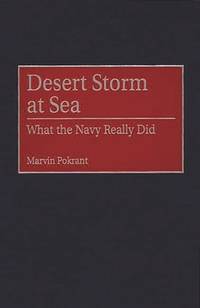
19998355Connecticut/London: Greenwood Press. Near Fine. 1999. First Edition. Hard Cover. 0313310246 . xxii 329pp; previous owner's inscription to front endpaper otherwise fine. Contributions in Military Science Number 175 ; 240 x 160mm . Greenwood Press hardcover
4to. 3 vols. (in 6 parts) bound as 6. XXXVI, 219, (1), (11), 224-491, (1) pp. (12), 262 pp., (1 blank f.), VIII, (3), 268-376, 397-519, (1) pp. VIII, 262 pp., (1 blank f.), VIII, (3), 268-403, (1) pp. (4), 115, (1), 124 pp. With 205 engraved folding plates (irregularly numbered I-CIII), including maps, plans, views and other illustrations, depicting temples, antiquities, plants, animals, etc. Contemporary half calf, gold fillets and two title-labels on spines, sprinkled paper sides. First edition of the Dutch translation of Pococke's celebrated monograph on the Near and Middle East, praised by Gibbon as a work of "superior learning and dignity" (Decline and Fall, ch. 11, n. 69). This Dutch edition was augmented with 27 plates, an essay by the minister Rutger Schutte on the travels of the Israelites, and a index to Biblical locations found in the main work. - "Pococke travelled extensively in Europe from 1733 to 1736 and continued on to the Levant, reaching Alexandria in September 1737. He remained three years in the Eastern Mediterranean, visiting Egypt, Palestine, Asia Minor and Greece. His book describes these journeys but not necessarily in chronological order. The plates of antiquities are after drawings by Pococke himself ... Pococke achieved a great reputation with this publication; the work was very popular during his lifetime and was praised by Gibbon" (Blackmer). "The quality and particularly the earliness of his observations and their record in prose, maps, and diagrams make him one of the most important near eastern travellers, ranking with Frederik Ludvig Norden and Carsten Niebuhr, in stimulating an Egyptian revival in European art and architecture, and recording much that has subsequently been lost" (ODNB). - A couple of plates in the last volume slightly browned and a few spots on the first few leaves of the first volume, otherwise a very good copy, with the leaves nearly untrimmed. The bindings somewhat rubbed along the extremities (primarily the spines), but otherwise good. Cox I, 224. Tiele, Bibl. 869. Cf. Blackmer 1323 (English ed.); for the author: Baigent, "Pococke, Richard (1704-1765"; in: ODNB (online ed.).
Large 4to. XV, (1), 573, (3) pp. Title-page with engraved illustration, aquatint frontispiece (author's portrait) by W. N. Gardiner after S. Harding and 1 full-page plate, drawn and etched by J. Storer. Set in roman and Arabic types, with incidental Greek and Hebrew. Contemporary boards, spine with printed label. Untrimmed, leaving all deckles intact. Second edition of Pococke's elaborate "Specimen historiae Arabum", first published in 1650. Based on Bar Hebraeus's "Mukhtasar fî'l-Duwal", it includes detailed essays on Arabic science, literature, religion, and history. The main text set in Richardson's long-bodied English Arabic, with the notes in Caslon's Arabic types. - Slightly browned, otherwise in very good condition and wholly untrimmed. From the library of the Ducs de Luynes at the Château de Dampierre: their bookplate reproducing the arms of Charles Marie d'Albert de Luynes (1783-1839), 7th Duc de Luynes. Schnurrer 140. OCLC 643939358. Cf. Fück 88 (1650 ed.). Graesse V, 373 (1648 ed.).
Ten watercolour coastal profiles in grey and blue, of widely varying sizes (30 to 119 cm long), with contemporary captions and other notes in pencil or black ink. 20th-century brown cloth with the artist's original laid-paper wrappers bound at the end, spine title: "East Indian views by N. Pocock taken on the ship Worcester 1798". A series of ten lovely coastal profiles drawn in watercolour by the English artist Nicholas Pocock (1740-1821), showing coasts and mountains in the East Indies, both coasts of the Indian Ocean, China and the South Atlantic. In the first drawing Mount Agung, an active volcano and the highest mountain on Bali, appears prominently, with its pointed peak reaching above the clouds. - Pocock, son of a Bristol merchant mariner, pursued a career in the merchant marine but had been an amateur painter since childhood. As master mariner of the ship Lloyd, owned by the Quaker merchant Richard Champion, he illustrated his logbooks with fine ink and wash coastal profiles and other drawings (some now in the National Maritime Museum in Greenwich). When Champion went bankrupt in 1778 in the wake of the American Revolution, Pocock devoted himself to painting. His first professional efforts drew praise from Joshua Reynolds, and he exhibited at the Royal Academy beginning in 1782. Pocock soon became a celebrated maritime artist and painter to King George III, moving to London in 1789, where the rate books record him at Great George Street from that year to 1816. He sometimes accompanied naval ships to make sketches and notes that he developed into paintings when back in London. When he painted maritime scenes he had not witnessed live, he interviewed sailors and others to ensure the accuracy of details such as weather conditions, his practical experience as a master mariner aiding him considerably. - The present drawings are not signed individually, but the wrappers (bound at the end) are signed "... Pocock Esqr / Gt George Street". The captions identify the views, some with additional notes about directions, distances, latitudes or soundings. A few topographical names are difficult to read or show irregular spellings (the coordinates help identify some), but they appear to show coasts in Bali, Karimata, Serutu and Lombok (all in the East Indies), Coromandel (the southeast coast of India), Joanna Island (off Madagascar), Macao (across the bay from Hong Kong), Martin Vaz Islands (near Trinidad off the coast of Brazil), Srikakulam (on the east coast of India: 'Frycacoel' may be a misreading of the alternative spelling Ticacoel. The caption gives a latitude of 18° 4' and the ship Worcester stopped in Bengal ten days later: The Asiatic annual register ... for the year 1799, London, 1800, p. 53) and perhaps Burma (Myanmar) and Pondicherry (on the Coromandel coast). The captions identify them as follows (we add numbers giving the order as bound, the probable bibliographical formats and the dimensions): 1. Island of Bally. Oblong agenda 8vo (12 × 30 cm). 2. Caremata & Souroutou nearly in one. 20 fathoms soft ground, oblong agenda. 8vo (12 × 30 cm). 3. Extremes of Lombek ... southward. 3 oblong agenda 8vo leaves pasted together to make a panorama (12 × 87 cm). 4. Caremata & Sourontou. Oblong agenda 8vo (12 × 30 cm). 5. On the coast of Coromandel. 4 oblong 6mo leaves pasted together to make a panorama (16 × 119 cm). 6. Islands Joanna from N to NE. Oblong agenda 8vo (12 × 30 cm). 7. N Macoa. Oblong 4to (19 × 33 cm). 8. View of Martin Vos Rocks distant 7 leagues, Oblong 4to (20.5 × 28.5 cm). 9. The highland on both sides of Chicacul & Frycacoel ... taken on board the ship Worcester August 17th. 1798. Copy N[icholas] P[ocock]. Oblong agenda folio (24 × 59.5 cm). 10. The land of Barma ... The land on both sides - Pondy ... Oblong folio, with the profile rendered in three bands above one another (31.5 × 46 cm). - Only drawing 9 includes a date in the caption, indicating that it is Pocock's copy of a drawing of a scene from 17 August 1798. All the profiles are drawn on wove paper, probably all on pieces from sheets of Royal format made by James Whatman and his successors, who continued to use his name. Only two drawings show watermarks. Drawing 4 is watermarked: "J WHATMAN | 1804" centred along the right half of one long edge of the sheet, the caps and small caps about 19 and 12 mm tall. The other 4 drawings on one or more oblong agenda 8vo leaves are similar in style and may have been made at the same time. Drawing 10 is watermarked: "J WHATMAN", centred along the left half of one short edge of the sheet, the caps and small caps about 20 and 13 mm tall. Nearly all high quality English paper included a year in the watermark for several decades beginning in 1794, and Whatman's successors generally centred the date below the name, but no date appears under the name here. Moreover, the style of the lettering is older than that of the 1804 watermark, resembling Heawood 3458 (London 1784), 3459 (London post-1791), 3461 (n.p. 1781?), including the distinctive M of these marks (the diagonal joining the right vertical well below its top) but with clearer serifs than any of Heawood's (perhaps not very accurate) drawings. This paper seems likely to have been made before 1794. The paper of the ten drawings together contain about the equivalent of three whole sheets, but they would have to have been taken from at least four sheets. The wrappers are made of coarse laid paper and show no watermark. - With a small tear at the head of drawing 9, not approaching the image, drawing 7 spotted and slightly dirty, but further in very good condition. Coastal profiles, mostly in the East Indies and the Indian Ocean, by the maritime painter to King George III. For Pocock: ODNB 22425.
198547909Stanley Paul Malicorne sur Sarthe, 72, Pays de la Loire, France 1985 Book condition, Etat : Très Bon hardcover, editor's illustrated binding grand In-8 1 vol. - 120 pages
Folio. 268 ff. Contemporary vellum with ms. title to spine. Fine incunabular edition of Pliny's famous encylopedic work, covering the entire field of ancient knowledge. With his "Natural History", Pliny gives a mathematical and physical description of the world, discusses geography, ethnography, anthropology, human physiology, zoology, botany, mineralogy, sculpture and painting. As "a purveyor of information both scientific and nonscientific, Pliny holds a place of exceptional importance in the tradition and diffusion of culture" (DSB). Through the present work Pliny "gives us by far the most detailed account of the coast of the United Arab Emirates that has come down to us. Chapter 32 of Book 6 (§ 149-152), beginning near the Qatar peninsula, proceeds to describe the Emirates islands, tribes, and coast right up to the Musandam peninsula, before continuing on south along the coast of Oman. As such, it is a mine of invaluable information on the UAE in the late pre-Islamic era" (UAE History, online). Pliny "completed his 'Natural History' in 77 AD and, to judge from his account of the peoples and places of south-eastern Arabia [...], the area of the UAE was full of settlements, tribes, and physical features, the names of which he recorded for posterity" (Ghareeb/Al Abed 54). - "This appears to be the first edition of Barbarus' recension, the note of a 1496 edition by the same printer being probably due to a confusion (Hain 13099)" (BMC). Dated 1497 in the colophon, but the dedication is dated the Ides of February in the twelfth year of the Doge Augustinus Barbadicus (30 Aug. 1497 to 29 Aug. 1498). - Numerous contemporary marginalia. Slight worming to gutter and some waterstaining near end; spine restored. Late 19th-c. bookplate of Dr. J. Klauber on front pastedown. HC 13101*. Goff P-799. GW M34321. Klebs 786.14. Proctor 4893A. BMC V 377. ISTC ip00799000.
Folio. (16), 311, (60) ff. Title-page and sub-title to index with ornamental woodcut border. Woodcut initials, head and tail pieces. Calf, gold-tooled ribbed spine with title-label. Sprinkled edges. First edition of the "Natural history" edited by Johannes Caesarius (1468-1550), a humanist and close friend of Erasmus. The original text was by Gaius Plinius Secundus (AD 23 - August 25, AD 79), better known as Pliny the Elder. He was a Roman author, naturalist, and natural philosopher, as well as naval and army commander of the early Roman Empire, and personal friend of the emperor Vespasian. The text in the present edition is decorated with woodcut borders and many woodcut initials. - The "Naturalis Historia" is one of the largest single works to have survived from the Roman empire to the modern day and purports to cover the entire field of ancient knowledge, based on the best authorities available to Pliny. He claims to be the only Roman ever to have undertaken such a work. It comprised 37 books in 10 volumes and covered over 20,000 facts on topics including the fields of botany, zoology, astronomy , geology and mineralogy as well as the exploitation of those resources. It remains a standard work for the Roman period and the advances in technology and understanding of natural phenomena at the time. Some technical advances he discusses are the only sources for those inventions, such as hushing in mining technology or the use of water mills for crushing or grinding corn. Much of what he wrote about has been confirmed by archaeology. ''We know from Pliny that there were important pearl fisheries in the Gulf [...] Pliny identifies Tylos (Bahrain) as a place famous for its pearls [... He] attests that pearls were the most highly rated valuable in Roman society, and that those from the Gulf were specially praised [...] The pearl related finds at the site of El-Dur indicate the site was integrated into the maritime trade routes linking the Roman Empire, the Persian Empire, India and South Arabia'' (Carter). Book 6 holds a chapter that gives the first detailed account of the regions around the Gulf, including what are now Qatar, the Emirates and Oman. - Not only is it virtually the only work which describes the work of artists of the time, and has it become an important reference work for the history of art, due to the wide range of topics, the referencing system and index it became a model for later encyclopaedias. - With manuscript notes of multiple owners on pastedown (including written ex-libris by Antonii Mauritii Seguin 1713 and Mathon de la cour 1744). Some underling in text, and notes in the margins (partly lost due to trimmed edges). A very good copy with bookplate of De Ponsainpierre on pastedown. VD 16, P 3531. Adams P 1556. BM-STC German 704. Durling 3689 (imperfect copy). Hunt 23. USTC (11 copies).
Folio. (188), (34), CCCCCXXXVI [= CCCCCXXXVIII; 538] pp. Title-page in red and black and separate title-page to index, both with woodcut border. Elaborately decorated calf, with image of the crucifixion on both panels. Blinrd-tooled spine. First and only Paris edition of "Historiae naturalis", with the annotations by Hermolaus Barbarus (1454-94), an Italian Renaissance scholar. His discussions of Pliny's "Naturalis Historia" was first published as "Castigationes Plinianae" in 1492, in which he made over 5000 corrections to the original text. Due to this work and other classical works he translated or edited he was considered a leader authority on Latin and Greek work on antiquity. The present copy was published by Jean Petit, in his days a leading bookseller in Paris, whose name and device are shown on the title-page with decorative woodcut border. The title-page to the index, here bound before the text, has the initials of the printer Nicolaus Sauetier. - The original text was by Gaius Plinius Secundus (AD 23-79), better known as Pliny the Elder. He was a Roman author, naturalist, and natural philosopher, as well as naval and army commander of the early Roman Empire, and personal friend of the emperor Vespasian. - The "Naturalis Historia" is one of the largest single works to have survived from the Roman empire to the modern day and purports to cover the entire field of ancient knowledge, based on the best authorities available to Pliny. He claims to be the only Roman ever to have undertaken such a work. It comprised 37 books in 10 volumes and covered over 20,000 facts on topics including the fields of botany, zoology, astronomy, geology and mineralogy as well as the exploitation of those resources. It remains a standard work for the Roman period and the advances in technology and understanding of natural phenomena at the time. Some technical advances he discusses are the only sources for those inventions, such as hushing in mining technology or the use of water mills for crushing or grinding corn. Much of what he wrote about has been confirmed by archaeology. ''We know from Pliny that there were important pearl fisheries in the Gulf [...] Pliny identifies Tylos (Bahrain) as a place famous for its pearls [... He] attests that pearls were the most highly rated valuable in Roman society, and that those from the Gulf were specially praised [...] The pearl related finds at the site of El-Dur indicate the site was integrated into the maritime trade routes linking the Roman Empire, the Persian Empire, India and South Arabia'' (Carter). Book 6 holds a chapter that gives the first detailed account of the regions around the Gulf, including what are now Qatar, the Emirates and Oman. - Not only is it virtually the only work which describes the work of artists of the time, and has it become an important reference work for the history of art, due to the wide range of topics, the referencing system and index it became a model for later encyclopaedias. - Panels shaved, affecting the decoration, spine cracked on the hinges. With manuscript ownership on title-page of the index. A good copy. Bird 1910. USTC (2 copies). Not in Adams, BMC French, Durling, Hunt, Wellcome.