4 134 résultats
325 p. Hardcover Very good condition good
Folio (ca. 232 x 356 mm). Report 166 pp.; appendix 167-1002 pp. [With:] Glossary to the Fifth Report. Ordered to be printed 12th March 1830. IV, 5-50 pp. Modern half calf over marbled boards. Massive report detailing the revenue and judicial systems in British India from the 18th century onwards. It is accompanied by Charles Wilkins's important (and mostly missing) Glossary, an early attempt to systematize the etymologically complex terminology of Anglo-Indian rule. - The Fifth Report also led to the Charter Act of 1813, which compelled the East India Company to let missionaries preach to the masses in India. Previously, the Company had discouraged missionary work in the country, fearing that they might incite religious sentiments which would affect the Company's business policy and diplomatic role. - The Glossary aimed to demystify the myriad of Anglo-Indian terms used in the Report. In the Preface, the editor states: "The numerous oriental terms used in the Fifth Report and its Appendix have been adopted from most of the languages current throughout India: - from Arabic, Persian, Sanskrit, Hindustany, Bengaly, Telinga, Tamul, Canara and Malabar; and a few from Turkish and Malay [...]". It was issued separately from the Fifth Report and was very quickly sold out. This is the second edition dated 1830. Yule and Burnell note this in their "Hobson Jobson" of 1886 as the edition used. - Removed from London's Inner Temple Library with their stamps and bookplate.
214 pages including colour photographic plates. Foreword by Lee Trevino. Intended to bring greater recognition and appreciation for a vastly undervalued and misunderstood legend. "He's the best ball-striker I ever saw come down the pipe. I didn't see them all, but I don't know how anyone could hit the ball better than Moe Norman." - Lee Trevino. Clean, bright and unmarked with negligible wear. Nice copy. Book
Large 8vo. XIX, (3), 83, (1) pp. With 3 plates. Original green cloth with giltstamped spine title. First English edition of this classic of hippiatry. "Saadat Yar Khan (1756-1835) was the son of Tahmasap Beg Khan Turani, a Persian nobleman. After his death, Rangin shifted to Delhi and began an army career. In 1787, he left the job and went over to Bharatpur and after two years again shifted to Lucknow where he was in the service of Mirza Suleman Shokoh. After a stay of nine years in Lucknow, he left to travel in Bengal. Later, he reached Gwalior and served the Sindhias for six years. He again resigned from service and took to trading of horses and touring" (Samiuddin, Ency. dict. of Urdu lit., p. 507). - A good, clean copy with C. Antony Penton's bookplate on front pastedown. Boyd/P. 99. Mellon Coll. 309.
oblong format, cartoons by the author. eng
199749884aaspFaldo Golf Institute Marriott 1997-01-01. Spiral-bound. Good. Wire coil binding. Notations or marginal marks on about 20% of pages. Generally mild wear. Faldo Golf Institute (Marriott) unknown
4to. 36 pp. With 5 black and white photographic plates in the text. Original printed wrappers. Rare issue of the periodical of the British Falconers' Club, the first issue of which appeared in 1937, including tributes to the late Vice-Presidents George Edward Lodge (1860-1954) and Guy Aylmer (1887-1954), as well as several book reviews. The contributors make observations on the Ovampo sparrowhawk, the African goshawk, and the red-headed merlin, as well as on partridge hawking, hacking, and the Dutch Falconers' Hut in "De Hoge Veluwe" National Park. The editorial discusses the 1954 Protection of Birds Act, which established the necessity of a licence when taking, selling, or importing live birds of prey for the purposes of falconry, stating that "it is most satisfactory that falconry has been recognised in this way, which gives it, potentially, a very much more favourable status than it has enjoyed for many years" (p. 10). The illustrations show the two former vice-presidents, G. E. Lodge painting, G. Aylmer with his hawk, hawks and merlins, and the Dutch Falconers' Hut surrounded by several hooded birds on perches. - Upper right corner of front cover slightly creased. A good copy. U.S. Air Force Academy Library, Special Bibliography Series 81, p. 91, 2. OCLC 52319876.
Large 8vo (175 x 260 mm). 2 vols. XXIII (instead of XXVII, lacking pp. XVII-XX), (3), 795 (instead of 799, lacking pp. 705-708), (1) pp. XVI, 778 pp. With all 49 tinted lithographic plates as well as numerous wood-engraved text illustrations. Contemporary full blue cloth with blindstamped covers and gilt spine titles. Wants the boxed 14 maps. First edition. Chesney (1789-1872), the explorer of the Euphrates and founder of the overland route to India, intended the work to be complete in four volumes, but half the manuscript was lost and only these two volumes were published. The book describes the exploration trip through the Euphrates and Tiber valleys, to the Arabian Gulf, in search of a shorter route to India. "He explored the Euphrates twice, at first alone, on a raft, in secret and at great risk (he frequently came under fire from hostile Arabs) and later by steamer, although the second attempt was no less fraught with difficulty than the first (the 'Tigris' was wrecked and there were numerous physical obstacles to overcome). Chesney was clearly an explorer of the first order and his courage and perseverance were matched only by his attention to detail and thoroughness in the surveys he produced" (Atabey). - Lacking four leaves in the first volume and (as often) the 14 slip-cased maps. Provenance: removed from the library of Hawkesyard Priory, Staffordshire (dispersed in 2008) with their stamps. Latterly in the collection of Roberto Gulbenkian (1923-2009). Atabey I, 234 Blackmer 337. Howgego II, p. 124, C26.
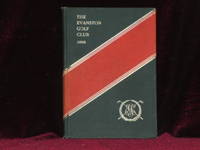
19083365Kansas City Missouri: Np 1908. First Edition. Hard Cover. Very Good. 12mo. 67pp. Bound in green and red cloth lettered and ruled in white. A very good copy with one photo illustration showing the clubhouse as it looked in 1908 and another showing a view of the lake of the golf course. The club initially opened in 1901. This book lists the names of past members residents and non-residents from opening year through 1908 along with its constitution by-laws house and ground rules. <br/><br/> Np hardcover books
19083365Kansas City Missouri: Np 1908. First Edition. Hard Cover. Very Good. 12mo. 67pp. Bound in green and red cloth lettered and ruled in white. A very good copy with one photo illustration showing the clubhouse as it looked in 1908 and another showing a view of the lake of the golf course. The club initially opened in 1901. This book lists the names of past members residents and non-residents from opening year through 1908 along with its constitution by-laws house and ground rules. <br/><br/> Np hardcover
1954169747Oswestry, Hughes, 1954. 1st ed. With frontispiece and several picture plates, 70 p. Small 8°, original clothbinding. (ca).
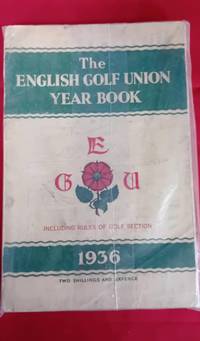
418778Paperback. Fair. THERE ARE NO TARIFFS OR CUSTOMS DUTIES ON BOOKS. A very scarce and early year book for the EGU as it was only founded in 1924. Includes much information on international matches county matches the Amateur and Open Championship and British and foreign golf unions. Illustrated throughout with photographs and vintage advertisements. Spine worn some pages loose. paperback
1975V38631New York (The Viking Press) 1975 (= Erste Ausgabe). 4°, Orignalkunstleder (Hardcover) 479 S, zahlreiche Abbildungen, ISBN 670294012 1
Malcolm Campbell The encyclopedia of golf. , Dorling Kindersley 1991, Legatura: in piena tela. Dorso: con impressioni in oro. Sovraccoperta: plastificata con alette informative. Interno in ottime condizioni. Ottimo (Fine) . <br> <br> <br> <br>
8vo. XXIV, 433, (1) pp. With 3 folding maps an 47 illustrations on 32 plates. Publisher's original giltstamped green cloth. First edition. St. John Philby (1885-1960), also known by his Arabian name "Sheikh Abdullah", was an Arabist, explorer, writer, and British colonial office intelligence officer. Educated at Trinity College, Cambridge, he studied oriental languages and was a friend and classmate of Jawaharlal Nehru, later prime Minister of India. Philby settled in Jeddah and became famous as an international writer and explorer. He personally mapped on camelback what is now the Saudi-Yemeni border on the Rub' al Khali; in 1932, while searching for the lost city of Ubar, he was the first Westerner to visit and describe the Wabar craters. At this time, Philby also became Ibn Saud's chief adviser in dealing with the British Empire and Western powers. He converted to Islam in 1930. The personal contacts between the United States and Saudi Arabia were largely channeled through the person of Philby. - An excellent copy, with very insignificant foxing to first and last few pages. Macro 1781. Ghani 302.
12 pages. Features: Seagram Gold Cup displayed at Eaton's; Walter Kern Joins quarter century club; Elvie Hukkanen gains membership in quarter-century club; Great centerfold collage of golf photos (with names) from the McCordick Cup Tournament; Ernie Sloan marks 45 years with the company; National campaign highlights Eaton's branded merchandise. Additional employee news. Moderate wear. A sound copy. Book
12 pages. Features: John J. Whitesell marks 25th anniversary and retirement; Presentation to Mrs. Chris Moore; Mildred Schultz is married; Farewell to Mrs. Vi Fraser; Bowling bash - photos and story; Field Day at Elk Island Park - many photos with text; Field Day at Highlands Golf Course - many photos; Mr. L.W. Bradshaw marks 30th anniversary; Mourning the passing of Delbert Miller. Additional employee news. Moderate wear. Bit of writing on front cover. A sound copy. Book
Colour lithograph. 43 x 33.3 cm. One of the very rare Weißenburg illustrated broadsheets showing oriental motifs. These were published under the fictitious address of Hassan Uwais (Auvès) in Cairo. The actual publisher, Camille Burckardt, was head of the Weißenburg company from 1880 until 1888. - Slight crease, minor edge damage and browning. All of these prints are very rare; a different print commanded £21,250 at Sotheby's in 2012. Des Mondes de Papier p. 66, no. 2.
207pp. 20 cm. Hardcover Very good condition good
8vo. XVIII, (2), 327, (1) pp. With engr. title page and lithogr. folding facsimile. Modern half calf (by Bayntun's, Bath) with giltstamped red spine label and marbled boards. Edges sprinkled in red. First edition. - The fame of the English clergyman Teonge (1621-90) rests on his present work. Due to financial difficulties, he enlisted in the Navy and became a chaplain on the ships Assistance, Bristol and Royal Oak, completing three voyages to the Mediterranean, where he searched for pirates, landed in Syria and visited Malta, Zante, Cephalonia, and Aleppo. - "The interest of Teonge's life is concentrated in the diary of the few years he spent at sea, which gives an amusing and precious picture of life in the navy at that time. This journal, from 20 May 1675 to 28 June 1679, having lain in manuscript for over a century, was purchased from a Warwickshire family by Charles Knight, who edited it in 1825 as ‘The Diary of Henry Teonge,’ with a facsimile of the first folio of the manuscript (London, 8vo). The narrative reveals the diarist as a pleasant, lively, easy-going man, not so strict as to prevent his falling in with the humours of his surroundings" (DNB). The diary contains accounts of cruises in the Channel, Atlantic, and Mediterranean, leavened with occasional songs, sonnets, acrostics, etc. "The nature of Teonge's diary, and the disappearance of the manuscript for almost a century after its first publication in 1825, led to persistent suggestions that it might have been a forgery. Confirmation both of Teonge's existence and of the sequence of events which he recorded came from the Admiralty records in the Public Record Office, and the re-emergence of the manuscript itself at a Sotheby’s sale in 1918 put the matter conclusively to rest" (ODNB). - Occasional insignificant brownstaining; altogether a well-preserved copy. Allibone 2375. DNB 56, 76. Lowndes 2605. Weber II, 412. OCLC 2438435.
8vo. pp. 97-105 (entire volume: iv, 65-128 pp., with 18 photographic illustrations and a folding colour map). Original printed blue wrappers. Early account of a visit to the seaport of Dhofar (Oman) on the southern coast of the Peninsula, including an interesting account of the local boats and the sailing skills of their owners. The illustrations show Makalla in Hadramaut, a camel drawing water in Dhofar, and the ruins of the temple of al-Bilad. Macro 777. OCLC 49427292.
8vo. pp. 97-105. With 2 photoplates. Modern wrappers. Early account of a visit to the seaport of Dhofar (Oman) on the southern coast of the Peninsula, including an interesting account of the local boats and the sailing skills of their owners. The illustrations show Makalla in Hadramaut, a camel drawing water in Dhofar, and the ruins of the temple of al-Bilad. Macro, Bibliography of the Arabian Peninsula, 777. OCLC 49427292.
4to. 2 vols. XX, 280 pp. (4), 281-576 pp. With 5 lithographed folding maps (2 in colour), 2 lithographed frontispieces (one in original hand colour, one tinted), and 14 lithographed plates, 12 of which tinted. Contemporary giltstamped full calf with the arms of the University of Glasgow to front covers and spine and giltstamped spine-labels. Marbled endpapers. All edges marbled. First edition. Lively account of the first extensive exploration of the Sinai desert performed entirely on foot. The English orientalist Palmer was engaged in 1869 to join the survey of Sinai, undertaken by the Palestine Exploration Fund, and followed up this work in the next year by exploring the desert of El-Tih, Idumaea, and Moab in company with Charles Drake. They completed this journey on foot and without escort, making friends among the Bedouins and Arab sheikhs, to whom Palmer was known as Abdallah Effendi. After a visit to the Lebanon and to Damascus, where he made the acquaintance of Sir Richard Burton, then consul there, he returned to England in 1870 by way of Constantinople and Vienna. - Palmer's report discusses the Sinai survey, the geography of the area, camp life, marches through the wilderness, and encounters with Arab tribes. It includes descriptions of Saint Catherine's Monastery as well as of Petra, with maps of the Sinai Peninsula, the Negeb, and the Moab, as well as two maps from the Sinai survey showing topographic views of Mount Sinai and Jebel Serbál. The charming tinted plates display desert and mountain views, ruins, hieroglyphs, towns, caves and churches. - Bindings very slightly rubbed. Small tears to 2 maps; otherwise in excellent condition. Prize copy awarded to Joannes M. Littlejohn, a student of Hebrew at the University of Glasgow, by Jacob Robertson; a commemorative bookplate to front pastedown of volume I, dated 1 May 1885; a handwritten note by Robertson to flyleaf of volume II. Blackmer 1238. Röhricht 3126, no. 5. OCLC 1013449009.
1332008569.Gpaperback. Good. Access codes and supplements are not guaranteed with used items. May be an ex-library book. paperback
Folio (full-sheet leaves, 54 x 36.5 cm). Lithographed frontispiece, title-page & dedication plus 5, [1 blank] pp. plus plates. With a lithographed frontispiece portrait of Sale by Thomas Fairland after a painting by Scarlet Davis, a lithographed illustrated title-page, a lithographed dedication to Queen Victoria (reproducing Sale's hand-written and signed dedication), a double-page "Plan of Jellalabad" (51.5 x 60 cm, lithographed by S. Leith in Edinburgh) and 34 tinted lithographic views of the city and its fortifications (in landscape format) on 22 leaves (10 full-page, 2 half-page and 11 pair of oblong half-page, numbered 1-11, showing the fortifications before and after repairs and improvements). All leaves are unwatermarked wove paper, the frontispiece on fine "India" paper mounted on thick paper, the plan on thin paper and all other lithographs on thick paper, that of the title-page grey. With a guard-leaf bound in facing each plate. All lithographs were probably printed by Hullmandel & Walton, though only the frontispiece and title-page name them. Gold-tooled red goatskin morocco, on 5 recessed supports (not aligned with the 6 false bands on the spine), each board with a frame of 3 gold double fillets alternating with 2 blind single fillets, with the title and author on the front board and the 2nd and 4th of 7 spine compartments, richly gold-tooled turn-ins, gold-tooled board edges, yellow endpapers, gilt edges, blue and white headbands. The first and only edition of a grand and spectacular visual presentation (there are only five pages of text) of the city of Jalalabad and its fortifications in eastern Afghanistan and related sites as far away as Kabul. The illustrated title-page (image size 45 x 35 cm) shows the tower known as Alexander's Column, with mountains and clouds in the background and several people at its foot (including two on horseback in the foreground: a British officer and turbaned man), the whole framed by palm trees, other plants and military attributes, with the title in grey sans-serif and slab-serif capitals with a white drop-shadow. The first 11 leaves of views (2 half-page and 10 full-page, the latter mostly with image size 26.5 x 37 cm) offer meticulously detailed views of sites in and related to Jalalabad, including four in and around Kabul. These show the architecture (including minarets, fortifications and the building where the British were held prisoner) as well as British and Afghan people engaged in military activities and trade. The 11 numbered plates that follow show two panoramas each (nos. 1 and 10 reproducing a hand-written caption) showing Jalalabad's fortifications before (below) and after (above) the repairs and improvements undertaken by Sale. A red line in the upper views indicates the parts that had been destroyed by an earthquake. - Although the title-page attributes the entire work to Robert Sale, the text begins with an account of the city and battle by Hamlet C. Wade, who served under him, followed by "Lady [Florentia] Sale's narrative of her prison & fellow prisoners" and eight short texts giving an account of the view on the title-page and those in the first 10 leaves of views (the 4th to 6th together and the 9th and 10th together), that for the third signed by Florentia Sale. - The grand presentation, the portrait of the author (Major General Robert Sale, who commanded the troops at Jalalabad during the 1842 battle) and the dedication to Queen Victoria suggest this volume commemorates a great success, but in fact it was only a minor and short-lived reprieve in Great Britain's foolish and disastrous First Anglo-Afghan War (1839-1842). In 1839 Great Britain hoped to put Afghanistan back under colonial control by invading it and taking Kabul, ignoring the Duke of Wellington's prescient warning that it was a foolish move, and that they would find it much more difficult to hold Kabul than to take it. The British grossly underestimated the strength of the opposition, the difficulty of the terrain and the country's anti-colonial sentiment. Forced to abandon the city after an uprising in 1841 they tried to retreat to Jalalabad but nearly all the British troops and their entourage were slaughtered in the treacherous mountain passes. Sale's troops, who futilely awaited them in Jalalabad, were surrounded and attacked by the Afghans but managed to defeat them and drive them back to Kabul. - Various sources speculatively date the present publication from ca. 1842 to ca. 1846, but at least in the present copy a footnote on the first page of the letterpress text says, "Since this has been put to press … Sir Robert Sale has gloriously fallen in the battle of Moodkee, fought 18 December, 1845 ... he was struck by a grape shot which ... proved mortal shortly after he received the wound". He died on 21 December, so the book must have been published in the last 10 days of 1845 or early in 1846. Although printed on unwatermarked wove paper, the letterpress leaves show point holes in the centres of the fore-edge and gutter margins, showing that each leaf was separately printed and each is almost certainly a whole sheet, probably of Demy format. - With an armorial bookplate showing the crest and motto ("sans changer") of the Earls of Derby, probably the 14th Earl, Edward George Geoffrey Smith-Stanley (1799-1869), Conservative Prime Minister three times in the years 1852-68. With minor foxing, slightly more in the frontispiece and much more in one full-page plate (Baba's garden, whose paper is not as thick as the others), but otherwise in very good condition. The frontispiece (together with the 2 preceding free endleaves) has separated from the bookblock, the hinges have been restored and the binding shows a few scuff marks, but the binding remains in good condition. Magnificent and detailed tinted lithographs of buildings, fortifications, terrain and life in and around Jalalabad (and Kabul) in Afghanistan ca. 1845. Thomson, The exotic and the beautiful (Bobins coll.) 268. WorldCat (3 copies?). Not in Abbey, Travel.