4 134 résultats
375p., illus. Hardcover Very good condition good
Fine English Paperback. Roy. 8vo. (27 x 18 cm). In English. 42, [2] p., b/w ills. The Baghdad Pact public record of the Karachi Conference series. May - June, 1957.
4to. (8), 79, (1) pp. With woodcut headpiece on t. p. and initials. 19th century orange-red crushed morocco by Riviere with leading edges gilt and elaborate gilt inner dentelle, rebacked. All edges gilt. The exceedingly rare first edition of one of the earliest English treatises on horsemanship, derived in part from Xenophon, Federico Grisone's "Ordini di cavalcare", and other authors, and in part from Astley's own experience. This is, in fact, the first translation into English of Xenophon's treatise "Peri hippikes" ("On horsemanship"). - The publication of Astley's "Art of Riding", perhaps his single most lasting achievement, came late in his life as an Elizabethan courtier. Here, he relays the doctrine of the Italian riding schools as he and other Gentleman Pensioners understood it, particularly on training the horse to respond to the hand. Astley was on friendly terms with Thomas Blundeville, whose Grisone translation two decades earlier counts as the first treatise on horsemanship to be published in English. - First three leaves slightly browned, with the upper right corner of each leaf imperceptibly restored from another copy; a closed tear to f. A4. Altogether a remarkable clean and crisp copy in an English master binding. The Fitzwilliam-Gloucester copy, bound with a common companion piece, Claudio Corte's "Art of Riding" (also published by Denham in the same year) commanded £14,400 at Christie's in 2006. The catalogue notes that the scarcity of these two work "at auction varies markedly; ABPC records some 5 copies of Corte's work at auction since 1975, but none of Astley's". Huth p. 11. STC 884. Mellon/Podeschi 12. Hoffmann III, 609 (s. v. Xenophon).
4to. (2), CX, 637, (1) pp. With 2 coloured plates (including a portrait frontispiece) and 184 black and white plates (1 of which not included in pagination). Original full cloth with giltstamped spine and spine-title. Second edition of this important English translation of the famous Latin treatise on ornithology and falconry written in the 1240s by the Holy Roman Emperor Frederick II. It was prepared by the Canadian ophthalmologist and comparative zoologist C. A. Wood (1856-1942), who studied animal vision, especially that of birds, and was first published in 1943 by Stanford University Press. The plentiful illustrations include a portrait frontispiece of Frederick II, photographs of various decorative manuscript pages from "De arte venandi cum avibus", falconer's equipment, and landmarks associated with the Emperor, including Castel del Monte and his tomb in Palermo, as well as drawings and photographs of various species of falcons and hawks, and a map of southern Italy and Sicily showing the Emperor's castles and hunting lodges. - Giltstamping somewhat faded; edges very slightly foxed. A very good copy of this second edition, never seen at auction. Oelgart 24B. U.S. Air Force Academy Library, Special Bibliography Series 81, 192. OCLC 459570612.
200718188AB2007. 1o issues. Milano Artestampa 2007. 38 : 27 cm. With many coloured art-prints. Coloured illustrated original cloth in original velvet slip-case and original velvet-cover. One of 648 numberd copies. Texts in English and Italian. With an interview of Gianni Salvaterra with the Italian painter Gillo Dorfles 1910-2018 in the first issue "Cleek". With essays by William Graham George Fullerton Carnegie James Ballantine John Hamliton James II King fo Scotland James III Kind of Scotland James IV Jing of Scotland James VI King of Scotland and Charles I King of England. The colourful art-prints are by Andres Serrano Andy Warhol Franco Fontana Jenny Holzer Lawrence Weiner Loris Cecchini Maurizio Galimberti Mel Ramos and Ugo Nespolo. - Copy as new. hardcover
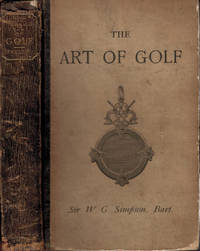
1892d2598Edinburgh: David Douglas. Covers rubbed with splits and small loss to head of spine. Contents frim and bright. 1892. Second Edition revised. Illustrated board covers with black leather spine. 230mm x 150mm 9" x 6". xx186pp. 20 photographic plates and 10 diagrams. . David Douglas hardcover
Various sizes (folio, 4to, 8vo). A total of 460 typescript and 177 manuscript pp. (9 of which comprise merely 2 lines) in 26 fascicles, assembled as 11 portfolios. With a few newspaper clippings as well as 1 photograph each of Hagia Sophia and the gate of Dolmabahce Palace, mounted on cardboard as postcards. A highly important and extensive archive from the secret personal papers of General Auguste Sarrou, France's chief spymaster in the Levant and Turkey during the critical period between 1917 and 1923, when the Near and Middle East were completely re-ordered following the demise of the Ottoman Empire. It features numerous "top secret" spy reports, correspondence and dossiers of political analysis, providing stellar insights into France's central role in shaping the destiny of Syria, Lebanon and Turkey, working to counteract the forces unleashed by Lawrence of Arabia during the Arab Revolt. - The present archive consists of dozens of classified intelligence reports, political masterplans and field notes. Most of the documents are typescripts or carbon copies of typescripts (many written by Sarrou), intended for distribution amongst only the most senior French military and political officials. The documents span Sarrou’s entire career, dating from 1908 to the 1960s, although the bulk of the documents concern the critical period from 1917 to 1923. It includes a typescript copy of Sarrou’s autobiography, written at the end of his 60-year-long career in espionage and diplomacy in Turkey, the Balkans and the Middle East; a series of papers relating to Sarrou’s time serving as a gendarme in Macedonia in the decade prior to World War I, when he notably befriended many leaders of "Young Turks"; and a further series of papers outline his secret "Mission d’Orient", a grand operation to support French ambitions in Syria, Lebanon and Anatolia. Furthermore, a series of highly important and secret analytical reports written by Sarrou provide a "game plan" for how France was to rule Syria and Lebanon (importantly, the Quay d’Orsay largely followed Sarrou’s advice as matters unfolded). Notable is Sarrou’s brutally unflattering assessment of Emir Faisal, Lawrence of Arabia’s old comrade. Additionally, there is an intriguing manuscript report of a meeting held between Arab intellectuals and Djemal Pasha, the Ottoman War Minister, the day before the fall of Damascus, as well as a series of fascinating reports concerning the 1921 attempt on the life of General Henri Gouraud, the French High Commissioner for Syria and Lebanon. Another series of 25 typescript "Secret" intelligence reports compiled by the Service des informations de la Marine dans le Levant (S.I.L.) in Port Said in 1918 and 1919 contain fascinating raw field intelligence on Anti-French elements throughout the Middle East, as well as the efforts of French assets to counteract these forces through counterespionage and propaganda. A diverse collection of typescript and manuscript research documents, as well as correspondence from key assets, assembled by Sarrou from 1919 to 1922, is supplemented by a series of highly insightful typescript reports, written by Sarrou to advise the French government on the situation in Turkey from 1921 to 1931, covering the rise of Atatürk’s new republic and French efforts to gain influence in Ankara. Finally, there is a collection of letters, documents and postcards from Sarrou’s mid to later career, from the late 1920s until his retirement in the mid-1960s. - Many of the elements of the present archive are likely unique survivors, while a couple examples of some of the typescripts may exist in various French official archives. A detailed list is available upon request.
Colour map and 111 plates and plans, some collotype, one double-page, 4 pp. advertisements at end. Original cloth. First and only edition of this study of mainly Hindu and Jaina architecture in the state of Gujarat on the western coast of India, superbly illustrated with collotypes. Published as volume IX of the Archaeological Survey of Western India. - The Scottish archaeologist James Burgess (1832-1916), founder of "The Indian Antiquary", did educational work in Calcutta, 1856 and Bombay, 1861, and was Secretary of the Bombay Geographical Society 1868-73. He was Head of the Archaeological Survey, Western India, 1873, and of South India, 1881. From 1886 to 1889 he was Director General of the Archaeological Survey of India. - With light foxing to first few leaves, binding slightly rubbed.
8vo. 372 pp. With frontispiece portrait, 4 maps (1 folding) & 17 plates. Publisher's gilt cloth with chipped and spotted dustjacket. First edition of this overview of Arab history and culture work that draws upon the author's own experience in the region and includes some of T. E. Lawrence's exploits. - Inscribed on the front free endpaper in the year of publication: "To the Rt Hon and Mrs L.S. Amery, With respects, Bertram Thomas, May 1937". - Bertram Thomas's (1892-1950) "first crossing of the Empty Quarter, albeit by the shortest and easiest route, assured him a permanent place in the history of European exploration of Arabia. He was admired by T. E. Lawrence (who wrote a preface to one of his books) and by his successor Wilfred Thesiger, who found twenty years later that Thomas was remembered by the Bedouin as an honourable, brave, and tolerant man" (ODNB). Leopold Amery (1873-1955) served a Colonial Secretary as well as Secretary of State for India and Burma in Churchill's war ministry. - A few minor spots, but still a very good copy. Macro 2186.
Large 12mo. V, (3), 20 pp. Modern half calf over marbled boards with black morocco label to spine, gilt. Padded at the end with 22 sturdy blank leaves with binder's ticket of "Period Binders, Bath". First edition of this rare introduction to Arabic. As the author writes in his dedication to the Rev. John Frederick Usko, "The object of the following pages is to put the Hebrew student in possession of just so much Arabick as may enable him to profit by the illustrations of Hebrew words in the Lexicons of Simonis and others." He proceeds to explain and justify his methods in the face of the many difficulties encountered by students. The text looks at the construction of the alphabet itself, compares Hebrew and Arabic letters, and similarly verbs and their tenses. - Attributed to Thomas Burgess (1756-1837), who served successively as Bishop of Salisbury and St. David's. He was educated at Winchester college and gained a scholarship to Corpus Christi College, Oxford, where he spent most of his time studying Greek. He was ordained in 1784 and at this time he became interested in Hebrew and theology. A prolific author, he published over a hundred works - the first while at Oxford. Early in his career, he came under the patronage of the Bishop of Salisbury. In his spare time, he helped increase the number of Sunday schools and contributed in writing primers for the students. The present work is an obvious fruit of these interests. - No copies listed in auction records of this unusual Newcastle imprint, which also names the London bookseller and dealer in continental books, W. H. Lunn. Some contemporary handwritten annotations in ink & ownership inscription to title-page "A Bertiz / August 5, 1829". - Rare. OCLC 55524381.
Folio. 17 separate issues, plus 2 duplicates. A selection of Aramco's weekly publication that provided news and feature stories covering company events, news, and appointments in addition to employee and community activities. The present collection starts in May 1973 and ends in November 1976. - The collection includes the followings issues: Vol. V (1973), nos. 5, 6. Vol XXIX (1973), nos. 19, 22, 36, 43, special supplement 21 Nov. 1973. Vol. VI (1974), no. 1. Vol. XXX (1974), nos. 6, 10, 16 (plus duplicate), 24. Vol. XXXI (1975), no. 46. Vol. XXXII (1976), nos. 9, 13 (plus duplicate), 14, 46. - Somewhat browned, otherwise in very good condition.
895 x 945 mm. Polyconic projection, constant ratio linear horizontal scale 1:4,000,000. Blue-line print. Framed. The only known example: a highly detailed map of the Arabian Peninsula, published by the "Arabian American Oil Co." in March 1942, two years before the company was formally so renamed, and the first effort to produce a large-scale map of the entire Peninsula that satisfied modern technical needs. Clearly produced in a very limited edition for internal use at the crucial, transitional moment in Arabian oil exploration, this is the earliest known map to use the name that still survives in "Saudi Aramco", issued at a time when the company was still officially Standard Oil of California. - The legend identifies railways, primary and secondary roads as well as "explorers' routes", oil pipelines, intermittent streams, airports, towns, "Arab wells", oases, "sand areas", "sabkhas", and "marsh". The Maidan-i-Naftun and Naft Safid oilfields in Iran (and the pipelines that link them to the A.I.O.C. Refinery at Abadan) are illustrated, as are the Kirkuk oilfield and the pipelines running from there to Haifa and Tripoli. Dammam and Dhahran, the sites of the first commercial oil wells in Saudi Arabia, also feature on the map. Aside from that, however, there is no illustrated oil development in the Middle East: the map effectively illustrates the blank slate that was Arabian oil exploration in the early 1940s. On the coast of what was then Trucial Oman, Sharjah, Dubai (with airfield) and Abu Dhabi are identified; the areas to the southwest of Abu Dhabi City are labelled "Sabkha es Salmiyah" and "Taff". Shows adjoining areas from the Bosporus to Somaliland and the USSR. - The "compiler and tracer" (cartographer and draughtsman) is identified as the Aramco engineer G. S. Sheets; separate fields to indicate "checked by" and "revisions" remain blank. Sheets had joined Aramco's predecessor, the California Arabian Standard Oil Company, in 1939 and immediately began work in Dhahran as a geological draftsman in the Production (Exploration) department. Upon his return to the U.S. he prepared several geological maps including the present one and acted as liaison with the Army Map Service. In 1942 he became attached as a civilian to the U.S. Army Corps of Engineers, Army Map Service, but he returned to Arabia in 1944 and in 1955 became staff assistant to the director of Concession Affairs. - In excellent state of preservation. Extremely rare: OCLC locates only two examples, both of which appear to be photocopies (Library of Congress and American University of Beirut). While the large 1963 map of Arabia that succeeded this, also produced by Aramco geologists, has occasionally appeared in the trade, no other original of this early map could be traced in libraries or in auction or trade records. A unique survival. OCLC 1048657705.
8vo. 5 vols. With 24 engr. plates after Robert Smirke. Contemporary full straight-grained blue morocco, Greek key patterned boards, spine gilt in compartments, all edges gilt. First edition of this early translation by Edward Forster (1769-1828), based on the French version of Antoine Galland, which had first appeared between 1704 and 1717. "Galland's translation [...] was quickly translated into English and German. It enjoyed a most remarkable success throughout Europe, perceptible even in children's literature, and contributed significantly to the new image which enlightened Europeans entertained of the Islamic East: after Galland, this was no longer the home of the Antichrist and of accursed heresy, but rather the ever-constant Orient beneath an eternally fair sky, boasting splendid colours and unheard-of wealth, Caliphs, Viziers, and Kadis, harems, fairy-tale princes, fairies and genies, sorcerers and sages, a world of fantastic adventure and outrageous incidents" (cf. Fück, p. 101). - After having studied law and medicine at Balliol and St Mary Hall, Oxford, Forster decided to enter the clergy. He soon "entered into an engagement with a bookseller, William Miller [...], to issue tastefully printed editions of the works of standard authors, illustrated by the best artists of the day" (DNB). The series was inceived with "Don Quixote" in 1801. His "Arabian Nights" were frequently reprinted, seeing five editions by 1854. The present set is distinguished by the beautiful illustrations after Smirke, "whom every person of correct taste will acknowledge to be second to none in this range of art" (I, vii), as well as by the elegantly gilt navy blue morocco bindings. Some occasional spotting due to paper, some slight wear and scuffing, but a beautiful set altogether. Chauvin IV, 239. Brunet III, 1716. Graesse IV, 524. Lowndes/Bohn I, 59. DNB VII, 453. OCLC 5782874. Thieme/B. XXXI, 164 (illustrations).
8vo. 175, (1) pp. With a portrait frontispiece of Gamal Abdel Nasser. Original printed and illustrated wrappers. Second edition, revised by Shawki Sukkary. Abbas al-Aqqad (1889-1964) remains well known in Egypt as a versatile journalist, poet and literary critic. Translated from the Arabic original ("Athar al-`Arab fi al-hadarah al-Awrubbiyah") by Ismail Cashmiry and Muhammad al-Hadi and published under the auspices of the Supreme Council for Islamic Affairs. Chapters include Arabic beliefs, life, writing, trade, science, arts, music, philosophy, state's organisation, religious movements, nationalism, the press, etc. "To sum up the situation of the Arab world today", al-Aqqad writes: "It is a situation in which the future looks as good as the past, and pride in our fathers is not divorced from hope for our sons". - Binding slightly duststained and chipped in places, but still a good copy. OCLC 16771175.
8vo. II, (523)-543, (1) pp. With 14 pages of black and white plates after photographs. Original printed wrappers, stapled. A highly detailed Smithsonian report illustrating daily life in 1940s Palestine, Syria, and Lebanon, profusely illustrated from photographs of buildings, markets, and rural life. The text is produced from an excerpt of the Smithsonian Report for 1943 and retains its pagination. Smithsonian reports, given annually to the institution's board of regents, cover a wide array of topics relating to the operations and expenditure of the institute; as a cultural institution and museum, they often went into detail regarding underlying social and economic structures when describing communities. Here, village life is illustrated via carefully described examples. Land ownership, inheritance, and family traditions are examined in economic, social, and cultural terms, along with relevant vocabulary (i.e., the four different terms for owned or leased property, or the worst insult one could level at a family). Much space is given to farming techniques and staple cereal crops (in order, wheat, barley, maize, dura, and rice) and to the central and unifying role of Islam in economic and cultural life. In the final years of WWII, American and other Western governments and institutions were increasingly interested in both the present and the future of countries like Palestine, Syria, and Lebanon. - Binding a touch delicate, otherwise in good condition. OCLC 1424819.
Original publisher's red cloth. Second edition of this classic work. With frontispiece portrait of HH Sheikh Sir Ahmad al Jabir al Sabah, contemporary Ruler of Kuwait. - In very good condition. OCLC 6947893. Cf. Macro, Bibliography of the Arabian Peninsula, 840 (1st ed.).
8vo. XII, 345, (1) pp. With frontispiece, folding map and 37 plates. Original giltstamped blue cloth. First British edition, printed in the U.S.A. This work, dedicated to Abdul Aziz bin Saud, one of the author's "best friends", catered to a Western public eager to learn about the Arab people and about Ibn Saud, whose military success against the Al-Rashidi and consolidation of control over the Nejd had brought him to international awareness. The following year, he would conquer the Hejaz. - Foxing and brownstaining to interior. Rear hinge split. Removed from the Times Book Club, London, with their inconspicuous bookplate on rear pastedown and contemporary accession stamp (2 July 1926). Macro, Bibliography of the Arabian Peninsula, 1134 (cites a 1923 London edition in error).
XII, (2), 148 pp. With hand mounted coloured frontispiece of Fa Serr and a folding map. Profusely illustrated throughout. Original cloth with dust jacket. 8vo. Limited second edition. Number 204 of 1000 copies. Signed by Carl Raswan in Arabic and English on front flyleaf. The sum of Raswan's research into and knowledge about Arabian horses among the Bedouin and of his visits to Arabian Studs in Egypt and other parts of the Near East. - Very rare as all of Raswan's works, an excellent copy. Boyd/P. 99. OCLC 401346888.
Folio (212 x 333 mm). (2), XIII, 91 pp. With 29 full-page plates (of which 20 folding) including dozens of coloured maps, as well as a very large folding "Map of the world showing existing and proposed air transport routes" housed in a custom pocket on the inside rear board, as issued. Original printed grey boards with blue cloth spine. Sole edition of this large-format, pivotal early document in the development of international air travel - complete with all 29 plates and the often-lacking loose map. The principal concern of the British during this period was accelerating air transport between the vast reaches of their empire - and chief among these was the lengthy journey to India, via the Middle East. As noted on p. 5, the maximum range of commercial aircraft in 1926 was a mere 400 miles; perhaps partly for this reason, the existing and proposed air routes include numerous stops for refueling in the oil-rich regions of Syria, Iraq, and Iran. - The stated aim of the Air Ministry was in fact to reduce the journey to India to just 5 days (p. VI), and although bold proposals are put forward and illustrated for giant "airships" with a range of 4,000 miles, the then-current technology limited aircraft to a designated route along the northern coast of the Arabian Gulf. Facing the challenge of "the extreme heat and the height of the Arabian Plateau, both of which tend to reduce the load with which an aeroplane can rise from the ground" (p. 9), the route is amply illustrated on numerous folding maps, from Cairo via Gaza, Rutbah Wells (Iraq), Baghdad, Basra, Bushire, Bandar Abbas, Chahbari, Pasni, Karachi, Hyderabad, etc. - Other chapters cover fascinating proposals for "major air routes" between Ottawa, London, and Kingston, Jamaica; "the use of wireless in air traffic communications" (p. 62); early air routes in Australia and the United States; and so on. The plates include designs for proposed experimental "airships"; photographs of early airports, and maps of meterological phenomena. Particularly interesting is the "Map Showing Areas in Which Main Imperial Airship Routes Will Probably Develop" (facing p. 74), which indicates that alongside the Transatlantic route, the coasts of the Arabian Gulf (but not the interior) as well as the coasts of Africa will be the next targets of development.
Folio (212 x 333 mm). (2), XIII, 91 pp. With 26 full-page plates (of 29), including dozens of coloured maps, as well as a very large folding "Map of the world showing existing and proposed air transport routes" housed in a custom pocket on the inside rear board, as issued. Original printed grey boards with blue cloth spine. Sole edition of this large-format, pivotal early document in the development of international air travel, including the often-lacking loose map. The principal concern of the British during this period was accelerating air transport between the vast reaches of their empire - and chief among these was the lengthy journey to India, via the Middle East. As noted on p. 5, the maximum range of commercial aircraft in 1926 was a mere 400 miles; perhaps partly for this reason, the existing and proposed air routes include numerous stops for refueling in the oil-rich regions of Syria, Iraq, and Iran. - The stated aim of the Air Ministry was in fact to reduce the journey to India to just 5 days (p. VI), and although bold proposals are put forward and illustrated for giant "airships" with a range of 4,000 miles, the then-current technology limited aircraft to a designated route along the northern coast of the Arabian Gulf. Facing the challenge of "the extreme heat and the height of the Arabian Plateau, both of which tend to reduce the load with which an aeroplane can rise from the ground" (p. 9), the route is amply illustrated on numerous folding maps, from Cairo via Gaza, Rutbah Wells (Iraq), Baghdad, Basra, Bushire, Bandar Abbas, Chahbari, Pasni, Karachi, Hyderabad, etc. - Other chapters cover fascinating proposals for "major air routes" between Ottawa, London, and Kingston, Jamaica; "the use of wireless in air traffic communications" (p. 62); early air routes in Australia and the United States; and so on. The plates include designs for proposed experimental "airships"; photographs of early airports, and maps of meterological phenomena. Particularly interesting is the "Map Showing Areas in Which Main Imperial Airship Routes Will Probably Develop" (facing p. 74), which indicates that alongside the Transatlantic route, the coasts of the Arabian Gulf (but not the interior) as well as the coasts of Africa will be the next targets of development. - Lacks three plates, otherwise fine.
Folio (243 x 367 mm). (12), 237, (1), 45, (7) pp. With engr. portrait of the author by R. White and 48 (of 49) engraved plates (lacking plate I). Contemporary calf with modern morocco label to gilt spine. First edition. Andrew Snape served as serjeant farrier to King Charles II. In his dedication to the king, he speaks of "being a Son of that Family that hath had the honour to serve the Crown of this Kingdom in the Quality of Farriers for these two Hundred Years." It is this classic work on which François Garsault was to base his 1734 "Anatomie Générale du Cheval". - Some brownstaining; some leaves with repaired tears, binding repaired. With armorial bookplate with cipher of George Simon Harcourt, Earl Harcourt (1736-1809) on front pastedown. Huth 26. Mellon 31. Wing S4382. ESTC R-14873. Nissen ZBI, 3887. OCLC 29155938. Cf. Mennessier de la Lance I, 526.
193421248New York: Conde Nast 1934. First edition. Very good overall. September 1934 issue of the magazine with article by Robert T. Jones. Robert Tyre "Bobby" Jones 1902 - 1971 was an American amateur golfer who founded the Augusta National Golf Club and co-founded the Masters Tournament. He was the most successful amateur golfer to compete at the national and international level. Other articles by Grantland Rice Frank Condon Bob Davis O. B. Keeler George Low Sr. Bernard Darwin and Tracy Hammond Lewis. The cover photographic illustration of George Dunlap; many b&w photographic illustrations throughout. Folio 48pp. A few small marks at front wrapper. Conde Nast unknown
Tall 8vo (172 x 252 mm). 4 vols. Arabic text throughout apart from titles in English (lacking in second volume) and 4 pp. subscribers' list in vol. 4. Modern half calf over marbled boards with blindstamped spine title. The rare and celebrated first complete edition of the Arabic text, printed in Calcutta at the Baptist Mission Press. Also known as the "Calcutta II" version, this is described on the title as "now, for the first time, published complete in the original Arabic, from an Egyptian manuscript brought to India by the late Major Turner Macan, editor of the Shah-Nameh". - The original scattered Arabic texts were collected in four corpora: the so-called Calcutta I or Shirwanee edition (1814-18, 2 vols.), the Bulaq or Cairo edition (1835, 2 vols.), the Breslau edition (1825-38, 8 vols.), and the present one, the "Calcutta II" or the "MacNaghten" edition. Considered the most comprehensive text of the Arabian Nights, this is also the basis for the best-known translations including the English editions by John Payne and Richard F. Burton. - "Première édition complète du texte arabe [...] Elle a été donnée d'après un manuscrit égyptien pris dans l'Inde par le major Turner Macan, et elle a eu pour éditeur sir W.-H. Macnaghten" (Brunet). "It was only in 1839-1842 that the Arabic text [of the 1001 Nights] was edited in its entirety, by Macnaghten" (cf. Fück). - Browned and brownstained. Intermittent worming throughout, occasionally with extensive loss and stabilized with translucent paper, especially concerning the beginning and end of vol. 2. An extraordinary survival. Chauvin IV, p. 17, 20B. Brunet III, 1715. Graesse IV, 523. Fück, p. 139, n. 365.
Signed, without inscription, by author upon title page. 325 pages. Index. Black and white reproductions of archival photos in text. Includes chapters on Akerman and Gyves family genealogy, plus the author's native ancestry. "Bob's incredible memory of the stories he heard from his family while he was growing up gives an excellent glimpse into what life was like for the early residents of Salt Spring Island. The stories he tells remind us of the importance of family, community and history: they remind us of our place as individuals and as part of the greater whole." - from Introduction. Prior owner's tiny address label inside front cover, otherwise clean and unmarked with moderate wear. A sound copy of this engaging and informative work. Book
Small folio (216 x 335 mm). 2 vols. LII, (2); IX, (1), 154; XI, (1), 116; VI, 82 pp. With 1 map. (6), VII, (1), 50, (2), 51-78; VI, 81, (1); V, (1), 93, (1); VI, 77, (1); IV, 40 pp. Original red cloth with gilt title to spine. Facsimile edition of eight collections of confidential documents from Britain's Foreign Office on affairs in the Arabian Gulf and beyond in 1905-1906. A goldmine of information, these secret intelligence communiques include direct communication with or discussion of key historical figures, including Sheikh of Abu Dhabi Zayed bin Khalifa Al Nahyan (1835-1909), Sheikh of Bahrain Isa ibn Ali Al Khalifa (1848-1942), his son and heir Hamad ibn Isa Al Khalifa (1872-1942), and his nephew Ali ibn Ahmad-Khalifa; Abdulaziz bin Abdul Rahman Al Saud (1875-1953) and his father Abdul-Rahman ibn Faisal al-Saud (1850-1928), Sheikh of Qatar Ahmad bin Muhammad Al-Thani (1853-1905), "effective ruler of Qatar" Jassim bin Mohammed Al Thani (1825-1913), and Abdul-Rahman ibn Idan (an "agent of the Shaikh of Qatar in Bahrain"); Sultan of Muscat and Oman Faisal ibn Turki (1865-1913); and names British "agents" active in Bahrain and Muscat. - The Foreign Office Confidential Print - the basis of this collection - was started as the quickest and most convenient method of circulating important mail within the Foreign Office. It is thus not an edited compilation of documents but a collection of reports shown almost exactly as they arrived in Whitehall, providing a rare glimpse into British Intelligence and Arabian affairs. - Binding a little tender, otherwise in good condition. Removed from the Library of the University of Texas at San Antonio with requisite stamps and shelfmark labels to spines. OCLC 584226. Nos. 8472, 8482, 8548, 8561, 8668, 8709, 8767, 8883.