234 résultats
18792090502128300510Not Available 1879. Soft Cover. Fine. Number of books: 3 Not Available paperback
19712092902137306776Japan Arts and Crafts Company 1971. Soft Cover. Fine. The book is in fine condition. Japan Arts and Crafts Company paperback
197023389Tokyo, Deutsche Gesellschaft für Natur- und Völkerkunde Ostasiens, 1970. 4°. Mit 83 s/w Abbildungen auf Tafeln. 381 S. Orig.-Ganzleinenband mit Orig.-Schutzumschlag. Schutzumschlag gebrauchsspurig. Handschriftl. Widmung auf dem Vorsatz. Sonst schönes Exemplar.
1895121940Stuttgart. Verlag der J. G. Cotta'schen Buchhandlung Nachfolger. 1895. 236 Seiten. Titel- u. rückenvergoldeter, weinroter Original-Leinwand-Einband. (Einband einseitig an der vorderen Rückenkante 2,5 cm eingerissen. Kanten minimal berieben. Ansonsten gutes Exemplar). 19x13 cm
19262092902140304933Daekoku Hongan-ji Temple 1926. Soft Cover. Fine. Number of books: 1 Daekoku Hongan-ji Temple paperback
19762110502151101454Not Available 1976. Soft Cover. Fine. Number of books: 1 Not Available paperback
1907WRCLIT48849London: Samurai Press 1907. Printed boards printed paper spine label. First edition. One of five hundred copies. Spine tanned and chipped with loss in two places label chipped but legible boards darkened at edges signature on front pastedown but a sound copy of a fragile book. WOOLMER VII. Samurai Press hardcover books
1908WRCLIT70780Cranleigh Surrey: The Samurai Press 1908. Small quarto. Cloth backed printed boards paper spine label t.e.g. Spine spotted as often light rubbing at edges otherwise a very good copy. First edition. Although nowhere so indicated approximately three hundred copies were printed. Because the press could not afford to buy sufficient type to print this work by hand it was commercially printed. WOOLMER XXII. The Samurai Press hardcover books
1908WRCLIT60394Cranleigh Surrey: The Samurai Press 1908. Small quarto. Cloth backed printed boards paper spine label t.e.g. Spine very slightly spotted light rubbing at edges otherwise a very good copy. First edition. Although nowhere so indicated approximately three hundred copies were printed. Because the press could not afford to buy sufficient type to print this work by hand it was commercially printed. WOOLMER XXII. The Samurai Press hardcover books
19932080302106807940Kashiwashobo 1993. Soft Cover. Fine. Size: A5 version 279 pages Number of books: 1 Kashiwashobo paperback
2080202103705079Kashiwashobo N.A. Soft Cover. Fine. Page size: 128p Size: 22cm A5 Kashiwashobo paperback
19822091502133901627Kashiwashobo 1982. Soft Cover. Fine. Volume: 1 Kashiwashobo paperback
19822080202104503633Kashiwashobo 1982. Soft Cover. Fine. Number of books: 4 Kashiwashobo paperback
19932110502151108808Kashiwashobo 1993. Soft Cover. Fine. Number of books: 1 Kashiwashobo paperback
19772090502113702343Not Available 1977. Soft Cover. Fine. The book is in fine condition. Not Available paperback
1820305224Edo 1820. 200 woodblock illustrations of crests some light soiling to margins. 208 pp. small oblong 8vo 110 x 155 mm. blue paper wrappers worn stitched. 200 woodblock illustrations of crests some light soiling to margins. 208 pp. small oblong 8vo 110 x 155 mm. Japanese woodcut book on the crests and symbols of the Samurai families.<br/><br/>WITH: <br/>A series of 99 small manuscript information cards on for ceremonial use for Samurai families denoting their crests and banners pen ink and colors. First half of 19th century each card 70 x 55 mm some affected by worm tracks. unknown books
18603052211860. 37 pen and ink illustrations of techniques of horse breaking. On rice paper. 8vo 240 x 170 mm. Wrappers in thicker paper with title labels covers slightly soiled and occasionally affected by worm holes some spreading through the text. 37 pen and ink illustrations of techniques of horse breaking. On rice paper. 8vo 240 x 170 mm. A fine mid 19th century Samurai text on horse-riding by Hiko. The Otsubo school of samurai training originated in the 7th century and was popularized in the 12th century when the elite Samurai warriors rode into battle. By 1600 under the comparitive peace of the Toguwara Era the military practice of Military equestrianism was discouraged and often became more of a ceremonial practice amongst the Samurai clans. This late manuscript text just predates the final extinguishing of the Samurai clans by the Meiji Emperor. unknown books
1800305220Nara 1800. 152 woodcut illustrations some double-page across several bifolia on mulberry paper. Folio 380 x260 mm. With a small stain on the opening pages thicker paper covers slightly soiled the upper cover with a few worm holes not affecting illustrations. upper cover title label not present. Stitched. Ownership chop of Sato Takekicho. 152 woodcut illustrations some double-page across several bifolia on mulberry paper. Folio 380 x260 mm. Woodcut book of the samurai armor at the Kasaga Shrine Nara Prefecture <br/><br/>"A fine illustrated text on an important collection of ancient samurai armor. The Kasaga shrine in Nara was the shrine of the Fujiwara family first built in 768 and rebuilt several times over the centuries and is now one of the more important in Japan and a Unesco World Heritage Site. The family armor which came to be placed in the Shrine includes pieces dating from the 12th century such as a special helmet with a sparrow motif said to have been dedicated by Minamoto no Yokishitsune dating form the Kamakura period 1185. The shrine is famous for its bronze lanterns. unknown books
1840122137Japan: c.1840s. A samurai's armour was a map of his spiritual power A colourful and intricately painted explanation of the complex steps samurai followed to don their famous warrior armour and required undergarments. The sequential illustrations show the fitting of a loincloth shirt and cord belt. The figure puts on trousers slippers leggings sandals greaves and thigh guards followed by the external armoured vest belt and shoulder guards. A couple of paintings show the warrior jumping and moving to test the fit of the armour and the security of the knots. Finally he straps on his swords and secures his mask helmet and arm guards completing a fearsome appearance. This manuscript was brushed on the cusp of the major changes in the status of the samurai. After the Meiji Restoration imperial decrees began to curtail their privileges and elite social standing - changes which transformed works like the present example into valuable historical documents. Quarto 267 x 197 mm ff. 15. With 30 original colour illustrations. Contemporary brown wrappers early 20th-century green thread yotsume toji stitching manuscript title label on front cover. Red ownership seal of the artist Hitomi Yuuichi Gyokuransai d.1968 on first leaf. Losses at foot of spine stitching split but still sturdy worming to wrappers and contents illustrations generally unaffected inner rear cover with old paper repair: a good example attractively illustrated. Antony Cummins & Yoshie Minami eds Samurai Arms Armour & the Tactics of Warfare: the Collected Scrolls of Natori-Ryu 2018. hardcover
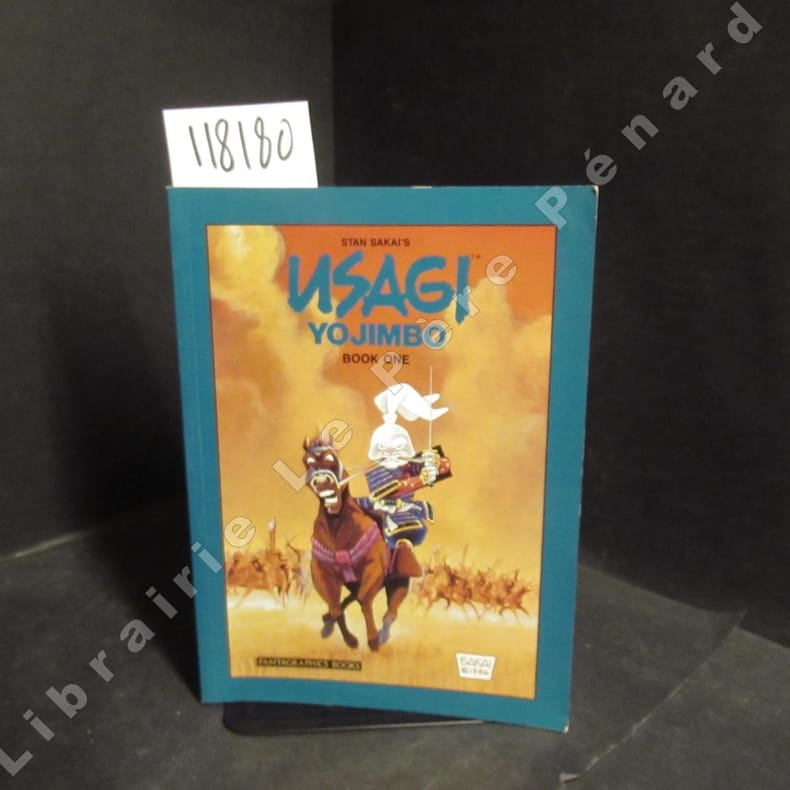
19891181801989 Fantagraphics Books - 1989 - Third edition - In-8, broché couverture illustrée - 114 pages - Nombreuses illustrations (planches) en N&B - Ouvrage en anglais - ISBN : 0-930193-35-0
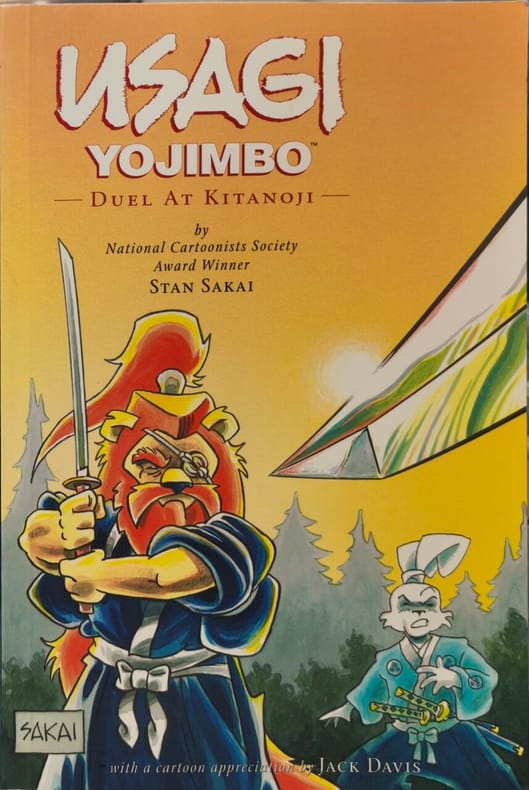
20033222Dark Horse Comics U.S 2003 224 pages 14 986x1 524x22 606cm. 2003. Broché. 224 pages.
SAMURAI
18882110502150413629Min'yu-sha 1888. Soft Cover. Fine. Volume: 1 Min'yu-sha paperback
18822111902160200608Hiro-rei-sha 1882. Soft Cover. Fine. Number of pages: 114 pages Size: 18.5cmx12.5cm Number of books: 1 Hiro-rei-sha paperback
198518986Rutland/Tokyo, Tuttle, (1985). A survey of the material arts of Feudal Japan. Mit sehr zahlreichen Abbildungen nach Zeichnungen. 4°. 483,1 S. OLeinen mit minimal gebrauchtem Schutzumschlag. In gering gebrauchtem Schuber mit montiertem Titelband. Buch sehr schön.