[SAMURAI TALES - MANUSCRIPT].Biblio.com
67 résultats
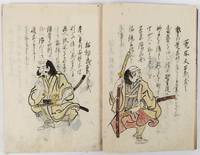
218340Japan. No date. Late Edo. Seven attractive colour manuscript ink and watercolour images 23.5 x 17cm 55 double-folded leaves 4-hole string binding paper title label upper cover. A little occasional worming contents paper on card covers insect damaged particularly on lower cover. This manuscript likely made in the late Edo period is a collection of samurai tales of revenge loyalty and self-sacrifice. The first story features Watanabe Kazuma 渡邊数馬 who avenged his brother Gentaro's death by pursuing and killing Kawai Matagorō. The book includes manuscript colour illustrations of the seven main figures involved in this vendetta—a story widely revered as a testament to loyalty and tenacity often portrayed in stage performances for the public. <br><br>Another account in the collection details Ikeda Tsuneoki also known as Shōnyū and his son who perished in the Battle of Nagakute near Nagoya. . unknown
19952090202118102930Kashiwashobo 1995. Soft Cover. Fine. The book is in fine condition. Kashiwashobo paperback
19932110502151108808Kashiwashobo 1993. Soft Cover. Fine. Number of books: 1 Kashiwashobo paperback
19732090502113715405Not Available 1973. Soft Cover. Fine. The book is in fine condition. Not Available paperback
19262092902140304933Daekoku Hongan-ji Temple 1926. Soft Cover. Fine. Number of books: 1 Daekoku Hongan-ji Temple paperback
18892110502150412978Not Available 1889. Soft Cover. Fine. Number of books: 3 copies Not Available paperback
19152111902160201068Hiyoshi do 1915. Soft Cover. Fine. Volume: 1 Hiyoshi do paperback
19822080202104503633Kashiwashobo 1982. Soft Cover. Fine. Number of books: 4 Kashiwashobo paperback
1330135032.Gpaperback. Good. Access codes and supplements are not guaranteed with used items. May be an ex-library book. paperback
19772090502113702343Not Available 1977. Soft Cover. Fine. The book is in fine condition. Not Available paperback
19322090502126903495Nobara-sha 1932. Soft Cover. Fine. Size: paperback Nobara-sha paperback
18822080302106807364Ryuundo Temple Osaka Prefecture 1882. Soft Cover. Fine. Number of books: 4 Ryuundo Temple, Osaka Prefecture paperback
19672090502113714443Not Available 1967. Soft Cover. Fine. The book is in fine condition. Not Available paperback
18822090502128300069Not Available 1882. Soft Cover. Fine. The book is in fine condition. Not Available paperback
19602090502113716352Not Available 1960. Soft Cover. Fine. The book is in fine condition. Not Available paperback
19602090502113715216Not Available 1960. Soft Cover. Fine. The book is in fine condition. Not Available paperback
18792090502128300510Not Available 1879. Soft Cover. Fine. Number of books: 3 Not Available paperback
19822092902138303423Kashiwashobo 1982. Soft Cover. Fine. Number of pages: 135p Size: 22cm Kashiwashobo paperback
19762110502151101454Not Available 1976. Soft Cover. Fine. Number of books: 1 Not Available paperback
19822091502133901627Kashiwashobo 1982. Soft Cover. Fine. Volume: 1 Kashiwashobo paperback
19832091202133001681Fortress Society 1983. Soft Cover. Fine. Number of books: 1 Fortress Society paperback
19632091502135419403Not Available 1963. Soft Cover. Fine. Number of books: 1 Not Available paperback
49373337like new. unknown
19762092902137302662Nichido Gallery 1976. Soft Cover. Fine. The book is in fine condition. Nichido Gallery paperback
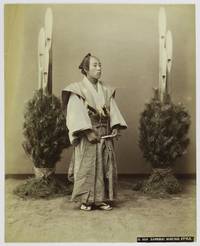
73414Japan ca. 1890. Albumen print 26.5 x 21.2 cm with additional colouring. = A nice large photo captioned B 1159 Samurai Waking Style. This photograph shows a studio portrait of a samurai full-length standing between two potted conifers and bamboo. Samurai were the hereditary military nobility and officer caste of medieval and early-modern Japan from the 12th century to their abolition in the 1870s. They were the well-paid retainers of the daimyo the great feudal landholders. They had high prestige and special privileges such as wearing two swords. They cultivated the bushido codes of martial virtues indifference to pain and unflinching loyalty engaging in many local battles. During the peaceful Edo era 1603 to 1868 they became the stewards and chamberlains of the daimyo estates gaining managerial experience and education. In the 1870s they were 5% of the population. The Meiji Revolution ended their feudal roles and they moved into professional and entrepreneurial roles. Their memory and weaponry remain prominent in Japanese popular culture. Wikipedia. The word waking is peculiar perhaps watching or warding is meant. The same photo framed is according to their website present in the Library of Congress. Weak pencilled annotation on verso. Mildly creased more so towards the margins; print strong. A very attractive item. unknown