24 420 résultats
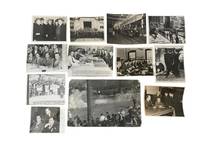
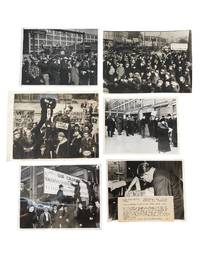
1937234461937. Labor Organization Chrysler strike press photo archive documenting the 1937 sit down strikes and picketing campaigns at Dodge Main and other Chrysler facilities in Detroit and Highland Park Michigan during the decisive phase of industrial unionization in the American automobile industry. The archive records workers occupying plants mass picket mobilizations outside factory gates anti injunction demonstrations and violence connected to the struggle between Chrysler management the United Automobile Workers and competing independent unions. These events unfolded only weeks after the February 1937 settlement of the Flint sit down strike against General Motors which established the UAW as a major industrial union and accelerated organizing efforts across Detroit's auto plants. Chrysler initially resisted recognition obtaining court injunctions ordering workers to evacuate occupied factories while thousands of laborers remained inside the plants or formed flying squadrons to block strikebreakers from entering. The scenes here capture the atmosphere of confrontation in Depression era industrial labor conflict at a time when mass production workers forced some of the largest corporations in the United States to negotiate with organized labor.<br /> <br /> Photo archive of 6 silver gelatin press photographs from 6 x 8 inches to 8 x 10 inches Detroit and Highland Park Michigan 1937. Affixed captions on versos with filing stamps dated March and August 1937. Crowds of striking workers gather outside Dodge Division and Chrysler factory gates beneath signs reading "Dodge Division of Chrysler Corporation Employment Office" and "We Are Here To Stay Dept. 82." Several men hold placards reading "82 is Sittin Too" "Spirit of 1937" and "Fence Jumper" while an effigy labeled "Injunction" hangs over the crowd in open defiance of a court order directing workers to vacate occupied plants. A large calendar board records the passing days of the sit down occupation beginning March 8 1937. Another scene shows relatives and supporters communicating with occupying workers through numbered department cards hung along the perimeter fence after union organizers established an improvised locating system for men inside the plant. One caption identifies "flying squadrons" directing picket activity outside Chrysler headquarters. The latest photograph records Frank A. Dillon identified as president of an independent Chrysler union receiving questioning from Detective Sergeant Harry Scher after an alleged beating connected to union violence that led Chrysler officials to temporarily close a plant pending investigation.<br /> <br /> The Chrysler strike formed part of the larger wave of industrial labor upheaval that reshaped American manufacturing during the New Deal. Passage of the Wagner Act in 1935 legally protected collective bargaining but enforcement depended on workers physically preventing corporations from continuing production with replacement labor. Sit down strikes became one of the most controversial tactics of the era because occupying workers halted machinery while denying employers access to their own factories. The archive preserves not only the mechanics of strike organization but also the public theater of industrial conflict in Depression era Detroit: marching pickets improvised communication systems anti injunction symbolism and massive worker assemblies outside factory gates. Moderate surface wear occasional creasing editorial markings and toning to versos with captions firmly affixed; images remain sharp and highly legible. Overall very good condition. unknown
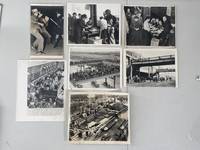
1938234231938. Labor Organizing United Auto Workers and CIO labor photograph archive documenting strike action union leadership and collective bargaining negotiations during the expansion of organized labor in the American automobile industry 1938-1949. The archive traces the period immediately following the 1935 Wagner Act when unions gained federal legal protection for collective bargaining but still faced violent resistance from corporations police departments and municipal governments. Several scenes connect directly to the years surrounding the 1937 Battle of the Overpass in Dearborn when Ford security men beat UAW organizers attempting to distribute union literature outside the River Rouge complex and to the broader wave of sit-down strikes and factory shutdowns that forced General Motors Chrysler and eventually Ford into formal negotiations with the UAW. The captions identify senior labor figures including Walter Reuther R. J. Thomas George Addes and Richard T. Leonard establishing the archive as documentation not merely of rank-and-file unrest but of the institutional consolidation of the UAW-CIO into one of the most powerful industrial unions in the United States. The material also records how labor disputes extended beyond factory gates into courts city halls state legislatures and police jurisdictions revealing the political dimensions of industrial unionism during the New Deal and early Cold War years.<br /> <br /> Photo archive of 12 Large silver gelatin press photographs one large panorama measuring 9.5 x 16.5 inches 11 press photos ranging from 6 x 8 inches to 8 x 10 inches primarily Detroit Dearborn South Gate and Atlantic City circa 1938-1949. A large-format scene dated 1939 records tear gas and street violence during a UAW strike at the Fisher Body plant with clouds of gas spreading across trolley tracks as helmeted police advance toward crowds of fleeing workers and spectators. Another image shows hundreds of demonstrators carrying a massive American flag through downtown Detroit toward City Hall during protests following clashes between union pickets and police at Federal Screw Works; the verso caption notes approximately forty injuries and references accusations of "police brutality" raised before city council. Additional photographs show UAW-CIO officials seated at conference tables negotiating contracts and appearing in municipal hearing rooms beneath desk microphones and courthouse lighting. Captions identify figures including Walter Reuther George Addes and R. J. Thomas while a 1940 Dearborn caption records the arrest of union leaders for distributing handbills asserting workers' rights under the National Labor Relations Act. South Gate strike scenes outside a General Motors facility show workers carrying placards demanding a thirty percent wage increase while Rev. Louis R. Loe conducts prayer services along the picket line. Convention and leadership photographs from Atlantic City and Washington document labor leaders gathered under the authority of Samuel Gompers and later CIO leadership structures linking local strike activity to national labor organization.<br /> <br /> The archive illustrates the transformation of the automobile industry from one of the nation's most violently anti-union industrial sectors into the center of postwar collective bargaining power. Ford Motor Company resisted union recognition longer than General Motors or Chrysler relying on private security forces local police cooperation labor espionage and anti-handbill ordinances to suppress organizing inside and outside its plants. Several captions directly reference these legal confrontations including arrests tied to leaflet distribution and disputes over municipal authority to restrict labor organizing in public space. By the late 1940s many of the same figures shown here were negotiating contracts that established wage standards pensions grievance procedures and health benefits that reshaped industrial employment across the United States. Creasing edge wear scattered minor losses adhesive residue and newsroom markings to versos; images remain clear and intact overall. Overall good condition. unknown
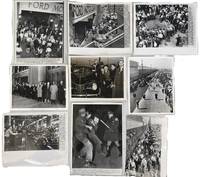
1941234341941. Labor Organizing Ford River Rouge plant labor photo archive documenting the struggle over union recognition strike enforcement and industrial bargaining at Ford Motor Company between 1941 and 1953. River Rouge was Ford's massive Dearborn complex where raw materials blast furnaces rail lines ships assembly shops and tens of thousands of workers were concentrated at one site. Ford resisted the United Auto Workers longer than General Motors and Chrysler and the 1941 strike forced the company into an NLRB-supervised vote that led to UAW representation at Rouge. The later 1949 strike over speed-up conditions demonstrates the continued role of the union in protecting workers from unreasonable production paces giving bargaining authority and strengthening worker control inside the plant.<br /> <br /> Photo archive of 7 Large silver gelatin press photographs measuring between 7 x 8 and 8 x 10 inches Dearborn and Detroit Michigan 1941-1953. Workers stream across elevated pedestrian bridges into the Rouge gates crowd plant entrances receive ballots under the supervision of officials and a Michigan State Police officer and stand in picket lines outside Ford buildings. A Black worker charges toward a picket while a state policeman advances with club raised with the Acme caption identifying the incident as "Vengeance at River Rouge" on April 4 1941. Other captions identify Sunday dinner served to pickets on April 6 1941; thousands returning to work after settlement of the UAW-CIO strike on April 14 1941; workers voting in the NLRB election on May 21 1941; pickets entertained from a truck during the May 1949 walkout; and Ford's River Rouge plant in 1953 described by the Ford News Department as employing more than 60000 and able to turn raw materials into a finished car in 28 hours.<br /> <br /> The archive records both the scale of River Rouge and the mechanics of labor conflict: police interference union voting picketing crowds and shop workers moving between strike and production. It connects the 1941 recognition fight to the postwar UAW's continuing battles over working conditions at one of the most closely watched industrial sites in the United States. Creasing handling wear surface marks and caption wear; images remain intact and legible. Overall in good condition. unknown
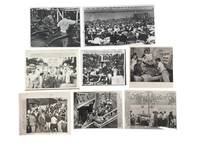
1941234311941. Labor Organizing Ford River Rouge plant press photographs documenting labor conflict picketing and union organization at the largest industrial complex in the United States from the early UAW recognition battles of 1941 through the major Ford walkouts of 1949 and 1967. The River Rouge plant in Dearborn employed tens of thousands of workers and was the center of Ford's anti-union resistance during the rise of the Congress of Industrial Organizations CIO. Ford Motor Company remained the last major Detroit automaker to recognize the United Auto Workers after General Motors and Chrysler signed contracts following the 1936-1937 sit-down strikes. Several scenes here connect directly to the April 1941 strike that finally forced Ford to negotiate with the UAW after years of union busting and company sanctioned violence against organizers. Later scenes document the 1949 strike involving roughly 65000 workers and the 1967 Rouge walkout documenting three decades of union activity in the American auto labor history.<br /> <br /> Photo archive of 9 black-and-white press photographs silver gelatin prints ranging from 7 x 9" to 8 x 11" Dearborn and Detroit Michigan 1941-1967. Photographs show UAW members at Rouge plant gates carrying placards reading "Ford Is On Strike" while reporters and cameramen surround circular picket formations outside the factory entrances. One scene records women from the Women's Auxiliary of UAW Local 600 marching in orderly formation with American flags during an April 1941 demonstration outside the Rouge complex. Another captures a state policeman advancing with baton raised as two men recoil during violence near a plant gate; the attached caption identifies one figure as an unidentified Black man striking a UAW picket captain. Additional scenes show workers waiting in line for pay envelopes during the strike men gathered outside plant entrances under heavy guard and a largely idle assembly floor where a lone foreman sits beside silent production lines after tens of thousands of workers walked out. Typed press captions affixed to versos on image margins including references to the May 1949 strike and September 1967 Rouge picketing.<br /> <br /> The Ford strikes were some of the most consequential labor battles in twentieth-century American industry. Ford's Service Department under Harry Bennett built an extensive anti-union apparatus that used labor spies intimidation and physical violence against organizers culminating in nationally publicized confrontations such as the 1937 "Battle of the Overpass." The April 1941 strike represented the decisive collapse of Ford's resistance to industrial unionism and secured UAW recognition at the Rouge plant fundamentally changing labor relations in the American automobile industry. These scenes preserve not only the mechanics of organized strike action but also the scale of industrial labor mobilization in midcentury Detroit where mass demonstrations were central in the struggle between organized labor and corporate management. Light creasing scattered surface wear and minor handling marks consistent with newsroom use; captions and editorial markings largely intact and legible. Overall good to very good condition. unknown
1961234081961. Labor Organizing United Auto Workers strike and labor photographs documenting national contract disputes factory shutdowns collective bargaining and picket line action across the American auto industry during the 1960s and 1970s. The group records major UAW conflicts involving General Motors Ford and Chrysler including the 1961 General Motors bargaining deadline the 1967 Ford strike in Los Angeles and the 1973 Chrysler contract dispute led by Leonard Woodcock and Douglas Fraser. These conflicts grew from fights over wages speedup compulsory overtime pensions medical coverage retirement eligibility and plant safety inside the nation's largest manufacturing sector. By the early 1970s the UAW represented more than one million workers and could halt production across dozens of plants through coordinated bargaining local picketing convention mobilization and public demonstrations.<br /> <br /> Photo archive of 8 Large silver gelatin press photographs one large panorama measuring approximately 8 x 14 inches and the remaining ranging from 8 x 8.5 to 8 x 10 inches primarily Detroit and Los Angeles 1961-1973. Workers paint strike placards inside a Local 15 UAW-CIO shop space with slogans including "Improve Working Conditions" "Free Paid Medical and Insurance" and "Stop Speed Up." Leonard Woodcock and Douglas Fraser march beside white-collar Chrysler employees carrying a sign reading "30 and Out No Age Limit." Ford workers gather beneath the "Ford Motor Co." sign at the Los Angeles assembly plant while signs reading "UAW on Strike for Justice" and "UAW Local 148" rise above the crowd. At Ford's Rouge plant hundreds of UAW members picket outside the entrance after a contract settlement while the attached caption notes that the plant employed roughly 33000 workers and that pickets remained after the "lonely guard" opened the gate. Factory interiors show chassis assembly lines rear axle installation and suspension components while a crowded convention hall displays banners reading "Get America Back to Work" and "Improve Working Conditions."<br /> <br /> The group demonstrates the UAW operations in the labor strife of the 60s and 70s: national officers negotiated with automakers local members prepared signs and walked gates convention delegates debated priorities and production workers controlled the pace of automobile output by withholding labor. Kennedy publicly intervened during the 1961 GM dispute to prevent a shutdown of the auto industry while the 1973 Chrysler negotiations centered on retirement working conditions and contract protections during a decade of inflation and labor unrest. Creasing edge wear scattered minor losses and occasional handling wear; captions editorial markings stamps and verso annotations retained throughout; images overall intact and clear. Overall in good condition. unknown
RO80218484Codes Rousseau. Non daté. In-12. Broché. Bon état, Couv. convenable, Dos satisfaisant, Intérieur frais. 272 pages augmentées de nombreuses illustrations en couleurs dans et hors texte.Tampon encreur et ex-libris en page de titre à l'encre.. . . . Classification Dewey : 372.8-Livre scolaire : autres matières
Hardcover, 304 pages, ENG, 430 x 290 x 30 mm, in very good condition !! Full Page Coloured Photographs, Very Large Size !. ISBN 9783865214119. Mikael Jansson photographs Formula 1: cars, drivers, mechanics, race tracks, pit lanes, and spectators. But behind the colorful surface, the glistening bodywork, the noisy engines and the smell of burning rubber lies a fundamental concern with the power of the image -- both in terms of photographic technique and in regard to meaning within contemporary culture. How to depict speed, how to show the impact of logos and of car manufacturers without succumbing to the rules of the commercial game? Jansson's images are both grainy and perfectly focused. Speed of Life is revealed in everything from the passing car, the reflections on the visor of a driver's helmet, from the break dust of the opening lap to the rubber particles from deteriorating tires at the end of the race. These still photographs brim with movement and action; in their very stasis they show the potency of speed. His images have motorsport as their theme but they abstract it to become fundamental for understanding the tempo of our present culture.
44795, Delius Klasing, 2011 Hardcover, 2. Auflage 112 Seiten, 121 Farbfotos, 56 S/W Fotos, 11 farbige Abbildungen, Format 21,6 x 24,8 cm, gebunden, Fine copy. Including an index. ISBN 9783768826013.
Hardcover, 2. Auflage 112 Seiten, 121 Farbfotos, 56 S/W Fotos, 11 farbige Abbildungen, Format 21,6 x 24,8 cm, gebunden, Fine copy. Including an index. ISBN 9783768826013. Bewegte Zeiten diese Buchreihe widmet sich den Fahrzeugen, mit denen sich Deutschland in der zweiten Halfte des 20. Jahrhunderts motorisierte, und dem besonderen Charme dieser Epoche. Der zwolfte Band prasentiert die legendare ?Ente? des franzosischen Herstellers Citroen.<br>Zwischen 1959 und 1992 wurden in Deutschland mehr als 250 000 Exemplare dieses unverwechselbaren Automobils verkauft, weltweit waren es insgesamt etwa 3,8 Millionen. Das hochbeinige, robuste Fahrzeug (in Frankreich seit 1948 auf dem Markt) mit dem knappen Herstellerkurzel 2CV verfugte bis 1970 uber ganze 16 PS, am Ende waren es 29. ?Weniger ist mehr? schien uberhaupt die zentrale Aussage dieses Autos zu sein. Sein spartanischer Charme begeisterte frankophile Individualisten ebenso wie die konsumkritischen Jungakademiker. Eines allerdings hatte der 2CV im Uberfluss: Federungskomfort. Und um an warmen Tagen mit aufgerolltem Verdeck und hoch geklappten Fenstern weit nach aussen geneigt durch Kurven zu schwingen und jede Oberklassenlimousine spiessig aussehen zu lassen ? dafur war der Entenmotor jederzeit stark genug?<br>Die ?Ente? war fur viele ihrer Fans weniger Fahrzeug als Lebenseinstellung. Sie war ein Statement fur Lebensfreude statt Leistungsdruck, fur Geschmack statt Protzerei. Ihr grosser Erfolg hierzulande beruhte deshalb unter anderem auf einem ganz und gar untechnischen Aspekt: Sie bot die Moglichkeit, mit sehr begrenzten Mitteln Stil zu zeigen.
44825, Delius Klasing, 2007 Hardcover, 1. Auflage, 160 Seiten, 79 Farbfotos, 22 S/W Fotos, 10 farbige Abbildungen, Format 17,8 x 24,9 cm, gebunden, Fine copy. Including an index. ISBN 9783768819862.
Hardcover, 1. Auflage, 160 Seiten, 79 Farbfotos, 22 S/W Fotos, 10 farbige Abbildungen, Format 17,8 x 24,9 cm, gebunden, Fine copy. Including an index. ISBN 9783768819862. Die franzosische Automobilmarke Citroen hat fur die Entwicklung des modernen Autos eine grosse Bedeutung. Mehrfach losten die Fahrzeuge mit dem Doppelwinkel auf dem Kuhler wichtige Evolutionsschritte im Fahrzeug-bau aus. Dabei verband sich die technische Innovation haufig mit einem Schuss Extravaganz in der gestalterischen Umsetzung: Citroen, das war immer auch die Marke fur Individualisten mit Freude am personlichen Stil.<br>Besonders einpragsam waren dabei die seit nunmehr 53 Jahren produzierten Oberklasse-Pkw mit ihrer umfangreichen Hydraulik, vom 6H uber DS, SM, CX und XM bis zum heutigen C6. Besonders innovativ zeigten sich die Mittelklassewagen, vom GS/GSA uber die Modellreihen BX und Xantia bis hin zum aktuellen C5. Fuhrend in den Verkaufszahlen aber waren stets die uberaus popularen Kleinwagen, vom minimalistischen 2CV (der legendaren ?Ente?) und dessen Derivaten (insgesamt rund 9 Millionen Einheiten) uber Visa und AX bis zum aktuellen Trio C1, C2 und C3.<br>Dieses Buch stellt alle Serien-Automobile von Citroen seit 1950 mit ihren technischen Daten und den erreichten Produktionszahlen vor. Dazu gehoren auch die sehr erfolgreichen leichten Transporter von der Kastenente bis zum modernen Evergreen Berlingo.
196667159BBLondon:, Paul, 1966. 8°. 175 S., Illustrationen und sw-Abbildungen, Pappband (Schutzumschlag mit leichten Randläsuren und leicht angebräunt; sonst gut erhalten)
1962141979Schwabenverlag. Stuttgart. (Ohne Jahr. Um 1962). 162 Seiten. Illustrierter Original-Leinwand-Einband. (Gebrauchsspuren). 16x12 cn
Hardcover,240 pages. Illustrated. 260x210 mm . ISBN 9783899556872. The thinking man??™s sports car: a symbol of the relentless desire for peak power and limitless performance, the Porsche 911 inspires a worldwide ripple effect. When Ferdinand Porsche could not find a sportscar he liked, he decided to build one himself. The rest is history. Jerry Seinfeld collects Porsches, Steve McQueen loved the car. Since its launch, the 911 has built a reputation for itself as ???the thinking man??™s sportscar???. It is not just a car but a cultural icon with a fanbase spanning young to old, east to west, rich and poor.
1900VERK0898Leipzig: Bureau des "Praktischen Maschinen-Construkteur" 1900. 4°. 314 Seiten. Mit 279 Abb. im Text. HLdrBd. mit Rückengoldpräg., Kanten berieben, gebräunt, ausgesch. Bibl.-Expl. Im Ganzen gut erhalten, keine Eintragungen oder Anstreichungen
1896VERK0895Leipzig: Bureau des "Praktischen Maschinen-Construkteur" 1896. 4°. VIII, 314 Seiten. Mit 264 Abb. im Text. HLdrBd. mit Rückengoldpräg., Kanten berieben, gebräunt, ausgesch. Bibl.-Expl. Im Ganzen gut erhalten, keine Eintragungen oder Anstreichungen Sach- und Namenregister vorangebunden. Beiliegend das Heft 1 des Jahrgangs 1888.
1898VERK0896Leipzig: Bureau des "Praktischen Maschinen-Construkteur" 1898. 4°. 312 Seiten. Mit 221 Abb. im Text. HLdrBd. mit Rückengoldpräg., Kanten berieben, gebräunt, ausgesch. Bibl.-Expl. Im Ganzen gut erhalten, keine Eintragungen oder Anstreichungen
1899VERK0897Leipzig: Bureau des "Praktischen Maschinen-Construkteur" 1899. 4°. VIII, 312 Seiten. Mit 260 Abb. im Text. HLdrBd. mit Rückengoldpräg., Kanten berieben, gebräunt, ausgesch. Bibl.-Expl. Im Ganzen gut erhalten, keine Eintragungen oder Anstreichungen Sach- und Namenregister vorangebunden.
42999Duisburg : Gruppe C Motorsport Verlag 2019. 271 Seiten ; 32 cm, 1800 g Festeinband, gebundene Ausgabe, Exemplar in gutem Erhaltungszustand
199945436Augsburg, Weltbild Verlag, 1999.
4798Paris charpentier libraire-éditeur 1855 - 2 volumes in12 reliés demi chagrin rouge dos à nerfs titre frapé 432 et 440 pages - ex libris
45436München: Polyglott, 2023. 281, IV S. Ill. 8°. 1. Aufl. Ill. orig. engl. Broschur.
1969121665Louis uberti 1969 239 pages in8. 1969. Broché. 239 pages.
1969R100065391Chez l'auteur. 1969. In-8. Broché. Etat d'usage, Coins frottés, Dos plié, Papier jauni. 239 pages.. . . . Classification Dewey : 629.2-Automobile
brossura La biomeccanica del colpo di frusta è uno degli argomenti più controversi del lavoro di un tecnico ricostruttore poiché è complesso quantificare in modo rigoroso le accelerazioni a carico degli occupanti di un veicolo tamponato. L'obbiettivo di questo vandecum è di descrivere la fenomenologia medica del colpo di frusta ma di spiegare come, nei tamponamenti a bassa velocità, l'entità dei danni ai veicoli non sia un indicatore affidabile della velocità relativa con cui gli stessi sono arrivati all'urto.