11 347 résultats
1527759881.Gpaperback. Good. Access codes and supplements are not guaranteed with used items. May be an ex-library book. paperback
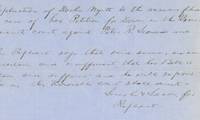
18533514603/11/1853. <blockquote><p>The case is well known and illustrates Lincoln’s penchant for aiding women who had been unjustly treated</p></blockquote><blockquote><p>""Said answers are untrue uncertain and insufficient that her Bill is true certain and sufficient and he Lincoln will so prove it to be""</p><p> </p></blockquote><p>During his 25-year legal career in Illinois Abraham Lincoln was involved in a substantial number of cases involving women as litigants. He was known for seeking to represent women and working to get justice for them in an era when women’s cases were often shunned by lawyers or not taken seriously.</p><p>Lincoln handled some 147 divorce cases about 40% of all divorce cases in his home county of Sangamon. Importantly more than half of the litigants he represented were women. He handled these cases with ""tender consideration"" learning from experience that the law could be a dangerous place for women who had few rights under the legal doctrines of the time. Lincoln also represented women in cases involving land disputes and in slander lawsuits which often involved accusations of adultery and were important for maintaining a woman's community reputation.</p><p>Lincoln was known for taking cases for women where he felt justice was on his client's side. Notable examples include: Nance Legins-Costley - In 1841 Lincoln successfully represented this African American woman to prevent her from being sold into slavery arguing that slavery was illegal in Illinois; Melissa Goings - He defended Mrs. Goings an elderly woman charged with her abusive husband's murder in a case based on self-defense; Doshia Wyatt - In 1853 Lincoln took on the case of Mrs. Wyatt a widow whose claim was that she was being cheated out of her inheritance.</p><p>A petition for dower is a legal request filed by a surviving spouse typically a widow to claim a portion of their deceased spouse's estate such as in real property based on common law dower rights. This is a formal process that requires the surviving spouse to file a petition in court describing the property and naming the heir or person with the next immediate estate of inheritance. The court then holds a hearing to determine the rights to dower and the property.</p><p>Doshia Wyatt widow of Robert Wyatt retained Lincoln and sued for her dower. Thomas Wyatt died in 1847 and left all of his property to his son Robert. Robert Wyatt lost part of the land the Mill Farm to satisfy a judgment against him in the U.S. District Court of Illinois. Robert Wyatt sold another property the Prue Farm to George Brewner. After Robert Wyatt's death in 1852 Doshia Wyatt sued Leonard and Brewner's heirs. Leonard contested the petition claiming that he did not believe Doshia and Robert Wyatt had been legally married. Leonard also claimed that Robert Wyatt had already left Doshia Wyatt land in his will which Leonard claimed was recorded.</p><p>Hearing the case was Judge David Davis a friend of Lincoln whom as President he would appoint to the U.S. Supreme Court. Ward Hill Lamon Lincoln’s co-attorney on the case began his professional association with Lincoln in 1852 when they became law partners. Though they had different styles they remained close personal and professional friends. After the partnership dissolved in 1857 their friendship continued and Lamon would later become Lincoln's bodyguard and U.S. Marshal for the District of Columbia during Lincoln's presidency. As the bodyguard Lamon was not in Washington on the night of Lincoln’s assassination being on assignment in Richmond at Lincoln’s request. In his Recollections of Abraham Lincoln Lamon reveals that before he left for Richmond he implored the President not to ""go out at night after he was gone particularly to the theatre.""</p><p>This document relates to the case of Doshia Wyatt. In a petition to the Court filed by Lincoln Wyatt stated her case: “Your petitioner would further represent to your honor that she your petitioner is the widow of the said Robert Wyatt — that she has never relinquished her dower to the said aforesaid land or any part thereof - nor has her dower ever been set off - or assigned her in said premises - that said Robert Wyatt on or about the 28th of July AD 1852 departed this life leaving her the said Doshia widow as aforesaid…Your petitioner would further pray that this honorable court appoints commissioners to assign her dower in & to all of the above described tracts or parcels of land according to the statue in such cases made and approved. And your petitioner would pray for such & gather relief as may be according to equity and good conscience and as in duly abound your petitioner will ever pray.â€</p><p>This is a pleading in Lincoln’s hand which contains the answer of Wyatt to the defendants’ responses to her allegations. <strong>Autograph document signed</strong> Vermillion County Illinois Circuit Court November 3 1853. <em>“The replication response of Doshia Wyatt to the defendants’ answers filed in the case for her Petition for Dower in the Vermillion Circuit Court against Peter R. Leonard and others. This repliant respondent says that said answers are untrue uncertain and insufficient that her Bill is true certain and sufficient and he Lincoln will so prove it to be as this Honorable Court shall direct. Lincoln & Lamon for Repliant respondent.â€</em> On the verso Lincoln has docketed the document <em>“Dosha Wyatt vs Peter R. Leonard Replication.â€</em> The clerk of court Samuel Craig then notes that the plea was filed on November 3 1853.</p><p>An uncommon document in Lincoln’s hand concerning his representation of women. As for the case the parties likely reached a settlement as Wyatt ended up dismissing the case while Leonard paid the costs.</p><p><img class=""alignnone wp-image-25018 size-post-window"" src=""https://cdn.raabcollection.com/wp-content/uploads/20231204144051/Folder-site-11-1600x1327.jpg"" alt="""" width=""1600"" height=""1327"" /></p> unknown
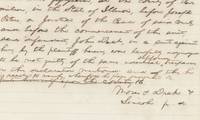
18573563230/10/1857. <p>John V. Drake and John C. Moses practiced law in Danville Illinois. They worked on cases appearing before the Vermilion County Circuit Court. When Abraham Lincoln had a case appearing in that court he would sometimes affiliate himself with Drake and Moses. Lincoln was before that court in October and November 1857.</p><p>Hezekiah Ballah sued John Deck and Zachariah Deck in a case heard in the Vermilion County Circuit Court. This was an action of trespass for castrating seventeen buck sheep and cutting up eight other ewes wethers and lambs. The Decks retained Lincoln who worked together with Drake and Moses in the case in October 1857. The Decks pleaded not guilty. Moreover John Deck also pleaded that he had been acquitted of the charge in Justice of the Peace court. The jury found the Decks not guilty. Hearing the case was Judge David Davis who Lincoln would one day name to the U.S. Supreme Court.</p><p><strong>Autograph document signed</strong> a draft pleading completely in Lincoln’s hand Vermilion County Circuit Court October 1857 being the pleading informing the Court that Deck had previously been acquitted of the same offense. The name of the case was John Deck impleaded with Zachariah Deck ads vs Hezekiah Ballah and it was filed In Trespass. <em>“And the said defendant John Deck comes and defends the force and injury…and says plaintiff actio non fails to act when there is a duty to act because he defendant says he is not guilty in manner and form as is in the declaration alleged; and of this he puts himself upon the country etc. citizens in a court or jury. Moses & Drake & Lincoln p.d.â€</em></p><p>Lincoln adds below: <em>“And for further plea in this behalf defendant John Deck says plaintiff actio non because he says that heretofore to wit on the __ day of __ in the year of our Lord one thousand eight hundred and fifty seven at the county of Vermillion in the state of Illinois before Joseph Peters a Justice of the Peace of said county and before commencement of this suit said defendant John Deck in a suit against him by the plaintiff herein was lawfully judged to be not guilty of the same identical supposed trespass in this declaration mentioned and this he is ready to verify therefore he prays judgment etc. Moses & Drake & Lincoln p.d.â€</em> The case is listed at lawofficeofabrahamlincoln.org.</p><p>An interesting pleading where Lincoln’s client has already been acquitted of the same offense.</p><p><img class=""alignnone wp-image-25018 size-post-window"" src=""https://cdn.raabcollection.com/wp-content/uploads/20231204144051/Folder-site-11-1600x1327.jpg"" alt="""" width=""1600"" height=""1327"" /></p> unknown
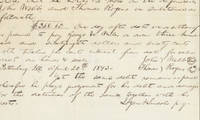
18433570010/1843. <blockquote><p>Miles who was also a prominent Whig politico and part of Lincoln’s political circle used Lincoln’s legal services a number of times</p></blockquote><p>Abraham Lincoln and Stephen T. Logan formed a prominent Illinois law partnership called Logan & Lincoln from 1841 to 1844 during which Logan an experienced attorney mentored Lincoln and introduced him to complex areas of the law. During his partnership with Logan Lincoln also increased his caseload before the Illinois Supreme Court and handled appeals from all areas of the state. Logan and Lincoln handled many cases together not merely at their Springfield office but around the state. This ls because Lincoln had a circuit law practice that involved riding the Eighth Judicial Circuit in Illinois covering 14-15 counties including Menard County on horseback or buggy. Logan remained in Springfield while Lincoln traveled the Circuit. As a general practitioner Lincoln handled diverse cases including property disputes debts torts. slander and criminal law. The Logan & Lincoln partnership ended amicably in 1844 after which Lincoln partnered with William H. Herndon who was a clerk in the Logan & Lincoln law office and whose father had been a Lincoln friend for many years.</p><p>George U. Miles was Herndon’s father-in-law. He came to Illinois in 1816 at age 20 settling first in St. Clair County and then in White County where he married Jane McCoy on November 18 1821. They had three children. Miles removed to Logan County and then in 1836 he went to Sangamon County where he lived on a farm six miles north of Springfield. In 1839 he moved to Petersburg in Menard County where he served as public administrator from 1845 to 1849. Miles was a Whig and a Menard County delegate to conventions that chose Whig candidates. Miles and Lincoln knew each other as neighbors and fellow Whigs and also because of Miles’ family relationship to Lincoln’s friend and partner Herndon. In early 1843 Lincoln sought a nomination for Congress and hoped for Miles’ political support.</p><p>Miles used Lincoln as an attorney a number of times both before and after Herndon became Lincoln’s partner. In late 1843 Miles retained Logan & Lincoln and sued John Webb and Thomas Rogers to collect a $368.60 debt on a promissory note.</p><p><strong>Autograph document signed</strong> all in Lincoln’s hand Menard County Illinois October-November 1843 being a petition in the county court in which Miles asks for judgment for a debt. <em>“George U. Miles plaintiff states that he holds a note on the defendants John Webb and Thomas Rogers in substance as followeth: ‘$368.60. One day after date we or either of us promise to pay George U. Miles or order three hundred and sixty eight dollars and sixty cents with twelve percent interest from date for value received. Our hands & seals: John Webb and Thomas Rogers Petersburg Ill. April 20th 1843.’ Yet the same debt remains unpaid wherefore he prays judgment for his debt and damages for the detention of the same together with his costs. Logan & Lincoln.â€</em></p><p>Lincoln won the case. The defendants were found to have defaulted and the court awarded Miles $392.67 counting costs. The case was decided November 1 1843. It is listed at lawofficeofabrahamlincoln.org.</p><p>After Lincoln’s assassination Miles acted as one of Herndon's key investigators. Miles famously interviewed individuals including Ann Rutledge’s aunt to gather information about Lincoln's early life and relationships serving as a vital source for Herndon's research. Herndon would write a famous biography of Lincoln in the 1880s.</p><p><img class=""alignnone wp-image-25018 size-post-window"" src=""https://cdn.raabcollection.com/wp-content/uploads/20231204144051/Folder-site-11-1600x1327.jpg"" alt="""" width=""1600"" height=""1327"" /></p> unknown
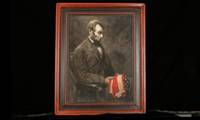
257151/1/88. <p><strong>Print of Abraham Lincoln</strong> well framed approximately 2 ft by 3 ft color commemorating the fallen president's work in saving the nation at the expense of his life.</p><p><img class=""alignnone wp-image-25018 size-post-window"" src=""https://cdn.raabcollection.com/wp-content/uploads/20231204144051/Folder-site-11-1600x1327.jpg"" alt="""" width=""1600"" height=""1327"" /></p> unknown
152770761X.Gpaperback. Good. Access codes and supplements are not guaranteed with used items. May be an ex-library book. paperback
0265741637.Ghardcover. Good. Access codes and supplements are not guaranteed with used items. May be an ex-library book. hardcover
M6-609yz5The Library of America. hardcover. New. 9x6x1. The Library of America hardcover
75-0580Brookville OH: Calligrafree 1974. Book. 4to. Soft Cover. 24 pp. Very Good.Mostly black and white platesContent includes Bookplates: The Art of Illumination today and more. Brookville, OH: Calligrafree, 1974 paperback
1904833New York: Andersen Auction Company 1904. <p>Together two pamphlets. 8vo. 230 x 155 mm. 9 x 6 inches. 33 pp.; 37 pp. Original toned printed wrappers; some light soiling to wrappers corners chipped otherwise good copies. </p><br /> <p>These copy with a presentation bookplate inside the back wrapper pasted-in by the New England Historic Genealogical Society citing the catalogue as a gift from Anderson Auction Galleries; with numerous ownership stamps in blind of the NEHGS. With a printed Bid Sheets and envelope. </p><br /> <p>Together 750 lots devoted to President Lincoln early life political campaigns presidency and administration and the Confederacy. A special section is devoted to Lincoln and the suspension of the Habeas Corpus Act. Many lots of printed ephemera and pamphlets. 833</p>. Andersen Auction Company unknown
0265757983.Ghardcover. Good. Access codes and supplements are not guaranteed with used items. May be an ex-library book. hardcover
1333674260.Gpaperback. Good. Access codes and supplements are not guaranteed with used items. May be an ex-library book. paperback
B9781016606059Hardback. New. hardcover
0260655503.Ghardcover. Good. Access codes and supplements are not guaranteed with used items. May be an ex-library book. hardcover
B9781019524701Hardback. New. hardcover
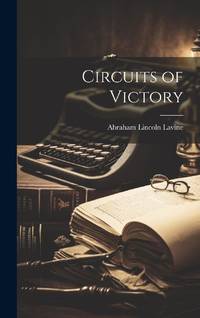
ria9781019524701_inpHardcover. New. New Book; Fast Shipping from UK; Not signed; Not First Edition; A memoir of a soldier's experiences in the American Civil War with a focus on the battles and campaigns of Abraham Lincoln. The author Abraham Lincoln Lavine was a Union soldier who fought with distinction in many of the key battles hardcover
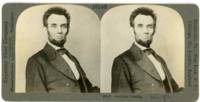
1865136231865. Lincoln Abraham. Late Civil War portrait of Abraham Lincoln derived from a February 1865 photograph taken during the final months of the American Civil War. The image records Lincoln near the conclusion of the conflict that preserved the Union and ended legal slavery in the United States. Created shortly before his assassination in April 1865 the portrait captures a visibly worn president whose appearance reflected the physical and political strain of leading the nation through four years of war. The photograph was long attributed to Mathew Brady but was actually taken by government photographer Lewis Emory Walker and issued commercially through the New York photographic publishers E. & H. T. Anthony. The portrait belongs to a group of late images that document Lincoln's appearance in the closing weeks of the war.<br /> <br /> Stereoview photograph published by Keystone View Company reproducing the 1865 Walker portrait of Abraham Lincoln. Keystone stereograph number 92. The mount bears the Keystone biographical text about Lincoln on the verso together with the company's copyright notice. A handwritten pencil notation on the reverse references the earlier attribution of the photograph to Mathew Brady. The portrait shows Lincoln with closely cut hair a style that contemporary accounts suggested was recommended by his barber in preparation for the creation of a life mask by sculptor Clark Mills.<br /> <br /> Photographic portraits of Lincoln produced during the final months of the Civil War became some of the most widely circulated visual representations of the president after his assassination in April 1865. Images such as this stereographic reproduction contributed to the creation of Lincoln's public memory in the late nineteenth century when photographic publishers issued stereographs and other prints that allowed Americans to view notable figures through emerging visual media. Stereographs played an important role in popular visual culture during this period offering audiences three dimensional photographic views through stereoscopic viewers and distributing portraits of political leaders to a wide national audience. Light wear consistent with age and handling. Overall condition good to very good. unknown
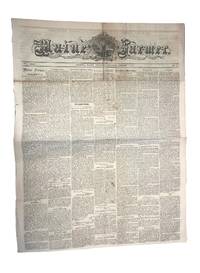
1863182911863. Maine Farmer. January 8 1863 prints the full text of Abraham Lincoln's Emancipation Proclamation within one week of its issuance providing contemporaneous evidence of how federal emancipation policy was circulated to the Northern public during the Civil War. Published just days after January 1 1863 the issue situates emancipation alongside ongoing war reporting integrating the declaration of freedom for enslaved people in Confederate states into the broader military and political narrative of the Union war effort. Introduced under the subheading "The following is the text of the President emancipating the slaves in the rebellious states" the proclamation asserts federal authority through wartime powers declaring that "all persons held as slaves within said designated States and parts of States are and henceforward shall be free" and further authorizes the enlistment of Black men into the armed forces. The proximity of this text to battlefield reports and personal correspondence underscores the immediacy with which emancipation entered public discourse as both military strategy and social transformation.<br /> <br /> Maine Farmer. Vol. not stated. Maine January 8 1863. 4 pages. Newspaper format. The Emancipation Proclamation appears in full on the second page accompanied by additional Civil War coverage including reports of troop movements battle outcomes and casualties. On the same page a letter from a Union soldier of the 16th Maine Regiment written at the Battle of Fredericksburg reads in part: "Dear Father I write you while lying on the battlefield wounded perhaps fatally. Tell mother I think of her while lying here and wish I had her to be with me in my last parting moments." An editorial note explains that the letter was written in pencil on the battlefield the paper "tinged with blood" and that the soldier died the following day linking the proclamation directly to the lived experience of wartime sacrifice.<br /> <br /> Issued at a turning point in the Civil War the publication captures the intersection of emancipation policy military necessity and public communication in the Union states. The inclusion of both the proclamation and firsthand testimony from the battlefield demonstrates how questions of slavery citizenship and national survival were experienced simultaneously at the level of policy and individual life. Newspapers such as this served as primary vehicles through which federal decisions reached civilian audiences shaping understanding of the war's aims and consequences. Small edge tears and light foxing present not affecting text. Overall very good. unknown
0266197868.Ghardcover. Good. Access codes and supplements are not guaranteed with used items. May be an ex-library book. hardcover
0265955777.Ghardcover. Good. Access codes and supplements are not guaranteed with used items. May be an ex-library book. hardcover
0265467160.Ghardcover. Good. Access codes and supplements are not guaranteed with used items. May be an ex-library book. hardcover
0266404286.Ghardcover. Good. Access codes and supplements are not guaranteed with used items. May be an ex-library book. hardcover
0332997014.Ghardcover. Good. Access codes and supplements are not guaranteed with used items. May be an ex-library book. hardcover
0365881333.Gpaperback. Good. Access codes and supplements are not guaranteed with used items. May be an ex-library book. paperback
036631887X.Ghardcover. Good. Access codes and supplements are not guaranteed with used items. May be an ex-library book. hardcover