576 résultats
18690010756First Limited Edition: D. Appleton & Co. 1869. New Edition. Hardcover. Very Good. 8vo; iv 830 pages contemporary half calf marbled boards scuffed <br/><br/> Also Lincoln's Message to the third session of the 37th Congress December 1 1862. Also the Inaugural Address of Jefferson Davis on entering upon his duties as President of the Confederate States. With a large fold-out "Railway Map of the Southern States" to accompany the report of the Military Operations during 1862. With much more. D. Appleton & Co. hardcover
1864M13597New York: Derby & Miller 1864. 1864. Volume II. 8vo. xxxi 1 711 1 pp. Subtle waterstain at top margin viewable from pages 500-712. Original full dark blue-green pebbled cloth gilt spine titles; light wear to extremities. Bookplate of the Essex Institute; small rubber stamp on title C.W. Post College Documents Library. The Emancipation Proclamation declared freedom for all slaves by January 1 1863. This proclamation is dated January 2 1863. Lincoln in writing this one of the most important documents in all US history declared "And by virtue of the power and fpr the purpose aforesaid I do order and declare that all persons held as slaves within said designated States and parts of the States are and henceforward shall be free; and that the Executive government of the United States including the military and naval authorities thereof will recognize and maintain the freedom of said persons." / The War Orders of 1863 are among the most historical during the Civil War. The volume includes: General Orders No.1: Emancipation Proclamation Liberty for Slaves. / General Orders No.100: The Lieber Code How soldiers should conduct ethically themselves in wartime. / General Orders No. 143: Order for the creation of the United States Colored Troops. / General Orders No.1. President Abraham Lincoln issued the Emancipation Proclamation on January 1 1863. With this Executive Order. He took a decisive stand on the most contentious issue in American history redefined the Union's goals and strategy and sounded the death knell for slavery. / Lincoln had always believed slavery to be immoral and fought its expansion. The President took the action "sincerely believed to be an act of justice" knowing that it might cost him the election. / With the Emancipation Proclamation Lincoln dramatically tied the Union's war aims to ending slavery. Whether they approved or not after January 1 1863 Americans could no longer deny that emancipation was central to the Union war effort. / Though ready to lay the groundwork for emancipation Lincoln feared that delivering the Proclamation at the wrong time would doom its chances for public acceptance and harm the Union cause. / On September 22 1862 Lincoln issued his preliminary Emancipation Proclamation giving the South 100 days to end the rebellion or face losing their slaves. / His final Proclamation on January 1 1863 further demonstrated his own evolving views by eliminating earlier references to colonizing freed blacks and compensating slave-owners for voluntary emancipation. Lincoln also added provisions for black military enlistment. Pausing before he signed the final Proclamation Lincoln reportedly said: "I NEVER IN MY LIFE FELT MORE CERTAIN THAT I WAS DOING RIGHT THAN I DO IN SIGNING THIS PAPER." Despite the political risks by 1864 he insisted on both reunion and emancipation as preconditions to any peace negotiation. Though the battle for civil rights would have to follow Lincoln rightly regarded the Proclamation as: "THE CENTRAL ACT OF MY ADMINISTRATION AND THE GREAT EVENT OF THE 19TH CENTURY" Derby & Miller, 1864. hardcover books
1864WB163441864. Hardcover. Very Good. Rare broadside tipped into a copy of The Early Life of Abraham Lincoln: Containing many unpublished documents and unpublished reminiscences of Lincoln's early friends. TARBELL Ida M. Assisted by James McCann Davis. Published by McClure New York 1896. The broadside printed in two columns presents the platforms of the Republicans who in June in Baltimore nominated Lincoln and the Democrats who in August in Chicago nominated McClellan. <br/><br/> hardcover books
188938654Boston: Roberts Brothers 1889. Early edition. 8vo pp. 536 plus advertisements. Index. Marbled paper 3/4 brown cloth. Flyleaves missing owner's bookplate on pastedown. Stained in places cover somewhat worn but VG. See Bitting page 288. Roberts Brothers unknown books
186424901.02<p>"<i>with the same determination to divide the country unless they can secure universal abolition we are exposed to the same dangers every day and God only knows in what unlucky hour our ruin may be consummated. Compare his policy with McClellan's expression of readiness to receive any State when its people offer to submit to the Union.</i>"</p><p>This Democratic Party campaign pamphlet quotes an April 1864 letter to argue that Lincoln gave Lieutenant General Ulysses S. Grant free rein to conduct the war after having interfered with and micromanaged McClellan's Peninsula Campaign in 1862. The publication also declared that Republicans were stained with "<i>The Taint of Disunion</i>" and quoted from Republican speeches and editorials to insist that the Democrats were the party of "<i>UNION AND PEACE</i>."</p> <b>ABRAHAM LINCOLN.</b>Printed Document. Democrat Campaign "<i>Document No. 12</i>" with headings "<i>Lincoln's Treatment of Gen. Grant</i>" "<i>Mr. Lincoln's Treatment of Gen. McClellan</i>" and "<i>The Taint of Disunion</i>." New York 1864. 8 pp. 5¾ x 8â… in.<p><b><br /></b></p><p><b>Excerpts:</b></p><p>Lincoln to Grant April 30 1864</p><p>"<i>I wish to express in this way my entire satisfaction with what you have done up to this time so far as I understand it. The particulars of your plans I neither know nor seek to know. You are vigilant and self-reliant; and pleased with this I wish not to obtrude any restrains or constraints upon you while I am very anxious that any real disaster or capture of our men in great numbers be avoided.</i>" p1/c1</p><p>"<i>Such in brief are some of the most notable instances in which Mr. Lincoln interfered with General McClellan when he occupied a position similar to that held by General Grant. They reflect so severely upon the President that no attempt to gloss them over by his apparent subsequent repentance can disabuse the patriotic portion of the nation of the matured conviction that he is to be held responsible for the lack of decisive victories in Eastern Virginia. The blame must and will rest upon him to whom it belongs.</i>" p5/c2</p><p>"<i>Having shown by copious extracts from the speeches of Abraham Lincoln W. H. Seward Wendell Phillips Wm. Lloyd Garrison and from the editorial writings of the Chicago Tribune and the N. Y. Tribune… that they were all <b>original secessionists and disunion men</b> we propose now to give the evidence that Mr. Lincoln himself has within the last three months been concerned in a movement to make peace with Jeff. Davis on terms involving the direct proposal to divide the Union and let the South go.</i>" p7/c2-p8/c1</p><p>"<i>with the same determination to divide the country unless they can secure universal abolition we are exposed to the same dangers every day and God only knows in what unlucky hour our ruin may be consummated. Mark how Mr. Lincoln constantly keeps up the idea of negotiating only with Jefferson Davis. Why does he never address himself to the people or the States of the South. Compare his policy with McClellan's expression of readiness to receive any State when its people offer to submit to the Union.</i>" p8/c2</p><p><b>Historical Background</b></p><p>The 1864 presidential election pitted President Lincoln against his Democratic challenger General George B. McClellan. Although McClellan had been the commander of the Army of the Potomac and general-in-chief of the Union Army the Peace platform adopted by the Democratic National Convention in Chicago declared the war a failure. The party was bitterly divided between War Democrats who favored continuing the war to restore the Union while leaving slavery alone; moderate Peace Democrats who favored an armistice and a negotiated peace that would likely protect slavery in a reconstructed union and radical Peace Democrats who favored an immediate end to the war without securing Union victory. McClellan was a War Democrat but the platform was written by radical Peace Democrat Clement Vallandigham and Peace Democrat George H. Pendleton was nominated for vice president.</p><p>In 1864 Republicans created the National Union Party to attract War Democrats Unconditional Unionists and Unionist Party members who would not vote for the Republican Party though most state Republican parties did not change their name. President Abraham Lincoln won the nomination of the "National Union Party" at its Baltimore convention and won re-election with new running mate War Democrat Andrew Johnson.</p><p>Although Lincoln was convinced by August 1864 that he would not be reelected General William T. Sherman's capture of Atlanta in early September and General Philip Sheridan's successes in the Shenandoah Valley of Virginia from August to October ensured his victory. Without the participation of the seceded states Lincoln and Johnson won 55 percent of the popular vote and an overwhelming 212-to-21 victory in the Electoral College. McClellan and Pendleton carried only Kentucky Delaware and McClellan's home state of New Jersey.</p>
186424901.02<p>"<i>with the same determination to divide the country unless they can secure universal abolition we are exposed to the same dangers every day and God only knows in what unlucky hour our ruin may be consummated. Compare his policy with McClellan's expression of readiness to receive any State when its people offer to submit to the Union.</i>"</p><p>This Democratic Party campaign pamphlet quotes an April 1864 letter to argue that Lincoln gave Lieutenant General Ulysses S. Grant free rein to conduct the war after having interfered with and micromanaged McClellan's Peninsula Campaign in 1862. The publication also declared that Republicans were stained with "<i>The Taint of Disunion</i>" and quoted from Republican speeches and editorials to insist that the Democrats were the party of "<i>UNION AND PEACE</i>."</p> <b>ABRAHAM LINCOLN.</b>Printed Document. Democrat Campaign "<i>Document No. 12</i>" with headings "<i>Lincoln's Treatment of Gen. Grant</i>" "<i>Mr. Lincoln's Treatment of Gen. McClellan</i>" and "<i>The Taint of Disunion</i>." New York 1864. 8 pp. 5¾ x 8â… in.<p><b><br /></b></p><p><b>Excerpts:</b></p><p>Lincoln to Grant April 30 1864</p><p>"<i>I wish to express in this way my entire satisfaction with what you have done up to this time so far as I understand it. The particulars of your plans I neither know nor seek to know. You are vigilant and self-reliant; and pleased with this I wish not to obtrude any restrains or constraints upon you while I am very anxious that any real disaster or capture of our men in great numbers be avoided.</i>" p1/c1</p><p>"<i>Such in brief are some of the most notable instances in which Mr. Lincoln interfered with General McClellan when he occupied a position similar to that held by General Grant. They reflect so severely upon the President that no attempt to gloss them over by his apparent subsequent repentance can disabuse the patriotic portion of the nation of the matured conviction that he is to be held responsible for the lack of decisive victories in Eastern Virginia. The blame must and will rest upon him to whom it belongs.</i>" p5/c2</p><p>"<i>Having shown by copious extracts from the speeches of Abraham Lincoln W. H. Seward Wendell Phillips Wm. Lloyd Garrison and from the editorial writings of the Chicago Tribune and the N. Y. Tribune… that they were all <b>original secessionists and disunion men</b> we propose now to give the evidence that Mr. Lincoln himself has within the last three months been concerned in a movement to make peace with Jeff. Davis on terms involving the direct proposal to divide the Union and let the South go.</i>" p7/c2-p8/c1</p><p>"<i>with the same determination to divide the country unless they can secure universal abolition we are exposed to the same dangers every day and God only knows in what unlucky hour our ruin may be consummated. Mark how Mr. Lincoln constantly keeps up the idea of negotiating only with Jefferson Davis. Why does he never address himself to the people or the States of the South. Compare his policy with McClellan's expression of readiness to receive any State when its people offer to submit to the Union.</i>" p8/c2</p><p><b>Historical Background</b></p><p>The 1864 presidential election pitted President Lincoln against his Democratic challenger General George B. McClellan. Although McClellan had been the commander of the Army of the Potomac and general-in-chief of the Union Army the Peace platform adopted by the Democratic National Convention in Chicago declared the war a failure. The party was bitterly divided between War Democrats who favored continuing the war to restore the Union while leaving slavery alone; moderate Peace Democrats who favored an armistice and a negotiated peace that would likely protect slavery in a reconstructed union and radical Peace Democrats who favored an immediate end to the war without securing Union victory. McClellan was a War Democrat but the platform was written by radical Peace Democrat Clement Vallandigham and Peace Democrat George H. Pendleton was nominated for vice president.</p><p>In 1864 Republicans created the National Union Party to attract War Democrats Unconditional Unionists and Unionist Party members who would not vote for the Republican Party though most state Republican parties did not change their name. President Abraham Lincoln won the nomination of the "National Union Party" at its Baltimore convention and won re-election with new running mate War Democrat Andrew Johnson.</p><p>Although Lincoln was convinced by August 1864 that he would not be reelected General William T. Sherman's capture of Atlanta in early September and General Philip Sheridan's successes in the Shenandoah Valley of Virginia from August to October ensured his victory. Without the participation of the seceded states Lincoln and Johnson won 55 percent of the popular vote and an overwhelming 212-to-21 victory in the Electoral College. McClellan and Pendleton carried only Kentucky Delaware and McClellan's home state of New Jersey.</p> books
187329274Washington: Polkinhorn 1873. 3" x 5 3/4" mounted on the top margin of the blank verso on old card stock. Light wear Good or so. Polkinhorn unknown
187329274Washington: Polkinhorn 1873. 3" x 5 3/4" mounted on the top margin of the blank verso on old card stock. Light wear Good or so. Polkinhorn unknown books
1812mon0000000132Lincoln OEM 1/1/2018 12:00:00 AM. paperback. Like New. in x in x in. A Represenative Photo May Be Used Actual Photos Available Upon Request Read The Description For Actual Items Included. Comes With Owners Manual Quick Start Guide With Case. Lincoln OEM paperback
1812mon0000001910Lincoln OEM 1/1/2018 12:00:00 AM. paperback. Like New. in x in x in. A Represenative Photo May Be Used Actual Photos Available Upon Request Read The Description For Actual Items Included. Comes With Owners Manual Quick Start Guide Warranty Guide With Case. Lincoln OEM paperback
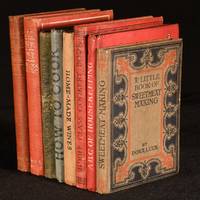
1900966H4London; Edinburgh: Henry J. Drane; Dean & Son Limited; Macmillan and Co. Limited; W. Foulsham & Co. Ltd.; Sands & Company; Nicholson & Sons c1900-1955 . Cloth. Very Good. 6" by 4". None. A very scarce eight-volume collection of characterful early 20th-century British domestic guides offering practical and economical instruction on cookery and housekeeping. In the publisher's original cloth bindings.This is a lovely eight-volume collection of vintage British household guides offering practical advice in cookery housekeeping and everyday thrift.This collection consists of the following: How to Cook for Myself and Family c.1900 by "An Experienced Cook". This copy is undated. Dated here using Jisc from copies held at the University of Leeds Library and Senate House Library University of London. This is a pragmatic cookbook aimed at modest households needing economical self-sufficient meals. The A B C of Housekeeping: or Mistress and Maid c.1904 by Mrs. J. N. Bell. This copy is undated. Dated here using Jisc from a copy held at the University of Cambridge Libraries. This is a vanishingly scarce Victorian manual offering moral and practical guidance on managing a home and domestic staff. Middle Class Cookery Book 1906. Compiled for The Manchester School of Domestic Economy. This is an instructional text blending economy and nutrition created for teaching domestic skills to middle-class women. 365 Cakes and Cookies: A Cake or Cooky for Every Day in the Year c.1906 This copy is undated. Dated here using Jisc from copies held at the University of Cambridge Libraries and the National Library of Scotland. Compiled from recipes by Marion Harland Mrs. Lincoln et al. This is a lovely compilation of daily baking recipes drawn from prominent 19th and early 20th century sources. 365 Supper Dishes: A Supper Dish for Every Day in the Year c.1908. This copy is undated. Dated here using Jisc from copies held at the University of Cambridge Libraries and the National Library of Scotland. This is a practical family-oriented recipe book offering a different supper suggestion for every day of the year. A Little Book of Sweetmeat Making 1908 by Dora Luck. This is a concise and charming guide to making traditional British sweets confections and holiday treats at home. Vegetarian Cookery 1926 by E. L. B. Forster. This copy is undated. Dated here using Jisc from copies held at the British Library and other institutions. This is a novel vegetarian cookbook from the postwar era offering wholesome and simple meat-free meals. Home-Made Wines: How to Make Them 1955 by Mary Woodman. This is an accessible introduction to British home winemaking with recipes for fruit flower and root-based wines. In the publisher's original cloth bindings. Externally generally smart. The odd handling mark to boards with the odd spot of damp staining. Particularly to "Everybody's Vegetarian" with damp staining to the perimeters of boards and the spine spine cockled. Slight soiling to boards particularly "365 Cakes". Front board of "Home-Made Wines" cockled rear board faded. Slight rubbing and bumping to extremities. Spines slightly faded particularly to "365 cakes". Bookplate from "Martin & Pamela Finch: Exlibris Gastronomique" to front free endpapers and to front paste downs of "Sweetmeat Making" and "A B C of Housekeeping". Offsetting to endpapers with the odd spot. Damp staining to perimeter of endpapers of "Everybody's Vegetarian". Previous owner's ink inscription to front free endpapers on all but "Middle Class Cookery" and "Vegetarian Cookery". Ink inscription to rear free endpaper of "How to Cook for Myself" with offsetting to rear endpaper. Blue pencil scribbles to endpapers of "365 Cakes". Hinges occasionally strained but firm. Internally generally firmly bound. Pages bright and generally clean if slightly age toned. The odd spot and handling mark heavier to fore edge and first and last few leaves. Very Good Henry J. Drane; Dean & Son, Limited; Macmillan and Co., Limited; W. Foulsham & Co., Ltd.; Sands & Company; Nicholson & Sons hardcover
18521905080529xbvkPhiladelphia, Schäfer & Konradi, 1852. Stahlstich-Frontispizportrait '[George] Washington', XVIII, 400 Seiten mit der Chronologie zu Beginn und den Tabellen am Ende, 12 Präsidentenportraits in Holzstich (Xylographie: John Adams; Thomas Jefferson; James Madison; James Monroe; John Quincy Adams; Andrew Jackson; Martin van Buren; William Henry Harrison; John Tyler; James K. Polk; Zacharias Taylor und Millard Fillmore) auf Tafeln; 1 mehrfach gefaltete grenzkolorierte gestochene geographische Karte 'Vereinigte Staaten von Nord-Amerika und Mexico, 1850 (Entw. u. gez. v. Major Radefeld)' am Ende des Buches. - Brauner ornamental blindgeprägter Original-Leineneinband mit dekorativer Rückenvergoldung und goldgeprägtem Rückentitel; 8vo.(ca. 18,5 x 11 x 3 cm).
1876288065London: Wesleyvan Confrence Office 1876 Black/Gilt Designed Covers. Spine Wear Chip Top.All Gilt Fore Edges. Pencil Notes Owners Name And Bookplate. Index To Verses. 254 Pgs. 12mo - over 6¾ - 7¾" tall. Owner's Name. 1st Edition. Full-Leather. Good. Wesleyvan Confrence Office hardcover
186230007.01<p>On the front page under <i>"News from the North" </i>is the text of Abraham Lincoln's reply to <i>New York Tribune</i>editor Horace Greeley. Greeley's letter urging Lincoln to emancipate all slaves in Union-held territory was known as "The Prayer of Twenty Millions." It was first published on August 20 1862. Lincoln responded on August 22 declaring that his paramount goal is to save the Union regardless of its effect on slavery as well as his personal views that all men should be free.</p> <b>ABRAHAM LINCOLN.</b>Newspaper. <i>Richmond Whig</i> Richmond Va. August 30 1862. 2 pp. 17 x 24 in.<p><b><br /></b></p><p><b>Excerpt:</b></p><p><i>"…As to the policy I 'seem to be pursuing' as you say I have not meant to leave any one in doubt. </i></p><p><i> I would save the Union. I would save it the shortest way under the Constitution. The sooner the national authority can be restored the nearer the Union will be 'the Union as it was.' If there be those who would not save the Union unless they could at the same time </i>save<i> slavery I do not agree with them. If there be those who would not save the Union unless they could at the same time </i>destroy<i> slavery I do not agree with them—My paramount object in this struggle </i>is <i>to save the Union and is </i>not<i> either to save or to destroy slavery. If I could save the Union without freeing </i>any<i> slave I would do it and if I could save it by freeing </i>all<i>the slaves I would do it; and if I could save it by freeing some and leaving others alone I would also do that.—What I do about slavery and the colored race I do because I believe it helps to save this Union and what I forbear I forbear because I do not believe it would help to save the Union. I shall do </i>less<i> whenever I shall believe what I am doing hurts the cause and I shall do </i>more<i>whenever I shall believe doing more will help the cause. I shall try to correct errors when shown to be errors; and I shall adopt new views so fast as they shall appear to be true views. </i></p><p><i> I have here stated my purpose according to my view of </i>official<i> duty; and I intend no modification of my oft-expressed </i>personal<i> wish that all men every where could be free." </i></p><p><b>Historical Background</b></p><p>Though this letter is often as proof that Lincoln did not intend to abolish slavery unknown to Greeley and most Americans Lincoln had already drafted the preliminary Emancipation Proclamation and was only waiting for a Union military victory to deliver it. Moreover Lincoln makes a "divide and conquer" rhetorical move: he splits the issue by stating that his constitutional duty as president is to keep the Union together while simultaneously expressing his personal view of universal freedom at the end.</p><p>Additional content in this issue includes a front page editorial <i>"European Recognition" "The Indian Atrocities in Minnesota" "Yankee Finances" "An Order From Gen. Burnside" "The Peninsular Campaign—Gen. </i><b><i>J. Bankhead </i></b><i>Magruder's Official Report"</i> which takes over two columns with considerable detail.<br /><br />The back page has additional content with: <i>"A Brilliant Cavalry Exploit" "The Impressment of Slaves In Georgia" "Outrages in Arkansas" "From Kentucky"</i> and more. Additionally there are various reports from the <i>"Confederate Congress"</i> and numerous advertisements including a <i>"$100 Reward"</i> for a runaway slave.</p><p>The <i>Richmond Whig</i> is one of the less common—but still important—newspapers from the capital of the Confederacy.</p><p>In <i>Four Years in Rebel Capitals: An Inside View of Life in the Southern Confederacy from Birth to Death</i> journalist T. C. DeLeon wrote that the <i>Richmond</i> <i>Whig</i>was among the South's best wartime newspapers. Their pages "recorded the real and true history of public opinion during the war. In their columns is to be found the only really correct and indicative 'map of busy life its fluctuations and its vast concerns' in the South during her days of darkness and of trial."</p><p>One of the more interesting episodes in the history of the <i>Whig</i> is its alleged involvement in a terror plot against New York City during the Civil War. The <i>Whig</i>was reputed to have worked with the Confederate government to use advertisements and editorials to convey secret messages to Southern sympathizers in the North. In October 1864 the <i>Whig</i> was alleged to have run an editorial that signaled Southern supporters to embark on a terror campaign that called for widespread fires to be set in New York city and federal offices to be taken over and the capture of the city's military commander Maj. Gen. John Adams Dix.</p><p><b>Condition</b></p><p>Good. Never bound several folds with minor wear at the folds.</p> books
186322448.01New York N.Y. 1863. No binding. Fine. New York Journal of Commerce. Newspaper. New York Journal of Commerce. New York N.Y. January 3 1863. 4 pp. 24 x 32 1/2 in. An early report of the Emancipation Proclamation where the editors describe Lincoln's bold move as ""a farce coming in after a long tragedy.Most of the people regard it as a very foolish piece of business."" Historical BackgroundThe Emancipation Proclamation was the single most important act of Lincoln's presidency. Its text reveals the major themes of the Civil War: the importance of slavery to the war effort on both sides; the courting of border states; Lincoln's hopes that the rebellious states could somehow be convinced to reenter the Union; the role of black soldiers; Constitutional and popular constraints on emancipation; the place of African Americans in the United States and America's place in a worldwide movement toward the abolition of slavery. In sounding the death knell for slavery and the ""Slave power"" the President took a decisive stand on the most contentious issue in American history and the United States joined other western nations in embracing a future of free labor.In addition to the moral impact of this ""sincerely believed.act of justice"" the Proclamation aided the Union cause tangibly and decisively. Because it focused on territory still held by the Confederacy only small numbers of slaves compared to the total slave population were immediately freed. However the Proclamation deprived the South of essential labor by giving all slaves a reason to escape to Union lines. Failing that it freed slaves immediately upon the Union Army's occupation of Confederate territory. The Proclamation also encouraged the enlistment of black soldiers who made a crucial contribution to the Union war effort. Moreover England and France who had already abolished slavery were restrained from supporting the Confederacy which would have been in their own economic interests. Lincoln summed up the Proclamation's importance in 1864: ""no human power can subdue this rebellion without using the Emancipation lever as I have done.""Nonetheless the editors of the Journal of Commerce disagreed and their opinion reflects the truly controversial nature of the act for many contemporary Americans.
186322448.01New York N.Y. 1863. No binding. Fine. New York Journal of Commerce. Newspaper. New York Journal of Commerce. New York N.Y. January 3 1863. 4 pp. 24 x 32 1/2 in. An early report of the Emancipation Proclamation where the editors describe Lincoln's bold move as ""a farce coming in after a long tragedy.Most of the people regard it as a very foolish piece of business."" Historical BackgroundThe Emancipation Proclamation was the single most important act of Lincoln's presidency. Its text reveals the major themes of the Civil War: the importance of slavery to the war effort on both sides; the courting of border states; Lincoln's hopes that the rebellious states could somehow be convinced to reenter the Union; the role of black soldiers; Constitutional and popular constraints on emancipation; the place of African Americans in the United States and America's place in a worldwide movement toward the abolition of slavery. In sounding the death knell for slavery and the ""Slave power"" the President took a decisive stand on the most contentious issue in American history and the United States joined other western nations in embracing a future of free labor.In addition to the moral impact of this ""sincerely believed.act of justice"" the Proclamation aided the Union cause tangibly and decisively. Because it focused on territory still held by the Confederacy only small numbers of slaves compared to the total slave population were immediately freed. However the Proclamation deprived the South of essential labor by giving all slaves a reason to escape to Union lines. Failing that it freed slaves immediately upon the Union Army's occupation of Confederate territory. The Proclamation also encouraged the enlistment of black soldiers who made a crucial contribution to the Union war effort. Moreover England and France who had already abolished slavery were restrained from supporting the Confederacy which would have been in their own economic interests. Lincoln summed up the Proclamation's importance in 1864: ""no human power can subdue this rebellion without using the Emancipation lever as I have done.""Nonetheless the editors of the Journal of Commerce disagreed and their opinion reflects the truly controversial nature of the act for many contemporary Americans. books
187727595Providence RI: Reid 1877. 8vo pp. 51. Paper wraps. Cover little chipped and torn o/w VG. Reid unknown books
1802000000000005365Philadelphia: Robert Johnson 1802. First Edition . Half-Leather. Very Good. 12mo - over 6¾" - 7¾" tall. Marbled boards leather spine thin ribbed. 34-95pdep This is the personal copy of Levi Lincoln his name on tp with W. Lincoln on tp at top Winslow was the grandson of Levi From the estate of Levi Lincoln See Howes U.S. Iana 6163 This book was published while Lincoln was attorney General He lambasted the Federalists for politeizing the Clergy Scarce <br/> <br/> Robert Johnson hardcover
1865236784Boston: Printed by Order of the City Council 1865. 1 vols. 8vo. Original pebbled bevelled cloth. Fine. 1 vols. 8vo. Includes speeches by Mayor of Boston Lincoln Senator Charles Sumner the eulogy Charles G. Loring A.H. Rice and Richard Henry Dana Jr pp. 56-61. BAL 4465 Printed by Order of the City Council unknown
1865236784Boston: Printed by Order of the City Council 1865. 1 vols. 8vo. Original pebbled bevelled cloth. Fine. 1 vols. 8vo. Includes speeches by Mayor of Boston Lincoln Senator Charles Sumner the eulogy Charles G. Loring A.H. Rice and Richard Henry Dana Jr pp. 56-61. BAL 4465 Printed by Order of the City Council unknown books
1801100-01498THE PENN PUBLISHING 1918-01-01. Hardcover. Good. Good condition with wear and markings. THE PENN PUBLISHING hardcover
186549673Troy N. Y.: A. W. Scribner Book and Job Printer Cannon Place 1865. 1st Printing Monaghan 802. Original printed self-wrappers stiched. Now housed in an archival mylar sleeve. Bit of age-toning & soiling to outer leaves overall VG. 47 1 blank pp. 8vo. 9" x 5-3/4" <br/><br/>"If it be that the South is avenged in his death she will find it to be a vengance that will recoil upon her own head; for in him she has lost her best friend and however little we could afford to spare him she could afford it less still." <br /> <br />One of the many such sermons that were published shortly after the tragic event of April 15th 1865; this particular one uncommon in the trade with RBH showing a 1945 Goodspeed catalogue as their most recent appearance. A. W. Scribner, Book and Job Printer, Cannon Place unknown books
18043684Printed by Ann Rivington 1804. Sm. 8vo. First Edition; sewed as issued disbound a very fresh crisp clean copy. VERY SCARCE. Printed by Ann Rivington, unknown
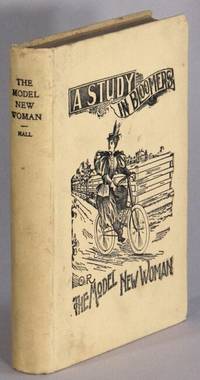
1895058165Chcago / Philadelphia / Stockton: American Bible House 1895. First Edition . Beige Cloth. Very Good/No DJ. B/ W Plates. 272 Pp. Beige Cloth Stamped In Black. Covers Dusty Spine Darkened Light Fraying At Top And Bottom Of Spine And At Tips Hinges Tight Endpapers Clean No Names Or Marks Or Tears. <br/> <br/> American Bible House hardcover
189569770Chicago Philadelphia Stockton: American Bible House 1895. First edition 12mo pp. 3-272; frontispiece and 34 illustrations; original pictorial cream cloth stamped in black; very good copy. Subjects discussed include dress reform equal suffrage prohibition tobacco-smoking moderate drinking co-education race relations divorce bimetalism and others. Wright III 2401. American Bible House unknown