Caplan, LincolnBiblio.com
11 347 résultats
1997G0870784099I4N00Twentieth Century Foundation 1997. Paperback. Very Good. May have limited writing in cover pages. Pages are unmarked. ~ ThriftBooks: Read More Spend Less.Dust jacket quality is not guaranteed. Twentieth Century Foundation paperback
0870784099.Gpaperback. Good. Access codes and supplements are not guaranteed with used items. May be an ex-library book. paperback
1977263135.Ghardcover. Good. Access codes and supplements are not guaranteed with used items. May be an ex-library book. hardcover
22953showing him head and shoulders 4¼" x 2½" no place no date unknown
0365496944.Gpaperback. Good. Access codes and supplements are not guaranteed with used items. May be an ex-library book. paperback
0365496952.Ghardcover. Good. Access codes and supplements are not guaranteed with used items. May be an ex-library book. hardcover
139067178X.Gpaperback. Good. Access codes and supplements are not guaranteed with used items. May be an ex-library book. paperback
1391840259.Ghardcover. Good. Access codes and supplements are not guaranteed with used items. May be an ex-library book. hardcover
8531613949.Gpaperback. Good. Access codes and supplements are not guaranteed with used items. May be an ex-library book. paperback
1258264617.Gpaperback. Good. Access codes and supplements are not guaranteed with used items. May be an ex-library book. paperback
195343521Washington DC: United States Geological Survey/USGS/Government Printing Office/GPO 1953. Hardcover. Very good plus. Professional Paper 247 is 228 pages and 248 is 462 pages. All the required plates and maps in the papers are present. The required forty-five folded maps and plates are present either in the two pockets or bound in. Library binding in the olive green cloth with lettering in gilt. Ex-library with call number at the base of the spine. Removal of label from the front cover. No library pockets labels stamps writing or markings were ever present. A very good plus copy. <br/> <br/> United States Geological Survey/USGS/Government Printing Office/GPO hardcover
186424898<p>"<i>As a MAN OF THE PEOPLE understanding them and trusted by them he has proved himself the man for the time.</i>"</p> <b>ABRAHAM LINCOLN. HENRY CHARLES LEA.</b>Printed Pamphlet. <i>No. 17: Abraham Lincoln</i> March 1864. 12 pp. 5¾ x 8¾ in.<p><b><br /></b></p><p><b>Excerpts:</b></p><p>"<i>What will be the place assigned by history to Abraham Lincoln</i>" p3</p><p>"<i>Few of us can forget the feelings of doubt and distrust with which we regarded his advent to the Presidential chair. That his native energy had elevated him from a youth of poverty and labor was reassuring and yet the narrow sphere in which his life had mostly been passed seemed to deprive him of the opportunities of familiarity with the great principles and details of statesmanship requisite for the perilous contingencies of the future.</i>" p3-4</p><p>"<i>Thus with doubt confusion and demoralization around him with no landmarks in the past to serve as a guide for the present or as a precedent for the future did Mr. Lincoln undertake the awful responsibilities of his high position. Thus relying on himself and on the people he boldly set to work to restore the Republic.</i>" p5</p><p>"<i>The country was saved so soon as the people recognized in their President a man who believed that he could save it and who honestly intended to do so. Had Abraham Lincoln done no more than this he would have merited a place between Washington and Jackson. It is a great thing to lift a nation to the highest level of its duties and responsibilities and few men to whom in the world's history the opportunity has been vouchsafed have accomplished the task so thoroughly.</i>" p6</p><p>"<i>And now the momentous question arises before the American people—to whose hands shall be confided the delicate trust of restoring the Union of our fathers</i>" p7</p><p>"<i>The great duty to which Mr. Lincoln has dedicated himself with rare singleness of purpose is the one thought which engrosses every true American heart—the re-establishment of the Union on a permanent basis.</i>" p7</p><p>"<i>The results of the war during the last twelve-month have not shown that the Proclamation was a mistake in military policy.</i>" p9</p><p>"<i>When Mr. Lincoln recommended the plan of compensated emancipation which was adopted by Congress he showed that he recognized fully how great an element of future strife lay in the institution of slavery and how beneficial to the whole country its abolition would be. Moderate in all his opinions he wanted a gradual not a violent change and long after his Emancipation Proclamation was issued he provoked the wrath of the radical emancipationists in Missouri by lending what aid he constitutionally could to the 'conservatives' in that State who desired that the extinction of slavery should be brought about gradually. Possibly in this Mr. Lincoln was mistaken yet if so the error arose from the desire which he has constantly manifested to harmonize the conflicting interests of the country even at the expense of temporary popularity.</i>" p9-10</p><p>"<i>The wisest statesman does not disdain to profit by experience nor can the head of a popular government adopt measures of fundamental change before the people are ripe for them. It is probable that Mr. Lincoln learned much as the war wore on; at all events the people did.</i>" p10</p><p>"<i>There are many who have richly earned the gratitude of the people for eminent services rendered to the Republic in the hour of her trials. There is no one who has so signally centered upon himself the confidence of all. There have been mistakes of detail in military naval and financial matters—mistakes inseparable from the sudden transition from profound and prolonged peace to civil war upon the largest scale. Yet in the general policy of the administration in its principles of statesmanship there have been few errors save those arising from a too generous disbelief in the sincerity of Southern madness.</i>" p11</p><p>"<i>Had Mr. Lincoln moved faster than he has done he would have left the people behind him and lost the support without which no popular government can conduct an exhausting war.</i>" p11</p><p>"<i>As a MAN OF THE PEOPLE understanding them and trusted by them he has proved himself the man for the time.</i>" p12</p><p>"<i>no one can be named who unites like Abraham Lincoln the kindliness and firmness the skill and experience the native sagacity and honesty to bring about an harmonious settlement and to extort from repentant rebels the implicit confidence which those high qualities have won from all loyal men.</i>" p12</p><p><b>Historical Background</b></p><p>The Union League Club of Philadelphia formed in 1862 as a patriotic society to support the Union and the policies of the Lincoln administration. The members of this private club represented the Philadelphia region's elite in business education and religion.</p><p>On April 15 1864 Lea met with Lincoln in Washington and three days later he wrote to Lincoln including two pamphlets he had recently written for the Union League Club including this one. He informed Lincoln "To prevent misconstruction perhaps I should add that I am a man of independent position with nothing to ask at your hands except the preservation of our institutions."<br /></p><p><b>Henry Charles Lea</b> 1825-1909 was born in Philadelphia and received a classical education from a private tutor. He showed particular promise in natural history. He joined his father in the publishing business in 1843 but had a nervous breakdown in 1847. While recuperating he read medieval French history and decided to become a historian rather than a scientist. Over the next fifty years Lea produced ten books and numerous articles on medieval institutional legal and ecclesiastical history. During the Civil War Lea was a member of the Union League of Philadelphia and led its Board of Publication. In that role he wrote many of the League's published pamphlets including this one. From 1863 to 1865 he served as a Bounty Commissioner and aided the provost marshal in recruiting soldiers including African Americans.</p> books
186424899<p>"<i>The will of the people is supreme.</i>"</p><p>"<i>The vital principle of</i> Lincoln's <i>whole administration has been his recognition of the fact that our Government is simply a machine for carrying into effect THE WILL OF THE PEOPLE.</i>"</p> <b>ABRAHAM LINCOLN. HENRY CHARLES LEA.</b>Printed Pamphlet. <i>No. 18: The Will of the People</i> January – April 1864. 8 pp. 5½ x 8½ in.<p><b><br /></b></p><p><b>Excerpts:</b></p><p>"<i>It has been generally assumed that the acts of the President have been the exponents of his own individual convictions. Democrats have censured him for converting the 'war against disunion' into a 'war against slavery.' Radical Republicans have been equally prone to condemn him as a half-hearted Abolitionist who required perpetual stimulation to perform his duty and who is not to be trusted because he did not immediately on his inauguration carry out the views which he had previously expressed of opposition to slavery.</i></p><p>"<i>Both parties seem to have forgotten that our form of government is as purely democratic as can be reduced to a practical system. Our whole political machinery is devised for the purpose of allowing the people to regulate the national policy. The will of the people is supreme.</i>" p3</p><p>"<i>For twenty years prior to his election he had on all fitting occasions expressed his disapprobation of slavery and his desire that it could be constitutionally done away with. Yet in the popular vote which made him President he saw the expression simply of a determination to resist the aggressions of slavery and not the condemnation of the system itself.</i>" p4</p><p>"<i>As the nation changed its views so he was ready to change his policy. When therefore the Emancipation Proclamation made its appearance the people was prepared to welcome that which a year earlier would have aroused a tempest of disapprobation.</i>" p5</p><p>"<i>The next step was the arming of negro troops. In July 1862 Congress authorized the employment of 'persons of African descent' in our armies. The public mind was not yet prepared to accept the assistance of the despised race. The administration accordingly did not press the matter.</i>" p5-6</p><p>"<i>Those who have witnessed the marvellous revolution in public opinion on this subject cannot but admire the manner in which Mr. Lincoln's honest deference to public opinion has produced results which the tact of the cunning statesman might have failed to secure. Taking each step as the voice of the people demanded it he has never been forced to retrace his position. Supported by and supporting the popular feeling he has moved onward in unison with it and each new development has afforded sure foothold for further progress.</i>" p6</p><p>"<i>His Proclamation of Amnesty puts into practical shape the wishes which have long been silently forming themselves in every loyal heart. Again has he divined the will of the people and at the fitting time his acts have responded making as far as his competence extends that will the law of the land. To this intuitive perception of public opinion and this skill in translating it into action Mr. Lincoln owes much of the success of his administration. He is at once the leader and the led.</i>" p7</p><p>"<i>The transitory passions of the multitude are very different from the slowly formed convictions of the people. The President has known to distinguish between them and he has at times shown as lofty a firmness to resist the former as he has ever manifested alacrity to respect the latter. The vital principle of his whole administration has been his recognition of the fact that our Government is simply a machine for carrying into effect THE WILL OF THE PEOPLE.</i>" p8</p><p><b>Excerpts from Resolutions Passed January 11 1864:</b></p><p>"<i>And Whereas The Union League of Philadelphia composed as it is of those who having formerly belonged to various parties in this juncture recognize no party but their country; and representing as it does all the industrial mechanical manufacturing commercial financial and professional interests of the city is especially qualified to give in this behalf an unbiased authentic utterance to the public sentiment. Therefore</i>" p2</p><p>"<i>Resolved That we cordially approve of the policy which Mr. Lincoln has adopted and pursued as well as the principles he has announced as the acts he has performed: and that we shall continue to give an earnest and energetic support to the doctrines and measures by which his administration has thus far been directed and illustrated.</i>" p2</p><p><b>Historical Background</b></p><p>Loyal Leagues also often known as Union Leagues were men's clubs established during the Civil War largely to support the war effort and the policies of the Lincoln administration. They usually consisted of the professional merchant and artisan classes in northern cities. The first such club formed in Philadelphia in 1862.</p><p>This pamphlet written by Henry C. Lea as director of the Union League of Philadelphia's Board of Publication insisted that Lincoln's policies reflected the will of the people. Six years earlier in his first debate with Stephen A. Douglas in August 1858 Lincoln famously said "In this and like communities public sentiment is everything. With public sentiment nothing can fail; without it nothing can succeed. Consequently he who moulds public sentiment goes deeper than he who enacts statutes or pronounces decisions. He makes statutes and decisions possible or impossible to be executed."</p><p>On April 15 1864 Lea met with Lincoln in Washington and three days later he wrote to Lincoln including two pamphlets he had recently written including this one. He informed Lincoln "I was much gratified to find from your remarks that in one of them—'The Will of the People'—I had to some extent indirectly appreciated the motives which have guided your policy. It appeared to me to present a line of argument likely to be effective before the people & I confess to surprise that it should not have been long since brought more prominently into notice to repel the attacks of radicals & Copperheads." <br /></p><p><b>Henry Charles Lea</b> 1825-1909 was born in Philadelphia and received a classical education from Irish American tutor Eugenius Nulty. Lea showed particular promise in natural history. He joined his father in the publishing business in 1843 but had a nervous breakdown in 1847. While recuperating he read medieval French history and decided to become a historian rather than a scientist. In 1850 he married his first cousin Anna Caroline Jaudon 1824-1912 who was of French Huguenot descent and they had four children between 1851 and 1859. Over the next fifty years Lea produced ten books and numerous articles on medieval institutional legal and ecclesiastical history. During the Civil War Lea was a member of the Union League of Philadelphia and led its Board of Publication. In that role he wrote many of the League's published pamphlets. From 1863 to 1865 he served as a Bounty Commissioner and aided the provost marshal in recruiting soldiers including African Americans. He continued in the publishing business until 1880 when his sons took over the firm. He continued to write and assemble an extensive medieval manuscript collection. He received honorary degrees from both American universities like Harvard Princeton and Pennsylvania and foreign universities in Giessen and Moscow.</p><p><b>Condition</b></p><p>Good with light foxing and toning.</p> books
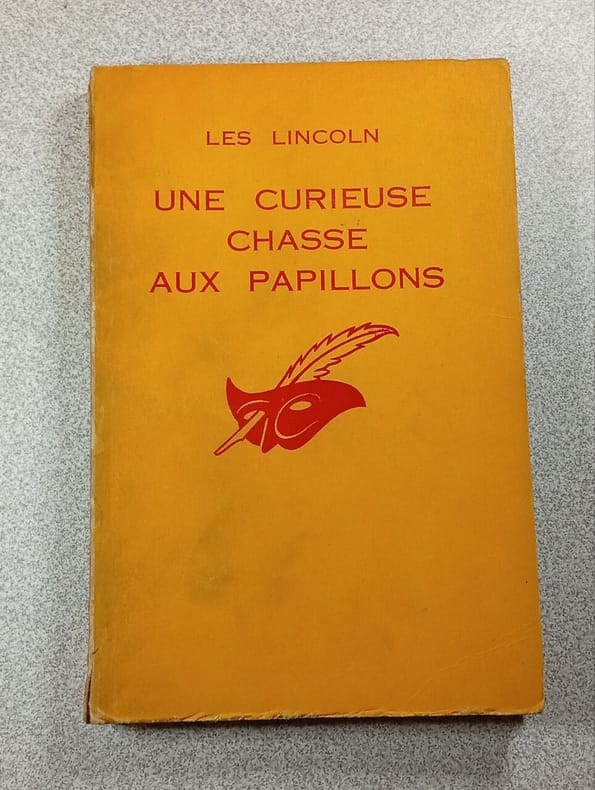
1964Pol-118Librairie des Champs-Elysées , Le Masque Malicorne sur Sarthe, 72, Pays de la Loire, France 1964 Book condition, Etat : Bon broché, sous cartonnage souple éditeur In-8 1 vol. - 186 pages
1964RO90005848LIBRAIRIE DES CHAMPS ELYSEES. 1964. In-12. Broché. Bon état, Couv. convenable, Dos satisfaisant, Intérieur frais. 186 Pages. . . . Classification Dewey : 820-Littératures anglaise et anglo-saxonne
500279796Sans date.
2017x-1138820490Routledge 2017. Paperback. New. 243 pages. 9.25x6.25x0.50 inches. Routledge paperback
56749903-20Taylor & Francis Group. Used - Very Good. Former library copy. Pages intact with possible writing/highlighting. Binding strong with minor wear. Dust jackets/supplements may not be included. Includes library markings. Stock photo provided. Product includes identifying sticker. Better World Books: Buy Books. Do Good. Taylor & Francis Group unknown
1138820490.Gpaperback. Good. Access codes and supplements are not guaranteed with used items. May be an ex-library book. paperback
6845587-nnew. unknown
6845587like new. unknown
2010x-1439802513CRC Pr I Llc 2010. Hardcover. New. 1st edition. 756 pages. 9.53x6.42x1.85 inches. CRC Pr I Llc hardcover
2012AME_9789814374446World Scientific Publishing 2012. 1ST. Hardcover. New/New. World Scientific Publishing hardcover
2004AME_9789812387035World Scientific Publishing 2004. 1st. Hardcover. New/New. World Scientific Publishing hardcover
2004x-9812387056World Scientific Pub Co Inc 2004. Paperback. New. illustrated edition. 592 pages. 9.00x6.00x1.25 inches. World Scientific Pub Co Inc paperback