Lincoln Financial Foundation CollectionBiblio.com
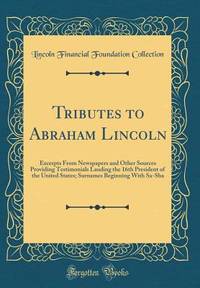
11 347 résultats
0484330500.Ghardcover. Good. Access codes and supplements are not guaranteed with used items. May be an ex-library book. hardcover
0656344156.Ghardcover. Good. Access codes and supplements are not guaranteed with used items. May be an ex-library book. hardcover
0656344725.Ghardcover. Good. Access codes and supplements are not guaranteed with used items. May be an ex-library book. hardcover
1332928374.Gpaperback. Good. Access codes and supplements are not guaranteed with used items. May be an ex-library book. paperback
1332922031.Gpaperback. Good. Access codes and supplements are not guaranteed with used items. May be an ex-library book. paperback
1334070865.Gpaperback. Good. Access codes and supplements are not guaranteed with used items. May be an ex-library book. paperback
152847824X.Gpaperback. Good. Access codes and supplements are not guaranteed with used items. May be an ex-library book. paperback
0364247606.Ghardcover. Good. Access codes and supplements are not guaranteed with used items. May be an ex-library book. hardcover
0428817459.Ghardcover. Good. Access codes and supplements are not guaranteed with used items. May be an ex-library book. hardcover
0260993522.Ghardcover. Good. Access codes and supplements are not guaranteed with used items. May be an ex-library book. hardcover
1860377692New York: Horace Greeley & Co 1860. 32pp. 8vo. Disbound. 32pp. 8vo. An early campaign biography of future president Abraham Lincoln written by John Locke Scripps of the New York Tribune. Scripps reports on the life of Abraham Lincoln in eight chapters touching on the major events of his life and career beginning with his early life and his move to Illinois through his transition from merchant to lawyer and legislator and covering his time in Congress with accounts of Lincoln's opposition to the Mexican-American War his support of the Wilmot Proviso and his involvement with the organization of the Republican Party. <br /> <br /> Wessen states that this edition was printed by Horace Greeley "from plates cast from the same type forms" as the 1860 Chicago edition which is considered the first published biography of Lincoln. An advertisement for the Tribune and the Tribune Almanac fills the bottom two thirds of the last page. <br /> <br /> "Most authentic of Lincoln campaign biographies" - Howes. Howes S247a "aa"; Managhan 79 note; Wessen Campaign Lifes of Abraham Lincoln 12 ref; Miles 418a; Abraham Lincoln: His Life in Print p. 85 Horace Greeley & Co unknown
1860367583New York: Office of the New York Tribune 1860. First edition Monaghan's first issue. 1 2-15 1pp. Lincoln's speech comprises pages 1-11 out of a total of 16 pages. With New York Tribune ads and subscription terms on rear wrapper. 8vo. Stitched self-wrappers minor toning minor chip to terminal leaf. First edition Monaghan's first issue. 1 2-15 1pp. Lincoln's speech comprises pages 1-11 out of a total of 16 pages. With New York Tribune ads and subscription terms on rear wrapper. 8vo. This address made at the Cooper Institute in New York on February 27 1860 catapulted Lincoln into the public eye and made him a viable presidential candidate. Indeed many historians have considered it the key to his success in the 1860 election and it is probably the most important speech Lincoln made after the Gettysburg Address and his inaugural addresses.<br /> <br /> The Cooper Union address was months in preparation; Lincoln was fully aware of its importance in moving himself from a regional favorite son to a viable national candidate. In the event some 1500 people including many prominent political figures attended on a snowy new York evening. The speech divides into three major parts. In the first Lincoln addressed the spread of slavery arguing that the framers of the constitution had been opposed to it and that the Federal government could regulate the question. In the second he argued that the Republicans were not a sectional Northern party and attacked the threats of southern Democrats to secede if the Republicans should win the election. Finally he addressed his fellow Republicans calling on them to act carefully and do "nothing through passion and ill temper.Let us have faith that right makes might and in that faith let us to the end dare to do our duty as we understand it."<br /> <br /> The Cooper Union speech was a resounding success. Horace Greeley described it as "one of the happiest and most convincing political arguments ever made in this City. No man ever made such an impression on his first appeal to a New York audience." Greeley quickly issued the speech in the form of this "Tribune Tract." It includes a final page of advertisements for other Tribune publications. The speech was later widely reprinted and made Lincoln nationally famous.<br /> This printing differs from other editions by its inclusion of a speech by James Doolittle Senator from Wisconsin and the message of Samuel Medary Democratic governor of the Kansas Territory vetoing the Kansas abolition bill.<br /> <br /> "The Cooper Union address tested whether Lincoln's appeal could extend from the podium to the page and from the rollicking campaigns of the rural West to the urban East. Cooper Union held the promise of transforming Lincoln from a regional phenomenon to a national figure. Lincoln knew it and rose to the occasion" Harold Holzer Lincoln at the Copper Union: The Speech That Made Abraham Lincoln President. Monaghan 50 Office of the New York Tribune unknown
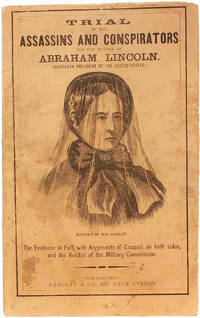
1865005102<p>Philadelphia: Barclay & Co. 1864 1865 1865. FIRST EDITION. 1 vol. 9-1/4" x 5-3/4" original pictorial wrappers illustrated pagination irregular but complete original stitching completely unsophisticated without repairs internally clean and bright mild general handling but surely one of the nicest copies you're going to encounter VERY GOOD. McDade 623 According to RBH only 2 copies have ever appeared at auction. The last one in 2008. Variant issue mentioned by Howes with the illustration of the execution moved to p 96; also with misprint of copyright date as "1864". Featuring engraved portrait of Mary Surratt on cover. The assassination of Lincoln by John Wilkes Booth on the night of April 14 1865 need no retelling. Time however which has its own way with our judgments has raised some doubts about some of these. The unfairness of the military tribunal is now manifest and the guilt of Mrs. Surratt is certainly doubtful. This was amply demonstrated by the fact that only two years after the crime the government could not obtain the conviction of her son John Surratt in the civil courts in Washington.</p> Philadelphia: Barclay & Co., 1864 [1865]
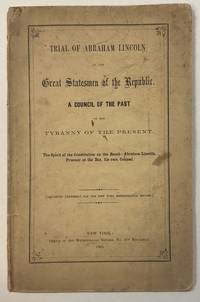
186323743<p>In this creative pamphlet Lincoln stands trial before a jury of his "peers" former presidents and statesmen from American history including Stephen A. Douglas Daniel Webster Henry Clay John Hancock Patrick Henry Gouverneur Morris Alexander Hamilton John C. Calhoun James Madison George Mason Elbridge Gerry Andrew Jackson Thomas Jefferson George Washington and William Gaston. The author compiles passages from their speeches in mock dialogue with the defendant Lincoln as they contradict his defenses against their charges.</p> <b>ABRAHAM LINCOLN.</b>Pamphlet. <i>Trial of Abraham Lincoln by the Great Statesmen of the Republic. A Council of the Past on the Tyranny of the Present. The Spirit of the Constitution on the Bench—Abraham Lincoln Prisoner at the Bar his own Counsel.</i> New York: Office of the Metropolitan Record 1863. Original printed wrappers stitched. 29 3 pp. First Edition.<p><b><br /></b></p><p><b>Excerpts:</b></p><p>"<i>George Washington the father of the American Union who was surrounded by the great statesmen of the Revolution and by others of a still later date…had assembled for the trial of the present incumbent … on charges of the gravest and most serious character. the Spirit of the Constitution…occupied the bench of Justice.</i>" 4-5</p><p>"<i>Abraham Lincoln is herein charged with treasonable intent purposes and designs in having committed the following unconstitutional acts in the course of his administration:</i></p><p>"<i>1. In having declared war against independent and sovereign States under the pretence of repossessing himself of certain forts and other property seized and held by said States.</i></p><p>"<i>2. In having arrested citizens of the United States and incarcerated them in Government bastiles without process of law.</i></p><p>"<i>3. In having suppressed the liberty of speech thereby denying to the citizen the Constitutional right of criticizing the acts of his Administration.</i></p><p>"<i>4. In having prohibited and stopped the publication of certain newspapers for the exercise of the same right referred to in the preceding charge.</i></p><p>"<i>5. In having placed the military above the civil power as shown in the establishment of martial law over portions of the country which were not embraced within the theatre of war.</i></p><p>"<i>6. In overthrowing State sovereignty as in the case of Virginia the integrity of which was violated by the erection of the so-called State of Kanawha within its limits.</i></p><p>"<i>7. In having approved indorsed and partially carried into execution the unconstitutional act of Congress known as the Confiscation Bill.</i></p><p>"<i>8. In having approved of the infamous law known as the Conscription Act which was not only subversive of the Constitution but violative of State sovereignty.</i></p><p>"<i>9. <b>In having attempted to carry into execution the Emancipation Act thereby violating the most sacred guarantees of the Constitution.</b></i> 5-6</p><p>"<i>The criminal looked around the court and on the faces of the assembled patriots of the past but as they returned his gaze they shuddering averted their heads. Then the Spirit of the Constitution addressing him spoke as follows:</i></p><p>"<i>'You have been tried and found wanting. You have been given the opportunity of saving a nation but you have stabbed it to the heart. You were born in the freest country under the sun but you have converted it into a despotism. You have violated your oath; you have betrayed the trust reposed in you by the popular will and to the outraged justice of your countrymen I now leave you with the brand of "Tyrant" upon your brow. They will hereafter inflict upon you that penalty which justice demands while history will pronounce its judgment upon the infamous acts of your Administration.'</i>" 28-29</p><p><b>Historical Background</b></p><p>Contemporaries historians and others have criticized Lincoln for violating state sovereignty freedom of speech and freedom of the press for suspending habeas corpus and imposing martial law. All of these charges figure prominently in this ghostly trial of the President.</p><p>The publisher and possibly author of this pamphlet was John Mulally the Irish-born editor and proprietor of the <i>Metropolitan Record</i> a weekly Catholic family newspaper published from 1859 to 1868 in New York City. From 1859 to March 1863 it was the official organ of the Archbishop John Hughes of New York. Catholic critics accused it of taking an "open and avowedly treasonable course…since the war broke out; but more especially since the President issued his Emancipation Proclamation" and of forcing Archbishop Hughes to withdraw his support.</p><p><i>The Indiana State Sentinel</i> a Democratic newspaper published in Indianapolis printed much of the pamphlet on its front page declaring it "perhaps the most thorough and effective exposition of the terrible character and extent of the departure of the present Administration from the word and spirit of the fathers of the Constitution that has yet been put in print."</p><p>In 1863 authorities arrested Baltimore booksellers Michael J. Kelly and John B. Piet publishers of the <i>Catholic Mirror</i> for printing works of a "treasonable character." On May 23 1864 Provost Marshal detectives again arrested Kelly and Piet and searched their store. Among the "inflammable matter" found were 97 copies of <u>this</u>pamphlet envelopes with rebel flags 57 packs of playing cards with Confederate officers and some 212 Confederate photographs. The authorities imprisoned Kelly and Piet in Fort McHenry. On May 28 Kelly's son received permission to reopen the store and authorities allowed the press to resume publication of the <i>Catholic Mirror</i> on May 30 while Kelly and Piet awaited trial. On June 1 and 2 Major General Lew Wallace ordered Kelly and Piet released if they each posted a $5000 security bond not to violate any departmental regulations.</p><p>In March 1864 Major General William S. Rosecrans a Catholic commander of the Department of the Missouri ordered the Provost Marshal General in St. Louis to seize all issues of the <i>Metropolitan Record</i> to prohibit further distribution of the newspaper in that department and to punish all vendors who sold or distributed issues of the newspaper knowing their "traitorous contents." Rosecrans had read enough in the <i>Metropolitan Record</i> to satisfy himself that "no reasonable freedom nor even license of the press suffice for the traitorous utterances in those articles" and that they were "a libel on the Catholics who as a body are loyal and national." In November 1864 Major General Hugh Ewing commanding the District of Kentucky likewise banned the circulation of the <i>Metropolitan Record</i> and seven other newspapers in his district.</p><p>In the midst of the 1864 presidential election campaign the <i>Metropolitan Record</i>advertised for canvassers to sell this as "the great campaign pamphlet of the day." Mulally later reportedly repudiated McClellan as the Democratic nominee favoring a peace candidate instead.</p><p>111 Eberstadt 332. Monaghan 252. Sabin 41234. LCP 10399.</p><p><b>Condition</b></p><p>Margin dusting to the front wrapper Very Good.</p> Office of the Metropolitan Record paperback books
186340887New York: Office of the Metropolitan Record 1863. Original printed wrappers. Stitched. 29 1 blank 1- advertisement for 'The Washington Despotism Dissected' 1 blank pp. Light wear and fox. About Very Good.<br /> <br /> The Metropolitan Record whose Prospectus is printed on the rear wrapper calls itself "an unswerving opponent of fanaticism in every form and an advocate of constitutional liberty and the rights of the citizens against despotic usurpation." <br /> This pamphlet is "A mock trial wherein Lincoln was charged with treasonable intent purposes and designs and of having committed among other unconstitutional acts the following: 'Declared War against Sovereign States under pretence of repossessing himself of certain forts and other property; arresting citizens without process of law; suppressed liberty of speech; stopped publication of certain newspapers; placed the military power above the civil power; overthrown State Sovereignty; forced unconstitutional acts through Congress.' At the conclusion of the trial the Court addressed the 'Criminal' as follows: 'You have been tried and found wanting. You have been given the opportunity of saving a nation but you have stabbed it to the heart. You have converted your country into a despotism'." Eberstadt.<br /> "Quotations from Lincoln and others selected to discredit his administration" Monaghan. A second edition was printed in 1867. Sabin Monaghan and LCP do not collate the advertisement at page 31.<br /> FIRST EDITION. 111 Eberstadt 332. Monaghan 252. Sabin 41234. LCP 10399. Office of the Metropolitan Record unknown
18942876ournal of the American Society of Naval Engineers 1894. Softcover. Very Good. Offprint. 1 pp 2 folding tables in original wrappers. Handling wear with a few short chips and tears to edges; text clean. Reprinted from Journal of the American Society of Naval Engineers Volume VI No. 3. Tables give the principal dimensions and the trial speed and power of more than 40 different steamers. ournal of the American Society of Naval Engineers unknown books
1165163640.Gpaperback. Good. Access codes and supplements are not guaranteed with used items. May be an ex-library book. paperback
143735677X.Gpaperback. Good. Access codes and supplements are not guaranteed with used items. May be an ex-library book. paperback
0365230510.Ghardcover. Good. Access codes and supplements are not guaranteed with used items. May be an ex-library book. hardcover
1330562801.Gpaperback. Good. Access codes and supplements are not guaranteed with used items. May be an ex-library book. paperback
1017362912.Ghardcover. Good. Access codes and supplements are not guaranteed with used items. May be an ex-library book. hardcover
1331196035.Gpaperback. Good. Access codes and supplements are not guaranteed with used items. May be an ex-library book. paperback
048484895X.Ghardcover. Good. Access codes and supplements are not guaranteed with used items. May be an ex-library book. hardcover