Munn, Orson D.: EditorMareMagnum

1 058 résultats
Lucky Strike cigarette ad on back cover provides a truly classic and timeless example of a mis-timed advertisement. Consider that the great Wall St. stock market crash of 1929 occurred mere days before this issue hit the newsstands. Beneath the caption "An Ancient Prejudice has been removed" appears a clenched fist labeled as "American Intelligence" breaking a heavy chain. Top left a paranoid miser stacks his gold by candlelight. Top right a wealthy couple visits their palatial bank. Text beneath miser reads "Hoarding gold with the fanatical zeal of the miser has vanished. American Intelligence sponsors thousands of banking institutions to which the individual (i.e. the wealthy couple) safely entrusts his wealth." The message is clear. Readers should put their trust (and money) in the banks, and shun gold. This issue was likely printed just as the Great Crash occurred, causing countless financial institutions to go under - and destroying even more individual fortunes. (The ad goes on to claim that cigarettes have similarly overcome the prejudice against them.) A truly stunning work which deserves to be preserved and reflected upon in this age of limitless fiat currency printing. Average wear with three-inch crease to lower corner of back cover. Suitably framed and mounted, this ad will make a superlative office display for any precious metals executive. Magazine
"Transforms the dry economic subject of inflation into a white-knuckles kind of blood-chiller... Concludes by charting out all the possible prognoses for the American inflation, none easy but some much less catastrophic than others. Not for the timid. Spares no tender sensibilities. The conclusions it reaches are shocking" - replica dust jacket. [3]-372 pp. including over forty pages of highly-informative footnotes. Ronald H. Marcks, a New England lawyer, adopted the pen name Jens O. Parsson to avoid any discomfort to his clients or associates which might stem from his alarming forecast. Former library copy with usual markings. Tight and square with moderate wear to publisher's green cloth. Replica dust jacket preserved in archival-grade Brodart. One of only a thousand copies in the first edition of this profoundly important and most timely treatise. Book
pp. xv, [i] 245. Index. First printing. "Aims to show how unstable in buying power are all monetary units, including the dollar; what hidden causes produce that instability; what harm results, although ascribed to other causes; and what are the various remedies which have been tried or proposed. The purpose is not to propose any one remedy as the best but to put the problem to the reader, especially to the business reader." - Preface. Very light wear to original olive cloth. Dust soiling to top edge. Binding sound. Several faint pencil erasures to contents. Dust jacket not included. A remarkably well-preserved copy. Fisher M-1344, Masui p.1410, Batson p.137, Pressman p.142, Hutchinson 682. Book
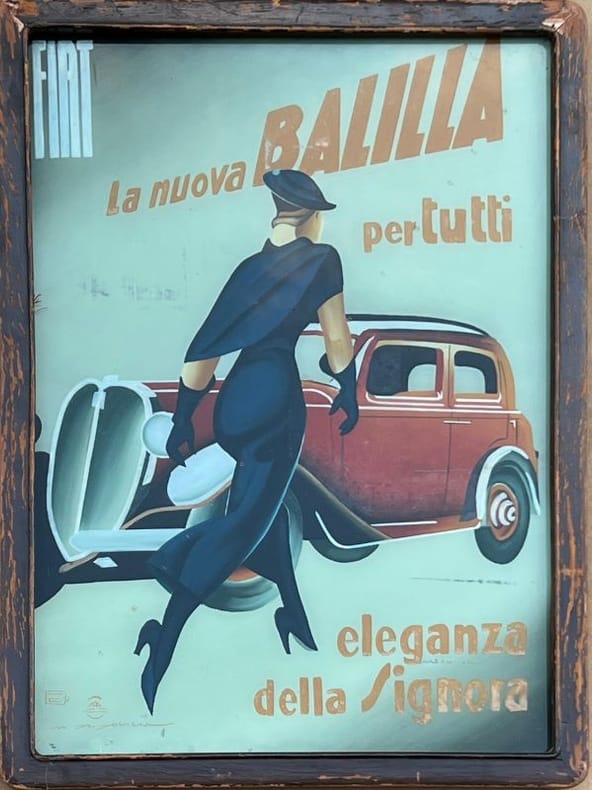
1934252221934 Fixé sous verre signé en bas à gauche, (1934), 52.5 x 38.5 cm., cadre en bois.
464 pages. Index. Originally published in Italian in 1931. This first English edition substantially revised. Inside front board is the bookplate of M.L. Burstein, "One of the sharpest minds in economics of the last century" - from online reference. "The depreciation of the mark of 1914-1923, which is the subject of this work, is one of the outstanding episodes in the history of the twentieth century. Not only by reason of its magnitude but also by reason of its effects, it looms large on our horizon. It was the most colossal thing of its kind in history: and, next probably to the Great War itself, it must bear responsibility for many of the political and economic difficulties of our generation. It destroyed the wealth of the more solid elements in German society; and it left behind a moral and economic disequilibrium, and breeding ground for the disasters which have followed." - Foreword. Gilt lettering legible upon blue backstrip which is sunned along with portions of each board. Bit of writing inside front board otherwise clean and unmarked. Binding intact. A sound association copy of this important work. COHEN 458. Book
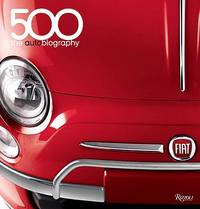
2016116499Rizzoli. New. 2016. Hardcover. 0847847535 .IN STOCK AND IMMEDIATELY AVAILABLE FOR SHIPMENT - IN STOCK AND IMMEDIATELY AVAILABLE FOR SHIPMENT - Flawless copy brand new pristine never opened - -- with a bonus offer; 9.1 X 0.8 X 9.5 inches; 144 pages . Rizzoli hardcover
201297741Rizzoli. New. 2012. Hardcover. 0847837203 . FREE UPGRADE to Courier/Priority Shipping Upon Request - IN STOCK AND IMMEDIATELY AVAILABLE FOR SHIPMENT - Flawless copy brand new pristine never opened -- 144 pp. ; 180 illus. 148 in color. -- with a bonus offer-- . Rizzoli hardcover
140 pages. Bibliography. "...The first careful study of the Federal Reserve System... Includes a careful presentation of the origins, purposes, and activities of the Federal Reserve Board of Governors. The reader will find for the first time the actual mechanism of this powerful organization, which has wielded such a tremendous influence on America in the twentieth-century." - from back cover. Contents unmarked. Incidental half-inch pen mark to front cover. Two ink stamps on back cover, one of which is smudged over publisher's information. Binding intact. Average wear. A rare first edition copy of this momentous work which remains timely over fifty years since its publication. [SINGERMAN 0865] Book
445 pages. Index. Translator's Note. First English language edition, translated from the second (1924) German edition. "A detailed sophisticated explanation of the quantity theory of money based on the subjective, marginal utility theory. Explains money's origin, the development and nature of banking, the cause and consequences of inflation and credit expansion, the differences in the value of different moneys, as well as the reason for 'cyclical' economic fluctuations." (B2 Greaves & McGee). Black top stain. Bottom edge uncut. Above-average wear to black cloth exterior. Narrow opening between backstrip and back board. Quarter-inch missing from top of backstrip which bears bright gilt lettering. No external markings. Usual internal library markings. Minor quantity of light pencil marginalia and underlining to contents. A worthy reading copy of this classic work by the famed libertarian and prominent member of the Austrian School. COHEN 72, GREAVES & McGEE p.11 Book
1930271721930. Approximately 150 photographs of Fiat promotional material including the interiors of factories advertisements Fiat automobile profiles maritime engines the Pope and his Fiat and Fiat car racing.<br /> <br /> Photos of factory interiors with workers 9 1/2 x 6 1/2" c. 1920 with blind stamp of "Motor Owner Photograph" & hand numbered on verso; Fiat racing drivers in front of their Fiats; smaller promotional real photos with captions beneath maritime engines for ships & racing boats captioned the Pope and his Fiat. With a significant number of dups especially in the smaller size 4x6". <br /> <br /> Very good condition a couple with slt edgewear. unknown
176 pages. "The author of this book believes that you can teach the fundamental mechanism of money and banking as you teach bridge, "by playing it," and thinks this game will do it. As an innovation in teaching method the possibilities are so revolutionary that no educator can afford to ignore it. Moreover, the game is an exceedingly entertaining one; as good a card game as any; can be played by any number from five to ten, and so is well adapted to the family circle, to the business man's club, or as a novelty for the next little dinner party." - from dust jacket. Contents clean and unmarked. Light wear and soiling to exterior of book which features bright gilt lettering and design upon backstrip and front board respectively. Binding sound. Game pieces uniquely stored in boxes within a box inside back board. Minor repair to one interior box. Dust jacket bears several closed tears and is missing a few chips, most notably at top fore-edge of back board and lower corner of back flap. Dust jacket is not price-clipped, bears average wear and is preserved in a glossy new archival-grade Brodart cover. Includes a total of 260 game pieces: 8 score cards; 2 jokers; 150 bank notes; 100 game cards. Overall, a quality copy of this unique and intriguing work. Book
190473063New York: Hollander & Tangeman 1904. First edition. Oblong quarto 11 x 5 1/2 inches; 28 x 14 cm. 24 pp. with seven pages bearing photographic illustrations five of which are of various high-end Fiat cars. Numerous diagrams and line drawings. Title page printed in red and black. Stapled wrappers with front cover bearing an art nouveau color illustration of a car on the road by R. Foster Worthley. Some mild aging but a very good copy.This hitherto unrecorded catalog helps elucidate the early history of Fiat automobiles in the United States. OCLC records a similar catalog for 1904 but it is only 8 pp. and measures 8 1/2 x 6 inches. Giovanni Agnelli with several investors founded the Fabrica Italiana Automobili Torino F.I.A.T. in 1899. Its acronymous name was changed to upper- and lower-case Fiat in 1906. The catalog offered here still bears the original moniker of F.I.A.T. Agnelli led the company until his death in 1945. If one researches the history of Fiat cars in the United States we can read that Fiats were first introduced into the US in 1908 “In 1908 the Fiat Automobile Co. was established in the country and a plant in Poughkeepsie N.Y.". But by this it is meant that Fiats were first manufactured in the United State in 1908. Prior to that date starting in 1902 the firm of Hollander & Tangeman of New York City held the sole license to import Fiats into the country. In the beginning years of the 20th century Fiats were considered amongst the most luxurious of automobiles as opposed to their thrifty image of recent decades. An average Fiat in 1908 cost $4000 as compared to a Ford Model T which only cost $850. In this 1904 catalog we can see that Fiat was anxious to be seen as a luxury automobile. They named almost all of their cars after royalty. The five models shown are the Queen Margherita the Princess Laetiza the King of Belgium the Leopold and the Touring. All but the Queen Margherita were driven by the 16-20 HP Fiat engine with the Queen having the 24-30 HP engine. “The year 1903 was a watershed for FIAT as its early automatic inlet-valve motor was replaced by a new T-head four-cylinder engine whose cylinders were arranged in pairs. FIAT principal Giavanni Agnelli had by then arranged to license Mercedes’ successful honeycomb radiator design which allowed for reliable power under the stress of hill climbs and sprints at which the small range of cars was proving to be increasingly proficient. In many respects FIATs were more technically advanced than their Mercedes counterparts which was particularly evident in their superior oil lubrication systems. A year later FIAT mated the recent engine redesign to a new frame made of pressed steel commencing a gradual transition from the wood frames that were standard to this point. This resulted in a car that was both more durable and less prone to flex which was ideal for the competition forays that were becoming the company’s increased focus†Sotheby’s.Hollander & Tangeman had their shop a view of which is in this publication at 5 West 45th Street in Manhattan. C. H. Tangeman was the son of George P. Tangeman whose company Royal Baking Powder was worth $10 million in 1895. Hollander & Tangeman was also involved in the power boat market again with Fiat engines. They were very active in the racing scene and a list of awards can be found on the final page. They changed the name of their company to the Hol-Tan Company in 1906 when they announced that they had given up the Fiat license and would now concentrate on selling American cars only. In fact Fiat had revoked Hol-Tan's license in preparation for the launch of Fiat production in Poughkeepsie. The Hol-Tan Company selected the cafr produced by the Moon Motor Company of St. Louis and branded it the Hol-Tan to replace the imported Fiats. They then sold the Hol-Tan to their fashionable clientele in New York Boston and Philadelphia. Hollander & Tangeman unknown
Nove fotografie, 1910 circa, cm. 18,5 x 24 di alcuni modelli di automobili Fiat degli inizi del novecento montate su cartoni rigidi (28 x 34) e con passepartout disegnato in decorazione bianca.
144 pages. Documents the creation of the privately-owned U.S. Federal Reserve in 1913. Above-average wear and soiling. Binding intact. Title hand-written upon sunned spine. 2.5" x 4" Thunderbolt sticker upon title page and inside back cover. Bit of writing at top of back cover. Two of the recommended titles inside back cover are stroked out. Occasional small ink markings to contents. A sound copy of the rare second printing of this classic work. [SINGERMAN 0909] Book
381 pages. Nine black and white sketches. "No name has been more prominently before the public during the last sixty years or more, as that of this great financial firm. Its origin was so shrouded in humble obscurity, and the rapidity with which it sprang forward to prosperity and fame was alike so extraordinary and so remarkable, that the public gaze has been kept by a species of fascination upon the movements of the well-known fianciers. From one corner of the world to the other the success of the Rothschilds has been the subject of universal wonder and envy." - from pages 1-2. Above-average wear. Front hinge open. Library binding. Usual library markings. Book
194 + xiv pages. Index. "This book tells the story of who caused the slump (Great Depression) and how they caused it, and it directs attention to two simple steps that can be taken to save our farmers and traders... The depression from which we now suffer is due to an artificially induced variation in the purchasing power of money. In these pages will be found ample evidence in support of this statement. The quarter from which the trouble is coming is indicated, and the amazing manner in which the machinery for monetary control of the world was established is traced out." - from Introduction. Covers tanned with age. Binding intact. Prior owner's name atop front cover. Contents considerably annotated in soft pencil. Most of blank back leaf missing. Above-average but not excessive wear. Book
iv, 109 pp. Index. Three lectures on post-war monetary stabilization delivered by Professor Cassel at Columbia University in concert with the Julius Beer Foundation. Lecture titles include: Inflation and Stabilization of Currencies, The Stabilization of the Value of Gold, and The New Gold Standard. "Cassel was beyond doubt one of the outstanding figures in economic science during the inter-war period. His authority was second only to that of Lord Keynes, and his advice was eagerly sought on many occasions by his own Government and by foreign Governments." - Paul Enzig. Maroon exterior adorned with gilt titling and publisher's device. Average wear. Binding intact. Usual library markings. A sound copy. Masui p.1425. Book
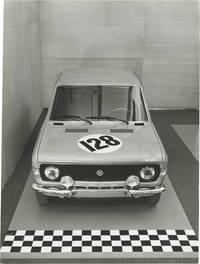
1973163815Turin Italy: Fiat 1973. Archive of 39 vintage borderless photographs of the Fiat 128 including 16 of the Fiat 128 Rally from Fiat's Public Relations Management division including a printed "Direzione Relazioni Pubbliche Fiat" card with an ink annotation on the bottom of "128 Rally" circa 1973.<br /> <br /> The 39 photographs in the collection include front sides rear and 3/4 views of the exterior dashboard and interior views various engine views and photographs of the vehicle's components with the chassis removed. The majority of the photographs appear to be of the 2-door saloon with the Fiat 128 Rally represented in 16 photographs and at least one image of the 2-door Sport Coupe.<br /> <br /> The revolutionary Fiat 128 was manufactured by the Italian carmaker from 1969 to 1985 and was designed in two and four-door sedan models two and three-door coupe models and three and five-door station wagon models. The vehicle's innovative front-engine front-drive layout engineered by Dante Giacosa with the engine design by Aurelio Lampredi allowed for relatively spacious passenger and cargo room for a compact vehicle the interior unobstructed by a tall transmission tunnel and was a layout adopted by virtually every other car manufacturer for front-wheel drive. In 2012 automotive journalist Jamie Kitman called the Fiat 128 a "pioneer of the small cars we drive today." Over three million of the vehicles were ultimately manufactured and in 1970 the Fiat 128 was named European Car of the Year.<br /> <br /> Approximately 9 x 7 inches overall. Near Fine. Fiat unknown
Torino, Societa? Anonima Tipografico Editrice Torinese, 1941. 4to (cm.33,5x23,5), brossura editoriale (mende al dorso e al margine inferiore dei piatti), pp. 96 riccamente illustrate con bellissime fotografie in nero.. Nelle ultime pagg. spellature al marg. sup. bianco con mende in una carta ma complessivamente buon es. considerata anche l’assoluta rarita? di questa opera. Testo in italiano ed in tedesco. Ricca documentazione fotografica delle attivita? sociali della Fiat per la formazione e l’assistenza degli operai, le scuole professionali, il dopolavoro, le attivita? sportive, le colonie estive. L’opera mette in evidenza il contributo delle Officine torinesi all’industria bellica, in perfetta sintonia con il Regime ed il fronte bellico italo-tedesco; significativa le foto della “gioventu? hitleriana in visita ai reparti specializzati Fiat” e la traduzione a fronte proprio in lingua tedesca. Probabilmente questo volume ha seguito le sorti delle tante opere “fascistissime”, divenute imbarazzanti e fatte sparire con il vento nuovo del dopoguerra; inoltre le vicende belliche hanno provveduto di per se a non facilitarne l conservazione. Non risulta presente nel mercato librario almeno degli ultimi trent’anni e soltanto un esemplare e? censito nelle biblioteche pubbliche italiane.
302 pages. "A love story that gives the history of demonetization and depicts the evil spirit and influences that have worked the destruction of American prosperity." - from Advertisement. "One of the most striking - almost startling - and original novels of the day, the keynote of which may affect a nation." - Chicago Times. Unmarked. Above-average but not excessive wear and soiling externally. Minor yellowing to contents. Binding intact. A rare surviving copy of this important work. Book
76 pages. Features: Ceylon Tea Bureau ad inside front cover features colour painting of Laurentian Scene by F. S. Coburn; The Way to Solvency - famous Canadian monetary reformer G.G. McGeer makes his case for changes to the Bank of Canada; Super one-page colour ad for Heinz canned beans and spaghetti; Fantastic one-page colour-photo Chipso ad features Mrs. John Boyle, Jr. and her children Mercedes, John and Patricia; Sometime We'll Meet (short story); Bloomin' Idol (short story); Afghanistan Destined for Conflict - a most prophetic photo-illustrated article; Children of the Heather (short story); The Haunted Yashiki (Japanese short story); Pinch-Hitting for Sir Galahad (short story); Dogs in My Life - illustrated article by Diana Thorne; Gesso Craft; One-page photo-ad for Pond's cold cream features Miss Frederica Vanderbilt Webb and Mrs. Reginald Vanderbilt; Two-page photo-ad for Fleischmann's XR Yeast features large photo of Dr. R.E. Lee; Little Rambles in Hollywood; Great one-page Lux soap ad features photo of Ginger Rogers; Illustrated fashion article; Cookery article; Beauty article; Wow! one-page full-colour photo of NHL hockey player Charlie Conacher of the Toronto Maple Leafs on the ice; Colour Old Dutch cleanser ad on back cover; and more. Includes blank subscription form and envelope. Average wear. Unmarked. A sound copy of this extraordinary issue. Book
148 pages. A rare early reprint of Mullins' classic expose of the Federal Reserve. Yellow high-lighting throughout. Modest lean to spine. Somewhat above-average external wear and soiling. Book
1983157185Turin: Fiat. 1983. 5 einmal gefalzten Blättern Text und 2 gefalzten Blättern Vorstücke. Gr.-Fol. (53 x 38 cm). Mit 6 (statt 7) signierten Originalradierungen (Plattenformat 23 x 33 cm), Or.-Lwd.-Kassette.
Album oblungo (mm. 205 x 295), tela edit., pp. (4),320 + XXXVI di Indici. Questo importante catalogo di materiale speciale di aeronautica, datato 1° agosto 1939 e aggiornato al 30 aprile 1940, interamente illustrato con tavole in b.n. nel t., è così’ suddiviso: (PARTE I) gruppo 1° “Incastellatura” - gruppo 2° “Cilindri e valvole” - gruppo 3° “Organi del moto” - gruppo 4° “Distribuzione” - gruppo 5° “Comandi ausiliari” - gruppo 7° “Alimentazione” - gruppo 8° “Accensione” - gruppo 9° “Pompe d’olio e tubazioni” - gruppo 11° “Avviamento” - gruppo 13° “Flangie di scarico” - gruppo 14° “Accessori e varie” - gruppo 15° “Dotazioni” - (PARTE II) “Pre-modifiche” - (PARTE III) “Varianti al motore di produzione”. Esemplare ben conservato.
In 4, pp. 278 con 7 tavole f.t. doppie. Moltissime illustrazioni fotografiche n. t. di particolari meccanici, filobus in circolazione a Milano, Cremona, Palermo, Sanremo, Torino, Genova, Livorno, Roma, filocarri per trasporto cemento ecc. In appendice vengono date le caratteristiche generali dei vari modelli di filobus Fiat e le norme di condotta di una vettura filoviaria. Raro e ricercato.