Leopold I, Holy Roman EmperorBiblio.com
420 résultats
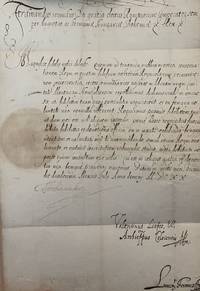
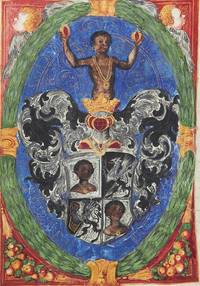
166935491669. Manuscript on vellum folio c. 240 × 300 mm. Sewn in contemporary limp vellum. Final leaf with contemporary notarial certification signature stamp and remnant of wax seal. Some wear and light soiling but a well-preserved and striking copy. With a large finely illuminated coat of arms in vivid colours and burnished gold framed by green palm fronds and flanked by angels incorporating distinctive Moor's head motifs. With a large finely illuminated coat of arms in vivid colours and burnished gold framed by green palm fronds and flanked by angels incorporating distinctive Moor's head motifs. Manuscript on vellum folio c. 240 × 300 mm. Sewn in contemporary limp vellum. 8 leaves. <p><br /> Imperial ennoblement diploma featuring depictions of Black African figures-an unusual and well-documented example of African representation in early modern European aristocratic identity.<br /> <p><p><br /> This lavishly illuminated imperial diploma issued by Emperor Leopold I on 6 May 1668 confirms the noble status of Georg Adam Christoph and Jakob Moren as members of the knightly nobility rittermäßiger Reichs- und erbländischer Adel of the Holy Roman Empire and its Hereditary Lands. It reaffirms earlier ennoblements of the family in 1514 and 1557 and grants the recipients revised arms and the right to use the territorial predicates von oder zu Sunnegg und Morberg following the extinction of the line of their cousin Hieronymus Moren. The present manuscript is an authenticated official copy certified on 4 April 1669.<br /> <p><p><br /> Of particular interest is the large full-page coat of arms likely painted by a professional court illuminator. Richly coloured and heightened with gold the quartered shield includes two fields with black imperial eagles and two with bust-length portraits of dark-skinned men in three-quarter profile adorned with gold earrings and chain necklaces. Above the shield rises a bare-chested crowned Black man holding a red orb in each hand and emerging from a coronet. The rendering is highly individualized and unambiguously emphasizes African phenotypic features. The composition is framed by a laurel cartouche flanked by angels and fruit.<br /> <p><p><br /> The surname Moren or Mor and the heraldic iconography leave little doubt that the family was of Moorish origin-or at least claimed such ancestry as part of its noble identity. While Moor's heads appear elsewhere in European heraldry they are typically stylized emblems representing conquest exoticism or religious symbolism. The Moren arms are distinct: they include multiple prominently placed depictions of Black African men-not as abstract symbols but as individualized and repeated figures in both crest and escutcheon. Their dignified and central presence-together with the family name-suggests an intentional genealogical claim rather than a purely symbolic motif. The route by which the Moren ancestor entered Habsburg service is uncertain but likely occurred via Spain or Italy in the late 15th or early 16th century.<br /> <p><p><br /> The Moren family retained noble status over successive generations with branches in Tyrol Styria Carinthia and Upper Austria and remained listed in official registers of the Austrian nobility into the 20th century. Among their later descendants was Therese von Mor zu Sunnegg und Morberg 1871-1945 a painter trained in Vienna Munich and Paris and active in several artists' associations. The family's heraldic identity-with its explicit visual reference to African ancestry-remained remarkably consistent making this diploma not only a legal instrument of nobility but a rare and compelling record of Black lineage within the early modern European aristocracy.<br /> <p><p><br /> Reference: Genealogisches Taschenbuch der adeligen Häuser Österreichs. 1907. Zweiter Jahrgang 1906/07 pp. 278-310. Wien: Otto Maass' Söhne.<br /> <p>. unknown
1674YTB-12Mons, Gaspar Migeon (1674) Petit in-8 de 168 pp. Maroquin rouge, triple filet doré encadrant les plats, dos à nerfs cloisonné et fleuronné, double filet or sur les coupes, doublures de maroquin vert ornées d'une large dentelle dorée, doubles gardes de papier marbré, tranches dorées sur marbures, quelques marges hautes ou basses rognées plus court. Reliure en maroquin doublé de maroquin du XIXè siècle. 154 x 102 mm. LA PLUS RARE EDITION ORIGINALE, SAISIE ET INTERDITE, D’UNE GRANDE ŒUVRE LITTERAIRE DE JEAN DE LA FONTAINE, IMPRIMEE SUBREPTICEMENT EN 1674. Rochambeau, p. 1673, 0 21 ; Tchemerzine, III, 858. « Edition originale extrêmement rare » (A. Claudin, Bibliographie des Editions originales, p. 54). « Edition Originale, extrêmement rare publiée clandestinement. La Fontaine n’ayant pu obtenir un privilège. Elle contient 17 Contes (dont Les Trocqueurs) » (Tchemerzine). Une impression clandestine saisie sur ordre de La Reynie. L’UN DES PLUS BEAUX EXEMPLAIRES APPARUS SUR LE MARCHE DEPUIS UN SIECLE. Grand de marges (hauteur 154 mm), sa largeur est exceptionnelle (largeur des feuillets 102 mm) ; le fameux exemplaire « Lignerolles » vendu en 1894 était plus court de marges : Hauteur 151 mm. L’exemplaire Mortimer Schiff mesurait 152 mm ; quant à l’exemplaire Rochebilière conservé dans sa reliure de l’époque, décrit par Claudin en1930, il avait une hauteur identique au nôtre, soit 154 mm. TRES BEL EXEMPLAIRE DANS UNE RELIURE EN MAROQUIN JANSENISTE RICHEMENT DOUBLEE. Provenance : Robert Hoe (ex-libris n° 1962 du catalogue de vente aux enchères de la première partie de sa bibliothèque, New York, 1911). Louis Barthou (vignette ex-libris, n° 496 du catalogue de vente aux enchères de la seconde partie de sa bibliothèque, Paris, 1935).
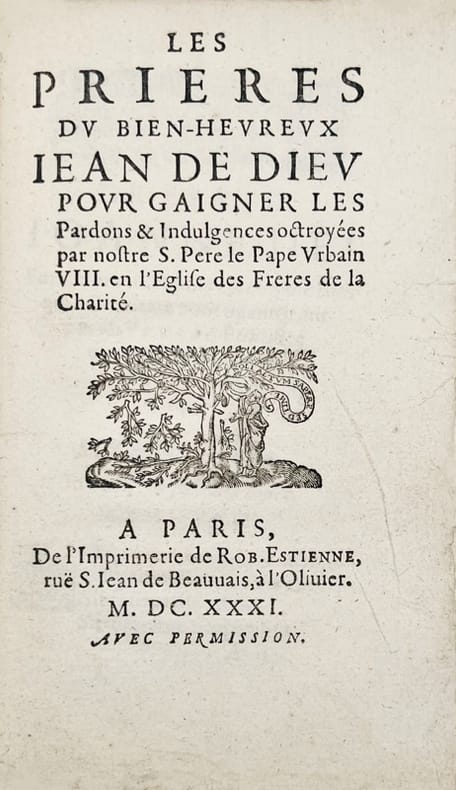
163144644A Paris, De l'Imprimerie de Rob. Estienne, 1631. In-12 de 1 feuillet blanc, 20 pp., 1 feuillet blanc, maroquin bleu turquoise, double encadrement de filets dorés et rosace centrale de fleur et palmette dorées, dos finement orné à nerfs, dentelle intérieure, entièrement non rogné, tranches dorées sur témoins (Lortic).
1665YTB-13Paris, Thomas Jolly, 1665. In-12 de (2) ff., 78 pp., (1) f. Maroquin bleu nuit janséniste, dos à nerfs, titre doré au dos, double filet or sur les coupes, dentelle intérieure dorée, tranches dorées. Reliure par E. Carayon. 140 X 83 mm. EDITION ORIGINALE DE LA PIECE PREFEREE DE CORNEILLE. Picot, n°84 ; Tchemerzine, II, 574 ; Le Petit, 185. « « Si mes amis ne me trompent, cette Pièce égale ou passe la meilleure des miennes, dit Corneille dans la préface qu’il a placée en tête de la tragédie d’Othon. Quantité de suffrages illustres et solides se sont déclarés pour elle, et si j’ose y mêler le mien, je vous dirai que vous y trouverez quelque justesse dans la conduite et un peu de bons sens dans le raisonnement, quant aux vers, on n’en a vu de moi que j’aie travaillé avec plus de soin » (Picot). Le sujet de la pièce est tiré des Histoires de Tacite, mais corneille a mis également à contribution Plutarque et Suetone dans leurs Vies de Galba et d’Othon. S’il faut en croire les Anecdotes dramatiques, le maréchal de Gramont aurait dit, à l’occasion d’Othon, que Corneille devrait être le « Bréviaire des Rois » et M. de Louvois qu’ « il faudrait, pour juger cette pièce, un parterre de ministres d’Etat ». Ce qui est certain, c’est qu’Othon resta au répertoire. « Corneille, dans sa préface, parle de cette tragédie comme l’une de ses meilleures. Mais elle eut peu de succès. Il a fallu attendre trois siècles pour s’aviser que les amis de Corneille avaient raison et qu’Othon est l’une de ses meilleures pièces » (Georges Forestier, Dictionnaire des œuvres). Othon est l’exacte peinture de la politique romaine et ce sont ces mérites historiques qui lui ont valu un accueil bien plus favorable de la part des critiques modernes que de la part des critiques du XVIIe siècle. EXEMPLAIRE CONSERVE DANS SA FINE RELIURE EN MAROQUIN BLEU NUIT REALISEE PAR E. Carayon.
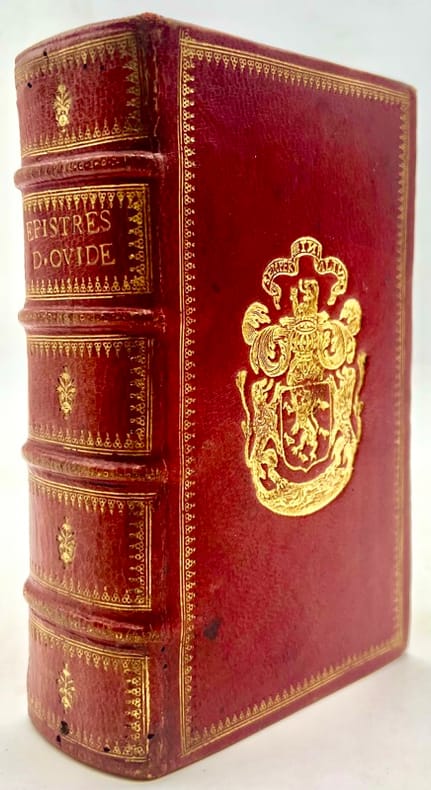
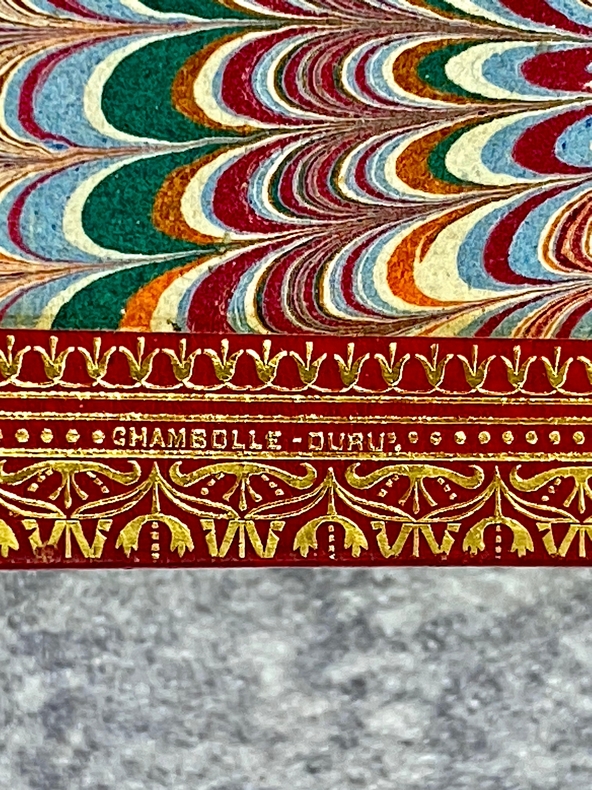
166742633Paris, Chez Edmé Martin et Français Eschart, 1667. 2 parties en 1 vol. in-12 de (4)-122 pp. 1 f. blanc, 518 pp. 1f. blanc, frontispice, maroquin janséniste rouge, dos à nerfs, dentelle intérieure, tranches dorées sur marbrure (Duru et Chambolle 1863).
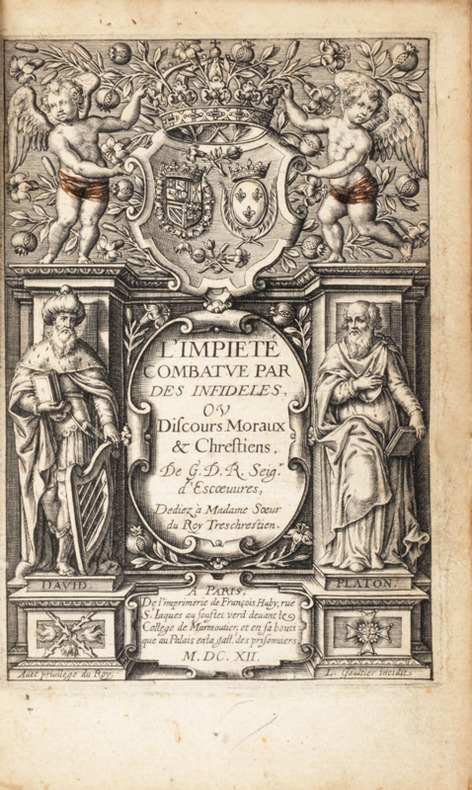
161240372Paris, François Huby, 1612. Petit in-8 (11 x 17 cm) de (24)-391-(1) pp., frontispisce, veau fauve, dos à nerfs, écoinçons à fond azuré, cartouche central losangé à fond doré de style oriental réservant un oval uni, semis de fleurs de lis couvrant les plats et le dos, tranches dorées (reliure de l'époque).
169038016PRIMERA Y UNICA EDICION.- S.l.: s.n. s.a. ca. 1690 o 1691.- 4 h. 528 p. 4 h.; 4º menor 205 x 16 cm: Con 2 viñetas xilográficas de fin de capítulo; Buena impresión sobre papel verjurado fuerte y limpio; Cinta separadora de lectura; Enc. en Plena Piel pasta época lomo liso con dorados y tejuelo rojo con el título cortes jaspeados. Según Salvá en su Catálogo ficha Nº 3595 este libro debió imprimiese para ser regalado o distribuirlo privadamente pues no consta por ninguna parte ni el nombre del librero que lo publicó ni aún el del pueblo donde salió a luz. Por todo esto la rareza de este libro se debe a su escasísima difusión y corta tirada. Catalina asevera que la impresión debe ser de Madrid."y casi tengo la seguridad de que no se imprimió en Alcalá". No obstante es de señalar que al principio del libro justo al final de la carta impresa en que se dedica el libro al Excmo. Sr. Marqués de Mondejar el autor escribe: Mondejar y Julio 20 de 1690. Por esto deduzco que debió de imprimirse en ese año o a más tardar al siguiente de 1691.- RARISIMA OBRA. Palau nº 276605 Salva nº 3595. Las 14 hojas comprendidas entre las pags. 133 a 161 tienen en la esquina superior externa una máncha de óxido que toca un poco al texto y va disminuyendo hasta desaparecer pero no afecta ni a su lectura ni a la textura del papel. También falta un trocito de papel en la esquina inferior externa de la hoja que corresponde a las pags. 275-76 que toca mínimamente al texto de una apostilla marginal impresa. Con 7 notitas de la época manuscritas a tinta en los márgenes externos. El plano posterior restaurado de dos pequeñas faltas de piel que apenas se notan. A PESAR DE LO DICHO QUE ES PRECEPTIVO EL LIBRO SE ENCUENTRA EN MUY BUEN ESTADO. CASTILLA-LEÓN Libro en español Sin editorial hardcover
168515307A Amsterdam, chez Henri Desbordes, 1685. In-12 de (8)-313-(3) pp., maroquin rouge doublé de maroquin rouge, dentelle intérieure, dos orné à nerfs, triple filet doré sur les plats, tranches dorées sur marbrure (reliure de l'époque).
16799294A Paris, Chez Jacques Langlois, 1679. 2 parties en 1 vol. in-12 de (20)-229-(2) pp. et (4)-248-(2) pp., basane brune granitée, dos orné, tranches jaspées (reliure de l'époque).
161541142Paris, Jean Moreau, 1615. Petit in-8 de (8)-152 pp., demi-maroquin rouge à coins, dos orné à nerfs (reliure du XIXe siècle).
162643535Bourg-en-Bresse, Jean Tainturier, 1626. In-8 de (14)-1014 pp., maroquin rouge, dos orné à nerfs, roulette dorée d'encadrement sur les plats, armes au centre (reliure de l'époque).
160713787A Paris, chez David Douceur, 1607. In-8 de 1 titre gravé (38)-802-(18) pp., maroquin rouge, dos plat orné de filets dorés, deux jeux d'un double filet doré d'encadrement sur les plats, médaillon de guirlande de feuillages au centre des plats, fleurons aux angles, tranches dorées (reliure de l'époque).
16692844A PARIS. CHEZ CLAUDE BARBIN, AU PALAIS SUR LE PERRON DE LA SAINTE CHAPELLE. 1669. IN-8 (11,7 X 17,2 X 3 CENTIMETRES ENVIRON) DE (24) + 500 PAGES, RELIURE PASTICHE XVII° PLEIN MAROQUIN ROUGE, DOS A CINQ NERFS ORNE DE CAISSONS A FLEURONS DORES, TITRE ET TRANCHES DORES, TRIPLE FILET DORE ENCADRANT LES PLATS, DOUBLE FILET DORE SUR COUPES, DENTELLE INTERIEURE DOREE. (CHAMBOLLE-DURU, RELIEUR). LE PRIVILEGE EST DU 2 MAI 1668, ACHEVE D’IMPRIMER POUR LA PREMIERE FOIS LE DERNIER JOUR DE JANVIER 1669. LES AMOURS OCCUPENT LES PAGES 1 A 440, LE POEME ADONIS LES PAGES 441 A 500. LES DEUX POEMES EN EDITION ORIGINALE. (TCHEMERZINE. III. 878). PETITES TRACES D’USURE EXTERIEURE SANS AUCUNE GRAVITE, SINON TRES BEL EXEMPLAIRE.
162353483Rouen: apud Societatis Typographicam / David du Petit Val 1623. Disbound. Very good. Two parts folio. 72; 37 1: blank pp; 1 full page copperplate engraving; woodcut initials and ornaments. Printed in red and black throughout. Text in Latin generally in two columns with double ruled borders in black. All edges gilt. Boards perished text block very solid with binding cords intact. Occasional light soiling. A very good copy housed in a beautiful new clamshell box of maroon silk moire.<br /> <br /> Concluding sections ONLY of this uncommon local missal for the Archdiocese of Rouen printed on vellum by David du Petit Val. Along with general information about the calendar and the celebration of the Mass this portion of the Missale Ecclesiae Rothomagensis contains tables of the Movable Feasts and Easter Sunday followed by a complete liturgical calendar. The second section contains musical scores with text for Palm Sunday Dominica in Ramispalmarum finito tractu diaconus dicat and Good Friday In die Veneris sancta tractu finito diaconus.<br /> <br /> The beautiful full page engraving of the Annunciation which opens the musical section is signed by Jean Messager. The following verses in praise of the Virgin Mary appear as a caption:<br /> <br /> Virgo tibi plenis exundat gratia rivis<br /> Pone metum: proh quanta refundes gaudia terris<br /> Femineos inter tu praestantissima coetus<br /> Cum Patris aeterni paries virgo integra Natum.<br /> <br /> Virgin you overflow with full streams of grace<br /> Put aside your fear: Oh! How many joys you will bring back to the earth<br /> You preeminent among women<br /> A virgin will bear with the Eternal Father a Perfect Son. References: OCLC 1063115827 one of only two copies located both at the British Library.<br /> Date printer and location taken from colophon; title and publisher information from British Library. Collation: e6 i6 o6 u6 aa6 ee4 ii2; asterisk-3asterisk6 4asterisk1 = 55 leaves. [apud Societatis Typographicam] / David du Petit Val unknown
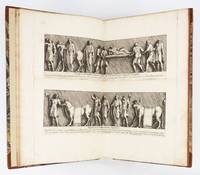
1690ST17496-016Rome: Buagni 1690. 492 x 310 mm. 19 1/4 x 12 1/4". 6 leaves of text numbered in sequence with the plates; i.e. title page frontispiece To the Reader plates 3-15 text leaves 16-19 plates 20-52. <br/> Modern quarter calf over marbled boards raised bands spine panels with gilt starburst centerpiece. With allegorical frontispiece featuring a portrait of the dedicatee Cardinal Otthobono and 46 FINELY ENGRAVED COPPERPLATES OF ROMAN ARCHES half of these double-page all mounted on stubs. Cicognara 3608; Brunet I 758 and VI 29473. Slight signs of use to the covers first and last three leaves faintly foxed one- to two-inch light dampstain to bottom corners far from images or text other trivial imperfections but A FINE COPY--internally clean fresh and bright with excellent impressions of the engravings and in a pleasing binding showing virtually no wear.<br/> <br/> This work depicting the triumphal arches of imperial Rome is considered by Cicognara to be "the most beautiful of this genre and classic especially for the magnificence and elegance of the prints which are the masterpiece of Pietro Bartoli." Bartoli 1635-1700 was an antiquary as well as an engraver; he produced engravings of many Roman antiquities and helped to excavate Nero's Domus Aurea the sprawling complex built by the emperor in the middle of Rome after the fire in 64 A.D. had destroyed much of the city. Bellori 1613-96 was an author and antiquarian who served as curator of antiquities for Pope Clement X. He was later librarian and antiquary to Queen Christina of Sweden who also employed Bartoli. Bartoli's illustrations show the Arch of Constantine the Arch of Titus and the Arch of Septimus Severus examining the details of each. J. M. Suarez wrote the text discussing the Arch of Septimus Severus. The vastness of the present volume the very considerable detail of the plates and the richness of the engravings make this a very impressive book. Buagni unknown
168043533Paris, Antoine Dezallier, 1680. In-16 réglé de (16)-139-(1) pp., maroquin lavallière, dos à nerfs, double filet sur les plats, tranches dorées (Capé).
1604002788Paris, Veuve de Sébastien Nivelle, 1604
167011320A Paris, Chez Thomas Jolly, 1670. In-12 de (4)-252-(1) pp., maroquin rouge, dos orné à nerfs, triple filet d'encadrement sur les plats, fleurons dorés aux angles et filets dorés au centre, tranches dorées (reliure de l'époque).
167844511S.l.n.d. (Amsterdam, Abraham Wolfgang, 1678). 4 tomes en un volume in-12 (132 x 73 mm) de (2)-203 pp. (parties I et II), 197-(2) pp. (parties III et IV), titre-frontispice gravé, maroquin rouge, dos orné à nerfs, triple filet doré encadrant une pièce d'ornement dorée sur les plats, dentelle intérieure, tranches dorées (Cuzin).
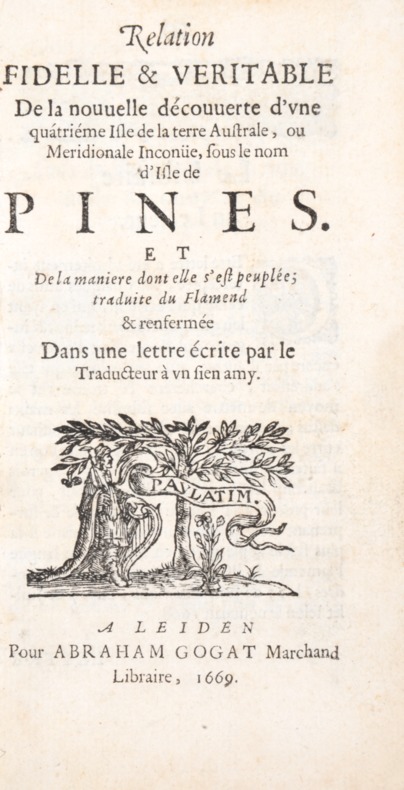
166916089Leiden, Abraham Gogat, 1669. In-16 de 45 pp., cartonnage Bradel vert, titre doré sur le dos (reliure du XIXe siècle).
1649ABC_49304Haarlem: Adriaen Roman 1649. Later black and orange painted paper wrappers showing a floral design. 4to. With a large woodcut printers device on the title page depicting a printing press surrounded by the Latin motto Labore et Diligentia and a Dutch quote from Genesis 3:19 with a small view of a school class below. Further with a large woodcut portrait of Laurens Janszoon Coster printer's device of A. Roman dated 1630 in the block on the final page 3 decorated woodcut initials and a woodcut tailpiece. Very rare first and only edition of a pamphlet containing reflections related to seafaring written by the Dutch minister Johannes Roman d. 1689. He had left his birthplace of Haarlem for Batavia in January 1647. On his journey to the Dutch East Indies on board the East Indiaman Nieu-Enchuysen built in 1636 also known under all spelling variations of Nieuw Enkhuisen he probably wrote the present pamphlet - comprising 15 short texts in which he reflects on topics relevant to those embarking on sea voyages. The present work is dedicated by the publisher Adriaen Roman to the directors of the Enkhuizen chamber of the VOC. A long poem in Dutch has been included at the end of the work on pp. 19-23 titled Ziel-verheffing over de verlossinghe die ons de Heere heeft ghedaen uyt verscheyde stormen ende nood-weder ons op de Spaensche zee over-ghekomen. Midtsgaders dat Hy ons heeft laten ontmoeten een Engelsch schip van de Barbades .The author born in Haarlem as son of the Dutch bookseller and publisher Adriaen Roman 1590-1649 went to Batavia in 1647 where he became a minister of a Malaysian church. He was active as a translator and in 1653 he wrote a manual of the Malay language titled Grondt ofte kort bericht van de Maleysche tale . which was published posthumously in Amsterdam in 1674 and again in 1689.With an extensive manuscript annotation in brown ink on the front pastedown containing biographical details on the author a quote from S. Gille Heringa "Naamlijst van Nederlandsche Dichters" in: Konst en letterbode 1848 part II p. 166. The pastedowns and first and last few leaves are very slightly water stained in the gutters and pp. 9-16 show a small water stain in the outer blank margin not affecting the text. Otherwise in very good condition.l Knuttel 6496; Landwehr VOC 767; Petit 2538; STCN 830231420 4 copies; USTC 1026292 4 copies same as STCN; Van der Wulp 9172; WorldCat 69050990 5 copies. Adriaen Roman, unknown
168761272Paris, Baptiste Loyson, 1662 (+) Paris, Coube, 1657 (+) Cologne, Pierre Marteau, 1687. 8vo. In contemporary ful calf with four raised bands and gilt ornamentation to spine. Super ex-libris to boards. Small paper-label pasted on to top of spine. Light wear to extremities, parts of gilting on spine worn off. Internally lightly browned and closely trimmed, occassionally touching letters. (10), 82, (12), 94, (4), 52 pp.
16202446Vienna 1620. In very good condition. unknown
163360823London, Robert Young, 1633. Folio. In contemporary full calf with five raised bands. Small paper-label pasted on to upper part of spine. Wear to extremities. Boards with scratches and a few wormholes, corners bumped and capitals chipped. Missing small part of leather on lower compartment. Vague dampstaining throughout and a few worm-tracts. Engraved title-page. (30), 345, (1), 351-416, 415-657, (1) + frontispiece.
167361081London, for Tho. Collins and John Ford in Fleet-Street, and Will. Cademan and Th. Popes Head New-Exchange Strand, 1673. 8vo. In contemporary full sprinkled calf with five raised bands and gilt lettering and ornamentation to spine. Small paper-label pasted on to top of spine. Previous owner's name in contemporary hand to lower margin of title-page. Light occassional marginal browning and worm-tract to last 4 leaves. Overall a good copy. (6), 185 pp. With numerous typographical errors in pagination, but complete.