EINSTEIN, ALBERT; VISHNIAC, ROMANBiblio.com

196 428 résultats
19802611New York: np 1980. First edition. Clamshell box. Fine. EXTREMELY RARE COMPLETE SUITE OF SEVEN LARGE SILVER PRINTS FROM EINSTEIN'S FAMOUS PHOTO SHOOT AT PRINCETON WITH ROMAN VISHNIAC. Each print is signed by Vishniac and dated "At Princeton 1942" in his hand below the image and numbered on the back. "One day Vishniac decided to visit Albert Einstein at Princeton to offer greetings from mutual friends in Berlin. Uninvited he hoped Einstein would pose for a portrait but Einstein had little interest. Vishniac recalled:<br /> <br /> It was a singular experience. An idea had suddenly come to him and the room was filled with the movement of the great man's thought. I waited several minutes and then when I saw that he did not intend to say anything more to me and that he was off in a world of his own I started taking pictures.<br /> <br /> Einstein later admitted that a Vishniac photograph taken that day was his favorite portrait" Encyclopedia of Twentieth-Century Photography. <br /> <br /> Vishniac provided details about this portolfio in a letter to an original recipient the letter is not included here explaining:<br /> <br /> The size of the edition's limitation is uncertain due to my age and only spare time to make them. The most expensive portfolios - Ansel Adams Kertesz - are limited in large numbers I can never measure up - 999 1001 and similar. <br /> <br /> The originality of Portfolio "Einstein" consists of its special character. It is made not to get images but the feeling that you are present during the creativity by the Great Man. All pictures are made with "hidden camera" method.<br /> <br /> The value of this portfolio is great and can hardly be estimated today. <br /> <br /> Princeton/New York: 1942 negatives; 1980 silver prints. Elephant folio clamshell box approx. 17x21 in. housing seven silver prints. Image size: approx. 10.25 x 13.25 in.; with matte 16x20 in. A few minor blemishes to box. Photos in fine condition. RARE. np unknown
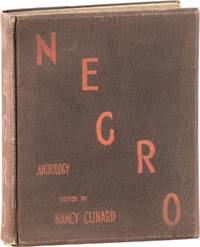
193488436London: Nancy Cunard at Wishart & Co 1934. First Edition. One of 1000 copies. Large quarto 31.5cm; publisher's dark brown buckram with titles stamped in red on spine and front cover and a map of "The Black Belt of America" on rear cover; dark brown topstain; viii23-855pp; with numerous half-tone and other illustrations throughout including the color fold-out map of Africa tipped in between p.584-585. Modest external wear particularly to base of spine and upper and lower front joint gently spine-sunned light wear to topstain with a touch of dust-soil to covers and faint foxing to endpapers and text edges occasionally extending into the margins; small closed tear to lower edge of title page with a tiny puncture to one lower fold on the map; hinges sound; a solidly Very Good copy. <br /> <br /> A monumental work compiling some 250 contributions by more than 150 authors two-thirds of whom were Black privately published and financed by Cunard a direct descendant of Benjamin Franklin and heiress to the Cunard shipping fortune. Blockson notes Cunard's "bohemian spirit" and "unbending devotion to ending racial prejudice" and calls Negro "a landmark in African-American literature see BLOCKSON 71 p.53-5. Cunard stated her purpose in publishing Negro was to show "that there was no superior race merely cultural differences that racism has no basis whatsoever." Among the impressive list of contributors were Langston Hughes W.E.B. Du Bois Zora Neale Hurston Jomo Kenyatta Samuel Beckett Ezra Pound Theodore Dreiser Countee Cullen Sterling Brown Claude McKay and many other key figures in the Harlem Renaissance. Of the 1000 copies printed many hundreds were destroyed during the blitz of London -- an assertion that was long offered by dealers without documentation but which is indeed supported by an annotation in Cunard's own copy held by the Ransom Center dated October 1941: ".what remained of the whole edition has been destroyed by bombs and fire last years Sept. save 10 copies saved by E.E. Wishart as if in prevision." This fact along with the book's unwieldy size and fragile binding accounts for the scarcity of attractive copies in the marketplace; the present example being among the nicer copies we have handled. BLOCKSON 71; PERRY 761 The Harlem Renaissance: An Annotated Bibliography and Commentary. 88436. Nancy Cunard at Wishart & Co unknown
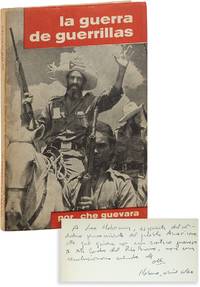
196086348Havana: Departamento de Instrucción del MINFAR 1960. First Edition. First printing. Warmly inscribed to the American economist and author Leo Huberman who was responsible for introducing the work to a North American audience: "A Leo Huberman exponente del verdado pensamiento del pueblo Americano esto que quiere ser un cantico guerrero a este lado del Río Bravo con un revolucionario saludo de / Che" To Leo Huberman exponent of the true thought of the American people this that would wish to be a war chant this side of the Rio Bravo with revolutionary greeting.; dated Habana April 6 1960. Small octavo; staple-bound pictorial paper wrappers; 1875pp. Text illustrations. Mild edgewear and some gentle rubbing at bound edge still Very Good or better. <br /> <br /> Terrific association copy of the true first edition of Che's classic treatise on people's war later published in English by Huberman's own Monthly Review Press 1961. Though unquestionably the work with which Guevara is most associated it is the hardest of his books to obtain in the first printing. It was issued presumably simultaneously in two formats - a 12mo edition measuring 15cm in height and with a price of 50cts on the rear wrapper; and as here in octavo measuring 20cm and with the wrapper unpriced. We have been unable to determine priority but would conjecture that the two issues reflect separate intent: a people's edition for slipping into a jacket pocket; and a more expensively-produced edition for libraries. Of the two the octavo edition is somewhat scarcer in institutional collections with about twenty examples noted in OCLC.<br /> <br /> Guevara's signature is not strictly speaking rare; however inscriptions with personal content are truly scarce and signed or inscribed copies of the present title are almost never seen. A copy inscribed to Argentinian dictator Juan Perón was offered by Sotheby's in 2016; a copy with Che's ownership signature appeared at Bonham's in 2014 but no further signed or inscribed copies appear in the auction record. Our copy is inscribed to Leo Huberman 1903-1968 Che's American publisher and a key figure of the American left during the Great Depression and into the decade of the Fifties. Huberman founded the important independent Marxist journal The Monthly Review in 1949 and it was as its editor that Huberman became closely involved with the revolution in Cuba - as well as more directly with Guevara himself. Along with his co-editor economist Paul Sweezy Huberman spent three weeks in Cuba in the months following the revolution much of that time in the company of Guevara who appears to have been among the authors' principal informants. Out of that visit came the book Cuba: Anatomy of a Revolution Monthly Review Press: 1960 a sympathetic account and one of the earliest for an American audience. Guevara is mentioned frequently in the book always in glowing terms - as for example: ". as we can testify from personal observation Che Guevara President of the National Bank has as brilliant quick and receptive a mind as is likely to be found in anyone occupying a comparable position in the government of any country in the world." p.92. It must have been during this visit that Huberman secured American publishing rights to Guerrilla Warfare and clearly this is when the present copy was inscribed to him an inscription that is truly effusive by Che standards giving every indication that Guevara held Huberman in mutually high respect.<br /> <br /> PROVENANCE: From the collection of a direct Huberman descendant 2025. Departamento de Instrucción del MINFAR unknown
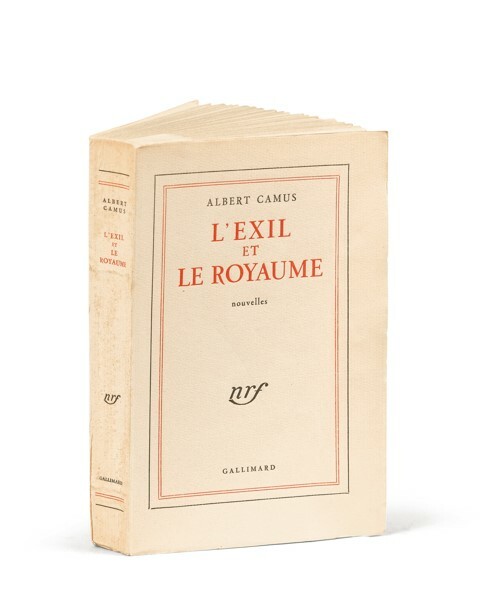
1957YTB-25Paris, NRF Gallimard, 1957. Edition originale. In-12 de 231 pp., (3) ff., (1) f. bl. Brochure de l’éditeur, exemplaire non coupé. Brochure de l’époque. 188 x 120 mm. EDITION ORIGINALE. PRECIEUX EXEMPLAIRE DU TIRAGE DE TETE, L’UN DES 45 SUR VELIN DE HOLLANDE VAN GELDER ET L’UN DES 5 EXEMPLAIRES HORS COMMERCE MARQUES DE A A E, CELUI-CI LETTRE C. Le recueil est composé de six textes : « La Femme adultère », « Le Renégat », « Les Muets », « L’Hôte », « Jonas » et « La Pierre qui pousse ». Ces nouvelles vont être pour l’écrivain « autant de gammes, dans le renouvellement des formes ». Albert Camus les entreprend dans une atmosphère de solitude et d’exil, vivant douloureusement le fait de se sentir prisonnier d’une image inexacte composée de lui par la critique et le public. Chacune de ces nouvelles sur la solitude et la solidarité témoigne de la force suggestive du réalisme symbolique. La prière d’insérer de Camus est suffisamment explicite : « Un seul thème, celui de l’exil, est traité de 6 façons différentes, depuis le monologue intérieur jusqu’au récit réaliste. Quant au royaume il coïncide avec une certaine vie libre et nue que nous avons à retrouver pour renaître enfin. L’exil à sa manière nous en montre les chemins, à la seule condition que nous sachions y refuser en même temps la servitude et la possession ». BEL EXEMPLAIRE, NON COUPE, CONSERVE DANS SA BROCHURE DE L’EPOQUE, TEL QUE PARU. Provenance : Bibliothèque Raoul Simonson (2013, II, n°443), sans ex-libris.
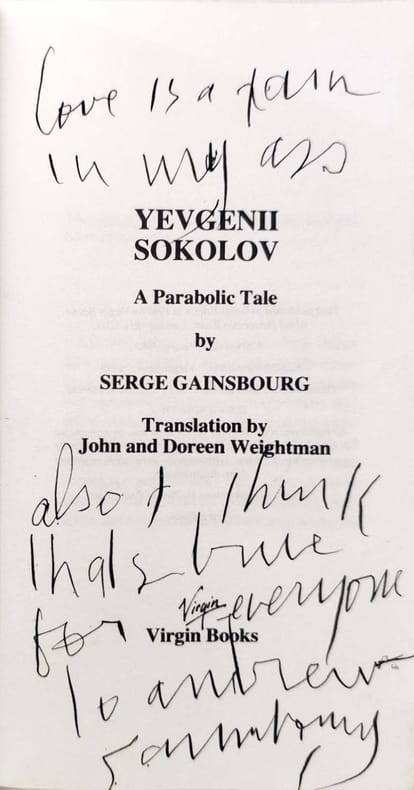
19801058741980 Londres, Virgin Books, 1980, broché, 110x195 mm. Avec 2 pages recto-verso d’illustrations couleur ainsi que la couverture qui rappellent les œuvres de Jacques de la Villeglé.
194851689André Gonin 1948 In-folio, en ff. sous couverture rempliée, chemise et emboîtage, 80 pp.18 lithographies en couleurs tirées dans les ateliers des Arts graphiques J.-E. Wolfensberg. Bel exemplaire.
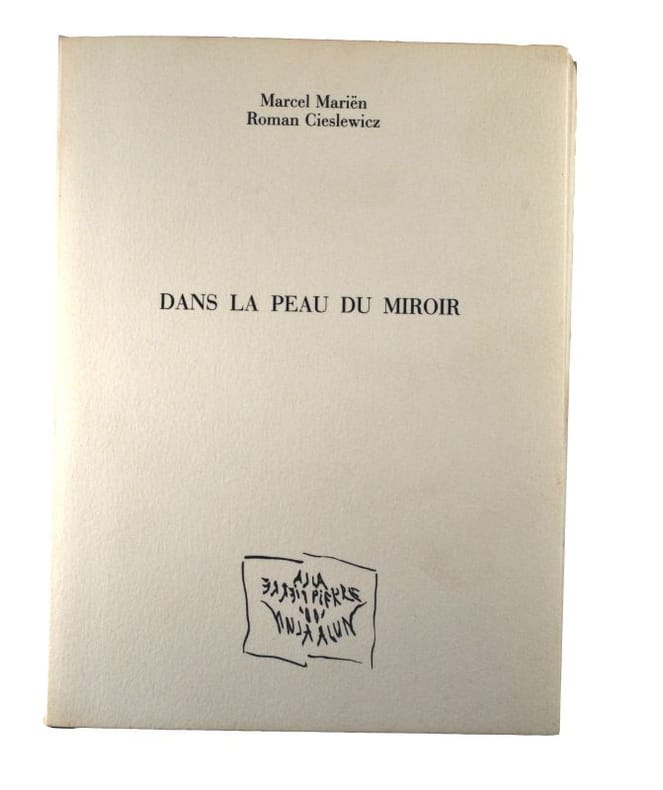
19881040951988 Bruxelles, La Pierre d’Alun, 1988, 224x166mm, 84pp., en feuilles sous couverture imprimée.Le texte de Marcel Mariën est illustré de 10 photomontages originaux de Roman Cieslewicz.Exemplaire 15/50 réservés aux amis de « La Pierre d’Alun » signés par les auteurs et comportant en frontispice une sérigraphie originale signée et numérotée de Roman Cieslewicz.Exemplaire unique comprenant les dix photomontages originaux, 360x265mm, portant tous au dos le cachet de la vente de l’atelier, l'ensemble contenu dans une boîte spécialement conçue et réalisée par l'Atelier Devauchelle.Roman Cieslewicz commence sa carrière cher « Elle » en 1963 ou il est rapidement nommé directeur artistique ; puis il dirige l’agence M.A.F.I.A. ou il conçoit des campagnes pour Prisunic, Woolmark, 3 Suisses ou Lancaster ; puis il crée la revue « Opus International », la revue « Kitsch » avec Topor et Sternberg, puis commence une longue collaboration avec le Centre Pompidou pour lequel il crée de nombreuses affiches et catalogues. Dans cette collaboration avec Marcel Mariën on reconnait l’influence du surréalisme belge.Provenance des photomontages : vente atelier Cieslewicz, Paris,19 mars 2006 , lot 238.(104095)
1920140553Munich: Dreilander Verlag 1920. Collection of 38 issues of the landmark Weimar-era periodical highlighting fantasy horror and early science fiction stories. Text in German. <br /> <br /> One of the world's first fantasy periodicals alongside the Swedish "Hugin" "Der Orchideengarten" featured a mix of new German stories alongside translations of foreign literature largely French including works by Victor Hugo Guy de Maupassant Voltaire Charles Dickens Edgar Allan Poe Joseph Capek H.G. Wells and many others. The magazine also made forays into the proto-science fiction genre as seen in Vol. 2 No. 4 entitled "Phantastik der Technik." <br /> <br /> A true product of the Weimar era's cultural blossoming the magazine also features stunning illustrations both with its two- and three-color cover art and its woodcut reproductions throughout: sinister yet elegant visions of anthropomorphic flowers religious idols Grim Reapers and gory deaths. "Der Orchideengarten" featured the work of Gustave Dore Otto Linnekogel Karl Ritter Alfred Kubim Carl Rabus Otto Nuckel and many more. <br /> <br /> This archive contains the following largely sequential issues: Vol.1 Nos.1-18 16 and 17 published as a combined issue; Vol.2 Nos.1-6 8 10-16 18-24. <br /> <br /> 9 x 12 inches saddle stapled. Very Good to Near Fine condition. In a custom quarter leather clamshell box. Dreilander Verlag unknown
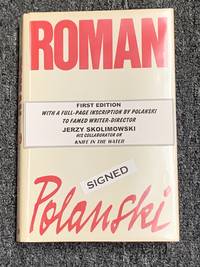
198412801<b>Signed & Inscribed First Edition First State copy a presentation copy by the internationally famed director to noted Polish writer/director Jerzy Skolimowski writer of Polanski's breakthrough film KNIFE IN THE WATER. Much better than very good copy slightly foxed to topedge leaves in like dust jacket showing light wear and a modicum of stain to spine & back panel not affecting the author portrait. This copy is a rarity indeed: it bears a full-page inscription by Polanski in Polish to Skolimowski translation provided by him on a laid-in sheet. In blue ink: "Romek. So you see what is happening / I am signing my biography to you / And it is in English / You could not have foreseen this / during those hot evenings / on Narutowicra Street / when you were served / fruit juices by Kuba / Love/ R." Signature a rarity today highly sought after; an inscription by him particularly one with this degree of meaning & history in such an association on a presentation copy is an extraordinary uniquity.</b> Morrow hardcover books
193258248New York: Charles Scribner's Sons 1932. First Edition. First Printing. Octavo 20cm; publisher's folded and gathered signatures sewn together across the spines with unprinted jade green laid paper wrappers glued onto preliminary and terminal leaves; x2415pp. Light wear and dust-soil to wrappers though contents are fresh and clean; Near Fine. Caldwell's first novel and second book produced by a commercial publisher a searing fictional depiction of poor white life in the deep South. "The story of a Georgia sharecropper shelved by the plantation owner allowed to live in a tumble-down shack but not allowed to raise a crop. Pictures a family unbelievably degraded and destitute - the end result of a bad system" COAN p.56. While the novel infuriated Southern readers it was nevertheless an enormous success basis for John Ford's 1941 film starring Charley Grapewin Gene Tierney and Dana Andrews. A Modern Library 100 book and one of the defining works of the 1930's rare in this pre-publication format with none found in the auction record. HANNA 570; FLYNT & FLYNT 73. Charles Scribner's Sons unknown
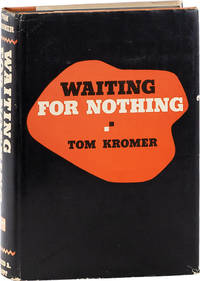
193558667New York: Alfred A. Knopf 1935. First Edition. First Printing. Octavo 19.25cm; orange cloth with titling and decorations stamped in black on spine and front cover; black topstain; dustjacket; x1873pp. Contemporary bookplate of Brigadier General Philip R. Faymonville on front pastedown hint of sunning to spine else a fresh Fine copy. Dustjacket is unclipped priced $2.00 with light wear to extremities hint of sunning to the red portions on the spine and a faint diagonal crease to upper front flap; Near Fine. Offered together with a copy of the Advance Issue. Octavo 19cm; publisher's taupe cloth with titles stamped in burgundy on front and rear covers; burgundy topstain; dustjacket; 48pp. Light wear to extremities with a touch of dust-soil to lower board edges; contents clean; Near Fine. <br /> <br /> Laid into the first edition is a brief one-page TLS from Sinclair Lewis to Blanche Knopf dated October 2 1936: "Dear Blanche: Tom Kromer has asked me to read his novel "Waiting for Nothing" to see if I want to recommend him for the Guggenheim Fellowship. Would you like to send me a copy of it here at the Essex House Yours sincerely Sinclair Lewis." Typed letter on white bond measuring 8 5/8" x 11"; 17 lines 66 words with a few old folds a small tear to right edge and staple holes at upper left corner. A quintessential novel of the Great Depression and a masterpiece of understated desperation written by a West Virginia drifter who famously scribbled his story down on scrap paper scrounged on the streets in boxcars and in hobo jungles. The novel was highly praised upon publication but Kromer never mustered another book-length work; he died tubercular and forgotten in a West Virginia sanatorium. The novel was essentially "lost" until its republication by the University of Georgia Press in the 1980s. <br /> <br /> In 1936 Kromer prepared his application for a Guggenheim Fellowship the basis for which was six completed chapters of his working class novel Michael Kohler and a discussion of the industrial scene and proletarian character he explored in Waiting For Nothing. It would have been a logical leap for him to have solicited an recommendation from Lewis who by then was nationally recognized as an author in the proletarian vein and whose novel It Can't Happen Here was published the same year as Kromer's debut. Kromer was unsuccessful at securing a Fellowship though the letter is evidence that Lewis at the very least made an effort to acquire a copy of his novel from Knopf in an attempt to help him in his efforts. HANNA 2059; RIDEOUT p.297. Alfred A. Knopf unknown
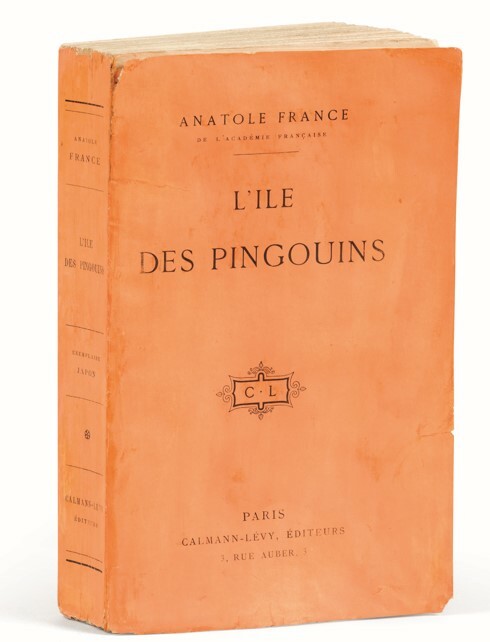
1908YTB-20Paris, Calmann-Lévy, s.d. (1908). In-12 de XV et 419 pp. Brochure orange de l’éditeur. 185 X 120 mm. EDITION ORIGINALE DE CETTE SATIRE DE LA CIVILISATION OCCIDENTALE ET DES TEMPS MODERNES D’ANATOLE FRANCE, PARUE QUELQUES ANNEES AVANT LA PREMIERE GUERRE MONDIALE. L’un des 75 exemplaires sur Japon, premier papier. Carteret, I, 293 ; Talvart, VI, 151 ; Pierre Versins, Encyclopédie de l’utopie et de la science-fiction, 349. « Dans ce conte historique et philosophique, publié en 1907, au ton voltairien, le premier livre s’intitule Les origines et relate d’abord le voyage du « saint homme Maël » sur une auge de pierre, vers une île bretonne qu’il convertit au catholicisme. Il arrive dans une île peuplée uniquement de pingouins. Le vieillard presque aveugle baptise étourdiment les pingouins qu’il prend pour des hommes et suscite dans une assemblée de l’Église au Paradis une dispute théologique assez semblable à celles de synodes.» (Françoise Létoublon, Impressions d’îles). « La « Pingouinie » ce n’est pas seulement la France, mais l’ensemble des nations qui lui ressemblent. A travers elle, l’auteur s’en prend aux sociétés occidentales bourgeoises et critique âprement leur fascination à l’égard d’un Etat géant en pleine expansion » (Chantal Foucrier, Le mythe littéraire de l’Atlantide, 1800-1939). « Le dernier livre de l’île des Pingouins brosse un tableau des révolutions successives, du capitalisme au collectivisme en passant par de nouveaux âges barbares, qui préfigurent les contre-utopies modernes » (Pierre Versins). Les livres V, VI et VII se situent au cœur de l’histoire contemporaine. Cette partie de la civilisation pingouine est envisagée du point de vue du nouveau régime libéral que France synthétise en trois épisodes principaux : le premier (Châtillon) n’est autre que l’aventure du général Boulanger ; le deuxième présente les étapes de l’affaire Dreyfus ; le troisième illustre les intrigues des coteries politique, de la haute finance et des hommes d’affaires qui font l’impossible pour se jeter aveuglément dans une guerre (la guerre de 1914 qu’Anatole France avait prévue avec lucidité). Dans le livre VIII l’auteur esquisse les derniers développements de la société capitaliste, la révolution collectiviste, les conflits armés, les retours à la barbarie, enfin les nouvelles civilisations qui perpétueront les anciennes erreurs auxquelles l’humanité semble à jamais condamnée. « L’Affaire Dreyfus a-t-elle eu sa « Ferme des animaux » ? Oui, certes, dans l’île des pingouins » d’Anatole France. Le roman peut se lire comme une amère satire allégorique des temps modernes. Anatole France réussit à présenter un récit désopilant, une interprétation politique sérieuse de l’Affaire Dreyfus et une peinture fidèle du désenchantement qu’éprouvaient déjà en 1908 les dreyfusards les plus idéalistes, comme Péguy ou France lui-même » (S. Rubin Suleiman). TRES SEDUISANT EXEMPLAIRE CONSERVE DANS SA BROCHURE D’EDITEUR ORANGE, TEL QUE PARU. AUCUN EXEMPLAIRE SUR JAPON N’EST REPERTORIE SUR LE MARCHE DEPUIS LE DEBUT DES RELEVES, IL Y A PLUS DE 35 ANS.
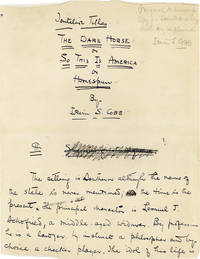
193446764N.p.: S.i. 1934. Holograph manuscript composed in dark blue ink on 152 numbered leaves rectos and housed in a bespoke chemise and slipcase by Barrieri. With presentation inscription from Cobb to MGM film produced and screenwriter Samuel Marx in pencil at upper right corner of title leaf: "Original manuscript copy for Sam Marx Esq / with my compliments / Irvin S. Cobb." A heavily-revised draft with extensive holograph additions and elisions in pencil and in pen throughout marking substantial textual differences between this and the final draft of the screenplay. Mild wear and handling; preliminary leaves with faint creasing to extremities with subtle toning to title leaf; Very Good or better. Slipcase with some light wear and minute board exposure to points around opening else Near Fine. Early unpublished manuscript treatment of the 1939 Paramount Studios film Our Leading Citizen directed by Alfred Santell with a screenplay by Jack Moffitt. A "Capital vs. Labor" story set in a once-small town that has evolved into an industrial city and centered around Lem Schofield an attorney and homespun philosopher and Clay Clinton son of Schofield's deceased partner. Clinton in love with Schofield's daughter and anxious for quick success joins the employ of J.T. Tapley the town's corrupt and influential industrialist. "When Tapley imposes a ten percent wage cut at his factory the workers walk out on strike precipitating a labor war. Lem immediately withdraws as Tapley's attorney but Clay ignorant of the nefarious tactics that Tapley is planning stays on. To crush the strike Tapley calls in a gang of strikebreakers led by Shep Muir. While pacifist union leader Jim Hanna struggles to end the strike peacefully communist agitator Jerry Perkins arrives in town to advocate radicalism and violence. Riots break out and amid an atmosphere of fear and suffering Lem steps in to quell the unrest. After insuring the arrest of agitators Peters and Muir Lem works to institute a labor settlement and Clay finally recognizing Lem's virtues nominates him for the position of United States Senator" TCM. While the final script faulted greedy capitalists and violent revolutionaries alike the film was blacklisted by V.J. Jerome head of the communist cultural commission who got an early look at the script and together with film critic Howard Rushmore deemed it potentially anti-communist. S.i. unknown books
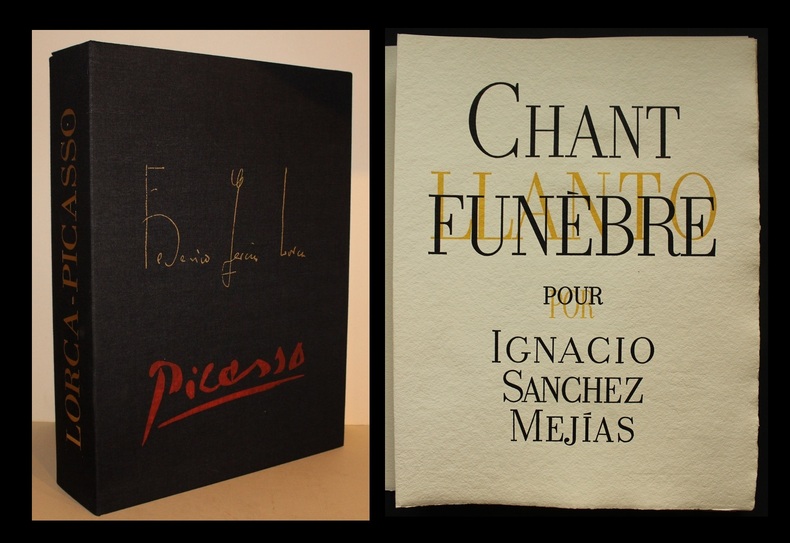
1976136111976 Moulin de Vauboyen à Bièvres en Essonne, Pierre de Tartas et SPADEM, 1976, 1 vol. in-folio (370 x 280 mm) en feuilles sous couverture gaufrée et boîte à châsse en toile noire de l'éditeur, auteur à l'or et signature de Picasso en rouge sur le plat supérieur et auteur et illustrateur à l'or au dos, de 71 pp. - (2) ff. (justificatif de tirage et achevé d'imprimer) - (2) ff. bl.Très bon état de lensemble.
193514689Paris Les Cahiers américains 1935 Deux volumes in-12 brochés, couvertures orange, numéros 10, 11 et 12 des Cahiers américains. Dos brunis, envoi de Barzun au journaliste Henry Mercadier.
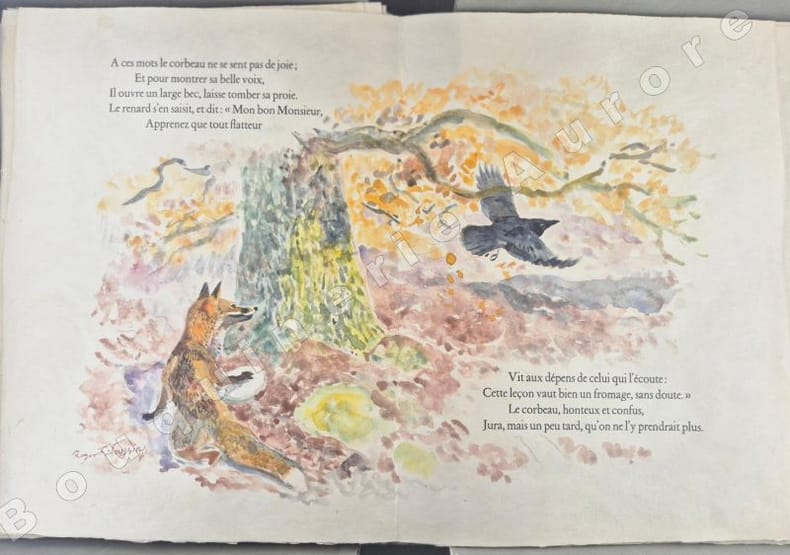
1960145941960 Paris, Vialetay, 1960, 1 vol. in-folio (386 x 288 mm) en feuilles sous couverture rempliée, avec petite aquarelle représentant un oiseau au plat supérieur, boîte à châsse recouverte de toile de Jouy, non paginé.Parfait état
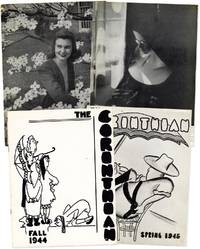
194388110Milledgeville GA: Georgia State College for Women 1943-1945. First Editions. Four slim quarto issues 29.25cm; original photo-illustrated and pictorial wrappers stapled. Publication sequence as follows: Spring 1943 Vol.XVIII No.2 1-1920pp; Fall 1943 December 1-1920pp; Fall 1944 34-1718-20pp; Spring 1945 34-1819-20pp; illus. The Spring 1943 and Fall 1944 issues are Very Good with some light external wear minor dust-soil and occasional foxing to wrappers with a few tiny tears and abrasions and a small ink mark to front cover of one issue. The Fall 1943 issue is Very Good with light wear and dust-soil to wrappers and an ad carefully torn out from inner rear wrapper. The Spring 1945 issue shows some splitting above and below the staples faint foxing along the left edge with the wrappers present but detached and neatly separated along the spine-fold; Very Good. <br /> <br /> A significant collection of issues of the Corinthian the literary magazine of the Georgia State College for Women where Flannery O'Connor attended on an accelerated program from 1942-1945 after graduating from Milledgeville's Peabody High School. She joined the staff of the Corinthian where she rose to the rank of editor in 1944 and contributed numerous poetry and prose pieces and also the occasional cartoon. Aside from her contributions to Peabody High's school newspaper where she served as art director these pieces in the Corinthian constitute some of hear earliest published work. Her contributions to the present issues all credited to M.F. O'Connor are as follows: Spring 1943 - "Elegance Is Its Own Reward" prose "Effervescence" poetry; Fall 1943 - "Home of the Brave" and "Doctors of Delinquency" prose; Fall 1944 - "Fashion's Perfect Medium" prose "Pftt" poetry; Spring 1945 - "Higher Education" poetry "Education's Only Hope" prose. While uncredited and lacking her later stylized "MFOC" initials both the cover of the Fall 1944 issue and two large cartoons illustrating "Fashion's Perfect Medium" are a dead match for O'Connor's style right down to the angular and chinless facial features of her subjects. Issues of the Corinthian are rare in commerce with none appearing in the auction record; OCLC notes 4 locations holding any issues Georgia College & State Univ UGA Brown BL with Emory showing 3 issues from 1942-45 held with O'Connor's papers. <br /> <br /> Provenance: From the collection of Kitty Burruss Bull a friend of O'Connor's at GSCW and her associate editor. Through a descendant. 88110. Georgia State College for Women] unknown
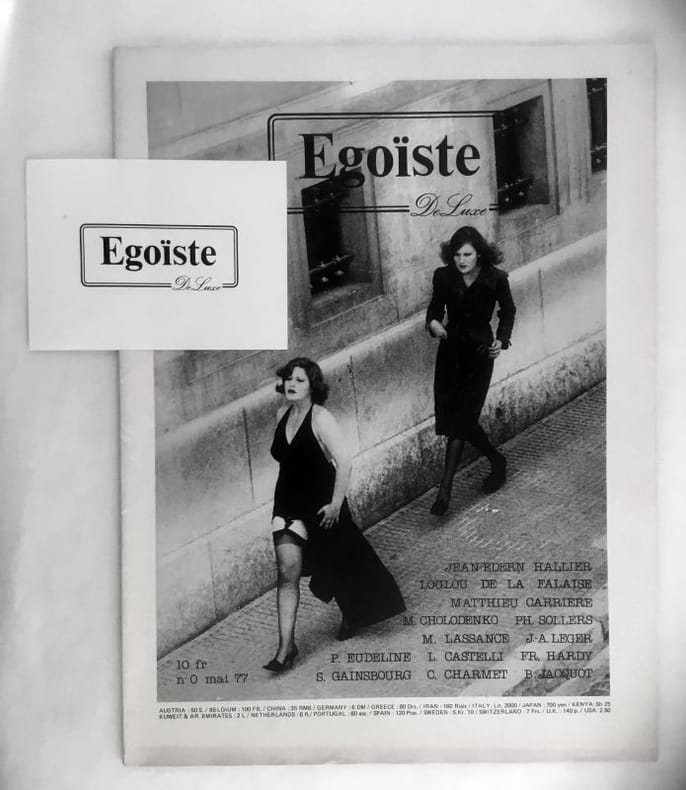
19771025331977 Dirigé par Gérard Julien Salvy, puis Nicole Wisniak, Philippe Morillon étant directeur artistique de la plupart des numéros.En novembre 1977 paraît le premier numéro du journal « Egoïste » sous l'impulsion de Nicole WisniakNotons également son exceptionnelle longévité de 44 ans, avec un tirage qui atteignit 35000 exemplaires.Très bel état général, quelques rares défauts aux premiers numéros.
195560624Paris, The Olympia Press, (1955). 2 volumes. Original green printed wrappers with slight wear along the edges. Hinges and capitals with slight paper loss. Apart from the edgewear and monir loss of paper, both volumes are fresh, tight, square, and clean, also internally.
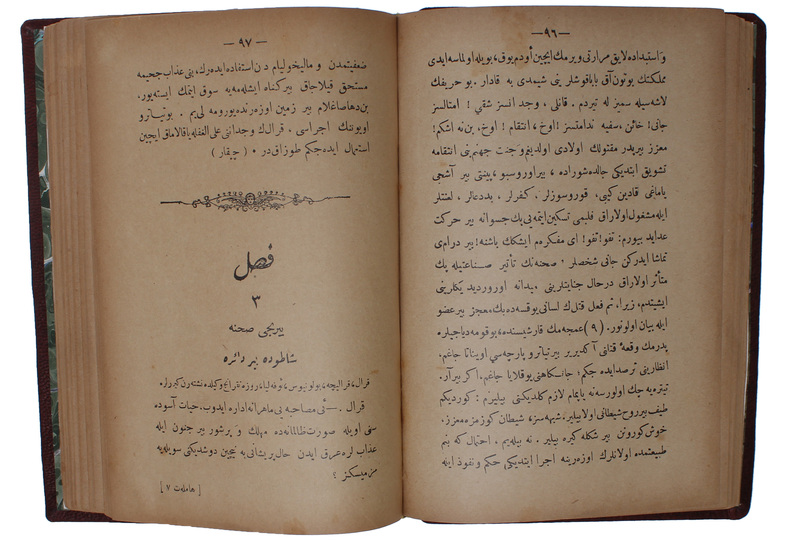
190859728Cairo, Kütübhane-i Içtihad, 1908. 8vo. In recent full calf with four raised bands. With blind-stamped ornamentation to boards in old Ottoman style. Very light occassional brownspotting, last few leaves a bit frayed, but no loss of text. Otherwise a fine copy. 243 pp
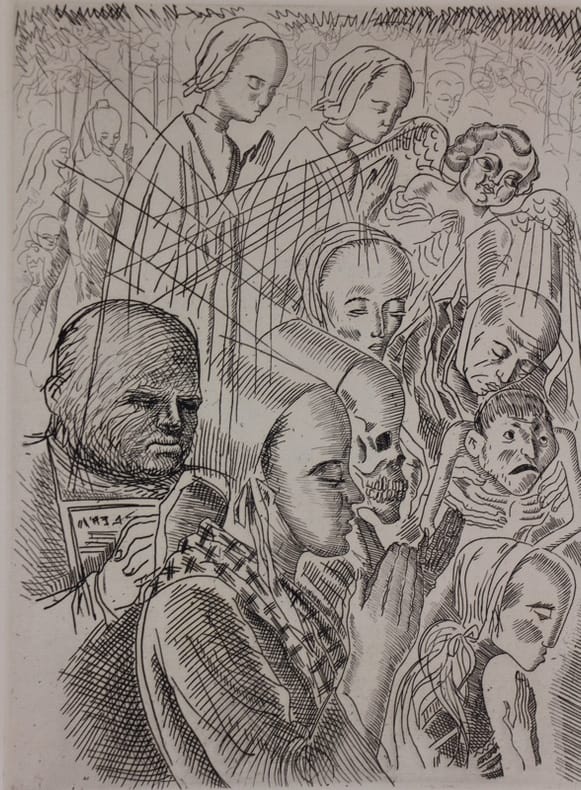
1935130571Paris, René Helleu 1935 In-folio 420 x 320, en feuilles sous couverture rempliée ornée d’une vignette sur bois rouge, 5ff- 57 pp. - 1 ff , 8 eaux-fortes de Romanin sous serpente. Tiré à 150 exemplaires numérotés sur Ingres d'Arches. L'ouvrage présente un défaut de foliotage : la table indique le poème " Paysage mauvais " à la page 11 alors qu'il est imprimé en page 13, le texte est cependant bien au complet de tous les poèmes indiqués Couverture un peu ternie. Le seul ouvrage illustré par Jean Moulin. Sous-préfet à Chateaulin de 1930 à 1933, il rencontra Max Jacob et, sur son conseil, illustra le recueil de poèmes de Tristan Corbière, «Armor», extrait des Amours jaunes. Le poème de Corbière évoque l'un des tragiques épisodes des relations entre la Bretagne et la République : soixante mille mobiles bretons, levés par Gambetta pour s'opposer aux envahisseurs prussiens, furent rassemblés en 1870 dans un camp à Conlie près du Mans. Les conditions étaient telles que bon nombre y moururent. Ceux qui en réchappèrent furent envoyés à la «boucherie» de la bataille du Mans. Jean Moulin dessine une fosse commune, en bordure d'un immense champ de croix de bois, où s'entassent corps d'hommes et de femmes. La fulgurante prémonition impressionne. Il signe ses oeuvres sous le pseudonyme de Romanin. En 1942, il ouvre une galerie d'art à Nice sous le même pseudonyme pour couvrir ses activités dans la résistance. Ouvrage très rare, enrichi d’un envoi autographe à “Antoinette en hommage à son beau talent. Très sympatiquement. Romain”. Nous n’avons pas identifié le signataire mais le destinataire doit être Antoinette Sach 1897 - 1986 dont on sait l’intimité avec Jean Moulin. Selon Pierre Péan, c’est elle qui le poussa à rejoindre le général de Gaulle à Londres, plutôt que de rallier les Etats-Unis. cf. Pierre Péan, Jean Moulin - L'Ultime mystère, Albin Michel 2015.
197910200Montréal Gilles Corbeil éditeur 1979
1958110353Paris, Jacques Vialetay, impr. Robert Blanchet 1958 2 volumes. Grand in-4 34 x 28 cm. En feuillets, sous chemise et étui rigides, couvertures rempliées, premiers plats illustrés d’une vignette, 253 pp. en pagination continue, composé en Libra de corps 20 par Robert Blanchet, 56 illustrations dont un frontispice réhaussé d’or et 8 à pleine page, 33 lettrines de Paul Jouve, gravées sur bois par Jacques Camille et Georges Beltrand. Tirage à 223 exemplaires numérotés. Celui-ci sur vélin de Rives, l’un des 25 exemplaires réservés aux collaborateurs, justifié au crayon “exemplaire d’artiste”. étui en partie passé, une petite brunissure au faux-titre et petite tache à la justification. Bel exemplaire.
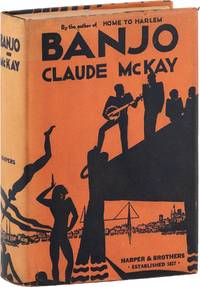
192988435New York: Harper & Brothers Publishers 1929. First Edition. First Printing. Octavo 19.5cm; navy blue and red paper-covered boards and black cloth backstrip with titles stamped in gilt on spine; decorative endpapers; orange topstain; dustjacket; viii23-3262pp. Spine ends gently nudged topstain slightly dulled else a fresh very Near Fine copy. In the original dustjacket designed by Aaron Douglas; unclipped priced $2.50 gently spine-sunned and lightly edgeworn with a few tiny tears a tiny split at rear flap fold and some mild dust-soil; still a bright Near Fine copy. <br /> <br /> McKay's second novel an accurate social perspective of Black life in southern France drawn directly from McKay's experience living in Marseilles. "Lincoln Agrippa known to his drifter cohorts on the 1920s Marseilles waterfront as "Banjo" passes his days panhandeling and dreaming of starting his own little band. At night Banjo Malty Ginger Dengel Bugsy Taloufa Goosey and even Jake of Home to Harlem prowl the rough waterfront bistros drinking looking for women playing music fighting loving and talking - about their homes in Senegal the West Indies or the American South; about Garvey's Back-to-Africa Movement; about being Black. When Ray a writer joins the group it triggers his rediscovery of his African roots and his feeling that at last he belongs to a race "weighted tested and poised in the universal scheme" from the HarperCollins reissue. PERRY 377; GLOSTER p.165-166. 88435. Harper & Brothers Publishers unknown
193446764N.p.: S.i. 1934. Holograph manuscript composed in dark blue ink on 152 numbered leaves rectos and housed in a bespoke chemise and slipcase by Barrieri. With presentation inscription from Cobb to MGM film produced and screenwriter Samuel Marx in pencil at upper right corner of title leaf: "Original manuscript copy for Sam Marx Esq / with my compliments / Irvin S. Cobb." A heavily-revised draft with extensive holograph additions and elisions in pencil and in pen throughout marking substantial textual differences between this and the final draft of the screenplay. Mild wear and handling; preliminary leaves with faint creasing to extremities with subtle toning to title leaf; Very Good or better. Slipcase with some light wear and minute board exposure to points around opening else Near Fine. Early unpublished manuscript treatment of the 1939 Paramount Studios film Our Leading Citizen directed by Alfred Santell with a screenplay by Jack Moffitt. A "Capital vs. Labor" story set in a once-small town that has evolved into an industrial city and centered around Lem Schofield an attorney and homespun philosopher and Clay Clinton son of Schofield's deceased partner. Clinton in love with Schofield's daughter and anxious for quick success joins the employ of J.T. Tapley the town's corrupt and influential industrialist. "When Tapley imposes a ten percent wage cut at his factory the workers walk out on strike precipitating a labor war. Lem immediately withdraws as Tapley's attorney but Clay ignorant of the nefarious tactics that Tapley is planning stays on. To crush the strike Tapley calls in a gang of strikebreakers led by Shep Muir. While pacifist union leader Jim Hanna struggles to end the strike peacefully communist agitator Jerry Perkins arrives in town to advocate radicalism and violence. Riots break out and amid an atmosphere of fear and suffering Lem steps in to quell the unrest. After insuring the arrest of agitators Peters and Muir Lem works to institute a labor settlement and Clay finally recognizing Lem's virtues nominates him for the position of United States Senator" TCM. <br /> <br /> While the final script faulted greedy capitalists and violent revolutionaries alike the film was blacklisted by V.J. Jerome head of the communist cultural commission who got an early look at the script and together with film critic Howard Rushmore deemed it potentially anti-communist. S.i. unknown