VOCHS Lukas (Ingenieurs und Architekts, auch der kaiserlichen Akademie feiner Künste und Wissenchaften Ehrenmigliedes)Livre Rare Book
136 résultats
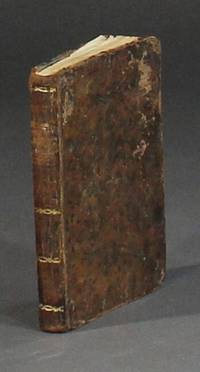
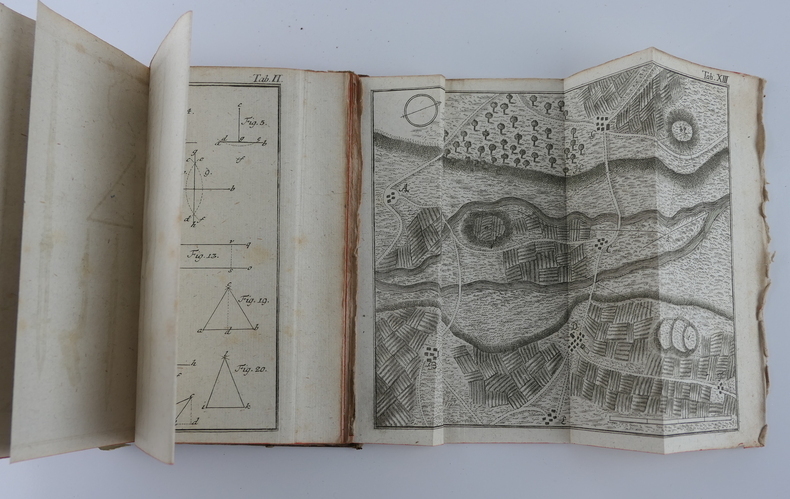
179780497Augsburg, Bei Matthäus Riegers Söhnen, 1797, in-12, demi-reliure à coins, dos long orné, pièce de titre cuir, plats papier à la colle, toutes tranches rouges, 233p. Seconde édition de cet ouvrage peu courant. 13 gravures dépliantes in fine. Texte et gravures en bon état de fraîcheur.
1763117894Chez B. Brunet 1763 6 fascicules réunis en 1 volume. In-8 Reliure d’époque plein veau marbré. 21 cm sur 13,7. Dos lisse orné de fleurons dorés encadrés de triple filets et d’une roulette en pied. Tranches rouges. 41-44-65-91 dont pages 63/64 déchirées 16-75pp.. Couverture avec un travail de vers sur les plats. Manque de cuir angulaire sur premier plat et coins émoussés. 6 derniers feuillets effrangés en marge. Ouvrage imprimé sur différents papiers. Bon état.
175920192Paris, B. Brunet, 1759 ;suivi de : Eloge de Maximilien de Bethune, duc de Sully, surintendant des Finances, etc, principal ministre sous Henri IV. Discours qui a remporté le prix de l’Académie Française en 1763. Paris, Regnard, 1763 ; relié en un volume in-8, veau porphyre, dos lisse décoré “à la grotesque”, pièce de titre grenat, triple filet d’encadrement des plats, filet sur les coupes, tranches rouges (reliure de l’époque) ; [4] 42 ; [2] 91 pp.
174812096Breslau, Johann Jacob Korn, 1748. 8° (18,5-22,5 cm). 16 Bll., 848 S. Pergamenteinband der Zeit mit montiertem Rückenschild
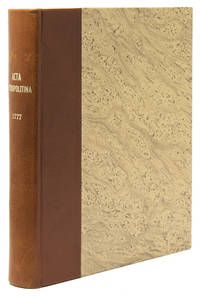
1780266788Petropoli Saint Petersburg: Typis Academiae scientiarum 1780. 18 folding engraved plates at end one folding table in text. viii LACKING 84 pages of introductory matter pp. 1-395 pp. Articles in Latin and in French. 1 vols. 4to. Modern quarter brown morocco and marbled boardsnew endpapers. Ex-library with discard stamp on original endpaper. 18 folding engraved plates at end one folding table in text. viii LACKING 84 pages of introductory matter pp. 1-395 pp. Articles in Latin and in French. 1 vols. 4to. Part two of the report on the year 1777 by the St. Petersburg Imperial Academy of Sciences. Articles include<br/><br/>Peter Simon PALLAS article on the giant anteater Observationes circa Myrmecophagam Africanam at pp. 223-231; Description du Bufle i.e. Buffalo à Queue de Cheval.pp. 232-257; Observations sur l'Asne dans son état sauvage ou sur le veritable onagre des anciens pp. 258-277.<br/><br/>An article by Daniel BERNOULLI at pp. 109-129 on the mesurement of time; and several articles by the great Swiss mathematician Leonhard EULER: De integratione formulae; De valore formulae integralis; Novae demonstrationes circa resolutionem numerorum in quadrata; Considerationes circa brachystochronas; Sur l'effet de la refraction dans les observations terrestres; De motu oscillatorio penduli cuiuscunque dum arcus datae amplitudinis absolvit; De theoria lunae ad maiorem perfectionis gradum evehenda. Typis Academiae scientiarum unknown books
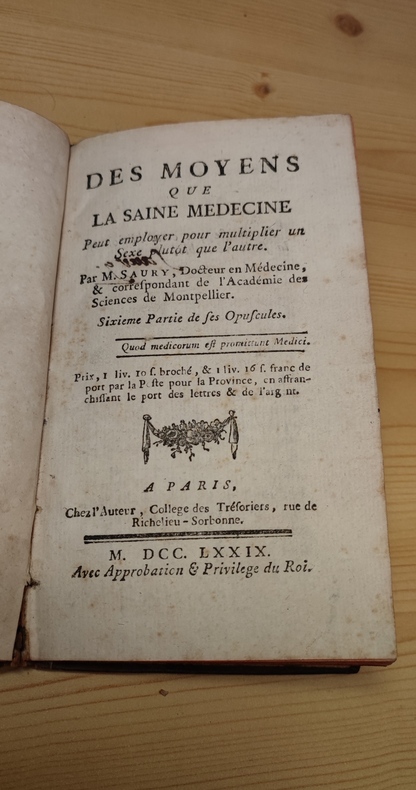
17793508A Paris, chez l'Auteur, 1779. Grand in-12 (17 X 10,4 cm), 36 pp., veau fauve d'époque, dos orné (pas de pièce de titre), tranches rouges. Vignette sur le titre et bandeau. Exemplaire certifié et signé par l'auteur. (petits défauts d'usage).
170825814paris Jean Moreau 1708 -in-12 PLEIN VEAU un volume, reliure d'époque plein-veau brun in-douze (binding full calfskin in-12) (10 x 16,5 cm), dos à nerfs (spine with raised bands), décoré "or" et à froid (gilt and blind stamping decoration), titre frappé "or", pièce de titre sur fond bordeaux avec un filet perlé "or" en encadrement, entre-nerfs à fleuron "or" dans un encadrement d'un filet perlé "or" avec rinceaux "or" aux angles, filet à froid de part et d'autre des nerfs, roulette "or" en pied, trés léger manque de cuir à la coiffe de tête, léger manque de cuir sur moins d'1/4 de cm2 en haut du 1er plat, coins écornés, Toutes tranches lisses jaspées rouges, Edition Ornée d'une gravure titre en frontispice gravée par J. B. SCOTIN dit SCOTIN LE JEUNE + une vignette en bas du Titre gravée sur bois en noir + bandeaux fronts de chapitres, lettrines et culs-de-lampes historiés gravés sur bois en noir, [(2) + 532 + 10 p. de Tables] pages, 1708 A Paris, chez Jean Moreau Editeur,
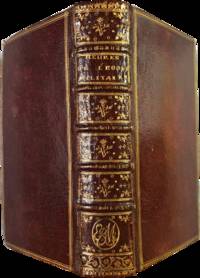
17744067Paris: Imprimerie Royale 1774. 8vo 163 x 91 mm. 18 3 3 528 30 3 3 pages. Partly double column. Woodcut and type-ornament head- and tailpieces. Faint marginal discoloration. Contemporary red morocco sides with triple thick and thin ruled border spine in six gold-tooled compartments title lettered in second compartment gilt medallion with monogram of the Ecole Royale Militaire in lower compartment gilt edges Brokatpapier endleaves with semis of gold stars and dots corners bumped. Provenance: modern etched bookplate with initials AK. Only Edition of a complete course of religious instruction for the pupils of the Ecole Royale Militaire founded in 1751 by Louis XV as a military academy for the sons of noble families including those who had sunk into poverty. The book of which only one other copy is recorded was printed and bound for the school. At first two hundred and eventually five hundred teenagers from all over France were admitted on the basis of an exam taken at the end of primary school. The huge expenses entailed by the construction of a magnificent palace to house the school designed by the architext Ange-Jacques Gabriel were covered by a national lottery and by taxes on playing cards. A single cohort graduated before the project ran out of money and although the buildings had been completed in 1787 the academy closed its doors. Pillaged during the Revolution it would not open again for the same purpose for another century. The first part of the book which was approved by and possibly written by Christophe de Beaumont the Archbishop of Paris consists of a primer of the Christian religion. It opens with the Archbishop's rules for the administration of religion in the school. From 6 am masses to near-daily catechisms and energetic prayer sessions to prepare for confession the young future officers were reminded regularly that their duties to God were as important as those to the King. The meticulous scheduling of each day and other casual details testify to the complete control of their lives by the authorities of the academy whose premises they seem never to have left not even on Christmas. An allusion to visits by the religious Directors to students in prison and in the infirmary are further reminders to the modern reader of the harsh conditions of young people's lives when children were viewed as small-sized adults. Including a table of moveable feasts from 1775 to 1793 and a calendar of Saints' days this section provides the basics of religion from the Ten Commandments to instructions on communion on how to conduct oneself at Mass and the ritual itself on examining one's conscience and preparing for confession and so on. While most could apply equally to any student including the repeated exhortations to contemplate one's sins clearly a central concern to these teachers of adolescents a few paragraphs address the special circumstances of soldiers. These include prayers to be recited before battle or after victory instructions on providing absolution to the dying in the absence of an available priest requiring memorization of a rather long passage and finally a prayer for a good death. The second and longer part printed in two columns contains the Offices for Sundays and feast days throughout the year partly in Latin. OCLC locates a single copy at the BnF. Imprimerie Royale unknown books
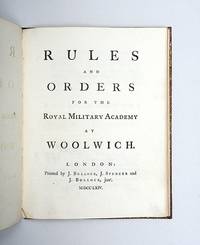
1764159337London: Printed by J. Bullock J. Spencer and J. Bullock junr. 1764. Good officers of Artillery and perfect Engineers Presented in a handsome period morocco a pair of notably scarce editions of regulations pertaining to the Royal Military Academy Woolwich; comprising the second recorded edition of the rules for the institution as a whole following that of 1741 together with the seemingly sole edition of the statutes relevant to officer-cadets specifically. We have traced no copy of either on auction records. The Academy - or "The Shop" as it was known colloquially - was established by Royal Warrant in 1741 for the training of "good officers of Artillery and perfect Engineers" its "gentlemen cadets" initially ranging in age between ten and thirty. The curriculum focused on mathematical theory and the scientific principles of gunnery and fortification employed to a practical end. It closed in 1939 and reopened in 1947 as the Royal Military Academy Sandhurst. The present regulations were drawn up under the eye of John Manners marquess of Granby 1721-1770 who in 1763 became master-general of the ordnance; another edition was put out in 1776. Quarto 225 x 173 mm. Contemporary red morocco decorative gilt spine sides with gilt border comprising a dog-tooth roll enclosing a broad panel formed of multiple tools including stars and circlets gilt edge roll and turn-ins Nonpareil pattern marbled endpapers gilt edges. Binding a trifle rubbed and marked gilt at head of front board dulled and a little wormed loss to lower compartment of spine boards just slightly splayed internally clean and crisp; withal an attractive copy. ESTC T93638 & T93392; an online search shows copies of the first mentioned work at 13 institutional libraries: BL Scotland St Andrews Strathclyde Wellcome Yale Society of the Cincinnati Auburn Temple Dalhousie Mount Saint Vincent Czartoryski Krakow and Queensland; the second at 10 libraries: BL Scotland St Andrews Strathclyde Society of the Cincinnati Auburn Temple Dalhousie Mount Saint Vincent and Queensland. hardcover
174014160Paris: de L’Imprimerie Royale 1740. Complete with errata’s and original blank leaves two of three finely engraved frontispieces chapter vignettes ornamental head and tail pieces and 82 folding plates. Full mottled calf rebacked the corners a bit worn. Interior is lightly toned with some browning on the preliminaries and last leaves. Generally this is an excellent set. First editions of these three volumes from a series published by the Academy of Sciences. It is a summary of the activities and inventions that have been made and contains the most important discoveries of the time. These periodicals which were at the forefront of scientific development during the Enlightenment contain works produced by an elite class of French scientist for the years 1722 1731 and 1740. Each volume provided an overview of advancements in math and science for each year and the writings therein shaped the world’s understanding of physics mathematics astronomy anatomy and other fields of science. They further provide invaluable historical data such as meteorological and astrological records for each year. <br /> <br /> The memoirs for 1722 include data recorded on both a lunar and solar eclipse as well as other astronomical observations by Jacques Cassini 1677-1756 best know for completing his fathers work on determining the meridian of Paris. The distinguished astronomer provided further research on lunar eclipses in the memoirs of 1731 where he is in great company alongside distinguished mathematicians Alexis-Claude Clairaut 1713-1765 Pierre Bouguer 1698-1758 known for his work in physics photometry and hydrography and the foremost proponent of the Newtonian movement in France Pierre de Maupertuis 1698-1759. Of special note in the 1731 memoirs is Maupertuis’s ballistic arithmetic which was used to try to better understand the movement of the earth and its gravity. Too an article by Clairaut on new formulas for finding the center of gravity. These articles contributed greatly to a better understanding of the earth’s shape and the mechanics of its rotation particularly Bouguer’s essay on the tendency of objects set in motion to move in a curvilinear fashion. The 1740 edition contains Cassini De Thury’s De la Maridienne de Paris. which was an important step in the process of mapping the shape of the earth. Cassini 1714-1784 representing the third generation of the distinguished family of astronomers was the first to question <br /> <br /> <br /> Picard’s measurements which had been used to map the Maridian of Paris. Clairaut’s essay on integral calculus in the same volume which established the existence of an integrating factor for linear differential equations was an important step in the history of mathematics and Mairan’s treatise on reflection and refraction of light and the human eye was essential to the advancement of optics. Mairan 1678-1771 would set the foundation for optical theory with this treatise. de L’Imprimerie Royale unknown
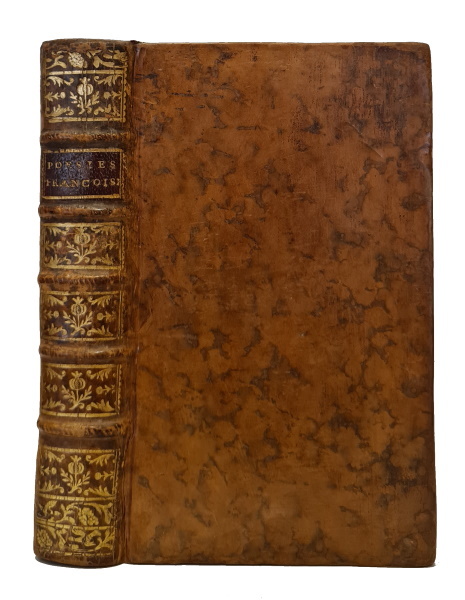
174054824Paris Moreau 1740 1 vol. relié in-12, veau fauve marbré, dos à nerfs, pièce de titre de maroquin bordeaux, fleurons et dentelle dorés avec filet en encadrement, tranches marbrées, (4)-532-(10) pp. Régnier-Desmarais (1632-1713) fit toute sa carrière à l'Académie française où il fut élu en 1670 sans avoir rien encore publié ! Secrétaire perpétuel à partir de 1683, il travailla activement à la rédaction du premier dictionnaire. D'une grande variété de formes, ses poésies n'ont de françaises que la langue, car elles sont le plus souvent imitées (ou bien traduites) de l'italien, de l'espagnol ou du grec. Ex-libris gratté sur la page de titre. Bonne reliure d'époque.
174054824Paris Moreau 1740 1 vol. relié in-12, veau fauve marbré, dos à nerfs, pièce de titre de maroquin bordeaux, fleurons et dentelle dorés avec filet en encadrement, tranches marbrées, (4)-532-(10) pp. Régnier-Desmarais (1632-1713) fit toute sa carrière à l'Académie française où il fut élu en 1670 sans avoir rien encore publié ! Secrétaire perpétuel à partir de 1683, il travailla activement à la rédaction du premier dictionnaire. D'une grande variété de formes, ses poésies n'ont de françaises que la langue, car elles sont le plus souvent imitées (ou bien traduites) de l'italien, de l'espagnol ou du grec. Ex-libris gratté sur la page de titre. Bonne reliure d'époque.
177344548Sevilla: Por D. Joseph Padrino y Solis 1773. First edition. Full calf. Boards rubbed extremities worn hinges starting but strong initials inked on fore edge front and rear endpapers toned early owner's signature on free front end paper older sigantures covered with small labels on first two leaves title page provided in facsimile scattered foxing & soiling contents otherwise clean; otherwise good. 16 cxii 321 pp. Illus. with b/w plates portraits facsimiles some folded and folded map. 4to. A second volume was published seventy years later in 1843. Contents: Discurso sobre la utilidad del estudio de las buenas letras / Por D.D. Sebastian Antonio de Cortes en la Academia Publica de 30 de Octubre de 1753 p. 1-66 ; Extracto de la disertacion escrita con motivo de una inscripcion antigua descubierta en Sevilla / Por Don Francisco Laso de la Vega en la Academia de 10 de Noviembre de 1752 p. 67-95 ; Traducion y explicacion del epitafio hebreo del sepulcro del Santo Rey Don Fernando III / Por Don Thomas Antonio Sanchez en la Academia de 12 de Enero de 1753 p. 96-104 ; Disertacion sobre el monacato del Rey Wamba / Por Don Miguel Sanchez Lopez en la Academia de 30 de Marzo de 1754 p. 105-152 ; Disertacion en que se prueba haverse celebrado en Sevilla un concilio nacional en el año 1478 de el qual ningun historiador ha hecho memoria / Por Diego Alexandro de Galvez en la Academia de 20 de Marzo de 1756 p. 152-170 ; Noticia de dos inscripciones anecdotas en que se hace memoria de un municipio antiguo llamado muniguense descubiertas / Por D. Sebastian Antonio de Cortes y D. Joseph de las Quentas Zayas en la academia de 26 de Marzo de 1757 p. 171-207 ; Apendice I p. 208-210 ; Apendice II p. 211-227 ; Noticias pertenecientes a la historia antigua y moderna de la Villa de Lora del Ria en Andalucia / Por D. Thomas Andres de Guseme en la Academia de 2 de Junio de 1758 p. 228-263 ; Explicacion de una inscripcion romana existente en Carmona atribuida por el celebre Muratori a Sevilla / Por Don Candido Maria Trigueros en la Academia de 28 de Septiembre de 1758 p. 264-282; Explicacion de una inscripcion hebrea que esta en la puerta que llaman de la campanilla de la Santa Patriarcal Iglesia de Sevilla / Por Don Candido Maria Trigueros en la academia de 12 de Junio de 1772 p. 283-305; Noticia y explicacion de un monumentoantiguo romano descubierto en la Villa de las Cabezas de San Juan del arzobispado de Sevillas / Por Don Francisco de Bruna en la Academia de 16 de Octubre de 1727 p. 306-314; Memoria de varias inscripciones sellos y monedas ineditas pertenecientes a la Betica cuyas copias y dibujos con la noticia de su descubrimiento y actual existencia han sido presentados à la Academia à consequencia de su particular encargo y comisión / Por D. Candido Maria Trigueros p. 315-321. Palau 162485. Por D. Joseph Padrino y Solis hardcover books
178914255En Valencia: En la Oficina de D. Benito Monfort Impresor de la Real Academia. Año 1789.- 2 h. 53 p.; en Folio; Gran papel de hilo verjurado; Cuidada impresión con un fino grabado al cobre el la portada diseñado por J. Camarón y grabado por M. Brú; Plena Piel Valenciana Epoca con rueda dorada en tapas y cantos lomera con filetes dorados.- MAGISTRAL EDICION DEL FAMOSO IMPRESOR VALENCIANO "BENITO MONFORT". MUY RARO. EN IMPECABLE ESTADO CON EL PAPEL BLANCO Y TERSO. Solamente la cabeza del lomo tiene un ligero deterioro que ha sido restaurado. Tiene repetidas 2 hojas correspondientes a las páginas 33-34 y 35-36. ARTE ESPAÑOL EN GENERAL E HISTORIA DEL ARTE ESPAÑOL Libro en español En la Oficina de D. Benito Monfort hardcover
173248603PRIMERA EDICION COMPLETA EN 6 TOMOS.- Con Privilegio. En Madrid: los tomos 1º a 5º En La Imprenta de Francisco del Hierro Impresor de la R. Academia Española 1726 - 1729 - 1732 - 1734 - 1737 y el tomo 6º en la Imp. de la Real Academia Española por los Herederos de Francisco de el del Hierro 1739.- En conjunto 6 VOLS. con: Tomo 1º. 4 h. sigue grabado alegórico al cobre LXXXXVI 723 p / Tomo 2º. 6 h. 714 p. / Tomo 3º. 6 h. 816 p. / Tomo 4º. 6 h. 696 p. / Tomo 5º. 6 h. 656 p. / Tomo 6º. 18 h. 578 p.: Tras la portada del Tomo 1º tal y como se ha indicado lleva un bello grabado a pleno folio dibujado por Antonio Palomino y grabado al cobre por Joan á Palomino; Magnífica impresión a dos columnas sobre gran papel de hilo verjurado; Con bonitas letras capitales grabadas en madera y cul-de-lampe al final de cada letra; Gran Folio 343 x 25 cm; Enc. en Plena Piel Pasta de la época lomo cuajado en oro tejuelo rojo cortes jaspeados en tonos rojo y azul incluyendo en cada tomo un precioso escudo nobiliario grabado a modo de ex-libris perteneciente al Marqués de Grimaldo Ministro de Felipe V.- PALAU N.º 1286. En excelente estado general. Tan solo algunas esquinas y bordes de la encuadernación han sido reparados de los normales desgastes del tiempo apreciándose pequeñas faltas en las cejillas de las cabezas de los lomos en los tomos 1 y 6. Interior en perfecto estado con el papel firme blanco sin manchas ni otros defectos. Publicado entre 1726 y 1739 el Diccionario de la lengua castellana de la Real Academia Española conocido como Diccionario de Autoridades representa la primera gran empresa lexicográfica del español. Concebido con fines normativos reunió definiciones apoyadas en ejemplos de autores canónicos sentando así las bases de la tradición académica. Su método basado en el uso ilustrado buscaba fijar la lengua sin desligarla de su riqueza histórica y literaria. Fue una obra clave en la consolidación de una lengua culta unificada para el mundo hispánico. Se estima que la tirada total fue de aproximadamente 1.500 ejemplares distribuidos en seis tomos. Hoy en día resulta una obra dificilísima de conseguir. LENGUA ESPAÑOLA Libro en español Real Academia Española hardcover
17574948PRIMERA EDICION.- Madrid: Gabriel Ramirez Imp. 1757.- 102 p. 1 h.: Ante la portada lleva un bonito escudo real grabado al cobre firmado por G. A. Gil; 4º menor 203 x 13 cm; Buena impresión sobre excelente papel de hilo verjurado blanco y fuerte; Media Piel.- RARO ejemplar que conserva el grabado del escudo real que casi nunca aparece en esta obra. Terminan los estatutos.Dado en Aranjuez à treinta de Mayo de mil setecientos cincuenta y siete. YO EL REY Ricardo Wall. La encuadernación con el lomo restaurado con piel nueva imitando su antiguedad. Interior en excelente estado con tan sólo una diminuta perforación de polilla en el margen inferior que no afecta texto. MADRID Libro en español Gabriel Ramirez Imp. hardcover
17963120506Madrid.: Vda. de Joaquín Ibarra. 1796. Hardcover. Cubierta deslucida. Good. 14 cm. 472 p. Encuadernación en tapa dura artesanal en plena piel pasta española con tejuelo. Cubierta deslucida. Lingüística. Filología.80 80 Vda. de Joaquín Ibarra. hardcover
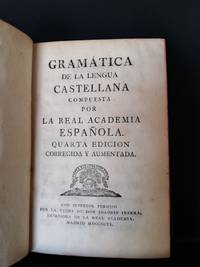
1796REF-ES-1796-1945Madrid: Viuda de Joaquín Ibarra 1796. Quarta edición. Tela. Very Good. Gramática de la lengua castellana. Compuesta por la Real Academia Española. Quarta edición corregida y aumentada. Con superior permiso por la viuda de Joaquín Ibarra impresora de la Real academia. Madrid 179612mo 479 pp. encuadernadas en plena piel de época tejuelo con títulos y ornamentos dorados al lomo cantos de color rojo guardas marmoleadas con etiqueta de la librería Dávila. Ex libris caligrafiado de Romualdo Poncelis Palencia. Cubierta un poco rozada interiores impecables texto totalmente limpio. Muy bonito ejemplar. 479 pp. Used book in good to very good condition unless otherwise noted. All our books are thoroughly checked for issues such as missing dust jackets markings library stamps and so on. If we notice a book was misdescribed we will always let you know before shipping. We're a brick and mortar store and handle every single book with respect and care. Viuda de Joaquín Ibarra hardcover
177222923SEGUNDA IMPRESION.- Madrid: Por D. Joachin de Ibarra Impresor de Cámara de S. M. 1772.- 7 h. XXII384 p.; 8º 165 x 11 cm.; fina impresión sobre papel verjurado blanco y firme; Pleno Pergamino época parcialmente desprendido del lomo. SIGLO XVIII ESPAÑOL Libro en español Por D. Joachin de Ibarra paperback
178625786PRIMERA EDICION.- En Madrid: En la Oficina de Don Antonio de Sancha año de 1786.- 1 h. LXI103 p. VIII p.: La portada lleva grabada una viñeta alegórica; 4º menor 207 x 14 cm; Excelente impresión sobre papel de hilo verjurado; Enc. en Plena Piel flexible tafilete verde lomera lisa dorada.- El amplio prólogo de LXI páginas trata sobre las sepulturas en España y su ubicación desde un punto de vista legal y medico-higiénico. También contiene un apéndice de VIII páginas al final con Noticias y reflexiones del excelentísimo Duque de Villahermosa sobre los cementerios fuera de los poblados y en especial sobre los establecidos extramuros de Turín. ESTE EJEMPLAR AUNQUE EN IMPECABLE ESTADO SE ENCUENTRA FALTO DE LAS TRES LAMINAS QUE DEBIA CONTENER. COSA BASTANTE COMUN YA QUE PARTE LA LA EDICION QUEDO EN RAMA VENDIENDOSE MUCHO MAS TARDE SIN INCLUIR YA ESTAS 3 LAMINAS. Por lo demás en impecable estado. SIGLO XVIII ESPAÑOL Libro en español En la Oficina de Don Antonio de Sancha hardcover
177344548Sevilla: Por D. Joseph Padrino y Solis 1773. First edition. Full calf. Boards rubbed extremities worn hinges starting but strong initials inked on fore edge front and rear endpapers toned early owner's signature on free front end paper older sigantures covered with small labels on first two leaves title page provided in facsimile scattered foxing & soiling contents otherwise clean; otherwise good. 16 cxii 321 pp. Illus. with b/w plates portraits facsimiles some folded and folded map. 4to. A second volume was published seventy years later in 1843. Contents: Discurso sobre la utilidad del estudio de las buenas letras / Por D.D. Sebastian Antonio de Cortes en la Academia Publica de 30 de Octubre de 1753 p. 1-66 ; Extracto de la disertacion escrita con motivo de una inscripcion antigua descubierta en Sevilla / Por Don Francisco Laso de la Vega en la Academia de 10 de Noviembre de 1752 p. 67-95 ; Traducion y explicacion del epitafio hebreo del sepulcro del Santo Rey Don Fernando III / Por Don Thomas Antonio Sanchez en la Academia de 12 de Enero de 1753 p. 96-104 ; Disertacion sobre el monacato del Rey Wamba / Por Don Miguel Sanchez Lopez en la Academia de 30 de Marzo de 1754 p. 105-152 ; Disertacion en que se prueba haverse celebrado en Sevilla un concilio nacional en el año 1478 de el qual ningun historiador ha hecho memoria / Por Diego Alexandro de Galvez en la Academia de 20 de Marzo de 1756 p. 152-170 ; Noticia de dos inscripciones anecdotas en que se hace memoria de un municipio antiguo llamado muniguense descubiertas / Por D. Sebastian Antonio de Cortes y D. Joseph de las Quentas Zayas en la academia de 26 de Marzo de 1757 p. 171-207 ; Apendice I p. 208-210 ; Apendice II p. 211-227 ; Noticias pertenecientes a la historia antigua y moderna de la Villa de Lora del Ria en Andalucia / Por D. Thomas Andres de Guseme en la Academia de 2 de Junio de 1758 p. 228-263 ; Explicacion de una inscripcion romana existente en Carmona atribuida por el celebre Muratori a Sevilla / Por Don Candido Maria Trigueros en la Academia de 28 de Septiembre de 1758 p. 264-282; Explicacion de una inscripcion hebrea que esta en la puerta que llaman de la campanilla de la Santa Patriarcal Iglesia de Sevilla / Por Don Candido Maria Trigueros en la academia de 12 de Junio de 1772 p. 283-305; Noticia y explicacion de un monumentoantiguo romano descubierto en la Villa de las Cabezas de San Juan del arzobispado de Sevillas / Por Don Francisco de Bruna en la Academia de 16 de Octubre de 1727 p. 306-314; Memoria de varias inscripciones sellos y monedas ineditas pertenecientes a la Betica cuyas copias y dibujos con la noticia de su descubrimiento y actual existencia han sido presentados à la Academia à consequencia de su particular encargo y comisión / Por D. Candido Maria Trigueros p. 315-321. Palau 162485. Por D. Joseph Padrino y Solis hardcover
177111400Madrid: Antonio Pérez de Soto 1771. Softcover — Tapa blanda. 227x162mm. 9x6½". Madrid Antonio Pérez de Soto 1771. En 4º 227 x 162mm. 35 pp. Escudo grabado en la portada. Guardas de papel. Primera edición. Oración por el nacimiento de Carlos Clemente Antonio de Padua de Borbón y Borbón 1771–1774 primer hijo del rey de Carlos IV y MarÃa Luisa de Borbón princesa de Parma. Fue bautizado en la pila de Santo Domingo y apadrinado por el papa Ganganelli. No llegó a cumplir los tres años de edad. Antonio Pérez de Soto paperback
1792495651Madrid: Imp. de la viuda de Ibarra . 1792. Hardcover. Cubierta deslucida. Good. 14 cm. 208 p. 9 lám. Encuadernación en tapa dura en plena piel lomo decorado y con tejuelo en piel. Imp. de la viuda de Ibarra . Cubierta deslucida. Lengua castellana Imp. de la viuda de Ibarra . hardcover
178458712Barcelona: en la imprenta de Brusi y Ferrer n.d. 1784. Small 8vo pp. 4 xii 191 1; 9 engraved plates at the back of alphabets; contemporary and likely original full calf gilt fillets on spine gilt lettering rubbed away; tiny wormhole pervades the top of the last dozen or so leaves occasionally affecting a letter ot two as well as minor loss on several plates vertical ink inscription on title page with date of 1784; all else very good. At the back is a 42-page Catalan dictionary in double column. Two copies in OCLC: Brown and the University of Leipzig. en la imprenta de Brusi y Ferrer, n.d. unknown