Voltaire; Francois-Marie ArouetBiblio.com
268 résultats
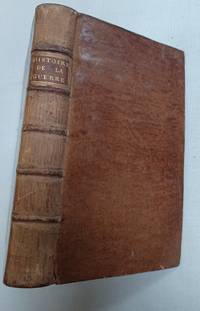
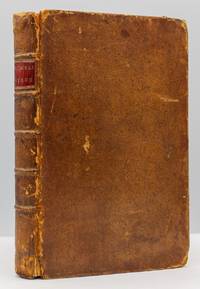
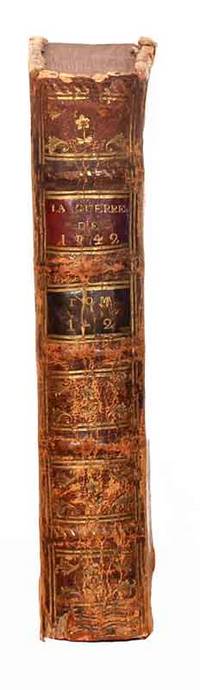
17551108080007Amsterdam 1755. Leather Bound. Good. 12mo. French. 2 volumes bound in 1. Fully bound in contemporary brown leather. 5 raised bands 6 compartments. Burgundy title plate on spine with gilt lettering. Gilt decorative borders along spine. Tight binding and solid boards. Moderate shelf wear. Slight cracking along spine edge. Scuffing to spine. Rubbing to boards. Extensive bumping and fraying to corners. Light chipping to board edges. Chipping and minor loss to spine ends. Red page ends. Notes on front endpage describing Voltaire as author. Otherwise clean unmarked pages. Good text block and legible text. A fairly well-preserved volume in readable condition. This volume though officially unnatributed to him was a work of Francois-Marie Arouet better known by his pen name: Voltaire. It collects all installments of his history of the war of 1741 being the War of Austrian Succession. An exceptional addition to the library of any scholar on World History. Bengesco 1232. Amsterdam hardcover
175446288Londres:: Chez Jean Nourse 1754. Originally published in The Hague in 1753. contemporary full mottled calf; gilt panelled spines. Armorial bookplates; some scatterred foxing. A very attractive set. 12mo. Half-titles present. Chez Jean Nourse, unknown
173650575bdParis: Jean Baptiste Claude Bauache 1736. First Edition. Octavo 1/4 red levant & red cloth hardcover leather uncut iv i-viii 1-80 i pp. Woodcut ornaments. One of Voltair’s better received theatrical presentations with a setting in the New World. Very Good bearing the bookplate of collector and French translator Richard F. O’Gorman. Jean Baptiste Claude Bauache, 1736. First Edition. hardcover
1736elala1494Paris: Jean Baptiste Claude Bauche 1736. 1736. 8vo. pp. 5 p.l. vii 1 80. woodcut ornaments initials & title vignette. 5 inserted engraved plates after Eisen Moreau Gravelot & Desene illustrating various scenes from the play taken from various editions of the work. modern bds. Second Edition published same year as the first by the same publisher with errata corrected. This tragedy revolving around a wicked Spanish governor of Peru who is in love with the virtuous American princess who in turn loves the long believed dead heroic American prince is one of the first French plays to be set in America. It was one of the most well received of Voltaires theatrical works. Bengesco 107. Cioranescu 64168. European Americana 736/253. Sabin 100698. cfQuérard X 313. Paris: Jean Baptiste Claude Bauche, 1736. unknown
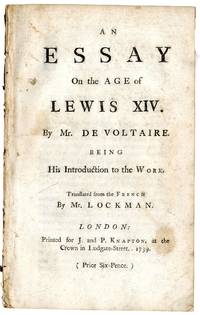
1739852London: Printed for J. and P. Knapton at the Crown in Ludgate Street 1739. First edition. Near fine. Small octavo. 2442 pp. Likely disbound from a pamphlet collection with vestiges of the leather spine present; outer leaves dust soiled with occasional spots; internal pages near fine. Original price intact on title page: Price Six-Pence. One page advertisement after conclusion of the translated text. <br /> <br /> First edition. An exceptionally scarce prospectus for Voltaire's landmark French enlightenment philosophy "Le Siecle de Louis XIV." Voltaire's revolutionary philosophical approach that argued intellect over military might was not completed or published until 1751 making this fragile 1739 pamphlet a remarkably early standalone English translation. ESTC T112827. Printed for J. and P. Knapton, at the Crown in Ludgate Street unknown
1759752Genève Geneva: Cramer 1759. First Edition. 3 vols. in one 12mo 164 x 100mm pp. 2 291 1; 133 1 35 1. First printing of the great 18th century philosophical narrative with all the points correct. Including the 3 usual cancels the right title page ornament repeated pages 193 and 266 the misprints of “que ce ce fut†page 103 line 4 and “précisément†page 125 line 4 the correction removing a paragraph break page 31 the rewritten lines about the Lisbon earthquake page 41 etc. Contemporary full calf red calf label rebacked with the original spine saved and laid down recornered marbled endpapers gilt rubbed inner paper hinges strengthened old ink signatures on the endpaper and front blank tiny signature on the title page one tissue strengthened tear at the bottom of A2 touching the last 3 lines of text without any loss otherwise internally quite nice clean and very good. Bound without N7 a blank and N8 a notice to the binder as is usual agreeing in all respects to what you would have received if you had purchased a copy in sheets on publication day then bought the sequels and then handed them over to the most local Swiss bindery. Ref: PMM 204. There were 18 editions of Candide in 1759. It took 221 years for a clear and convincing bibliography to first sort them out and then got accepted and once accepted our real 1st edition was confirmed as rare. In the last 15 years however that bibliographical data has been more widely circulated and several 1st editions that weren’t on the original 22–copy census have come into market. It is still scarce more so in a contemporary binding.<br /> <br /> Candide bides as the epitomic philosophical fable of the French Enlightenment and the genotype of irony without exaggeration and though it’s laced with more salt than the postwar streets of Carthage it repeatedly tolls a reminder that light hearts live long. Most importantly Candide remains remarkably relevant when examined through contemporary frameworks functioning as an incisive proto-postcolonial text that anticipates modern discourse on global inequality systems of oppression and the limitations of Enlightenment rationality. The novel's scathing portrayal of slavery conquest and religious persecution resonates with intersectional analyses that recognize how power structures interlock across racial gender and economic dimensions. The savage irony throughout the text dismantles not just philosophical optimism but also European exceptionalism exposing the hypocrisy of colonial enterprises and religious institutions alike. The narrative's episodic structure—with its global movements between Europe South America and the Ottoman Empire—invites discussions of transnationalism and diasporic experience while Candide's concluding retreat to cultivate his garden has been reinterpreted by ecocritical scholars as both an acknowledgment of environmental interdependence and a potentially problematic withdrawal from systems-level political engagement.<br /> <br /> “Do you believe†said Candide “that men have always massacred each other as they do to-day that they have always been liars cheats traitors ingrates brigands idiots thieves scoundrels gluttons drunkards misers envious ambitious bloody–minded calumniators debauchees fanatics hypocrites and fools†“Do you believe†said Martin “that hawks have always eaten pigeons when they have found them†<br /> –Voltaire Candide. Cramer unknown
1759023043London: J. Scott and J. Gretton. Rebound in full new leather. Scholars have differed about whether this edition or the Nourse edition published in the same year was the First Edition in English. At the very least the First Edition of This Translation. One of the greatest works in all literature. According to PMM 204: The folly of philosophic and religious optimism is displayed with a vigor and wit that carries the reader away. Near Fine. . Near Fine. Hardcover. 1759. J. Scott and J. Gretton hardcover
1764elala166Geneva: Cramer 1764. 1764. 8vo. pp. xvi 386 2. complete with half-title. woodcut title vignette. A fine copy in contemporary mottled calf gilt back. First Edition. Bengesco I 660. Cioranescu 63982. 1st Edition. Hardcover. [Geneva: Cramer], 1764. Hardcover
178641246AB1786. Basel De l'imprimerie de Jean-Jacques Tourneisen 1786. 20.9cm x 12.6cm. 552 pages. Original Hardcover. Good condition only with considerable rubbing to the binding. Preowner's name plate on pastedown. Bookplate of Richard Oliver Presented to the Albemarle Club. Oeuvres Completes de Voltaire. Tome Trente-Huitieme. Includes also the description of : "Austerités" / Astrologie / Athéisme / Atomes / Avarice / Auguste Octave / Avocats / Babel / Roger Bacon / Baiser / Banqeroute / Barac et Debora / Bataillon / Bayle / Blaspheme / Bornes de L'esprit Human / Brachmanes Brames / Cartesianisme / Celtes / Chaine des Etres Crées Charité / Charlatan / De La Chine - Section I. etc. hardcover
1775600AG1775. Paris 1775 gez. 1775 Kupferstich Voltaire im Bett liegend von Personen umgeben von Neé und Masquelier nach Non. Bildgrösse: 145 x 18 cm. Blattgrösse: 195 x 23 cm. Leicht fleckig. unknown
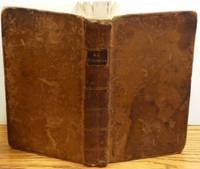
175628383London: Jean Nourse 1756. two volumes in one full contemporary calf binding five raised bands on spine binding quite sound and tight text clean and sound original owner signature on front endpaper along with price paid for the book. First London edition in the original French. First Thus. Full-Leather. Very Good/No Jacket. 12mo - over 6¾" - 7¾" tall. Jean Nourse Hardcover
17654481CB1765. 2 in 1 Band. Genève Cramer 1765. 8°. 292 283 S. Mit 1 gest. Tafel 1 Textholzschn. und einigen Holzschnittvignetten. Lederband der Zeit. Erschien ebenfalls anonym erstmals ebenda 1759-1763 in 2 Bänden. - Nur wenig stockfleckig. Einband berieben und bestossen. unknown
1767333162London 1767. hardcover. very good. 124 pages evenly browned tall slim 12mo bound in 3/4 brown morocco decoratively gilt spine patterned boards. London: 1767. Scarce. Very good .<br/> <br/> unknown
17687816<p>Glasgow: Printed for Robert Urie 1768 Three English-language editions were printed in 1768 one in London one in Dublin and one in Glasgow. All have different collations and none name a translator. The Urie edition is rare: ESTC lists seven copies three in North America Toronto North Carolina Huntington Library. . Contemporary speckled calf with red calf spine label. Octavo in fours. Binding extremities lightly worn occasional light marginal dampstaining. Old ink signature on title-page later ink signature and address on front free endpaper bookplate of a third owner on front pastedown. Overall a good clean copy with wide margins possibly a large paper copy.</p> Printed for Robert Urie,
1768PLTInVOL99Dublin: Printed for J.Milliken 1768. 1768. 12mo. pp. contemporary sprinkled calf gilt back numbered Vol. XXVI on spine. First Dublin Edition. Voltaire's classic philosophical tale of the noble savage of the New World - a Canadian Huron and his encounters with and impressions of the hypocrisy and corruptness of civilized European society. The work enjoyed immense popularity being widely translated and frequently reprinted and adapted to the stage. cfNCBEL II 101. cfLande S2289. cfSabin 100747. Hardcover. Dublin: Printed for J.Milliken, 1768. Hardcover
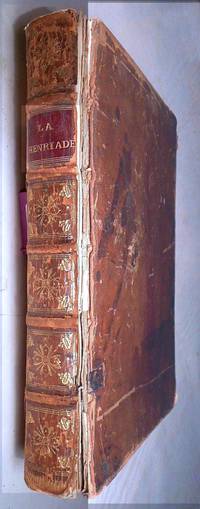
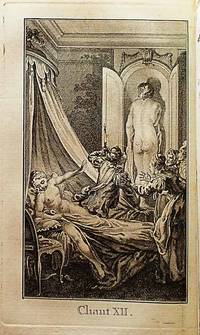
17411692London: A Londres i.e. Paris: Gandouin 1741. later. 4to 202 pages of text and cxxii pages of 'Remarques Sur La Henriade in parts following each of the Dixieme 'Chants'' full calf raised bands gilt spine panel decorations red and gilt leather spine tittle covers scuffed with edge wear spine gilt decorations and title good some wear to spine ends upper board detached marbled endpapers irregular pagination - Bradey: Appears to be complete with all the text the frontispiece and 9 other full page engravings chiefly from designs by J. de Troy engraved title vignette and engraved head and tail pieces of each 'Chant' engraved head piece page v and others by de Poilly. Contents clean with scattered foxing text tight and engraved plates very good with some scattered moderate foxing reissue of the text and plates of the 1728 edition with the "Remarques " by Lenglet Dufresnoy cxii pp. printed on separate quires which are gathered together into this copy following page 202 VG copy. A Londres (i.e. Paris: Gandouin) hardcover
17755953Geneva: Cramer et Bardin 1775. Edition encadré" volume 11. Octavo 21 cm; 420 pages portrait frontispiece by Martinet and 21 engraved plates. Text within typographic borders. Bound in contemporary etched leather scored in gilt. Spine decorated in gilt with leather labels. Marbled endpapers. Boards somewhjat splayed. Negligible loss at head and tail. Hinges starting. Upper joint reinforced. Contents clean. <br />References: Cohen-De Ricci 1042; Bengescu Voltaire IV #2141 <br /><br />Volume 11 only of the 40-volume "edition encadré" published in 1775 by Cramer et Bardin the last edition of Voltaire's works published under the author's supervision. Then as now La Pucelle d'Orleans was Voltaire's most consumed work so it is not surprising to find this volume detached from the its 39 companions. Voltaire's greatest poem but not the one you read in school. With Ariosto in mind Voltaire rewrote the Joan of Arc story with all the wit and critical distance of an 18th-century libertine. The result is that France's sainted woman warrior becomes the vehicle for an intelligent and licentious burlesque. Good and right-thinking people have always found it offensive but it doesn't really care. Nice binding charming illustrations. [Cramer et Bardin] hardcover
178842563Amsterdam: Chez Marc- Michel Rey 1788. Full contemporary calf leather spine label titled in gilt. Some old damping to bottom fore-edge of textblock not affecting the text. Front hinge starting but still firmly bound. Scarce edition. . Full-Leather. Very Good. Chez Marc- Michel Rey Hardcover
17627601Geneva: Cramer 1762. First Edition. Hard Cover. Very Good. Octavo. 358 pages. The first authorized edition with a number of piracies appearing before this epic based upon the life of Joan of Arc. Twenty plates by Gravelot. The ornament on the title page is the same as the one on the 1759 first edition of Candide. Contemporary 3/4 brown leather all edges stained red; a few letters lost on red label on spine; some scuffing and edge wear; light marginal stain not affecting text on about 50 leaves; overall a very good copy. <br/><br/> Cramer hardcover
176424563Londres: aux depens de la compagnie 1764. 8vo pp. xvi 384; engraved frontispiece and 20 engraved plates; 20th-century full crimson straight-grain morocco by Zaehnsdorf decorative gilt border on covers gilt-paneled spine and preserving the original blue printed wrappers which are bound in. First published without plates at Louvain in 1755. This is likely a 'variorum' edition probably Dutch based on the first authorized edition of 1762 Geneva with variant readings from earlier piracies. Bengesco 491. aux depens de la compagnie unknown
1795ILTPVOLT95Paris: Didot Le Jeune L'An Troisième 1795. 1795. 2 Volumes. 4to. pp. 211; 212. with half-titles. engraved frontis. portrait of Jeanne d'Arc by Gaucher & 21 engraved plates by engraved by A very tall fine crisp copy on thick paper deckle edge visible on some leaves bound in contemporary tree calf gilt backs all edges gilt some surface scarring to covers but still a very nice copy. First Edition with these Illustrations the frontispiece portrait of Jeanne d'Arc by Gaucher and the other twenty-one plates engraved by Bacquoy Choffard Delignon Delvaux Duhamel Dupréel Lemire Lingée Malbeste Patas Pauquet Ponce and Romanet after designs by Lebarbier Marillier Monnet and Monsiau. "Très belle édition." Cohen-De Ricci Cohen-De Ricci 1034. Brunet V 1362. Bengesco 513. F. Hardcover. Paris: Didot Le Jeune, L'An Troisième [1795]. Hardcover
1731231308Paris: Josse 1731. First. hardcover. very good. Slim 8vo pp. xxix 3. 110 3 approbation and errata. Decorative copper engraved head-pieces a few contemporary ink annotations full gilt brown calf covers lightly warped and rubbed with a bright gilt heraldic crest on front and back red edges. Paris: J.F. Josse 1731. First Edition. Scarce. Very good.<br/> <br/> Josse unknown
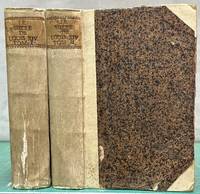
175116247Berlin: C F Henning. Very Good- with no dust jacket. 1751. First Edition; First Printing. Hardcover. Vellum darkened and with some surface cracking light extremity wear; light foxing. No half-title pages. Errata page for both volumes bound at end of Vol I. Two custom owners' bookplates in first volume. Solid hardcovers. ; French language. Half vellum binding with marbled boards. Two of two volumes complete. Bengesco I 1178. This work was the most researched and carefully prepared of Voltaire's works. He began work on this project in 1734 while at the Chateau Cirey put it aside in 1738 and resumed work on it in 1750. First Edition First Printing of Voltaire's pioneering historical study of the age of King Louis XIV published while Voltaire was resident at the court of King Frederick II of Prussia.; xii 488 2 errata; ii 466 in 2v pages . C F Henning hardcover
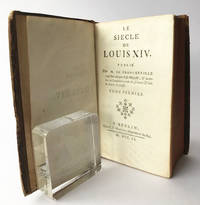
17512359The first edition of Voltaire's brilliant historical study of the age of King Louis XIV. Begun as early as 1732 Voltaire sent a manuscript version to Frederic II who was enthusiastic and encouraged its publication. In 1739 Voltaire published a 'Plan Raisonné' of the project including two finished chapters but this was condemned by the court and seized. In 1750 Voltaire left France for Frederic's court at Berlin where he set himself to complete the work. Failing to obtain the 'privilège royal' or even the non-written 'permission tacite' he decided to go ahead and publish the work in Berlin at his own expence. Voltaire continued to add to the work in subsequent editions most notably in the 1753 Berlin edition where he added a supplement in which he refuted the attacks made by La Beaumelle.<br /><br /><i>Two volumes in one 12mo 144 x 85mm pp. xiv 488 1 errata; ii 466 2 errata with the half-title to the first volume in contemporary calf rather worn spine gilt in compartments foot of spine chipped wormhole to the head of spine wanting the front endpaper red edges.</i><br /><br />BN Voltaire Catalogue 3361-3363. C.F. Henning
173360085London C. Davis and A. Lyon 1733. 8vo. Lovely contemporary full Cambridge-style binding with five raised bands to spine and blindstamped ornamental borders to boards. . Double gilt line-borders to boards. All edges of boards with gilt borders. Gilt title to spine. Hinges neatly and professionally re-inforced. Internally very nice clean and fresh. A lovely crisp and large copy with good margins printed on heavy fine paper. 16 -including preface contents advertisements 253 1 18 -Index pp. <br/><br/><em>The important actual first edition of this highly celebrated key work of the Enlightenment in which the anecdote of how Newton discovered gravity the story about Newton and the falling apple appeared for the first time together with the description of the difference between the physical world view of the English and the French the "plenum" and the "vacuum". This seminal work in which Voltaire famously depicts British philosophy science society and culture in comparison to French can be viewed as the Enlightenment equivalent to Tocqueville's "Democracy in America". This series of essays which is based on Voltaire's experiences when living in England was actually written by Voltaire mostly in English which he mastered to perfection. It has often been presumed that the first edition of the work was that published in French in 1734 but actually the present English edition constitutes the actual first appearance of the work as well as the version that is closest to Voltaire's intention as the French language version is the re-written one and the English version the original. Curiously almost all modern English versions are translations into English of the French edition instead of the original English version making this edition of the utmost importance.After the original English edition of 1733 two French editions soon followed the first in 1734. Unlike the British the French resented the book and already in 1734 the French Parliament issued an order for the author's arrest and condemned the work causing the impact of it in France to be delayed. The book was burned for being "dangerous to religion and civil order". At the same time the work became a bestseller in Britain and as much as 14 editions of the work were published in the eighteenth century. "Inspired by Voltaire's two-year stay in England 1726-8 this is one of the key works of the Enlightenment. Exactly contemporary with Gulliver's Travels and The Beggar's Opera Voltaire's controversial pronouncements on politics philosophy religion and literature have placed the Letters among the great Augustan satires. Voltaire wrote most of the book in English in which he was fluent and witty and it fast became a bestseller in Britain. He re-wrote it in French as the Lettres philosophiques and current editions in English translate his French." Nicholas Cronk Introduction to the Oxford's Classics edition from 1999.The great French philosopher Voltaire was greatly impressed by the philosophical and scientific achievements of the English especially those of Newton Locke and Bacon. As a disseminator of scientific knowledge Voltaire came to play a great rôle in the popularization of Newtonian science and its discoveries the present work being a prime example. Although the work was condemned by the French authorities it still came to play a great rôle in the spreading of Newtonian ideas in France. The present work generally came to play a dominant rôle in Enlightenment accounts of the history of science and philosophy. The work focuses on British science and thought and uses the accounts of these to emphasize what is lacking in French society and French thought. The work is generally very critical towards the French "ancient régime" and when Voltaire here discusses the emergence of empiricism it is viewed as an English tradition that stands in opposition to the French rationalist tradition with Descartes as the prime example. This view is taken over by the following Enlightenment historians of science and philosophy e.g. d'Alembert see for instance his "Preliminary Discourse" of 1751. Some of the most influential passages of the work are probably those on Bacon who Voltaire sees as the founder of modern experimental science Newton and Descartes. Letters XIV on Descartes and Newton XV on attraction and XVI on Newton's Optics from 1704 are among the most influential essays of the work. In XVI Voltaire reflects upon Newton's "Optics" and the way that he rejected Descartes' theory and set out his own account of the properties of light. In XV he presents the first account of Newton and the falling apple: "As he was walking one Day in his Garden and saw some Fruits fall from a Tree he fell into profound Meditation on that Gravity the Cause of which had so long been sought but in vain by all the Philosophers whilst the Vulgar think there is nothing mysterious in it. He said to himself that from what height soever in our Hemisphere those Bodies might descend their Fall wou'd certainly be in the Progression discover'd by Galileo; and the Spaces they run thro' would be as the Square of the Times. Why may not this Power which causes heavy Bodies to descend and is the fame without any sensible Diminution at the remotest Distance from the Center of the Earth or on the Summits of the highest Mountains; Why said Sir Isaac may not this Power extend as high as the Moon." pp. 127-28.But perhaps the most famous passage in the volume is the opening of Letter XIV: "A Frenchman who arrives in London will find Philosophy like every Thing else very much chang'd there. He had left the World a "plenum" and he now finds it a "vacuum". At Paris the Universe is seen compos'd of Vortices of subtile Matter; but nothing like it is seen in London. In France 'tis the Pressure of the Moon that causes the Tides; but in England 'tis the Sea that gravitates towards the Moon; so that when you think that the Moon should make it Flood with us those Gentlemen fancy it should be Ebb which very unluckily cannot be prov'd." pp. 109-10. </em> hardcover