Voltaire, Francois-Marie Arouet De,Biblio.com

364 résultats
6930413like new. unknown
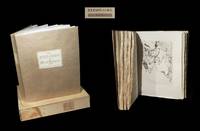
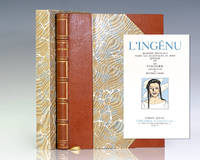
1945293861945. Paris Les Editions nationales 1945. Un vol. au format in-4 288 x 232 mm de 234 pp. brochÂŽ sous couverture ˆ rabats rempliÂŽs et ÂŽtui-chemise de plein cartonnage crÂme dos lisse piÂce de titre contrecollÂŽe sertie d'un double filet en noir. Un des 500 exemplaires numÂŽrotÂŽs du tirage sur pur-fil Johannot second papier aprÂs les 100 de tÂte sur vÂŽlin d'Arches. L'ouvrage s'agrÂŽmente - ici en premier tirage - de 52 eaux-fortes dont 12 hors-texte de Jean-Louis Viard. ''Le rythme de Voltaire est ˆ lui et insÂŽparable de la forme de son esprit. En dÂŽpit qu'en aient les renchÂŽris et les ergoteurs ce voltairianisme dont les pages qui vont suivre sont la fleur est bien la crÂŽation de Voltaire comme sa langue''. Absent de Monod Manuel de l'amateur de livres illustrÂŽs modernes. Marques d'eau et claires rousseurs affectant l'ÂŽtui-chemise. Du reste trÂs belle condition. Peu courant. b42961 unknown
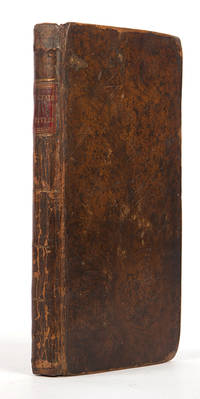
117621Glasgow Printed by Robert Urie 1759. . Fourth edition; 12mo 18 x 10.5 cm; a little toned front hinge reinforced; contemporary tree calf contrasting red morocco lettering-piece to spine joint and headcap repaired slightly scuffed and rubbed very good; 6 3-149 13pp.<br /> An early Glasgow printing of this interesting outsider's take on English society and its people precipitated by Voltaire's exile to Great Britain in 1726. <br /><br />The resulting Letters first published in 1734 following his return to Paris express his great admiration for the comparative religious freedom enjoyed by England's Quakers and Socinians as well as its constitutional monarchy 'where the Prince is all powerful to do good and at the same time restrain'd from committing evil' the implication being that England could provide a model for France's reform p.53. When the French edition was published the following year without the approval of the royal censor as Lettres Philosophique it caused a storm with copies confiscated and publicly burnt and Voltaire again forced to flee Paris.<br /><br />The work remains one of Voltaire's most widely known and read texts which helped introduce Bacon Locke and Newton to Europe's Enlightenment thinkers. It also contains an early account of Newton's famous discovery of gravity passed on to Voltaire by Newton's niece Catherine Barton as well as an early translation into French verse of Hamlet's soliloquy from Act 3 Scene 1: 'Demeure il faut choisir & passer à l'instant / De la vie à la mort ou d l'Etre au neant.' p.173.<br /><br />Widely ranked as Voltaire's most important early philosophical work and 'the first bomb hurled against the Ancien Régime' Babson.<br /> ESTC T137639. Glasgow, Printed by Robert Urie, 1759. unknown
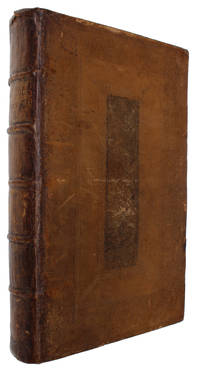
173360085London C. Davis and A. Lyon 1733. 8vo. Lovely contemporary full Cambridge-style binding with five raised bands to spine and blindstamped ornamental borders to boards. . Double gilt line-borders to boards. All edges of boards with gilt borders. Gilt title to spine. Hinges neatly and professionally re-inforced. Internally very nice clean and fresh. A lovely crisp and large copy with good margins printed on heavy fine paper. 16 -including preface contents advertisements 253 1 18 -Index pp. <br/><br/><em>The important actual first edition of this highly celebrated key work of the Enlightenment in which the anecdote of how Newton discovered gravity the story about Newton and the falling apple appeared for the first time together with the description of the difference between the physical world view of the English and the French the "plenum" and the "vacuum". This seminal work in which Voltaire famously depicts British philosophy science society and culture in comparison to French can be viewed as the Enlightenment equivalent to Tocqueville's "Democracy in America". This series of essays which is based on Voltaire's experiences when living in England was actually written by Voltaire mostly in English which he mastered to perfection. It has often been presumed that the first edition of the work was that published in French in 1734 but actually the present English edition constitutes the actual first appearance of the work as well as the version that is closest to Voltaire's intention as the French language version is the re-written one and the English version the original. Curiously almost all modern English versions are translations into English of the French edition instead of the original English version making this edition of the utmost importance.After the original English edition of 1733 two French editions soon followed the first in 1734. Unlike the British the French resented the book and already in 1734 the French Parliament issued an order for the author's arrest and condemned the work causing the impact of it in France to be delayed. The book was burned for being "dangerous to religion and civil order". At the same time the work became a bestseller in Britain and as much as 14 editions of the work were published in the eighteenth century. "Inspired by Voltaire's two-year stay in England 1726-8 this is one of the key works of the Enlightenment. Exactly contemporary with Gulliver's Travels and The Beggar's Opera Voltaire's controversial pronouncements on politics philosophy religion and literature have placed the Letters among the great Augustan satires. Voltaire wrote most of the book in English in which he was fluent and witty and it fast became a bestseller in Britain. He re-wrote it in French as the Lettres philosophiques and current editions in English translate his French." Nicholas Cronk Introduction to the Oxford's Classics edition from 1999.The great French philosopher Voltaire was greatly impressed by the philosophical and scientific achievements of the English especially those of Newton Locke and Bacon. As a disseminator of scientific knowledge Voltaire came to play a great rôle in the popularization of Newtonian science and its discoveries the present work being a prime example. Although the work was condemned by the French authorities it still came to play a great rôle in the spreading of Newtonian ideas in France. The present work generally came to play a dominant rôle in Enlightenment accounts of the history of science and philosophy. The work focuses on British science and thought and uses the accounts of these to emphasize what is lacking in French society and French thought. The work is generally very critical towards the French "ancient régime" and when Voltaire here discusses the emergence of empiricism it is viewed as an English tradition that stands in opposition to the French rationalist tradition with Descartes as the prime example. This view is taken over by the following Enlightenment historians of science and philosophy e.g. d'Alembert see for instance his "Preliminary Discourse" of 1751. Some of the most influential passages of the work are probably those on Bacon who Voltaire sees as the founder of modern experimental science Newton and Descartes. Letters XIV on Descartes and Newton XV on attraction and XVI on Newton's Optics from 1704 are among the most influential essays of the work. In XVI Voltaire reflects upon Newton's "Optics" and the way that he rejected Descartes' theory and set out his own account of the properties of light. In XV he presents the first account of Newton and the falling apple: "As he was walking one Day in his Garden and saw some Fruits fall from a Tree he fell into profound Meditation on that Gravity the Cause of which had so long been sought but in vain by all the Philosophers whilst the Vulgar think there is nothing mysterious in it. He said to himself that from what height soever in our Hemisphere those Bodies might descend their Fall wou'd certainly be in the Progression discover'd by Galileo; and the Spaces they run thro' would be as the Square of the Times. Why may not this Power which causes heavy Bodies to descend and is the fame without any sensible Diminution at the remotest Distance from the Center of the Earth or on the Summits of the highest Mountains; Why said Sir Isaac may not this Power extend as high as the Moon." pp. 127-28.But perhaps the most famous passage in the volume is the opening of Letter XIV: "A Frenchman who arrives in London will find Philosophy like every Thing else very much chang'd there. He had left the World a "plenum" and he now finds it a "vacuum". At Paris the Universe is seen compos'd of Vortices of subtile Matter; but nothing like it is seen in London. In France 'tis the Pressure of the Moon that causes the Tides; but in England 'tis the Sea that gravitates towards the Moon; so that when you think that the Moon should make it Flood with us those Gentlemen fancy it should be Ebb which very unluckily cannot be prov'd." pp. 109-10. </em> hardcover
elala5774London: Au dépens de la Compagnie 1757. Originally published at The Hague in 1738 this collection of writings begins with the letter on the soul. It should not be confused with Voltaire’s Lettres Philosophiques Letters Concerning the English Nation. Bengesco II p. 20 1558n. 8vo. pp. 285 3. woodcut tailpieces. 19th century bds. worn. elala5774 London: Au dépens de la Compagnie, 1757 unknown
elala5775London: Au dépens de la Compagnie 1775. Originally published at The Hague in 1738 this collection of writings begins with the letter on the soul. It should not be confused with Voltaire’s Lettres Philosophiques Letters Concerning the English Nation. Bengesco II p. 20 1558n citing 8vo. 12mo. pp. 316. Uncut in original wrs. elala5775 London: Au dépens de la Compagnie, 1775 unknown
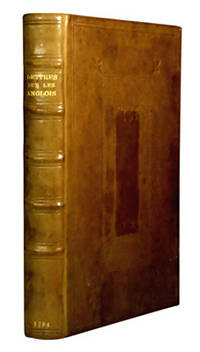
173446420<p>Basle i.e. London : by W. Bowyer 1734. First edition. Although an English translation had been published in London as "Letters Concerning the English Nation" in 1733 this is the first appearance of the original French text of the book now generally known as the "Lettres Philosophiques" and as "the first bomb thrown at the Ancien Régime". It has been said of Voltaire that "he came to England a poet and left it a philosopher": however that may be this book resulting from his stay in 1726-1728 is "one of the greatest and most influential works of the eighteenth century and beyond . the book that taught the whole of Europe how to think" Voltaire Foundation. The letters contrasting English and French thinking deal variously with religion in England - Quakers Anglicans Presbyterians and Socinians; politics parliament and Magna Carta; trade commerce and the businessman who "contributes to the felicity of the world"; English empiricism and Francis Bacon John Locke and Isaac Newton; and literature - Shakespeare above all Wycherley Congreve Swift and Pope etc. The London publishers' preface is interesting on the author's extreme reluctance to sanction a French-language edition - they had suppressed this edition for an entire year but others were now preparing illicit editions and they now had to displease the author to please the public. The furore which greeted the French editions when they appeared probably justified Voltaire's reluctance and the use here of a fake Basle imprint. Foolscap 8vo 171 x 103mm. viii228xxpp. Bound in a creditable modern rendition of early eighteenth-century full panelled calf; sprinkled edges; a few slight marks; Voltaire's name added to title-page in manuscript; faint fringe of very pale discolouration to fore-edge throughout text barely visible in most places; a few minor internal marks and tiny flaws but a good copy of one of the key books of the Enlightenment. Eighteenth-century 1768 ownership inscription now obscured.</p> Basle [i.e. London : by W. Bowyer], 1734. hardcover
1925elala168Paris: René Kieffer 1925. 1925. 8vo. pp. numerous text illus. with pochoir hand-colouring. contemporary half morocco original coloured pictorial wrs. bound in. First Edition Illustrated by Joseph Hémard Limited to 500 copies this one of 480 on vélin de cuve. One of the few of Voltaires works to deal with a distinctly economic subject. Directed against the Physiocrats and specifically Mercier De La Rivières Ordre naturel et essentiel des sociétés the witty and sarcastic tale takes its title from Merciers statement that in an organized state according to the physiocratic doctrine an average sum of forty crowns should suffice for the existence of each citizen. Voltaire singles out for special ridicule the proposed impot unique or single tax on land. The story revolves around the owner of a small estate yielding an annual net income of forty crowns who is alarmed at the promulgation of several edicts "by a few gentlemen who having some leisure have undertaken to govern the kingdom from their firesides". According to them the government "being by divine- and birth-right co-proprietor of his land he at least owes it one-half of his income" and that "as all wealth proceeds from land land is to bear the whole burden of taxation." Carteret IV 406. 1st Edition. Paris: René Kieffer, 1925. unknown
137212Paris: Librairie d'Amateurs n.d. The Libraire d'Amateurs edition of Voltaire's satirical novella. Quarto bound in three quarter crushed morocco over marbled boards with gilt titles and tooling to the spine in six compartments within raised gilt bands marbled endpapers ribbon bound in top edge gilt with 46 monochrome plates by Umberto Brunelleschi. In fine condition. Housed in a custom marbled slipcase. One of the most influential thinkers of the French Enlightenment François-Marie Arouet know by the nom de plum Voltaire was a resourceful and prolific writer. His works touched nearly every literary form including plays poems novels theoretical essays and scientific treatises. A forthright and candid advocate of civil liberties he frequently criticized the institutions of religious dogma and classism prevalent in 18th century France often doing so through satire to avoid censorship and imprisonment. Librairie d'Amateurs hardcover
1981123982Berkeley CA: The Arif Press 1981. cloth label on spine. Arif Press. 12mo. cloth label on spine. 16 2 pages. Limited to 150 copies. Translated from the French by P.H. Hanson. Frontispiece facsimile of 1784 engraving. The Arif Press unknown
198195056Berkeley: Arif Press 1981. Hardcover. Fine. Translated by P. H. Hanssen. Slim small octavo. Cloth with applied paper label. Fine. One of 150 copies. Arif Press hardcover
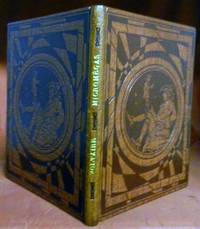
175212376London: J. Robinson. London J. Robinson 1752. . Hardback. Likely a pirated edition. A very good copy in half vellum. An important early example of what would become science fiction. Three editions were published in 1752 at about the same time the actual first edition doesn't have the date on the title page unlike the present copy. The other two copies are thought to be unauthorised and likely published in Paris or Germany. An adventure following the journey of alien visitors to Earth from Sirius and Saturn. ".inaugurated a tradition of superior aliens who come to lecture humans about the need to improve themselves" Westfahl volI p17. Some scuffing to the binding handwritten title on the spine ink name to endpaper top edge dusty. A presentable copy of an important milestone in the history of science fiction. 12376 Hyraxia Books. . Very Good. Hardback. Edition. 1752. J. Robinson hardcover
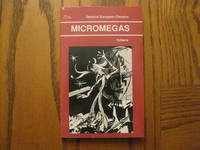
1989006340Dedalus 1989. Soft cover. Fine. Tim Gray. First Dedalus edition/printing small trade paperback. As New unread condition. Translated by W. Fleming. Intro by Ben Barkow. Collection of stories. ". as Proto SF is "Micromégas" the title story contained in Le Micromégas de Mr. de Voltaire avec une Histoire des Croisades & un nouveau plan de l'Histoire de l'esprit humain coll 1752; trans Tobias Smollett as Micromegas a Comic Romance for full subtitle see Checklist 1753 in which two Alien giants see Great and Small the larger from a planet circling Sirius and a smaller giant from Saturn visit Earth where their responses to human life make some satirical points not least that our species may not be so very important in the context of the much larger physical Universe that was coming to be accepted at the time Voltaire was writing. " JC/PN Encyclopedia of SF Internet 4th Ed. <br/> <br/> Dedalus paperback
192322200Paris: Rene Kieffer 1923. leather_bound. Orig. full two-toned brown leather covers decorated in blind backstrip lettered in gilt marbled endpapers. Teg. Fine. 54 pages. 24 x 19 cm. Limited edition copy 95 of 500 on velin la forme with 45 vignettes in pochoir by Joseph Hemard. An exquisite copy bound by Kieffer with his label on verso of front cover paste-down. Hémard’s lasting fame however lies in his book illustrations – always with a distinctly French character usually comic and often mildly erotic. He was probably the most prolific book illustrator in the first half of the twentieth century in France. Rene Kieffer unknown
178467131Londres: chez Robinson No 25 Pater-Noster-Row 1784. First British edition 8vo pp. 2 ii 208; vignette title page; original blue paper wrappers; edges curled small cracks at spine ends; all else very good. Unpublished during the author's lifetime these Memoires are generally seen as an outright attack on Frederick of Prussia after Voltaire had suffered humiliation on Frederick's orders in Frankfurt. chez Robinson, No 25, Pater-Noster-Row unknown
1770028261765 - 1770 s.l. sans éditeur 1770. Cramer - Genève - 20 x 12 cm - 2376pgs - 388 pgs - 430 pgs - 366 pgs - 364 pgs - XXIIles pages 3-312 pgs 1et 2 n'existent pas - 404 pgs - plein basane dos à 5 nerfs - fleurons estampées en or dans les caissonstomaisons rouges avec une partie du titre estampée en or - traces d'usage aux dosaux coiffes et aux coins mais très acceptable nom à l'intérieur des plats suppérieurs pour le premier vol.: texte en manuscrit en face du faux titre 18ième- en tout des ex. très acceptables - Bengesco 2212 - Barbier III 532 - les parties 1-3 probablement imprimés en 1766 mais la date sur la page de titre est 1765 le supplément dans la 3ième partie est intégré dans le texte <br/> <br/> 1765 - 1770 s.l. sans éditeur unknown
1905Geneva: Cramer 1765-1768. Five volumes. A GORGEOUS COPY OF THE FIRST EDITION with ALL HALF-TITLES PRESENT of one of Voltaire's most important and fascinating works a haphazard collection of philosophical and literary pieces which clearly demonstrate the depth and scope of his genius. The original intention was to publish only three volumes and for that reason many bibliographers consider the first three volumes a complete work in itself although Voltaire continued until the 19th volume appeared in 1776. I offer here the first three volumes along with the next two. In his introduction to the third part Voltaire points out that some of the works which appear here had been published before but only incorrectly and incompletely. He goes on to assert that many of the other works originally printed alongside them and attached to his name were not in fact by him. His reason for publishing this collection therefore was to present a definitive and complete text of many of his most important works many of which are printed here for the first time. Included are his commentary on Beccaria his Traite sur la tolerance with documentation that had not previously been published and dozens of other pieces. Volume 3 is complete with the supplement which is often missing. Due to their subversive nature they all ended up on the Catholic Church's Index of Prohibited Books these books were published without the name of the author the name of the publisher or the place of publication. Due to their popularity they were reprinted by Cramer and mercilessly pirated by other publishers. Most sets are mixed with different printings by different publishers. The volumes I offer here however are first printings throughout. Nicely printed on fine laid paper with numerous head- and tailpieces. 8vo. Bound in very attractive contemporary half French calf and decorated boards spines in six compartments leather spine labels. Minimal traces of wear to corners else fine and bright with large margins and no defects inside or out. Bengesco 2212; B.N. vol. 214 part I columns 82-86; Barbier III 531-532. A very rare and important set in contemporary bindings and in excellent condition. <br/><br/> Geneva: Cramer, 1765-1768 hardcover
19287275<p>1/500 FIRST EDITION THUS VERY GOOD.</p> VOLTAIRE SOC hardcover
1775044596Genève et Paris: Cramer et Bardin 1775. Edition encadrée" Complete set of all 40 volumes with the engraved frontispieces where issued all pages printed within the wood-engraved frames octavo format. Uniformly bound in mottled calf with gilt spine trim and lettering; some leather chipping mostly at the head of some spines. all edges marbled. Contents: t. 1 La Henriade divers autres poëmes et toutes les piéces relatives à l'épopée. t. 2-10 Ouvrages dramatiques précédés et suivis de toutes les piéce qui leur sont relatifs. t. 11 La Pucelle d'Orléans poëme suivie du Temple de Gout &c. t. 12-13 Mélanges de poësies &c. t. 14-17 Essai sur les moeurs et l'esprit des nations; et sur les principaux faits de l'histoire depuis Charlemagne jusqu'à Louis XIII. t. 18-20 Siècle de Louis XIV auquel on a joint un précis du siècle de Louis XV et un autre morceau d'histoire. t. 21 Histoire de Charles XII roi de Suède avec les pièces qui y sont relatives. t. 22 Histoire de l'Empire de Russie sous Pierre le Grand divisée en deux parties. t. 23-24 Annales de l'Empire depuis Charlemagne fragmens sur quelques revolutions dans l'Inde fragmens sur l'histoire générale et divers autres morceaux historiques. t. 25-30 Questions sur l'Encyclopédie par des amateurs. t. 31-32 Romans philosophiques élémens de Newton précédés et suivis de divers morceaux intéressans. t. 33-37 Mélanges de littérature d'histoire et de philosophie. t. 38-40 Piéces détachées attribuées à divers hommes célèbres. Cramer et Bardin unknown
180832539-528Paris De l'Imprimerie des Frères Mame & Chez Antoine-Augustin Renouard 1808-16. With 178 engraved plates mostly by Moreau le Jeune. 8vo c. 210 x 140 mm. Late 19th century full red morocco gilt lettering on spines somewhat faded gilt outer and inner fillets all edges gilt. From the library of James Arthur Taylor with his engr. bookplate. Paris De l'Imprimerie des Frères Mame & Chez Antoine-Augustin Renouard 1808-16. Rare edition of Voltaire's 1694-1778 collected works illustrated with a suite of engravings mostly done by J.-M. Moreau le jeune 1741-1814. Single copies from the present edition were also sold separately by Renouard. "Cette collection de gravures est l'une des plus belles qui ait jamais été exécutée pour aucun livre" Fürstenberg. Arranged in 21 vols. by Renouard it contains of: Théatre 9 vols. 1809; Romans 2 vols. 1809 and 1808; Poèmes et discours en vers 1808; Epîtres stances et odes 1808; Contes en vers satires et poésies mèlées 1808; Siècle de Louis XIV 2 vols. 1808; Précis du siècle de Louis XV 1808; Histoire de l'empire de Russie sous Pierre le Grand 1809; La Henriade poème avec les notes et variantes suivi de l'essai sur la poésie épique 1816; La Pucelle d'Orléans poème en vingt et un chants 1816; Histoire de Charles XII roi de Suède 1816. The majority of the volumes are illustrated with 113 engravings by Moreau le Jeune. Renouard added a series of c. 65 portraits of famous peoples mostly engraved by Augustin Saint-Aubin the copper-plates of which Renouard possessed. Probably this is the best-known work of Moreau le Jeune draftsman und engraver. After the first announcement of the publication of the Kehl edition of Voltaire's complete works he started the series of illustrations without an order and on his own account. Later Moreau sold them to Beaumarchais who included them in the de-luxe edition of Voltaire's complete works printed at Kehl in 1785-89. These series was also sold separately as in the present case.- Plates partly browned text-page very clean otherwise a nice set. - Bengesco IV 2184; Quérard La France littéraire X 378-379; Bocher Catalogue de l'oeuvre pp. 582 & 618; Sander Illustr. franz. Bücher 1407; cf. Cohen/de Ricci 1047; cf. Lewine p. 566; no copy in BnF. LITERATURE: FRENCH ; LITERATUR: FREMDSPRACHIGE ; Paris, De l'Imprimerie des Frères Mame & Chez Antoine-Augustin Renouard unknown
182423898Paris: Delangle Frères 1824. Later printing. Hardcover. fair. Octavo. Half leather over marbled paper covered boards with gold lettering on spines. marbled endpapers. Fascinating edition of the works of the most famous French Enlightenment writer essayist and philosopher of all times. It includes: Vol. 1 : Biographie. Vol.2 : Mémoires. Vol. 3-12 : Théâtre. Vol. 13 : La Henriade. Vol. 14 : La Pucelle. Vol. 15-18 : Poésie. Vol. 19-24 : Essai sur les moeurs. Vol. 25-27 : Le Siècle de Louis XIV. Vol. 28-29 : Le Siècle de Louis XV. Vol. 30 : Histoire de Charles XII. Vol. 31 : Histoire de Russie. Vol. 32-33 : Annales de l'Empire. Vol. 34 : Histoire du Parlement de Paris. Vol. 35-37 : Mélanges historiques. Vol. 38-40 : Politique et législation. Vol. 41-42 : Physique. Vol. 43-48 : Philosophie. Vol. 49-50 : Dialogues. Vol. 51-58 : Dictionnaire philosophique petite perte à la coiffe du volume 54. Vol. 59-60 : Romans. Vol. 61 : Facéties. Vol. 62-64 : Mélanges littéraires. Vol. 65-67 : Commentaires. Vol. 68-95 : Correspondance. Vol. 96-97 : Tableau analytique. Some edge wear on bindings with joints edges and corners partly rubbed. A few volumes have their head or tail of spine chipped. Volume 97 has a different binding and is from a different publisher Beaudouin Frères. Only volume 64 is in poor condition with its first 50 pages missing and heavy worming affecting text. Sporadic foxing throughout. Text in French. Bindings in overall fair to good interior in good condition. Delangle Frères hardcover
18192003020120Paris: Renouard 1819-1822 1819. Hardcover. Very Good. 64 volume set of 66. Uniformly bound in later 1/4 leather over yellow marbled boards. Gilt stamped spines. Good bindings and covers. Minor scattered foxing. 164 engraved portraits and plates including folding and facsimiles. Refs: Brunet V.1355 Bengesco IV 2149. Carteret III 16. Querard X 379. Vicaire VII 1137 <br> T. 1-7. Theatre 1819 7 v. . T. 8. La Henriade 1819 434 p. T. 9. La Pucelle d'Oleans 1819 371 p. T. 10. Poemes 1819 479 p. T. 11. Epitres et stances 1819 352 p. T. 12. Contes en vers. Satires et poesies melees 1819 408 p. T. 13-16. Essai sur les moeurs et l'esprit des nations 1819 4 v. . T. 17-18. Le siecle de Louis XIV 1819 2 v. . T. 19. Precis du siecle de Louis XV 1819 456 p. T. 20. Histoire de Charles IX 1819 338 p. T. 21. Histoire de l'empire de Russie 1819 404 p. T. 22. Annales de l'Empire 1819 636 p. T. 23. Histoire du Parlement de Paris 1819 514 p. T. 24-25. Melanges historiques 1819 2 v. . T. 26-27. Politique et legislation 1819 2v. T. 28. Physique 1819 611 p. T. 29-31. Philosophie 1819 3 v. . T. 32. Dialogues et entretiens philosophiques 1819 559 p. T. 33-38. Dictionnaire philosophique 1819 6 v. . T. 39-40. Romans 1819 2 v. . T. 41. Faceties 1821 432 p. T. 42-43. Melanges litteraires 1821 2 v. . T. 44-45. Commentaires sur Corneille 1821 2 v. . T. 46-57. Correspondance 1821 12 v. . T. 58. Correspondance avec l'imperatrice de Russie ; Lettres de plusieurs souverains a M. de Voltaire ; Lettres des princes de Prusse etc. et de M. de Voltaire. 1821 323 104 p. T. 59-61. Correspondance avec le roi de Prusse 91821 3 v. . T. 62. Correspondance avec d'Alembert 1821 756 p. T. 63. Lettres inedites de Voltaire a Mademoiselle Quinault a M. d'Argental au president Henault a M. Damilaville a Madame d'Epinay et autres personnages remarquables 1822 388 p. T. 64. Vie de Voltaire / par Condorcet. Memoires pour servir a la vie de M. de Voltaire ecrits par lui-meme. Commentaire historique sur les oeuvres de l'auteur de "La Henriade" 1822 495 p. <br> This is an oversized or heavy book which requires additional postage for international delivery outside the US. Paris: Renouard [1819-1822] hardcover
1867mon0003537430Paris: Aux Bureaux du Siecle 1867. Hardcover. Good. . 9-volumes-in-5. covers show minor wear tear rubbing. pages tanned and clean. Paris: Aux Bureaux du Siecle hardcover
88202Paris A. Sautelet Verdière Furne A. Dupont 1827. Ganzleder gebunden; rote goldgeprägte Einbände Goldschnitt marmorierte Vorsätze / 3 Bände / Anz. Seiten: 1848 2168 2235 / 135 x 20 x 27 cm / Zustand: sehr gut geringe Alters-/ Gebrauchsspuren; Einbände nur geringfügig berieben Papier etwas gebräunt und leicht fleckig die hintersten Blätter von Band 1 an unterer Ecke knickspurig Bibl.-stempel auf Titelseiten handschr. Nummerierung auf Vorsätzen Paris, A. Sautelet, Verdière, Furne, A. Dupont, 1827 unknown
2101PA076<p>De l'Imprimerie de la Société Littéraire-Typographique. S./l. 1785.</p>_x000d_<p>De 22x14 cm. Com iv iv 398 págs. Encadernação revestida em papel da época decorativo marmoreado. Exemplar apresenta foxing nas margens de algumas páginas.</p>_x000d_<p>Contém cinco tragédias Les Lois de Minos Dom Pedre Les Pelopides Irene e Agatócles diversas peças com elas relacionadas tais como: dedicatórias notas variantes e discursos críticos. </p> I-199A-D-3 unknown