Francois-Marie Arouet de VoltaireBiblio.com
364 résultats
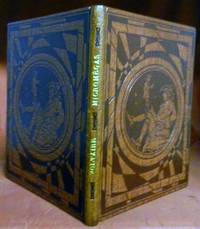
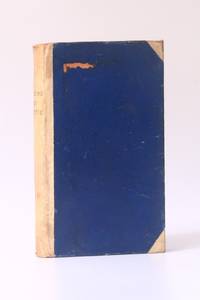
175212376London: J. Robinson. London J. Robinson 1752. . Hardback. Likely a pirated edition. A very good copy in half vellum. An important early example of what would become science fiction. Three editions were published in 1752 at about the same time the actual first edition doesn't have the date on the title page unlike the present copy. The other two copies are thought to be unauthorised and likely published in Paris or Germany. An adventure following the journey of alien visitors to Earth from Sirius and Saturn. ".inaugurated a tradition of superior aliens who come to lecture humans about the need to improve themselves" Westfahl volI p17. Some scuffing to the binding handwritten title on the spine ink name to endpaper top edge dusty. A presentable copy of an important milestone in the history of science fiction. 12376 Hyraxia Books. . Very Good. Hardback. Edition. 1752. J. Robinson hardcover
1989006340Dedalus 1989. Soft cover. Fine. Tim Gray. First Dedalus edition/printing small trade paperback. As New unread condition. Translated by W. Fleming. Intro by Ben Barkow. Collection of stories. ". as Proto SF is "Micromégas" the title story contained in Le Micromégas de Mr. de Voltaire avec une Histoire des Croisades & un nouveau plan de l'Histoire de l'esprit humain coll 1752; trans Tobias Smollett as Micromegas a Comic Romance for full subtitle see Checklist 1753 in which two Alien giants see Great and Small the larger from a planet circling Sirius and a smaller giant from Saturn visit Earth where their responses to human life make some satirical points not least that our species may not be so very important in the context of the much larger physical Universe that was coming to be accepted at the time Voltaire was writing. " JC/PN Encyclopedia of SF Internet 4th Ed. <br/> <br/> Dedalus paperback
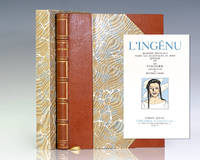
192322200Paris: Rene Kieffer 1923. leather_bound. Orig. full two-toned brown leather covers decorated in blind backstrip lettered in gilt marbled endpapers. Teg. Fine. 54 pages. 24 x 19 cm. Limited edition copy 95 of 500 on velin la forme with 45 vignettes in pochoir by Joseph Hemard. An exquisite copy bound by Kieffer with his label on verso of front cover paste-down. Hémard’s lasting fame however lies in his book illustrations – always with a distinctly French character usually comic and often mildly erotic. He was probably the most prolific book illustrator in the first half of the twentieth century in France. Rene Kieffer unknown
1981123982Berkeley CA: The Arif Press 1981. cloth label on spine. Arif Press. 12mo. cloth label on spine. 16 2 pages. Limited to 150 copies. Translated from the French by P.H. Hanson. Frontispiece facsimile of 1784 engraving. The Arif Press unknown
198195056Berkeley: Arif Press 1981. Hardcover. Fine. Translated by P. H. Hanssen. Slim small octavo. Cloth with applied paper label. Fine. One of 150 copies. Arif Press hardcover
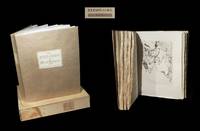
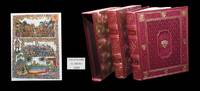
137212Paris: Librairie d'Amateurs n.d. The Libraire d'Amateurs edition of Voltaire's satirical novella. Quarto bound in three quarter crushed morocco over marbled boards with gilt titles and tooling to the spine in six compartments within raised gilt bands marbled endpapers ribbon bound in top edge gilt with 46 monochrome plates by Umberto Brunelleschi. In fine condition. Housed in a custom marbled slipcase. One of the most influential thinkers of the French Enlightenment François-Marie Arouet know by the nom de plum Voltaire was a resourceful and prolific writer. His works touched nearly every literary form including plays poems novels theoretical essays and scientific treatises. A forthright and candid advocate of civil liberties he frequently criticized the institutions of religious dogma and classism prevalent in 18th century France often doing so through satire to avoid censorship and imprisonment. Librairie d'Amateurs hardcover
1925elala168Paris: René Kieffer 1925. 1925. 8vo. pp. numerous text illus. with pochoir hand-colouring. contemporary half morocco original coloured pictorial wrs. bound in. First Edition Illustrated by Joseph Hémard Limited to 500 copies this one of 480 on vélin de cuve. One of the few of Voltaires works to deal with a distinctly economic subject. Directed against the Physiocrats and specifically Mercier De La Rivières Ordre naturel et essentiel des sociétés the witty and sarcastic tale takes its title from Merciers statement that in an organized state according to the physiocratic doctrine an average sum of forty crowns should suffice for the existence of each citizen. Voltaire singles out for special ridicule the proposed impot unique or single tax on land. The story revolves around the owner of a small estate yielding an annual net income of forty crowns who is alarmed at the promulgation of several edicts "by a few gentlemen who having some leisure have undertaken to govern the kingdom from their firesides". According to them the government "being by divine- and birth-right co-proprietor of his land he at least owes it one-half of his income" and that "as all wealth proceeds from land land is to bear the whole burden of taxation." Carteret IV 406. 1st Edition. Paris: René Kieffer, 1925. unknown
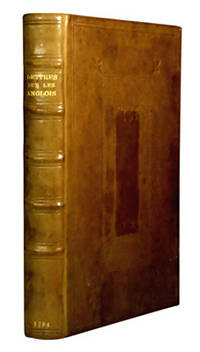
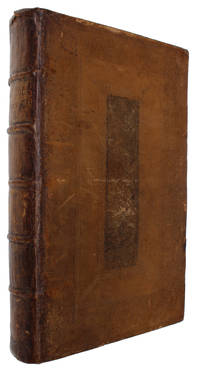
173446420<p>Basle i.e. London : by W. Bowyer 1734. First edition. Although an English translation had been published in London as "Letters Concerning the English Nation" in 1733 this is the first appearance of the original French text of the book now generally known as the "Lettres Philosophiques" and as "the first bomb thrown at the Ancien Régime". It has been said of Voltaire that "he came to England a poet and left it a philosopher": however that may be this book resulting from his stay in 1726-1728 is "one of the greatest and most influential works of the eighteenth century and beyond . the book that taught the whole of Europe how to think" Voltaire Foundation. The letters contrasting English and French thinking deal variously with religion in England - Quakers Anglicans Presbyterians and Socinians; politics parliament and Magna Carta; trade commerce and the businessman who "contributes to the felicity of the world"; English empiricism and Francis Bacon John Locke and Isaac Newton; and literature - Shakespeare above all Wycherley Congreve Swift and Pope etc. The London publishers' preface is interesting on the author's extreme reluctance to sanction a French-language edition - they had suppressed this edition for an entire year but others were now preparing illicit editions and they now had to displease the author to please the public. The furore which greeted the French editions when they appeared probably justified Voltaire's reluctance and the use here of a fake Basle imprint. Foolscap 8vo 171 x 103mm. viii228xxpp. Bound in a creditable modern rendition of early eighteenth-century full panelled calf; sprinkled edges; a few slight marks; Voltaire's name added to title-page in manuscript; faint fringe of very pale discolouration to fore-edge throughout text barely visible in most places; a few minor internal marks and tiny flaws but a good copy of one of the key books of the Enlightenment. Eighteenth-century 1768 ownership inscription now obscured.</p> Basle [i.e. London : by W. Bowyer], 1734. hardcover
elala5774London: Au dépens de la Compagnie 1757. Originally published at The Hague in 1738 this collection of writings begins with the letter on the soul. It should not be confused with Voltaire’s Lettres Philosophiques Letters Concerning the English Nation. Bengesco II p. 20 1558n. 8vo. pp. 285 3. woodcut tailpieces. 19th century bds. worn. elala5774 London: Au dépens de la Compagnie, 1757 unknown
elala5775London: Au dépens de la Compagnie 1775. Originally published at The Hague in 1738 this collection of writings begins with the letter on the soul. It should not be confused with Voltaire’s Lettres Philosophiques Letters Concerning the English Nation. Bengesco II p. 20 1558n citing 8vo. 12mo. pp. 316. Uncut in original wrs. elala5775 London: Au dépens de la Compagnie, 1775 unknown
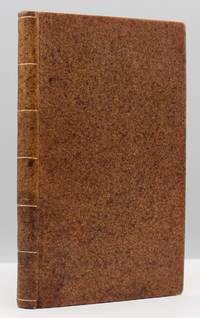
117621Glasgow Printed by Robert Urie 1759. . Fourth edition; 12mo 18 x 10.5 cm; a little toned front hinge reinforced; contemporary tree calf contrasting red morocco lettering-piece to spine joint and headcap repaired slightly scuffed and rubbed very good; 6 3-149 13pp.<br /> An early Glasgow printing of this interesting outsider's take on English society and its people precipitated by Voltaire's exile to Great Britain in 1726. <br /><br />The resulting Letters first published in 1734 following his return to Paris express his great admiration for the comparative religious freedom enjoyed by England's Quakers and Socinians as well as its constitutional monarchy 'where the Prince is all powerful to do good and at the same time restrain'd from committing evil' the implication being that England could provide a model for France's reform p.53. When the French edition was published the following year without the approval of the royal censor as Lettres Philosophique it caused a storm with copies confiscated and publicly burnt and Voltaire again forced to flee Paris.<br /><br />The work remains one of Voltaire's most widely known and read texts which helped introduce Bacon Locke and Newton to Europe's Enlightenment thinkers. It also contains an early account of Newton's famous discovery of gravity passed on to Voltaire by Newton's niece Catherine Barton as well as an early translation into French verse of Hamlet's soliloquy from Act 3 Scene 1: 'Demeure il faut choisir & passer à l'instant / De la vie à la mort ou d l'Etre au neant.' p.173.<br /><br />Widely ranked as Voltaire's most important early philosophical work and 'the first bomb hurled against the Ancien Régime' Babson.<br /> ESTC T137639. Glasgow, Printed by Robert Urie, 1759. unknown
173360085London C. Davis and A. Lyon 1733. 8vo. Lovely contemporary full Cambridge-style binding with five raised bands to spine and blindstamped ornamental borders to boards. . Double gilt line-borders to boards. All edges of boards with gilt borders. Gilt title to spine. Hinges neatly and professionally re-inforced. Internally very nice clean and fresh. A lovely crisp and large copy with good margins printed on heavy fine paper. 16 -including preface contents advertisements 253 1 18 -Index pp. <br/><br/><em>The important actual first edition of this highly celebrated key work of the Enlightenment in which the anecdote of how Newton discovered gravity the story about Newton and the falling apple appeared for the first time together with the description of the difference between the physical world view of the English and the French the "plenum" and the "vacuum". This seminal work in which Voltaire famously depicts British philosophy science society and culture in comparison to French can be viewed as the Enlightenment equivalent to Tocqueville's "Democracy in America". This series of essays which is based on Voltaire's experiences when living in England was actually written by Voltaire mostly in English which he mastered to perfection. It has often been presumed that the first edition of the work was that published in French in 1734 but actually the present English edition constitutes the actual first appearance of the work as well as the version that is closest to Voltaire's intention as the French language version is the re-written one and the English version the original. Curiously almost all modern English versions are translations into English of the French edition instead of the original English version making this edition of the utmost importance.After the original English edition of 1733 two French editions soon followed the first in 1734. Unlike the British the French resented the book and already in 1734 the French Parliament issued an order for the author's arrest and condemned the work causing the impact of it in France to be delayed. The book was burned for being "dangerous to religion and civil order". At the same time the work became a bestseller in Britain and as much as 14 editions of the work were published in the eighteenth century. "Inspired by Voltaire's two-year stay in England 1726-8 this is one of the key works of the Enlightenment. Exactly contemporary with Gulliver's Travels and The Beggar's Opera Voltaire's controversial pronouncements on politics philosophy religion and literature have placed the Letters among the great Augustan satires. Voltaire wrote most of the book in English in which he was fluent and witty and it fast became a bestseller in Britain. He re-wrote it in French as the Lettres philosophiques and current editions in English translate his French." Nicholas Cronk Introduction to the Oxford's Classics edition from 1999.The great French philosopher Voltaire was greatly impressed by the philosophical and scientific achievements of the English especially those of Newton Locke and Bacon. As a disseminator of scientific knowledge Voltaire came to play a great rôle in the popularization of Newtonian science and its discoveries the present work being a prime example. Although the work was condemned by the French authorities it still came to play a great rôle in the spreading of Newtonian ideas in France. The present work generally came to play a dominant rôle in Enlightenment accounts of the history of science and philosophy. The work focuses on British science and thought and uses the accounts of these to emphasize what is lacking in French society and French thought. The work is generally very critical towards the French "ancient régime" and when Voltaire here discusses the emergence of empiricism it is viewed as an English tradition that stands in opposition to the French rationalist tradition with Descartes as the prime example. This view is taken over by the following Enlightenment historians of science and philosophy e.g. d'Alembert see for instance his "Preliminary Discourse" of 1751. Some of the most influential passages of the work are probably those on Bacon who Voltaire sees as the founder of modern experimental science Newton and Descartes. Letters XIV on Descartes and Newton XV on attraction and XVI on Newton's Optics from 1704 are among the most influential essays of the work. In XVI Voltaire reflects upon Newton's "Optics" and the way that he rejected Descartes' theory and set out his own account of the properties of light. In XV he presents the first account of Newton and the falling apple: "As he was walking one Day in his Garden and saw some Fruits fall from a Tree he fell into profound Meditation on that Gravity the Cause of which had so long been sought but in vain by all the Philosophers whilst the Vulgar think there is nothing mysterious in it. He said to himself that from what height soever in our Hemisphere those Bodies might descend their Fall wou'd certainly be in the Progression discover'd by Galileo; and the Spaces they run thro' would be as the Square of the Times. Why may not this Power which causes heavy Bodies to descend and is the fame without any sensible Diminution at the remotest Distance from the Center of the Earth or on the Summits of the highest Mountains; Why said Sir Isaac may not this Power extend as high as the Moon." pp. 127-28.But perhaps the most famous passage in the volume is the opening of Letter XIV: "A Frenchman who arrives in London will find Philosophy like every Thing else very much chang'd there. He had left the World a "plenum" and he now finds it a "vacuum". At Paris the Universe is seen compos'd of Vortices of subtile Matter; but nothing like it is seen in London. In France 'tis the Pressure of the Moon that causes the Tides; but in England 'tis the Sea that gravitates towards the Moon; so that when you think that the Moon should make it Flood with us those Gentlemen fancy it should be Ebb which very unluckily cannot be prov'd." pp. 109-10. </em> hardcover
1945293861945. Paris Les Editions nationales 1945. Un vol. au format in-4 288 x 232 mm de 234 pp. brochÂŽ sous couverture ˆ rabats rempliÂŽs et ÂŽtui-chemise de plein cartonnage crÂme dos lisse piÂce de titre contrecollÂŽe sertie d'un double filet en noir. Un des 500 exemplaires numÂŽrotÂŽs du tirage sur pur-fil Johannot second papier aprÂs les 100 de tÂte sur vÂŽlin d'Arches. L'ouvrage s'agrÂŽmente - ici en premier tirage - de 52 eaux-fortes dont 12 hors-texte de Jean-Louis Viard. ''Le rythme de Voltaire est ˆ lui et insÂŽparable de la forme de son esprit. En dÂŽpit qu'en aient les renchÂŽris et les ergoteurs ce voltairianisme dont les pages qui vont suivre sont la fleur est bien la crÂŽation de Voltaire comme sa langue''. Absent de Monod Manuel de l'amateur de livres illustrÂŽs modernes. Marques d'eau et claires rousseurs affectant l'ÂŽtui-chemise. Du reste trÂs belle condition. Peu courant. b42961 unknown
1020887923.Ghardcover. Good. Access codes and supplements are not guaranteed with used items. May be an ex-library book. hardcover
1113034068.Gpaperback. Good. Access codes and supplements are not guaranteed with used items. May be an ex-library book. paperback
3439Paris: Librairie des Bibliophiles / D. Jouaust 1880. FIRST EDITION of one of Voltaire's most unusual works with a lot of explicit erotic verse. A SPECIAL LARGE-PAPER COPY ON CHINESE PAPER PRINTED FOR JOUAUST THE PUBLISHER. 2 leaves; XL 151 pp. plus frontispiece etched portrait of Voltaire also on Chinese paper. 8vo. Bound in contemporary cloth with leather spine label surely for Jouaust whose engraved bookplate is on the front pastedown. Entirely uncut and unopened. Leather spine label worn else fine and bright. Bengesco 1891 vol. II p. 363. <br/><br/> Paris: Librairie des Bibliophiles / D. Jouaust, 1880 hardcover
6930413like new. unknown
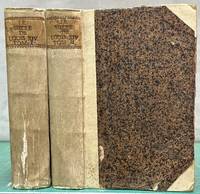
175116247Berlin: C F Henning. Very Good- with no dust jacket. 1751. First Edition; First Printing. Hardcover. Vellum darkened and with some surface cracking light extremity wear; light foxing. No half-title pages. Errata page for both volumes bound at end of Vol I. Two custom owners' bookplates in first volume. Solid hardcovers. ; French language. Half vellum binding with marbled boards. Two of two volumes complete. Bengesco I 1178. This work was the most researched and carefully prepared of Voltaire's works. He began work on this project in 1734 while at the Chateau Cirey put it aside in 1738 and resumed work on it in 1750. First Edition First Printing of Voltaire's pioneering historical study of the age of King Louis XIV published while Voltaire was resident at the court of King Frederick II of Prussia.; xii 488 2 errata; ii 466 in 2v pages . C F Henning hardcover
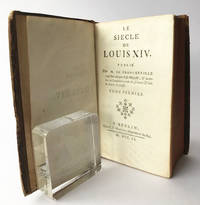
17512359The first edition of Voltaire's brilliant historical study of the age of King Louis XIV. Begun as early as 1732 Voltaire sent a manuscript version to Frederic II who was enthusiastic and encouraged its publication. In 1739 Voltaire published a 'Plan Raisonné' of the project including two finished chapters but this was condemned by the court and seized. In 1750 Voltaire left France for Frederic's court at Berlin where he set himself to complete the work. Failing to obtain the 'privilège royal' or even the non-written 'permission tacite' he decided to go ahead and publish the work in Berlin at his own expence. Voltaire continued to add to the work in subsequent editions most notably in the 1753 Berlin edition where he added a supplement in which he refuted the attacks made by La Beaumelle.<br /><br /><i>Two volumes in one 12mo 144 x 85mm pp. xiv 488 1 errata; ii 466 2 errata with the half-title to the first volume in contemporary calf rather worn spine gilt in compartments foot of spine chipped wormhole to the head of spine wanting the front endpaper red edges.</i><br /><br />BN Voltaire Catalogue 3361-3363. C.F. Henning
1785320871785. S.l. Editions d'Art Seper / Le Chant des SphÂres / Arts et couleurs 1986. 2 forts vol. au format pt in-4 262 x 205 mm de 201 et 216 pp. Reliures d'ÂŽdition de plein skyvertex lie-de-vin ˆ l'imitation de maroquin filets d'encadrement dorÂŽs et ˆ froid sur les plats lesquels s'ornent d'une large frise d'encadrement ˆ froid composition figurative en relief au centre frappÂŽe des armes dorÂŽes de France jeux de filets en relief formant croisillons sur fond de lys en relief fleurons dorÂŽs dos ˆ nerfs ornÂŽs de filets maigres ˆ froid caissons d'encadrement dorÂŽs entrelacs de fleurons en relief ˆ froid armes de France et fleuron hÂŽraldique dorÂŽs titre dorÂŽ tomaison dorÂŽe tÂtes dorÂŽes gardes de pleine moire lie-de-vin sous ÂŽtuis bordÂŽs. Un des exemplaires du tirage numÂŽrotÂŽ ; complet de son certificat d'authenticitÂŽ volant. Ensemble complet des deux volumes le constituant. Chacun s'agrÂŽmente de nombreuses autant que dÂŽlicates compositions en couleurs par Jean Gradassi. ''Toutes les illustrations de cette collection en trois volumes vÂŽritables reconstitutions historiques en couleurs ont ÂŽtÂŽ reproduites ˆ partir de sÂŽlections manuelles et rehaussÂŽes d'aquarelle au pochoir. ConfÂŽrant ˆ cette ÂŽdition une grande valeur artistique''. ''PassionnÂŽ d'Histoire Jean Gradassi se spÂŽcialise dans cet art difficile qu'est l'illustration et pour lequel l'ÂŽtude des costumes civils et militaires de l'architecture du mobilier d'ÂŽpoque sont une base indispensable ˆ sa crÂŽation artistique o chaque dÂŽtail mÂŽrite d'Âtre examinÂŽ ˆ la loupe. Quand on sait avec quelle minutie et quel souci du dÂŽtail chaque architecture chaque costume chaque personnage sont mis au point et avec quelle Ç maestria È dans la couleur il parvient ˆ faire vivre toutes ces scÂnes spirituelles et animÂŽes on est transportÂŽ d'admiration pour son art''. Voltaire cÂŽlÂbre ici les idÂŽes progressistes des LumiÂres fait ÂŽtat des avancÂŽes culturelles techniques et ÂŽconomiques rÂŽalisÂŽes au cours du rÂgne de Louis XV. TrÂs belle condition. b42961 unknown
1946100-45639Librairie Larousse 1946. paperback. Very Good. Tight appears to be reprint of the 1946. Librairie Larousse paperback
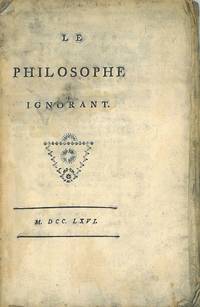
176658868Uten sted. Amsterdam eller Haag. 1766. 8vo. I materie. Ubeskåret. 6 120 s. Fransk. <br/><br/><em>Første 4 s. med et lite hull. Boken utkom flere steder i året 1766 - London Berlin Augsburg m. fl.Materien noe smusset. </em> unknown
17607699<p>Geneve: Chez les Frères Cramer 1760 Early reprint published in the same year as the first edition. The first edition has a London imprint though it was actually printed in Geneva too and Voltaire's name does not appear on the title. Full modern speckled calf gilt-ruled spine edges stained red. Twelvemo. Small brown stain on verso of title-page and next recto some light dampstaining at top corner. Generally a very good copy. A spurious publication in which Voltaire blatantly pretends that this is a French translation of an original work by the brother of David Hume. According to Voltaire Hume's brother was pastor at an Edinburgh church and had produced two other plays which had been produced in London. "…il est le frère de ce célèbre philosophe Mr. Hume qui a creusé avec tant de hardiesse & de sagacité les fondements de la métaphysique & de la morale; ces deux philosophes sont également honneur à l'Ecosse leur patrie" preface. All editions of this work are rare. OCLC lists one copy of the present edition the Library of Congress copy. Of the first edition OCLC lists seven copies: Yale Maryland New York Public Library Cornell Harvard Texas Chicago.</p> Chez les Frères Cramer,
1731231308Paris: Josse 1731. First. hardcover. very good. Slim 8vo pp. xxix 3. 110 3 approbation and errata. Decorative copper engraved head-pieces a few contemporary ink annotations full gilt brown calf covers lightly warped and rubbed with a bright gilt heraldic crest on front and back red edges. Paris: J.F. Josse 1731. First Edition. Scarce. Very good.<br/> <br/> Josse unknown
elala2018Parma: Bodoni Press 1798. 8vo. pp. 3 p.l. 128. with initial blank. 19th century quarter roan bit rubbed some light foxing. BOUND WITH: .La Marianna Tragedia Di Voltaire Nuovamente Tradotta. 8vo. pp. 1 p.l. x 2 107. complete with initial blank. Parma: Bodoni Press 1804. BOUND WITH: .L'Olimpia Tragedia Di Voltaire Nuovamente Tradotta. 8vo. pp. 1 p.l. xii 2 135. Parma: Bodoni Press 1805. BOUND WITH: .L'Alzira Tragedia Di Voltaire Nuovamente Tradotta. 8vo. pp. 2 p.l. viii 106. some light foxing. Parma: Bodoni Press 1797. New Italian translations by Luigi Landriani of four of Voltaire's plays: a nice grouping of Bodoni imprints. Brooks 711 932 961 679. Parma: Bodoni Press, 1798. unknown