4 083 résultats
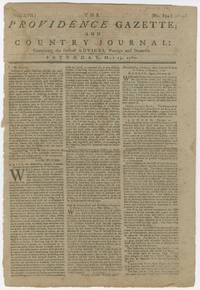
178025999<p><b>Jefferson's Excessively Rare BILL FOR ESTABLISHING RELIGIOUS FREEDOM</b></p><p><b>One of the three achievements of which Jefferson was most proud as listed on his epitaph. </b></p><p>Only the <b>second known newspaper</b> printing and the <b>first front-page</b> printing. </p><p>THOMAS JEFFERSON. Prominent front-page printing of "<i>A Bill for establishing religious Freedom Printed for the Consideration of the People</i>" <i>The Providence Gazette; and Country Journal </i>Rhode Island May 13 1780 1:1-2.</p><p>Jefferson drafted the bill in 1777 and John Harvie 1742-1807 introduced it in the Virginia General Assembly on June 12 1779. James Madison reintroduced a slightly different version in October 1785 and the General Assembly adopted a further revised version on January 16 1786.</p><p>This eclipses by roughly six years the rare 1786 Paris four-page printing of the Act making it the earliest obtainable printing of Jefferson's proposed bill. It is closer to Jefferson's original text than either the amended act or Jefferson's hybrid version created in 1786.1 </p><p>Here it is introduced by a local commentator signing as "Roger Williams" in homage to America's earliest advocate of religious toleration and separation of church and state.</p><p><b>Complete Transcript of Introduction</b></p><p><i>Mr. Carter</i></p><p><i> <u>In times of public dissention wherein the exertions of municipal law are too feeble to check the encroachments of popular or despotic leaders or of factions directed to particular views the men who nobly oppose the vicious torrent give an irresistible proof of the innate excellence of human nature.</u> Commotions of every kind are near the confines of usurpation: They terminate in horror when the rights of mankind are essentially violated. Of all those rights freedom of thinking in matters religious is the most important. Actions are the necessary consequence of volition; and therefore religious establishments counteract their own intentions. Religion is relative only to the creature and the Creator: It existed the same where in the mundane or other systems coeval with nature in gradation; and consequently anteceded the objects of civil institution. <u>For governments therefore whether republican monarchical or despotic to enforce religion as pertaining to their formation is absurd and ridiculous; but more especially so when freedom is the glorious prize for which we dare to fight to bleed to die!</u>—Unhappy contrast! The first State but one in the confederated union of America is attempting to enslave the free-born mind.—The first State but one in the confederated union of America is boldly declaring the rights of humanity in the most critical of times! Happy Virginia! thy unsullied charms will smile with truth when the universal boon shall be known to all and heaven pronounce impartial freedom.</i></p><p><i> The following Sir is an <u>Act of the State of Virginia</u>: That the noble sentiments therein contained may universally prevail in the anxious prayer of your very humble servant.</i></p><p><i> ROGER WILLIAMS.</i></p><p><b>Bill for Establishing Religious Freedom as introduced June 12 1779 and printed here</b></p><p>deletions in final version in bold</p><p><i><b>A</b> <b>Bill</b></i><i>for establishing religious Freedom.</i></p><p><i><b>Printed for the Consideration of the People.</b></i></p><p><b><i>Well aware that the opinions and belief of men depend not on their own will but follow involuntarily the evidence proposed to their minds that</i></b><i> <b>Almighty God has created the mind free and manifested his supreme will that free it shall remain by making it altogether insusceptible of restraint</b></i><i>; that all attempts to influence it by temporal punishments or burthens or by civil incapacities tend only to beget habits of hypocrisy and meanness and therefore are a departure from the plan of the holy Author of religion who being Lord of both body and mind yet chose not to propagate it by coercions on either as was in his Almighty power to do <b>but to extend it by its influence on reason alone</b>; that the impious presumption of legislators and rulers civil as well as ecclesiastical who being themselves but fallible and uninspired men have assumed dominion over the faith of others setting up their own opinions and modes of thinking as the only true and infallible and as such endeavouring to impose them on others hath established and maintained false religions over the greatest part of the world and through all time; that to compel a man to furnish contributions of money for the propagation of opinions which he disbelieves <b>and abhors</b> is sinful and tyrannical; that even the forcing him to support this or that teacher of his own religious persuasion is depriving him of the comfortable liberty of giving his contributions to the particular pastor whose morals he would make his pattern and whose powers he feels most persuasive to righteousness and is withdrawing from the ministry those temporary rewards which proceeding from an approbation of their personal conduct are an additional incitement to earnest and unremitting labour for the instruction of mankind; that our civil rights have no dependence on our religious opinions any more than on our opinions in physics or geometry that therefore the proscribing any citizen as unworthy the public confidence by laying upon him an incapacity of being called to offices of trust and emolument unless he profess or renounce this or that religious opinion is depriving him injuriously of those privileges and advantages to which in common with his fellow citizens he has a natural right; that it tends also to corrupt the principles of that </i><i><u>very</u></i><i> religion it is meant to encourage by bribing with a monopoly of worldly honors and emoluments those who will externally profess and conform to it; that though indeed those are criminal who do not withstand such temptations yet neither are those innocent who lay the bait in their way; <b>that the opinions of men are not the object of civil government nor under its jurisdiction; </b>that to suffer the civil magistrate to intrude his powers into the field of opinion and to restrain the profession or propagation of principles on supposition of their ill tendency is a dangerous fallacy which at once destroys all religious liberty because he being of course judge of that tendency will make his opinions the rule of judgment and approve or condemn the sentiments of others only as they shall square with or differ from his own; that it is time enough for the rightful purposes of civil government for its officers to interfere when principles break out into overt acts against peace and good order; and finally that truth is great and will prevail if left to herself; that she is the proper and sufficient antagonist to error and has nothing to fear from the conflict unless by human interposition disarmed of her natural weapons free argument and debate; errors ceasing to be dangerous when it is permitted freely to contradict them.</i></p><p><i><b>We the General Assembly of Virginia do Enact</b></i><i> That no man shall be compelled to frequent or support any religious worship place or ministry whatsoever nor shall be enforced restrained molested or burthened in his body or goods nor shall otherwise suffer on account of his religious opinions or belief; but that all men shall be free to profess and by argument maintain their opinions in matters of religion and that the same shall in no wise diminish enlarge or affect their civil capacities. And though we well know that this Assembly elected by the people for the ordinary purposes of legislation only have no power to restrain the acts of succeeding Assemblies constituted with powers equal with our own and that therefore to declare this act irrevocable would be of no effect in law; yet we are free to declare and do declare that the rights herein asserted are of the natural rights of mankind and that if any act shall be hereafter passed to repeal the present or to narrow its operation such act will be an infringement of natural right.</i></p><p><b>"An Act for establishing religious Freedom" as adopted January 16 1786</b></p><p><i>An Act for establishing religious Freedom.</i></p><p><i>Whereas Almighty God hath created the mind free; that all attempts to influence it by temporal punishments or burthens or by civil incapacitations tend only to beget habits of hypocrisy and meanness and therefore are a departure from the plan of the holy author of our religion who being Lord both of body and mind yet chose not to propagate it by coercions on either as was in his Almighty power to do; that the impious presumption of legislators and rulers civil as well as ecclesiastical who being themselves but fallible and uninspired men have assumed dominion over the faith of others setting up their own opinions and modes of thinking as the only true and infallible and as such endeavouring to impose them on others hath established and maintained false religions over the greatest part of the world and through all time; that to compel a man to furnish contributions of money for the propagation of opinions which he disbelieves is sinful and tyrannical; that even the forcing him to support this or that teacher of his own religious persuasion is depriving him of the comfortable liberty of giving his contributions to the particular pastor whose morals he would make his pattern and whose powers he feels most persuasive to righteousness and is withdrawing from the Ministry those temporary rewards which proceeding from an approbation of their personal conduct are an additional incitement to earnest and unremitting labours for the instruction of mankind; that our civil rights have no dependence on our religious opinions any more than our opinions in physics or geometry that therefore the proscribing any citizen as unworthy the public confidence by laying upon him an incapacity of being called to offices of trust and emolument unless he profess or renounce this or that religious opinion is depriving him injuriously of those privileges and advantages to which in common with his fellow citizens he has a natural right; that it tends only to corrupt the principles of that very Religion it is meant to encourage by bribing with a monopoly of worldly honours and emoluments those who will externally profess and conform to it; that though indeed these are criminal who do not withstand such temptation yet neither are those innocent who lay the bait in their way; that to suffer the civil magistrate to intrude his powers into the field of opinion and to restrain the profession or propagation of principles on supposition of their ill tendency is a dangerous fallacy which at once destroys all religious liberty because he being of course judge of that tendency will make his opinions the rule of judgment and approve or condemn the sentiments of others only as they shall square with or differ from his own; that it is time enough for the rightful purposes of civil government for its officers to interfere when principles break out into overt acts against peace and good order; and finally that truth is great and will prevail if left to herself that she is the proper and sufficient antagonist to error and has nothing to fear from the conflict unless by human interposition disarmed of her natural weapons free argument and debate errors ceasing to be dangerous when it is permitted freely to contradict them:</i></p><p><i>Be it enacted by General Assembly That no man shall be compelled to frequent or support any religious worship place or Ministry whatsoever nor shall be enforced restrained molested or burthened in his body or goods nor shall otherwise suffer on account of his religious opinions or belief; but that all men shall be free to profess and by argument to maintain their opinions in matters of Religion and that the same shall in no wise diminish enlarge or affect their civil capacities. </i></p><p><i>And though we well know that this Assembly elected by the people for the ordinary purposes of legislation only have no power to restrain the Acts of succeeding Assemblies constituted with powers equal to our own and that therefore to declare this Act irrevocable would be of no effect in law; yet we are free to declare and do declare that the rights hereby asserted are of the natural rights of mankind and that if any Act shall be hereafter passed to repeal the present or to narrow its operation such Act will be an infringement of natural right.</i></p><p><b>Additional Content</b></p><p>This issue also includes a report that King Louis XVI had given the Marquis de Lafayette permission to rejoin the army of the United States p1/c3; rumors from London that Parliament would be dissolved p1/c3; news of John Adams' arrival in Europe as a negotiator to try to end the Revolutionary War p2/c1; the installation of the Rev. Samuel Williams as Hollis Professor of Mathematics at Harvard University p2/c2; news of raids by Native Americans in Pennsylvania skirmishes with British forces and local news of taxes and a burglary p3/c1-3; a proclamation by British Commander-in-Chief Henry Clinton offering a pardon to all those who would return to their loyalty to the Crown p4/c1; a brief letter by Lafayette to the Massachusetts General Assembly: "<i>Nothing but those particular marks of their favour and the grateful feelings they have excited could increase the happiness I enjoyed in finding myself on the American shore and the warm desire I feel of being again with my American fellow-soldiers in the defence of our noble cause.</i>" p4/c2</p><p><b><i>The Providence Gazette and Country Journal</i></b> 1762-1817 was the first newspaper published in Providence Rhode Island. Sarah Updike Goddard ca. 1701-1770 her son William Goddard 1740-1817 and her daughter Mary Katherine Goddard 1738-1816 established the weekly newspaper in 1762. When William Goddard moved to Philadelphia to establish the <i>Pennsylvania Chronicle</i> in 1767 Sarah Goddard published <i>The Providence Gazette and Country Journal</i>with the assistance of Philadelphia-born John Carter 1745-1814 who had been a printer's apprentice to Benjamin Franklin. Carter purchased <i>The Providence Gazette and Country Journal </i>in 1768. Postmaster-General Franklin appointed John Carter as the postmaster of Providence in 1772 and Carter held the position until 1792. In 1795 Carter shortened the title of the newspaper to <i>The Providence Gazette</i> until 1811 when he restored the original title. Carter sold the newspaper to Hugh H. Brown and William H. Wilson in 1814 and the newspaper continued under that title until 1817. Successor newspapers continued into the 1830s.</p><p><b>CENSUS OF NEWSPAPER PRINTINGS BEFORE JANUARY 16 1786:</b></p><p><i>Independent Ledger and the American Advertiser.</i> April 10 1780. Boston MA p4/c1</p><p><i>Providence Gazette; and Country Journal. </i>May 13 1780. Providence RI p1/c1-2</p><p><i>Thomas's Massachusetts Spy Or American Oracle of Liberty.</i> May 25 1780. Worcester MA p2/c1-2</p><p><i>Virginia Journal and Alexandria Advertiser.</i> April 14 1785. Alexandria VA. p2/c1-2</p><p><i>Maryland Journal and Baltimore Advertiser.</i> November 18 1785. Baltimore MD p2/c32</p><br /><p>1 For Jefferson's combination of parts of the bill and act into an odd hybrid in 1786 see the editorial discussion in 82. A Bill for Establishing Religious Freedom 18 June 1779.</p><p>2 <i>The Maryland Journal and Baltimore Advertiser</i>. June 7 1785. Baltimore MD p2/c3-p3/c1 proposed the same text for a similar act of the Maryland General Assembly by "A Citizen" but since Maryland is not Virginia it is omitted here.</p><br /><br /><br /><br /><br /> books
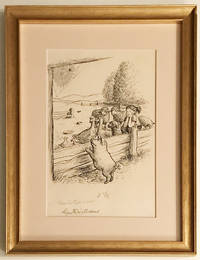
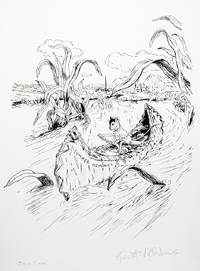
1952BBO41<p><b>WILLIAMS</b> Garth:</p><p><b><i>Charlotte's Web</i></b>: <i>"A Director's Meeting"</i>. 1952</p><p>Original ink drawing as reproduced in <i>Charlotte's Web</i> by E B White</p><p>New York: Harper & Bros 1952 illustrated on <b>page 88</b>;</p><p>The image was also used sometimes as the frontispiece in later reprints of this title such as the Anniversary edition.</p><p>Titled in pencil and Signed in full in ink at lower left by the artist.</p><p><br /></p> books
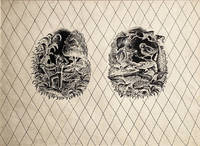
1945VBF40<p><b>WILLIAMS</b> Garth 1912–1996</p><p><i><b>Stuart Little – Endpaper Designs</b></i> 1945</p><p>Pencil and ink conceived for the endpapers with china white</p><p>Two designs: Stuart Little on the river bank his right leg on a log his boat docked behind him; the other: a view of the winding river seen from the perspective of a perched bird.</p><p>Each drawing measures 5-1/2 x 4-1/2 inches on larger paper framed.</p><p>Well-rendered designs bordered by paneled margins executed in ink for the endpapers of the first edition of <i>Stuart Little</i> by E B White</p><p>The published version prints these images in reverse in the color green.</p> Harper & Bros books
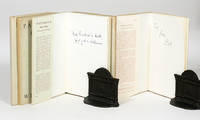
19462118New York: New Directions 1946. First edition. Original cloth original dust jacket. Fine/Fine. FIRST EDITIONS AN OUTSTANDING ASSOCIATION COPY: 
Theodore Roethke's copies of Books III and V with Book III inscribed in Roethke's hand "Ted Roethke's book gift of W.C. Williams" and Book V inscribed by Williams "Ted from Bill". With first editions of the remaining volumes. William Carlos Williams was one of the most influential figures in Theodore Roethke's creative life. "At a time when Theodore Roethke was finding his poetic voice he called William Carlos Williams 'my toughest mentor.'" From 1940-1948 as Roethke was developing his poetry he submitted his latest work to Williams to critique. Williams repeatedly responded candidly and forcefully issuing "a series of challenges to Roethke and these challenges changed the direction and scope of Roethke's art" Robert Kusch "My Toughest Mentor": Theodore Roethke and William Carlos Williams. Roethke's own volumes of Paterson - Williams's masterpiece - must have held extraordinary significance for him and unite two of the towering figures in American poetry. Each first edition of Paterson had a very limited print run: Books I-IV one of only 1000 copies Book V one of 3000 copies. New York: New Directions 1946-1958. Tall octavo original cloth original dust jackets. A fine set with only the most trivial wear. New Directions hardcover books
1949D16273New York: New Directions 1949. First Edition. Hardcover. Very Good. First printing first state with the incorrect copyright page "Copyright 1948 / New Directions". One of 20 to 50 copies thus out of a total of 1500 copies printed on laid paper by Peter Beilenson. "Originally scheduled for release of 27 October 1948 One Arm was not published until January the following year because of an error on the copyright page.Between late October and January 1949 New Directions attempted to recover and correct all copies with the incorrect copyright notice.According to James Laughlin of New Directions and Andreas Brown however between 20 and 50 copies escaped correction." Crandell A9.I.a1. This is author Paul Bowles's copy with Williams's presentation inscription on the front flyleaf" "To Paul and Morocco - With Love Tennessee." Williams has inscribed the book again at a later date on the front free endpaper: "Many hands all empty on the covers meaning what Tennessee to Paul Tangiers 1962." With Bowles's signature on the front free endpaper. One loose signature with the corrected copyright page is laind in. Foreedge a little soied spine a little cocked covers slightly rubbed otherwise a fine copy in broken publisher's slipcase. A wonderful association copy preserved in a custom-made folding cloth box. <br/><br/>In December of 1948 Jane Bowles left Tangier and went to Gibraltar to meet her husband Paul Tennessee Williams and Frank Merlo Williams's lover. The three of them were arriving on the SS Saturnia. Williams brought with him his new Buick Roadster and the four of them toured Spain for a few days before crossing the straits to Tangier. The weather in both Spain and Tangier was rainy and after two weeks in Tangier the group headed to Fez. See An Invisible Spectator - A Biography of Paul Bowles by Christopher Sawyer-Laucanno Weidenfeld & Nicolson NY 1989 pages 280-1. Although Williams visited Tangier on several occasions it seems quite possible that Williams first inscribed tghe book on this visit. Subsequent visits took place in the 50's and 60's. New Directions hardcover books
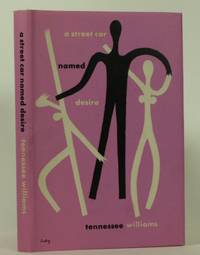
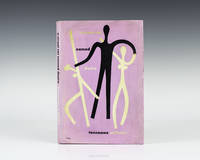
194722908New York: New Directions 1947. First edition. Pink boards; virtually as new in dust jacket unfaded and with no wear. One of the fabled Norman Unger copies purchased new by Williams's friend the book collector Unger then wrapped and stored for 30 years. Cover and jacket design by Alvin Lustig. Crandell A 5.1.a. <br/><br/> New Directions hardcover books
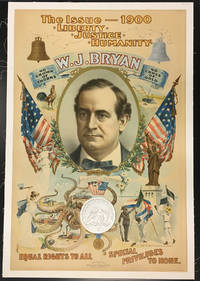
190024250<p><b><i>"No Crown of Thorns / No Cross of Gold / Equal Rights to All / Special Privileges to None"</i></b></p><p>William Jennings Bryan tried for the White House in 1896 1900 and 1908. The leading supporter of "free silver" against the gold standard and a champion of the "little guy" against moneyed Eastern businessmen and bankers Bryan came closest to victory in 1896.</p> <b>WILLIAMS JENNING BRYAN.</b><i>"The Issue--1900: Liberty Justice Humanity."</i> Columbus Ohio Neville Williams 1900. Chromolithograph printed by the Strobridge Lithograph Company Cincinnati Ohio. 20 x 30 in; edges slightly trimmed very faint mat toning; laid down on canvas.<p>Surrounding the central vignette of the candidate flanked by American flags nearly every theme of Bryan's long political career is represented in fantastic graphics. Quotes from his 1896 "Cross of Gold" speech on monetary policy and the free coinage of silver surround his name; a rooster and plow reveal his appeal to the nation's long-suffering Midwestern farmers; and "Blind Justice" looks longingly at Bryan's portrait. A bronze liberty bell dated 1776 juxtaposes a silver one labeled "1900 No Imperialism."</p><p>Below a white-clad Lady Democracy fashioned as a Jael-style avenger prepares to destroy monopolistic trusts by hacking the tentacles off an octopus that protects large American industries such as the U.S. Biscuit Company American Tobacco the American Steel Trust and perennial progressive punching bag Standard Oil. An octopus representing monopolies dates to the early 1880s but gained traction in the early years of the 1900s notably in <i>Puck</i> magazine's famous 1904 cartoon of Standard Oil's tentacles surrounding the U.S. Capitol building.</p><p>The anti-imperialist plank is shown by figures representing Cuba Mexico and probably the Philippines appealing to the Statue of Liberty shouting "give us liberty or give us death" paraphrasing Patrick Henry's famous line. The print itself boldly proclaims "Equal Rights to All Special Privileges to None."</p><p><b>William Jennings Bryan</b> 1860-1925 of Nebraska was a powerful orator and prominent populist who failed in bids for the presidency in 1896 1900 and 1908. His support for farmers and laborers led him to oppose trusts and seek monetary trade tariff and railroad rate regulation. After his third presidential bid he became Woodrow Wilson's Secretary of State in 1913. A pacifist in 1915 Bryan resigned after Wilson began to move towards fighting Germany in WWI after the sinking of the <i>Lusitania</i>. Bryan supported Prohibition and was an ardent anti-Darwinist. He died in 1925 five days after the conclusion of the Scopes Monkey Trial where he defended Tennessee's anti-evolutionary position.</p> books
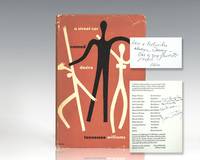
194787896New York: New Directions 1947. Early printing of Williams' classic play which won the Pulitzer Prize for Drama in 1948. Octavo original illustrated boards. association copy inscribed or signed by several cast members for producer Danny Selznick. Signed by Marlon Brando Kim Hunter Jessica Tandy and Karl Malden. Inscribed by Kim Hunter on the verso of the first blank: "Love and best wishes always Danny- one of my Favorite people- Kim." Selznick's ownership inscription on the lower corner of the half-title page. Danny Selznick is a producer and the youngest son of David O. Selznick; it was Selznick's mother Irene Mayer Selznick who produced the stage version of Streetcar Named Desire<i>;</i> it was she who recommended to film producer Charles Feldman to cast Kim Hunter in the screen version. Very good in a very good price-clipped dust jacket. Jacket design by Alvin Lustig. Housed in a custom half morocco clamshell box. Rare and desirable signed by Brando and the other cast members. A Streetcar Named Desire received the Pulitzer Prize for Drama in 1948. The play opened on Broadway on December 3 1947 and closed on December 17 1949 in the Ethel Barrymore Theatre. The Broadway production was directed by Elia Kazan and starred Marlon Brando Jessica Tandy Kim Hunter and Karl Malden. The London production opened in 1949 with Bonar Colleano Vivien Leigh and Renee Asherson and was directed by Laurence Olivier. "No one dared approach this new thing without caution. They had just witnessed something unprecedented on the stage a high-pitched jagged alarming--and comical!--drama structure" Sam Staggs. It is often regarded among the finest of American plays of the 20th century. New Directions hardcover books
19477342New York: New Directions 1947. First edition of Williams' classic play which won the Pulitzer Prize for Drama in 1948. Octavo original illustrated boards. Signed by Tennessee Williams on the front free endpaper. Near fine in an excellent dust jacket which has had some expert restoration to the extremities. Jacket design by Alvin Lustig. Housed in a custom half morocco clamshell box. A Streetcar Named Desire received the Pulitzer Prize for Drama in 1948. The play opened on Broadway on December 3 1947 and closed on December 17 1949 in the Ethel Barrymore Theatre. The Broadway production was directed by Elia Kazan and starred Marlon Brando Jessica Tandy Kim Hunter and Karl Malden. "No one dared approach this new thing without caution. They had just witnessed something unprecedented on the stage a high-pitched jagged alarming--and comical!--drama structure" Sam Staggs. It is often regarded among the finest of American plays of the 20th century. New Directions hardcover books
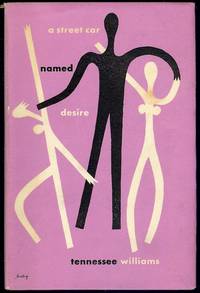
19479097New Directions 1947. WILLIAMS Tennessee. A STREETCAR NAMED DESIRE. NY: New Directions 1947. Tall 8vo. pictorial purple boards in dust jacket. First Edition. Signed by Williams and actress Jessica Tandy on the front endpaper. Only a mere 5080 copies were printed. One of the most difficult if not the most difficult and desirable books to obtain in the Williams canon. Tandy portrayed Blanche DuBois in the original Broadway production also starring Marlon Brando Kim Hinter and Karl Malden. Tandy garnered four Tony awards for her performance. Unquestionably one of the great masterpieces of modern American drama and the first play to win Williams a Pulitzer Prize. Near fine few very tiny dings to upper & lower covers little tanning to endpapers; text clean & tight; minor soil & few very short tears little fading spine & small light stain front cover; $2.75 price is present on the front flap d/j. A nice copy!! <br/><br/> New Directions hardcover books
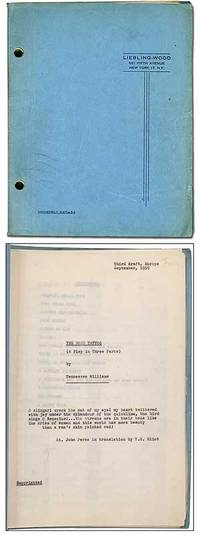
19503445981950. Softcover. Near Fine. Carbon typescript. Quarto. 75pp. but missing final two pages. Sheets bradbound in the blue "Liebling-Wood" folder of Williams's agent Audrey Wood. The light blue wrappers a bit worn with a couple tears and the original brads replaced very good plus. It's labeled "Third draft Europe September 1950" on the first sheet along with a pencil notation that reads "not final draft." This copy also includes the epigraph from the poem "Anabasis" on the first sheet that was used intermittently by Williams throughout his many draft. The Rose Tattoo is Williams's first full-length comedy which he called his "love-play to the world." It concerns a Sicilian widow from the Gulf Coast and her attempts to protect her attractive young daughter while dealing with her own renewed passions. This draft was completed after learning that Elia Kazan had passed on directing the play to do a film with Arthur Miller a snub that greatly disheartened Williams. Nevertheless the play which debuted on Broadway in early 1951 won the Tony Awards for best play as well as best actor and best actress awards for Eli Wallach and Maureen Stapleton. A 1955 film version was also a success starring Burt Lancaster and Anna Magnani who was won the Oscar for best actress. unknown books
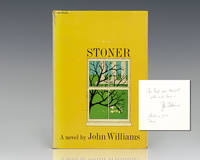
1965122576New York: The Viking Press 1965. First edition of the author's classic work. Octavo original half cloth. Presentation copy warmly inscribed by the author on the front free endpaper "For Bob and Margaret with much love- John Williams Christmas 1970 Denver." The recipients were close friends of the author. Near fine in an excellent dust jacket with some toning to the spine. Jacket design by Ellen Raskin. John Williams's luminous and deeply moving novel is a work of quiet perfection. William Stoner emerges from it not only as an archetypal American but as an unlikely existential hero standing like a figure in a painting by Edward Hopper in stark relief against an unforgiving world. "One of the great unheralded 20th-century American novels .Almost perfect" Bret Easton Ellis. The Viking Press hardcover books
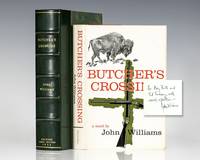
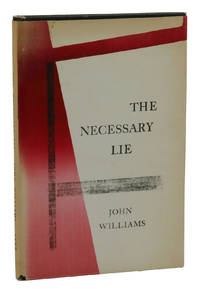
196031014New York: The MacMillan Company 1960. First edition of Williams' second novel. Octavo original cloth. Association copy inscribed by the author on the front free endpaper "For Mary Beth and Ed Twining with much affection- John Williams." Ed Twining was an English professor at The University of Denver where John Williams also taught and was the director of the creative writing program. The two were lifelong friends. Near fine in a near fine price-clipped dust jacket. Jacket design by Gilbert Etheredge. Housed in a custom half morocco clamshell box. A nice association. "Harsh and relentless yet muted in tone Butcher's Crossing paved the way for Cormac McCarthy. It was perhaps the first and best revisionist western" The New York Times Book Review. It is the 1870s and Will Andrews fired up by Emerson to seek "an original relation to nature" drops out of Harvard and heads west. He washes up in Butcher's Crossing a small Kansas town on the outskirts of nowhere. Butcher's Crossing is full of restless men looking for ways to make money and ways to waste it. Before long Andrews strikes up a friendship with one of them a man who regales Andrews with tales of immense herds of buffalo ready for the taking hidden away in a beautiful valley deep in the Colorado Rockies. He convinces Andrews to join in an expedition to track the animals down. The journey out is grueling but at the end is a place of paradisal richness. Once there however the three men abandon themselves to an orgy of slaughter so caught up in killing buffalo that they lose all sense of time. Winter soon overtakes them: they are snowed in. Next spring half-insane with cabin fever cold and hunger they stagger back to Butcher's Crossing to find a world as irremediably changed as they have been. "Butcher's Crossing dismantles the myth of the west revealing a horror story about the grinding day to day of just surviving.a restrained and gorgeous lyricism.even in its softer moments it doesn't overdo anything and the moral criticism is in the precision of the language the now-famous simple and elegant Williams prose" Bret Easton Ellis. The MacMillan Company hardcover books
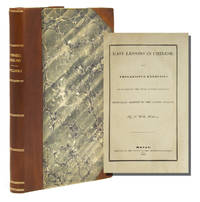
1842260298Macao: Printed at the Office of the Chinese Repository 1842. First edition. Frontispiece and folding plate. Text in English and Chinese. ix i 287 1 pp. 8vo. Rebacked and recorned in three quarters calf preserving early marbled boards new endpapers. Horizontal tear across frontispiece neatly repaired. Bookplate of Library of the American Board of Commissioners for Foreign Missions. First edition. Frontispiece and folding plate. Text in English and Chinese. ix i 287 1 pp. 8vo. First edition of this early manual on the Chinese language for English speakers issued as Chinese trade was opening to the West. It is the first book on China by the missionary and sinologist Samuel Wells Williams 1812-1884 who argues that the beginning student of Chinese should first learn to write the 214 radicals that comprise the various characters. With the bookplate of the American Board of Commissioners for Foreign Missions who in 1833 hired Williams to run its printing press in Guangdong. Cordier 1685; Lust 1067; Trübner Catalogue of Dictionaries and Grammars of the Principal Languages p. 37 Printed at the Office of the Chinese Repository unknown books
503783on lower portion and verso of a typed letter on Esquire magazine letterhead November 8 1967 signed by Rachel Gallagher Editoral Associate. 4to 1 1/2 pages. A remarkable letter in answer to Gallagher's inquiry stating that Esquire is planning a feature on the salutary effects of a number of drugs on the market mentioning an article in Life magazine regarding the drug Dilantin and wondering if Williams would agree to participate in the article: "Dear Miss Gallagher - I am very interested in pills that don't contain barbiturates or amphetamine. At night I take two doriden tablets and a 100 milligram mellaril - and I have no deleterious effect from them. Pills are dangerous but sometimes danger must be accepted. I think we all know that. I shall try to get hold of the piece on Dillantin sic which is a pill I never heard of. I always check out with my doctor whatever I take. To combine pills with an excessive amount of alcohol is the greatest indiscretion and one I avoid." William's apparently failed to follow his own advice. His death in 1987 was brought about by his choking on the cap of a pill container. Williams 1914-87 Mississippi-born playwright and novelist; winner of 2 Pulitzer Prizes for drama "A Streetcar Named Desire" 1948 and "Cat on a Hot Tin Roof" 1955. Signed by Authors. F. Soft cover. paperback books
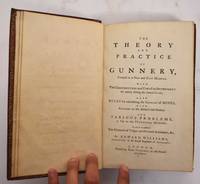
1766177778London: Printed for Paul Vaillant in the Strand 1766. Leather bound. VG soiling but otherwise bright and very clean inside a superb copy. Full red leather with extensive gilt tooled border on both covers all edges gilt marbled endpapers. 5 raised bands with extensive and detailed gilt tooling in the compartments. 8 302 pages 9 unnumbered leaves of plates Tables 1-5 Plates I II III IV. The last four leaves of plates are numbered I-IV. A superb copy of a book rarely encountered either in the trade or at auction. Printed for Paul Vaillant, in the Strand unknown books
19962237np: np 1996. First edition. nb. Fine. EXTREMELY RARE LITHOGRAPH SIGNED BY ILLUSTRATOR GARTH WILLIAMS OF THE COVER ART FOR E.B. WHITE'S CLASSIC STUART LITTLE. WITH HAND-COLORING BY WILLIAMS. Pulled by hand from the original pen and ink drawing by Garth Williams. Marked "Bon à Tirer" "ready for press" in pencil by the printer. This image was acquired directly from the lithographer; Williams added the delicate gray hand-coloring in this image as a guide for the lithographer to follow in coloring the full edition. Williams died in 1996 just after this "ready for press" lithograph was printed; therefore no copies of the final printing of approximately 300 were signed. 

 11.25 x 15 inches. Fine condition. A UNIQUE EXAMPLE OF ONE OF GARTH WILLIAMS'S MOST DESIRABLE IMAGES. np unknown books
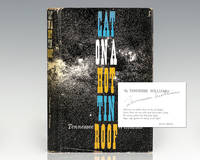
1955102375New York: New Directions 1955. First edition first issue of one of Williams's best-known works and his personal favorite. Octavo original cloth. Boldly signed by Tennessee Williams on the title page. Near fine in a near fine dust jacket with light rubbing to the extremities. Jacket design by Alvin Lustig. Rare and desirable signed. Cat on a Hot Tin Roof first heated up Broadway in 1955 with its gothic American story of brothers vying for their dying father's inheritance amid a whirlwind of sexuality untethered in the person of Maggie the Cat. The play also daringly showcased the burden of sexuality repressed in the agony of her husband Brick Pollitt. In spite of the public controversy Cat stirred up it was awarded the Pulitzer Prize and the Drama Critics Circle Award for that year. "Tennessee Williams never wrote a more explosive play than Cat on a Hot Tin Roof" Howard Kissel. It was the basis for the 1958 film directed by Richard Brooks starring Elizabeth Taylor Paul Newman and Burl Ives. New Directions hardcover books
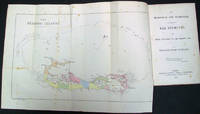
1848WRCAM41959London: Thomas Cautley Newby 1848. xii346pp. Folding colored frontispiece map. Contemporary three-quarter calf and marbled boards gilt label. Small tear in upper fore- edge of a few pages. Small closed tear repaired on verso of map. Map and titlepage slightly foxed else quite clean and neat. A very good copy. Williams a resident of Hamilton Bermuda drew largely on the heretofore unexamined material in the Public Records Office of the Colony. His work constitutes the first thorough history of Bermuda from discovery and initial settlement through the mid-19th century. There is a heavy emphasis on the political history of the island and also information on geology climate agriculture commerce churches etc. A lengthy appendix reprints many documents important in the history of the island. A scarce book; we can find only one copy appearing at auction in the last thirty years. Thomas Cautley Newby hardcover books
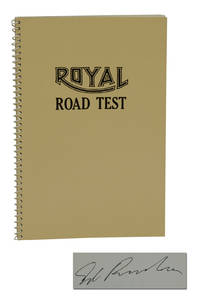
1967140939345Los Angeles: Self Published 1967. First Edition. Fine. First edition. Signed by Edward Ruscha on the first blank page. Cream colored wraps in spiral binding. About Fine with two top spirals indented and minor shelf wear to covers. A collaboration between Ed Ruscha Mason Williams and Patrick Blackwell in which they painstakingly document dropping a standard office-model Royal typewriter from a speeding Buick in the desert. One of 1000 copies originally printed. [Self Published] unknown books
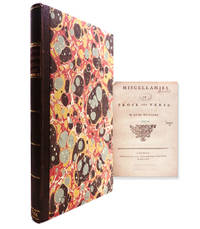
1766318208London: Printed for T. Davies 1766. First edition. "Samuel Johnson contributed the 'Advertisement' at least nine other pieces including 'The Fountains: A Fairy Tale' pp. 111-41 revised several others and was presumably responsible for the general editing and arrangement of the volume. 4 1-184pp. 4to. Bound in modern brown quarter calf and marbled boards. With library markings on title-page. First edition. "Samuel Johnson contributed the 'Advertisement' at least nine other pieces including 'The Fountains: A Fairy Tale' pp. 111-41 revised several others and was presumably responsible for the general editing and arrangement of the volume. 4 1-184pp. 4to. "Miss. Williams the blind Welsh poetess remained a member of Johnson's household from the days when she was his wife's constant companion. Johnson wrote a proposal for the work in the Gentleman's Magazine in 1750 but publication was delayed for 16 years presumably due to the lack of material by the poetess herself until Johnson arranged for contributions from many of his friends" --Maggs 1038/110. ESTC T77856; Fleeman pp. 1139-42 Courteney & Nicholl Smith p. 111 Printed for T. Davies unknown books
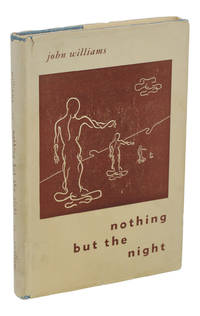
1965140941166Denver CO: Verb Publications 1965. First Edition. Near Fine/Near Fine. First edition first printing. 47 pp. Bound in publisher's grey cloth over boards stamped in gilt. Near Fine with light rubbing light soiling and light wear to cloth light browning to endsheets. In a Near Fine dust jacket with several short edge tears toning small stain to spine and small chip at foot. Williams'collection of poetry which was published the same year as Stoner printed in an edition of merely 425 copies and extremely scarce in the original dust jacket. Verb Publications unknown books
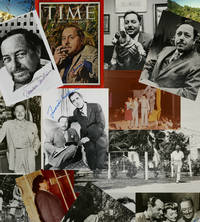
1990140940903No Place: No Publisher 1990. Near Fine. A three-ring binder of photographs of Tennessee Williams and people and places related to his work compiled by fan Jackie Koenig over many years. The majority 40 to be exact are publicity photos of Williams himself; four of these are signed by Williams. These show Williams on TV programs at Key West taken by Don Pinder at his library in 1955 at the Showcase Theatre in San Francisco in 1976 taken by Jere Hageman by her on their versos and at play openings. Koening has provided occasional contextual details on laid in slips such as "I attended this preview and Tennessee Williams sat behind me."<br /> <br /> A copy of the March 9 1962 issue of Time magazine is included. It features a portrait of Williams on the cover and is also signed. Some photos related to Williams' work are included such as signed photos of actors in productions of his work like Burl Ives and Ben Cooper. A set of 11 original color photos by Emily Roseland from 1997 capture the Puerto Vallarta set of Night of the Iguana.<br /> <br /> A visual documentary of the later years of the famous American playwright. [No Publisher] unknown books
1913140937324London: Elkin Matthews 1913. First Edition. Fine/Near Fine. First edition first printing. Signed by William Carlos Williams on the half-title page in a shaky post-stroke signature. Publisher's pale yellow paper-covered boards lettered in gilt on the upper board and spine. Fine in glassine wrapper which is lightly wrinkled and lightly edge worn with small chips at the spine ends. A wonderful signed copy of the poet's scarce second book. Elkin Matthews unknown books
1948140938798Denver CO: Alan Swallow 1948. First Edition. Near Fine/Very Good. First edition first printing. Bound in publisher's coarse blue cloth with titles in dark blue on the spine. Near Fine with light rubbing to cloth at tips light toning to pages. In a Very Good unclipped dust jacket edge-worn lightly soiled and lightly toned. The author's scarce first novel. Alan Swallow unknown books