69 634 résultats
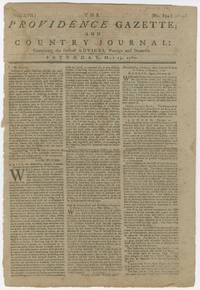
178025999<p><b>Jefferson's Excessively Rare BILL FOR ESTABLISHING RELIGIOUS FREEDOM</b></p><p><b>One of the three achievements of which Jefferson was most proud as listed on his epitaph. </b></p><p>Only the <b>second known newspaper</b> printing and the <b>first front-page</b> printing. </p><p>THOMAS JEFFERSON. Prominent front-page printing of "<i>A Bill for establishing religious Freedom Printed for the Consideration of the People</i>" <i>The Providence Gazette; and Country Journal </i>Rhode Island May 13 1780 1:1-2.</p><p>Jefferson drafted the bill in 1777 and John Harvie 1742-1807 introduced it in the Virginia General Assembly on June 12 1779. James Madison reintroduced a slightly different version in October 1785 and the General Assembly adopted a further revised version on January 16 1786.</p><p>This eclipses by roughly six years the rare 1786 Paris four-page printing of the Act making it the earliest obtainable printing of Jefferson's proposed bill. It is closer to Jefferson's original text than either the amended act or Jefferson's hybrid version created in 1786.1 </p><p>Here it is introduced by a local commentator signing as "Roger Williams" in homage to America's earliest advocate of religious toleration and separation of church and state.</p><p><b>Complete Transcript of Introduction</b></p><p><i>Mr. Carter</i></p><p><i> <u>In times of public dissention wherein the exertions of municipal law are too feeble to check the encroachments of popular or despotic leaders or of factions directed to particular views the men who nobly oppose the vicious torrent give an irresistible proof of the innate excellence of human nature.</u> Commotions of every kind are near the confines of usurpation: They terminate in horror when the rights of mankind are essentially violated. Of all those rights freedom of thinking in matters religious is the most important. Actions are the necessary consequence of volition; and therefore religious establishments counteract their own intentions. Religion is relative only to the creature and the Creator: It existed the same where in the mundane or other systems coeval with nature in gradation; and consequently anteceded the objects of civil institution. <u>For governments therefore whether republican monarchical or despotic to enforce religion as pertaining to their formation is absurd and ridiculous; but more especially so when freedom is the glorious prize for which we dare to fight to bleed to die!</u>—Unhappy contrast! The first State but one in the confederated union of America is attempting to enslave the free-born mind.—The first State but one in the confederated union of America is boldly declaring the rights of humanity in the most critical of times! Happy Virginia! thy unsullied charms will smile with truth when the universal boon shall be known to all and heaven pronounce impartial freedom.</i></p><p><i> The following Sir is an <u>Act of the State of Virginia</u>: That the noble sentiments therein contained may universally prevail in the anxious prayer of your very humble servant.</i></p><p><i> ROGER WILLIAMS.</i></p><p><b>Bill for Establishing Religious Freedom as introduced June 12 1779 and printed here</b></p><p>deletions in final version in bold</p><p><i><b>A</b> <b>Bill</b></i><i>for establishing religious Freedom.</i></p><p><i><b>Printed for the Consideration of the People.</b></i></p><p><b><i>Well aware that the opinions and belief of men depend not on their own will but follow involuntarily the evidence proposed to their minds that</i></b><i> <b>Almighty God has created the mind free and manifested his supreme will that free it shall remain by making it altogether insusceptible of restraint</b></i><i>; that all attempts to influence it by temporal punishments or burthens or by civil incapacities tend only to beget habits of hypocrisy and meanness and therefore are a departure from the plan of the holy Author of religion who being Lord of both body and mind yet chose not to propagate it by coercions on either as was in his Almighty power to do <b>but to extend it by its influence on reason alone</b>; that the impious presumption of legislators and rulers civil as well as ecclesiastical who being themselves but fallible and uninspired men have assumed dominion over the faith of others setting up their own opinions and modes of thinking as the only true and infallible and as such endeavouring to impose them on others hath established and maintained false religions over the greatest part of the world and through all time; that to compel a man to furnish contributions of money for the propagation of opinions which he disbelieves <b>and abhors</b> is sinful and tyrannical; that even the forcing him to support this or that teacher of his own religious persuasion is depriving him of the comfortable liberty of giving his contributions to the particular pastor whose morals he would make his pattern and whose powers he feels most persuasive to righteousness and is withdrawing from the ministry those temporary rewards which proceeding from an approbation of their personal conduct are an additional incitement to earnest and unremitting labour for the instruction of mankind; that our civil rights have no dependence on our religious opinions any more than on our opinions in physics or geometry that therefore the proscribing any citizen as unworthy the public confidence by laying upon him an incapacity of being called to offices of trust and emolument unless he profess or renounce this or that religious opinion is depriving him injuriously of those privileges and advantages to which in common with his fellow citizens he has a natural right; that it tends also to corrupt the principles of that </i><i><u>very</u></i><i> religion it is meant to encourage by bribing with a monopoly of worldly honors and emoluments those who will externally profess and conform to it; that though indeed those are criminal who do not withstand such temptations yet neither are those innocent who lay the bait in their way; <b>that the opinions of men are not the object of civil government nor under its jurisdiction; </b>that to suffer the civil magistrate to intrude his powers into the field of opinion and to restrain the profession or propagation of principles on supposition of their ill tendency is a dangerous fallacy which at once destroys all religious liberty because he being of course judge of that tendency will make his opinions the rule of judgment and approve or condemn the sentiments of others only as they shall square with or differ from his own; that it is time enough for the rightful purposes of civil government for its officers to interfere when principles break out into overt acts against peace and good order; and finally that truth is great and will prevail if left to herself; that she is the proper and sufficient antagonist to error and has nothing to fear from the conflict unless by human interposition disarmed of her natural weapons free argument and debate; errors ceasing to be dangerous when it is permitted freely to contradict them.</i></p><p><i><b>We the General Assembly of Virginia do Enact</b></i><i> That no man shall be compelled to frequent or support any religious worship place or ministry whatsoever nor shall be enforced restrained molested or burthened in his body or goods nor shall otherwise suffer on account of his religious opinions or belief; but that all men shall be free to profess and by argument maintain their opinions in matters of religion and that the same shall in no wise diminish enlarge or affect their civil capacities. And though we well know that this Assembly elected by the people for the ordinary purposes of legislation only have no power to restrain the acts of succeeding Assemblies constituted with powers equal with our own and that therefore to declare this act irrevocable would be of no effect in law; yet we are free to declare and do declare that the rights herein asserted are of the natural rights of mankind and that if any act shall be hereafter passed to repeal the present or to narrow its operation such act will be an infringement of natural right.</i></p><p><b>"An Act for establishing religious Freedom" as adopted January 16 1786</b></p><p><i>An Act for establishing religious Freedom.</i></p><p><i>Whereas Almighty God hath created the mind free; that all attempts to influence it by temporal punishments or burthens or by civil incapacitations tend only to beget habits of hypocrisy and meanness and therefore are a departure from the plan of the holy author of our religion who being Lord both of body and mind yet chose not to propagate it by coercions on either as was in his Almighty power to do; that the impious presumption of legislators and rulers civil as well as ecclesiastical who being themselves but fallible and uninspired men have assumed dominion over the faith of others setting up their own opinions and modes of thinking as the only true and infallible and as such endeavouring to impose them on others hath established and maintained false religions over the greatest part of the world and through all time; that to compel a man to furnish contributions of money for the propagation of opinions which he disbelieves is sinful and tyrannical; that even the forcing him to support this or that teacher of his own religious persuasion is depriving him of the comfortable liberty of giving his contributions to the particular pastor whose morals he would make his pattern and whose powers he feels most persuasive to righteousness and is withdrawing from the Ministry those temporary rewards which proceeding from an approbation of their personal conduct are an additional incitement to earnest and unremitting labours for the instruction of mankind; that our civil rights have no dependence on our religious opinions any more than our opinions in physics or geometry that therefore the proscribing any citizen as unworthy the public confidence by laying upon him an incapacity of being called to offices of trust and emolument unless he profess or renounce this or that religious opinion is depriving him injuriously of those privileges and advantages to which in common with his fellow citizens he has a natural right; that it tends only to corrupt the principles of that very Religion it is meant to encourage by bribing with a monopoly of worldly honours and emoluments those who will externally profess and conform to it; that though indeed these are criminal who do not withstand such temptation yet neither are those innocent who lay the bait in their way; that to suffer the civil magistrate to intrude his powers into the field of opinion and to restrain the profession or propagation of principles on supposition of their ill tendency is a dangerous fallacy which at once destroys all religious liberty because he being of course judge of that tendency will make his opinions the rule of judgment and approve or condemn the sentiments of others only as they shall square with or differ from his own; that it is time enough for the rightful purposes of civil government for its officers to interfere when principles break out into overt acts against peace and good order; and finally that truth is great and will prevail if left to herself that she is the proper and sufficient antagonist to error and has nothing to fear from the conflict unless by human interposition disarmed of her natural weapons free argument and debate errors ceasing to be dangerous when it is permitted freely to contradict them:</i></p><p><i>Be it enacted by General Assembly That no man shall be compelled to frequent or support any religious worship place or Ministry whatsoever nor shall be enforced restrained molested or burthened in his body or goods nor shall otherwise suffer on account of his religious opinions or belief; but that all men shall be free to profess and by argument to maintain their opinions in matters of Religion and that the same shall in no wise diminish enlarge or affect their civil capacities. </i></p><p><i>And though we well know that this Assembly elected by the people for the ordinary purposes of legislation only have no power to restrain the Acts of succeeding Assemblies constituted with powers equal to our own and that therefore to declare this Act irrevocable would be of no effect in law; yet we are free to declare and do declare that the rights hereby asserted are of the natural rights of mankind and that if any Act shall be hereafter passed to repeal the present or to narrow its operation such Act will be an infringement of natural right.</i></p><p><b>Additional Content</b></p><p>This issue also includes a report that King Louis XVI had given the Marquis de Lafayette permission to rejoin the army of the United States p1/c3; rumors from London that Parliament would be dissolved p1/c3; news of John Adams' arrival in Europe as a negotiator to try to end the Revolutionary War p2/c1; the installation of the Rev. Samuel Williams as Hollis Professor of Mathematics at Harvard University p2/c2; news of raids by Native Americans in Pennsylvania skirmishes with British forces and local news of taxes and a burglary p3/c1-3; a proclamation by British Commander-in-Chief Henry Clinton offering a pardon to all those who would return to their loyalty to the Crown p4/c1; a brief letter by Lafayette to the Massachusetts General Assembly: "<i>Nothing but those particular marks of their favour and the grateful feelings they have excited could increase the happiness I enjoyed in finding myself on the American shore and the warm desire I feel of being again with my American fellow-soldiers in the defence of our noble cause.</i>" p4/c2</p><p><b><i>The Providence Gazette and Country Journal</i></b> 1762-1817 was the first newspaper published in Providence Rhode Island. Sarah Updike Goddard ca. 1701-1770 her son William Goddard 1740-1817 and her daughter Mary Katherine Goddard 1738-1816 established the weekly newspaper in 1762. When William Goddard moved to Philadelphia to establish the <i>Pennsylvania Chronicle</i> in 1767 Sarah Goddard published <i>The Providence Gazette and Country Journal</i>with the assistance of Philadelphia-born John Carter 1745-1814 who had been a printer's apprentice to Benjamin Franklin. Carter purchased <i>The Providence Gazette and Country Journal </i>in 1768. Postmaster-General Franklin appointed John Carter as the postmaster of Providence in 1772 and Carter held the position until 1792. In 1795 Carter shortened the title of the newspaper to <i>The Providence Gazette</i> until 1811 when he restored the original title. Carter sold the newspaper to Hugh H. Brown and William H. Wilson in 1814 and the newspaper continued under that title until 1817. Successor newspapers continued into the 1830s.</p><p><b>CENSUS OF NEWSPAPER PRINTINGS BEFORE JANUARY 16 1786:</b></p><p><i>Independent Ledger and the American Advertiser.</i> April 10 1780. Boston MA p4/c1</p><p><i>Providence Gazette; and Country Journal. </i>May 13 1780. Providence RI p1/c1-2</p><p><i>Thomas's Massachusetts Spy Or American Oracle of Liberty.</i> May 25 1780. Worcester MA p2/c1-2</p><p><i>Virginia Journal and Alexandria Advertiser.</i> April 14 1785. Alexandria VA. p2/c1-2</p><p><i>Maryland Journal and Baltimore Advertiser.</i> November 18 1785. Baltimore MD p2/c32</p><br /><p>1 For Jefferson's combination of parts of the bill and act into an odd hybrid in 1786 see the editorial discussion in 82. A Bill for Establishing Religious Freedom 18 June 1779.</p><p>2 <i>The Maryland Journal and Baltimore Advertiser</i>. June 7 1785. Baltimore MD p2/c3-p3/c1 proposed the same text for a similar act of the Maryland General Assembly by "A Citizen" but since Maryland is not Virginia it is omitted here.</p><br /><br /><br /><br /><br /> books
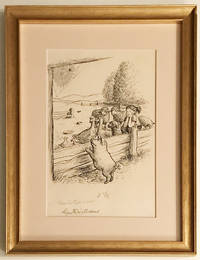
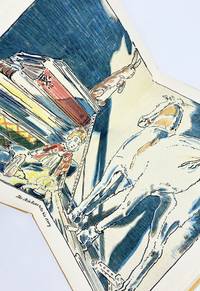
1952BBO41<p><b>WILLIAMS</b> Garth:</p><p><b><i>Charlotte's Web</i></b>: <i>"A Director's Meeting"</i>. 1952</p><p>Original ink drawing as reproduced in <i>Charlotte's Web</i> by E B White</p><p>New York: Harper & Bros 1952 illustrated on <b>page 88</b>;</p><p>The image was also used sometimes as the frontispiece in later reprints of this title such as the Anniversary edition.</p><p>Titled in pencil and Signed in full in ink at lower left by the artist.</p><p><br /></p> books
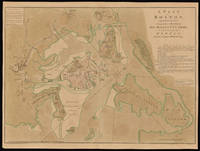
177614254London: Andrew Dury Duke's Court St. Martin's Lane 12th March 1776. 490 by 655mm 19.25 by 25.75 inches. Double-page engraved map with contemporary hand-colour in full. A plan of the Siege of Boston vividly encapsulating the events in the opening phase of the Revolutionary War based on a survey by a British officer present during the Siege who has made notes referring to fortifications the position of troops the Battle of Bunker Hill and the siege from April to October of 1775. The British troops and their fortifications are depicted on Boston Common showing the encampment of the 6th Regiment. The representation of troops at Charlestown and Bunkers Hill tries to put the desperate British situation in better light showing where the "Troops Landed 17 June under General Howe" a "Redoubt taken from ye Rebels by Genl. Howe" and at Charlestown Neck the "Lines & Redoubts thrown up by our Troops after ye Victory on ye 17th June 1775". The American troops encircle the town with the "Headquarters of the Rebels" at Cambridge and American installations at Roxbury and the mouth of the Charles. The key lower right includes a note acknowledging the strength of the American opposition: "a Strong Post of the Enemy Fortified in appearance with great Judgment". Following the Battle of Lexington and Concord in April of 1775 the British retreated into Boston and were soon surrounded by militia although they maintained control of Boston Harbour. On 16 June having learned that the British intended to occupy the surrounding hills militiamen under Colonel William Prescott fortified Breed's Hill near Bunkers Hill. The British attacked the next day and prevailed but not before losing some 1000 men. The situation then settled into a month-long standoff with occasional small actions followed by the installation on Dorchester Heights of cannons captured at Ticonderoga and brought overland by Henry Knox forcing the withdrawal of the British in March 1776. "The principal part of this Plan was Survey'd by Richard Williams Lieutenant at Boston and sent over by the Son of a Nobleman to his Father in Town by Whose Permission it is Published". Commissioned into the Royal Welsh Fusiliers in August 1768 Lieutenant Richard Williams joined British forces in Boston in June 1775. Williams kept a journal during this period. He also painted a watercolour panorama of Boston which is owned by the British Library. Williams died of unknown causes in Nova Scotia in May of 1776. Nebenzahl notes that the map "clearly reveals the situation of the siege of Boston by the Continental army nine months after Washington assumed command". Nebenzahl Kenneth. A Bibliography of Printed Battle Plans of the American Revolution 16; Nebenzahl Kenneth. Atlas of the American Revolution pp. 48-49 illustration; Guthorn Peter J. British Maps of the American Revolution pp. 40 62 Andrew Dury, Duke's Court, St. Martin's Lane, unknown
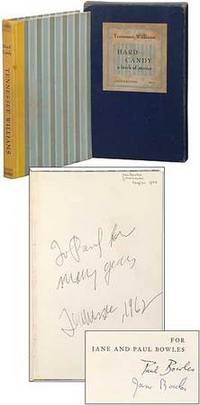
1954346445New York: New Directions 1954. Hardcover. Very Good/Very Good. First edition. Tall octavo. Some soiling and a small stain along the edge of the spine about very good in a worn first issue royal blue slipcase in a custom chemise and quarter morocco clamshell case. The Dedication Copy Inscribed by Tennessee Williams to Paul Bowles at a later date: "To Paul for many years. Tennessee 1962." Both Paul and Jane Bowles have Signed their names beneath the printed dedication: "For Jane and Paul Bowles." Additionally in the upper corner of the flyleaf where Williams' inscription appears Paul Bowles has printed: "Paul Bowles / Jane Bowles / Tangier 1954." About the time of Williams' inscription Bowles had recently completed the musical score of Williams' play The Milk Train Doesn't Stop Here Anymore. Presumably the best copy of this title in the world. New Directions hardcover
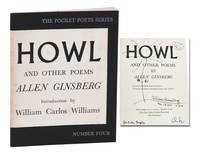
1956140946196San Francisco: City Lights Pocket Bookshop 1956. First Edition. Very Good. First edition first issue with Lucien Carr listed on the dedication page and a period after Harlem on the rear cover. Signed by Allen Ginsberg on the title page and inscribed "Allen Ginsberg - Dec. 15 1975 G.B.M. - for Kirby Congdon - Ah." with doodles of a smiling sun and flower. Publisher's black wraps printed in blue with white wraparound printed in black. Very Good with light toning foxing and staining. Minor toning to contents. <p>An important association copy of this undisputed cornerstone of Beat poetry Ginsberg's initial inspiration came from a terrifying vision he had during a San Francisco peyote trip. Inscribed warmly to fellow poet Kirby Congdon 1924-2023. Like Ginsberg Congdon was openly gay at a time when few people dared to be and was a flamboyant motorcyclist and leather aficionado who mingled regularly in the Beat community. He published Interim Books Cycle Press and the lit mag Magazine eventually returning to Key West Florida and becoming its first poet laureate. City Lights Pocket Bookshop unknown
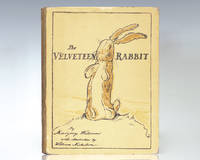
192237252New York & London: George H. Doran & Heinemann 1922. First edition. Fine in very good plus jacket. First printing US issue in a variant likely trial UK jacket of the beloved children's classic. This book captures the wistful attachment to our childhood toys through the story of a stuffed rabbit that hopes the love of its owner can make it real. It is one of the great collaborations in modern children's books with the lithographs and the text equally invoking bittersweet affection: "You were Real to the Boy . because he loved you." Later printings did not use lithography to produce Nicholson's drawings making the first printing especially distinctive in the quality of its lustrous illustrations. This is a remarkable copy of "one of the first modern picture books a perfect combination of story and pictures" Mahony. <br /> <br /> Scarce even moreso in an unrestored dust jacket and especially in this variant. The US first was typically issued with UK jackets but we've only been able to trace this variant printed in a single color lacking the Heinemann logo at the bottom on the spine and with an entirely blank rear panel to one other copy. That copy appeared at Christie's in 1998 where they described it as a "rare variant or trial" jacket. That copy sold for almost $15000 and remains even today the highest price any edition of this book has achieved at auction. 9.5'' x 7''. Original pictorial paper boards. Original unclipped no price variant pictorial dust jacket printed in single color no logo on spine blank rear panel. Color pictorial rabbit endpapers. Illustrated with 4 full-page and 3 double-page color lithographs. 8 19 1 pages. Housed in a custom full leather clamshell box. Except for a very slight bit of rubbing to head of spine the book is in truly fine condition in bright and clean pictorial dust jacket with 1'' chip at foot of spine some mild fraying at folds and a few short closed tears. George H. Doran & Heinemann unknown
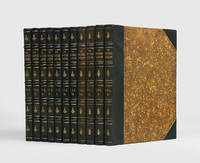
1882182650London: B. S. Williams at the Victoria and Paradise Nurseries 1882-97. Orchidelirium First edition of this magnificent work one of the great orchid books of the 19th century. The Orchid Album was published at the height of the "orchidelirium" that had been building in Britain for some decades until it seized the imaginations of late Victorian horticulturists in the same way that the tulip craze inflamed the minds of collectors in Golden Age Holland. The British horticultural writer Anna Pavord notes: "some of the grander Victorian growers such as the Duke of Devonshire at Chatsworth in Derbyshire and the Duke of Northumberland at Syon House in Middlesex employed their own collectors but orchid fanciers like John Day acquired their best treasures at auction. Nurserymen such as James Veitch Conrad Loddiges and Benjamin Samuel Williams of the Victoria and Paradise Nurseries in Upper Holloway regularly sent consignments of orchids to be auctioned by Messrs Stevens of King St Covent Garden. It was in their sale room that after an epic battle with a fellow enthusiast Sir Trevor Lawrence a contemporary of Day's acquired the one single plant of Aerides lawrenciae imported by Frederick Sander from the Philippines". The stunning plates are the work of John Nugent Fitch 1840-1927 the nephew of Walter Hood Fitch. His "work was more flamboyant than that of such predecessors as Ehret Redouté or the Bauer brothers combining botanical accuracy with a flair for page design. In Britain and Europe he had little competition being rivalled only by the Frenchman Alfred Riocreux" ODNB. Bibliographies call for 528 plates but overlook the fact that the only folding plate which appears in Volume I is double-numbered as 9-10. This is a complete set and includes the four-page obituary for Benjamin Samuel Williams in Volume IX. 11 vols 315 x 240 mm. With 527 fine hand-coloured lithograph or chromolithograph plates by John Nugent Fitch one double-numbered folding plate in Vol. I some with tinted backgrounds. Contemporary half dark green morocco spines with raised bands gilt-lettered direct in two compartments gilt floral device in others boards ruled in gilt marbled boards and endpapers marbled endpaper vols. I-IV grey; V-VI dark green VII-IX light blue top edges gilt. Bookplates and shelf marks of Reeves Library Westminster College Missouri gifted by Carl F. Setz. Bindings refurbished small nick to fore edge of vol. V endpapers of vol. VII with minor abrasions with free endpaper detaching but holding and a few minor text repairs starting before title of vol. XI occasional foxing or faint marginal damp staining: a very good copy. Nissen 2107; not in Plesch or Pritzel. Anna Pavord review of "A Very Victorian Passion: The Orchid Paintings of John Day" in The Independent 29 May 2004. hardcover
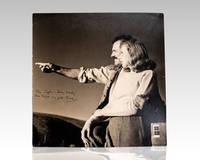
1939150074c. 1939-1940. Rare original black and white photograph of legendary American writer Ernest Hemingway and his third wife Martha Gellhorn. Black and white vintage gelatin silver print of Hemingway pointing towards the distance with one arm and the other wrapped around Martha Gellhorn. Inscribed by Ernest Hemingway in black ballpoint to the middle left "For Taylor my pal Ernie." Inscribed above by Martha Gellhorn "For Taylor - Love Marty." The recipient was Hemingway’s great friend Taylor “Beartracks†Williams the well-known Sun Valley hunting and fishing guide. Hemingway’s friendship with Williams dated back to their meeting in Idaho in the late 1930s after which Hemingway frequently returned to Ketchum before eventually settling there. Ernest Hemingway and Martha Gellhorn met in December 1936 and soon began working alongside one another as correspondents traveling to Spain in 1937 to report on the outbreak of the Spanish Civil War. At the time still married to his second wife Pauline Pfeiffer Hemingway divorced in 1939 the same year he and Gellhorn first visited Ketchum; they married the following year. During this period Gellhorn filed reports from Spain for Collier’s while Hemingway published For Whom the Bell Tolls 1940 a novel partly written in Ketchum and illustrated on its dust jacket with a photograph of him at his typewriter taken there. In 1941 the couple traveled to China on assignment for Collier’s and returned again to Ketchum before their marriage ended in divorce in 1945. In near fine condition with with light creasing to the extremities. Triple matted and framed. The photograph measures 9.375 inches by 9.375 inches. The entire piece measures 16.5 inches by 16.5 inches. Ernest Hemingway 1899–1961 was one of the most influential American writers of the 20th century whose concise prose style and exploration of universal themes reshaped modern literature. Known for his works such as The Old Man and the Sea A Farewell to Arms and For Whom the Bell Tolls Hemingway developed a narrative voice that captured the complexities of human struggle and resilience with stark simplicity. His experiences as a journalist and participant in both World Wars deeply informed his writing lending authenticity to his depictions of courage loss and alienation. While his personal life marked by adventure and tragedy often overshadowed his literary contributions his stylistic innovations and engagement with existential themes solidified his status as a transformative figure in American letters. By pushing the boundaries of narrative form and emphasizing the power of understatement Hemingway left an enduring legacy on both literature and the cultural understanding of the human condition. unknown
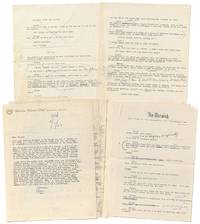
1960467082New York 1960. Unbound. Near Fine. Three Typed Letters Signed by playwright Tennessee Williams sent to director George Roy Hill along with nine Typescript Draft Pages with corrections for Williams’ play Period of Adjustment. Overall very good with typical folds for mailing and a few stains housed in a custom cloth clamshell case with black morocco spine label gilt.<br /> <br /> In 1960 Tennessee Williams was busy developing The Night of the Iguana while also working on a new somewhat uncharacteristic play Period of Adjustment. A departure from his usually dark dramas Period of Adjustment was instead what Williams called “a serious comedy.†Elia Kazan was originally tapped to direct the play but was forced to withdraw due to film commitments so a young actor and theater director George Roy Hill stepped in. The play opened in November 1959 running for 132 performances and in 1962 MGM Pictures asked Hill to direct the film version in what would be his directorial screen debut. The resulting film starred Jane Fonda in one of her first leading roles and garnered generally favorable reviews. Hill subsequently became a prolific director of films including Thoroughly Modern Millie 1967 Butch Cassidy and the Sundance Kid 1969 and The Sting 1973 for which he was awarded the Academy Award for Best Director.<br /> <br /> These three letters and typescript draft pages provide insight into the working relationship between Williams and Hill as well as their personal connection. The pages of the script differ markedly from the final printed version of the play and between these drafts and the discussions evident in the letters this material is also a depiction of Williams’ creative and collaborative process.<br /> The archive consists of:<br /> <br /> 1. Typescript draft pages for the play Period of Adjustment. Undated 1960. Nine quarto leaves seven typed on letterhead of the Warwick Hotel Philadelphia typed rectos only with autograph annotations and emendations in pencil and ink in Williams’ hand throughout. These draft excerpts are rewrites of the Act I curtain and the opening of Act II. Annotations include dialogue changes and cuts as well as stage directions.<br /> <br /> 2. Typed Letter Signed “Tenn†September 1960. Quarto. On letterhead of the Sheraton-Charles Hotel New Orleans; written on recto only. Williams writes to Hill about the Miami preview performance of his new play The Night of the Iguana which he says “has left me with a bit of a trauma… .†Williams had just returned from some time off in Havana where he worked on a rewrite and after a stop in his “old turf in New Orleans†He was heading back to New York to meet with Hill about the new script for the film version of Period of Adjustment. Williams also discusses casting for Period deferring to Hill’s opinion on the choice for the female protagonist.<br /> <br /> 3. Typed Letter Signed “Tenn†no date 1960. Quarto. Typed recto only with autograph postscript and date “Monday P.M.â€. Williams consoles Hill after having chosen Frank Corsaro to direct The Night of the Iguana as well as not mentioning Hill the night before on David Susskind’s television show Open End both apparently perceived by Hill as slights. Williams explains that he selected Corsaro long before he and Hill became acquainted and his omission of Hill in his Open End remarks were attributable to his need to patch up a misunderstanding with Elia Kazan. Williams referring to Kazan by his nickname: “Baby I thought you knew that Gadg became very angry with me because he had been attacked for distorting my plays and I had not come to his defense.†He explains he had taken this opportunity on Susskind’s show to make a “public refutation†and praise Kazan though he acknowledges to Hill he “should have made some reference to the truly happy and gratifying experience I have had with you as director†of Period of Adjustment. The autograph postscript reads: “I notice you sent the wire at 3:00 A.M. — I was stoned too.â€<br /> <br /> 4. Typed Letter Signed “Tenn†no date 1960. Quarto. Two leaves typed rectos only. Williams responds to Hill’s recent letter discussing Period of Adjustment: “I must say at once it shows the best comprehension of a playwright’s intentions and well as the keenest analysis of the play’s problems I have ever had from a director…. It gives me a tremendous sense of relief and security.†He continues to extensively discuss the casting of the play as well as some ongoing rewrites and edits. unknown
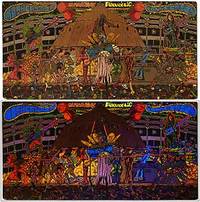
394116Unbound. Very Good. Large mural on plywood. Approximately 72" x 36". Luminous or florescent paint probably acrylic-based similar to DayGlo paint in many colors on large 1/2" Weyerhaeuser plywood. Signed in the lower right quadrant: "Chet Williams 12-11-78." Corners a little rounded some rubbing to a few sections grain of the plywood shows through a bit overall very good. A spectacularly colorful and accomplished representation of the band staged in front of the giant Mothership and with a cerise ray gun blast bisecting the painting horizontally. Parliament and The Funkadelics were two separate bands that played concurrently both under the direction of George Clinton and both with roughly the same complement of musicians. By the late 1970s the term Parliament-Funkadelic became the catchall phrase for the creative and increasingly uncatagorizable music project. The wildly creative members of Parliament-Funkadelic who played a mixture of funk soul psychedelic rock and jazz improvisations were an important influence on post-disco and post-punk music as well as a seminal influence on hip hop music and in some sense have become a genre unto themselves. In the years following their commercial decline brought about by a number of reasons hip hop DJs began to extensively sample P-Funk beats which helped to reinvigorate the band with the subsequent re-issue of their catalog and the reconstitution of the band. They were inducted into the Rock and Roll Hall of Fame in 1997. This spectacular vernacular mural pretty perfectly captures the P-Funk lineup at their most creative as well as during their most commercially successful iteration when they evolved the entire P-Funk mythos complete with references to science-fiction and featuring their prop "Mothership" that was central to their touring show. A unique artifactual evocation of the P-Funk phenomenon. We can find out nothing conclusive about the artist but apparently this was found in southern Connecticut. unknown
1922138402London: Heinemann 1922. First edition English issue published simultaneously with the American issue of this beloved children’s classic “one of the first modern picture books a perfect combination of story and pictures†Mahony 234 with seven beautiful color illustrations by William Nicholson. Quarto original paper-covered pictorial boards and cloth spine pictorial endpapers illustrated with seven color illustrations three double-page by William Nicholson. In very good condition. Uncommon. “Margery Bianco’s first children’s book The Velveteen Rabbit was written while she was living in England… Her own two children were young and at an age when toys meant much to them. She had vivid memories of the toys she had loved as a child and this thinking about toys and remembering toys suddenly brought them to life. The Velveteen Rabbit introduced English artist William Nicholson to the field of children’s books†Meigs et al. 473. Nicholson’s work has been placed “in the front rank among picture-books of this century†Marcus Crouch. Heinemann hardcover
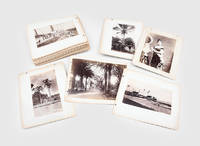
174071Hawai'i: late 19th century. A window into a transformative era An impressive collection documenting Hawai'i in the late 19th century shortly before its annexation offering a compelling visual narrative of the island's diverse social cultural and environmental landscape. Many of the images are by Furneaux 1835-1913 a Boston-born artist. Originally a tourist in Hawai'i Furneaux soon settled and became a prominent figure in Hilo. He served as the US consular agent and shipping commissioner at Hilo port actively advocating for infrastructure improvements. In addition to his amateur photography Furneaux was known for his dramatic paintings of Hawaiian volcanoes including Kilauea. We have traced no other photographs by Charles Furneaux in commerce. Another image though unsigned is attributed to the Englishman James J. Williams 1853-1926 the founder of the longest-established photography business in Honolulu. Musicians and instruments are captured through a photograph of women playing the 'ukulele guitar and five-string taropatch. Under the patronage of King Kalakaua who championed the revival of native Hawaiian culture in the late 19th century the 'ukulele gained prominence as a symbol of national pride. His support of traditional music including the Royal Hawaiian Band fostered a renaissance of Hawaiian musical traditions. One image shows the band led by the Prussian Henri Berger whom Queen Liliuokalani named the "father of Hawaiian music". Agricultural themes are vividly represented through images of Japanese residents and a village on Hilo. These people arrived from the 1850s to work the sugar plantations. Together with a depiction of a sugar cane flume they underscore the labour-driven transformation of Hawai'i's landscape and society. The boom of the sugar industry largely controlled by American and European settlers led to an increased foreign influence over the islands' economy and governance. The photographs of grass huts or hales stand as visual records of local architectural practices. Urban life and political power are depicted in town scenes images of Honolulu Harbour and 'Iolani Palace in addition to two photographs of Queen Lili'oukalani who was overthrown in 1893. Another shows a party at the Captain Cook memorial at Kealakekua Bay. Finally the island's natural beauty is captured showing among others Mana Waiopuna Falls also known as Jurassic Falls. 83 albumen prints approximately 145 x 102 to 178 x 250 mm or the reverse landscape and portrait format mounted recto and verso on card 208 x 260 mm with twin holes in left margin; 2 with pencilling on mount 13 initialled "CF" in the negative. Formerly bound in album; cards bowed wear to edges of card affecting two photographs; photos with minor yellowing or fading; a well-preserved collection. Jim Tranquada New History of the Origins and Development of the 'Ukulele 1838-1915 2003. John Hannavy Encyclopedia of Nineteenth-Century Photography 2008. unknown
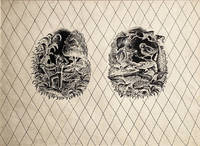
1945VBF40<p><b>WILLIAMS</b> Garth 1912–1996</p><p><i><b>Stuart Little – Endpaper Designs</b></i> 1945</p><p>Pencil and ink conceived for the endpapers with china white</p><p>Two designs: Stuart Little on the river bank his right leg on a log his boat docked behind him; the other: a view of the winding river seen from the perspective of a perched bird.</p><p>Each drawing measures 5-1/2 x 4-1/2 inches on larger paper framed.</p><p>Well-rendered designs bordered by paneled margins executed in ink for the endpapers of the first edition of <i>Stuart Little</i> by E B White</p><p>The published version prints these images in reverse in the color green.</p> Harper & Bros books
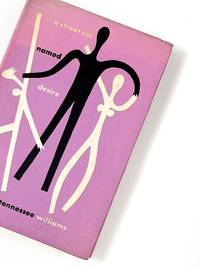
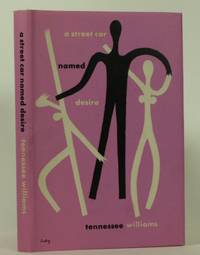
194750392New York: New Directions 1947. First edition. Near fine in a near fine jacket. Signed first printing of Williams's most enduring play a beautiful copy in the iconic Lustig-designed dust jacket. The broken dreams of a Southern belle are dramatized in Williams's best known play a hit on Broadway with Jessica Tandy and Marlon Brando in the lead roles both then virtually unknown. After its brilliant run on stage STREETCAR went through a groundbreaking adaptation into film keeping many of the same people involved: Brando garnered his first Oscar nomination in the film starring alongside Vivian Leigh. According to Geoffrey Shurlock who was involved in the Production Code Administration that monitored the morality of motion pictures STREETCAR changed the landscape of how films could communicate drama for adult audiences: "Tennessee Williams was something new to movies. The stage got a shock from Tennessee Williams. We got twice the shock. Now we know that a good deal of what we decide in censoring movies is not morality but taste. It began with STREETCAR" quoted in Palmer and Bray. This first edition has since become famous in its own right for the brilliant pink jacket design by Alvin Lustig a high point of New Directions' publications. 9'' x 6''. Original pink pictorial boards with design by Alvin Lustig. In original unclipped $2.75 pink pictorial dust jacket echoing board design. 171 1 pages. Signed by Williams on front free endpaper. Book with mild rubbing to top and bottom edges as typical. Tiny chip to top edge of front panel of jacket. Some faint uneven sunning to spine front and rear panel. Top edge a little dusty. Else clean and bright. New Directions unknown
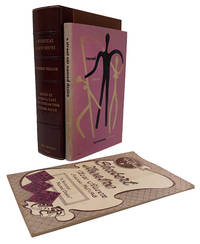
19471003721New York: New Directions 1947. First edition of A Streetcar Named Desire Tennessee Williams's first play to win the Pulitzer Prize signed by the entire original cast including Jessica Tandy Marlon Brando Kim Hunter and Karl Malden. Produced by Irene Mayer Selznick and directed by Elia Kazan the original stage production opened in New Haven on October 30 1947: the program for that first performance is present here with three ticket stubs from the Shubert Theatre. The show then moved to Boston and Philadelphia before arriving on Broadway where Tandy would win the Tony for her performance as the fragile self-deluding Blanche DuBois: "Whoever you are - I have always depended on the kindness of strangers." Wolcott Gibbs in a rave review for The New Yorker regretted that "there is no way . . . to convey the effect Mr. Williams achieves in his last act of a mind desperately retreating into the beautiful crazy world it has built for itself." A wonderful association copy with related ephemera from the very first performance of A Streetcar Named Desire. Single volume measuring 9 x 6 inches: 171 1. Original pink pictorial paper boards original unclipped pink pictorial dust jacket designed by Alvin Lustig. Ink signatures of the original cast beside their printed names on page 5; former owner's signature to front free endpaper. Shelfwear to boards jacket spine panel sunned restoration and light soiling to jacket. With: original program from the October 30 1947 premiere at New Haven's Shubert Theatre with three opening night ticket stubs mounted to upper wrapper. Faint tidemark to rear wrapper of program. Book and program housed together in custom clamshell box. New Directions unknown
19471152New York: New Directions 1947. First Edition. Fine. The most famous post–modern American play. Fine in publisher’s pink boards and near fine matching pink dustjacket a superb copy. Cover and jacket design by Alvin Lustig. Reference: Crandell A 5.1.a. Basis of the play and then the motion picture classic both directed by Elia Kazan and both starring Marlon Brando Kim Hunter and Karl Malden Vivian Leigh replaced Jessica Tandy in the film. The play won the Pulitzer Prize. Brando Leigh and Hunter won Oscars for their performances in the film. Custom half morocco box. A pivotal work in American theater marking a decisive shift in mid-century dramatic sensibilities through its unflinching portrayal of class conflict sexuality and psychological fragility beneath the veneer of post-war American society. The play's exploration of Blanche DuBois' tragic collision with Stanley Kowalski's brutal realism illuminates the broader cultural tensions between fading Southern aristocracy and emerging industrial working-class values at a moment when American identity was being profoundly reconfigured. Williams' innovative use of expressionistic techniques—including the haunting blue piano symbolic lighting and poetic dialogue—revolutionized theatrical language while his courageous engagement with previously taboo subjects such as mental illness homosexuality and sexual violence challenged the boundaries of censorship during an era of rigid social conformity. Through its visceral emotional impact and psychological complexity "Streetcar" helped establish American drama as a serious literary form capable of confronting the deepest contradictions of the human condition ultimately serving as a bridge between Tennessee Williams' own Southern Gothic sensibilities and the psychological realism that would come to dominate American theater in subsequent decades. New Directions unknown
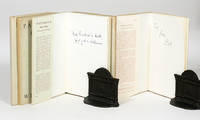
19462118New York: New Directions 1946. First edition. Original cloth original dust jacket. Fine/Fine. FIRST EDITIONS AN OUTSTANDING ASSOCIATION COPY: 
Theodore Roethke's copies of Books III and V with Book III inscribed in Roethke's hand "Ted Roethke's book gift of W.C. Williams" and Book V inscribed by Williams "Ted from Bill". With first editions of the remaining volumes. William Carlos Williams was one of the most influential figures in Theodore Roethke's creative life. "At a time when Theodore Roethke was finding his poetic voice he called William Carlos Williams 'my toughest mentor.'" From 1940-1948 as Roethke was developing his poetry he submitted his latest work to Williams to critique. Williams repeatedly responded candidly and forcefully issuing "a series of challenges to Roethke and these challenges changed the direction and scope of Roethke's art" Robert Kusch "My Toughest Mentor": Theodore Roethke and William Carlos Williams. Roethke's own volumes of Paterson - Williams's masterpiece - must have held extraordinary significance for him and unite two of the towering figures in American poetry. Each first edition of Paterson had a very limited print run: Books I-IV one of only 1000 copies Book V one of 3000 copies. New York: New Directions 1946-1958. Tall octavo original cloth original dust jackets. A fine set with only the most trivial wear. New Directions hardcover books
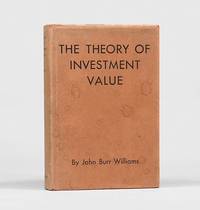
1938148498Cambridge: Harvard University Press 1938. An investment classic very rare in the jacket First edition first printing of a major and influential text in investment theory; very scarce on the market and especially so preserving the dust jacket. "The author of an insufficiently appreciated classic Williams was one of the first economists to interpret stock prices as determined by 'intrinsic value' that is discounted dividends" Rubinstein. Based on Williams's 1937 Harvard PhD dissertation the work "developed the dividend discount model based on Fisher's concepts of the present value of a discounted stream of expected receipts and rate of return over costs.Williams's model implied that a rational investor should buy only the security with the highest rate of return" Dimand p. 49. Octavo. With 5 folding tables. Original red cloth blindstamp rule border to covers spine lettered gilt with dust jacket. A fine copy in very good jacket minor chips and short closed tears at extremities small chip to front fold lightly toned and soiled. Dennistoun and Goodman 497; Larson 1969; Rubinstein A History of the Theory of Investments p. 75. See Robert W. Dimand in Poitras ed. Pioneers of Financial Economics volume 2. hardcover
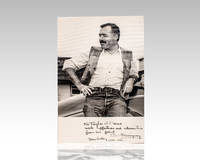
150070Rare original black and white photograph of legendary American writer Ernest Hemingway. Black and white matte photograph of Hemingway at his peak wearing Western garb and leaning on a car. Inscribed by Ernest Hemingway in black ballpoint at the bottom margin below the image "For Taylor Williams with affection and admiration from his friend Ernest Hemingway Sun Valley 1939 - 1940." The recipient was Hemingway's great friend Taylor “Beartracks†Williams the well-known Sun Valley hunting and fishing guide. Hemingway’s friendship with Williams dated back to their meeting in Idaho in the late 1930s after which Hemingway frequently returned to Ketchum before eventually settling there. The spring of 1953 also marked a peak moment in Hemingway’s career and personal life: he had recently written The Old Man and the Sea and received the Pulitzer Prize and this period preceded the airplane accidents of 1954 and his later forced departure from Cuba during the Castro regime—events that would profoundly affect his final years and contribute to his death in 1961. In fine condition. Triple matted and framed. The photograph measures 6.5 inches by 9.5 inches. The entire piece measures 16.75 inches by 13.5 inches. Ernest Hemingway 1899–1961 was one of the most influential American writers of the 20th century whose concise prose style and exploration of universal themes reshaped modern literature. Known for his works such as The Old Man and the Sea A Farewell to Arms and For Whom the Bell Tolls Hemingway developed a narrative voice that captured the complexities of human struggle and resilience with stark simplicity. His experiences as a journalist and participant in both World Wars deeply informed his writing lending authenticity to his depictions of courage loss and alienation. While his personal life marked by adventure and tragedy often overshadowed his literary contributions his stylistic innovations and engagement with existential themes solidified his status as a transformative figure in American letters. By pushing the boundaries of narrative form and emphasizing the power of understatement Hemingway left an enduring legacy on both literature and the cultural understanding of the human condition. unknown
1949D16273New York: New Directions 1949. First Edition. Hardcover. Very Good. First printing first state with the incorrect copyright page "Copyright 1948 / New Directions". One of 20 to 50 copies thus out of a total of 1500 copies printed on laid paper by Peter Beilenson. "Originally scheduled for release of 27 October 1948 One Arm was not published until January the following year because of an error on the copyright page.Between late October and January 1949 New Directions attempted to recover and correct all copies with the incorrect copyright notice.According to James Laughlin of New Directions and Andreas Brown however between 20 and 50 copies escaped correction." Crandell A9.I.a1. This is author Paul Bowles's copy with Williams's presentation inscription on the front flyleaf" "To Paul and Morocco - With Love Tennessee." Williams has inscribed the book again at a later date on the front free endpaper: "Many hands all empty on the covers meaning what Tennessee to Paul Tangiers 1962." With Bowles's signature on the front free endpaper. One loose signature with the corrected copyright page is laind in. Foreedge a little soied spine a little cocked covers slightly rubbed otherwise a fine copy in broken publisher's slipcase. A wonderful association copy preserved in a custom-made folding cloth box. <br/><br/>In December of 1948 Jane Bowles left Tangier and went to Gibraltar to meet her husband Paul Tennessee Williams and Frank Merlo Williams's lover. The three of them were arriving on the SS Saturnia. Williams brought with him his new Buick Roadster and the four of them toured Spain for a few days before crossing the straits to Tangier. The weather in both Spain and Tangier was rainy and after two weeks in Tangier the group headed to Fez. See An Invisible Spectator - A Biography of Paul Bowles by Christopher Sawyer-Laucanno Weidenfeld & Nicolson NY 1989 pages 280-1. Although Williams visited Tangier on several occasions it seems quite possible that Williams first inscribed tghe book on this visit. Subsequent visits took place in the 50's and 60's. New Directions hardcover books
194722908New York: New Directions 1947. First edition. Pink boards; virtually as new in dust jacket unfaded and with no wear. One of the fabled Norman Unger copies purchased new by Williams's friend the book collector Unger then wrapped and stored for 30 years. Cover and jacket design by Alvin Lustig. Crandell A 5.1.a. <br/><br/> New Directions hardcover books
1949D16273New York: New Directions 1949. First Edition. Hardcover. Near Fine. First printing first state with the incorrect copyright page "Copyright 1948 / New Directions". One of 20 to 50 copies thus out of a total of 1500 copies printed on laid paper by Peter Beilenson. "Originally scheduled for release of 27 October 1948 One Arm was not published until January the following year because of an error on the copyright page.Between late October and January 1949 New Directions attempted to recover and correct all copies with the incorrect copyright notice.According to James Laughlin of New Directions and Andreas Brown however between 20 and 50 copies escaped correction." Crandell A9.I.a1. This is author Paul Bowles's copy with Williams's presentation inscription on the front flyleaf" "To Paul and Morocco - With Love Tennessee." Williams has inscribed the book again at a later date on the front free endpaper: "Many hands all empty on the covers meaning what Tennessee to Paul Tangiers 1962." With Bowles's signature on the front free endpaper. One loose signature with the corrected copyright page is laid in. Ever so slightly cocked covers a bit rubbed otherwise a fine copy in publisher's slipcase defective. A wonderful association copy preserved in a custom-made folding cloth box. <br/><br/>In December of 1948 Jane Bowles left Tangier and went to Gibraltar to meet her husband Paul Tennessee Williams and Frank Merlo Williams's lover. The three of them were arriving on the SS Saturnia. Williams brought with him his new Buick Roadster and the four of them toured Spain for a few days before crossing the straits to Tangier. The weather in both Spain and Tangier was rainy and after two weeks in Tangier the group headed to Fez. See An Invisible Spectator - A Biography of Paul Bowles by Christopher Sawyer-Laucanno Weidenfeld & Nicolson NY 1989 pages 280-1. Although Williams visited Tangier on several occasions it seems quite possible that Williams first inscribed tghe book on this visit. Subsequent visits took place in the 50's and 60's. New Directions hardcover
GOR001864412Paperback. Very Good. paperback
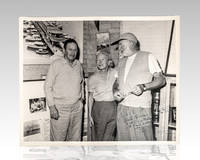
150055Rare original black and white photograph of legendary American writer Ernest Hemingway. Black and white matte photograph of Hemingway with his wife Mary and fishing guide Taylor Williams in the trophy room of a club or private home after a day on the water. Inscribed by Ernest Hemingway in black ballpoint at the bottom right corner "To Taylor Best always 2nd Prize Marlin 1st Prize Dolphin Papa E. Hemingway." Additionally inscribed by Mary Hemingway in black ballpoint above Ernest Hemingway's inscription "Love to Taylor Mary." This photograph was probably taken in Cuba in the spring of 1953 when Taylor Williams visited Ernest Hemingway to participate in fishing tournaments. A related letter included here documents Hemingway’s invitation to Williams to join him in Cuba and refers to his success in those competitions including a first-place finish for dolphin and second place for marlin. Hemingway’s friendship with Taylor “Beartracks†Williams the well-known Sun Valley hunting and fishing guide dated back to their meeting in Idaho in the late 1930s after which Hemingway frequently returned to Ketchum before eventually settling there. The spring of 1953 also marked a peak moment in Hemingway’s career and personal life: he had recently written The Old Man and the Sea and received the Pulitzer Prize and this period preceded the airplane accidents of 1954 and his later forced departure from Cuba during the Castro regime—events that would profoundly affect his final years and contribute to his death in 1961. In near fine condition. The piece measures 8 inches by 10 inches. Together with two additional glossy photographs of Taylor Williams. The first of Williams holding a fishing rod and fish. The second of Williams and Mary Hemingway standing on a boat proudly holding up a prize swordfish. In near fine to very good condition. The pieces measure 8 inches by 10 inches. Also with a page from a Cuban newspaper El Avance Criollo with an image of Hemingway Mary Williams and a prize fish. In near fine condition with toning and mail folds. Accompanied by a typed letter signed by Mary Hemingway regarding fishing and Papa. One page on Finca Vigia stationery from San Francisco de Paula Cuba dated 27 May 1957 addressed to Williams as "Colonel". The letter reads in full "Dearest Colonel: We finally picked up the photographs at the Floridita two prints of this same picture and I must say it does full justice to your distinguished nose. None of us looks as bad as we might have and that's about all we can expect from photographs these days I guess. You haven't missed anything super in the fishing here. Papa and I have been out four times I think since you left and one day when there was only very patchy current we spotted one in the morning put the bait over him two or three times he fooling around teasing us and Papa finally hooked him and brought him in. That afternoon a little one - 35-40 lbs. took a bait and I got him in with no suffering or nonsense such as I was displaying while you were here. I think the swimming helps ton up the muscles - have done my full half-mile in the pool every day now for a long time. Recently the weather has improved slightly - it waits until afternoon to rain. Otherwise no news - very quiet here and we miss you every single day and the Little House empty looks forlorn and missing you too. Not having your precise address on the Keys I'm sending this to S.V. where you'll have it when you arrive. Dearest Taylor - very much love and affections and good wishes from both of us - Mary. Papa reading in his chair says me too." In fine condition with mail folds. The piece measures 5.75 inches by 7.75 inches. Ernest Hemingway 1899–1961 was one of the most influential American writers of the 20th century whose concise prose style and exploration of universal themes reshaped modern literature. Known for his works such as The Old Man and the Sea A Farewell to Arms and For Whom the Bell Tolls Hemingway developed a narrative voice that captured the complexities of human struggle and resilience with stark simplicity. His experiences as a journalist and participant in both World Wars deeply informed his writing lending authenticity to his depictions of courage loss and alienation. While his personal life marked by adventure and tragedy often overshadowed his literary contributions his stylistic innovations and engagement with existential themes solidified his status as a transformative figure in American letters. By pushing the boundaries of narrative form and emphasizing the power of understatement Hemingway left an enduring legacy on both literature and the cultural understanding of the human condition. unknown
194722908New York: New Directions 1947. First edition. Pink boards; very fine in dust jacket unfaded and with no wear. One of the fabled Norman Unger copies purchased new by Williams's bibliophilic friend the book collector Unger then wrapped and stored for 30 years. Cover and jacket design by Alvin Lustig. Crandell A 5.1.a. New Directions unknown