Darwin, Erasmus; Blake, WilliamBiblio.com

113 résultats
179143999London: J. Johnson 1791. <p>Darwin Erasmus 1731-1802. The botanic garden: A poem in two parts . . . 4to. xii 214 126 2; 2 ix 197 1pp. General title-leaf misbound before title-leaf to Part II. 20 engraved plates including 5 by William Blake 1757-1827; 2 of the plates are after drawings by John Henry Fuseli 1741-1825. London: J. Johnson 1791. 275 x 207 mm. Half calf gilt marbled boards in period style. Minor foxing and offsetting small marginal stains on two or three plates not affecting the images marginal tears in signature S and one plate repaired but very good. </p> <p> First Edition of Part I; third edition of Part II containing two more plates than the first edition of 1789. Darwin's first major literary work and the chief source of his fame during his lifetime. "The Botanic Garden an annotated scientific poem in Augustan couplets appeared in two parts of which the second The Loves of the Plants 1789 was published before the first The Economy of Vegetation 1791. Darwin decided to publish the second part of the work first because it was better suited 'to entertain and charm.' The first part of the work is more ambitious than the second covering all natural philosophy and embodying many of the researches and inventions of Wedgwood Watt Boulton and others. The design of the totality was Darwin wrote 'To enlist Imagination under the banner of Science . . . to induce the ingenious to cultivate the knowledge of botany . . . and recommending to their attention the immortal works of the celebrated Swedish naturalist-Linnaeus'" Dictionary of Scientific Biography. The Botanic Garden is also important for the five plates in Vol. I engraved by William Blake: four engravings of the Portland vase and the "Fertilization of Egypt" after a design by Fuseli. Keynes Blake 103. King-Hele Erasmus Darwin pp. 97-119. </p> . J. Johnson unknown
1787024881London: J. Cooke 1787 Undated but 1787-1788. 2 vols. Elephant Folio. original full calf gilt spine labels rubbed & worn rebacked with original spines laid-down hinges slackening cloth tape strengthening to hinges both volumes some chipping to leather amateurish repairs internally clean & complete; pp. iv 1-460 with frontispiece 94 plates full-page 1/2 page &1/4 page on 51 sheets 6 folding maps/charts 1 full page; ii title last blank 461-990 page 663 erroneously labelled 635 4 list of Subscribers misbound between p.988 & 989 2 Directions to the Binder for placing the cuts with 70 plates full-page & 1/2 page on 39 sheets 6 folding maps/charts 10 full page see Alan Frost in La Trobe Journal No. 8 October 1971 for a history of the book highlighting differences in content and pagination between editions. Very heavy set 9 kg additional postage may be required for international and domestic delivery. A good copy of an early issue intact but would benefit from some restoration. Ex-libris Charles Scobie ANARE Macquarie Island 1948 with his ownership signature and date 29-5-1941 to rear pastedown. First Edition. Hard Cover. G. J. Cooke hardcover
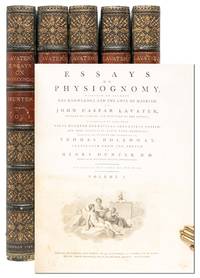
17987427London: Printed for John Murray 1798. First edition in English. Near Fine. Three folio volumes bound in five 12 7/8 x 10 1/4 inches; 327 x 260 mm. ii half-title verso blank ii vignette title-page verso blank ii translator's preface vi advertisement iv contents x list of subscribers ii dedication vi author's preface ii French translators' preface 3-280; iii-xii; 1-3 4-238; 1 half title vol II. part II verso blank 239-444; iii-iv title-page verso blank v-xii contents 1-252; 2 half title vol III. part III 253-437 1 blank 1-xi index 1 blank pp. Complete with 174 engraved plates after Rubens Fuseli Bartlozzi and Blake. Bound ca. 1830 in full dark green diced calf covers with double ruled gilt line and decorative corner-pieces in gilt. Spines with five raised bands elaborately tooled in gilt two brown morocco labels lettered in gilt. Gilt ruled board edges and turn-ins marbled endpapers all edges gilt. With the engraved armorial bookplate of Viscount Birkenhead on front paste-down of each volume. Some light foxing and offsetting throughout but still an incredible set of this landmark work. Near Fine.<br /> <br /> Johann Caspar Lavater 1741 - 1801 "was the last and most influential of the descriptive physiognomists a class of pseudo-scientists who attempted to ascertain character on the basis of physical features.Von der Physiognomik 1772 an unillustrated two-volume book was Lavater's first work on the subject; this was later expanded with the help of Goethe into the four-volume Physiognomische Fragmente 1775 - 1778 and further perfected in a French translation Essais sur la physiognomie 1781.supervised by Lavater himself. Lavater's physiognomy differed from those of his predecessors in that he paid special attention to the structure of the head particularly the forehead - a form of psychological indexing that exerted some influence on the development of phrenology and brain localization theories in the early nineteenth century. Lavater's work also influenced artists of the period both in the overall creation of portraits and in the use of his physiognomical theories to construct individual faces in historical paintings" Norman Library. Among the portraits included in Essays on Physiognomy are those of Descartes Locke Milton Newton Vesalius Voltaire and George Washington. <br /> <br /> Osler 3178. Near Fine. Printed for John Murray unknown
17881107522 prints. London: J.R. Smith 1788. 2 prints images 21 x 26 cms. with full margins and imprints. Well printed in brown ink cleaned and titles mounted below the prints in very good condition. § Second state of The Idle Laundress third state of Industrious Cottager good impressions. These two prints were designed to be issued together but they are extremely rarely found so. I have had two copies of the first plate third state and one copy of any state of the second plate. The first is known in one copy of the first state and Essick records only two copies of the second state BM and Keynes; Essick has the third state printed in 1803. The second plate is known in one copy each of the first and second states and 4 copies of the third state. Essick The Separate Plates of William Blake XXX and XXXI. J.R. Smith unknown books
17801240091780. London: Fielding and Walker 1780 and J. Fielding: 1781. <br /> <br /> Two vols. in one large thick folio vol. 1 frontispiece title page printed in red and black 6 632 pp. with 46 plates including 5 maps and a plan; vol. 2 with title page dated 1781 494 pp. with 33 plates indices etc. 79 of 80 plates in total. Very early calf very worn and rubbed newly consolidated and now stable. Internally very good and the plates in fine condition.<br /> <br /> § First edition of this version being Blake's first appearance as the sole engraver and in one case the designer and engraver of five plates. Plates 1 2 3 and 5 all engraved and 5 engraved and designed by Blake. See Essick CBI III. Easson and Essick 1 #1 for plate 5. The plates are: 1 Numbers chap. 13 v. 23 in vol. 1; 2 Jonah chap. 3 v. 4; 3 Judith chap. 13 v. 104; Matthew chap. 3 v. 135; Revelations chap. 1 v. 12-13. Plate 5 is signed "d & sc. Blake." Here "d" stands for delineavit as distinct from invenit invented the image. Essick thinks Blake was strongly influenced by an engraving by Picart-see Essick CBI p.22. Blake's wash drawing for pl. 5 is in the British Museum. unknown
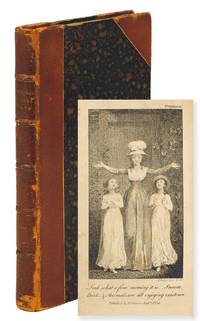
179111069912mo. London: printed for J. Johnson 1791. 12mo xii 177 3 advertisements pages with 6 plates by William Blake after his own designs and an extra plate bound in at the front not by Blake. Modern polished tree calf gilt backstrip red label in very good condition. Some plates have offset onto the facing page as usual. § First edition to contain William Blake’s characteristic illustrations reminiscent in iconography to his designs for his own Songs of Innocence 1789. This copy has all the plates in the second and much improved state and an extra plate at the front thought to be by Blake but not. This collection of didactic tales for youth in part reinforcing the lessons of Wollstonecraft’s first book Thoughts on the Education of Daughters proved her most popular book going through five editions by 1800. Windle Bibliography of Mary Wollstonecraft A3b. Bentley Blake Books 514A. Easson and Essick vol. I no. III. printed for J. Johnson unknown books
17911269381791. London: printed for J. Johnson 1791. <br /> <br /> 12mo xii 177 3ads pp with 6 plates by William Blake after his own designs each signed by Blake. Old half red morocco scuffed but sound some browning and rubbing. The Buxton Forman copy with his large bookplate and manuscript notes in pencil. Other illegible early notes partially erased.<br /> <br /> § First edition to contain William Blake's characteristic illustrations reminiscent in iconography to his designs for his own Songs of Innocence 1789. This copy has all the plates in the third state the only state to have every plate signed by Blake with notable variations from the first and second states. The Buxton Forman copy initialed by him in pencil with his shelf mark. According to Bob Essick this is the only copy known to him with the third state plates in the first edition -- they are usually found in the 1796 edition only.<br /> <br /> This collection of didactic tales for youth in part reinforcing the lessons of Wollstonecraft's first book Thoughts on the Education of Daughters proved her most popular book going through five editions by 1800. <br /> <br /> Windle Bibliography of Mary Wollstonecraft A3b. Bentley Blake Books 514A. Easson and Essick vol. I no. III. unknown
1797007894London: R. Noble for R. Edwards 1797. First Edition. Full Morocco. Very Good. Elephantine folio 44 by 34 cm. viii 2 95 2 pp. 43 of the pages have Blake's expansive charismatic illustrations surrounding the text. Four of these are section heads the balance being border ornamentation but even the latter are far more than merely decorative. The distinctive Blake artwork fires the imagination regardless. In fact the text which is framed with ruled lines seems to cover some of the illustration. Last two pages are the Explanation of the Engravings which are often not present. The full navy blue morocco is fairly heavily rubbed along the edges a bit less so by the joints. Some scattered soiling within but the pages are generally quite clean. There are a few closed tears not of great length and one repaired close tear which was somewhat longer. The Explanation of Engravings leaf has two repaired tears. Notwithstanding these flaws this is an attractive appealing copy. R. Noble for R. Edwards unknown
179737372London: R. Noble for Richard Edwards 1797. Large quarto. 16 5/8 x 12 3/4 inches. 4 engraved section titles and 39 pages with engraved border illustrations by William Blake with the letterpress Explanation of the Engravings leaf. Uncut on the fore-edge and lower edge. Minor offsetting as usual. Later half dark green morocco and green moire cloth boards by Riviere & Son spine with raised bands in seven compartments lettered in the second and fourth the others with a repeat decoration in gilt burgundy glazed endpapers top edge gilt.<br/> <br/>A spectacular work illustrated by Blake.<br/> <br/>"Of the merit of Mr. Blake . the editor conceives it to be unnecessary to speak. To the eyes of the discerning it need not be pointed out; and while the taste for the arts of design shall continue to exist the original conception and the bold and masterly execution of this artist cannot be unnoticed or unadmired" advertisement p.viii. Blake originally intended the present work to be the first installment of a much larger illustrated edition of Young's best selling poem. He chose 43 images to engrave from the 537 drawings in watercolour he had made around pages of the first edition of Young's poem inlaid in album sheets. Perhaps baffled by the novelty of Blake's interpretations the public remained unreceptive and the book remains what is essentially a remarkable fragment: a tantalising hint of what might have been. A large copy. Bentley notes that "the paper was only marginally larger than the copperplate and even in untrimmed copies . parts of the platemark may not appear." With the explanation leaf often wanting.<br/> <br/>Bentley Blake Books 515; Bindman Complete Graphic Works of Blake 337-379; Dover 1975; Easson and Essick William Blake Illustrator Vol. I IV; Essick and LaBelle Night Thoughts; Ray The Illustrator and the Book in England 3. R. Noble for Richard Edwards unknown books
1797123299Large 4to. London: R. Noble 1797. Large 4to viii 1 95 2 pages; with 43 full-page engravings by Blake after his own designs surrounding the letterpress text. “Explanation†leaf bound in at the back. Half brown morocco backstrip gilt gilt top by Riviere; a very large copy measuring 16 1/2 x 13 inches thus preserving almost all the imprints. § First edition with Blake’s illustrations complete with the leaf of “Explanationsâ€. Essick and LaBelle explain in their commentary how Blake virtually in a frenzy completed 537 watercolor designs when he was commissioned by the publisher Edwards to illustrate Young’s masterpiece. Edwards issued only the first four “Nights†or sections and had Blake etch and engrave 43 plates to test the market. The response must have been poor since no further engravings were requested of Blake and Edwards ceased business shortly thereafter. Ironically today the poet Young once compared with Shakespeare and Milton is largely forgotten save for this edition. Colored copies are known in two palettes the earlier of which may have been colored under Blake’s direction. Bentley Blake Books 515. Easson and Essick William Blake Book Illustrator vol. 1 IV. Essick and LaBelle Night Thoughts Dover 1975. Bindman Complete Graphic Works of Blake 357-379. Ray The Illustrator and the Book in England 3. R. Noble unknown books
179748706London.: R. Noble. 1797. Scarlet morocco-backed contemporary moiré cloth boards gilt titles to front cover and spine. Folio. 415 x 325 mm. Leaf with 'Explanation of the Engravings' recto and verso printed title advertisement pp. iii - viii and 43 leaves with engravings by William Blake surrounding the text; 21 of the leaves retain the publisher's imprints. First edition of Blake's illustrations for Edward Young's Night Thoughts.Night Thoughts is a key work in the Blake canon executed at a crucial point in his career. Sometime in 1795 or 1796 Blake was comissioned by the publisher Richard Edwards to undertake the illustration of each page of Young's bestseller 'Night Thoughts'. It was intended to publish the whole poem of nine nights in installments accompanied by engravings based on Blake's drawings but Edwards went out of business after the first volume consisting of 4 Nights and the project was never completed. 'Blake has undertaken to make designs to encircle the letter press of each page of Young's Night Thoughts Edwards the Bookseller of Bond Street employed him and has had the letter press of each page laid down on a large half sheet of paper. There are about 900 pages - Blake asked 100 guineas for the whole. Edwards said he could not afford to give more than 20 guineas for which Blake agreed. Fuseli understands that Edwards proposes to select about 200 from the whole to have that number engraved by Blake as decorations for a new edition.' Blake Records. R. Noble. hardcover
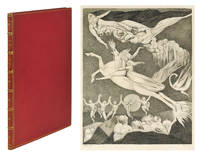
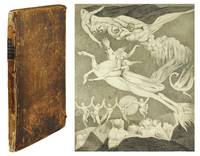
17961246441796. London: by S. Gosnell for William Miller 1796. <br /> <br /> Slim 4to xi 16 pp. With a frontispiece and 2 illustrations headpiece and tailpiece designed by Blake and engraved by Perry. Later full red straight-grain morocco gilt-lettered backstrip a fine copy with a faded inscription on the title-page "Sophia Baillie".<br /> <br /> § First edition with Blake's illustrations ridiculed in the press upon publication. One of the rarest letterpress books to contain illustrations designed by Blake. Four copies have sold in the last 40 years; two have appeared at auction. The year 1796 saw three translations of Burger's Lenore one by J. T. Stanley one by H. J. Pye the Poet Laureate and a third by W. R. Spencer with designs by Lady Diana Beauclerk. Blake was commissioned to create three illustrations for the Stanley translation including the frontispiece "Lenore clasping her spectral bridegroom" which is famous for supposedly having hung as a separate print in C.G. Jung's office. The British Critic for September 1796 spitefully compared Lady Diana's pictures with those of Blake's: "We are highly impressed by the propriety decorum and grace which characterizes all the figures of this elegant artist Lady Beauclerk even those of a preternatural kind; forming a most striking contrast to the distorted absurd and impossible monsters exhibited in the frontispiece to Mr. Stanley's last edition i.e. Blake's design. Nor can we pass by this opportunity of execrating that detestable taste founded on the depraved fancy of one man of genius which substitutes deformity and extravagance for force and expression and draws men and women without skin with their joints all dislocated; or imaginary beings which neither can nor ought to exist." The Analytical Review chimed in with comments including "perfectly ludicrous instead of terrific." Lenore had a profound effect on the development of Romantic literature throughout Europe7 and a strong influence on the English ballad-writing revival of the 1790s.8 According to German language scholar John George Robertson5<br /> <br /> Lenore exerted a more widespread influence than perhaps any other short poem in the literature of the world. . like wildfire this remarkable ballad swept across Europe from Scotland to Poland and Russia from Scandinavia to Italy. The eerie tramp of the ghostly horse which carries Lenore to her doom re-echoed in every literature and to many a young sensitive soul was the revelation of a new world of poetry. No production of the German "Sturm und Drang"-not even Goethe's Werther which appeared a few months later-had such far-reaching effects on other literatures as Bürger's Lenore; it helped materially to call the Romantic movement in Europe to life.<br /> <br /> In a similar tone English literature scholar Marti Lee claims that:6<br /> <br /> "Lenore" had tremendous influence on the literature of the late eighteenth- and early nineteenth-centuries and in fact today's popular horror books and movies are still feeling the reverberations. . In short Bürger's achievement while minor in itself helped father an international movement that led directly to the massive popularity of Gothic works then and now. . As the Gothic novel borrowed many of its original conventions from the German ballads as popularized by "Lenore" we can fairly say that Bürger is one of the most influential founding fathers of the Gothic and horror genres.Bentley Blake Books 440. Easson and Essick William Blake Book Illustrator vol. 2 XLVI. Bindman Complete Graphic Works of Blake 380-382. unknown
17961233581796. London: William Miller 1796 etc. <br /> <br /> 9 titles mostly bound together and the magazine printing present Burger G. A. Blake William illustrator. Leonora also 'Lenore' and 'Lenora'' Eight different printings six in English and two in German as listed below including the edition illustrated by Blake. London: William Miller 1796 etc. 7 titles bound together and the magazine printing present separately. With a frontispiece and 2 illustrations headpiece and tailpiece designed by Blake and engraved by Perry and other illustrations not by Blake as described below. Old calf very worn covers detached preserved in a new box.<br /> § Nine printings of Burger's hugely influential poem bound together including the first edition with Blake's illustrations ridiculed in the press upon publication. One of the rarest letterpress books to contain illustrations designed by Blake. Four copies have sold in the last 60 years; none have appeared at auction. No recorded copy has seven versions of the poem bound together let alone the Monthly Magazine printing which preceded them. Although the binding is in very poor condition it was deemed best to keep the "sammelband" in original condition just as it was assembled by the first owner.<br /> <br /> Contents: <br /> <br /> 1 Leonora. A Tale. London: William Miller 1796. 8vo viii 13p. Frontispiece after Daniel Chodowiecki engraved by Harding head- and tailpiece by Harding. Interesting early manuscript notes about the book on half-title see below. 8.5 x 5.5 ins.<br /> <br /> 2 Lenore. Ein Gedicht. London: gedruckt bey S. Gosnell 1796. 8vo 3 4- 14 2p. Not illustrated. 8.5 x 5.5 ins. Text in German.<br /> <br /> 3 Leonora. A Tale. Translated and altered from the German. by J.T. Stanley. A New Edition. London: printed by S. Gosnell for William Miller 1796. 4to frontispiece by Blake engraved by Perry half-title xi 16p. inserted additional frontispiece by Chodowiecki not called for headpiece and tailpiece by Blake engraved by Perry 16p. 12 x 9 ins.<br /> <br /> 4 Leonora. Translated from the German. by W.R. Spencer Esq. With Designs by the right Honourable Lady Diana Beauclerc. London: T. Bensley; for J. Edwards and E. and S. Harding 1796. Large 4to 8 3 4-35p. Frontispiece 4 full-page plates 2 headpieces and 2 tailpieces engraved by Bartolozzi Harding etc. Text in German and English. 14.5 x 10.5 ins.<br /> <br /> 5 Ellenore a Ballad originally written in German. Norwich: John <br /> March and sold by J. Johnson 1796. Sm. to 4 14 2 ad.pp. 11 x 9 ins. Not illustrated.<br /> <br /> 6 Lenore a Tale. Translated from the German. by Henry James Pye. London: for the author and sold by Sampson Low 1796. Sm. 4to 4 1799. 11 x 9 ins. Not illustrated.<br /> <br /> 7 Lenore. Ein Gedicht. London: gedrucht bey S. Gosnell 1796. Sm. 4to 2 12p. Head- and tail-piece by Harding. 11 x 9 ins.<br /> <br /> 8-9 Lenora a Ballad from Bürger. Monthly Magazine: London: March 1796. 8vo 89-196 pp. In modern paper wrappers.<br /> This copy bears the bookplate of Frederick Collins Wilson "a keen amateur actor at Cambridge playing female roles. a friend of Alfred Austin." Reilly Mid-Victorian Poetry 1860-1879 1999. and another copy in modern brown wrappers. <br /> <br /> A manuscript note to the half-title of the first book bound here reads: "Dr. Edward Ash of Holles Street Cavendish Square one of the travelling students of physic upon the Radcliffe Foundation at Oxford and who at Gottingen became Master of the German language translated eight stanzas of this poem and showed them to Mr. Stanley: but refusing to compleat the work it was undertaken by Mr. Stanley. Mr. St. communicated his translation from day to day as it advanced to Lady Di. Beauclerc who without disclosing her intention prepared her drawings since published with the work to put £100 in the pocket of Mr. Spencer Ld. Charles Spencer's son then employed in a translation of it. Upon the discovery of this by Mr. Stanley he immediately sent out this publication; and there was a great fracas between the parties." Writer unknown but perhaps Wilson.<br /> <br /> The year 1796 saw four translations of Burger's "Lenore" one by J. T. Stanley one by H. J. Pye one by William Taylor the Poet Laureate and a fourth by W. R. Spencer with designs by Lady Diana Beauclerc. Blake was commissioned to create three illustrations for the Stanley translation including the famous frontispiece "Lenore clasping her spectral bridegroom." The British Critic for September 1796 spitefully compared Lady Diana's pictures with those of Blake's: "We are highly impressed by the propriety decorum and grace which characterizes all the figures of this elegant artist Lady Beauclerc even those of a preternatural kind; forming a most striking contrast to the distorted absurd and impossible monsters exhibited in the frontispiece to Mr. Stanley's last edition i.e. Blake's design. Nor can we pass by this opportunity of execrating that detestable taste founded on the depraved fancy of one man of genius which substitutes deformity and extravagance for force and expression and draws men and women without skin with their joints all dislocated; or imaginary beings which neither can nor ought to exist." The Analytical Review chimed in with comments including "perfectly ludicrous instead of terrific." <br /> <br /> According to German language scholar John George Robertson in his "History of German Literature" 1970 "Lenore exerted a more widespread influence than perhaps any other short poem in the literature of the world. . like wildfire this remarkable ballad swept across Europe from Scotland to Poland and Russia from Scandinavia to Italy. The eerie tramp of the ghostly horse which carries Lenore to her doom re-echoed in every literature and to many a young sensitive soul was the revelation of a new world of poetry. No production of the German "Sturm und Drang"-not even Goethe's Werther which appeared a few months later-had such far-reaching effects on other literatures as Bürger's Lenore; it helped materially to call the Romantic movement in Europe to life." It is also seen by some as a foundational book in the literature of vampirism. <br /> <br /> Bentley BB 440; BBS p. 203 noting that the Nat. Lib. Scotland copy is colored. Easson and Essick WBBI Vol. II XLVI. Bindman Complete Graphic Works of Blake 380-382. At the Vershbow auction two bidders quickly drove the Leonora watercolor of the tailpiece well past the high estimate of $80000. The work sold for a hammer price of $170000 $207750 with the premium. 123358<br /> $29750.separately. With a frontispiece and 2 illustrations headpiece and tailpiece designed by Blake and engraved by Perry and other illustrations not by Blake as described below. Old calf very worn covers detached preserved in a new box.<br /> <br /> § Eight printings of Burger's hugely influential poem bound together including the first edition with Blake's illustrations ridiculed in the press upon publication. One of the rarest letterpress books to contain illustrations designed by Blake. Four copies have sold in the last 60 years; none have appeared at auction. No recorded copy has seven versions of the poem bound together let alone the Monthly Magazine printing which preceded them. Although the binding is in very poor condition it was deemed best to keep the "sammelband" in original condition just as it was assembled by the first owner.<br /> <br /> Contents: <br /> <br /> 1 Leonora. A Tale. London: William Miller 1796. 8vo viii 13p. Frontispiece after Daniel Chodowiecki engraved by Harding head- and tailpiece by Harding. Interesting early manuscript notes about the book on half-title see below. 8.5 x 5.5 ins.<br /> <br /> 2 Lenore. Ein Gedicht. London: gedruckt bey S. Gosnell 1796. 8vo 3 4- 14 2p. Not illustrated. 8.5 x 5.5 ins. Text in German.<br /> <br /> 3 Leonora. A Tale. Translated and altered from the German. by J.T. Stanley. A New Edition. London: printed by S. Gosnell for William Miller 1796. 4to frontispiece by Blake engraved by Perry half-title xi 16p. inserted additional frontispiece by Chodowiecki not called for headpiece and tailpiece by Blake engraved by Perry 16p. 12 x 9 ins.<br /> <br /> 4 Leonora. Translated from the German. by W.R. Spencer Esq. With Designs by the right Honourable Lady Diana Beauclerc. London: T. Bensley; for J. Edwards and E. and S. Harding 1796. Large 4to 8 3 4-35p. Frontispiece 4 full-page plates 2 headpieces and 2 tailpieces engraved by Bartolozzi Harding etc. Text in German and English. 14.5 x 10.5 ins.<br /> <br /> 5 Ellenore a Ballad originally written in German. Norwich: John <br /> March and sold by J. Johnson 1796. Sm. to 4 14 2 ad.pp. 11 x 9 ins. Not illustrated.<br /> <br /> 6 Lenore a Tale. Translated from the German. by Henry James Pye. London: for the author and sold by Sampson Low 1796. Sm. 4to 4 1799. 11 x 9 ins. Not illustrated.<br /> <br /> 7 Lenore. Ein Gedicht. London: gedrucht bey S. Gosnell 1796. Sm. 4to 2 12p. Head- and tail-piece by Harding. 11 x 9 ins.<br /> <br /> 8 Lenora a Ballad from Bürger. Monthly Magazine: London: March 1796. 8vo 89-196 pp. In modern paper wrappers.<br /> This copy bears the bookplate of Frederick Collins Wilson "a keen amateur actor at Cambridge playing female roles. a friend of Alfred Austin." Reilly Mid-Victorian Poetry 1860-1879 1999. <br /> <br /> A manuscript note to the half-title of the first book bound here reads: "Dr. Edward Ash of Holles Street Cavendish Square one of the travelling students of physic upon the Radcliffe Foundation at Oxford and who at Gottingen became Master of the German language translated eight stanzas of this poem and showed them to Mr. Stanley: but refusing to compleat the work it was undertaken by Mr. Stanley. Mr. St. communicated his translation from day to day as it advanced to Lady Di. Beauclerc who without disclosing her intention prepared her drawings since published with the work to put £100 in the pocket of Mr. Spencer Ld. Charles Spencer's son then employed in a translation of it. Upon the discovery of this by Mr. Stanley he immediately sent out this publication; and there was a great fracas between the parties." Writer unknown but perhaps Wilson.<br /> <br /> The year 1796 saw four translations of Burger's "Lenore" one by J. T. Stanley one by H. J. Pye one by William Taylor the Poet Laureate and a fourth by W. R. Spencer with designs by Lady Diana Beauclerc. Blake was commissioned to create three illustrations for the Stanley translation including the famous frontispiece "Lenore clasping her spectral bridegroom." The British Critic for September 1796 spitefully compared Lady Diana's pictures with those of Blake's: "We are highly impressed by the propriety decorum and grace which characterizes all the figures of this elegant artist Lady Beauclerc even those of a preternatural kind; forming a most striking contrast to the distorted absurd and impossible monsters exhibited in the frontispiece to Mr. Stanley's last edition i.e. Blake's design. Nor can we pass by this opportunity of execrating that detestable taste founded on the depraved fancy of one man of genius which substitutes deformity and extravagance for force and expression and draws men and women without skin with their joints all dislocated; or imaginary beings which neither can nor ought to exist." The Analytical Review chimed in with comments including "perfectly ludicrous instead of terrific." <br /> <br /> According to German language scholar John George Robertson in his "History of German Literature" 1970 "Lenore exerted a more widespread influence than perhaps any other short poem in the literature of the world. . like wildfire this remarkable ballad swept across Europe from Scotland to Poland and Russia from Scandinavia to Italy. The eerie tramp of the ghostly horse which carries Lenore to her doom re-echoed in every literature and to many a young sensitive soul was the revelation of a new world of poetry. No production of the German "Sturm und Drang"-not even Goethe's Werther which appeared a few months later-had such far-reaching effects on other literatures as Bürger's Lenore; it helped materially to call the Romantic movement in Europe to life." It is also seen by some as a foundational book in the literature of vampirism. <br /> <br /> Bentley BB 440; BBS p. 203 noting that the Nat. Lib. Scotland copy is colored. Easson and Essick WBBI Vol. II XLVI. Bindman Complete Graphic Works of Blake 380-382. At the Vershbow auction two bidders quickly drove the Leonora watercolor of the tailpiece well past the high estimate of $80000. The work sold for a hammer price of $170000 $207750 with the premium. unknown