BLAKE, WilliamBiblio.com
455 résultats
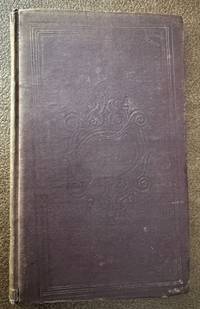
183918535London: William Pickering 1839. First letterpress edition of Blake’s best-loved works which had been available previously only in the poet’s privately printed and unobtainable hand-painted and engraved editions. Edited with a lengthy 18-page preface by the Swedenborgian James John Garth Wilkinson 1812-1899 who used Charles Augustus Tulk’s copy of the illuminated first edition c.1795-1807 to make his selection. This edition appears in two issues with and without a poem entitled “The Little Vagabond†at page 71. The poem was reportedly canceled by the editor out of prudishness. It is not present in this copy. No priority between the two issues has been established. Keynes 135; Bentley & Nurmi 161B; Bentley Blake Books 171 The English poet and dramatist John Drinkwater’s copy with his ownership signature dated 1923 on the front free endpaper and his bibliographical annotations beneath in pencil and his delightful little gilt embossed leather bookplate on the front endsheet. The book also bears the engraved bookplate of Elizabeth Walbridge on the front endsheet. Elizabeth Walbridge was married to S. Cornell Walbridge a major figure in the glass industry in Toledo Ohio aka “Glass City†and an avid book collector in the early years of the Twentieth Century. There is also a contemporary ownership signature on the front free endpaper that is difficult to decipher: possibly “Miss Mare or Miss Marie†and the remnant of a red wax seal beneath the tipped-in Walbridge bookplate. Head and tail of spine very slightly worn spine faintly sunned with covers fading slightly toward the margins otherwise a remarkably attractive and clean copy of this rare and important edition. 8vo original plum cloth. Head and tail of spine very slightly worn spine faintly sunned with covers fading slightly toward the margins otherwise a remarkably attractive and clean copy of this rare and important edition. William Pickering unknown
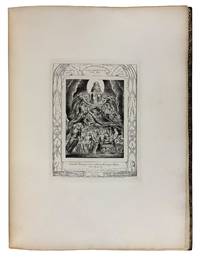
182641830London: William Blake 1826. Folio. 17 x 13 inches. Engraved pictorial title and 21 engraved plates by Blake each being mounted India paper proofs each plate marked "Proof" in the lower right corner on paper watermarked J. Whatman Turkey Mill 1825. Plate No. 1 misdated "1828". Later straight-grained green morocco gilt with Riviere & Sons spine gilt in compartments<br/> <br/> Blake's renowned engravings for the Book of Job: one of 150 proof sets on India Paper.<br/> <br/> "The story which Blake called 'Job's Captivity' fascinated him all his life. He alluded to it throughout his drawings and writings made a large separate print of Job in 1793 and then a series of twenty-one designs now in the Morgan Library for his faithful patron Thomas Butts about 1810" Bentley. Blake had completed the designs for what would become his Illustrations for the Book of Job around 1805-1806 for Thomas Butts a clerk to the commissary general of musters who had by then become Blake's major patron. The publication was not conceived of until ten years later when Linnell hoping to provide his ageing friend with a much needed income offered to finance the engraving and printing. The plates were borrowed back from Butts in 1821 and Blake began the arduous task of the engraving. Although the title page is dated 1825 publication was delayed until 1826 and the date amended on a label pasted to the boards in which the plates were issued. This striking work was printed in four different series during the 19th century: a first set of 150 "proof" copies on india paper 1826 to which series the present set belongs; a second set of 65 "proof" copies on French paper 1826; 100 sets on drawing paper with the word "Proof" removed from the plates 1826; and finally 100 sets on India mounted on heavy paper 1874 pulled from the original plates by Linnell. The 1826 India paper proof sets like the present are the best printing of these famous plates being richly inked strong impressions. Damon describes the illustrations as "Blake's most lucid; and they are the supreme example of his reading the Bible in its spiritual sense." Ray adds that they are "supreme masterpieces of graphic art."<br/> <br/> Ray Illustrator and the Book in England 8; Damon p. 217; Bindman 625-646; Keynes 55; Binyon 105-126; Bentley 421A. William Blake unknown
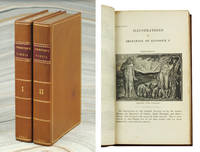
18211228771821. London: 1821. <br /> <br /> 2 vols. small 8vo xii -vii/viii 12 xxiv -i/iv 214 pp; I 215-592 pp. With an engraved frontispiece to each volume and 230 illustrations including 17 woodcuts and 6 engraved plates by Blake and four other designs by Blake engraved by others. Retrospective early 19th century full calf red labels by Court Benson. <br /> <br /> § A very good copy of a scarce work in any condition as it was issued for use in schools. Blake contributed 17 woodcuts to this volume as well as 10 other plates of which he engraved six which were not well received; nor were they well treated by the publisher who cut down the blocks and printed them poorly. Only a few proofs before they were trimmed are now extant. These blocks have remained amongst the most influential woodcuts in the history of British art and their influence can be seen from Calvert and Palmer all the way up to the present day. The blocks were saved by Linnell and were printed not long after Blake's death as separate impressions perhaps by Calvert and again in 1977 as a set by Iain Bain. Any impressions are now hard to find. For a full discussion of this wonderful book see Essick's masterly monograph A Troubled Paradise. San Francisco: John Windle 1999. Bentley Blake Books 504. Bindman 602-18. Easson and Essick I X. unknown
18211071521821. London: 1821. <br /> <br /> 2 vols. small 8vo xii -vii/viii 12 xxiv -i/iv 214; I 215-592 pp. With an engraved frontispiece to each volume and 230 illustrations including 17 woodcuts and 6 engraved plates by Blake and four other designs by Blake engraved by others. Original full rose sheep backstrips lettered in gilt slight wear to joints vol. 1 invisibly repaired. A very fine set internally perfect. Enclosed in a modern protective box.<br /> <br /> § Presentation copy inscribed by Thornton to his daughter. A very fine copy of a scarce work in any condition as it was issued for use in schools; the impressions of the woodcuts in this copy are the richest I have ever seen. Blake contributed 17 woodcuts to this volume as well as 10 other plates of which he engraved six which were not well received; nor were they well treated by the publisher who cut down the blocks and printed them poorly. Only a few proofs before they were trimmed are now extant. These blocks have remained amongst the most influential woodcuts in the history of British art and their influence can be seen from Calvert see below and Palmer all the way up to the present day. The blocks were saved by Linnell and were printed not long after Blake's death as separate impressions perhaps by Calvert also see below and again in 1977 as a set by Iain Bain see below. Any impressions are now very hard to find. For a full discussion of this wonderful book see Essick's masterly monograph A Troubled Paradise. San Francisco: John Windle 1999. Bentley BB 504. Bindman 602-18. Easson and Essick I X. unknown
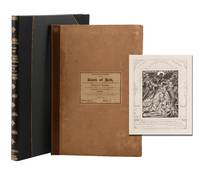
1826140948122London: Published by the Author 1826. First Edition. Near Fine. First edition of Blake's visionary interpretation of the first of the Poetic Books in the Old Testament. Folio. Engraved title and 21 engravings on drawing paper. Original buff paste board covers with publisher's printed label over quarter brown cloth; cloth perished at spine rebacked. A beautiful copy retaining the original boards housed in a custom clamshell case with spine tooled in gilt.<br /> <br /> <p>The first edition was printed in a run of 315 copies and issued in three versions: 150 copies on laid India with the word "Proof" printed in the bottom margin of plates 65 copies on French paper with "Proof" and 100 on Whatman paper with the word "Proof" removed from the copper plates but still faintly visible in some pulls. This copy is from the latter which Keynes calls the Ordinary Issue. Two plates with watermark of "J Whatman Turkey Mill 1825" and one watermarked "J Whatman 1825" Plate No. 1 incorrectly dated "1828".<p><br /> <br /> Rubbing to covers light soiling light offsetting and subtle repairs to end sheets. Small chip to corner margin of Plate No. 5 far from the engraving. Provenance: armorial bookplate of Frederick Pollock to front pastedown additional mounted printed note from antiquarian bookseller "This book was purchased in 1941 from London whilst the great battle for civilization was in progress. -Francis Edward Ltd."<br /> <br /> <p>An impressive production hailed by many to be Blake's greatest masterpiece completed just before the end of his life. "The story which Blake called 'Job's Captivity' fascinated him all his life. He alluded to it throughout his drawings and writings made a large separate print of Job in 1793 and then a series of twenty-one designs for his faithful patron Thomas Butts about 1810" Bentley. Blake took the plates from Butts' earlier commissions and began work on a second set for John Linnell his friend and fellow artist in 1821. Hoping to earn his impoverished aging friend much needed income Linnell completely backed the project monetarily while Blake went to task engraving. <br /> <br /> <p>Only 20 of the 315 sets were sold during Blake's lifetime mostly to members of his inner circle marking this a commercial failure. However the work was widely recognized as an artistic success amongst the nobility and upper gentry with copies purchased for the King's Library and The Royal Academy. Like many artists Blake did not receive proper recognition until after his death. Admired by John Ruskin he writes highly of the artist in his 1857 text The Elements of Drawing that "The Book of Job . is of the highest rank in certain characters of imagination and expression; in the mode of obtaining certain effects of light it will also prove a very useful example to you. In expressing conditions of glaring and flickering light Blake is greater than Rembrandt." Bentley 421A Keynes 55 vi Ray 8. Published by the Author unknown