HENRI LIZIERLivre Rare Book
75 résultats
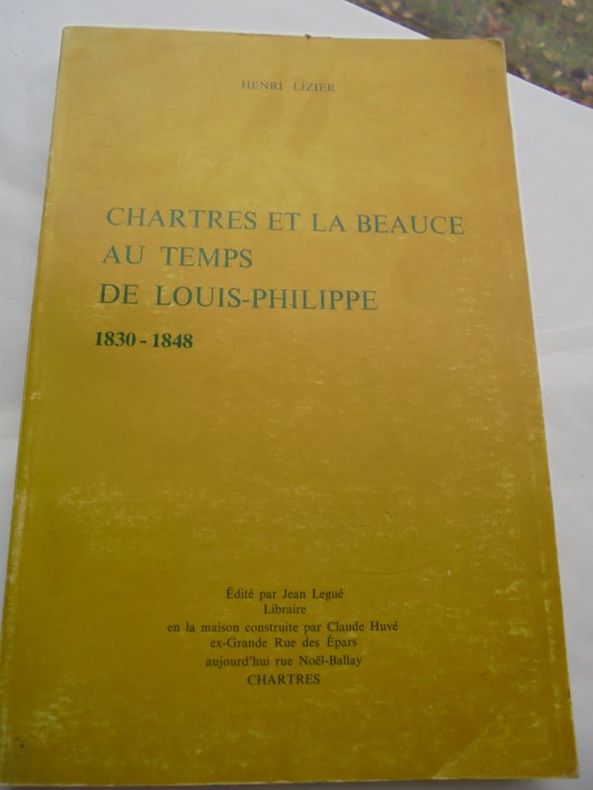
1572189061572 Broché - 15,7 x 24 - 252 pp - année 1972 - Edité par Jean Legué Libraire
159031035s. l.: S. n. 1590. Fine. S. n. s. l. s. d. circa 1590 34 x 25.50 cm une feuille Authentic original engraving executed in burin after a 16th-century painting by Johannes Stradanus. Proof on watermarked laid paper work from the late 16th or early 17th century. Artists' signatures in the plate. Latin caption in the lower part of the engraving. Manuscript translation in old handwriting below the plate mark: ""Ainsi les canards attachés sur le fleuve chantent pendant que ceux qui surviennent sont blessés d'un coup de feu et charpillent leurs plumes sur le fleuve"" ""Thus the ducks attached on the river sing while those that come are wounded by gunshot and scatter their feathers on the river"". Watermark visible by transparency. The engraving has been mounted and restored with small pieces of old laid paper glued to the edges on the reverse otherwise fine condition for this very rare engraving. Johannes Stradanus known as Giovanni Stradano or Jan van der Straet was a Flemish painter and engraver born in Bruges in 1523 and died in Florence on February 11 1605. After beginning to learn painting from his father and following the latter's death he continued his training in the workshop of Maximiliaan Frank from 1535 to 1537 then in that of Pieter Aertsen in Antwerp from 1537 to 1540. In 1545 he was received as a master in the Antwerp painters' guild. He then began a journey across Europe: in France then in Italy where he first stayed in Venice before settling in Florence. There he worked for Cosimo I de' Medici and collaborated with Giorgio Vasari for the decoration of the Studiolo of Francesco I de' Medici and for that of the hall of Clement VII in the Palazzo Vecchio. In 1565 he was part of the teams of painters and sculptors charged under the direction of Giorgio Vasari with creating the gigantic decoration planned for the entry into Florence of Joanna of Austria on the occasion of her marriage to Francesco I de' Medici. Greatly influenced by the Mannerists including Michelangelo Johannes Stradanus contributed to the development of the great Italian history painting. He painted several altarpieces for Florentine churches. He also stayed in Rome from 1550 to 1553 and in Naples in 1576. After a stay in Antwerp in 1578 he devoted a large part of his activity to engraving. Philippe Galle born in Haarlem in 1537 and died in Antwerp in March 1612 was a Flemish engraver member of a famous family of engravers. He practiced engraving on copper drawing the commerce of engravings publishing and writing. He trained under Hieronymus Cock in Antwerp where he engraved drawings by Pieter Bruegel the Elder notably the series of the Seven Deadly Sins. He then became the engraver of Maarten van Heemskerck. From 1557 he owned his own workshop which would be frequented by his sons Theodore and Cornelius as well as by his son-in-law Adriaen Collaert the Wierix brothers Hendrick Goltzius Crispin de Passe the Elder and other members of the Collaert family. His workshop was at the center of Antwerp engraving production. Philippe Galle created some of his most admirable works based on projects by Pieter Bruegel the Elder The Alchemist 1558 by Jan van der Straet by Franz Floris The Daughters of Lot and by Gillis Congnet Aenevm Saecvlvm and the four ages of humanity 1575. S. n. unknown
159031035S. n. | s. l. s. d. [circa 1590] | 34 x 25.50 cm | une feuille
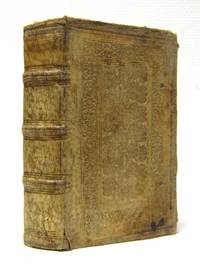
1556LA - HAY351851556. Paris Chez Caveiller. relié plein veau marron glacé 18e siècle. La numérotation des pages passe de 386 à 407 sans manque de texte par contre les pages 626 à 647 et 820 à 837 sont absentes non montées à la reliure ; les pages liminaires et de titres sont aussi absentes seul la page de titre a été remplacée par une page en papier d'époque et composée à l'encre brune ancienne apparemment à l'identique ; l'ouvrage a été recoupé en tête et parfois à la limite des titres ; quelques rares travails de vers en charnières et marges supérieures et faibles taches également rares ; coiffe supérieure arasée coins frottés et trou de vers au nerf supérieur sinon bonne reliure et intérieur frais le prix 750 e accordé à 350 e est adapté aux absences citées. format : 136/7 cm. avec à la suite 26 pages d'"Indice des Matières Principales" ; avec 3 bandeaux et 4 lettrines ; plats ornés d'un filet d'encadrement or ; dos à 4 nerfs avec caissons décorés d'un filet et motifs floraux dorés ainsi qu'une pièce de titre en cuir marron avec titre or ; toutes tranches rouges. unknown
1512b-stock-foreign-3French and European Publications Inc 2015-12-02. Paperback. New. French and European Publications Inc paperback
154314763s.l. (Paris) et Paris Enseigne Saint Claude par Jacques Regnault 1543 8 feuillets lim. Non chiffrés, 271 feuillets mal chiffrés, 268 et 1 feuillet blanc , et 6 ff. lim. N.ch. Et 124 ff. mal ch. 130.Ces deux ouvrages en un fort volume in-8 maroquin rouge, dos à nerfs, double filet doré sur les coupes, dentelle dorée inter, tranche dorée sur marbrure (Niedrée)
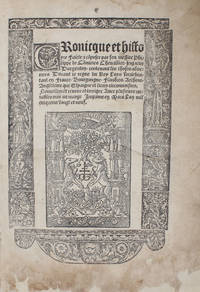
152954624Paris 1529 Colophon: 24 Mars 1524 pour Francoys Regnault - Colophon: 2. Daoust August pour maistre Enguillebert de Marnef 1524. Large 4to. 27 x 20 cm. Contemp. full calf. Panelled covers with blindtooled rolls inner panel with cornerpieces and in the middle an oval arabesque medaillon. 5 raised bands. Upper and lower compartments of spine repaired. 2 small nicks at bands on spine. light wear along fronthinge. Corners neathly repaired. Collation Cronique et Histoire: Title-page with large and broad ornamental woodcut borders consisting of 6 pieces. A large printers woodcut device. Ff 4 Ff 106. Colophon on folio CVI 106 some misfoliation - signatures correct. - Collation Croniques Charles VIII: Title-page printed in red and black inside large ornamental woodcut borders. In the middle printers woodcut device.Ff 4 Ff 54. Colophon on LIIII 54 - many misfoliations - signatures correct. On F 4 Arms of France in a large woodcut. Some annotations in a contemporary hand. - Both work with many large initials in woodcut. Lower margins throughout browned and with some repairs some leaves in the middle having some heavy wormtracts in lower margins. Some corners at end restored. In the second work a wormtract in outer margins but decreasing toward end. Upper right corners with a faint dampstain. <br/><br/><em>Scarce early editions of these works that only later obtained the name of "Memoires" and they are a major primary source for 15th century European history. Commines is called "the first critical and philosophical historian since classical times" and "the first truly modern writer"."In 1498 fifteen years after the death of Louis XI of France Commines's work was completed first published in 1524 in Paris and is considered a historical record of immense importance largely because of its author's cynical and forthright attitude to the events and machinations he had witnessed. His writings reveal many of the less savory aspects of the reign of Louis XI and Commines related them without apology insisting that the late king's virtues outweighed his vices. He is regarded as a major primary source for 15th century European history."The Mémoires are divided into "books" the first six of which were written between 1488 and 1494 and relate the course of events from the beginning of Commines' career 1464 up to the death of King Louis. The remaining two books were written between 1497 and 1501 printed in 1528 and deal with the Italian wars ending in the death of King Charles VIII of France."Brunet II189-190. - Adams 2441 and Adams 2443 but not quite the same collation. - Tchemerzine III 452-54 but differences in collations. </em> hardcover
152954624Paris, 1529 (Colophon: 24 Mars 1524 pour Francoys Regnault) - Colophon: 2. Daoust (August) pour maistre Enguillebert de Marnef, 1524. Large 4to. (27 x 20 cm.). Contemp. full calf. Panelled covers with blindtooled rolls, inner panel with cornerpieces and in the middle an oval arabesque medaillon. 5 raised bands. Upper and lower compartments of spine repaired. 2 small nicks at bands on spine. light wear along fronthinge. Corners neathly repaired. Collation (Cronique et Histoire): Title-page with large and broad ornamental woodcut borders consisting of 6 pieces. A large printers woodcut device. Ff (4) + Ff 106. Colophon on folio CVI (106, some misfoliation - signatures correct). - Collation (Croniques Charles VIII): Title-page printed in red and black inside large ornamental woodcut borders. In the middle printers woodcut device.Ff (4) + Ff 54. Colophon on LIIII (54 - many misfoliations - signatures correct). On F (4) Arms of France in a large woodcut. Some annotations in a contemporary hand. - Both work with many large initials in woodcut. Lower margins throughout browned and with some repairs, some leaves in the middle having some heavy wormtracts in lower margins. Some corners at end restored. In the second work a wormtract in outer margins, but decreasing toward end. Upper right corners with a faint dampstain.
159810688A La Rochelle, Par Hierosme Haultin, 1598. 1 vol. in-8 de 91-(2)-956 pp., vélin souple à rabats (reliure de l'époque).
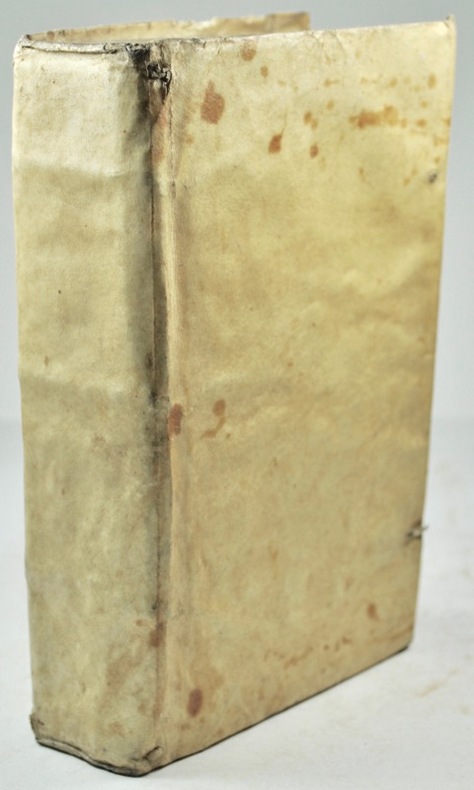
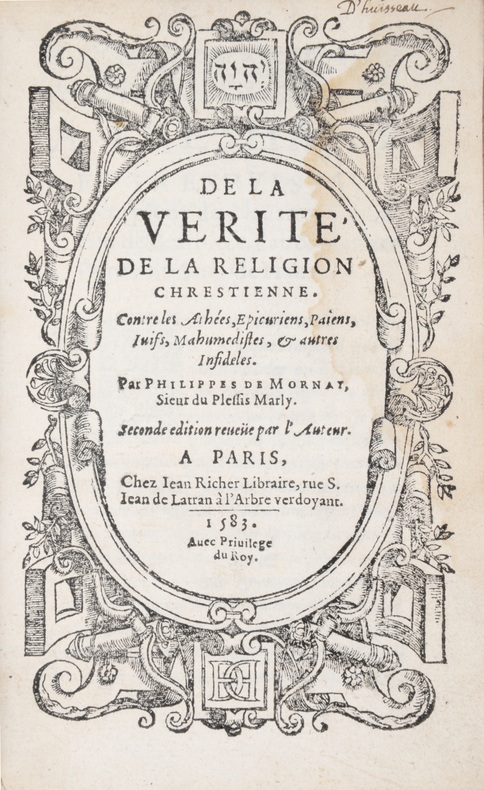
158315476Paris, Jean Richer, 1583. In-8 de (16)-603-(2) pp., vélin rigide à recouvrement, titre manuscrit sur le dos à nerfs, tranches jaspées (reliure de l'époque).
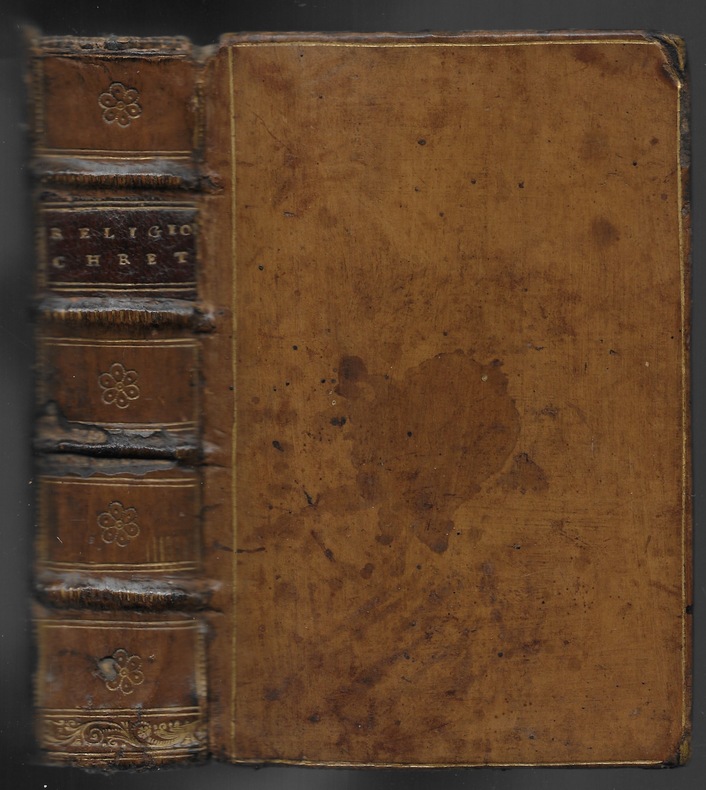
158212471Seconde édition revue par l'auteur Plein veau blond, dos à nerfs, pièce de titre maroquin rouge, filets dorés sur les plats. Reliure usagée mais corps d'ouvrage solide. Assez bon Anvers Plantin 1582 1 fort volume in-8°
15977939Sigenae Nassoviorum Christopher Corvinus 1597. 2 works in 1 binding 36 625 10 64 p. Contemporary Vellum richly decorated with stamps spine with 3 raised bands 8° new endpapers Sigenae Nassoviorum, Christopher Corvinus hardcover
1594395572In Genoua: Appresso gli Heredi di Gier. Bartoli 1594. Softcover. Good. First Italian edition. Translated by Lorenzo Conti. Quarto. 40 803 1pp. woodcut title vignette and illustrated woodcut initials. Contemporary pastepaper boards with original sewing along the joints edges sprinkled red. Signed manuscript note dated from: "Malta 2 December 1839" laid-down on the front pastedown identifying this copy as belonging to: "the Library of the Knights of Malta of the Order of St. John of Jerusalem." Two small laid-paper strips are pasted over an early ownership signature on the title page to the left and right of the woodcut vignette. The pastepaper binding is frayed at the edges and torn along the front joint both free endpapers are nearly detached modest intermittent old dampstaining and some worming to the top margin good. The scarce first Italian edition of Commynes celebrated Mémoires in a contemporary binding and with a compelling provenance. Appresso gli Heredi di Gier. Bartoli unknown
158699650Rouen, Imprimerie Martin le Megissier, 1586, in-12, [8] pp, Demi-toile à coins brune à la bradel, dos long, pièce de titre rouge, Nouvelle édition de cet édit royal, rédigé par le comte de Cheverny, garde des Sceaux d'Henri IV en 1561, ayant trait au commerce. Petits frottements, pâle mouillure marginale. Couverture rigide
158142253S.l. [Genève], chez Jean Durant, 1581. In-8 de 248 pp. (A-P8 Q4), veau gris, dos orné à nerfs, triple filet doré sur les plats, tranches rouges (Galette).
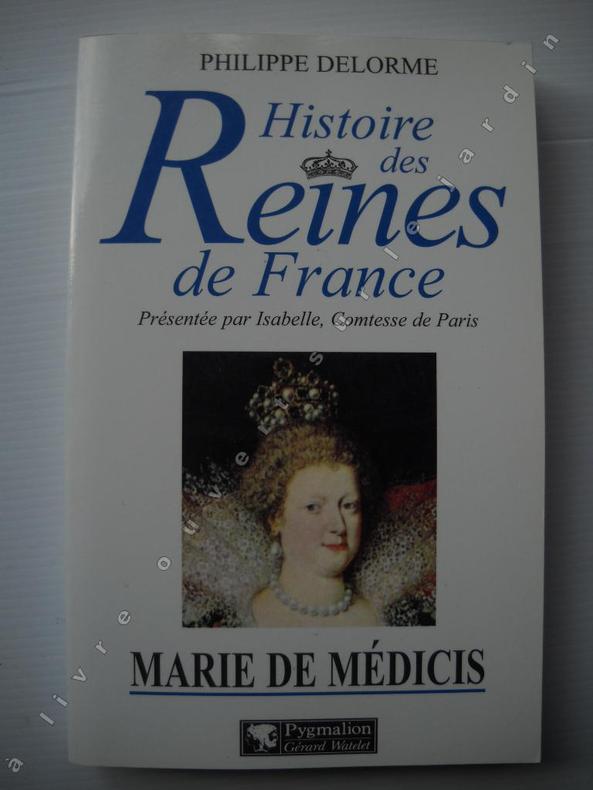
1552168481552 Broché - 15,5 x 24 - 321 pp - année 1998 - Editions Pygmalion Gérard Watelet -
1552168801552 Broché - 15,5 x 24 - 320 pp - année 2000 - Editions Pygmalion Gérard Watelet - bibliographie
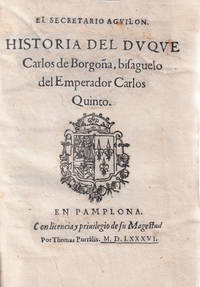
158611657Pamplona: Thomas Porralis 1586. 204x150mm. 8x6". Pamplona Thomas Porralis 1586 al fin 1587. En 4º 204 x 150mm. 1 lámina a toda página grabada en xilografÃa 8 205 1 pp. Portada con xilografÃa real de Felipe II. Marca del impresor en la última página. Encuadernación en pergamino de la época guardas renovadas en el siglo diecinueve. Primera edición poco frecuente impresa en Pamplona en el siglo XVI de la biografÃa de Carlos de Borgoña 1433-1477 llamado el <em>Audaz</em> que gobernó Borgoña entre 1463 y 1477 momento en que el poder del Ducado de Borgoña alcanzó su máximo apogeo si bien su muerte en 1477 significó el fin del sueño borgoñón de resucitar la antigua Lotaringia. El matrimonio de su hija MarÃa con el emperador Maximiliano ligó la herencia borgoñona al linaje de los Habsburgo en la persona del hijo de ambos Felipe el Hermoso que contraerÃa matrimonio con la reina Juana de Castilla. El hijo de ambos Carlos recibirÃa su nombre en memoria de su bisabuelo. El libro está ilustrado con una preciosa xilografÃa a toda página representando a Duque de Borgoña a caballo y su leyenda al pie "antes muerto que vencido". Pedro de Aguilón de origen tudelano fue secretario de embajada en Francia del rey Felipe II; escribió este libro basándose en las <em>Memorias</em> de Ph. de Commynes escritas en francés y que tratan de la vida y hechos de Luis XI y Carlos VIII. Buen ejemplar papel ligeramente amarronado algunas pequeñas manchas ocasionales; generalmente limpio y marginoso. Referencias: Palau 3856; Arigita <em>BibliografÃa Navarra</em> 79 Thomas Porralis unknown
155912310Venetia: P. Gironimo Giglio 1559. 153x97mm. 6x3¾". Venetia P. Gironimo Giglio 1559. En 8º 153 x 97mm. 12 248 8 hojas la última blanca. Marca del impresor en portada y última hoja. Encuadernación de la época en pergamino. Primera edición italiana de la famosa historia de Francia entre 1466 y 1483 y en particular la rivalidad polÃtica entre Luis XI y Carlos el Temerario. Philippe de Commines 1447-1511 fue un escritor francés de origen flamenco y diplomático en la corte de Borgoña y Francia. Charles Sainte-Beuve le considera el primer escritor verdaderamente moderno y el primer crÃtico e historiador filosófico desde tiempos clásicos. Su análisis de las escena polÃtica lo convirtieron en un escritor único de su tiempo. P. Gironimo Giglio unknown
1552188531552 Relié avec jaquette éditeur - 15,5 x 24,5 - 373 pp - année 1985 - Edition France Loisirs -
159032520s. l.: S. n. 1590. Fine. S. n. s. l. fin XVIe début XVIIe 34 x 25.50 cm une feuille Authentic original engraving executed in burin after a 16th-century drawing by Johannes Stradanus. Proof on watermarked laid paper work from the late 16th or very early 17th century. Artists' signatures in the plate. Latin legend in the lower part of the engraving. Manuscript translation in old handwriting under the plate mark: ""Des chasseurs par le commandement du roi de France cherchent beaucoup de fientes de cerfs et donnent les crottes des jeunes cerfs aux chiens afin que par l'odeur ils apprennent à connaitre l'âge des cerfs."" ""Hunters by command of the king of France search for much deer dung and give the droppings of young deer to the dogs so that by scent they learn to know the age of the deer"". Watermark visible by transparency. The margins of the engraving have been backed with small pieces of old laid paper pasted to the edges on the reverse otherwise fine condition for this very rare engraving. Johannes Stradanus known as Giovanni Stradano or Jan van der Straet is a Flemish painter and engraver born in Bruges in 1523 and died in Florence on February 11 1605. After beginning to learn painting from his father and following his father's death he continued his training in the workshop of Maximiliaan Frank from 1535 to 1537 then in that of Pieter Aertsen in Antwerp from 1537 to 1540. In 1545 he was received as a free master in the guild of Antwerp painters. He then began a journey through Europe: in France then in Italy where he first stayed in Venice before settling in Florence. He worked there for Cosimo I de' Medici and collaborated with Giorgio Vasari for the decoration of the Studiolo of Francesco I de' Medici and for that of the Clement VII hall of the Palazzo Vecchio. In 1565 he was part of the teams of painters and sculptors charged under the direction of Giorgio Vasari with creating the gigantic decoration planned for the entry into Florence of Joanna of Austria on the occasion of her marriage to Francesco I de' Medici. Greatly influenced by the Mannerists including Michelangelo Johannes Stradanus contributed to the development of great Italian history painting. He painted several altarpieces for Florentine churches. He also stayed in Rome from 1550 to 1553 and in Naples in 1576. After a stay in Antwerp in 1578 he devoted a large part of his activity to engraving. Philippe Galle born in Haarlem in 1537 and died in Antwerp in March 1612 is a Flemish engraver member of a famous family of engravers. He practiced copper engraving drawing engraving commerce publishing and writing. He trained with Hieronymus Cock in Antwerp where he engraved drawings by Pieter Bruegel the Elder notably the series of the Seven Deadly Sins. He then became the engraver of Maarten van Heemskerck. From 1557 he owned his own workshop which was frequented by his sons Theodore and Cornelius as well as by his son-in-law Adriaen Collaert the Wierix brothers Hendrick Goltzius Crispin de Passe the Elder and other members of the Collaert family. His workshop was at the center of Antwerp engraving production. Philippe Galle created some of his most admirable works on projects by Pieter Bruegel the Elder The Alchemist 1558 Jan van der Straet Franz Floris Lot's Daughters and Gillis Congnet Aenevm Saecvlvm and the four ages of humanity 1575. S. n. unknown
159032520S. n. | s. l. fin XVIe début XVIIe | 34 x 25.50 cm | une feuille
159032532s. l.: S. n. 1590. Fine. S. n. s. l. fin XVIe début XVIIe 34 x 25.50 cm une feuille Authentic original engraving executed with burin after a 16th-century drawing by Johannes Stradanus. Proof on watermarked laid paper work from the end of the 16th or very beginning of the 17th century. Artists' signatures in the plate. Latin caption in the lower part of the engraving. Manuscript translation in an old hand beneath the plate mark: ""Le chasseur prend les petits du tigre et met dans des trappes des miroirs qui représentent les petits qu'il a enlevés. Cette bête stupide croyant les voir effectivement entre dans les filets et hurle étant prise."" ""The hunter takes the tiger cubs and places mirrors in traps that represent the cubs he has taken. This foolish beast believing it actually sees them enters the nets and howls being caught."". Watermark visible by transparency. The margins of the engraving have been backed with small pieces of old laid paper glued to the edges on the verso otherwise fine condition of preservation for this very rare engraving. Johannes Stradanus known as Giovanni Stradano or Jan van der Straet was a Flemish painter and engraver born in Bruges in 1523 and died in Florence on February 11 1605. After beginning to learn painting from his father and following his father's death he continued his training in the workshop of Maximiliaan Frank from 1535 to 1537 then in that of Pieter Aertsen in Antwerp from 1537 to 1540. In 1545 he was received as a master in the Antwerp painters' guild. He then began a journey across Europe: to France then to Italy where he first stayed in Venice before settling in Florence. There he worked for Cosimo I de' Medici and collaborated with Giorgio Vasari on the decoration of the Studiolo of Francesco I de' Medici and on that of the Clement VII room in the Palazzo Vecchio. In 1565 he was part of the teams of painters and sculptors charged under the direction of Giorgio Vasari with creating the gigantic decoration planned for the entry into Florence of Joanna of Austria on the occasion of her marriage to Francesco I de' Medici. Greatly influenced by the Mannerists including Michelangelo Johannes Stradanus contributed to the development of grand Italian history painting. He painted several altarpieces for Florentine churches. He also stayed in Rome from 1550 to 1553 and in Naples in 1576. After a stay in Antwerp in 1578 he devoted a large part of his activity to engraving. Philippe Galle born in Haarlem in 1537 and died in Antwerp in March 1612 was a Flemish engraver member of a famous family of engravers. He practiced copperplate engraving drawing the trade of engravings publishing and writing. He trained under Hieronymus Cock in Antwerp where he engraved drawings by Pieter Bruegel the Elder notably the series of the Seven Deadly Sins. He then became the engraver of Maarten van Heemskerck. From 1557 he owned his own workshop which would be frequented by his sons Theodore and Cornelius as well as by his son-in-law Adriaen Collaert the Wierix brothers Hendrick Goltzius Crispin de Passe the Elder and other members of the Collaert family. His workshop was at the center of Antwerp engraving production. Philippe Galle created some of his most admirable works on projects by Pieter Bruegel the Elder The Alchemist 1558 Jan van der Straet Franz Floris The Daughters of Lot and Gillis Congnet Aenevm Saecvlvm and the four ages of humanity 1575. Adrian Collaert born in Antwerp in 1565 and died in 1618 was part of a great family of engravers. Trained in the workshop of his father-in-law Philippe Galle he began with copperplate engraving before specializing in burin work. S. n. unknown
159032532S. n. | s. l. fin XVIe début XVIIe | 34 x 25.50 cm | une feuille
159032521s. l.: S. n. 1590. Fine. S. n. s. l. fin XVIe début XVIIe 34 x 25.50 cm une feuille Authentic original engraving executed with burin after a 16th-century drawing by Johannes Stradanus. Impression on watermarked laid paper work from the late 16th or very early 17th century. Artists' signatures within the plate. Latin caption in the lower portion of the engraving. Manuscript translation in old handwriting below the plate mark: ""On dit que la Barbarie produit de très bons chameaux que chassent les soldats de la marine pressés par la faim. Cette viande quoique très dure les rassasie."" ""It is said that Barbary produces very good camels which are hunted by sailors pressed by hunger. This meat although very tough satisfies them."". Watermark visible by transparency. The margins of the engraving have been backed with small pieces of old laid paper pasted along the edges on the reverse otherwise fine condition for this very rare engraving. Johannes Stradanus called Giovanni Stradano or Jan van der Straet is a Flemish painter and engraver born in Bruges in 1523 and died in Florence on February 11 1605. After beginning to learn painting with his father and following the latter's death he continued his training in the workshop of Maximiliaan Frank from 1535 to 1537 then in that of Pieter Aertsen in Antwerp from 1537 to 1540. In 1545 he was admitted as master to the guild of Antwerp painters. He then began a journey across Europe: to France then to Italy where he first stayed in Venice before settling in Florence. There he worked for Cosimo I de' Medici and collaborated with Giorgio Vasari on the decoration of the Studiolo of Francesco I de' Medici and on that of the Clement VII room in the Palazzo Vecchio. In 1565 he was part of the teams of painters and sculptors charged under the direction of Giorgio Vasari with creating the gigantic decorations planned for the entry into Florence of Joanna of Austria on the occasion of her marriage to Francesco I de' Medici. Greatly influenced by the Mannerists including Michelangelo Johannes Stradanus contributed to the development of grand Italian history painting. He painted several altarpieces for Florentine churches. He also stayed in Rome from 1550 to 1553 and in Naples in 1576. After a stay in Antwerp in 1578 he devoted a large part of his activity to engraving. Philippe Galle born in Haarlem in 1537 and died in Antwerp in March 1612 is a Flemish engraver member of a famous family of engravers. He practiced copperplate engraving drawing print dealing publishing and writing. He trained with Hieronymus Cock in Antwerp where he engraved drawings by Pieter Bruegel the Elder notably the series of the Seven Deadly Sins. He then became the engraver of Maarten van Heemskerck. From 1557 he owned his own workshop which was frequented by his sons Theodore and Cornelius as well as by his son-in-law Adriaen Collaert the Wierix brothers Hendrick Goltzius Crispin de Passe the Elder and other members of the Collaert family. His workshop was at the center of Antwerp print production. Philippe Galle created some of his most admirable works based on designs by Pieter Bruegel the Elder The Alchemist 1558 by Jan van der Straet by Franz Floris The Daughters of Lot and by Gillis Congnet Aenevm Saecvlvm and the four ages of humanity 1575. Adrian Collaert born in Antwerp in 1565 and died in 1618 was part of a great family of engravers. Trained in the workshop of his father-in-law Philippe Galle he began with copperplate engraving before specializing in burin work. S. n. unknown