1 723 résultats
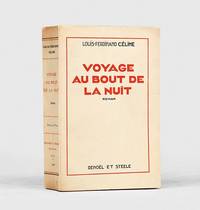
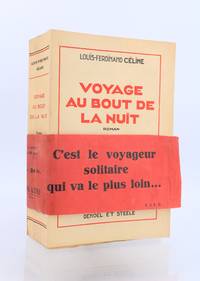
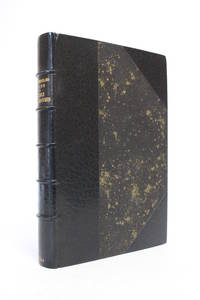
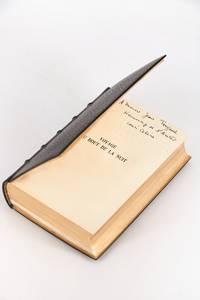
193291871Paris: Denoël & Steele 1932. Fine. Only deluxe presentation copy motivated by ideological conviction Denoël & Steele Paris 1932 12 x 19 cm Relié sous chemise et étui First edition one of the deluxe copies on alfa this one an unnumbered hors commerce only deluxe issue after 10 copies on Arches. Full blue-gray morocco binding spine with five raised bands gilt date at foot yellow box calf doublure watered silk free endpapers original wrappers including spine bound in all edges gilt half morocco chemise in panels wood motif paper boards slipcase edged in morocco wood motif paper boards lined with blue felt outstanding binding signed Hélène Alix. Unrecorded presentation copy signed and inscribed by Louis-Ferdinand Céline to Belgian pacifist writer Jean Tousseul. Handsome copy housed in a fine doublure morocco binding by Hélène Alix in perfect condition despite the foxing-prone Alfa paper. Jean Tousseul pen name of Olivier Degée 1890-1944 is one of the most singular figures in Belgian Francophone literature of the interwar period: he was at once a self-taught writer from the working-class world of the Meuse quarries a militant journalist and a committed socialist and pacifist. He served four months in prison in 1918 for his anti-militarist articles receiving at the time the public support of Romain Rolland. Tousseul contributed to Barbusses journal Monde and published his work in Paris with the publisher Rieder. By 1932 he was a recognised author in pacifist and proletarian circles on both sides of the Franco-Belgian border. His major novel on the First World War which appeared a few months after Célines Voyage springs from the same terrible reckoning: La Rafale constitutes an objective testimony a powerful and meticulous document on the war and the disarray of minds that resulted from it. Jean Tousseul condemns recourse to war but fears that it may long remain attached to the flank of a humanity still in the grip of its elementary instincts. This analysis by Désiré Denuit might well have been borrowed from the finest studies of Célines masterpiece. In 1937 Jean Tousseul was awarded the Prix Triennal de Littérature belge for Le Masque de Tulle. During the war he refused collaboration with the occupying forces and died in 1944. This unrecorded Céline presentation copy to Jean Tousseul who does not appear in any Céline biography on one of the most precious issues of the first edition is nonetheless beyond the promotional and commercial imperatives that motivated the distribution of luxury copies a unique testament to the humanist conviction that presided over the writing of Voyage au bout de la nuit. it all began just like that Few were those who immediately recognised the importance of the novel. Céline the writer who was still known as Dr Destouches had offered his manuscript to Gallimard Bossart and Figuière before approaching Denoël et Steele. The latter was the only publisher to show genuine enthusiasmthough without the resources to ensure adequate promotion. The initial print run was accordingly cautious: 200 press copies printed on 12 October 1932 followed the next day by 20 on Arches and 95 on Alfa paper according to the printers archives. The 3000 ordinary copies of the first edition were printed between 15 October and 3 November. It was only after the award of the Prix Renaudot that more than 100000 further copies appeared with the textual variants that are now well documented. one can never be sufficiently defiant with words Céline sent several press copies to close friends such as Abel Gance to leading critics including Georges Bernanos to figures of influence such as André Breton and to artists he admired among them the singer Yvette Guilbert. Then as the books success grew to new acquaintances. He reserved very few deluxe issue copies for his inner circle. These were destined primarily for members of the Prix Goncourt jury and a handful of influential journalists. T Denoël & Steele hardcover
1932158019Paris: Editions Denoël et Steele 1932. The author's debut inscribed to one of his earliest and most ardent defenders First trade edition first printing inscribed by the author on the half-title "A mon Marcel Espiau hommage de l'Auteur Louis Céline" together with an autograph letter signed by the author inviting Espiau to dinner to celebrate "the benevolence and the good taste of his jury" our translation. Espiau was instrumental in awarding the Prix Renaudot to Céline for this his debut. Voyage au bout de la nuit was published in October 1932 to immediate and widespread critical acclaim. It was quickly touted as the favourite for the Prix Goncourt and Céline was assured of his victory. In 1926 a group of critics Espiau among them had created the Prix Renaudot while waiting for the nomination of the Goncourt. Though not officially related the juries of both prizes announce the winners at the same time and place on the first Tuesday of November at the Drouant restaurant in Paris. The Renaudot is often considered a consolation prize with the jurors ensuring that they have an alternative laureate in case their first choice receives the more prestigious Goncourt. Voyage did not win the Goncourt that year. In a scandal that fuelled Céline's notoriety the Goncourt was awarded instead to Guy Mazeline's Les Loups. Céline's subsequent fame resulted in 50000 copies of Voyage selling in the following two months. Despite the consensus that the Goncourt decision was a travesty Espiau still had to fight bitterly to have Voyage awarded the Renaudot: it took three rounds of voting for Céline to emerge victorious with a small majority of six votes out of ten. Céline left France almost immediately for a "little medico-sentimental tour of Europe" quoted in Gibault. He was mortified by the loss having been vocally confident of his success and overwhelmed by the attention the affair had garnered his debut. On his return to France he sent Espiau this letter of invitation apparently unpublished. The letter invites Espiau to dine with Céline and the previous winner of the Renaudot Philippe Hériat. The letter is undated aside from a "le 3". Espiau gave continued vocal support of Céline writing in an article for Les Nouveaux Temps in 1941: "I liked Céline straight away the barely dry proofs of his unalterable Voyage au bout de la nuit. I immediately fought for him within a literary panel - the only one who crowned him - and where moreover everyone was quickly won over. a writer of his kind is a blessing from the gods". Céline was grateful for the support sending thanks for the article: "I know you and remain greatly in your debt for the admirable courage with which you defended my first book at the time when the league of Perfect Thinking already had me in a lasso" Letter to Marcel Espiau March 1941. This is the uncommon first printing of the trade issue with the points: "Grande Imprimerie de Troyes" imprint in the colophon "Le Flute Corsaire" advertised on the bottom right of rear wrapper as "Sous presse" and with no imprint below the red frame and a lowercase "m" printed upside down on p. 150 line 10. Some copies although not this one also have the lowercase m on p. 541 line 37 and 8 pages of publisher's advertisements at the rear on grey-blue paper dated 1932; these are not indicative of priority. Octavo. Original white wrappers printed in red and black edges untrimmed. Housed in a custom cream flat-backed box lettered and ruled in red and black imitating the wrappers. Spine lightly sunned two short closed tear to foot of spine and rear corner trivial chip and a few nicks to head front joint a little rubbed contents uniformly toned. Letter folded one nick and one short closed tear a little paper adhered to verso very sharp and bright. A beautiful copy clean and fresh. En français dans le texte 366; Connolly The Modern Movement 74F. Gibault Céline 1932-1944: Délires et persécutions 1985. unknown
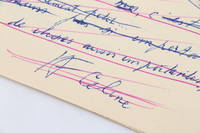
195483743s. l. Meudon 1954. Fine. Céline's Ars Poetica: ""I capture all the emotion on the surface! I cram it into my metro! s. l. Meudon s. d. 1954 10 x 21 cm 34 feuillets Manuscript pages from Conversations with Professor Y' n.p. Meudon n.d. 1954 various sizes from 10x21 cm to 27x21 cm 34 sheets. Autograph manuscript by Louis-Ferdinand Céline 34 sheets of various sizes written in blue and sometimes pink ballpoint pen. Some of the pages are numbered by Céline at top left. The last folio numbered 159 is signed by the writer at the bottom. Two leaves contain previously unpublished passages: the first a few lines long refers to the Professeur. The second leaf numbered 136 features another full-page text on the verso which we did not find in the Professeur Y' or in any of the published works of Céline. Céline refers in this unpublished passage to article 75 of the penal code condemning to the death penalty any French citizen found guilty of intelligence with the enemy. It also mentions a certain ""Me Johann Niels Borggensen"" no doubt a pseudonym for his lawyer Thorvald Mikkelsen: "".supposedly to protect me from police curiosity! holy cow! he was having a ball.when you've got the warrant up your arse crossed out: article 75 anyone can do what they like with you! what a joke! we can do what we like with you.it wouldn't have been Borggensen perhaps someone else would have been worse.give me article 75 and I'll put the whole of France in a Mouse hole for you! and Germany with it! and England such a nag and Europe with it! no bomb needed! H ! Y ! Z ! I'll make you fit the atom into a."" Important set of working manuscripts bearing witness to the writing of Conversations with Professor Y' Céline's true Ars poetica. Since the first part of Féerie pour une autre fois' Fable for Another Time was not as successful as expected Céline wanted to give the release of the second part - Normance - as much publicity as possible and restore his reputation after his years of exile in Germany and Denmark. Instead of writing the usual promotional note prière d'insérer he suggested to publisher Gaston Gallimard this eulogy written in the style of an imaginary interview between himself and Professor Y alias Colonel Réséda a prostatic old man. This zany ""interviouwe"" was published in several parts in the Nouvelle Revue française in 1954 and the finished work through Éditions Gallimard the following year. Céline speaks fervently of his style and his conception of literature and vehemently criticizes the world of letters and public taste. Unlike Céline's other works the genesis of this text crucial to the understanding of his oeuvre is poorly documented and its manuscripts are rare. The Pléiade edition of Celinian novels contains only a few pages of an earlier version very close to the published text. This set of pages covering every passage of the text contains both heavily crossed-out sheets and neatly rewritten notes. It bears witness to the different stages of the writer's work: drafting an initial sheet crossing out and rewriting on the same page then transcribing short passages on separate notes. The last page of the text is extensively crossed out and rewritten resulting in a slightly different version of the published version. The manuscript also contains the famous metaphor of the metro typical of the writer's emotive style compared here to the ""dry language"" of his peers: ""Did you see Have you noticed All caught up in my metro!. what do I leave on the surface. the worst rubbish in cinema!. foreign languages then!. translations!. retranslations of our worst rubbish that they use for their ""parlants"" talking pictures superb foreign languages!. in addition to the psychology! the psychological mumbo jumbo!. all the crap. . Me it's something else! me I'm much more brutal! me I capture all the emotion!. all the emotion on the surface! all at once! I decide! I stick it in the metro! my metro! all t unknown
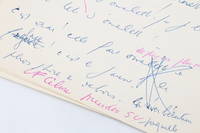
195483744Meudon 1954. Fine. ""What is Normance "" Meudon 1954 20 x 27 cm 16 feuillets 9 pour le premier manuscrit 7 pour le second Two unpublished autograph manuscripts signed by Louis-Ferdinand Céline in blue and red ballpoint pen: the first contains 9 pages numbered in the left-hand corner from 1480 to 1488; the second contains 7 pages numbered from 1498 to 1504. Each text is signed by Céline in red ink at the bottom margin with the words ""Meudon 54"" also in his hand ff. 1485 and 1505. There are numerous variants lines and words crossed out modified and repeated. Traces of pinholes in the upper left-hand margin of every sheet as Céline organized his manuscripts in ""bundles"". Normance was published in 1954 as a sequel to 'Fable for Another Time' published two years earlier. Both parts were written during Céline's years of exile and imprisonment in Denmark. Upon his return to France in 1951 Céline began ""polishing"" his writings and published these two monumental texts initially envisaged as a single book. ""Céline while he was working on it thought of this novel as a second Journey to the End of the Night' twenty years later capable to astonish the public as much as the 1932 novel"" Henri Godard. This set of manuscript pages corresponds to two passages from the second half of the novel Romans Pléiade IV p. 371 to 375 significantly different from the published text. This is an earlier version unknown to scholar Henri Godard as evidenced by a note in the Pléiade edition where he explains the difficulties encountered by Céline's secretary Marie Canavaggia when translating the word ""planqaouzeuze"" - appearing here on one of the manuscript leaves. Her transcription ""plaquouseuze"" eventually remained in the published text. Godard further stated he had no knowledge of this part of the manuscript i.e. our manuscript not appearing in the intermediate versions transcribed and published in the Pléiade edition. The first of the manuscripts recounts the ransacking and looting of psychic Armelle's apartment: ""How many decks did Armelle have Her fortune-telling cards were taking the air! . Ah seeress! Something she hadn't guessed was how her trembles would be tarred! They'd rip open her armchairs crush her fine hiding places! ah Pythonisse! ah the quilt now! the inside of the pillows flies! flies away!"" Céline also evokes Madame Toiselle the building's concierge: ""- It's a mess Madame Toiselle. I yell it at her. she was a maniac! . moron! she's looking now! she's looking good! ah I see her consternation.she's there in front of me on all fours. I can see her head! Her hoe! - Omelette head!"" I shout to her Omelette head'! The second focuses on Raymond in the grip of a delirious crisis thinking he's a donkey: ""Raymond Raymond! but it's your wife you're looking for! it's true he was looking for his wife.! well maybe five minutes ago he was looking for his wife! Denise! . now he's looking for himself. . - Hiian! hiiian! he answers me! There's also a comical settling of scores between Mimi and Rodolphe: ""There goes Mimi then there goes Rodolphe! Rodolphe! they're coming! and how they're treating each other! where were they on the threshold the two of them! they're taking advantage of the lull in the bombs! - Pig! Pimp! - Cabotine! coureuse! and they attack their costumes. "" Remarkable manuscripts bearing witness to Céline's tireless pursuit in finding the right word and his willingness to place himself as a direct witness to events both historical and autobiographical. These unpublished manuscript lines are typical of the Celinian style of this ambitious novel: ""The story style and tone of Normance set it apart from the rest. It is nothing more than the long account of a night of bombing in Montmartre told in his own way by Céline who had been deeply impressed by the spectacle of the bombing of the Renault automobile factories in Boulogne-Billancourt which he had witnessed from the windows of his apart unknown
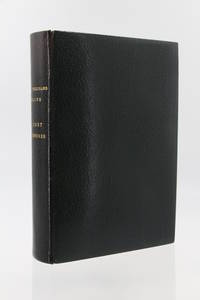
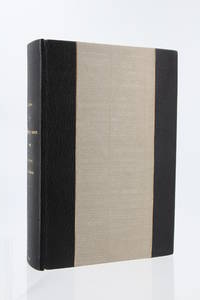
195477905Paris: Gallimard 1954. Fine. Gallimard Paris 1954 14.50 x 21.50 cm relié sous étui First edition one of 41 numbered copies on Holland paper the deluxe issue.Bound in full jansenist dark green morocco smooth spine very lightly sunned grey suede endpapers and pastedowns original wrappers and spine preserved all edges gilt housed in a slipcase trimmed with dark green morocco paper-covered boards with a wood-grain effect grey paper lining; a superb full morocco binding signed by A. Bourdet.A pleasant copy finely bound and preserved.Provenance: from the library of the distinguished bibliophile François Ragazzoni with his bookplate mounted on an endpaper. Gallimard hardcover
195445261Paris: Gallimard 1954. Fine. Gallimard Paris 1954 14 x 21 cm relié sous chemise et étui First edition one of 45 numbered copies on Hollande paper the tirage de tête Autograph inscription from Louis-Ferdinand Céline to his friend Pierre Duverger the only photographer to have taken color photographs of Céline Quality blueish paper covers sunned as is often the case Ex libris pasted onto foot of half-title This copy has a half black morocco chemise spine in six compartments date to foot and a slipcase edged in black morocco both by Goy & Vilaine. Gallimard unknown
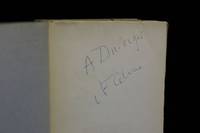
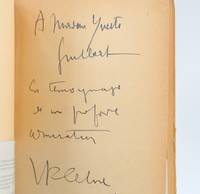
193288966Paris Paris: Denoël & Steele 1932. Fine. Céline gifts his Voyage to the queen of Paris Music Hall and tries to get her to sing his bawdy tunes Denoël & Steele Paris Paris 1932 12 x 19 cm Broché sous chemise et étui First edition with all first printing features one of the press copies. Exceptional presentation copy inscribed by the author to the famous singer Yvette Guilbert to whom Céline himself sang and offered one of his scandalous compositions Katika la putain Katika the Whore later renamed À Nud coulant With a Slipknot"" ""A madame Yvette Guilbert en témoignage de ma profonde admiration. LFCéline. Beneath Céline's inscription the actor Fabrice Luchini added: A Yvette Guilbert in memoriam. FLuchini ; and on the half-title actor Jean-François Balmer wrote in turn: Merci en bon voyage. JFBalmer. With pasted-in entry tickets to their respective performances of Voyage au bout de la nuit at the Comédie des Champs-Élysées for Luchini and at the Théâtre de luvre for Balmer. This remarkable presentation copy reveals Céline's consuming passion for the musical attributes of language. Song is omnipresent in Voyage au bout de la nuit from its famous epigraph the well-known Chanson des Gardes suisses which Céline would later claim to have written himself. The book's title derives from one of the song's verses. Céline was also a songwriter and even performed two of his own compositions: Règlement and above all À Nud coulant a bawdy tune he first presented as a translation of a Finnish folk song. He composed À Nud coulant after the publication of Voyage during the writing of Mort à Crédit Death on Credit between 1934 and 1936 and recorded it in 1955. Arnaud Marzorati noted Célines impossibly deep voice and confessed to being captivated by his deliberate arrythmia. As if the rhythm of life could be chaotic and not tied to the mere beating of the heart; as if he sought to tell his story with a pulse outside of consensus. Program May 16 2013 Les Chansons de Céline Cité de la musique. But before recording the song himself Céline had the audacity to offer this scandalous song to the great Yvette Guilbert in the 1930s. As Michaël Ferrier notes Céline would spend his life seeking the friendship of the stars of his time - some now forgotten Guy Berry Max Révol Alfred Pizella others more memorable like Michel Simon or Arletty to whom he dedicated a piece Arletty jeune fille dauphinoise in 1948 many built their careers on operettas both staged and filmed. This passion for song no doubt traces back to Célines childhood: the Passage Choiseul where his mother kept a lace shop was home to Offenbachs Théâtre des Bouffes-Parisiens and a gramophone dealer. Télérama special issue June 2011. Célines close friend the painter Henri Mahé recounted the memorable evening when Céline unsuccessfully offered À Nud Coulant to the singer. Whether it was on this musical occasion that Céline gifted his Voyage to the queen of the Parisian music hall remains unknown: Why did the great Yvette Guilbert one day invite him to visit her at home He leapt at the chance! She introduced him to Cécile Sorel the unforgettable Célimène. Overjoyed he promptly sang them his brand-new Katika. The compliments were brief and tepid barely courteous. No! They had something else in mind. A film a screenplay he was to write based on their ideas: two sisters triumphing on stage One on official stages across the globe the other in the worlds music halls. Henri Mahé La Brinquebale avec Céline p. 72. This extraordinary copy contains inscriptions by two renowned interpreters of Célines prose - actors Fabrice Luchini and Jean-François Balmer both of whom have brought to life the musicality of the Voyage. Denoël & Steele unknown
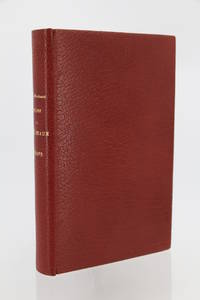
195477824Paris: Gallimard 1954. Fine. Gallimard Paris 1954 14.50 x 21.50 cm relié sous étui First edition one of 41 numbered copies on Hollande paper deluxe issue. Binding in half black morocco-grained shagreen with bands smooth spine gilt date at tail gilt fillet frame on mouse-grey paper boards guards and pastedowns of black paper original wrappers and spine preserved top edge gilt others uncut full black morocco-grained shagreen slipcase with black paper interior binding signed Montécot. A fine copy. Gallimard hardcover
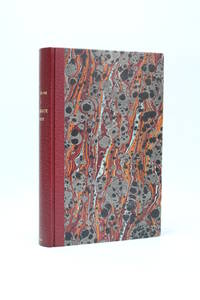
195487752Paris: Gallimard 1954. Fine. Gallimard Paris 1954 14.50 x 21.50 cm relié First edition one of 41 numbered copies on Hollande paper from the deluxe issue. Contemporary half black morocco binding smooth spine wood-effect paper boards marbled paper endpapers and pastedowns original wrappers and spine preserved top edge gilt other edges untrimmed binding signed L. Bergeron. A fine copy. Gallimard hardcover
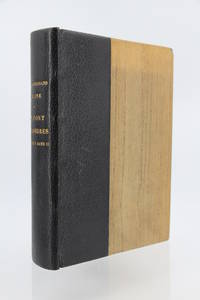
194171006Paris: Nouvelles Editions Françaises 1941. Fine. Nouvelles Editions Françaises Paris 1941 11.50 x 19 cm relié First edition one of 60 numbered copies on Arches laid paper ours one of 10 hors commerce copies numbered in Roman numerals deluxe copy. Bradel binding in half red morocco smooth spine gilt date at foot pebbled paper boards covers and spine preserved. Provenance: from the library of Maître Mikkelsen Louis-Ferdinand Céline's lawyer during his exile and incarceration in Denmark. We present accompanying our copy a certificate signed by the expert Bernard Portheault attesting to the prestigious provenance of this volume. Nouvelles Editions Françaises hardcover
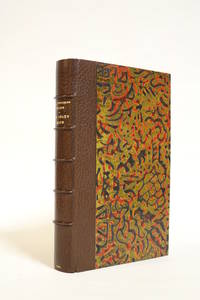
195445126Paris: Gallimard 1954. Fine. Gallimard Paris 1954 14 x 21 cm relié First edition one of 45 numbered copies on Hollande paper the tirage de tête. Half morocco cerise to coins spine to quatre nerfs sertis de filets noirs covers endpapers and pastedowns marbled top edge gilt covers and spine preserved. A nice copy elegantly bound. Gallimard unknown
194187024Paris: Nouvelles Editions Françaises 1941. Fine. Nouvelles Editions Françaises Paris 1941 11.50 x 18 cm relié sous étui First edition one of 60 numbered copies on laid Arches paper deluxe issue. Full bordeaux oasis binding smooth spine cat's eye paper endpapers and pastedowns covers and spine preserved top edge gilt slipcase bordered with bordeaux oasis cat's eye paper boards the whole signed by Montécot. Fine copy attractively bound. Nouvelles Editions Françaises hardcover
194168980Paris: Nouvelles Editions Françaises 1941. Fine. Nouvelles Editions Françaises Paris 1941 11.50 x 19 cm relié First edition one of 60 numbered copies on vergé d'Arches paper deluxe copies ""tirage de tê"". Bound in brown half morocco covers and spine preserved top edge gilt binding signed by Thomas Boichot. Nice copy. Nouvelles Editions Françaises unknown
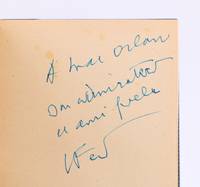
194489964Paris: Denoël 1944. Fine. ""And Mac Orlan!"" Denoël Paris 1944 12 x 18.8 cm Relié First edition on ordinary paper. Half black long-grain morocco binding smooth spine tooled in palladium with author title and date anthracite-grey paper boards original wrappers and spine preserved the latter with two small stains at head and foot endpapers and pastedowns of anthracite-grey paper binding signed Thomas Boichot. Precious and exceptional signed presentation inscription by Louis-Ferdinand Céline: ""A Mac Orlan son admirateur et ami fidèle. LFerd"" Twelve years his senior Louis-Ferdinand Céline regarded Pierre Mac Orlan as one of his principal literary masters. The latter's fantasy novels provided an ideal framework for Céline's distinctive style. In a 1937 pamphlet Céline openly expressed his admiration for Mac Orlan's work: ""And Mac Orlan! He had foreseen it all and put it all to music thirty years ago."" Until 1944 the two men would meet in Gen Paul's Montmartre studio on Avenue Junot Céline as a habitué Mac Orlan as a more occasional visitor. This friendship which Céline describes as ""faithful"" in this inscription was not one-sided. In 1950 Mac Orlan came to the defense of his ""disciple"" who had been condemned by the French courts: ""Few writers can escape the rigorous logic of social criticism. The French Republic ours the freest the world can know at this moment must work to ease hatreds."" Céline 1944-1961: Cavalier de l'Apocalypse Unpublished letter from Mac Orlan February 15 1950. A superb inscription from Céline to one of his literary mentors Pierre Mac Orlan whom he encountered in Gen Paul's studio during the interwar period and the Occupation. Denoël hardcover
193291201Paris: Denoël & Steele 1932. Fine. ""Unprejudiced minds will have to bow before the integrity of his testimony"" publisher's band Denoël & Steele Paris 1932 12 x 19 cm Broché First edition on ordinary paper with all the features of the first printing. Includes its publishers band expertly restored and the publishers catalogue at rear. An exceptionally fresh copy preserved with its rare red publishers band quoting Mollys phrase Cest le voyageur solitaire qui va le plus loin he travels farthest who travels alone translation by John H. P. Marks followed by this text on the verso: One should not be misled by the tone of this extraordinary novel and take Journey to the End of the Night for a pamphlet by the violence of its sarcasm as well as its ever-present and particularly ferocious satire. The author aims to create a very faithful image of urban man with all his implied complexity richness and contradictions. In this book of prodigious variety and vividness he has no other ambition than to approach life: unprejudiced minds will have to bow before the integrity of his testimony translation our own. From December 1932 copies sported a new band printed on green paper: Un formidable / succès / Prix Théophraste Renaudot. Denoël & Steele unknown
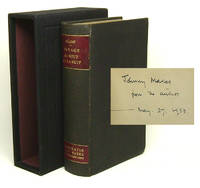
193333339Paris: Editions Denoel et Steele Paris 1933. First Thus. Hardcover. First Thus. Hardcover. Signed by Authors. Celine's legendary First Novel. Inscribed Presentation/ Association Copy of Some Significance. A very early reprint of the first edition published in 1932. 8vo 18.5cm x 12cm. 623pp. A superb presentation inscribed to his friend John Marks who translated this very title into English the following year. A very good copy in a contemporary black buckram binding with titles on the spine in gilt on a maroon panel. There is some off-setting to the endpapers & the cheaper publisher's paper stock has lightly & evenly tanned. A faint stain to the fore-edge. The original card covers are not bound in. The presentation on the first blank reads: Johnny Marks from the author ~ May. 27. 1933. "Celine's Journey to the End of the Night along with Death on the Installment Plan were both very successful in the 1930s & are unique: they come nearer than any other works of the century to creating the illusion of a living infuriated comic vibrant voice. This voice comes off the pages.as though it were the pure real flux of a mind actively working." - Martin Seymour-Smith in Novels and Novelists 1980. A cornerstone of Modern World Literature the publication of this work in 1932 had an immediate impact on author s of the period such as Henry Miller with Tropic of Cancer in 1934 George Orwell with Down and Out in Paris and London in 1935 Henry Green & many others. Connolly: The Modern Movement No. 74. An important Association Copy. Editions Denoel et Steele, Paris hardcover
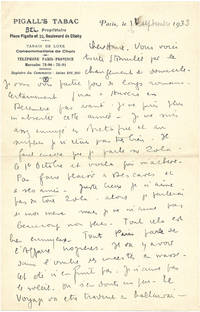
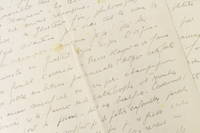
1933Celine10<p><strong>CÉLINE Louis-Ferdinand 1894-1961</strong></p><p>Autograph letter signed " Destouches " to Évelyne Pollet<br />Paris 14 Sept. 1933 2 p. in-8°<br />Pigall's Tabac letterhead<br />Light ink smudge on upper margin<br />Usual central fold</p><p><strong>Upcoming speech in tribute to Zola and translation of <em>Journey to the End of the Night</em></strong></p><p><strong><em>" Good heavens I really don't like Zola at all so I'll talk about myself — though I don't like myself much either. " </em></strong></p><p><strong>When Céline confesses that he never wants to reread his novel — a work widely regarded as one of the greatest in 20th-century French literature</strong></p><p><em>" Chère Amie</em><br /><em>Vous voici toute stimulée par le changement de domicile. Je vous vois partie pour de longs romans. Certainement j'irai à Anvers en décembre pas avant. Je ne puis plus m'absenter cette année. Je me suis assez ennuyé en Bretagne et au surplus je n'étais pas très bien. <strong>Il faut encore que je parle sur Zola le 1er octobre et voilà qui m'achève. Pour faire plaisir à Descaves et à ses amis. Juste cieux je n'aime pas du tout Zola alors je parlerai de moi-même mais je n'aime pas beaucoup non plus</strong>. Tout cela est bien ennuyeux. Tout Paris parle de l'Affaire Nozières</em>¹ sic<em>. Il va y avoir dans l'ombre des incestes en masse. Cet été n'en finit pas. Je n'aime pas le soleil. On s'en doute un peu. <strong>Le Voyage va être traduit en hollandais.</strong></em><br /><em>Je reprends samedi mon dispensaire</em>²<em>. Tout cela est une telle farce !</em><br /><strong><em>Je vois que vous finirez par connaître le Voyage par cœur. Moi je ne l'ai jamais relu et ne le relirai jamais. Je trouve tout cela ennuyeux et plat à vomir. C'est curieux que tout ce cabotinage finisse par séduire le lecteur</em></strong><em>. Je crois qu'il a envie d'en faire autant. Tout es là. Enfin on se connaît mal. <strong>Nous sommes recouverts d'immondices civilisés</strong>. N'oubliez pas de me donner votre nouvelle adresse.</em><br /><em>Amicalement</em><br /><em>Destouches "</em></p><p><u>A breakaway speech:</u><br />In the summer of 1933 Lucien Descaves approached his friend Céline asking him to deliver a speech in tribute to Zola at the annual Médan pilgrimage. Céline did not hold the naturalist writer in high esteem and it was out of friendship for Descaves that he agreed. Thus on October 1st 1933 before an audience composed of the Parisian literary elite and other notable figures the writer took the floor.<br />Where previous speeches had remained within the expected register of homage Céline's intervention stood in stark contrast — and caused a scandal. The audience had no idea what was coming. Already a master of staging his public persona Céline deliberately chose to go against expectations and handed the floor to Ferdinand Bardamu the protagonist of <em>Journey to the End of the Night</em>. He even hinted at this shift when he said "Good heavens I really don't like Zola at all so I'll talk about myself."<br />Through Bardamu Céline delivered a dark and deeply critical vision of contemporary French society. Though the speech begins as a genuine tribute to the father of the <em>Rougon-Macquart</em> series it soon gives way to the characteristic disillusionment of Céline's universe.<br />The writer clearly signals a definitive break with Zola's naturalism: the Great War had in Céline's eyes discredited the modernist hopes pinned on scientific progress and the promise of a fairer society. In this speech Céline effectively buries the legacy of naturalism that Zola had championed.</p><p><u>Translation of Journey to the End of the Night:</u><br />Published the previous year <em>Journey to the End of the Night</em> had caused a sensation and catapulted Céline to the forefront of the Parisian literary scene. Already translated into several languages he reassured his Dutch translator J.A. Sandfort in a letter dated September 10th demanding that his text be translated in full:<br /><em>"Under no circumstances should there be any abridgment of Journey. I do not want it — not a quarter not a page nor a line </em>…<em>" </em>He added <em>"There are already 10 foreign translations of this book all absolutely complete"</em> <em>Lettres</em> no. 3393.</p><p>1- Violette Nozière 1915–1966 barely 18 years old was arrested accused of poisoning her parents. While her mother was resuscitated her father did not survive. Although her mother initially joined the civil lawsuit she eventually forgave her daughter. Sentenced to death on October 12 1934 — a sentence commuted to life imprisonment on August 29 1945 — Violette Nozière was granted early release on August 29 1945.</p><p>2- Céline attempted to practice medicine privately by opening a practice in Clichy in November 1927 which he quickly closed due to lack of patients. He eventually took a position as a suburban doctor at the Clichy dispensary directed by Grégoire Ichok. Dr. Destouches resigned from the Communist municipality of Clichy on December 10 1937.</p><p>Born in Antwerp in 1905 Évelyne Pollet took the initiative to write to Céline after reading <em>Journey to the End of the Night</em> eventually coming to "know it by heart." They met in May 1933 and became lovers. She went on to write eight novels and collections of short stories including a fictionalized account of her relationship with Céline written in 1942 and published in 1956 under the title <em>Escaliers</em> La Renaissance du livre. Évelyne is also the name of the heroine in <em>La Naissance d'une fée</em> the first of the three ballets in <em>Bagatelles pour un massacre</em>.</p><p><u>Provenance:<br /></u>Private collection</p><p><u>Bibliography:</u><br /><em>Lettres</em> éd. Henri Godard et Jean-Paul Louis Pléiade 2009 n°33-94</p>
195585266Paris: Gallimard 1955. Fine. Gallimard Paris 1955 12 x 19 cm relié First edition one of 36 numbered copies on Holland paper deluxe copy. Half red morocco binding with bands spine with six raised bands set with black fillets gilt fillet frame on wood-grain paper boards marbled endpapers and pastedowns original covers and spine preserved top edge gilt. Handsome copy attractively bound. Gallimard hardcover
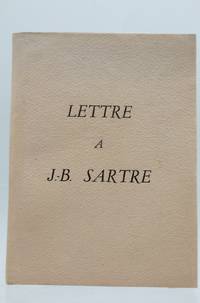
194875286Paris: Pierre Lanauve de Tartas 1948. Fine. Pierre Lanauve de Tartas Paris 1948 14 x 20 cm en feuilles First edition one of 150 copies on B.F.K. de Rives the only issue after 50 other deluxe copies. Some discreet restorations to spine and covers. At the colophon our copy is exceptionally enriched with the very rare manuscript signature of Louis-Ferdinand Céline then in exile in Denmark. The publisher Pierre Lanauve de Tartas specified just above Céline's signature ""Author's copy"". This very rare copy indeed bears printed on the front cover the initial title of the work: Lettre à J. B. Sartre. We include the flying slip bearing the final title ""à l'agité du bocal"" which was glued onto the entirety of the print run subsequently distributed. Precious author's copy of Céline's scathing response to Jean-Paul Sartre who in Réflexions sur la question juive had accused him of having been paid by the Germans under the Occupation for having held such indefensible antisemitic positions. Pierre Lanauve de Tartas unknown
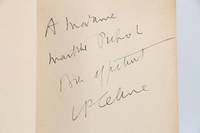
193771965Paris: Denoël & Steele 1937. Fine. Denoël & Steele Paris 1937 11.50 x 18.50 cm broché First edition one of 125 numbered copies on alfa paper ours one of 25 hors commerce copies the only deluxe copies after 15 Holland and 40 pur fil. Spine and margins of covers skilfully restored. Autograph inscription signed by Louis-Ferdinand Céline ""A Madame Marthe Pujol Bien affectueusement L.F. Céline"". Precious deluxe copy with an autograph inscription by the author. Denoël & Steele unknown
194764327Copenhage Copenhagen 1947. Fine. Copenhage Copenhagen 10 avril 1947 22.50 x 28.40 cm 6 pages sur 3 feuillets Very long autograph letter signed ""Dest"" to Doctor Tuset and Henri Mahé dated April 10 unknown
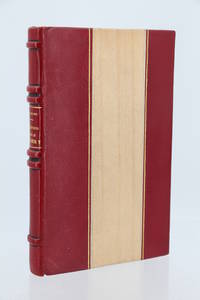
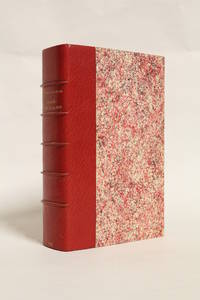
193269416Paris: Denoël & Steele 1932. Fine. Denoël & Steele Paris 1932 12 x 19 cm relié First edition on ordinary paper with all the characteristics of the first print. Binding in half red morocco preserved covers and spine first cover plate and lined spine with restorations top edge gilt binding signed by Laurenchet. Nice copy with the publisher's catalog in fine. Denoël & Steele unknown
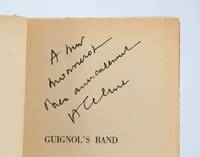
194484658Paris: Denoël 1944. Fine. Denoël Paris 1944 12 x 19 cm broché First edition a Service de Presse advance copy. Rare and handsome copy considering the fragility of this poor-quality wartime paper. Autograph inscription signed by Louis-Ferdinand Céline: ""A Mr Monnerot bien amicalement L.F. Céline."" ""To Mr Monnerot most cordially L.F. Céline."" Denoël unknown
193863396Paris: Denoël 1938. Fine. Denoël Paris 1938 14 x 22 cm relié First edition one of 100 numbered copies on pur fil paper after 32 Japon and 50 Hollande paper. Half morocco covers and spine preserved top edge gilt binding signed by Semet & Plumelle. A nice copy elegantly bound. Denoël unknown
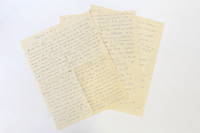
194763242s. l. Copenhague Copenhagen 1947. Fine. s. l. Copenhague Copenhagen 23 avril 1947 22.50 x 28.40 cm 6 pp. in-folio Signed autograph letter of Céline to Henri Mahé and his wife dated April 23 1947 in Copenhagen lines in black ink on three sheets of lined paper. unknown