CARLYLE, ThomasBiblio.com
4 249 résultats
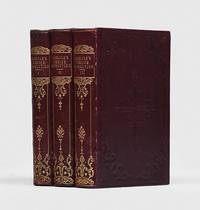
1837174294London: James Fraser 1837. Moulding "popular conceptions of the French Revolution down to the present day" First edition bound for presentation and inscribed by the author to his mother-in-law on the title page of the first volume: "To Mrs. John Welsh. Liverpool. T.C. London June 1837". A leaf of the original manuscript closely written across two sides is bound in facing the title. Presentation copies of Carlyle's magnum opus are extremely scarce. The History was published in May 1837. Grace Welsh 1782-1842 the mother of Jane Welsh Carlyle 1801-1866 is recorded as visiting the couple in London at the end of May whereupon Thomas removed himself to rural Scotland. Grace had not approved of her daughter's choice to marry Carlyle in October 1826. In Jane's own words writing to him without her mother's knowledge made her "as nervous as if I were committing a murder" ODNB. Grace leased the pair a modest home in Edinburgh shortly after their marriage but relations between mother and daughter remained fraught throughout their lives. While writing the History Carlyle observed of one maternal visit that "Jane and her mother cannot live together" quoted in Ireland p. 151. The manuscript leaf preserves the text for pages 58-62 of Volume III discussing the aftermath of the September Massacres of 1792. It runs to 45 lines and contains several corrections and crossed-through sections including some two and a half lines not printed on page 59. The final manuscript of the History was largely destroyed after publication only fragments remaining. This copy remained in the Welsh family until 1938 when it was sold at Sotheby's after the death of Mary Chrystal the granddaughter of Jane Welsh's uncle. Carlyle's History remains one of the most authoritative accounts of the early Revolution. The work established his reputation as an intellectual and influenced many of his contemporaries - including Dickens whose Tale of Two Cities drew heavily from it. "The book at once captured the English-speaking world and has outside France moulded popular conceptions of the French Revolution down to the present day" PMM. 3 vols octavo 182 x 115 mm. All vols bound without half-titles vol. II bound without leaf of publisher's advertisements at rear. Bound for presentation in contemporary full purple morocco spines lettered and decorated in gilt covers with decorative border and central ornament in blind turn-ins in gilt light yellow coated endpapers edges gilt. Housed in custom red morocco book-form case. Neat contemporary note to p. 318 of vol. III "see 328". Margins of manuscript leaf slightly trimmed vol. III sig. P4 bound after P8. Aside from light rubbing to extremities and very minor sunning to spines bindings bright and fresh slight superficial split to front inner hinge of vol. I and in a few places to the text block but all holding firm scattered light foxing. A highly attractive copy. Dyer p. 85; Printing and the Mind of Man 304; Tarr A8.1. Annie Elizabeth Ireland Life of Jane Welsh Carlyle 1891. unknown
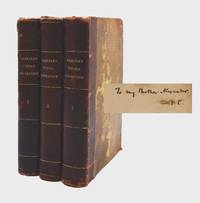
1837372411London: James Fraser 1837. First Edition with half-titles. vii 1 404; vii 1 422 2; vii 1 448pp. 3 vols. 8vo. Contemporay three-quarters morocco with gilt bands and title to spine and marbled paper boards. General edgewear and rubbing to boards spine and corners generally sound; tear to half-title and bump to contents pages in vol. 3 overall occasional spotting and foxing to endpapers. Letters with old folds staining some loss both silked. In matching custom clamshell box and folder. First Edition with half-titles. vii 1 404; vii 1 422 2; vii 1 448pp. 3 vols. 8vo. Inscribed in the first volume: "To my brother Alexander. T.C." With 2 ALS laid in from Thomas to his brother Alex as well as a note laid-in in pencil: "Published 1837 / autographed to Grandfather / HCJ 1950." <br /> <br /> Carlyle and his brother Alexander were the eldest of nine children and their correspondence goes from when Carlyle was in Edinburgh trying to get his footing as a writer until Alexander died on his farm in Canada in 1876. They were "remarkably close" and Thomas wrote to Alexander with "an open and copious expression of feeling and in this regard are distinguished from the letters Carlyle wrote to Goethe Emerson Mill Sterling and Browing.He showed his love for Alexander in many of the letters he wrote either to or about him by the frequency with which he wrote and the moral and financial support he gave to him by accepting support from him in return and by graphically bringing to him the sophisticated worlds from which Alexander was isolated" Marrs p. viii.<br /> <br /> One of Carlyle's dreams was to live on a self-sustaining farm where he could work in peace. He moved to such a farm in Hoddam Hill in May 1825 which his father leased for him and Alexander moved away from the family farm to work the land with a helper. The plans for the farm are discussed in the second letter sent February 1825. Disagreements with the landlord caused them to give up the plot but Carlyle would remember it fondly the rest of his life. Alexander eventually moved to Canada to live on his own farm.<br /> <br /> The first letter of 24th of May 1823 tells an animated and detail rich story about traveling to Kinnaird the Buller house near Dunkeld where he was to work as tutor to the two adolescent sons. He talks sitting next to a Dr. Fyfe one of Jane Welsh's "more ardent and enterprising suitors" Marrs p. 146 as well as his impressions of first arriving in Dunkeld "among people of such a fashionable turn" and the house where he was to stay. At the time he was deeply involved in his Life of Schiller articles for Taylor's London Magazine completing the first of three articles in April and had begun translating Goethe's Apprenticeship of Wilhelm Meister for Edinburgh publisher Boyd: "The family received me hospitly and shewed me into my quarters where I spent two hours in unpacking and arranging my goods. I have not dined and having all put to rights I am scribbling to Alick.I shall be quite comfortable here.I shall be as quiet as in the middle of Sahara; shall bolt my door and study and read and smoke according to my own pleasure." <br /> <br /> The second letter dated February 14 1824 sic. but postmarked February 17 1825 discusses his plans: "I must settle some place of abode for myself some scheme of existing in conformity to my medical prescriptions and also of proceeding with my literary employments. The farm is still my favourite or rather only steady project. A reasonable house is all that I want; with land that would pay you for working it." He talks also of learning Spanish and describes his dreams of accomplishment and reputation: "Literary fame is a thing which I covet little; but I desire to be working honestly in my day and generation in this business which has now become my trade. I make no grain of doubt that in time I shall penetrate the fence that keeps me back and find the place which is due to me among my fellow men. Some hundreds of stupider people are at this very time doing duty with acceptance in the literature of the time. We shall see; I am not at all in a hurry; the time will come."<br /> <br /> It was this book written a decade later that established Carlyle's reputation as an important intellectual: "a prose epic teeming with colourful scenes of dramatic events and imaginative portraits of the leading revolutionaries. The book at once captured the English-speaking world and has outside France moulded popular conception of the French Revolution down to the present day" PMM In his letter to Alexander in Canada written 23 April 1837 he references the completion of "The Book" "it is all in type my share of it finished.I suppose it will be out as a Book in not many days. You shall have a Copy of it by the earliest chance after that; and good appetite I shall wish you with it. It is I think the most radical Book that has been written in these late centuries.and will give pleasure and displeasure one may expect to almost all classes of persons. Let it take its fate: the great indisputable blessin is that I have done with it forever and a day" Marrs p. 421. PMM 304; Marrs ed. The Letters of Thomas Carlyle to his Brother Alexander p. 142-147 p. 191-195 James Fraser unknown
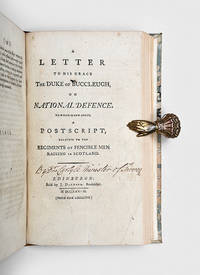
1778152780Edinburgh: J. Dickson 1778. First edition second issue "a re-issue of the London edition of the same year with a cancel title page and the addition of a postscript dated: Lincoln's Inn July 20th 1778" ESTC this copy also retaining the London title page. "This discussion of the bill for extending the militia law of Scotland introduced in 1776 contains a number of passing references to the war in America" Adams. The postscript comments on Burgoyne's defeat. Carlyle is identified as author in a contemporary hand on the Edinburgh title. After studies at Edinburgh Glasgow and Leiden where his classmates included William Robertson Adam Ferguson and John Home Carlyle was licensed to preach in 1746 and was introduced to the parish of Inveresk some five miles south-east of Edinburgh by the duke of Buccleuch the following year receiving his ordination in 1748. A moderate in his support for ecclesiastical patronage and politically conservative issues as well as in his endorsement of Enlightenment cultural principles including liberal education polite learning and religious toleration Carlyle was a familiar figure in the cultural life of what has come to be known as the Scottish Enlightenment. Strong and outspoken in his support for the Scots militia cause having written in 1760 The Question relating to a Scots Militia Considered the present pamphlet attacks Smith's apparent opposition to militias in the Wealth of Nations citing passages from Smith's book and also referring to the opinions of the Encyclopedistes. The other pamphlets included in this volume are: DOUGLAS John William Pulteney and Junius attributed authors. A Letter addressed to two Great Men on the prospect of peace; and on the terms necessary to be insisted upon in the negotiation. London: Millar and A. Kincaid & J. Bell Edinburgh 1760. Howes 6095. DALRYMPLE Sir John. The Rights of Great Britain asserted against the Claims of America: being an answer to the declaration of the General Congress. The third edition with additions. London: T. Cadell 1776. Howes 2564. LIND John. An Answer to the Declaration of the American Congress. The fourth edition. London: T. Cadell J. Walter and T. Sewell 1776. Howes 6167. TOWNSHEND Charles. Remarks on the Letter addressed to two Great Men. I a Letter to the author of that piece. London: printed in the year 1760. Howes 10372. Manuscript attribution to Henry Lord Holland on title. Octavo 209 x 122 mm. Bound fourth with four other pamphlets related to American affairs in contemporary quarter sheep and marbled boards vellum tips spine ruled gilt in compartments red morocco label lettered "Pamphlets" and numbered 2 direct sprinkled edges. Ownership inscription "Binning" to front pastedown dated 1779 with a manuscript list of the volume's contents to front free endpaper. Short tear to head of front joint; a very good copy. Adams The American Controversy 78-56b variant; ESTC T179898 locating copies at the National Library of Scotland and Harvard Business School only. The London imprint ESTC T107064 is slightly more common with copies located at British Library Columbia Harvard JCB and the New York Historical Society only; Vanderblue p. 50. hardcover
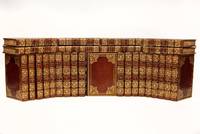
18963445London: Chapman and Hall Limited 1896. The Centenary Edition Large Paper Edition Limited Edition. Leather Bound. Very Good. The Centenary Edition Large Paper Edition Limited Edition. Leather Bound. 30 vol. Thomas Carlyle The Works of Thomas Carlyle. <br /> The Centenary Edition Large Paper Edition Limited Edition limited to 300 sets of which this is no. 274. Illustrated frontispiece of Louis XVI of France. Illustrated throughout. Top edges gilt raised bands on spine. Bound in full brown Morocco leather with elaborate gilt floral embellishments on front and back covers and beautiful gilt floral embellishments on spine panels. Beautiful leather and silk doublures on inner covers. Published London: Chapman and Hall Limited 1896.<br /> H: 8 7/8" W: 6 1/4" D: 1 1/2 Chapman and Hall Limited unknown
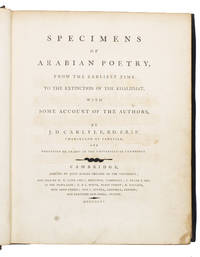
1796ABC_48589Cambridge: Printed by John Burges printer to the university 1796. Contemporary brown calf with a later spine a dark red morocco title-label on the spine with the title and author lettered in gold marbled endpapers. 4to. With an engraved sheet with musical notation. 2 parts in 1 volume. First edition of this beautiful example of Orientalist scholarship presenting sixty early Arabic poems in their original language with English translations. This work by Orientalist Joseph Dacre Carlyle 1758-1804 enabled the English to discover the beauty of Arabic literature. The poems which cover a wide range of topics offer a glimpse into the rich cultural heritage of the Arab world. Carlyle was the first to translate these poems into English. His translations became quite well-known and continued to be used in other works until at least the late 19th century.The work is a collection of poems from the Arabian peninsula between the 6th and 13th century. It includes a poem written on the tomb of Sayid by Abd Almalec Alharithy dates unknown a poem on avarice by Hatim al-Tai -578 and a poem about a thunder storm by Ibrahim Ben Khiret Abou Isaac dates unknown. In addition to the poems themselves the work also provides some biographical information about the poets offering readers a deeper understanding of the historical and cultural context in which the poems were written. The work consists of two parts the first contains the poems in English and the second in Arabic.Carlyle was professor of Arabic at the University of Cambridge. He was appointed chaplain by Thomas Bruce Lord Elgin 1766-1841 to the embassy at Constantinople in 1799 and pursued his researches in Eastern literature in a tour through Asia Minor Palestine Greece and Italy. During his travels he collected several valuable Greek and Syriac manuscripts.The work has been rebacked the leather on the boards is dried and cracked the flyleaf in the back has been replaced by a different marbled paper. The work is somewhat browned throughout with mild foxing on the first few leaves annotations in pencil on page 12 and 80. Otherwise in good condition.l BMC 4 1258.1197; Graesse II p. 49. Printed by John Burges printer to the university, unknown
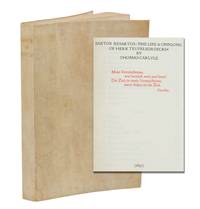
1907ST20299London: The Doves Press 1907. ONE OF 300 COPIES printed on paper and 15 on vellum. 235 x 165 mm. 9 1/4 x 6 1/2". 341 1 pp. <br/> VERY ATTRACTIVE DARK BLUE CRUSHED MOROCCO IN THE STYLE OF THE DOVES BINDERY counterfeit signature stamped and dated 1907 to the rear turn-in covers simply framed by two plain gilt rules raised bands spine compartments with rose window designs formed by six open ovals accented with dots encircled by two gilt rules with low platforms and dots above and below gilt titling turn-ins gilt-ruled and with cornerpieces of open ovals dots and gouge work all edges gilt and gauffered with two rows of tiny dots. Initials designed by Edward Johnston. Printed in red and black. Pastedown with the bookplate of Helen and Michael Oppenheimer. Tidcombe DP-13. For the binding: Tidcombe p. 464. Spine a little sunned just a trace of soiling to leather the usual offsetting from the facing turn-ins on the front and rear free endpaper a hint of yellowing to quire b but still fine the text otherwise pristine and the binding unworn and lustrous.<br/> <br/> This is one of the 26 intriguing and obviously uncommon examples Tidcombe has identified as forged or imitation Doves bindings a group of handsomely executed volumes that continue to be mysterious. Tidcombe differentiates between forgeries those books that are stamp-signed with "C - S" and a date as here on the one hand and unsigned "copies of Doves bindings or bindings in the Doves style" on the other. But she treats them as one group "because they have several features in common." For example signed or unsigned all of the suspect bindings cover Doves Press books all are bound in dark blue morocco and all have a signature pallet with the letters "E" and "S" close together. Although Tidcombe suggests that the person responsible for the forged Doves bindings could possibly have been the former Doves Bindery finisher Charles McLeish she does not settle on him or any other likely candidate. Whoever was behind them the volumes in this puzzling group of bindings--like other forgeries and imitations of historically important cultural artifacts--are actively collected for their value as counterfeits. And as with other counterfeits the present binding is a kind of implicit homage in this case to the outstanding work done by Cobden-Sanderson at the Doves Bindery--our spurious binding would not have been worth undertaking were the objects it mirrored not so universally recognized as worthy of imitation. The text here is an uncategorizable work reminiscent of satires by Swift and Sterne in its fictitious biography of Teufelsdroeckh i.e. "devil's dung" Professor of Things in General at the University of Weissnichtwo "Know-not-where". Day calls it "an intellectual and spiritual autobiography and a diatribe against current conditions in England" that advocates a reorganization of society and its institutions so that "Brotherhood and the duty to work usefully will grip mankind's true leaders and assure a theocracy a reborn humanity ruled by the divine spirit within." Our volume was formerly in the collection of fine private press books owned by the distinguished scholars Sir Michael Oppenheimer 1924-2020 and his wife Lady Helen Oppenheimer 1926-2022; he was an Oxford lecturer in politics and history she an Anglican theologian whose groundbreaking work on ethics helped reform the church's position on remarriage of divorced persons. The Doves Press unknown
1880135178London: Chapman and Hall 1880. hardcover. very good. 34 volumes 30 original 1 volume Index 3 volumes of Carlyle's Translations from the German. Frontispiece illustrations in some volumes. 8vo handsomely bound in 3/4 tan polished calf; ornately gilt-decorated spines with raised bands; burgundy and black leather labels marbled edges. London: Chapman and Hall no date circa 1880. A very good set. The Library Edition.<br/><br/> Chapman and Hall unknown books
1880135178London: Chapman and Hall 1880. hardcover. very good. 34 volumes 30 original 1 volume Index 3 volumes of Carlyle's Translations from the German. Frontispiece illustrations in some volumes. 8vo handsomely bound in 3/4 tan polished calf; ornately gilt-decorated spines with raised bands; burgundy and black leather labels marbled edges. London: Chapman and Hall no date circa 1880. A very good set. The Library Edition.<br/> <br/> Chapman and Hall unknown
61321London: Printed for Longman Hurst Rees Orme and Brown 1814. French-to-English Dictionary EX LIBRIS JANE CARLYLE INSCRIBED BY THOMAS CARLYLE with an autograph letter from Alexander Carlyle tracing the provenance. A New Revised edition. Duodecimo in half-sheets 17 x 11cm pp.2 40 unpaginated. Black ink ownership of Jane Ballie Welsh Haddington to flyleaf. Further black ink inscription from Thomas Carlyle also to flyleaf: 'To William Fingland Thornhill: T.C. Templand 29 March 1842.' Also with an autograph letter dated 28th February 1924 on headed note-paper from Alexander Carlyle 1843-1931 nephew of Thomas loosely inserted. Contemporary brown morocco recently rehinged and repaired to spine with gilt titles to red label. Housed in a fleece-line orange buckram-covered slipcase. Bookplate of James Fingland son of the recipient William Fingland to front pastedown. Clean and complete with a touch of light occasional spotting. Wear to boards and spine now carefully restored to an attractive robust condition. Very good. Alexander Carlyle who acted as his uncle's chief advocate on the public stage after his death in 1881 building a formidable archive of correspondence later gifted to the National Library of Scotland here deftly unravels the provenance of this French dictionary: Gifted by Thomas just after the death of his mother-in-law Grace at her home in Templand near Dumfries in March 1842 to "a poor boy of Dr. Russell's whom she Mrs. Welsh liked who staid here three nights when one of her miserable servants failed a Tardy's Dictionary and an old Livy; I remembered the Tardy and thought a charitable orphan heart best deserved it. London: Printed for Longman, Hurst, Rees, Orme, and Brown, 1814 unknown
1837219681London: James Fraser 1837. First edition. 8vos. Red crushed morocco. teg marbled endpapers french fillet border front panels raised bands spine gilt in compartments with floral centerpieces inside floral spray borders lavish inner dentelles. A Club Bindery production and stamped by them on the inside lower front dentelle. A few surface nicks to boards some marginal foxing a uniformly fine set. Red morocco ex libris bookplate of important American collector and founder of the Grolier Club Robert Hoe 1839-1911 front pastedown of each volume. A handsome set in custom cut mylar covers. James Fraser unknown
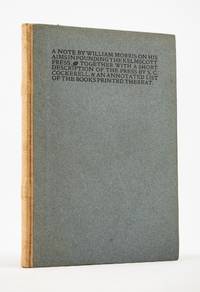
1898ST20842Hammersmith: Kelmscott Press 1898. ONE OF 525 COPIES on paper and 12 on vellum. 210 x 150 mm. 8 1/4 x 5 3/4". 4 p.l. including two blanks 70 pp. 1 leaf colophon. <br/> Original holland-backed blue paper boards. WOODCUT ILLUSTRATION BY EDWARD BURNE-JONES of "Pysche Borne off by Zephyrus" ENGRAVED BY WILLIAM MORRIS elaborate borders around this and first page of text designed and cut by Morris large decorative woodcut initials device on last page of text and one full-page woodcut of ornaments used in the Kelmscott edition of "Love is Enough." Printed in red and black in Golden Troy and Chaucer types. With errata slip laid in at title page. Front pastedown with Arts & Crafts-style bookplate of Edmund Bulkley dated 1893; a list of the Kelmscott books in E. W. Buckley's collection listed by the number assigned to them in this book recorded in pencil on a translucent piece of paper laid in here. Morris & Cockerell 53; Peterson A-53; Ransom 53; Tomkinson p. 121. Some wear to lower corners just a hint of soil to covers otherwise a very fine copy--exceptionally fresh clean and bright internally.<br/> <br/> Owned by two collectors with a special interest in Morris this is a very pleasing copy of one of the key Kelmscott Press books and the last one to be issued by the press. Morris tells us here about his admiration for 15th century printed books saying that "they were always beautiful by force of the mere typography even without the added ornament with which many of them are so lavishly supplied." And he says that "it was the essence of his undertaking to produce books which it would be a pleasure to look upon as pieces of printing and arrangement of type." This is the most important contemporaneous source of comment on the founding operation and publications of the Kelmscott Press. Peterson quotes Newdigate who says that this is "one of the three books that every student of English book-production ought to read." The original owner here was American private press collector Edmund Bulkley who according to the list laid in at the rear of this volume owned 42 Kelmscott books. Evidently prepared after Bulkley's death the list also marks with a "0" the books sold before 1950 and notes at the end the books including this volume that remained in the possession of "M A B B." this might refer to a relation possibly art collector M. A. B. Bulkley who bequeathed a Pre-Raphaelite-style painting to the Fitzwilliam Museum in 1996. Bulkley's distinctive bookplate perhaps created by one of the private presses is found in a number of press books which when listed at auction are in notably fine condition. In 1883 Morris & Company took out a full-page ad in the Official Catalogue of the Boston Foreign Exhibition announcing the appointment of Elliott & Bulkley of 42 East 14th Street New York City as U.S. agents for the sale of Morris & Co. "Decorative Manufactures" including wallpaper fabrics and "the celebrated Hammersmith carpets made only by Morris & Company." It is tempting to speculate that Edmund Bulkley was associated with this firm and became aware of the Kelmscott Press via this connection with Morris & Company. Although without additional signs of ownership our book was later sold as part of the library of Clive Wilmer 1945-2025 English poet and scholar of John Ruskin and William Morris. He wrote and lectured extensively on both men and from 2009 to 2019 served as Master of The Guild of St. George a charity for arts crafts and the rural economy founded by Ruskin in 1871. The Ruskin Society of North America presented him with a Lifetime Achievement Award in 2023. Copies of this work appear with some regularity in the marketplace but specimens in attractive condition are becoming increasingly difficult to find. Kelmscott Press unknown
337133London: doves press. hardcover. near fine. 8 blank ;4 5-341 1 10 blankpp. Printed in red and black. Large 8vo Bound by the Monastery Hill Bindery in full brown crushed morocco with watered silk textured end-papers 5 raised bands gilt decoration & dentelles top edge gilt London: The Doves Press 1907. Near fine in a cloth slipcase.<br/> <br/> Beautifully printed book. One of 300 copies printed on paper of a total of 315.<br/> <br/> doves press unknown
1880179594London: Chapman and Hall 1880. hardcover. very good. 34 volumes 30 original 1 volume Index 3 volumes of Carlyle's Translations from the German. Frontispiece illustrations in some volumes. 8vo handsomely bound in 3/4 tan polished calf; gilt-decorated spines with raised bands and red and black leather labels marbled boards and edges three volumes slightly chipped. London: Chapman and Hall no date circa 1880. A good set. The Library Edition.<br/><br/> Chapman and Hall unknown books
1880179594London: Chapman and Hall 1880. hardcover. very good. 34 volumes 30 original 1 volume Index 3 volumes of Carlyle's Translations from the German. Frontispiece illustrations in some volumes. 8vo handsomely bound in 3/4 tan polished calf; gilt-decorated spines with raised bands and red and black leather labels marbled boards and edges three volumes slightly chipped. London: Chapman and Hall no date circa 1880. A very good set. The Library Edition.<br/> <br/> Chapman and Hall unknown
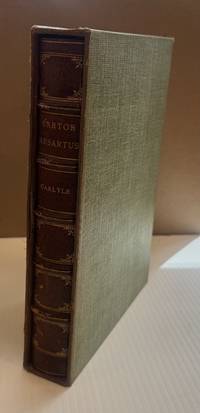
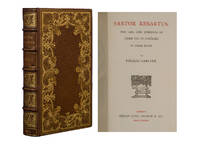
18896403London: Kegan Paul Trench & Co 1889. Fine. Sixteenmo 6 3/16 x 3 5/8 inches; 157 x 93 mm. vi 306 1 imprint 5 blank pp. Portrait frontispiece with tissue guard. Title-page printed in red and black. Bound ca. 1920 by Rivière & Son stamp signed in gilt on lower turn-in. Full antelope crushed levant morocco covers decoratively ruled in gilt surrounding a very elaborate floral design in pointillé spine with five raised bands similarly decorated and lettered in gilt in compartments gilt-ruled board edges full dark blue morocco liners elaborately decorated in gilt blue watered silk end-leaves top edge gilt. A wonderful example of the art of 'pointillé'.<br /> <br /> The Scottish author critic and thinker Thomas Carlyle 1795-1881 was a major influence on Victorian society. His novel Sartor Resartus translated as The Tailor Re-tailored among other variations is a satirical look at the work of a fictional philosopher Diogenes Teufelsdröckh. Intriguing in its form the book is structured from the prospective of a skeptical English reviewer consumed by Teufelsdröckh's book Clothes Their Origin and Influence. In crafting Sartor Resartus Carlyle drew on a range of literary influences: Goethe Hegel Sterne and Switft. Carlyle's complicated text not only critiques academic writing and materialism but offers meditations on the meanings of symbols and the search for truth. Although first started as an essay the project eventually developed into a novel which was first published serially in Fraser's Magazine 1833-34. Fine. Kegan Paul, Trench & Co unknown
183765348Capturing the French Revolution CARLYLE Thomas. The French Revolution. A History. In Three Volumes. London: James Fraser 1837. First edition. Three octavo volumes 7 3/4 x 4 3/4 inches; 197 x 121 mm. vii 1 404; vii 1 422 2 publisher's ads; vii 1 448 pp. Complete with half-titles and the integral ad leaf in Vol. II. Uncut. Publisher's brown boards expertly rebacked to style and with original printed spine labels laid down. Some expectable rubbing to boards but still a remarkable copy. Very difficult to find in the original boards and complete. housed in a blue cloth clamshell case with a red morocco gilt spine label. "Of the three great political upheavals which have altered the face of the earth-the American French and Russian Revolutions-only the French has stimulated literary masterpieces which in turn have made their impact direct and indirect upon millions of readers who would have and have left unread the productions of dispassionate scholarship. They are Carlyle's book offered here and the 'History of the French Revolution' by Michelet. Carlyle wrote his French revolution as a secular 'tract for the times' and as a warning for his compatriots of the frightful consequences of materialism utilitarianism and democracy. Scottish puritanism and German romanticism were his lodestars; 'History is the essence of innumerable biographies' was his historical creed. The result is not a work of scholarship but a prose epic teeming with colorful scenes of dramatic events and imaginative portraits of the leading revolutionaries. The book at once captured the Englihs-speaking world and has outside France moulded popular conceptions of the French Revolution down to the present day" PMM. Printing and the Mind of Man 304. HBS 65348. $3500 James Fraser hardcover books
18743586London: Chapman and Hall 1874. First Thus. Near Fine. Library Edition. Thirty-four octavo volumes 207 x 133 mm uniformly bound by Morrell ca. 1930 in three-quarter crushed brown levant morocco over brown cloth ruled in gilt. Spines with five raised bands decoratively gilt lettered and tooled in compartments. Two volumes professionally repaired at top of spines. Engraved frontispieces and plates. The Library edition originally issued in 30 volumes 1869-71 with three additional volumes translations from the German added in 1871 and also a thirty-fourth volume as General Index . A near fine set. <br/><br/>"In literature Carlyle was the pioneer who explored and made known the work of modern Germany. His literary judgments were penetrating and when he had a congenial subject just; and on men like Voltaire Burns and Johnson he gave verdicts that approached finality. At a historian he is in the highest rank. Bating certain unimportant errors of detail he illumined the past with astonishing insight and made his personages actual and his scenes dramatic. His style is an extraordinary farrago leaping not flowing coining strange words and performing extravagant evolutions; yet cumulatively it impresses as a great style suffused with humor irony and passion; impossible to imitate utterly personal burning and convincing" British Authors of the Nineteenth Century. Beautifully bound by W. T. Morrell on London established c. 1861 as successor to the firm begun by Francis Bedford who in turn had assumed control of the esteemed bindery of Charles Lewis. Sarah T. Prideaux in Modern Bookbindings states that Morrell had a very large business that supplied "all the booksellers with bindings designed by his men" bindings that were "remarkable for their variety and merit." Near Fine. Chapman and Hall unknown books
1907140947580Hammersmith London: Doves Press 1907. Limited Edition. Very Good. Limited Edition. One of 315 copies. 341 1 pp. Bound in publisher's limp vellum with spine lettered in gilt. Printed in black and red by Cobden-Sanderson and Emery Walker. Very Good. Covers curled with red spotted staining to rear cover and light foxing to fore edge. Bookplate of famed bibliophile Decherd Turner 1922-2002 on the front free endpaper with transfer mark from previously pasted bookseller's ticket at front pastedown. <p>A stunning Doves Press production of Carlyle's comic novel first printed serially in Fraser’s Magazine from 1833 to 1834. The Scottish essayist and historian had intended this to be a new kind of novel with varying paradoxical themes that intertwined fact and fiction speculation seriousness and satire. The book is a parody of German Idealism and of Hegel in particular. <p>Books printed by Cobden-Sanderson and Emery Walker at the Doves Press are characterized by a stark simplicity “dependent for their beauty almost entirely upon the clarity of the type the excellence of the layout and the perfection of the presswork†Cave 147. They reflect Cobden-Sanderson’s passion for the “ideal book†in its entirety. Doves imprints are scarce because when the press closed in 1913 Cobden-Sanderson cast all the type off the Hammersmith Bridge into the Thames— to remain “untouched for other use†Ransom 59. Ransom Doves 13. Doves Press unknown
18743586London: Chapman and Hall 1874. First Thus. Near Fine. Library Edition. Thirty-four octavo volumes 207 x 133 mm uniformly bound by Morrell ca. 1930 in three-quarter crushed brown levant morocco over brown cloth ruled in gilt. Occupying approximately 51 1/2 inches 131 cm. of shelf space. Spines with five raised bands decoratively gilt lettered and tooled in compartments. Two volumes professionally repaired at top of spines. Engraved frontispieces and plates. The Library edition originally issued in 30 volumes 1869-71 with three additional volumes translations from the German added in 1871 and also a thirty-fourth volume as General Index . A near fine set. <br /> <br /> "In literature Carlyle was the pioneer who explored and made known the work of modern Germany. His literary judgments were penetrating and when he had a congenial subject just; and on men like Voltaire Burns and Johnson he gave verdicts that approached finality. At a historian he is in the highest rank. Bating certain unimportant errors of detail he illumined the past with astonishing insight and made his personages actual and his scenes dramatic. His style is an extraordinary farrago leaping not flowing coining strange words and performing extravagant evolutions; yet cumulatively it impresses as a great style suffused with humor irony and passion; impossible to imitate utterly personal burning and convincing" British Authors of the Nineteenth Century. Beautifully bound by W. T. Morrell on London established c. 1861 as successor to the firm begun by Francis Bedford who in turn had assumed control of the esteemed bindery of Charles Lewis. Sarah T. Prideaux in Modern Bookbindings states that Morrell had a very large business that supplied "all the booksellers with bindings designed by his men" bindings that were "remarkable for their variety and merit." Near Fine. Chapman and Hall unknown
03825London: Kegan Paul Trench & Co. 1889. Considered to be One of the Finest Works of the Nineteenth Century<br/>A Superb Binding by Rivière & Son<br/><br/>RIVIÈRE & SON binders. CARLYLE Thomas. Sartor Resartus: The Life and Opinions of Herr Teufelsdröckh. London: Kegan Paul Trench & Co. 1889. <br/><br/>Sixteenmo 6 3/16 x 3 5/8 inches; 157 x 93 mm. vi 306 1 imprint 5 blank pp. Portrait frontispiece with tissue guard. Title-page printed in red and black.<br/><br/>Bound ca. 1920 by Rivière & Son stamp signed in gilt on lower turn-in. Full antelope crushed levant morocco covers decoratively ruled in gilt surrounding a very elaborate floral design in pointillé spine with five raised bands similarly decorated and lettered in gilt in compartments gilt-ruled board edges full dark blue morocco liners elaborately decorated in gilt blue watered silk end-leaves top edge gilt. A wonderful example of the art of 'pointillé'.<br/><br/>Thomas Carlyle 1795-1881 was a Scottish philosopher satirical writer essayist historian and teacher. Considered one of the most important social commentators of his time he presented many lectures during his lifetime with certain acclaim in the Victorian era. One of those conferences resulted in his famous work On Heroes and Hero Worship and The Heroic in History where he explains that the key role in history lies in the actions of the "Great Man" claiming that "History is nothing but the biography of the Great Man". A respected historian his 1837 book The French Revolution: A History was the inspiration for Dickens' 1859 novel A Tale of Two Cities and remains popular today. Carlyle's 1836 Sartor Resartus is considered one of the finest works of the nineteenth century.<br/><br/>Sartor Resartus meaning 'The tailor re-tailored' is an 1836 novel by Thomas Carlyle first published as a serial in 1833-34 in Fraser's Magazine. The novel purports to be a commentary on the thought and early life of a German philosopher called Diogenes Teufelsdröckh which translates as 'god-born devil-dung' author of a tome entitled "Clothes: Their Origin and Influence" but was actually a poioumenon. Teufelsdröckh's Transcendentalist musings are mulled over by a skeptical English Reviewer referred to as Editor who also provides fragmentary biographical material on the philosopher. The work is in part a parody of Hegel and of German Idealism more generally. However Teufelsdröckh is also a literary device with which Carlyle can express difficult truths. London: Kegan Paul, Trench & Co., 1889 unknown books
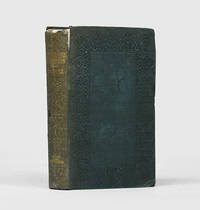
1850165074London: Chapman and Hall 1850. Inscribed to his "glorious queen" First edition in book form a major presentation copy to one of the key figures in Carlyle's life inscribed by the author on the front free endpaper to the literary hostess Harriet Mary Baring Baroness Ashburton: "The Lady Ashburton: 25 Dec 1850: - T.C.". Of aristocratic lineage Ashburton 1805-1857 married into the Baring banking dynasty and "established one of the foremost literary salons in the country gathering around her such men of letters as Richard Monckton Milnes A. H. Clough Charles Buller Sydney Smith William Makepeace Thackeray and pre-eminently Thomas Carlyle. To Carlyle she was a 'glorious Queen' the 'lamp of my dark path'" ODNB Lady Ashburton. Carlyle first met Ashburton in late 1839 and maintained a correspondence for many years. She was a major intellectual stimulus to him and he frequently visited her grand residences Bath House in Piccadilly and The Grange in Hampshire. The relationship was surely non-romantic but caused much misery to Carlyle's wife Jane who felt increasingly spurned by Carlyle as he turned to Ashburton for company and intellectual fulfilment. "Jane's resentment was understandable since the attraction struck at her union with Carlyle by robbing her of the 'genius' who had come to dominate any society in which they found themselves and on whose achievements she had staked so much. Lady Harriet enjoyed her role as literary lion tamer and felt an affection for her greatest capture; and bizarre as it may seem Carlyle was bemused by her and delighted in an almost rapturous correspondence. Between the three of them there were times of steady friendship punctuated by jealous outbreaks when Lady Harriet's letters were clearly unwelcome at Cheyne Row. It dragged on because Jane Carlyle generally fought down her feelings while Carlyle was unwilling to give up his circle of acquaintances with the Ashburtons including many of his closest friends" ODNB Jane Carlyle. Latter-Day Pamphlets presented Carlyle's views on various political and social questions in the aftermath of the revolutions of 1848 and his visit to Ireland during the Great Famine. It marked the culmination of years of increasingly controversial public statements constituting "a shriek of satiric and Swiftian despair" ODNB Thomas Carlyle against modernity democracy and materialism. The work was first issued as eight pamphlets from February to August 1850 and published in book form in the month of completion. Given the date of inscription Carlyle evidently presented the volume as a Christmas gift. Lady Ashburton did not keep the volume long and appears not to have read it as it remains largely unopened. She soon re-presented the volume inscribing below Carlyle's inscription "General Radowitz from H. M. Ashburton The Grange Jan. 11th 1851". The Prussian general and statesman Joseph Maria von Radowitz 1797-1853 who was then in England and dined with the queen later that month was a prominent proponent of German unification under Prussian leadership and a close adviser of Crown Prince Frederick William. Lady Ashburton later tried to arrange a meeting with Carlyle and Radowitz while the former was in Germany but Radowitz did not attempt it. Carlyle wrote somewhat petulantly "I expected some movement from Radowitz. in these parts; but there has nothing whatever of the kind taken place: which on the whole has been a convenience to me rather than otherwise; Radowitz except as a sight and not much as that being completely nothing to me or even less in this pressure of persons" letter from Carlyle to Jane 8 October 1852 accessible on Carlyle Letters Online. Octavo. Dark green fine diaper grain cloth binding A binder's ticket of Bone & Son to rear pastedown spine lettered in gilt spine and covers with blind floral blocking yellow endpapers. Housed in custom red quarter morocco box. Bookplate to front pastedown of H. & C. Michaelis dated 1902. Loss at head of spine and split at head of joints still all holding front inner hinge neatly repaired rear inner hinge splitting. A presentable copy with the contents almost entirely unopened. Tarr A21.1.c hardcover
282124New York: Scribner. hardcover. near fine. Frontispiece. 30 volumes 8vo 3/4 green morocco spines evenly faded to brown gilt-stamped raised spines top edges gilt New York.: Charles Scribner's n.d. ca. 1930. Near Fine. Centenary edition.<br/><br/> Scribner unknown books
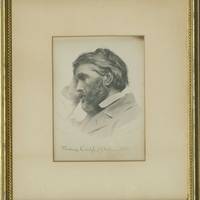
186582811865. <p>Engraving of a photograph of the great writer and historian by Elliott and Fry taken approximately 1854. Signed and dated by Carlyle in 1865 as he finished his great work on Frederick the Great.</p><p>Signed images of Thomas Carlyle are very uncommon this being the first we have carried.</p> unknown
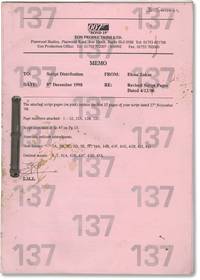
166272Iver Heath Buckinghamshire: Pinewood Studios 1998. Revised Draft script for the 1999 film seen here under the working title "Bond 19." Copy belonging to visual effects technician Brian Smithies with his name in manuscript ink on the first page of the script and his annotations on several script pages denoting scenes utilizing visual effects. Numeric watermark on each script page. <br /> <br /> During an assignment to protect a late billionaire's daughter from her father's killers James Bond uncovers an international scheme to increase petroleum prices by way of a nuclear disaster. The nineteenth film in the James Bond series and the third to star Pierce Brosnan as the titular MI6 agent. <br /> <br /> Shot on location throughout Spain France Azerbaijan Turkey and the UK.<br /> <br /> Self wrappers. Title page replaced with a memo revision page dated December 4 1998. 119 leaves with last page of text numbered 115. Xerographic duplication rectos only with 16 pink revision pages bound in at the beginning of the script dated December 4 1998. Pages Very Good plus bound with a silver prong with light rust near the binding and moderate dampstaining on the first page of the script. Pinewood Studios unknown
19031883Canton: The Kirgate Press 1903. First edition. First edition. 4to. Superb intensely ornate decorative and inlaid binding by RALPH RANDOLPH ADAMS an innovative binder in the early 1900's who revitalized the Viennese inlay or mosaic technique in fine binding. ONE OF ONLY 15 COPIES ON IMPERIAL JAPAN PAPER. TEG others uncut. Bound in full brown morocco; the front cover is nearly completely filled with ornate leaf and stylized floral design ipress in the leather inlaid black petals arranged in groups with gilt stamped internal designs and inlaid black petals similar designs on back cover and spine From "Brush and Pencil" 1904: "Randolph Adams whose magnificent bindings in Viennese inlay have become so well know of late. and wonderful mosaic designs in leather surpass it is said anything o fthe sort hitherto attempted by either ancient or modern binders and his bindings are in the collections of many well-known connoisseurs." An important though perhaps lesser known American fine bookbinder. Margins of spine sightly corners very slightly rubbed an extremely tight and solid binding near fine. <br/><br/> The Kirgate Press hardcover books