Hussey, MauriceAntiquariat.de
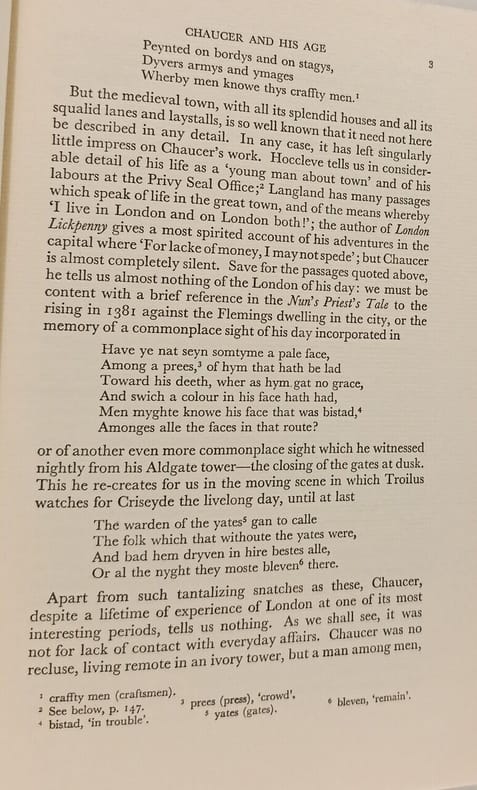
Chaucer's World. A Pictorial Companion
1967126264Cambridge University Press, London, 1967. 172 S. ; 24,5 x 18,5 cm ; kart. ;

Antiquariat Weber · DE - Neuendorf9,00 €
2 514 résultats
192834945London: The Medici Society 1929. January 1928. Hardcover. Used - Good. Worn copy but clean and intact. BLACK COVER. Illustrations after by W. Russell Flint. Color plates. Previous owner sticker inside cover. Pencil mark to front flyleaf. London: The Medici Society, 1929. hardcover
1969014015Chicago: The Great Books Foundation. Complete set. All volumes appear to be unread copies. Slipcase has edge wear. V11 . Near Fine. Soft cover. Third Printing. 1969. The Great Books Foundation paperback
1967126264Cambridge University Press, London, 1967. 172 S. ; 24,5 x 18,5 cm ; kart. ;
Twaynels English Authors Series #1. 219p, bibliography,index Neat,crisp tight copy. Small school library stamps - otherwise looks unread. Book
40p. Numerous illustrations. Small folio. Original green cloth binding. XLib. REF9
19236048819Wien, Braumüller 1923. 8°. 122 pp. Neuere Halbleinwand. Stempel verso Titel. Kleines Signaturschild auf Rücken. Sonst ordentlich.
0266258913.Ghardcover. Good. Access codes and supplements are not guaranteed with used items. May be an ex-library book. hardcover
1332051952.Gpaperback. Good. Access codes and supplements are not guaranteed with used items. May be an ex-library book. paperback
viii + 290pp., 25cm., in the series "Mediaevalia Lovaniensia" Series 1 Studia 19, softcover, fine condition, [text in English], T74604
1991T74604Leuven, Leuven University Press 1991 viii + 290pp., 25cm., in the series "Mediaevalia Lovaniensia" Series 1 Studia 19, softcover, fine condition, [text in English], T74604
B9781610486736Paperback / softback. New. paperback
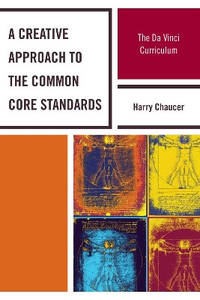
ria9781610486736_inpPaperback. New. New Book; Fast Shipping from UK; Not signed; Not First Edition; A Creative Approach to the Common Core Standards: The Da Vinci Curriculum challenges educators to design programs that boldly embrace the Common Core State Standards by imaginatively drawing from the genius of great men and women such a paperback
ria9781610486729_inpHardcover. New. New Book; Fast Shipping from UK; Not signed; Not First Edition; A Creative Approach to the Common Core Standards: The Da Vinci Curriculum challenges educators to design programs that boldly embrace the Common Core State Standards by imaginatively drawing from the genius of great men and women such a hardcover
1970634940Erlangen, Deichert, 1890. (Nachdr. Amsterdam, Rodopi, 1970). XII, 77 S. OKart. (Erlanger Beitr. zur engl. Philol. 8).
1966806450München, 1966. V, 207 S. Br.
1947100147201At the Clarendon Press 1947 in8. 1947. Relié. Ouvrage académique de H.S. Bennett analysant l'influence de Geoffrey Chaucer sur la littérature anglaise du XVe siècle couvrant la poésie et la prose de cette période. Le livre inclut des tables chronologiques et une bibliographie étendue s'inscrivant dans la série Oxford History of English Literature
1341048209.Ghardcover. Good. Access codes and supplements are not guaranteed with used items. May be an ex-library book. hardcover
102288008X.Ghardcover. Good. Access codes and supplements are not guaranteed with used items. May be an ex-library book. hardcover
1334327181.Gpaperback. Good. Access codes and supplements are not guaranteed with used items. May be an ex-library book. paperback
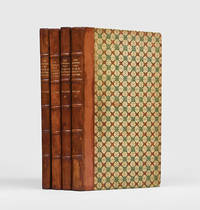
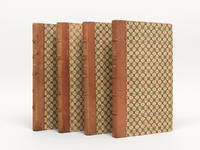
1928176203Waltham St Lawrence: Golden Cockerel Press 1928-31. Beautiful Books Limited edition number 135 of 485 copies on handmade paper; a further 15 copies were issued on vellum. The Canterbury Tales was one of the "most important Golden Cockerel editions for which Eric Gill provided the engravings" and showcases his "originality and verve" ODNB. This work was seen as one of the finest books to be produced by the press exhibiting the ideals of the private press movement as if the "author artist and printer have shared one concept and expressed it" Franklin. An announcement of the edition within The Times Literary Supplement on 2 February 1928 noted a publication price of 25 Guineas. It also stated that the vellum copies at 120 Guineas had already been fully subscribed. The publication of the work was a major literary event and was widely covered in the press throughout the four-year publication period. A review within The Times Literary Supplement described the set as "a fine one" and noted that "each page is ornamented at the side with a conventional tree at the top or bottom of which there are usually figures. These figures seems alternately to express an almost frivolous gaiety and a harsh ascetism. Gill portrays these attributes and characteristics of the Middle Ages as if they came down to us from a great distance as pale now romantic shadows of what was once violent and robust. With this mood is at times combined a strain of Post-Impressionism a modern flavour". The review concluded comparing the Golden Cockerel edition to the Kelmscott Chaucer noting that Pre-Raphaelitism was "adaptable to new circumstances". The partners of the Golden Cockerel Press Christopher Sandford Owen Rutter and Anthony Sandford described the set in their bibliography of the press as simply "beautiful books". 4 vols tall octavo. Initials printed in red blue and black. With full-page illustration 29 half-page illustrations decorated borders tailpieces and line fillers all by Gill. Bound for the publishers by Sangorski & Sutcliffe in brown quarter niger spines lettered in gilt patterned paper boards top edge gilt others untrimmed. Some wear to extremities slight colour variance to morocco minor cracking to front joint of vol. 1 minor browning to endpapers as usual: a very good set. Chanticleer 63; Franklin 307; Gill 281. The Times Literary Supplement 2 Feb. 1928 p. 79 & 18 April 1929 p. 310. hardcover
1929000681<p><strong>One of the most prestigious books published by the Golden Cockerel Press number 80 of a limited edition of 485 copies printed on handmade paper and 15 on vellum. </strong></p><p><strong>Description:</strong> 4 vols. Original quarter niger morocco over patterned papered boards spines with raised bands lettered in gilt bound by Sangorski and Sutcliffe. Quarto: 32 × 20 cm; pp.: vol.i: 4 150 2; vol.ii 4 188 2 vol.iii 4 196 2 vol.iv 2 218 4. With 1 full-page 29 half-page and 269 decorated borders tail-pieces line-fillings and 61 initials engraved on wood by Eric Gill. Printed from 18 pt. Caslon Old Face printed on Batchelor hand-made paper nos. 16–500 in black red and blue. Top edge gilt others trimmed.</p><p><strong>Ref.:</strong> Cave/Manson 63; Chanticleer 63; Gill 281</p><p><strong>Condition:</strong> Binding somewhat bumped and bruised at corners spine occasionally stained as often fore-edges slightly dusty and with single marginal stains interior clean and free of marks.</p><p><strong>Notes:</strong> Eric Gill's woodcuts for the Golden Cockerel Press edition of Geoffrey Chaucer's <em>The Canterbury Tales</em> are celebrated for their artistic and technical mastery. Gill created an impressive array of wood engravings designing them to harmonise with the typography reflecting his expertise as a typeface designer. The engravings complement the text enhancing the reading experience with a seamless blend of visual and literary art rooted in the tradition of illuminated manuscripts. The borders often featuring leaf and stem motifs are inhabited by figures - girls men kings priests and nuns - that interact with or comment on the tales. These range from playful and erotic to solemn mirroring Chaucer's diverse moods and adding narrative depth. Some of the woodcuts are known to have been rather bold in their depictions and have been seen as controversial in their time; however they have since been recognised as being apt and reflective of the spirit of the text. It is therefore fair to conclude that taken as a whole these features make Gill's woodcuts a standout contribution to 20th-century book illustration marrying technical precision with imaginative flair and thus cementing the edition's status as a landmark in private press publishing.</p> Golden Cockerel Press hardcover
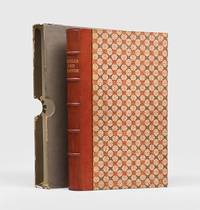
1927180559Waltham St Lawrence: Golden Cockerel Press 1927. A crown jewel of the press First Golden Cockerel Press edition number 129 of 219 copies printed on Kelmscott handmade paper retaining the seldom-seen original slipcase. Loosely inserted is the equally elusive publisher's prospectus for autumn 1926 describing this edition as "a larger and more elaborate volume than has hitherto been attempted." Troilus and Criseyde was one of the first books that Eric Gill illustrated for the Golden Cockerel Press having joined as chief engraver in 1924. Together with The Song of Songs 1925 Canterbury Tales 1925 and The Four Gospels 1931 it is one of "the classic examples of specialist book production of that period. For a while the Golden Cockerel was Eric Gill" MacCarthy p. 187. Gill's artworks "captured the whimsical interplay between words and images displayed in medieval illuminated manuscripts. In Troilus and Cryseide Gill mixed full page illustrations with a combination of black and white lines and a rich assortment of shapes that presented a sense of motion. He created serpentine flora with simple figures to cushion the distinctive text. These border decorations reflect the narrative stanzas in an unassuming manner" Berona p. v. There were also six copies on vellum. Small folio. Woodcut title page 5 full-page woodcut illustrations ornamental borders throughout by Eric Gill. Text printed in black red and blue in Caslon O. F. type. Original quarter niger by Sangorski & Sutcliffe spine with raised bands second compartment lettered in gilt floral patterned paper-covered sides top edge gilt others untrimmed. Housed in the publisher's card slipcase. Publisher's prospectus loosely inserted. Hint of wear to corners otherwise a fine copy in the slipcase a little worn and with short split to one edge. Chanticleer 50; Gill 279. For the prospectus see Cock-A-Hoop P50. David A. Berona Eric Gill's Masterpieces of Wood Engraving: Over 250 Illustrations 213; Fiona MacCarthy Eric Gill 1989. hardcover
15611489Full calf. Probable first issue of the Stowe Edition with Chaucer's arms dated 1560 and before woodcut additions. Relative to the precedence of issues of the 1561 Stowe edition David R. Carlson "The Woodcut Illustrations in Early Printed Editions of Chaucer's Canterbury Tales" in Chaucer Illustrated: Five Hundred Years of The Canterbury Tales in Pictures British Library 2003 states "the most plausible explanation seems to be that the printer and publisher of the Stowe edition came into possession of the woodcuts belatedly after most of the press work for the edition had been done. After obtaining the blocks they ran up a new issue of the beginning of the book incorporating a "General Prologue" illustrated with woodcut. In all documented cases the unillustrated i.e. first"General Prologue" occurs with a title page showing the Chaucer arms dated 1560 at the top of the shield. A different title-page dated 1561 is found in copies incorporating the woodcut illustrated General Prologue." v. also David R. Carlson "Woodcut Illustrations of the Canterbury Tales 1483-1602. More specifically a recent Robert Temple Catalogue adds: "The first three gatherings in the 1561 second issue were entirely reprinted this being done to permit the inclusion of twenty-two wood-cut illustrations in the Prologue to the Canterbury Tales the signatures running floret4 floretiii being mis-signed Aiii 6 A4 B - I6. instead of the floret4 A - I6. of the first issue. In the illustrated i.e. second issue some damage to the wood-cut frame of the first secondary title is apparent which is not evident in the first issue: a crack in the wood extends from the centre of the lower edge up through the box identifying King Henry IIII to just left of centre of the title box and another from the top left-hand corner of the title-box through the box identifying King Henry VII and ending apparently at a worm-hole in its top rules. STC 2nd edition unaccountably and without assigning a reason lists these two issues in the reverse order - despite the evidence in the illustrated issue of the later date on the title-page the obviously interpolated gathering `' which contains the first six illustrated leaves of ten the rest being in the variant short gathering `A' and the extended splitting of the wood-block on the title-page to the Canterbury Tales which shows only a slight split at the extreme tail in the first printing and no worm-hole." Professional restoration to the present copy include wash and repair of title page with ancient replacement of top inch and periphery of same not affecting text; repapering of Prologue gutters; new pastedowns & fly papers. All that said a complete copy without loss of text. Light peripheral worming. Handsomely bound in appropriate period style full ruled English calf five raised bands six compartments; morocco title & date labels. This copy was presented by the Durants to Wellesley College then sold in 1912 to George Herbert Palmer & then to Lewis Kennedy Morse. Folio 12 3/16 x 8 1/2 inches 310 x 215 mm; 5 ccclxxviii leaves. Divisional title pages of the "Caunterburie Tales" and "Romaunt of the Rose" both borrowed from Edward Hall's 1550 Vnion of the two noble and illustre famelies of Lancastre & Yorke in ornamental border showing the ascent of Henry VIII. Large woodcut of the Knight at the head of his tale recto of B1. Collation: Floret4; A-I6; K-U6; Aa-Ii6. Kk-Pp6; Q-U6; X-Z6; Aaa-Iii6; Kkk-Uuu8. Numerous oddities in foliation following CCXXIV though catchwords and signatures remain constant. A handsome & supple copy beautifully printed in fifty-six line two-column black-letter Gothic. The 1561 Stowe edition is probably the one known to William Shakespeare and Edmund Spenser and presents some nineteen poems here first printed from manuscript sources. STC5076 Foregoing copyright 2021.; Folio ; Additional images and further information provided upon request. ; All shipments through USPS insured Priority Mail. John Kyngston for Jhon Wight hardcover books
1986Q-0517606151Avenel Books 1986-01-01. Hardcover. New. New. In shrink wrap. Looks like an interesting title! Avenel Books hardcover
15611489<p>Full calf. Probable first issue of the Stowe Edition with Chaucer's arms dated 1560 and before woodcut additions. Relative to the precedence of issues of the 1561 Stowe edition David R. Carlson "The Woodcut Illustrations in Early Printed Editions of Chaucer's Canterbury Tales" in Chaucer Illustrated: Five Hundred Years of The Canterbury Tales in Pictures British Library 2003 states "the most plausible explanation seems to be that the printer and publisher of the Stowe edition came into possession of the woodcuts belatedly after most of the press work for the edition had been done. After obtaining the blocks they ran up a new issue of the beginning of the book incorporating a "General Prologue" illustrated with woodcut. In all documented cases the unillustrated i.e. first"General Prologue" occurs with a title page showing the Chaucer arms dated 1560 at the top of the shield. A different title-page dated 1561 is found in copies incorporating the woodcut illustrated General Prologue." v. also David R. Carlson "Woodcut Illustrations of the Canterbury Tales 1483-1602. More specifically a recent Robert Temple Catalogue adds: "The first three gatherings in the 1561 second issue were entirely reprinted this being done to permit the inclusion of twenty-two wood-cut illustrations in the Prologue to the Canterbury Tales the signatures running floret4 floretiii being mis-signed Aiii 6 A4 B - I6. instead of the floret4 A - I6. of the first issue. In the illustrated i.e. second issue some damage to the wood-cut frame of the first secondary title is apparent which is not evident in the first issue: a crack in the wood extends from the centre of the lower edge up through the box identifying King Henry IIII to just left of centre of the title box and another from the top left-hand corner of the title-box through the box identifying King Henry VII and ending apparently at a worm-hole in its top rules. STC 2nd edition unaccountably and without assigning a reason lists these two issues in the reverse order - despite the evidence in the illustrated issue of the later date on the title-page the obviously interpolated gathering `' which contains the first six illustrated leaves of ten the rest being in the variant short gathering `A' and the extended splitting of the wood-block on the title-page to the Canterbury Tales which shows only a slight split at the extreme tail in the first printing and no worm-hole." Professional restoration to the present copy include wash and repair of title page with ancient replacement of top inch and periphery of same not affecting text; repapering of Prologue gutters; new pastedowns & fly papers. All that said a complete copy without loss of text. Light peripheral worming. Handsomely bound in appropriate period style full ruled English calf five raised bands six compartments; morocco title & date labels. This copy was presented by the Durants to Wellesley College then sold in 1912 to George Herbert Palmer & then to Lewis Kennedy Morse. Folio 12 3/16 x 8 1/2 inches 310 x 215 mm; 5 ccclxxviii leaves. Divisional title pages of the "Caunterburie Tales" and "Romaunt of the Rose" both borrowed from Edward Hall's 1550 Vnion of the two noble and illustre famelies of Lancastre & Yorke in ornamental border showing the ascent of Henry VIII. Large woodcut of the Knight at the head of his tale recto of B1. Collation: Floret4; A-I6; K-U6; Aa-Ii6. Kk-Pp6; Q-U6; X-Z6; Aaa-Iii6; Kkk-Uuu8. Numerous oddities in foliation following CCXXIV though catchwords and signatures remain constant. A handsome & supple copy beautifully printed in fifty-six line two-column black-letter Gothic. The 1561 Stowe edition is probably the one known to William Shakespeare and Edmund Spenser and presents some nineteen poems here first printed from manuscript sources. STC5076 Foregoing copyright 2024.; Folio ; Additional images and further information provided upon request. ; All shipments through USPS insured Priority Mail.</p> John Kyngston for Jhon Wight hardcover