829 résultats
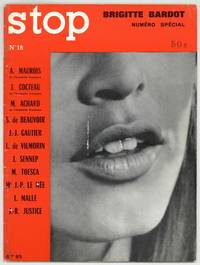
1962516875Paris: Editions Thea 1962. Softcover. Very Good. Periodical. Text in French. Tall octavo. Profusely illustrated. Stapled pictorial wrappers. Publisher's small rubberstamp price on front cover spine and covers rubbed very good or better. With publisher's four-page pamphlet laid in printed in German Spanish and English with statements about Brigitte Bardot by Simon de Beauvoir Jean Cocteau Andre Maurois Jean-Jacques Gautier Louis Malle and more. Special issue devoted entirely to Brigitte Bardot. Editions Thea unknown
196999232Paris : NRF Gallimard 1969 - 1985. 205x140mm. broch. Couverture rabats. Bel exemplaire. 2206 NRF, Gallimard unknown
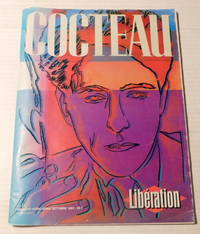
1983100479<p>Paris: Publie par la SARL Societe nouvelle de presse et de communication SNPC 1983. 1983. Good. - Folio 14-1/2 inches high by 11 inches wide. Softcover bound in color pictorial wraps illustrated with an abstract portrait of Cocteau on the front cover. The edges of the rubbed covers are lightly creased with a few minor chips. 111 & 5 pages including the covers profusely illustrated in black & white throughout including many full-page illustrations from photographs. The front edges of the pages are lightly creased with occasional minor chipping. Good.</p><p>A special issue on Jean Cocteau edited by Michel Cressole with numerous contributions and essays on Cocteau by him including "Cocteau C'est un Charlot" "Les lieus suspendus dans le temps" "Les temps de l'opiomane" "Le temp des garcons de profil" "Le temps des femmes" "La gouvernante de Jean Cocteau" "Ses insistances vestimentaires" "Cocteau face a la haine" "Deux lettres inedites juillet 1940 Quand Sartre et Cocteau collaboraient" "Cocteau fait du journalisme" etc. and contributions by Louella Interim Anne de Margerie Christian Caujolle "Cocteau d'images" J.-P. Thibaudat "Cocteau fait du theatre" Herve Gauville "Cocteau fait de la danse" Patric Bensart Francoie Baudot Philippe Romon "Cocteau a New York" Christian Perrot "Cocteau a Londres" Alain Proviste "Cocteau a Paris" and Michael Delmar "La constellation Jean Cocteau".</p><p>The author and editor French journalist and gay activist Michel Cressole 1948-1995 was active in the FAHR in the 1970's joining the daily newspaper "Liberation" in 1978. He also wrote a column for L'Autre Journal and went to Africa with photographer Francoise Huguier. Cressole appeared in Louis Skorecki's film series "Les Cinephiles" and in Lionel Soukaz's "Maman que Man". Cressole also wrote for the French AIDS periodical "Le Journal du sida" before passing away from AIDS in 1995.</p> Paris: Publie par la SARL Societe nouvelle de presse et de communication (SNPC), 1983. paperback
1966510685London: Hanover Gallery 1966. Softcover. Near Fine. Original exhibition announcement. Cover illustration by Jean Cocteau. Measuring approximately 6 ½" x 5" folded. Single sheet folded to make four pages in the publisher's original printed mailing envelope. Light bumping to the corners else near fine. Addressed to noted bibliographer editor and collector Donald Gallup Esq. The exhibition was held at the Hanover Gallery in London from September 27 to October 22 1966. Hanover Gallery unknown
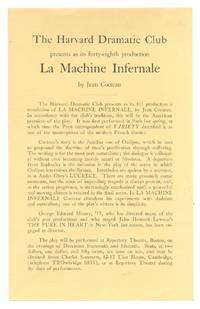
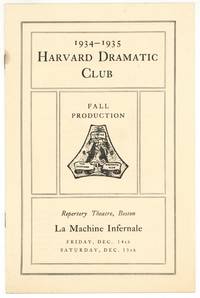
1934575167Cambridge: The Harvard Dramatic Club 1934. Unbound. Fine. First edition. Single 5" x 8" sheet printed on one side. Fine. Advertisement for the American debut of the play. The Harvard Dramatic Club unknown
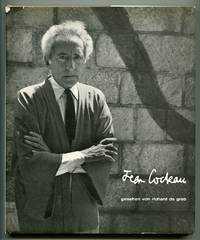
1964504457Munchen: Delp'sche Verlagsbuchhandlung 1964. Hardcover. Near Fine/Very Good. First edition. Text in German. 88pp. Illustrated from black and white photographs. Foxing on topedge light toning at the foot of the spine near fine in a very good dust jacket with a few tiny chips and tears and modest toning on the spine and rear panel. Inscribed by de Grab on the front fly verso. Delp'sche Verlagsbuchhandlung hardcover
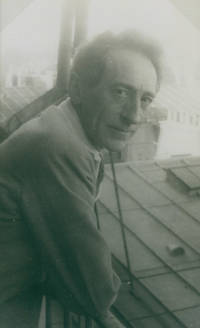
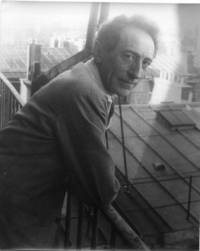
1949222172Paris 1949. Half-length leaning over the railing of his terrace face turned to camera. 1 vols. Post card format. Fine. Matted. Half-length leaning over the railing of his terrace face turned to camera. 1 vols. Post card format. Probably taken just before Cocteau's trip to America in 1949. unknown
1949211175Paris 1949. Gelatin silver print. 1 vols. 9-7/8 x 8 inches. Embossed stamp at lower right atelier stamp on verso with pencilled notations giving the subject of the photograph the date and the number of the negative. Gelatin silver print. 1 vols. 9-7/8 x 8 inches. Portrait of Cocteau leaning over the balustrade of a rooftop. unknown
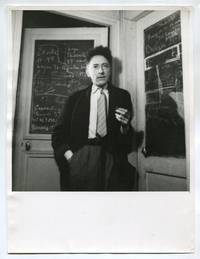
1945617891New York / France: French Press & Information Service 1945. Unbound. Fine. Gelatin silver photograph. Approximately 7" x 9". Press agency stamps on verso Small glue marks on back where it was likely affixed light edgewear near fine. Cocteau standing in front of a door with his handwriting visible on the window in the door. French Press & Information Service unknown
1935589724Boston: Repertory Theatre 1935. Softcover. Near Fine. First edition. Octavo. 8pp. Stapled printed self-wrappers. Staples a little rusted else near fine. Repertory Theatre unknown
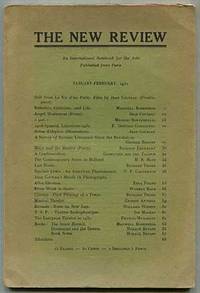
1931334184Paris: no publisher 1931. Softcover. Very Good. Magazine. Small quarto. 69pp. Paper wrappers with unopened pages. Sunned with some wear to the spine and bumping to the corners very good. The first of a five-issue literary magazine published from 1930 to 1932 that devoted itself to "the modern arts such as photography the cinema sound and talking films phonograph records radio etc." It was edited by the American author and translator Samuel Putnam along with help from Ezra Pound Maxwell Bodenheim and Richard Thoma. This issue features several contributions from Jean Cocteau including a five-page poem "Angel Wuthercut" an illustration a photograph of Cocteau and a still from his first film La Vie d'un Poete the first film of The Orphic Trilogy. It also includes an early poem from Richard Eberhart and contributions from Pound Bodenheim Massimo Bontempelli E. Giménez Caballero George Reavey H.R. Hays Richard Thoma V.F. Calverton Wambly Bald George Antheil Willard Widney Ian Mackay Francis Musgrave and Horace Bevans. [no publisher] unknown
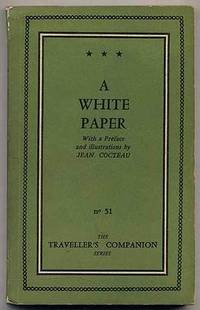
1957329076Paris: Olympia Press 1957. Softcover. Near Fine. First edition. Preface and illustrations by Jean Cocteau. Slight rubbing and light wear near fine. Issued in The Traveler's Companion Series No. 51. Scarce in reasonable condition. Olympia Press unknown
1928244851Paris: Editions des Quatre Chemins 1928. First edition one of 2875 copies on Rives. With five black and white illustrations by de Chirico. 80 6 pp. 1 vols. 8vo. Original blue-grey printed wrappers. Fine copy in original glassine worn. First edition one of 2875 copies on Rives. With five black and white illustrations by de Chirico. 80 6 pp. 1 vols. 8vo. Artist and the Book 56. Artist and the Book 56 <br/><br/> Editions des Quatre Chemins unknown
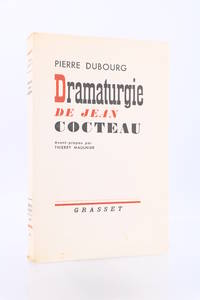
195491205Paris: Grasset 1954. Fine. Grasset Paris 1954 12.2 x 19 cm Broché First edition one of 42 numbered copies on alfa paper the only deluxe paper issue.Minor unobtrusive foxing to the foot of the upper cover otherwise a pleasing copy.Preface by Thierry Maulnier. Grasset unknown
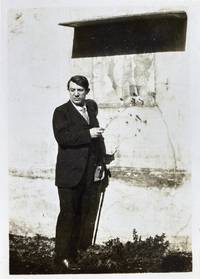
191778126Paris 1917. Fine. Paris 1917 6.30 x 8.60 cm une photographie Original photograph likely unique and unpublished of Pablo Picasso at the Casa di Marco Lucrezio Pompeii spring 1917 Paris 1917 63 x 86 cm one photograph Original photograph depicting Pablo Picasso in the spring of 1917 at the Casa di Marco Lucrezio in Pompeii holding a twig in front of a wall on which there is a Pompeian fresco. Contemporary silver print perhaps unique from Jean Cocteau's personal archives then the Maurice Sachs collection. Exceptional almost undiscovered and probably unpublished photograph taken by Jean Cocteau during the stay. On 16 April 1917 Picasso visits Pompeii accompanied by Jean Cocteau and Léonide Massine to prepare the ballet Parade the first work described as surrealist by Guillaume Apollinaire for the new season of Serge de Diaghilev's Ballets Russes. On his return this initiatory journey inspired his monumental painting: the Parade stage curtain a real visual signature of the ballet marking the beginnings of Picasso's neo-classical period and today preserved at the Musée national d'Art Moderne Georges Pompidou. Pierre Daix in his bibliography dedicated to the painter recounts the aesthetic shock caused by the discovery of the Pompeian frescoes: Giovanni Carandente to whom we owe the best studies on this trip highlights that Picasso was strongly struck by the animation and the sensuality that the cataclysm of the year 79 AD had brutally destroyed. If it is true as he wrote to Gertrude Stein that he immediately drew many Pompeian fantasies which are a little daring attracted as he was by the erotic elation that emerges from these licentious paintings . these memories settled in him to emerge with force thereafter. . Everything that had made up the Pompeian universe was preserved on the site as well as in the National Archaeological Museum of Naples . In its singularity this universe contributed to enriching Picasso's cultural heritage with something more alive more trembling than he had gained from his museum visits until then. He particularly loved the conciseness of the paintings: two or three years later the impressions felt in Pompeii were to translate into a real creative explosion a series of paintings which all bore traces of these never buried memories. This source was to remain alive until La Danse of 1925. Pierre Daix Picasso. Unique and early original photograph of Picasso taken and printed by his friend Jean Cocteau in a mythical place that will influence his aesthetic for the long-term. Provenance: Jean Cocteau's personal archives then the Maurice Sachs collection and Max-Philippe Delatte. unknown
1962D17822Monaco: Éditions du Rocher 1962. First Edition. Paperback. Near Fine. Inscribed and signed by Cocteau for editor Jean Denoël with a drawing at the front and signed by Picasso and Cocteau on the colophon. Among a number of copies on Rives reserved for collaborators from a total edition of 255. 24 original lithographs 11 of them hors-texte including the front wrapper and 2 double-page by Picasso printed in black by Mourlot. Folio contents loose as issued in original wrappers with cut-out design revealing title on front cover; 1/4 calf gilt-backed chemise and board slipcase split. Contents are fine. Prospectus laid in. "On the occasion of Picasso's 80th birthday Pierre Bertrand who was Cocteau's publisher assembled eleven of the poet's texts which reflected his friendship with Picasso. The latter illustrated these texts with 24 lithographs some of which are drawn in Cocteau-esque style "---Cramer 117; Monod 292; Bloch 1037-1060. <br/><br/> Éditions du Rocher paperback
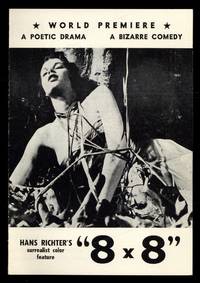
1957619239New York: 5th Avenue Cinema 1957. Unbound. Fine. 5th Avenue Cinema unknown
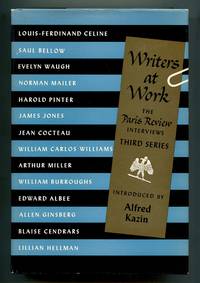
1967588632New York: The Viking Press 1967. Hardcover. Fine/Near Fine. First edition. Introduction by Alfred Kazin. 368pp. Illustrated. Fine in an about near fine dust jacket with slight wear to the extremities. Interviews with William Carlos Williams Jean Cocteau Evelyn Waugh Lillian Hellman William Burroughs Saul Bellow Allen Ginsberg Harold Pinter and more. The Viking Press hardcover
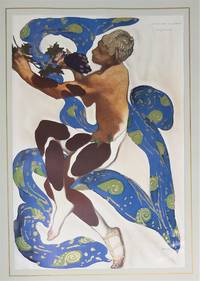
913<br /><br /><p><b>BEAUTIFUL EXAMPLE OF THIS MAJOR LUXURY WORK ON BAKST'S ART THE FIRST ONE OF ITS KIND AND THE MOST IMPRESSIVE</b> especially attractive thanks to its art-déco publisher's binding here in great condition. It focuses on Bakst's costumes for Diaghilev's Ballets Russes together with a few set designs gathering most of his most famous creations. Interestingly it occasionally mentions the owner of the costume itself usually British or French.</p><p>Alexandre contributed a critical essay while the 24-year old Cocteau authored notes on the various ballets.</p><p>"Born in Russia in 1866 Léon Bakst belonged to that young generation of European artists who rebelled against 19th century stage realism which had become pedantic and literal without imagination or theatricality. There were no specialist trained theatre designers so painters like Léon Bakst turned their painting skills to theatre design. Bakst's fame lay in the ballets he designed for the Diaghilev Ballets Russes and huge pageant spectaculars for dancer and patron Ida Rubinstein. He died in 1924 but after nearly 100 years his magic is as potent as ever rediscovered by every generation. His influence was such that people who have never heard his name now see the world in a different way" V&A.</p><p><br /></p><p><i><u>Description</u></i><i><br />Folio 41.3 x 28.5 cm. Photographic portrait frontispiece title 4 ll. 50 pp. and 12 ll. 1 l. 77 tipped-in plates including 50 in colour some double-page entirely printed or mounted on grey papier d'Auvergne. <br />Original publisher's half vellum over marbled boards Bakst signature printed in white to upper board; very lightly soiled here and there small bumps at extremities small split to lower hinge.</i></p> De la More Press, Londres, for Maurice de Brunoff, Paris, 1913.
19812090502128600469Tokyosogensha 1981. Soft Cover. Fine. Number of pages: 551p Size: 22cm Tokyosogensha paperback
192027722Paris:: Aux Editions de la Sirene December 1920. First edition. publisher's printed wrappers in glassine. Old ink inscription on half-title; light wear to wrappers at extremities of the spine; a few gatherings a little loose; glassine chipped particularly at spine. 12mo. Aux Editions de la Sirene, unknown
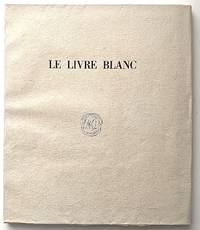
19282423Paris: Maurice Sachs and Jacques Bonjean 1928. First edition. 6 7-80 6 pp. Quarto. Folded wrappers title and monogram printed on front cover. Printed on Montval laid paper handmade by Gaspard Maillol by Ducros et Colas printers Paris. Slightest occasional spotting to leaves still a fine copy housed in a chemise and slipcase. <br /> <br /> One of 31 numbered copies printed of which ten were reserved for the author. The true and extremely rare first edition of one of Cocteau's most extraordinary and emblematic works. Published anonymously it is the first time Cocteau directly wrote on the subject of homosexuality- as Claude Arnaud notes in his definitive biography "this indirect praising of homosexual love experienced as 'one of the most mysterious workings of the divine masterpiece' was the kind of work that might once have helped the adolescent Cocteau to rise above opprobrium and secure his self-esteem." Cocteau never allowed his name to be directly attributed to the text of this book although later editions bore his preface and sometimes illustrations. As Frédéric Canovas writes "From the first edition to the last one published while he was still alive Jean Cocteau systematically refused to print his name on the cover of Le Livre Blanc: the text was to remain anonymous although Cocteau himself had not hesitated to demonstrate his intimate relationship to the book by illustrating it on several occasions and by adding a short manuscript note to the second French edition and a longer foreword to the English one. Indeed of all Cocteau's books Le Livre Blanc is probably one of his most confusing because of both its subject and its form or forms. Even today it remains difficult to consider this book. The critic finds himself lost among the multiple editions the various versions of the text and the many illustrations as well as the prefaces manuscript notes and frontispieces. Despite its nature as a confidential text. Le Livre Blanc has appeared in no less than 13 different editions from 1928 to the present. the first edition is anonymous bears no mention of the publisher's name and contains no illustrations. The printing was limited to 21 copies including 10 author's copies and is needless to say almost impossible to find today."<br /> <br /> Pia Les Livres de l'Enfer 812-813. Canovas "Jean Cocteau's Le Livre Blanc: Sex Text and Images" Word & Image 231:1-15 January 2007. Georgel Jean Cocteau et Son Temps 402. Young The Male Homosexual in Literature 709 for the English edition. [Maurice Sachs and Jacques Bonjean] unknown
1949IOCl[COC43Paris: Paul Morihien 1949. 1949. 8vo. pp. 3 p.l. 11-87 1 leafcolophon. 4 colour illus. in text 3 full-page with no text on verso after designs by Cocteau. original wrs. & dw. with vignette by Cocteau below title on front dw. short tear in lower front joint faint foxing to last 2 leaves glassine wr. tattered. Limited to 500 numbered copies this one of 475 on watermarked 'vélin Johannot'. This is the third edition of Cocteau's semi-autobiographical homo-erotic text the second to be illustrated. All three of these editions 1928 1930 and 1949 were published anonymously in limited numbers. Hardcover. [Paris]: Paul Morihien, [1949]. Hardcover
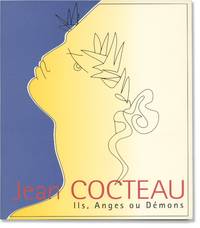
2001167150Kyoto and Tokyo: Musée Eki / Musée des Beaux-Arts Bunkamura 2001. First Edition. Softcover. First Edition. Text in French and Japanese.<br /> <br /> Published in conjunction with an exhibition which ran from March 31 through May 20 2001 at the Musée des Beaux-Arts Bunkamura Tokyo and from June 13 through July 10 2001 at Musée Eki Kyoto. <br /> <br /> Near Fine in perfect-bound wrappers with French flaps. Musée Eki / Musée des Beaux-Arts Bunkamura unknown
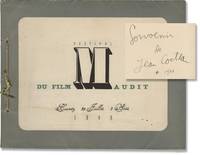
1949170399Paris: Objectif 49 / La Cinémathèque Française 1949. Vintage program for the Festival du film maudit held in Biarritz from July 29 through August 5 1949 by French avant-garde cinema club Objectif 49. SIGNED on the title page by Objectif 49 co-founder Jean Cocteau: "Souvenir de Jean Cocteau / 1949" "A token from Jean Cocteau / 1949". Text and titles in French.<br /> <br /> Objectif 49 was founded in Paris after the close of the Second World War. Although only active for two years the club's influence was significant in no small part due to its lofty goals-the promotion of new avant-garde films the reevaluation of uncommercial and "failed" films the foundation of alternative institutions for educating film audiences and most broadly the creation of entirely new systems for distributing and exhibiting cinema in France. The group staged over 40 one-night events three festivals and counted Robert Bresson Eric Rohmer René Clement Jean Grémillon and many other cinematic and literary luminaries among its ranks.<br /> <br /> Organized by Cocteau and co-founder André Bazin with a name drawn from Mallarmé's "poètes maudits" "cursed poets" the Festival du film maudit was Objectif 49's most important public event intended to be a rival to the Cannes Film Festival. Held at the posh Grand Casino on the coast the festival was notably attended by then-little-known filmmakers Jacques Rivette and François Truffaut who were accompanied in by Cocteau himself having initially failed to make their way past the doorman due to their "bohemian" behavior and attire. Films screened included Kenneth Anger's "Fireworks" Jean Grémillon's "Lumière d'été" Robert Montgomery's "Ride the Pink Horse" Jacques Tati's "Jour de fête" Jean Vigo's "Zéro de conduite" and "L'Atalante" among many others.<br /> <br /> In the wake of the festival's success "film maudit" became a term of praise used by "Cahiers du cinéma" writers in the 1950s and the term was later adopted by the publication's American counterparts. The festival would be re-staged the following year but Cocteau and Bazin were not involved and the event was less well received. <br /> <br /> A memento from a transitional time in the cinema of postwar France in which the foundations were laid for the proliferation of New Wave avant-garde and experimental films and film culture in the years to come.<br /> <br /> 11 x 9 inches. 40 pages. Very Good plus or better in wrappers with a string binding. Objectif 49 / La Cinémathèque Française unknown