1 469 résultats
012311No Binding. Fine. Three scratchboards two 12'x 15" the other 16" x 12" depicting critical scenes from Jean Genet's classic Querelle. Two are uniform in size and are matted and framed in the style of the oblong one which wads originally matted and framed by the artist. The life of Sam Steward 1909 - 1983 the subject of Justin Spring's biography "Secret Historian: The Life and Times of Samuel Steward Professsor; Tattoo Artist and Sexual Renegade "Farrar Strauss Giroux 2010 took Steward from a small town Ohio upbringing to personal friendships with Gertrude Stein and Alice B. Toklas associations with George Platt Lynes Glenway Wescott and other literati and a close relationship with sex researcher Alfred Kinsey. Steward's life may well be most provocatively known for his explicit diaries journals photography and art that both recorded his sexual life in detail and which he shared with Kinsey. Starting out as an English professor at DePaul University with literary aspirations and after writing several commercially unsuccessful books Steward attempted mid-life in the early 1950s to seek approval from Jean Genet to publish his own English translation-with his own original illustrations - of Querelle de Brest. When it became clear to Steward that Genet was disinterested he dropped the project: these three scratchboards the art he he created for it. Steward's pursuit of "serious" literary expression ebbed and later in the 1960s under the pseudonym Phil Andros he authored a series of gay paperback novels STUD The Greek Way etc. regarded as the most literate of homoerotic fiction featuring his alter-ego hustler. He turned his artistic energies to tattooing operating parlors catering to naval and military servicemen in Chicago Milwaukee and finally Oakland. And his sexual activities increasingly involved sadomasochism in which he had always been interested All three of these drawings were reproduced in "An Obscene Diary: The Visual World of Sam Steward" Antonius Press/ Elysium Press 2010. During Steward's lifetime the "Lucky Strike" image was published in the Zurich-based Der Kries an early homophile publication introduced to Steward by Dr. Kinsey and also in the rare anthology of homoerotic art published by Der Kries in 1960 Der Mann in der Zeichnung under one of Steward's pseudonyms Philip von Chicago. Spring writes: "Noteworthy among Steward's many illustrations for Der Kries is one that was originally created for Steward's 1951- 1952 English language translation of Querelle de Brest. Working form Polaroid photographs taken of himself in various poses Steward fashioned three scratchboard illustrations for the story. In the first a man lights a cigarette for a sailor; in the second Querelle strangles the Armenian pederast; in the third Querelle is penetrated by the bartender husband of Madame Lysiane. The illustration of the sailor having his cigarette lit subsequently appeared in Der Kreis under the caption "Lucky Strike." Indeed Steward etched "LUCKY STRIKE" in the cigarette in the picture on the verso it is signed "Sam Steward 1951 1952". The strangulation picture has in Steward's hand on the verso: "From Genet's Querelle de Brest. Querelle strangles the Armenian". In the picture itself Steward etched his signature and date in the design on the Armenian's shirtcuff: "Sparrow Phil 1951". The picture of Querelle and the bartender in sexual union hung on the wall of Steward's apartment for many years. It is pictured in one of Steward's sex Polaroids reproduced in "Obscene Diary". On the verso of it Steward wrote "L'Execution De Querelle 9-19-51" Steward did not work in scratchboard alone. His art was quite versatile: murals in his apartments tempera watercolor pastel pen/ink and some wire sculpture and collage. These drawings could be regarded as the most important of his visual art. While they were motivated by literary aspiration they in effect represented a real turning point in his lif. unknown
195112311TRIPTYCH OF ORIGINAL SCRATCHBOARDS FOR STEWARD'S UNPUBLISHED TRANSLATION OF JEAN GENET'S QUERELLE <br /> Three scratchboards two 12'x 15" the other 16" x 12" depicting critical scenes from Jean Genet's classic Querelle. Two are uniform in size and are matted and framed in the style of the oblong one which wads originally matted and framed by the artist. <br />The life of Sam Steward 1909 - 1983 the subject of Justin Spring's biography "Secret Historian: The Life and Times of Samuel Steward Professsor; Tattoo Artist and Sexual Renegade "Farrar Strauss Giroux 2010 took Steward from a small town Ohio upbringing to personal friendships with Gertrude Stein and Alice B. Toklas associations with George Platt Lynes Glenway Wescott and other literati and a close relationship with sex researcher Alfred Kinsey. Steward's life may well be most provocatively known for his explicit diaries journals photography and art that both recorded his sexual life in detail and which he shared with Kinsey. Starting out as an English professor at DePaul University with literary aspirations and after writing several commercially unsuccessful books Steward attempted mid-life in the early 1950s to seek approval from Jean Genet to publish his own English translation—with his own original illustrations - of Querelle de Brest. When it became clear to Steward that Genet was disinterested he dropped the project: these three scratchboards the art he he created for it. Steward's pursuit of "serious" literary expression ebbed and later in the 1960s under the pseudonym Phil Andros he authored a series of gay paperback novels STUD The Greek Way etc. regarded as the most literate of homoerotic fiction featuring his alter-ego hustler. He turned his artistic energies to tattooing operating parlors catering to naval and military servicemen in Chicago Milwaukee and finally Oakland. And his sexual activities increasingly involved sadomasochism in which he had always been interested All three of these drawings were reproduced in "An Obscene Diary: The Visual World of Sam Steward" Antonius Press/ Elysium Press 2010. During Steward's lifetime the "Lucky Strike" image was published in the Zurich-based Der Kries an early homophile publication introduced to Steward by Dr. Kinsey and also in the rare anthology of homoerotic art published by Der Kries in 1960 Der Mann in der Zeichnung under one of Steward's pseudonyms <br />Philip von Chicago. Spring writes: "Noteworthy among Steward's many illustrations for Der Kries is one that was originally created for Steward's 1951- 1952 English language translation of Querelle de Brest. Working form Polaroid photographs taken of himself in various poses Steward fashioned three scratchboard illustrations for the story. In the first a man lights a cigarette for a sailor; in the second Querelle strangles the Armenian pederast; in the third Querelle is penetrated by the bartender husband of Madame Lysiane. The illustration of the sailor having his cigarette lit subsequently appeared in Der Kreis under the caption "Lucky Strike." Indeed Steward etched "LUCKY STRIKE" in the cigarette in the picture on the verso it is signed "Sam Steward 1951 1952". The strangulation picture has in Steward's hand on the verso: "From Genet's Querelle de Brest. Querelle strangles the Armenian". In the picture itself Steward etched his signature and date in the design on the Armenian's shirtcuff: "Sparrow Phil 1951". The picture of Querelle and the bartender in sexual union hung on the wall of Steward's apartment for many years. It is pictured in one of Steward's sex Polaroids reproduced in "Obscene Diary". On the verso of it Steward wrote "L'Execution De Querelle 9-19-51" <br />Steward did not work in scratchboard alone. His art was quite versatile: murals in his apartments tempera watercolor pastel pen/ink and some wire sculpture and collage. These drawings could be regarded as the most important of his visual art. While they were motivated by literary aspiration they in effect represented a real turning point in his life. They combine a fascination with uniformed sailors and sadomasochism that was thematic to much of his art. And finally with their clear bold stroke of line these scratchboards capture intrinsically the violence and passion in Genet's landmark of 20th century erotic literature. <br /><i>NOTES ON THE IMAGES: The framed pictures are the orignals. The picture on the horizontal hung as framed on Seward's wall witness to his sexual activites as imaged in the cropped snapshot reproduced in Obscene Diary. The two original images on the vertical were reframed in the style that Seward framed the horizontal one. The close-ups of Seward's signature is from the verso of the horizontal image: the other two are photocopies taken from the versos before they were framed. The two reproduced images are as reproduced in the book Obscene Diary. </i> original art books
012311No Binding. Fine. Three scratchboards two 12'x 15" the other 16" x 12" depicting critical scenes from Jean Genet's classic Querelle. Two are uniform in size and are matted and framed in the style of the oblong one which wads originally matted and framed by the artist. The life of Sam Steward 1909 - 1983 the subject of Justin Spring's biography "Secret Historian: The Life and Times of Samuel Steward Professsor; Tattoo Artist and Sexual Renegade "Farrar Strauss Giroux 2010 took Steward from a small town Ohio upbringing to personal friendships with Gertrude Stein and Alice B. Toklas associations with George Platt Lynes Glenway Wescott and other literati and a close relationship with sex researcher Alfred Kinsey. Steward's life may well be most provocatively known for his explicit diaries journals photography and art that both recorded his sexual life in detail and which he shared with Kinsey. Starting out as an English professor at DePaul University with literary aspirations and after writing several commercially unsuccessful books Steward attempted mid-life in the early 1950s to seek approval from Jean Genet to publish his own English translation-with his own original illustrations - of Querelle de Brest. When it became clear to Steward that Genet was disinterested he dropped the project: these three scratchboards the art he he created for it. Steward's pursuit of "serious" literary expression ebbed and later in the 1960s under the pseudonym Phil Andros he authored a series of gay paperback novels STUD The Greek Way etc. regarded as the most literate of homoerotic fiction featuring his alter-ego hustler. He turned his artistic energies to tattooing operating parlors catering to naval and military servicemen in Chicago Milwaukee and finally Oakland. And his sexual activities increasingly involved sadomasochism in which he had always been interested All three of these drawings were reproduced in "An Obscene Diary: The Visual World of Sam Steward" Antonius Press/ Elysium Press 2010. During Steward's lifetime the "Lucky Strike" image was published in the Zurich-based Der Kries an early homophile publication introduced to Steward by Dr. Kinsey and also in the rare anthology of homoerotic art published by Der Kries in 1960 Der Mann in der Zeichnung under one of Steward's pseudonyms Philip von Chicago. Spring writes: "Noteworthy among Steward's many illustrations for Der Kries is one that was originally created for Steward's 1951- 1952 English language translation of Querelle de Brest. Working form Polaroid photographs taken of himself in various poses Steward fashioned three scratchboard illustrations for the story. In the first a man lights a cigarette for a sailor; in the second Querelle strangles the Armenian pederast; in the third Querelle is penetrated by the bartender husband of Madame Lysiane. The illustration of the sailor having his cigarette lit subsequently appeared in Der Kreis under the caption "Lucky Strike." Indeed Steward etched "LUCKY STRIKE" in the cigarette in the picture on the verso it is signed "Sam Steward 1951 1952". The strangulation picture has in Steward's hand on the verso: "From Genet's Querelle de Brest. Querelle strangles the Armenian". In the picture itself Steward etched his signature and date in the design on the Armenian's shirtcuff: "Sparrow Phil 1951". The picture of Querelle and the bartender in sexual union hung on the wall of Steward's apartment for many years. It is pictured in one of Steward's sex Polaroids reproduced in "Obscene Diary". On the verso of it Steward wrote "L'Execution De Querelle 9-19-51" Steward did not work in scratchboard alone. His art was quite versatile: murals in his apartments tempera watercolor pastel pen/ink and some wire sculpture and collage. These drawings could be regarded as the most important of his visual art. While they were motivated by literary aspiration they in effect represented a real turning point in his lif. unknown books
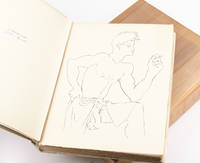
194791769n. l.: Paul Morihiens. n. 1947. Fine. One of a 9-copy issue of this celebrated clandestine novel with an original drawing by Cocteau Paul Morihien s. n. n. l. s. d. 1947 ; lettre : fin mars 1944 25 x 32.5 cm En feuilles sous chemise et étui First edition. One of 10 copies on vélin de Lana lettered G around which Genet has signed in blue ink signed by Genet at the limitation page most limited deluxe issue except for a unique copy. Complete with the loose leaf beginning with Une brusque lassitude.. With an autograph letter signed by Jean Genet on one page with customary fold marks from mailing published in Edmund White Jean Genet pp. 260-261. Illustrated with 29 erotic lithographs by Jean Cocteau and an original pencil drawing by Cocteau as well as a suite of the illustrations presenting some foxing on certain plates. Loose leaves in the publishers wrappers and laced slipcase with the upper board detached wood slipcase square spine with slide mechanism on the spine bearing the title and author engraved in red. An exceptional copy with a suite of the illustrations on Chine paper and an original drawing by Cocteau also featured in the book on p. 177. Also with an important autograph letter signed dating from late March 1944 written by Jean Genet to Maurice Toesca thanks to whom he avoided being sent to a concentration camp. Maurice Toesca a senior official at the Prefecture of Police as well as a prolific novelist biographer and literary critic had met Genet in 1944 on the request of Cocteau to secure his release: Sir Even had Monsieur Jean Cocteau not told me I would have understood the part you played in my release for you are poetrys representative at the Prefecture and my simple thanks would seem poor recompense for the marvellous gift you have given me. I am deeply sorry not to be able to offer you of all people a poem; but at least my heart is full of warm feeling toward you. Do not laugh Monsieur Toesca if you hear me speak of friendship it is still the finest thing I have to give. Please accept mine. Need I tell you again how desperate I was sunk in a darkness from which I no longer hoped to emerge and truly darkness it was for I had contemplated staking everything on an escape attempt whose most likely outcome was death the guards were terribly well armed! I tell you this nonetheless so that you may know my joy when the inspector came to announce my release. Monsieur Dubois was splendid; I should be glad if he could learn from you that I hold him in the deepest gratitude. My happiness is such that I could embrace everyone who helped bring this about. Monsieur Toesca it is a very thankful old thug who dares to shake your hand. translation our own Querelle de Brest was published clandestinely by Paul Morihien Jean Cocteaus secretary. Cocteau is responsible for the masterly and sensuous and unsigned illustrations. A portion of the five hundred and twenty-four copies printed were seized by the police the following year during a raid on the bookshop run by Morihien just steps from Cocteaus apartment at the Palais-Royal. After Genets wartime tribulations Cocteau came once more to his aid this time to spare him a life sentence: convicted for a third time and facing transportation to a penal colony Genet obtained a Presidential pardon through the intervention of Cocteau and Sartre. Querelle de Brest was adapted for the screen in 1982 by Rainer W. Fassbinder. A superb copy of this masterpiece a true cornerstone of homosexual and queer literary culture where the criminal underworld mingles with almost metaphysical ecstasy. [Paul Morihien]s. n. unknown
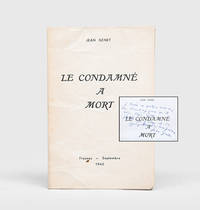
1942172551Fresnes: September 1942. Presentation copy of Genet's rare debut with his corrections First edition first printing presentation copy inscribed by the author on the title page to his friend Boris Kochno and with several authorial manuscript corrections. Genet wrote the poem while imprisoned in Fresnes for bibliolarceny. The manuscript was smuggled out and privately printed in a tiny edition. The inscription reads thus: "à Boris ces quelques mots mais bien davantage parce qu'il aime déjà Guy plutôt qu'à cause de sa sympathie par mon poème - Jean Genet" "These few words are for Boris but much more because he already likes Guy than because of his appreciation for my poem". Kochno 1904-1990 was celebrated for his work for the Ballets Russes and Les Ballets des Champs-Elysées which helped reinvigorate the art in France. Genet's biographer Edmund White credits a small circle of distinguished gay artists to whom Kochno belonged with inspiring Genet to write about homosexuality with such unprecedented frankness and power. The individual to whom the inscription refers is likely Lucien-Guy Noppé nicknamed Guy Genet's fellow inmate and lover. Noppé was a major inspiration for Miracle de la rose 1946 and Journal du voleur 1949 and was the subject of various poems penned by the author such as "Boxeur endormi" and "À Guy". On 21 July 1943 Genet sent the latter poem in manuscript to both Kochno and Kochno's lover Christian Bérard. The couple later designed the set for Genet's play Les Bonnes 1947. Variants in pink wrappers have been noted without priority. Octavo pp. 16. Original white wrappers printed in black pages loose within as issued. Housed in a custom black solander box. Faint foxing to lightly creased wrappers small burnt hole to front cover internally fresh. A well-preserved copy of this fragile publication. see Edmund White Jean Genet 1993 p. 226. unknown
1949124273Geneva: aux dépens d'un ami 1949. The first numbered copy with Genet's birthday card to a friend Signed limited edition large paper issue the tirage de tête number 1 of 10 copies numbered in roman numerals signed by Genet and printed on Vélin d'Arches paper from a complete edition of 410. Laid in is an autograph note written by Genet slipped inside a rice-paper birthday card with mawkish hand-painted decorations. The first part of the inscription in a neat hand satirizes the sentimentality of the card with a string of asinine rhymes: "Cette carte se mange comme le pain des anges mon âme de la fange tirée par vous ô Lange qui êtes sans mélange sauf de fleurs et d'oranges votre âme dans ses langes purifierait le Gange. Dans le ciel des mésanges on hurle vos louanges" "This card can be eaten like angel's bread my soul of mire pulled by you oh swaddling sheets unadulterated except for flowers and oranges your swaddling soul would purify the Ganges. In the blue tits' sky they howl your praise". The second part in a much looser hand - "Eh bien ma petite mon ange je suis très simple très gentil et je ne vous souhaite en vous embrassant que du bonheur votre Plantagenet" "Well my sweet little thing my angel I am very simple very kind and as I kiss you I only want to wish you happiness your Plantagenet" - recalls the interrogation scene in Miracle de la Rose 1946 in which the narrator's name "Genet" is turned into "Plantagenet" by the interrogator. Loose quarto quires held in the original card chemise lithographed chemise titles half-title title and dedication page. With the original grey card slipcase. Housed in a black quarter morocco solander box by the Chelsea Bindery. Chemise faintly tanned tiny closed tear at head of spine light spotting to lower margins; slipcase a little rubbed at extremities and with one tiny stain. A bright and fresh copy in excellent condition. unknown
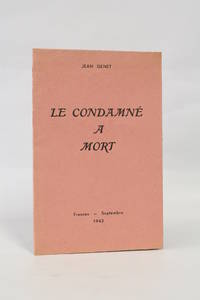
194263635Fresnes: S. n. 1942. Fine. S. n. Fresnes 1942 14 x 21.50 cm en feuilles sous couverture rose First edition of Jean Genet's debut work written at Fresnes printed in a few copies and published at the authors expense which appeared clandestinely while he was serving a prison sentence for book theft. The pamphlet thirteen pages unbound and unpaginated was printed on brown paper under a pink or white cover. Our copy is housed in a half old-rose box chemise boards of geometrically patterned paper slipcase trimmed in old-rose box the ensemble signed by Thomas Boichot. « J'ai dédié ce poème à la mémoire de mon ami Maurice Pilorge dont le corps et le visage radieux hantent mes nuits sans sommeil. ». Thus Jean Genet explained the genesis of this poem a tribute to « l'assassin de 20 ans » guillotined with whom he shared the last forty days. According to François Sentein biographer of Maurice Pilorge L'Assassin et son bourreau the two men never actually met and Jean Genet would make him into an imagined companion « mort avec l'insouciance d'un dandy » Edmund White Jean Genet. Jean Cocteau who would become both friend and guardian angel to Jean Genetsaving him from life imprisonment a few years laterwrote in his Journal: « Parfois il m'arrive un miracle. Par exemple Le Condamné à mort de Jean Genet. Je crois qu'il n'en existe que quatre exemplaires. Il a déchiré le reste. Ce long poème est une splendeur. Jean Genet sort de Fresnes la plaquette est datée de la prison « Fresnes septembre 1942 ». Poème érotique à la gloire de Maurice Pilorge assassin de vingt ans exécuté le 12 mars 1939 à Saint-Brieuc. L'érotisme de Genet ne choque jamais. Son obscénité n'est jamais obscène. Un grand mouvement magnifique domine tout. La prose qui débute est courte insolente hautaine. Style parfait. » Extremely rare and very attractive copy as published. S. n. hardcover
25554Fresnes, sans éditeur, Septembre 1942, in-8, en feuilles, couverture rempliée sur papier teinté rose.Édition originale rare du premier livre de l'auteur. Selon son futur éditeur, Marc Barbezat, Genet aurait confié l'impression de la plaquette à l'un de ses co-détenus à la prison de Fresnes, typographe de métier qui purgeait une peine pour avoir imprimé de faux tickets d'alimentation et devait être libéré quelques temps avant lui.Tirée à une petite centaine d'exemplaires, elle aurait été imprimée aux frais de Genet sur du papier de différentes qualités, détourné, dit-on, des stocks réservés à l'administration allemande.Très bel envoi autographe signé : A Jean Ballard dont la gentillesse me permit il y a 10 ans d'aller balayer les cours des jésuites. J'ai pu bouffer alors. Veuillez mon cher ami me permettre de vous le rappeler. Un tel souvenir vaut mieux pour moi que tel autre qui ne serait que littéraire Jean Genet.L’exemplaire comporte 15 corrections autographes à l’encre noire de l’auteur.2 lettres autographes signées jointes à Jean BALLARD. 4 pages in-4 ou in-12, la première, sur papier lignée, Toul, Jean Genet Caporal au 22e R.T.A. 2e Cie sans date (1935), la seconde Val de Grâce (Paris), 8 avril 1936.Rares lettres anciennes et inédites de Genet au directeur des Cahiers du Sud. Genet qui s'enrôle plusieurs fois durant ces années, est en garnison à Toul affecté au 22e Régiment de Tirailleurs algériens. Après un changement de corps il sera incorporé au Régiment d'Infanterie Colonial du Maroc. C'est du R.I.C.M., alors l'un des plus prestigieux régiments de France, devant la Légion Étrangère, que Genet sera porté déserteur.Il est tard, presque trop tard pour oser me rappeler à vous, mais l'accueil que vous me fîtes il y a bientôt 2 ans aux «Cahiers», votre bonté et votre patience me donnent de l'audace. Peut-être avez-vous oublié un garçon gauche, perdu dans Marseille, abrité un moment par les Jésuites, qui fut vous demander conseils ? Conseils pratiques et spirituels. Monsieur Ballard si vous l'avez oublié, je me souviens moi, que vous me dites : «une âme c'est quelque chose qui se touche, c'est palpable, je crois que vous avez une âme». D'aventure, il a été en Italie conduit dans une prison fasciste, en Autriche vagabondant, en Espagne mendiant (ou presque)... Les soucis spirituels et littéraires cèdent le pas aux nécessités immédiates. L'Armée enfin met, pour un temps bref, un terme à ces prodigalités. Il a donné à un camarade féru de poésie l'adresse des Cahiers du Sud afin qu'il se procure quelques numéros (...) Genet va découvrir un article épatant : Il est signé Benjamin FONDANE et s'appelle : «La conscience malheureuse». Et il cite Chestov : «Tôt ou tard la philosophie deviendra une philosophie «en plein air» et plus loin «lorsque vous perdez la route, alors... «Autre chose commence qui n'est ni l'esprit ni le logos: le voici. Ce ne sera pas «la perception laborieuse de quelque chose. Ce sera quelque chose «que nous saisirons immédiatement - ou le Rien». Pour qui a roulé, à droite, à gauche, titubé et tenté de se justifier pas mal d'actes nécessités par les rigueurs d'une vie malaisée, vous pensez si de telles affirmations sont un réconfort. Je ne connais pas Monsieur Fondane, et sans doute ne tient-il pas autrement à savoir que j'existe, mais celui qui a été touché par une idée, qu'il ait le droit de dire sa sympathie... Monsieur Jean Ballard m'excuserez-vous d'avoir été aussi bavard, d'un mauvais bavardage ? La caserne m'isole terriblement. Elle est bourrée de gens qui jugent intellectuellement et pas toujours intelligent (...)Je ne puis avoir l'audace de penser que vous vous souvenez de moi, quand j'allai, sur votre invitation, aux «Cahiers», je fus reçu très aimablement par, sans doute, madame Ballard. Permettez donc que je me représente : Jean Genet, un jour en détresse à Marseille, cherchant l'appui avec des consolations, des Cahiers, et échouant chez les Jésuites (...) Depuis, j'ai été affecté, en vue de mon envoi à Shanghai, au R.I.C.M., à Aix en Provence, et aujourd'hui je suis au Val de Grace où m'a conduit un stupide accident au bras et à la jambe. Et ma lettre n'est que pour vous demander s'il ne vous reste pas quelques numéros des Cahiers du Sud, ou des volumes édités par eux, que vous pourriez nous faire parvenir. La littérature des «Foyers du Soldat» est immonde, et un bain de littérature vraie, ferait un bien immense, moral donc physique, à moi d'abord et à toute la chambrée. Il ne sait trop si sa requête est décente et s'excuse d'adresser de telles lettres mais il assure Jean Ballard qu'il en aurait grande reconnaissance, et qu'il ferait œuvre pie (...)
194263635S. n. | Fresnes 1942 | 14 x 21.50 cm | en feuilles sous couverture rose
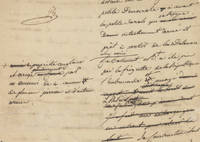
17932495809/07/1793. <p>Following the execution of King Louis XVI and Marie Antoinette in January 1793 the French revolutionary government found itself at war with Spain the Netherlands and Great Britain. It dispatched Edmond Charles Genêt as minister to the United States for the purpose of enlisting American assistance to the fullest extent possible. Genêt arrived in Charleston South Carolina on April 8 1793 – calling himself “Citizen Genêt†to emphasize the revolutionary title. He received a warm welcome and immediately began to issue privateering commissions that authorized the bearers regardless of their country of origin to seize British merchant ships and their cargo for personal profit all with the approval and protection of the French Government. President Washington saw this as a dangerous attempt to draw the new United States into a European war and on April 22 issued his Proclamation of Neutrality declaring the U.S. a neutral nation in the conflict and threatening legal proceedings against any American providing assistance to the warring countries. Genet then proceeded to the capital at Philadelphia and was met with acclaim and jubilation everywhere he went as many Americans supported the French Revolution’s goals of liberty equality fraternity. He was officially received by Washington on the afternoon of May 18th but Secretary of State Thomas Jefferson soon informed him that the United States considered the outfitting of French privateers in American ports to be a violation of the U.S. policy of neutrality. Genet ignored this warning and in fact threatened to take his case directly to the American people bypassing official government opposition. Genêt was thus willing to challenge Washington and risk being seen as a foreign meddler in American domestic affairs.</p><p>Sometime in the spring of 1793 the French frigate Embuscade commandeered the British vessel Little Sarah and dragged it into Philadelphia. The ship was there outfitted as a French privateer and renamed La Petite Démocrate. On June 22nd the Washington administration began to investigate the disturbing claims coming from the nation's capitol. There was talk of sending an armed brigade from the state of Pennsylvania to confront Genet. Secretary of State Thomas Jefferson visited Genet in an attempt to secure his promise that the vessel would not leave Philadelphia before the President’s return. According to Jefferson’s account of the meeting Genet “said he should not be justified in detaining her. I told him it would be considered a very serious offence indeed if she should go away; that the government was determined on that point and thinking it was right would go through with it. After some hesitation he said he could not make any promise it would be out of his duty but that he was very happy in being able to inform me that the vessel was not in readiness and therefore could not sail that day.… And whenever I tried to fix it to the President’s return he gave the same answer that she would not be ready for some time but with the look and gesture which showed he meant I should understand she would not be gone before that time.""</p><p>On July 8 Washington Hamilton Jefferson and Knox met at Independence Hall. Note of the meeting read: ""The secretary of the Treasury and The secy of War are of opinion that it is expedient that immediate measures should be taken provisionally for establishing a battery on Mud Island under cover of a party of Militia with direction that if the Brig Sarah should attempt to depart before the pleasure of the President shall be known concerning her military coercion be employed to arrest and prevent her progress. The Secretary of State dissents from this opinion.""</p><p>Jefferson evidently then turned to Genet who was in Philadelphia to write his own rationale that he would send just 2 days later to Washington enclosing this note with a recommendation that armed conflict not be commenced as he had advocated at Independence Hall. He judged Genet's non-committal along with conciliatory language as promise enough that the action would not be taken prior to President Washington's return.</p><p><strong>Autograph memorandum signed</strong> Philadelphia July 9 1793 to Thomas Jefferson Genet's draft pages 1 and 2 signed in the margin. <em>""Note pertaining to la Petite Démocrate captured by frigate Embuscade heretofore la Petite Sarah that M. Genet has had armed on account of the Republic and to which the exit is being opposed.""</em></p><p><em>""You have asked me details about the Brigantine la Petite Démocrate heretofore la Petite Sarah found presently armed and ready to leave Delaware. This vessel Sir of English property armed by our enemies with 4 cannons and other arms has been taken by the Frigate of the French Republic l'ambuscade and sent to Philadelphia. The construction being light and strong her body lined with copper her molding superior her rigging and her masts in good shape I have judged to act on the Embuscade Captain's report and that provided by other sailors that the acquisition of this vessel was advantageous to the Republic and this consideration added to the wish I had to procure employment for a rather large amount of French sailors being there exposed to the danger which often comes by being idle and miserable made me determined to take her on behalf of the State.</em></p><p><em>""I had it repaired right away. I did so using cannons found on board 4 French vessels. I left the command to the Citizen Amiot officer of the Republic. I will have it sent out armed with a commission of the Executive Council along with my instructions as soon as possible. I have to confine Monsieur that relating these facts which are not susceptible for discussion from me and which should not present any difficulties to your government.""</em></p><p>On July 11 Jefferson wrote to Washington ""Papers requiring the President’s instant attention"" enclosing the final version of this very note.""</p> unknown
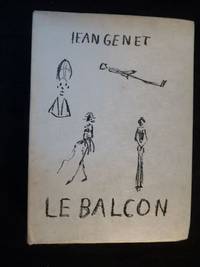
195843776Paris L'Arbalte 1958 In-12, daim gris trs fonc entirement recouvert d'un dcor rptition de petits motifs abstraits incrusts en box verni noir, rehauss de jeux de bandes horizontales irrgulires mosaques en box noir avec chaque extrmit un petit clou argent; nom de l'auteur et titre de l'ouvrage en petites capitales pousses au palladium sur les bandes passant par le dos; doublures de mme peau que les plats, gardes de daim gris clair, non rogn, couverture imprime. Bote-tui (Florent Rousseau, 2013).Edition originale. Exemplaire numrot sur vlin de Lana. Trs belle reliure de Florent Rousseau, parfaitement adapte l'esprit du livre.
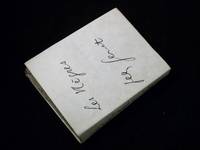
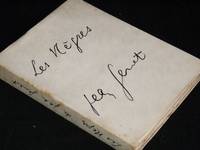
195838387Décines Décines-Charpieu: Marc Barbezat 1958. Fine. Marc Barbezat Décines Décines-Charpieu 1958 15.50 x 20.50 cm broché First edition one of 32 numbered copies on Japon nacre paper the tirage de tête. A fine copy. Marc Barbezat unknown
195841929Décines Décines-Charpieu: Marc Barbezat 1958. Fine. Marc Barbezat Décines Décines-Charpieu 1958 15 x 19.50 cm relié sous étui First edition one of 32 numbered copies on nacré Japon the tirage de tête. Bound in full embossed khaki leather smooth spine without lettering the title of the work and the author's name in gilt on the front cover reproducing the calligraphy of the original wrapper publishers name and place in gilt on the back cover likewise reproducing the calligraphy of the rear wrapper endpapers and pastedowns of wood-grain effect almond paper wrappers and spine preserved top edge gilt; slipcase covered with wood-grain effect almond paper echoing the binding and bearing on the covers the same features as the binding. A few small spots of foxing on the spine and upper edge slightly affecting the boards internally very clean. A rare copy spectacularly and perfectly presented. Marc Barbezat hardcover
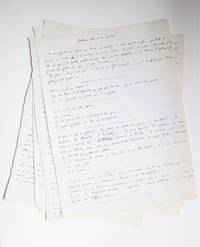
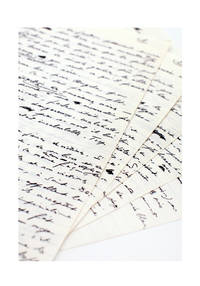
196872719s. l.: S. n. 1968. Fine. S. n. s. l. s. d. circa 1968 22 x 29 cm 6 feuillets 1/4 Unpublished autograph manuscript comprising 6 and a quarter leaves written in black ink containing around twenty notes and digressive reflections relating to the exercise of power. - ""Where does the law come from From power. The law is the voice and instrument of power. Power precedes the law and gives birth to it."" - ""The working masses are not about to accept nor to consider as political the rape of a little girl nor of a little boy. We live in such a moral climate that it first makes us pity the pain of the parents it makes us reject the cruelty of the act. The worker needs a certain respectability in order to stand equal here with the present bourgeois classes the aristocracy has disappeared. We must look ever more closely at what servile labor consists of and what it entails."" - ""Work as a virtue fostered a new morality and if it was all the more distant and disregarded by the aristocrat the people held to it. I am not speaking of what broke out in 1789 but of what was gradually formed as serfs escaped in one way or another from serfdom. In 1789 this new morality had reached its point and what had carried it word illegible to the extreme had become what was called the bourgeoisie. Bound to this new morality of work they also aspired to an 'imitation'but an imitation onlyand the morality was stronger than the still prestigious pretensions of the declining nobility."" - ""If there is an essence of power it remains hidden. But the manifestation of power even if not ostentatious seeks to be recognized and visible. For instinct one must accept the enigma."" - ""Rousseau a foundling abandons his children to public care: no one cares. It is probable that Dostoevsky raped a little girl: no one cares. The Brothers Karamazov is indeed a revolutionary book."" S. n. unknown
195838387Marc Barbezat | Décines 1958 | 15.50 x 20.50 cm | broché
195841929Marc Barbezat | Décines 1958 | 15 x 19.50 cm | relié sous étui
195640848Décines Décines-Charpieu: Marc Barbezat 1956. Fine. Marc Barbezat Décines Décines-Charpieu 1956 15 x 20.50 cm broché First edition one of 32 numbered copies on Japon nacré the tirage de tête. Illustrated covers with an original lithograph by Alberto Giacometti. Slight worming to spine. A good well-margined copy. Marc Barbezat unknown
Genet2<p><strong>GENET Jean 1910-1986</strong></p><p>Autograph manuscript first draft<br />N.p.n.d 1971 4 p. 1/2 in-4°<br />Numerous corrections from the author</p><p><strong>A complete and first-draft manuscript written in reaction to the murder of George Jackson</strong></p><p><strong><u>A remarkable plea with revolutionary overtones taking a firm stand in support of the African-American community</u></strong></p><p><em>" Hier c'est-à-dire quand la vie de George Jackson paraissait encore possible j'ai parlé de son livre comme meurtre et je ne me doutais pas que le meurtrier serait descendu par la police américaine. <strong>Cet assassinat de Jackson par la police américaine quel que soit le niveau d'autorité qui l'a décidé c'est un coup monté : il a pu partir des salons de Reagan ou d'un bureau de simples gardiens la cible restait la même : un Nègre qui pense qui écrit ce qu'il pense dont le livre est l'annonce et la préparation d'une révolution noire.</strong><br /></em>… <strong><em>Les Blancs peuvent rire de sa naïveté Jackson était en effet naïf</em></strong><em> c'est-à-dire neuf c'est-à-dire nouveau c'est-à-dire dangereux. Maladroits <strong>les blancs l'ont tué</strong>. Ils ne l'ont pas grandi par sa mort ils lui ont enfin donné ses proportions exactes pourtant incalculables trop vastes. </em>…<em> Il n'y a jamais eu il n'y a pas il n'y aura jamais de victimes. <strong>Si Jackson est responsable de sa démarche révolutionnaire de son livre et de sa mort les policiers américains sont responsables de la même façon de l'assassinat de Jackson</strong>. Les Noirs américains sont responsables et non victimes quand ils acceptent de faire la guerre au Viêt-Nam à Saint-Domingue en Bolivie pour ce que les Américains blancs appellent la grandeur de l'Amérique. <strong>Ils sont responsables quand ils acceptent même la plus petite parcelle des bénéfices de l'impérialisme qui s'enrichit des dépouilles des peuples dévastés. L'Europe fait partie aussi de ce vampirisme. Il n'y a qu'un moyen de prouver sa liberté pour une liberté toujours plus grande c'est d'entrer dans la révolution</strong> </em>…<em> comme tout homme et toute femme qui refusent d'asservir et d'être asservi.</em> …<em><br />Jonathan et George Jackson Angela Davis les Panthères noires les mouvements révolutionnaires noirs ou blancs ont porté au plus haut degré ou la trahison ou le combat démasqué donc la conscience d'être responsable. </em>…<br /><strong><em>Qu'est-ce que la prison C'est l'immobilité. " Homme libre toujours tu chériras la mer ! " Baudelaire.</em></strong>…<em> Même s'il m'est difficile ici de dire comment le monde sera changé croyez bien qu'on y travaille. Nous ne négligerons rien. Cela nous gêne peut-être de dominer de moins en moins les Noirs mais c'est qu'ils ne l'acceptent plus. Ils comptent sur leur propre force non pour nous dominer mais pour nous regarder droit dans les yeux. Ils changent aussi le langage qui n'obéira plus à la définition des maîtres. </em>…<br /><em>Qu'était le corps de Jackson dans cette cellule. Ni plus ni moins qu'un autre dans cet espace</em> …<br /><strong><em>Il faut porter notre attention sur David Hilliard huit ans de prison sur Angela Davis accusée de complot et de tentative de meurtre et de tous les Noirs emprisonnés – dans la prison ou dans le ghetto – qui risquent à tout moment d'être assassinés comme George et Jonathan Jackson ou gâchés par le monde blanc. En fait il faut apprendre à trahir les Blancs que nous sommes</em></strong><em>. "</em></p><p>George Jackson died in San Quentin prison on August 21 1971. According to the official police account he was shot while allegedly threatening a guard with a revolver during an escape attempt having taken advantage of a riot to flee the prison yard — despite it being under heavy surveillance. However the official version of events does not align with the findings of an independent investigation conducted afterward. To this day the circumstances surrounding his death remain shrouded in mystery. Jackson's trial was scheduled to take place just two days later — a trial he had actively prepared for. In the end he and his two comrades were acquitted of a crime committed nearly two years earlier on January 13 1970.<br />This text is an essential complement to Genet's other writings on Jackson following in the wake of an article published shortly before. It was elaborated as part of a collective work in homage to the "Soledad Brothers" and more broadly to all Black political prisoners.</p><p>Genet's political commitment reached its full force beginning in 1970. On February 25 a representative of the Black Panther Party requested his support. Genet declined to sign petitions but offered instead to carry out advocacy campaigns on the ground in the United States for the Black Panthers. For two months he shared their daily life tirelessly crisscrossing the country with them giving countless lectures at universities and speaking to the press.</p><p>An admirable manuscript in which Genet's outrage bursts forth in solidarity with the African-American cause.</p><p><u>Bibliography:</u><br />Jean Genet <em>L'Ennemi déclaré</em> textes et entretiens Gallimard 1991 p. 105-108</p>
49776Dcines Marc Barbezat, L'Arb 3 fvrier 1961 In-8, box argent orn sur les plats et le dos d'une composition voquant un paravent, constitue de bandes verticales et parallles de maroquin vert en grande partie recouvertes par deux grands visages imprims en vert bouteille sur un fond parme; nom de l'auteur et titre de l'ouvrage en grandes capitales pousses au palladium sur le dos; doublures bord bord de papier Japon gris perle, non rogn, couverture imprime remplie. Bote-tui (Daniel-Henri Mercher, 2015).Edition originale de cette pice qui fut joue pour la premire fois le 16 avril 1966 Paris l'Odon Thtre de France, dans une mise en scne de Roger Blin. Un des 45 premiers exemplaires numrots sur japon nacr. Belle reliure mosaque de Daniel-Henri Mercher.
48226Dcines Marc Barbezat, L'Arb 3 fvrier 1961 In-8, broch, couverture imprime remplie. Chemise, tui.Edition originale de cette pice qui fut joue pour la premire fois le 16 avril 1966 Paris l'Odon-Thtre de France, dans une mise en scne de Roger Blin. Un des 45 premiers exemplaires numrots sur japon nacr. Neuf, non coup.
47786Dcines Marc Barbezat, L'Arb 3 fvrier 1961 In-8, broch, couverture imprime remplie.Edition originale de cette pice qui fut joue pour la premire fois le 16 avril 1966 Paris l'Odon Thtre de France, dans une mise en scne de Roger Blin. Un des 45 premiers exemplaires numrots sur japon nacr. Exemplaire l'tat de neuf, non coup.
46405928Précieux tapuscrit du premier roman de Jean Genet qui n’avait alors fait paraître que le Condamné à mort, plaquette publiée à compte d’auteur à l’automne 1942. La récente édition des œuvres complètes de Genet (Bibliothèque de la Pléiade 2021) offre une notice très détaillée sur la genèse de ce roman et sur sa publication en décembre 1943.Notre-Dame-des-Fleurs a été écrit presque entièrement à la prison de la Santé entre janvier et mars 1942 puis à Fresnes où Genet fut incarcéré de mai à octobre de la même année. “Au début de 1943 Cocteau découvre le Condamné à mort ; il est ébloui et désire en rencontrer l’auteur, qui tient à ses heures une caisse de bouquiniste sur le quai Saint-Michel. Une première entrevue a lieu le 14 février et Genet propose à Cocteau de prendre connaissance du roman qu’il vient d’écrire. Le surlendemain, il lui en lit quelques pages. La matière déroute d’abord son auditeur, mais le soir même, Cocteau sort de sa perplexité” Pléiade p. 1373. Dans son Journal (1942 - 1945) Cocteau écrira “Trois cents pages incroyables où il crée de toutes pièces la mythologie des “tantes” Genet est un voleur poursuivi par la police. On tremble qu’il ne disparaisse et qu’on détruise ses œuvres. Il faudrait pouvoir les éditer, à quelques exemplaires, sous le manteau.” Journal. Gallimard 1989 pp. 269-270. Le manuscrit de Jean Genet sera dactylographié quand Cocteau obtiendra un contrat de Paul Morihien en mars 1943. La relecture est confiée à François Sentein. La première édition paraîtra sous le manteau en décembre 1943 à 350 exemplaires, sans le nom des éditeurs Morhihien et Denoël, mais ne sera diffusé qu’à partir de septembre 1944. E 1948 il sera republié par Marc Barbezat qui en avait déjà donné un extrait dans le n° 8 de la revue L’Arbalète (avril 1944). En 1951 Notre-Dame-des-Fleurs ouvre le tome 2 des Œuvres complètes publiées par Gallimard.Nous ignorons l’origine de ce dactylogramme qui a appartenu à Raymond QUENEAU. Nous avions acquis la bibliothèque Queneau peu après son décès, mais l’héritier n’avait pu nous éclairer sur les rapports de son père avec J. Genet.La page de titre porte l’ÉPIGRAPHE AUTOGRAPHE de Jean Genet : “Sans Maurice Pilorge dont la mort n’a pas fini d’empoisonner ma vie, je n’eus jamais écrit ce livre. Je le dédie à sa mémoire J. G.” Cette dédicace signalée comme absente de dactyl. (par les éditeurs de la Pléiade p. 1390) figurera en tête des éditions.Nous avons soigneusement comparé le texte de cet exemplaire dactylographié avec celui de l’édition originale et nous avons relevé plus de 50 variantes plus ou moins importantes aux pages 11, 15, 16, 25, 31, 34, 35, 37, 57, 58, 75, 79, 84, 90, 97, 100, 104, 111, 116, 118,121, 122, 144,151,153,154, 155, 166, 168,171, 174, 175, 177, 184, 193, 195, 198, 206, 208, 212, 215, 227, 234, 267, 272, 282,287, 291, 292, 315,318, 323 et 331 du tapuscrit.
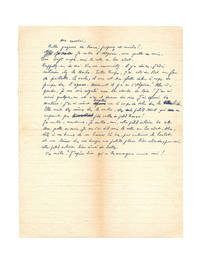
1955Genet4<p><strong>GENET Jean 1910-1986</strong></p><p>First draft manuscript<br />N.p.n.d c. 1955 3/4 p. in-4° in blue ink on lined paper<br />Numerous repentirs by the author</p><p><strong>Unpublished and provocative manuscript about the Algerian war</strong></p><p><strong><u>From the</u></strong><u> <strong>B. & R. Broca</strong> <strong>collection</strong></u></p><p><em>" Me revoici</em><br /><em>Belles gonzesses de France préparez vos miches !</em><br /><em>Je rentre d'Algérie une patte en moins trois doigts coupés mais le reste en bon état.</em><br /><em>Rappellez-vous</em> sic<em> de moi. Vous me reconnaîtrez : il y a dix ans j'étais milicien chez les Boches. Entre temps j'ai rôti du Viet au feu des paillottes. Les vaches ils nous ont tous foutu dehors à coup de pompes dans l'ognon. Heureusement il y a eu l'Algérie ! Alors là pardon je me suis régalé avec la viande de Bic ! J'en ai crevé quelques-uns et c'en est devenu du vice. J'ai défoncé des moukères : J'en ai même travaillé une à coup de talons dans le bide. Elle avait deux mômes dans le ventre deux sales petits Bicots qui ne ne couperont pas</em> les <em>jolies couilles de petit Français ! </em><br /><em>Je rentre mesdames je rentre moi votre petit milicien de 44. </em><br /><em>Une patte en moins je vous l'ai dit mais le reste en bon état. Alors dites à vos hommes de se barrer là bas pour continuer le boulot et me laisser dans vos draps une petite place bien chaude pour moi votre petit milicien bien aimé et boiteux. </em><br /><em>Vos mâles J'espère bien qu'on les arrangera comme moi ! "</em></p><p>Entirely unpublished this text seems to be linked to the play <em>Les Paravents</em> first performed on 16 April 1966 at the Théâtre de l'Odéon. Although the complete manuscript of the work as we know it was written in 1961 we nevertheless know that the first drafts were composed as early as 1955. Genet made profound changes and this sequence a monologue by a colonist was probably discarded.<br />The text deliberately provocative embodies here more than ever the moral intellectual and sexual transgression of its author. Strongly committed to anti-colonialism Genet expressed his position not only through his work but also through political combat. He thus took a violent stand against France during the Algerian War and pleaded more generally the cause of independence.</p><p><u>We would like to thank Albert Dichy for confirming the unpublished nature of this document</u></p>
195640848Marc Barbezat | Décines 1956 | 15 x 20.50 cm | broché
18251528Albany: Packard & Van Benthuysen 1825. About very good. 112pp. plus five engraved plates and folding table. Original printed boards sympathetically rebacked. Light dampstaining and wear to boards. Some foxing and toning internally heavier to initial leaves. A rare and pioneering if evidently fanciful work on air travel by Edmund Charles Genet the infamous ambassador of the French Republic to the United States who from his position in America sought to outfit privateering expeditions against British and Spanish interests in the Caribbean during the 1790s. Following the failure of his schemes and removal from his office at the request of President Washington Genet managed to remain in the United States:<br/><br/>"In February 1794 the new minister Joseph Fauchet arrived with a warrant for Genet's arrest. Had the ex-minister returned to France the Jacobins now in power might have executed him. Granted asylum in the United States he married Cornelia Clinton daughter of New York governor George Clinton 1739-1812 settled near Albany and eventually became a U.S. citizen. He avoided politics and busied himself with publishing unworkable schemes for powered balloons and for using hydraulic power to haul barges over hills" - ANB.<br/><br/>Despite its title which suggests hydraulics the present work largely deals with aviation and is regarded as the first printed suggestion of the theory of a heavier-than-air machine taking flight. The marvelous plates contain detailed diagrams and illustrations of Genet's proposed horse-powered aerostatic airship and the text discusses his designs and his theoretical proofs for the possibility of mechanical flight in exuberant detail. <br/><br/>"This pamphlet by the former Ambassador from France contains a proposal for a large airship and other suggestions for the use of the aerostatic principle. The project attracted much attention. but never materialized" - Aeronautic Americana. "Extremely rare and important the first book printed in the United States on practical aeronautics and on the first patent for an aeronautical invention" - Streeter.<br/> ANB online. Aeronautical Americana 9. Honeyman Sale 1475. Howes G100 "b." Rink 610. Streeter Sale 3974. Packard & Van Benthuysen unknown books