259 résultats
200412592Marcinelle, Dupuis, 1985 ; in-4, 48 pp., cartonnage de l'éditeur.
200412591Marcinelle, Dupuis, 1985 ; in-4, 48 pp., cartonnage de l'éditeur. N° 8.
200412589Marcinelle, Dupuis, 1987 ; in-4, 48 pp., cartonnage de l'éditeur. N° 15.
200412588Marcinelle, Dupuis, 1987 ; in-4, 48 pp., cartonnage de l'éditeur. N° 10.
200412595Marcinelle, Dupuis, 1984 ; in-4, 48 pp., cartonnage de l'éditeur. N° 7.
200412594Marcinelle, Dupuis, 1984 ; in-4, 48 pp., cartonnage de l'éditeur(1er plat trace légère d'écriture. N° 7.
200412598Marcinelle, Dupuis, 1983 ; in-4, 48 pp., cartonnage de l'éditeur. N° 6.
200412597Marcinelle, Dupuis, 1983 ; in-4, 48 pp., cartonnage de l'éditeur. Tampons page de titre intérieur N° 6.
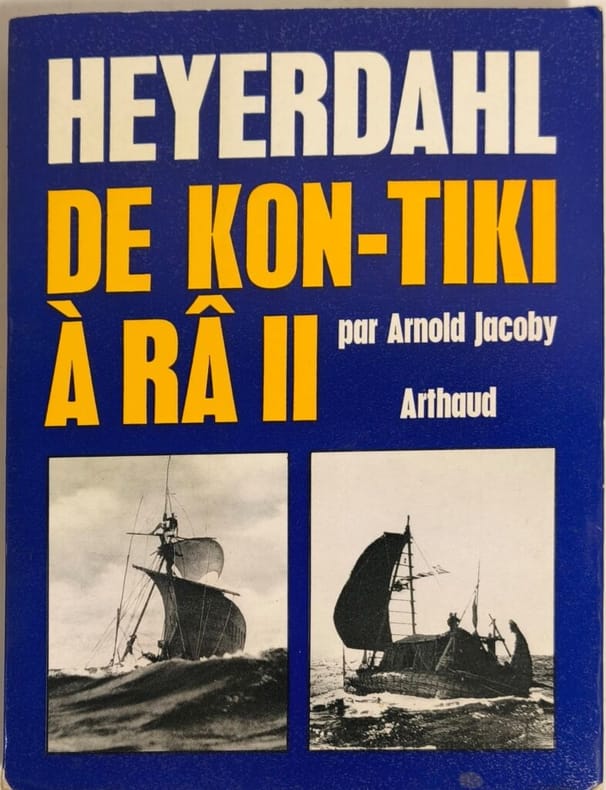
19705508Arthaud 1970 249 pages in8. 1970. broché. 249 pages. Cette biographie d'Arnold Jacoby retrace la vie de l'explorateur Thor Heyerdahl en se concentrant sur ses deux expéditions maritimes les plus célèbres : la traversée du Pacifique sur le radeau Kon-Tiki et celle de l'Atlantique sur le bateau de papyrus Ra II. L'ouvrage traduit du norvégien est illustré de croquis et de photographies
193722044Paris Letouzey et Ané 1937 In-8 paginé de 1026 à 1519, de Panégéryque à Papyrus
Mm 210x270 Volume nella sua brossura originale e cofanetto protettivo editoriale, 32 pagine con numerose tavole in nero fuori testo. Opera in ottime condizioni. Spedizione in 24 ore dalla conferma dell'ordine.
2000LFA-126714069Un ouvrage de 197 pages, format 270 x 315 mm, illustré, relié cartonnage sous jaquette couleurs, publié en 2000, bon état
1928144335Giessen. Verlag von Alfred Töpfelmann 1928. 35 Seiten u. eine Tafel. Originalbroschur. (Geringe Gebrauchsspuren).
Mm 220x285 Volume realizzato dall'Editore per conto del "Credito Italiano" - Libro rilegato in tela con sovraccopeta, custodia editoriale muta, XV-482 pagine con 238 illustrazioni a colori nel testo. Opera in ottime condizioni. SPEDIZIONE IN 24 ORE DALLA CONFERMA DELL'ORDINE.
MILAN, Sté Ed. Vita e Pensiero - 1936 - tiré à part du IV Congresso internazionale de Papirologia à Firenze - 5 pages - Non coupé - très propre Envoi
Smith Wilbur Il settimo papiro. , Longanesi 1995, Libro in condizioni mediocri, presenta pagine interne ingiallite, come la sovraccoperta Mediocre (Poor) . <br> <br> Copertina rigida <br> 554<br> 9788830412705
In-16 (cm. 19.60), brossura illustrata, con alette, pp. 198, (2), con illustrazioni in bianco e nero nel testo. Prima edizione. Text in English. Tracce di polvere al piatto posteriore; peraltro, volume in ottimo stato (nice copy).
Very light shelfwear. ; Graeco-Roman Memoirs No. 59; 8vo - over 7¾" - 9¾" tall; 50 pages
Creasing to lower corner of book. ; Graeco-Roman Memoirs No. 59; 8vo - over 7¾" - 9¾" tall; 50 pages
A19909Liber and Editions Minerva:Fribourg, Genève.0. 119 Seiten.27 cm. Original-Leinen mit Original-Schutzumschlag
114272aafBern und Stuttgart, Verlag Hans Huber, 1966, in-8vo, 119 S., Original-Leinenband mit OU.
1064259Paderborn : Schöningh, 2016. 153 S. Originalbroschur.
Wilbur Smith Il settimo papiro. , Longanesi 1995, Libro in condizioni buone, non presenta alcun segno di usura se non le pagine interne leggermente ingiallite Buono (Good) . <br> <br> <br> 550<br>
Faint creases to wraps. ; Conferenze Pubbliche, 2; 26 pages
Very light shelfwear. Else fine. ; Egyptian Bookshelf; 96 pages; One of the most outstanding inventions of ancient Egypt was the making of "paper" from the papyrus plant. As early as 3000 B. C. , sheets and rolls of papyrus provided an ideal surface for writing with reed pen and cakes of carbon black and red ochre pigment. Egyptian scribes were able to record on papyri everyday details such as administrative records, legal documents, and letters of business and personal life. Equally important for our understanding of ancient Egypt, pen and papyrus were used to record literary texts, tales, and moral instructions, as well as compendia of Egyptian knowledge exemplified by the famous Rhind Mathematical Papyrus and the books of treatment, prescriptions, and recitations for healing. Religious hymns and litanies are recorded, as are the great formulae to secure life after death--the Coffin Texts and the Book of the Dead. In this book, Richard Parkinson and Stephen Quirke freshly examine the methods of papyrus-making and its different uses, not only under the Pharaohs, but also other Egyptian civilizations such as the Hellenistic kingdom of the Ptolemies and the colonial rule of the Roman Empire. Papyrus remained the writing material of the Mediterranean world until it was eclipsed by the cloth paper of the Orient in the ninth century A. D. , bringing four thousand years of writing tradition to an end.