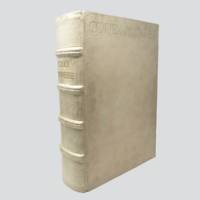
121 résultats
2023__0113230915Stationery Office Books 2023. Hardcover. New. 6700 pages. 368.00x248.00x239.00 inches. Stationery Office Books hardcover
2024__0113231032TSO 2024. Paperback. New. 7248 pages. 8.27x28.54x11.81 inches. TSO paperback
Z1-BULK-004-00257The Stationery Office. Used - Like New. Used - Like New. Worn/ripped cover. Ships from UK in 48 hours or less usually same day.Your purchase helps support Sri Lankan Children's Charity 'The Rainbow Centre'. 100% money back guarantee. We are a world class secondhand bookstore based in Hertfordshire United Kingdom and specialize in high quality textbooks across an enormous variety of subjects. We aim to provide a vast range of textbooks rare and collectible books at a great price. Our donations to The Rainbow Centre have helped provide an education and a safe haven to hundreds of children who live in appalling conditions. We provide a 100% money back guarantee and are dedicated to providing our customers with the highest standards of service in the bookselling industry. The Stationery Office unknown
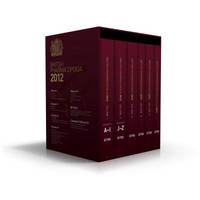
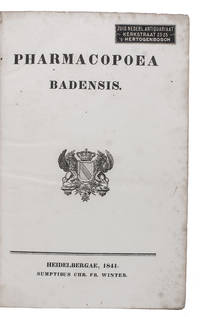
1841I14BP0GYACIHHeidelberg 1841. Large 8vo 23.5 x 15.5 cm. Christian Friedrich Winter Near contemporary half calf gold-tooled spine. With the wood engraved arms of Baden on title-page. VIII 353 1 pp. First edition of the official pharmacopoeia of the Duchy of Baden in southwest Germany which replaced the Preußischen Pharmakopöe used there previously. It contains a total of 822 medicines and recipes of which 345 "Simplicia" simple medicines and 477 "Praeparata" compound medicines. The book is entirely interleaved.With bookseller's ticket on title-page. Slightly foxed throughout primarily in the margins. Binding cracked at front hinge otherwise a good copy.l R. Schmitz et al. Geschichte der Parmazie 2005 pp. 577-578. unknown
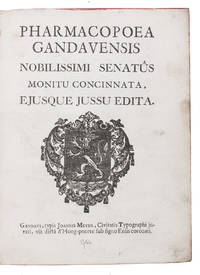
1756I17F1HIG4EOQGhent 1756. 4to. Joannis Meyer Contemporary calf richly gold-tooled spine with a tulip in 5 of the 7 compartments red edges. 2 works in 1 volume. 1 1 blank 14 274 30; 54 2 pp. Ad 1: Unrecorded first issue of the rare third edition of the Ghent pharmacopoeia the first to call itself a "pharmacopoea" instead of "antidotarium" in the title.This copy differs slightly from all others recorded in that it contains a somewhat different preface and approval which is signed only by A.C.J. van Rossum and dated 1755. It therefore lacks the more expanded approval from 1756 of the professors of the University of Louvain including that of Van Rossum as well as the subsequent dedication to Empress Maria Theresa. The present variant is therefore almost certainly an earlier issue.Ad 2: New edition of the taxa regulating the prices of pharmacists in Ghent. The previous version dates from 1690 and this new edition was published to reflect the changes made in the pharmacopoeia of 1756.With the binding worn at the spine and somewhat along the extremities. Slightly thumbed with a small tear in the fore-edge margin of pp. 239-248 and a water stain in the fore-edge margin of the final part of ad 1 starting at p. 265; a good copy.l Ad 1: Anet 2 copies; Daems & Vandewiele p. 106 3 copies; STCV 2 copies; WorldCat 1 copy; not in Blake; Wellcome; ad 2: Anet 1 copy; Daems & Vandewiele pp. 106-107; not in STCV; WorldCat. unknown
2025__0113231075TSO 2025. Paperback. New. 7248 pages. 8.27x28.54x11.81 inches. TSO paperback
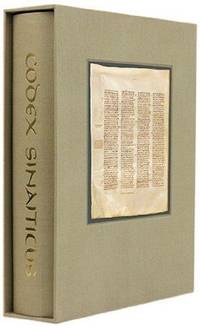
42603London: The British Library 2011. 2 Vols. folio 450 x 360 mm introduction volume: 31pp. orig. printed wrappers facimile volume: 822 pages of coloured facsimiles orig. cloth slip-case some light spotting. The facsimile is an enormous and extremely heavy book. Codex Sinaiticus is one of the worlds most remarkable books. Written in Greek in the fourth century it is the oldest surviving complete New Testament and one of the two oldest manuscripts of the whole Bible. No other early manuscript of the Christian Bible has been so extensively corrected and the significance of the Codex Sinaiticus for the reconstruction of the Christian Bibles original text the history of the Bible and the history of western book making is immense. This magnificent printed facsimile reunites the text now divided between the British Library the National Library of Russia St Catherines Monastery Mt Sinai and Leipzig University Library. London: The British Library, 2011 hardcover
1616089ADD63Gedruckt durch Nicolaum Henricum Munchen Munich: . 1616 Nine volumes in one. Folio. 350 mm. Collation: Engraved title 10 leaves the last blank 62 p. ; 4 leaves the first blank pp. 63-94; 9 leaves the first blank pp. 95-200; 19 leaves the first blank pp. 201-406; 7 leaves pp. 407-443; 22 leaves pp. 444-728; 4 leaves pp. 729-774; 3 leaves the first blank pp. 775-793; 4 leaves pp. 794-827 6 leaves. Scattered damp stain heaviest on last leaf colophon. Early thumb indexes mostly present. German black letter gothic fraktur type; large woodcut initials; and decorative head and tail pieces throughout. Each sectional title bears Maximilian's large 150 x 185 mm coat of arms. Most impressive too are the six pages with large woodcuts of 10 fish and one lobster. Generally clean and tight. Original full alum tawed pigskin over beveled oak boards binding; nicely tooled in blind; with Maximillian's simple arms in a circle within a 2" diamond. Five raised bands. Original brass clasps present. Early manuscript ownerships; Printed paper ownerships of the Kgl. Bezirksgericht Nurnberg in various places. Several stamped Nazi Eagle ownerships of the Oberlandesgerichts Nurnberg. First Edition of the Codex Maximilianus. Bavaria under Maximilian I 1598-1651 was a country of around 1 million inhabitants with agriculture and salt production a ducal monopoly being the dominant sectors of the economy. It became a key player in the events leading up to the Thirty Years War. In 1608 Bavaria occupied and annexed the hitherto free Imperial and Lutheran city of Donauworth. The action caused the Protestant princes and cities to found the Protestant Union. Bavaria then concluded an alliance with the Austrian and Hungarian Estates. In 1609 Bavaria became the leading force in the newly founded Catholic Holy League an alliance formed against the Protestant Union. Consolidating his governance Duke Maximilian in 1616 introduced a new Bavarian Landrecht Law Code which was a compilation reworking and summation of all the laws and codes. Includes the codes of: Judicial Procedure; Court Laws; State Laws; Police Law; Forestry hunting and fishing regulations; Etc. It became a widespread the model for law and legislation for over 150 years. Stobbe II 366. Very Scarce. Only a handful of copies are recorded in U.S. libraries. PRICE JUST REDUCED! CHEST 2/1 Language: eng. 1st Edition. Hardcover. Very Good. [Gedruckt durch Nicolaum Henricum], Munchen [Munich]: . hardcover
1732I14C5IX5BOPXDouai: Jacques-François Willerval 1732. Contemporary tanned sheepskin richly gold-tooled spine brown title-label. Small folio 25.5 x 17 cm. With a woodcut of the then current Douai coat-of-arms a shield with an arrow and eight drops of blood on the title-page. Very rare first and only edition of the pharmacopoeia of the city of Douai in French Flanders. Although the city housed the second oldest university in the Low Countries it had never before compiled its own pharmacopoeia whereas nearby Lille had been the first city in the Southern Low Countries to do so. Compared with other pharmacopoeias the Douai pharmacopoeia was rather conservative and even old fashioned both in its recipes as in its use of measurements and despite being titled as "galeno-chymica" the number of chemical formulas is quite low cf. Vandewiele. With a library stamp and a contemporary owner's inscription on the tile-page. Rebound and with some restorations at the spine and corners; edges and spine worn with two cracks in the latter. Browned throughout especially the last 10 pages due to a damp stain that gradually grows larger through the final 30 pages.l Anet 1 manuscript copy; Daems & Vandewiele p. 93 3 copies; Vandewiele "La Pharmacopée de Douai en manuscrit de Michel Brisseau" in: Revue d'histoire de la pharmacie LXI 216 1973 pp. 340-344; WorldCat 2 copies; not in: Blake; Wellcome. Jacques-François Willerval, unknown
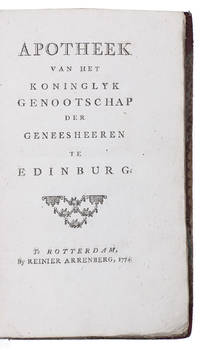
1774IAEEAKGVMQPTRotterdam 1774. 8vo. Reinier Arrenberg Contemporary red half sheepskin marbled paper sides. VI 5 1 blank 184=182 46 pp. Rare first edition of the Dutch translation of the standard pharmacopoeia of Edinburgh first published in 1699 as Pharmacopoea Collegii Regii Medicorum Edinburgensis. The present translation was based on the sixth edition of 1774. Its"materia medica" starts with the "simples": the non-compounded medicines and ingredients from vegetable animal and mineral sources. The compound medicines follow including oils syrups wines waters powders ointments plasters and more. The work closes with an index an appendix and a short list with the translations of some Latin words and terms.With a bookplate on paste-down. Only very slightly browned some occasional small spots and a few marginal water stains near the end of the book. Overall in good condition and virtually untrimmed. Binding rubbed along the extremities sides scratched.l Blake p. 348; STCN 3 copies; WorldCat 3 other copies. unknown
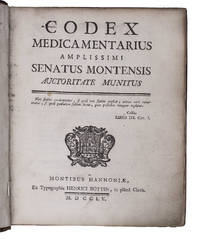
1755JC4CQCORXW8DMons: Henri Bottin 1755. Contemporary calf richly gold-tooled spine red edges. 4to. Rare first and only edition of the Mons pharmacopoeia. Although the Vienna pharmacopoeia had been officially designated as the standard for the Austrian Netherlands the city of Mons published its own pharmacopoeia in 1755 making it the last city in the Low Countries to create a new pharmacopoeia.With early owner's inscriptions. Title-page detached but otherwise in very good condition. Binding worn at the spine and extremities and spine-label lost.l Anet 1 copy; Daems & Vandewiele pp. 65-66 3 copies; Wellcome IV p. 368; WorldCat 2 copies; not in Blake. Henri Bottin, unknown
2022__0118987674TSO 2022. Hardcover. New. 11th ed. 2020 english ed edition. TSO hardcover
DG-5-2Fine. New and factory sealed. unknown
1800I14DVA32F2X0Leiden: Abraham and Jan Honkoop 1800. Contemporary mottled boards. 12mo. Rare second edition of "the first general as distinguished from hospital 'pharmacopoeia' compiled by an American" Cowen first published at Paris in 1798. The first part of the book is a classification of diseases and is taken word for word from the influential 1769 nosology by the Scottish physician William Cullen. The second part is a pharmacopoeia divided into materia medica and composite medicines. The introduction notes that it is based on the author's notes made at the University of Edinburgh the London pharmacopoeia and Joseph Townsend's The physicians' vade mecum 1794 p. x. Between the two parts can be found a list translating the Latin names of the chemical preparations "which not all readers will view as sufficiently legitimate" p. 77 into the modern English and French nomenclature.William Tazewell d. 1832 was an American physician who had studied in Edinburgh and in 1797-1800 was secretary to Elbridge Gerry in Paris. After returning to the United States Tazewell set up a medical practice in Williamsburg and later moved to Virginia. In 1803 he presented copies of his Vade-mecum to George Washington and Thomas Jefferson the latter writing that "it has really brought the whole science of diseases & remedies within the shortest compass possible and not meddling with the details of the science himself it presents exactly such a general view of every part of it as Jefferson often wishes to take" Cowen.With a small price in pen on the first flyleaf. Only some thumbing on the last 30 pages otherwise in very good condition and wholly untrimmed. Boards slightly worn and spine cracked but still structurally sound.l Cowen America's pre-pharmacopoeial literature pp. 21-22; STCN 1 copy; Founders online letters to Tazewell from Washington and Jefferson; Wellcome V p. 241; WorldCat 2 copies. Abraham and Jan Honkoop, hardcover
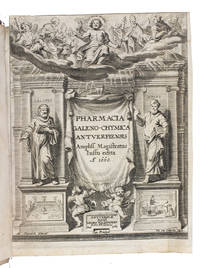
1661JC5F71XARFAUAntwerp 1661. 4to. Joris Willemsens I 18th-century vellum faded manuscript title on spine. With an integral engraved architectural title page by Petrus van Caukercken after Abraham van Diepenbeeck with the title on a drapery held by 2 putti in an arch and flanked by figures of Claudius Galenus and Masawaih al-Mardini views of a botanical garden and an apothecary's shop below and Jesus with numerous religious and allegorical figures above in a cloud letterpress title page with a woodcut decoration a divisional title for part 2 woodcut tailpieces woodcut decorated initials 5 series. Set in roman and italic with incidental Greek textura and pharmacological signs. 1 1 blank 46 285 = 281 32 1 blank pp. Rare first and only edition in Latin of the first and only official pharmacopoeia for Antwerp containing hundreds of medicinal recipes and throwing a great deal of light on 17th-century medical practice in the Low Countries. The work's separate part with the title "Selectiora chymica" shows the rising importance of chemistry in the production of medicines. Although Plantin published an important and influential 1568 Antwerp edition of Valerius Cordus's Dispensatorium first published posthumously at Nürnberg in 1546 it was not produced by order of any official municipal body. In 1624 the magistrates of Antwerp set up a Collegium Medicum which did declare that medicines were to be prepared following Cordus until further notice. In 1659 the Antwerp Collegium Medicum decided to produce their own pharmacopoeia primarily at the impetus of their secretary and future director Michiel Boudewijns 1591-1681 best known as the father of modern medical ethics. Although his name does not appear on the title-page the book does attribute the 18-page preface to him and he was probably the principal compiler of the book. The decision to compile it makes explicit reference to those published at Augsburg 1564 Rome 1583 Amsterdam 1636 and Brussels 1641 but Valerius may have remained the most important source. No apothecaries were officially consulted in the compilation of the pharmacopoeia reflecting the growing status of physicians and declining status of apothecaries.Although the letterpress title-page is dated 1660 the engraved title-page when present is apparently always dated 1661 and in some copies the 1660 has been corrected to 1661. The work has extensive preliminaries with dedications notes to the reader laudatory verses etc. but some copies include an unsigned bifolium inserted after a2 containing an additional dedication not present here. The present copy does have the rarer addendum leaf at the end and an addendum slip on Q3r supplying the omitted last line of that page with the quire signature and catchword below it. The addendum leaf has three blind impressions of the type for this addendum slip in its head margin.With minimal wear at the edges. With a brown spot in the outer margin of the first two gatherings; a very good copy.l Anet 6 copies; Daems & Vandewiele pp. 62-63 5 copies; STCV 12879911 5 copies incl. 1 defective; not in Krivatsy; Wellcome. hardcover
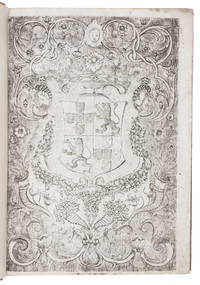
1711I17ERD520PLVLisbon 1711. Small folio 29 x 21 cm. Monastery of São Vicente de Fóra Modern sheepskin gold-tooled spine red morocco title-label. With engraved arms as fronstipiece and a title-page printed in red and black. 28 494 29 1 blank pp. Rare second edition of the first Portuguese pharmacopoeia first published in 1704 by the friar D. Caetano de Santo António d. 1730 an apothecary of the Monastery of Santa Cruz of the city of Coimbra who upon publication of the second volume was working at Lisbon in the Monastery of São Vicente de Fora. "The Pharmacopeia Lusitana shows how important the convent pharmacy was at that time in Portugal. The Portuguese religious apothecaries were very knowledgeable on pharmaceutical matters" Pita. With a few manuscript annotations in the margins. Ca. 50 leaves with a waterstain at the head of the gutter margin an occasional smudge and two leaves with a small hole and small tears otherwise in very good condition.l J.R. Pita Brief history of Portuguese pharmacopoeias pp. 1-5; Porbase 1 copy; Wellcome IV p. 369 incomplete; WorldCat 5 copies. unknown
19303089Copenhagen 1930. Folio. Orig.hvellum. 14 pp. and 448 pp. of facsimiles Photolitographs by Emil Pinkau & Co.A-G Leipzig. Corpus Codicum Islandicoruum Medii Aevi vol I. - The work contains in full size reproduction this world-famous manuscript. hardcover
19301700Copenhagen 1930. No.1005 fol.in the royal collection in the Royal Library of Copenhagen. With an Introduction by Finnur Jonsson. . Folio. Orig.hvellum. 14 pp. and 448 pp. of facsimilesphotolithographs by Emil Pinkau & Co.A-G Leipzig. Corpus Codicum Islandicorum Medii Aevivol.I. - The work contains in full size reproduction this world-famous manuscript. hardcover
184243675William Pickering for The Society of Antiquaries of London 1842. Roy. 8vo. First Edition with engraved title-vignette parallel texts in Old English and English in double column; full burgundy crushed morocco back with raised bands second compartment lettered in gilt slightly dulled but wholly legible gilt doublures uncut a remarkably bright crisp clean copy. FIRST APPEARANCE OF THE EXETER BOOK IN ENGLISH. Exeter Cathedral Library MS 3501 familiarly known as the 'Exeter Book' is one of the four major Anglo-Saxon literature codices and the largest known collection of Old English literature still in existence. It comprises an anthology of poetry including 'The Seafarer' 'The Wanderer' 'The Phoenix' 'Guthlac' 'Widsith' and others together with the famous Riddles. This is the first printing of the Old English text with Thorpe providing the first English translation. EXTREMELY SCARCE. William Pickering [for] The Society of Antiquaries of London, hardcover
1925238<p>Limited Edition. One of 320 copies this copy numbered 260. Large folio 37cm27cm. Publisher's white pigskin spine and front cover lettered in blind 137 full page coloured minatures of poets whose works are included in the volume Gothic characters double column 844 pp. housed in burgundy slipcase with cloth ribbons. Published by Insel-Verlag Leipzig 1925-1927.</p><p>A little soiling to covers some minor spotting to endpapers some mottling to slipcase; near fine.</p><p>This particular facsimile edition is remarkably important as it marked the first time that a complete full facsimile of the Codex Manesse was produced. Prior to the publication of this edition only a part facsimile had been produced in Paris in 1852 and a facsimile of just the miniatures was produced in 1886. Later facsimiles were produced however none better this edition ensuring it remains the most coveted by libraries and collectors. The publisher ensured that this facsimile was an accurate reproduction replicating the library stamps early annotations uneven page edges and discolouration to the pages which feature with the original manuscript. This edition is permanently on display at the University of Heidelberg. The University of Heidelberg holds the original manuscript where it is rarely displayed due to its fragility. A copy of this facsimile is instead displayed to visitors.</p><p>Anton Kippenberger 1874-1950 the director of the publisher Insel-Verlag had aspired since 1920 to produce the technically complex reproduction of the manuscript.</p><p><em>"The production process however was considerably more elaborate than for the Gutenberg Bible. 137 full-page miniatures in up to eight colours and more than 700 pages of text had to be reproduced . The 1st August deadline for the completion of the first delivery could not be met as the hand-made paper from Zanders did not fulfil the quality requirements . Only a third delivery of paper fulfilled all requirements . The Manessische Liederhandschrift was an international sensation. For scholars it was a great gain for the codex had by no means been accessible to everyone even in Heidelberg".</em> Sarkowski</p><p>Heidelberg University Library.</p><p>Please contact us for shipping costs if ordering from outside the UK.</p> Insel-Verlag hardcover
1925137734Leipzig: Insel-Verlag 1925-27. A masterpiece of facsimile reproduction Limited edition facsimile number 3 of 320 copies. The Codex Manesse compiled c.1304-40 is the single most comprehensive source for Middle High German poetry and among the most widely esteemed of all German manuscripts renowned for the beauty of its illustration. A triumph of early 20th-century reproduction this facsimile is remarkably accurate retaining every detail down to the discolouration to the pages the unevenness of the page edges library stamps and early annotations. The original manuscript is held at the library of the University of Heidelberg where it is rarely exhibited due to its fragility. A copy of this facsimile is on display instead. Future facsimiles were produced but none surpass or equal this edition and it remains the most desired among collectors. Quarto. Original white pigskin spine and front cover lettered in blind. Very light soiling to covers contents fine. An excellent copy. unknown