VOLTAIRE (François-Marie Arouet de).Livre Rare Book
50 résultats
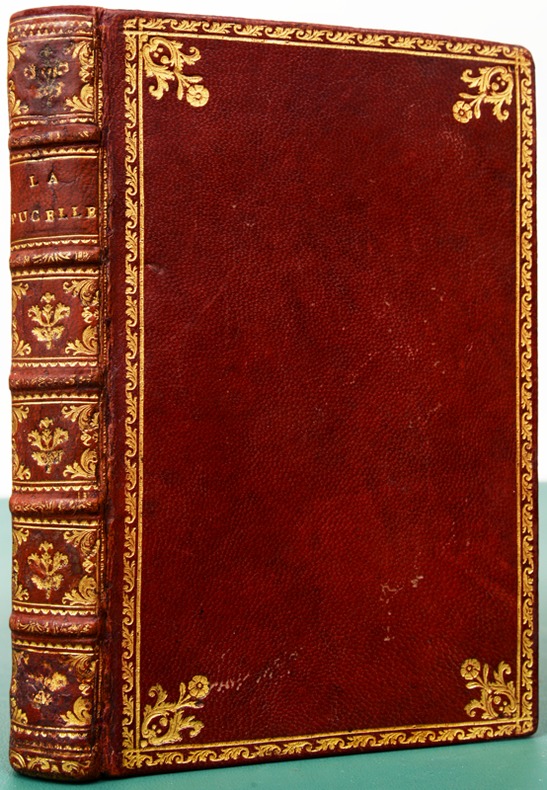
176216572[Genève], , 1762. Petit in-8 de 301 pp., maroquin rouge, dos orné à nerfs, filet et frise dorés d'encadrement sur les plats, fleurons aux angles, tranches dorées, contreplats de soie rose (reliure italienne de l'époque).
177244477Paris, , 1772. In-8 sur un grand papier vergé (204 x 132 mm) de 2 ff.n.ch. (titre et frontispice), (1)-8-124 pp., figures et texte gravés, veau marbré, dos lisse orné, pièce de titre de maroquin rouge, triple filet doré d'encadrement sur les plats, filet doré aux coupes, roulette intérieure, tranches rouges (reliure de l'époque).
1721ERJ-24Salamanticae, 1721. Reliure fatiguée et postérieure mais intérieur en très bel état. Ouvrage en latin de 196 pages, 19x14 cm, très belle typographie.
17473605331Bologna, (1747). (32) 229, (233-)584 S. Ppbd. 12mo
178611177Frankfurt, Varrentrapp um 1786.
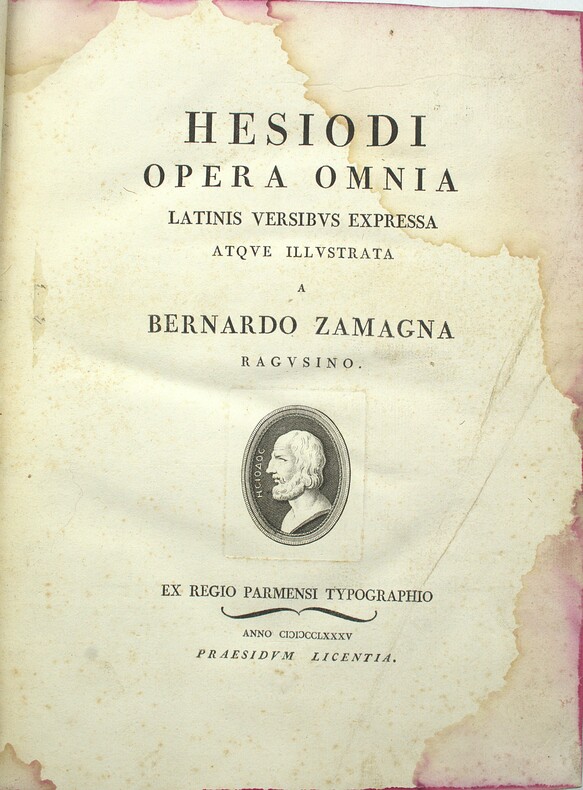
1785PHO-1815Parme, Ex regio Parmensi typographio (Bodoni), 1785, grand in-4, 16ff.-(2)-XXXV-248pp.-110pp., relié pleine basane marron légèrement postérieure, filet à froid aux plats, tranches rouges, petits frottements, coins usés, mouillure marginale.
179917201799 Couverture rigide Paris, Pierre et Firmin Didot, an VI (1797-1798). Un volume in-12 (16,5 x 11 cm), reliure demi-maroquin à grains fins à coins, dos à 5 nerfs orné, tranche supérieure dorée, dos insolé, quelques frottements marginaux. Faux-titre, titre, 99 pages, quelques rousseurs. Imprimé sur vélin fin. Composé en caractères mobiles mais en vue du stéréotypage, comme l'atteste les retirages portant sur la page de titre "editio stereotypa". Pierre et Firmin Didot avaient donné l'année précédente leur première édition stéréotype pour un Virgile qui de même reproduisait une édition d'abord donnée en caractères mobiles (v. Les Didot, Trois siècles de typographie... Catalogue par André Jammes. P., 1998, n°117). Ex-libris contrecollé, L. Chazal. Texte en latin.
1758PHO-2105La Haye, Pierre de Hondt, 1758-1759. 2 tomes en 1 vol. in-folio (41 × 26 cm). 4ff.-330pp.-3ff., 2ff.-328pp.-14ff. Reliure de l’époque en veau brun, dos à nerfs orné, pièce de titre rouge, tranches rouges, coins émoussés, coiffes absentes, dos manquant, frottements, épidermures, premier plat fragile, mouillure angulaire, quelques brunissures.
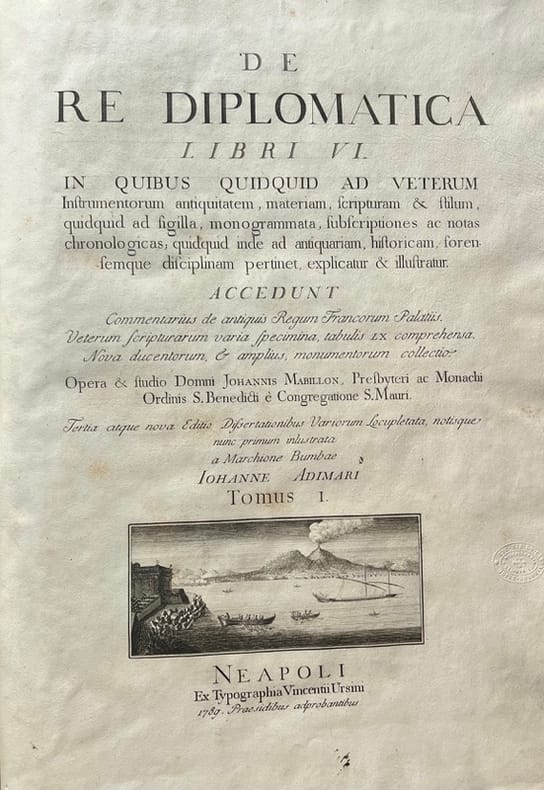
178943026Neapoli, Ex Typographia Vincentii Ursini, 1789. In-folio de 1 frontispice gravé (2)-XX-668 pp.MABILLON (Jean). De Re diplomatica Librorum supplementum. In quo archetypa in his libris, pro regulis proposita, ipsaeque regulae denuo consirmantur, novisque speciminibus & argumentis asseruntur & illustrantur. Opera & studio Domni Johannis Mabillon, presbyteri & monachi Ordinis S. Benedicti e Congregatione S. Mauri. Tertia atque nova editio…tisque nunc primum illustrata a marchione Bumbae Johanne Adimari. Neapoli, Ex Typographia Vincentii Ursini, 1789. In-folio de In-folio de VIII-116-CLXXX pp.Ensemble 2 vol. grand in-folio, vélin, titre doré sur les dos (reliure de l'époque).
17606364Alphabets Anciens et Modernes. 25 gest. Tafeln von Niodot u. a. nach Goussier u. des Hautesrayes. [Paris ca. 1760]. Folio (ca. 45 x 30 cm). Lose nicht gefaltete u. beschnittene Bogen.
178212394Aux Deux-Ponts, [Parme, Stamperia Reale, Giambattista Bodoni], 1775 [1782]. 13 vol. grand in-8, veau marbré, dos lisses ornés, pièces de titre en maroquin rouge, et de tomaison en maroquin rouge sur pièce de maroquin vert, tranches dorées (reliure de l'époque).
1764KC8048Venice: Remondini 1764. Hardcover. Very Good. Folio 315 x 240mm. 38pp. I-XXXVIII. Finely printed with decorative chapter headings and tail-pieces. Engraved printerÂ’s device of Remondini depicting bishop with putti carrying crozier and miter. Engraved vignette of muses on dedication page. Decorative paper covered boards; some minor soiling or staining joint repaired on title verso lacking first and last blanks otherwise complete and in good form with good wide margins. <br/><br/>Collection of poetic essays in song of Sister Maria Theresa Crocefissa 1645-1699 an Augustinian nun from Venice known for her long orations printed by the Remondini press. In the 16th century Venice was the marketplace of the world. Its location on the lagoon and its unique connections with the sea distinguished it as a cosmopolitan center among the great cities of the Renaissance. In this larger context commerce and trade played a central role in the development and achievements of music printing. The subject of this work is poems written as canzones and sonettoes or songs and little songs of Sister Maria Crocefissa. From an early age Maria Crocefissa was devoted to long poetic orations. Soon she was also engaged in self-punitive actions including wearing a hairshirt. At the age of 23 she experienced her first religious ecstasies. During these periods of trance some lasting well over a week she regressed into a childlike state that left her completely paralyzed. The presence of Maria Crocefissa in her Augustinian convent of San Girolamo brought about a series of supernatural episodes and mysterious sightings which interested the public. While she was still alive her papers were widely published. This particular title of her poems addressed to Girolama Gaudio is of utmost rarity not located in a contemporary library collection or market worldwide. From the Remondini press who by the second half of the 18th century were employing more than a thousand people in the Bassano del Grappa with hundreds of others busy in their local paper mills and selling their products in scores of countries making them perhaps the biggest publishers in Europe. Between 1751 and 1790 Remondini were granted more licenses for books than all the other Venice booksellers put together. Printed matter was a luxury and the Remondini press was known to employ refined typographical features to suit the tastes of buyers. In this work attention is paid to the decorative elements initials and layout of each page. Remondini hardcover books
1764KC8048Venice: Remondini 1764. Hardcover. Very Good. Folio 315 x 240mm. 38pp. I-XXXVIII. Finely printed with decorative chapter headings and tail-pieces. Engraved printers device of Remondini depicting bishop with putti carrying crozier and miter. Engraved vignette of muses on dedication page. Decorative paper covered boards; some minor soiling or staining joint repaired on title verso lacking first and last blanks otherwise complete and in good form with good wide margins. <br/><br/>Collection of poetic essays in song of Sister Maria Theresa Crocefissa 1645-1699 an Augustinian nun from Venice known for her long orations printed by the Remondini press. In the 16th century Venice was the marketplace of the world. Its location on the lagoon and its unique connections with the sea distinguished it as a cosmopolitan center among the great cities of the Renaissance. In this larger context commerce and trade played a central role in the development and achievements of music printing. The subject of this work is poems written as canzones and sonettoes or songs and little songs of Sister Maria Crocefissa. From an early age Maria Crocefissa was devoted to long poetic orations. Soon she was also engaged in self-punitive actions including wearing a hairshirt. At the age of 23 she experienced her first religious ecstasies. During these periods of trance some lasting well over a week she regressed into a childlike state that left her completely paralyzed. The presence of Maria Crocefissa in her Augustinian convent of San Girolamo brought about a series of supernatural episodes and mysterious sightings which interested the public. While she was still alive her papers were widely published. This particular title of her poems addressed to Girolama Gaudio is of utmost rarity not located in a contemporary library collection or market worldwide. From the Remondini press who by the second half of the 18th century were employing more than a thousand people in the Bassano del Grappa with hundreds of others busy in their local paper mills and selling their products in scores of countries making them perhaps the biggest publishers in Europe. Between 1751 and 1790 Remondini were granted more licenses for books than all the other Venice booksellers put together. Printed matter was a luxury and the Remondini press was known to employ refined typographical features to suit the tastes of buyers. In this work attention is paid to the decorative elements initials and layout of each page. Remondini hardcover
1787DEMO006589IAugsburg : Christ. Friderici Burglen 1787. First edition. Hardcover. Very Good. 8 engravings two woodcuts. 4to 251 pages later speckled boards rebacked new spine some waterstains <br/><br/>Moguntina is the city of Mainz birthplace of moveable type and home to Johann GUTENBERG. This is Bishop Wurdtwein's study of the first hundred years of printing concentrating on the contribution of Gutenberg as continued by Fust & Schoefer and their followers. 8 engravings two woodcuts Christ. Friderici Burglen hardcover
17852936Parmae, ex Regio Typographeco, s.d. (1785) ; in-4 ; plein veau havane moucheté, dos à nerfs, caissons décorés, pièce de titre rouge, triple filet doré d’encadrement des plats, toutes tranches dorées, roulette décorative dorée d’intérieur (reliure de l’époque) ; (2) ff. de titre et dédicace, XCIV pp., 100 pp., (1) f. d’achevé d’imprimer, portrait gravé d’Anacréon à la page de titre et vignette gravée par Cagnoni en tête de la dédicace.
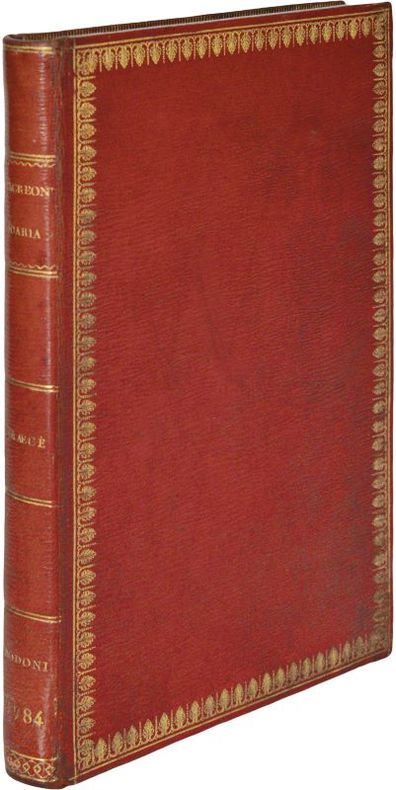
17840041201784 Parmae [Parme], Ex Regio Typographeio [Bodoni], 15 septembre 1784. Petit in-quarto (170 X 246 mm) maroquin rouge à grain long, encadrement de dentelle et filet dorés sur les plats, dos lisse fileté, titre doré avec en queue la date d'impression et la mention «Bodoni», chainette dorée en queue, coupes et coiffes filetées, tranches dorées (Reliure de l'époque); (7) ff. dont titre, LXXXII-103 pages, (1) page d'achevé d'imprimer. Deux ex-libris gravés collés sur le premier contreplat.
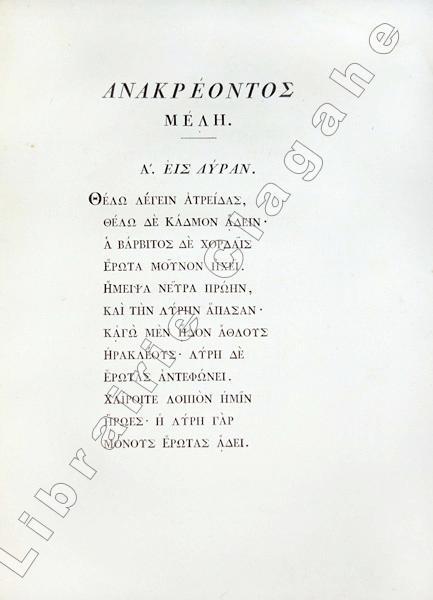
1791bn1506I. B. Bodonius Regis Catholici Typographys et B. Parm. Typogr. Praef. Relié 1791 In-12 relié demi chagrin havane à coins, faux titre et titre puis CXVIII, feuille de titre : Anacreontos Thioy Melh, puis 111 pages, portrait gravé au titre et au faux titre. Il s'agit de la réimpression de l'édition en caractères grecs majuscules de l'Anacréon que Bodoni fit paraître pour la première fois à Parme en 1784 en caractères minuscules. Il est dédié au Chevalier De Azara ambassadeur d'Espagne, devenu son conseiller et mécène. L'un des premiers chefs-d'Oeuvre de la typographie bodonienne. On consultera le numéro 28 de la revue FMR où un article : Question de Caractère est consacré à Bodoni. Ex-Libris de P. de la Morandière et de A. -G. Du Plessis ; dos en partie insolé, bon exemplaire Livraison a domicile (La Poste) ou en Mondial Relay sur simple demande.
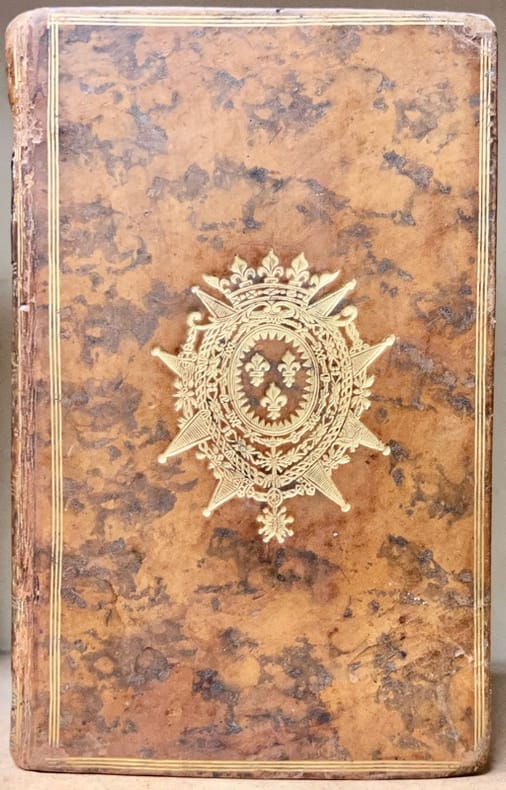
178216064A Paris, de l'Imprimerie de Monsieur, 1782. In-8 de 232 pp., veau marbré, dos lisse orné, pièce de titre en maroquin rouge, armes et triple filet doré d'encadrement sur les plats, tranches dorées (reliure de l'époque).
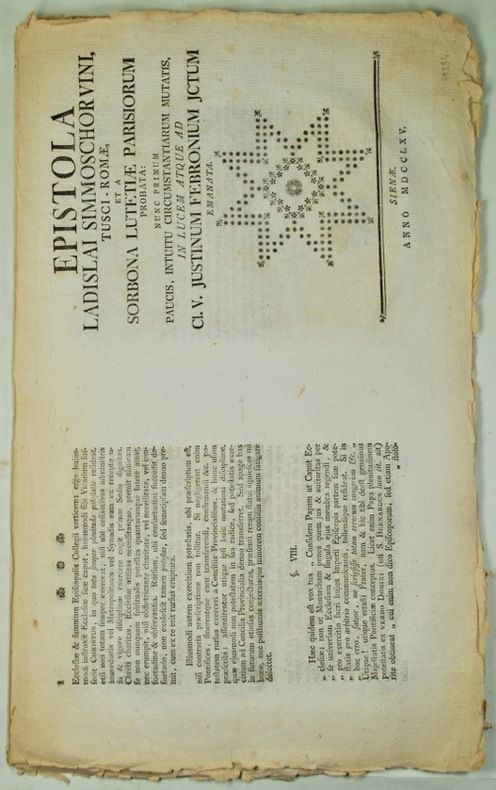
176539594Sienne, , 1765. 1 feuille (45 x 36 cm) pliée en deux et 1 feuillet (22 x 36 cm), les deux imprimés recto verso.
176739595Augsburg, Innsbruck, Joseph Wolff, 1767. 21 feuilles (43 x 36 cm) pliées en deux, imprimées recto verso.
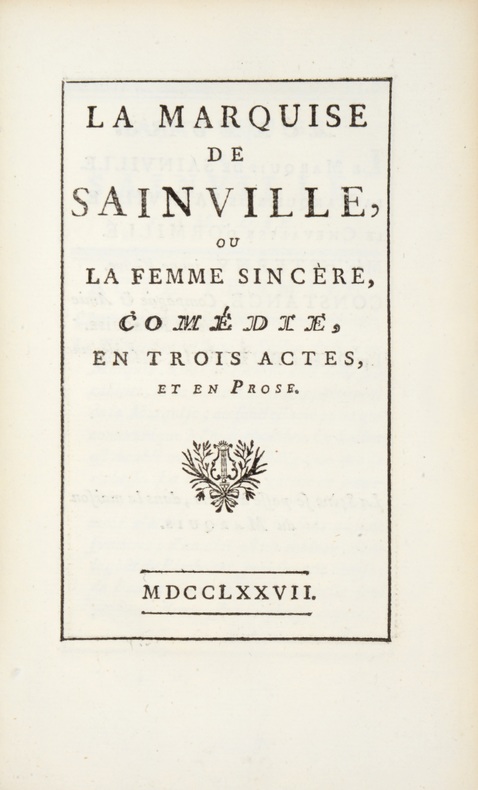
177215319[], [], 1772-1777. 4 pièces en 2 volumes in-8, texte encadré, veau marbré, dos lisse orné à la grotesque, pièces de titre en maroquin rouge et de tomaison en maroquin noir, tranches rouges (reliure de l'époque).
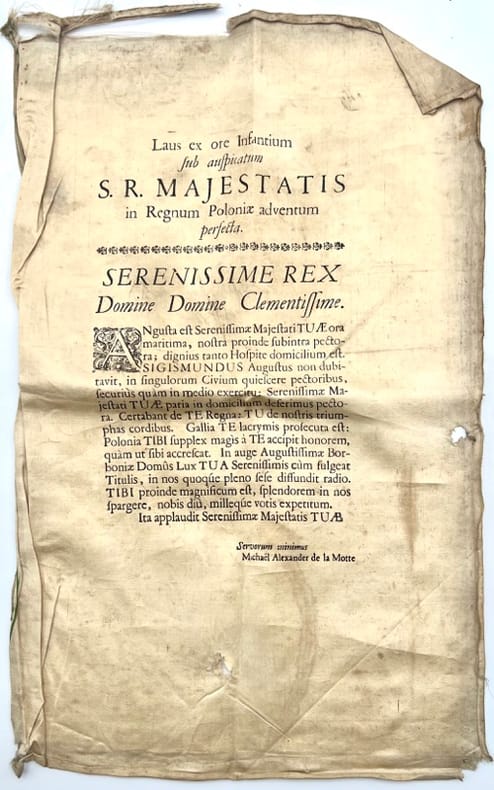
171444331S.l.n.d., , 1714-1734. Placard in-quarto sur soie (39 x 25 cm).
178341804Paris, Imprimerie Royale, 1783. In-8 (199 x 120 mm) de (4)-49 pp., maroquin rouge, titre en long sur le dos «ÉPREUVE DE LA NOUVELLE PRESSE DE L’IMPR. ROYALE» encadré d’un double filet doré, triple filet doré d’encadrement sur les plats armes royales serties de la mention « Imprimerie royale », roulette dorée sur les coupes, dentelle intérieure, doublures et gardes de moire bleue, tranches dorées (reliure de l’époque).
174942104Paris, Vaneck, 1749. Titre et 20 gravures sur cuivre (12 x 7,5 cm) frappées par 4 ou 5 sur 5 feuilles (24 x 38 cm).[CHEVILLARD (Jacques)]. Methode facile pour apprandre le blason, ou l'on joint les armes accollees, des Princes, et Princesses Ducs, et Duchesses, et celles des Maisons des plus considerables de France, avec les Explications des ornements exterieurs. Paris, Vanheck, 1749. 71 gravures sur cuivre (12 x 7,5 cm) frappées par 3 ou 4 sur 18 feuilles (24 x 38 cm).Ensemble 2 suites reliées en 1 vol. in-folio, demi-chagrin prune à coins, dos fleurdelisé à nerfs, double filet doré d'encadrement sur les plats (reliure du XIXe siècle).
1783192186Receuil des planches", tome premier". Paris, Panckoucke u. Liège, Plomteux, 1783. Plattengröße ca. 35,5 : 24 cm. [7 Warenabbildungen]