213 résultats
16688Leyde Chez Bonaventure & Abraham Elzevier 1647 in 4 (24,5x18,5) Un volume reliure d'attente de l'époque, plats de carton, velin teinté recouvrant le dos, [5 faux-feuillets non chiffrés] 732 pages [3 faux-feuillets non chiffrés], petite trace jaune sur la marge inferieure du dernier tiers du volume. Contenant outre la relation de plusieurs evenements notables en l'Estat, en l'Eglise, és Cours, & és Armées, divers avis Politiques, Ecclessiastiques, & Militaires sur beaucoup de mouvemens importans de l'Europe, sous Henri III, Henri IV et LOUIS XIII. Edition originale. Très important pour l'histoire du XVIème siècle. Bon exemplaire
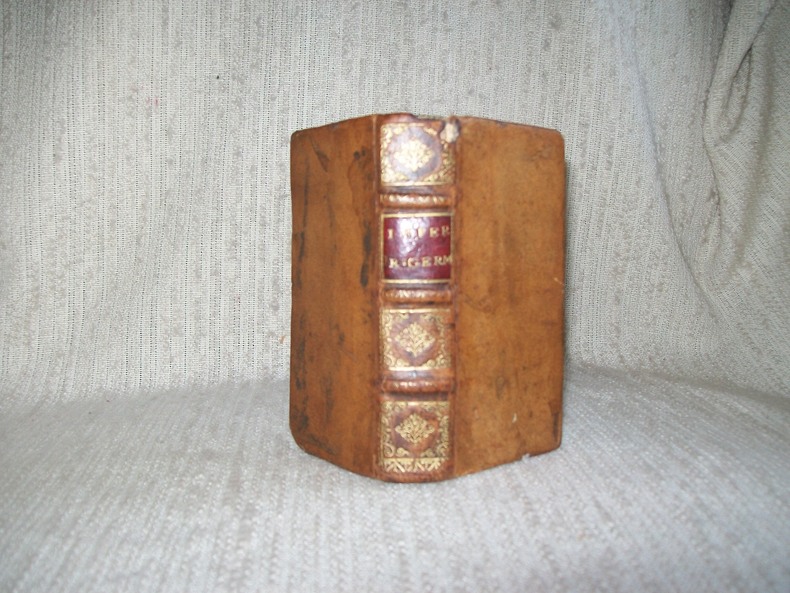
1634GITk013Lugduni Batav ex Officina Elzeviriana A° 1634. In-32 (11cm x 5cm) 8 feuillets non chiffrés (titre-frontispice, dédicace, avis aux lecteurs, liste des Empereurs de 801 à 1619, table des matières) 1-414pp. Pleine basane havane, dos à nerfs orné de compartiments à pastilles dorés, pièce de titre rouge, tranches brique, reliure de l'époque. Orné d'un beau titre-frontispice aux attributs du Saint Empire Romain Germanique couronnés par deux anges. Coiffe supérieure arasée avec petite perte de cuir. Bel exemplaire frais et complet, reliure de l'époque solide et décorative malgré le défaut signalé. De la Bibliothèque de Joseph Xaupi avec son bel ex-libris armorié sur le contreplat.
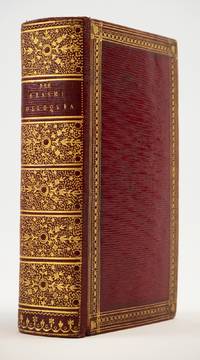
1643ST20492Lugduni Batavorum Leyden: Bonaventura Elzevier and Abraham Elzevier 1643. Second Elzevier Edition. 137 x 78 mm. 5 1/2 x 3". 12 p.l. 672 44 pp. 2 leaves. <br/> ELEGANT EARLY 19TH CENTURY RED STRAIGHT-GRAIN MOROCCO VERY ELABORATELY GILT BY BOZERIAN unsigned but see below covers framed by bead-and-star roll enclosed with double gilt fillets leaf tools at corners. smooth spine in compartments with large central fleuron of floral lancets emanating from central circlet in a richly stippled ground small circles at corners one compartment with gilt lettering cresting tulip and violet roll at foot of spine turn-ins with bead-and-star roll marbled endpapers vellum flyleaves all edges gilt. Woodcut initials headpieces and tailpieces numismatic portrait tondo fine engraved title page by C. C. Dusend showing Erasmus gazing through a telescope at the Godly orb seen through parted clouds. Willems 552; Rahir 546; USTC 1027918. For the binding: Culot "Jean Claude Bozerian" Roulette 9 Plate I and Palette 12 Plate X. Just barely perceptible rubbing to joints and extremities one leaf with tiny burn hole affecting a couple of words intermittent minor foxing negligible ink spots here and there other trivial imperfections but an extremely attractive copy the text fresh and clean and the very well-preserved binding with lustrous leather and bright gilt.<br/> <br/> This is a remarkably pretty copy of an extremely influential but generically elusive work printed by a legendary press and bound by the founder of a celebrated French binding dynasty. First published in 1524 the "Colloquia" comprise 63 conversations originally written for Erasmus' students on varied and overlapping topics but these urbane meditations soon became widely read as they covered subjects that intrigued the important thinkers of the day. Their influence was so profound that it is not saying too much to claim that they helped to speed the Reformation. Although they are difficult to classify precisely one could categorize them as including in general terms exposure of ritualistic fallacies invective against corruption within the church examination of popular imposture deploring of contemporary personal sins practical advice for laymen and miscellaneous discussion of amusing topics. In specific terms the text takes on such controversial topics as the value of pilgrimage celibacy and abstinence from meat on Fridays and other prescribed days. Erasmus' "Colloquia" was frequently published by the Elzeviers once in French and a total of nine times in Latin. The text was universally adopted for school use up through the 18th century. Although our lovely little binding is unsigned Culot firmly identifies its tools as those used by Jean-Claude Bozerian 1762-1840. He was the elder of the Bozerian brothers François is referred to as "le jeune" and was active in Paris from 1795 to about 1810. He began his career in Lyon as an apprentice bookseller printer and bookbinder eventually deciding to focus on the latter craft. Marriage to the widow of binder Pierre Boulier allowed him to establish a binding workshop in Paris where he was joined by his brother. His bindings were soon much in demand by French bibliophiles who appreciated their superior materials tasteful design and flawless execution--all characteristics that are plainly evident in the present case. Bonaventura Elzevier and Abraham Elzevier unknown
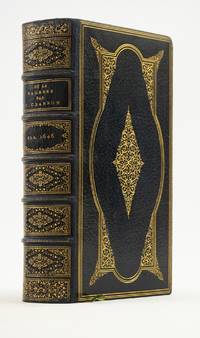
1646ST20750Leyden: Chez les Elseviers 1646. First Elzevier Edition. 135 x 75 mm. 5 1/4 x 3". 12 p.l. including engraved title 663 9 pp. <br/> ELEGANT DARK BLUE MOROCCO BY LORTIC stamp-signed on front doublure BEAUTIFULLY GILT-TOOLED IN THE STYLE OF THE 17TH-CENTURY BINDER KNOWN AS "LE GASCON" covers with graceful lobed French fillet frame intricately lacy gilt at corners delicately tooled lozenge at center raised bands spine densely gilt in compartments with complex mandorla centerpieces curling tendrils at corners and myriad small tools gilt lettering RED MOROCCO DOUBLURES with very fine lace gilt frame leather hinges marbled endpapers and flyleaves all edges gilt. Engraved title and engraved arms. Verso of front free endpaper with engraved bookplate of Emmanuel Martin see below. Willems 601; Rahir 599; STCN 832762849; USTC 1027902. Half-inch crack to head of front joint minor wear to head of spine corners a little rubbed isolated faint foxing otherwise a fine and pretty copy clean and fresh internally and in a lustrous binding.<br/> <br/> With striking gilt elaboration inside and out this is a beautifully bound and delightful Elzevier edition of Charron's celebrated work "On Wisdom" first printed in 1604. Inspired by the letters of Seneca and Stoic in spirit the work gives a meticulous and reasoned argument for living an austere virtuous and purposeful life in harmony with nature. But Charron's rationalism combined here with a lack of interest in revelation as a source of truth made his work suspect to the theological authorities of his day and he was accused of portraying religion as unnecessary for morality. His attempt to revise the work to satisfy his critics was interrupted by his death. A lawyer before he became a theologian and preacher Charron 1541-1603 desired at age 45 to join a monastic community but was rejected for being too old. Our volume was lavishly bound by Pierre Marcellin Lortic 1822-92 who apprenticed with the Gruel bindery before opening his own workshop in 1844. Over the next 40 years he won numerous awards became a preeminent Parisian binder and was named a Chevalier of the Legion of Honor. Beraldi says of Lortic: "For the decoration of a binding Lortic with real passion conceived the bound book as a jewel: he loved the rich the sumptuous the flamboyant." Beraldi put Lortic in the first rank of gilders even though Pierre did not do the gilding with his own hand. Instead he employed the best doreurs available including Wampflugh Maillard and Domont before his talented son and eventual successor Marcellin took over those responsibilities in the 1870s. Our binding was likely commissioned by the previous owner the formidable French bibliophile Emmanuel Martin 1821-82 whose library was sold in 1877. Our volume is lot #64 in the auction catalogue "Collection de M. Emm. Martin: Livres Rares et Précieux Anciens et Modernes" selling according to a manuscript indication in the margin for 161 francs a very substantial sum representing modern buying power of about $3000. The catalogue description says it is a "charming example" of the rarest Elzevier edition of this work and gives special praise for the "perfectly executed" binding rendered "with the most remarkable finesse" in the style of Le Gascon an artisan active in Paris in the first half of the 17th century and revered as perhaps the outstanding gilder of his day. This is a very great compliment to Lortic and it is not surprising that as the auction catalogue states the present example of his work was featured in the Museum of Ornamental Arts as part of the Art Treasures Exhibition held in Manchester in 1857. Chez les Elseviers unknown
1648ST12230Leyden: Bonaventure and Abraham Elzevier Suivant la copie imprimée à Paris 1648. First Elzevier Edition. 133 x 73 mm. 5 1/4 x 2 7/8". 12 p.l. 440 pp. <br/> ELEGANT 19TH CENTURY CHESTNUT BROWN MOROCCO GILT BY JOLY FILS stamp-signed on front doublure covers with French fillet border center of each board with intricate lozenge formed by strapwork fleurons volutes and many small tools this within a lobed triple-fillet frame with scrolling cornerpieces and with large fleurons projecting out from the corners; raised bands spine richly gilt in compartments with central fleuron and scrolling cornerpieces gilt titling BLUE-GREEN MOROCCO DOUBLURES with wide gilt frame formed by plain and decorative rules and repeating small tulip tools marbled flyleaves all edges gilt. With engraved allegorical title page. Front flyleaf with bookplate of P. R. Méry. Willems 630; Rahir 625. ◆Spine uniformly sunned to a pleasing hazel brown front joint just beginning to show rubbing isolated tiny rust spots or faint foxing but in nearly fine condition the very pretty binding otherwise unworn and with bright gilt and the text quite clean bright and fresh.<br/> <br/> This is an attractively bound Elzevier edition of letters by Balzac 1597-1654 a writer whose prose had a major influence on French literature. Our volume contains letters to diverse persons with the majority addressed to Valentin Conrart 1603-75 counsellor and secretary to the king who hosted literary gatherings that gave birth to the French Academy. The Elzeviers published a number of volumes containing the correspondence of Balzac and it is said that these editions contributed considerably to Balzac's renown. Our binding is retrospective in design communicating a clear sense of bindings from that period yet identifiable at once as late 19th century work and reflecting an artisan working at the top of his craft. Bonaventure and Abraham Elzevier] Suivant la copie imprimée à Paris unknown
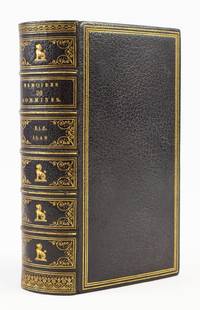
1648ST19567-004Leyden: Chez les Elzeviers 1648. First Elzevier Edition. 135 x 75 mm. 5 1/4 x 3". 12 p.l. 765 19 pp. <br/> ATTRACTIVE DARK BLUE MOROCCO GILT BY NIÉDRÉE stamp-signed on front turn-in covers with French fillet border raised bands spine compartments with sea lion crest of Sir Richard Tufton at center curling tendrils at corners gilt lettering densely gilt turn-ins marbled endpapers all edges gilt. With engraved title page featuring four tondo portraits and the French royal arms. Verso of front free endpaper with ink monogram of Edwin Wolf II; front pastedown and front flyleaf with tipped-on old dealer descriptions. Willems 634 citing this copy among the handsomest offered at auction; Rahir 630. ◆A little browning mostly to edges of leaves in the first and last couple of quires one leaf with corner replaced away from the text and probably before printing other trivial signs of use internally but A VERY APPEALING COPY the text quite clean and fresh and in a lustrous binding with few signs of wear.<br/> <br/> This is a distinguished copy of the famous "Memoirs" that comprise the first critical and philosophical history to be written after antiquity; they deservedly earned for Commines ca. 1445 - ca. 1511 the appellation of "father of modern history." In this work Commines chronicles the reign of Louis XI and the Italian expedition of Charles VIII covering most of the three decades beginning in 1464. Britannica says that "the graphic style of his narrative and above all the keenness of his insight into the motives of his contemporaries an insight undimmed by undue regard for principles of right and wrong make this work one of the great classics of history." Willems describes this Elzevier edition as "admirably executed" and notes that "well-preserved copies" fetch high prices citing our copy from the Tufton sale as one such example. Sir Richard Tufton 1813-71 was the natural son of Henry Tufton Earl of Thanet and succeeded to the earl's estates on his father's death in 1849. The "sea lion"--literally the head and forelegs of a lion with a fish-like lower body--stamp on our binding is the crest from his coat of arms. The handsome binding is the work of Parisian artisan Jean-Edouard Niédrée d. 1864 who was known for his skillful work and for the great care he took to preserve margins in the books he bound. Chez les Elzeviers unknown
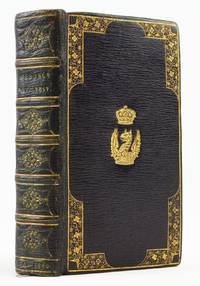
1640ST19814Lugd. Batavorum Leyden: Ex officina Elzeviriana 1640. Third Elzevier Edition. 130 x 72 mm. 5 1/8 x 2 7/8". 4 p.l. 536 30 47 pp. <br/> Excellent late 18th century dark blue straight-grain morocco in the style of Roger Payne gilt covers with floral vine cornerpieces gilt supralibros of George Spencer-Churchill 5th Duke of Marlborough Stamp 3 featuring the head and wings of a griffin emerging from a ducal coronet surmounted by the coronet of a marquess raised bands spine panels with gilt fleuron centerpiece gilt lettering gilt-ruled turn-ins all edges gilt. Title page with engraved frame featuring the Four Evangelists and their symbols. Rahir 500; Willems 505. For the binding: Smith and Benger p. 46; "British Armorial Bindings" https://armorial.library.utoronto.ca/node/31988. ◆Spine evenly faded and gilt consequently a little dulled a touch of rubbing to extremities tail margin of text with half-inch wide light dampstain extending an inch up on the fore-edge margin of the last couple quires a hint of foxing and browning other trivial imperfections but still a pleasing copy without serious defects internally and in a scarcely worn binding with lustrous covers.<br/> <br/> This Elzevier printing of the first lexicon of New Testament Greek comes in an elegant binding and with illustrious provenance. First printed in 1619 the "Manuale" is the work of German philologist Georg Pasor 1570-1637 and was the authority on New Testament Greek throughout the 17th century. Printed by Bonaventure and Abraham Elzevier our volume is bound in the style of the venerable English artisan Roger Payne using the straight-grain morocco process developed by Payne with delicately tooled gilt panels framing the cover. The supralibros of a man whose love of books brought him to ruin was added at the center both boards sometime before 1817. The coronet above the griffin indicates that George Spencer-Churchill 1766-1840 was at that time the Marquess of Blandford before his father's death in 1817 made him the 5th Duke of Marlborough. According to DNB "He spent great sums on his gardens and his library at White Knights near Reading." His extravagance eventually ruined him financially and most of his collection had to be auctioned during his lifetime. According to the University of Toronto's "British Armorial Bindings" this volume was Lot 3017 in the sale of the "Distinguished and Celebrated" White Knights Library conducted by R. H. Evans of London in June of 1819; it sold for eight shillings. Our book was later sold at Sotheby's on 13 June 1934 lot 725; the catalogue for that sale described the binding as "in the style of Roger Payne." We find ourselves inclined to believe even more heartily in this association. Ex officina Elzeviriana unknown
1650322497Lugduni Batovorum: Ex Officina Eleviriana 1650. First Elzevir Edition thin paper issue. Edited by Nicolaus Heinsius. 24 270 276 2pp. Woodcut initials headpieces and tailpieces engraved title. Errata in rear. 12mo. Black morocco by Trautz-Bauzonnet recased with the joints repaired marbled endpapers gilt edges. Edwin Wolf II ink monogram on front blank. First Elzevir Edition thin paper issue. Edited by Nicolaus Heinsius. 24 270 276 2pp. Woodcut initials headpieces and tailpieces engraved title. Errata in rear. 12mo. Willems 675; Rahir 674 Ex Officina Eleviriana unknown
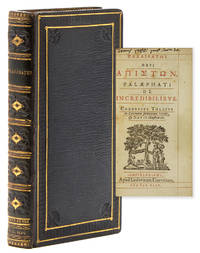
1649322551Amsterdam: Apud Ludovicum Elzevirium 1649. Text in Greek and Latin. Title printed in red and black. 36 253 9 2 blank pp. Errata on verso of penultimate leaf preceding the integral blank. Ruled in red throughout. 12mo. Full dark blue straight grained morocco by Simier covers and spine tooled in gilt and blind marbled endpapers gilt edges. Text in Greek and Latin. Title printed in red and black. 36 253 9 2 blank pp. Errata on verso of penultimate leaf preceding the integral blank. Ruled in red throughout. 12mo. Willems 1089; Rahir 1101. Provenance: Title page with early ink ownership inscription in Latin of the Jesuit Maison Professe in Paris; early inscription in French relating to Louis Coulon; Edwin Wolf II inked monogram Apud Ludovicum Elzevirium unknown
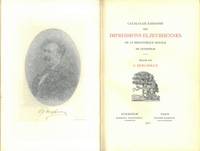
191160455Stockholm & Paris 1911. Leks8vo. Elegant håndbundet skinnbind med opphøyde ryggbånd marmorerte dekler. Bundet med begge omslagene. Med Berghmans portrett som frontispiece. XXV 387 s.Royal 8vo. Elegantly bound blue quarter calf raised bands marbled covers. Bound with both wrappers. With Berghmans portrait as frontispiece XXV 387 pp. Nordiska Bokhandeln i kommission Fransk. <br/><br/><em>Bindet en tanke skrapet. </em> hardcover
1643ST19567-147Lvgd. Batavorvm Leyden: Ex Officina Elzeviriana 1643. Second Elzevier Edition. 132 x 75 mm. 5 1/4 x 3". 1 p.l. 3-312 315-329 9 pp. <br/> FINE CONTEMPORARY BURGUNDY MOROCCO covers with gilt triple ruled border spine gilt in compartments with broad and stippled bands fleuron cornerpieces and floral centerpiece marbled endpapers turn-ins and all edges gilt. Woodcut initials headpieces and tailpiece engraved title page depicting St. Martin slicing his cloak in two with his sword to share with the beggar. Front pastedown with a cardinal's large 17th century engraved armorial bookplate rotated and trimmed to fit. Front pastedown and free endpaper with the morocco bookplates of Mortimer L. Schiff and of H. V. Ingram respectively. Initial blank and last leaf each with small ownership stamp that at rear of C. H. F. Curnillon that at front hard to decipher though perhaps reading "EBH." Willems 560; Rahir 552. ◆A few instances of light foxing and other trivial imperfections internally but A REMARKABLY WELL-PRESERVED COPY the binding bright and scarcely worn and the text very fresh and clean with virtually no signs of use.<br/> <br/> This is a most appealing little book containing the works of Severus the fourth century ecclesiastical historian who gave up great wealth in exchange for Christian seclusion and holy exercises and who became an ardent follower of St. Martin of Tours. Our volume includes Severus' most famous work his "Life of St. Martin" with its unforgettable pictures of this much venerated saint whose compassionate life includes the famous episode in which Martin cuts his cloak in half to share it with a beggar. Along with the "Life" are the "Dialogi Duo" which contains a reasoned review of the then prevailing bitter ecclesiastical feuds and provides information about these controversies not supplied from any other source. Also included is Severus' "Sacred History" a less original work summarizing events from creation to his own day but one much used in the Middle Ages when the author's correct and limpid Latin was greatly admired. Willems says this is the second Elzevier edition containing the same material as the 1638 edition but with the added continuation of the sacred history by Johannes Sleidanus 1506-56; Willems adds that the printing is "beautifully executed." This is a particularly lovely copy with distinguished provenance: it was previously in the library of the distinguished American bibliophile Mortimer Schiff 1877-1931 whose collection included works by great printers important illustrated books works printed on vellum and fine and historic bindings; it was later owned by H. V. Ingram a collector of fine bindings in the mold of Schiff a large number of whose books Ingram subsequently possessed. Ex Officina Elzeviriana unknown
10328Paris. Em. Paul, L. Huard et Guillemin. Mars-avril 1891. 2 tomes en 2 volumes in-8° brochés. 273 & 467 pages. Manque angulaire à la couverture du premier tome ; pages intérieures propres.
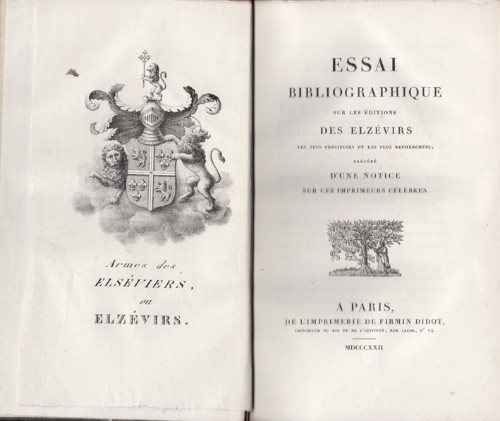
182214991822 Paris, Firmin Didot, 1822. 22 x 13,5 cm (R), in-8, 300 pp. - 2 ff. - frontispice (armes des Elzevier), reliure de l'époque en demi-veau blond.
1666AMO-45251666, S. l. n. n. [Marque à la sphère, Leyde, Hackius]
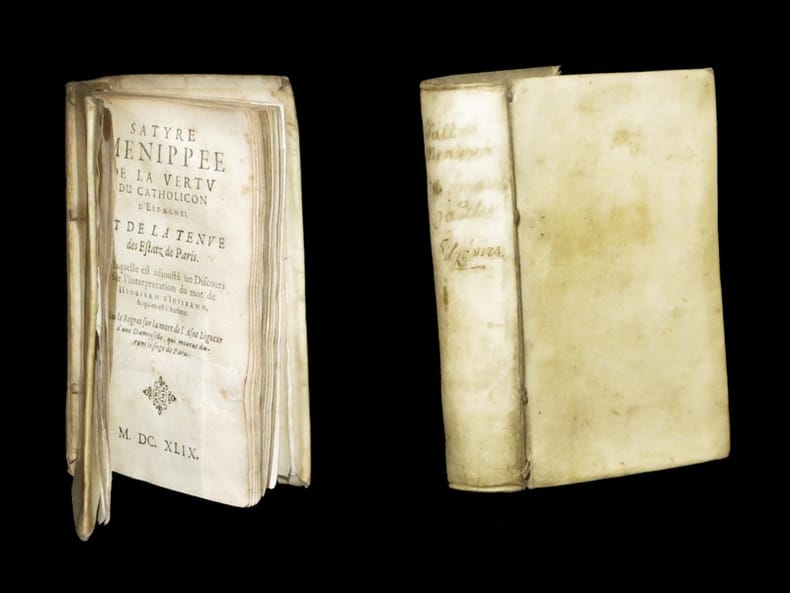
172631009S.l., s.é., 1649. Un vol. au format pt in-12 (138 x 88 mm) de 206 pp. Reliure ''à la hollandaise'' de l'époque de plein vélin ivoire à coutures apparentes et rabats, plats jansénistes, dos lisse orné d'un filet à froid en tête et queue, titre anciennement calligraphié à l'encre.
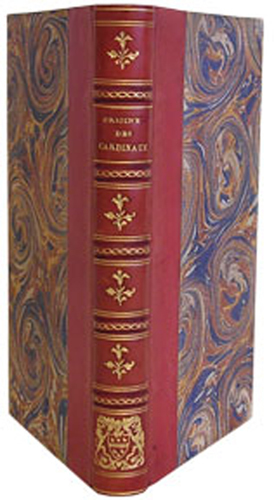
Petit in-12, demi-veau cerise, dos à nerfs ornés d'une guirlande et soulignés de doubles filets dorés, fleurons entrenerfs, armes dorées en pied, titre doré, tranches marbrées (rel. du XIXe), (4), 143, (1), 42, 112 p. Edition originale posthume "annexe aux Elzévier" et "très jolie édition imprimée par F. Foppens" (Willems) divisée en trois parties sous pagination particulière. La première contient le "Traité de l'origine des cardinaux", la seconde le traité "Des Légats…" la troisième, le "Traité de Pise…". Juriste lyonnais élève des Cujas, l'auteur devint l'un des aumôniers d'Henri IV puis de Louis XIII. Le 'traité des légats' est attribué à Jean-Denis de Sallo. Ce traité fut fait au sujet de la légation du cardinal Chisi qui devait venir en France en exécution du traité de Pise. (Brunet, II, 891. Willems, 2017). Joli exemplaire, frais, bien relié. Ex-libris imprimé de P. de la Morandière.
33482Petit in-12, demi-veau cerise, dos à nerfs ornés d'une guirlande et soulignés de doubles filets dorés, fleurons entrenerfs, armes dorées en pied, titre doré, tranches marbrées (rel. du XIXe), (4), 143, (1), 42, 112 p. Cologne, Pierre Ab Egmont [i.e. Bruxelles, François Foppens], 1665.
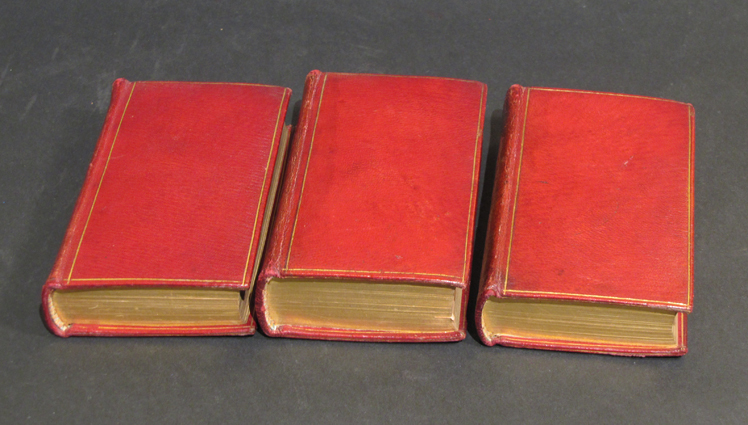
1640905Lugd. Batav, apud Elzevirios, 1640, trois volumes in-12 ; plein maroquin rouge sang, dos lisse, filet doré encadrant les plats, filet doré sur les coupes et sur le contre-plat, toutes tranches dorées (reliure ancienne) ; (12) ff. (titre gravé, epistola dedicatoria signée de Bonaventure et Abraham Elzevir ; buste gravé de Sénèque ; vita Senecae ; fragmenta ex-libris ; portrait en pied de Sénèque presque nu, debout dans une vasque), 552 pp. ; 718 pp. (le f. blanc manque) ; 442 pp. et (7) ff. d’index. Les tomes 2 et 3 sont datés de 1639 (Willems-508).
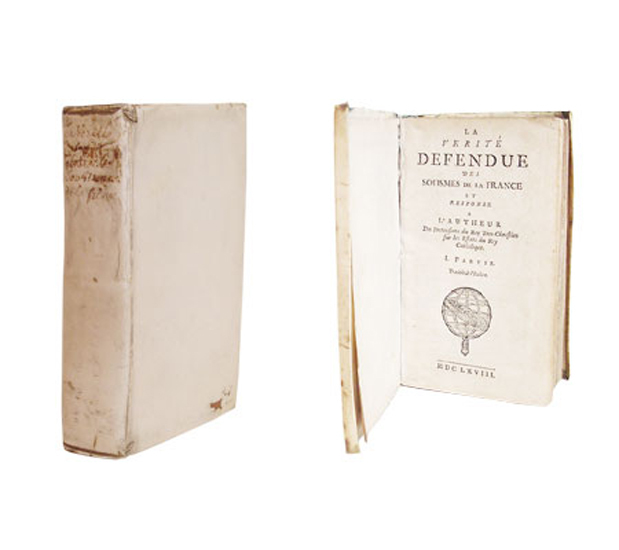
2 tomes reliés en un volume petit in-12, plein vélin ivoire cordé à petits rabats de l'époque, 160, (2) p. et (1) f. blanc, 242, (2) p. Traduction française de : "La Verità vendicata da i sofismi di Francia" rédigé par un abbé résident de l'Empereur à Venise, Domenico Federici, publié pendant les événements même de la "guerre de Dévolution". "A propos de la renonciation de Marie Thérèse au trône espagnol, il examine tous les arguments qu'on peut alléguer pour ou contre. Puis, après avoir discuté la question des droits de la reine aux Pays-Bas, il conclut qu'elle ne peut en avoir aucun. Cet exposé est appuyé sur de nombreux textes et sur des pièces [publiés en appendice]" ('Sources de l'Histoire de France', 8735). Willems ('Elzevier', 1809) souligne la qualité matérielle de cette édition qu'il distingue de deux autres "beaucoup moins belles" publiées à la même date. ('Les traductions de l'italien en français au XVIIe siècle', PUPS, 2001, p. 235). Très bon exemplaire.
294292 tomes reliés en un volume petit in-12, plein vélin ivoire cordé à petits rabats de l'époque, 160, (2) p. et (1) f. blanc, 242, (2) p. S.l.n.e. [La Haye, Steucker], 1668.
97680Lugdunum Batav. (Leyde) Ex Officina Elzeviriana (Elzevier), Anno 1647, 1 volume in-18 de 115x65 mm environ, (2) ff. (4) ff. (1 page de titre gravée, epître, typographi, table) 362 pages (6) ff. (index), (2) ff., plein vélin crème. Papier très fragile avec mouillure, complet de 8 planches, une griffure sur le premier plat, quelques traches sur le cuir. Texte en latin.
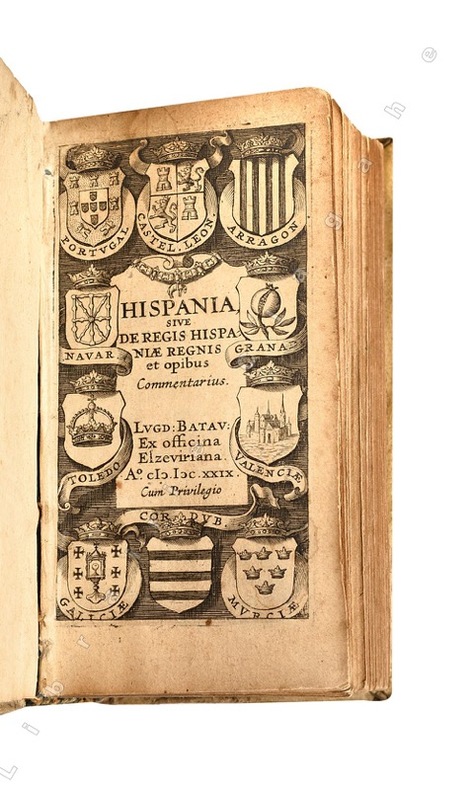
162921438Lugd. Batav. (Leyde), ex officina Elzeviriana, 1629 ; in-24 (108 mm), vélin rigide de l’époque, titre manuscrit au dos ; [16], 498 pp., [1] f. de Privilège, titre gravé illustré de blasons.
1668169[Amsterdam, Daniel Elzevier ?], 1668 ; in-16 de 332 pp., vélin ivoire de l'époque à rabats, dos lisse, titre à l'encre.
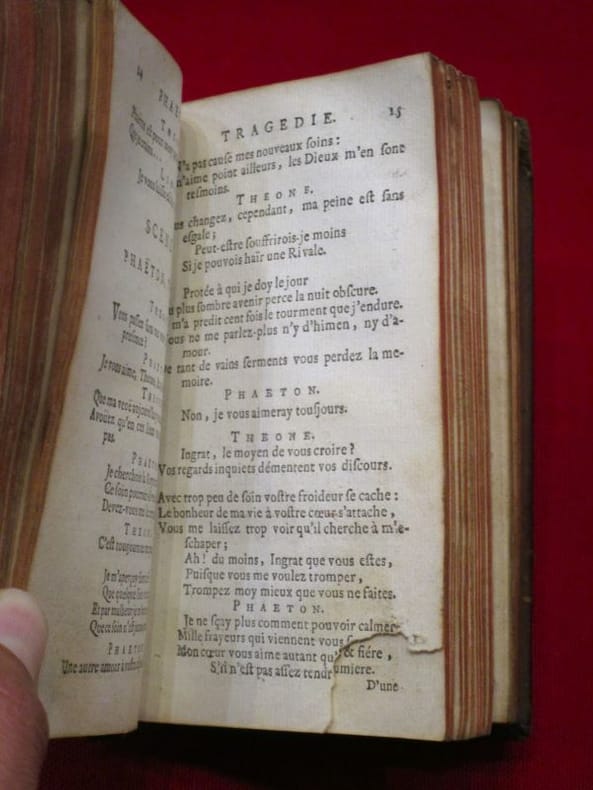
1682117737amsterdam abraham wolfgang 1682-83-84-85 Suivant la Copie de Paris, A Amsterdam, Ches (chez) Abraham Wolfgang, 1684 (de 1682 à 1685), 2 volumes in-12 de 75x130 mm environ, regroupant 14 pièces d'environ 60 pages chacune, contiennent 2 titres gravés et 14 gravures frontispices. Pleine basane d'époque, dos à quatre nerfs portant titres et tomaisons dorées, caissons ornés, roulette dorée sur les coupes, tranches rouges, gardes blanches. Traces d'usure sur les reliures (deux coiffes accidentées, un manque de cuir au dos, plats griffés, coins émoussés), traces de mouillures tome I, ex libris manuscrit, une déchirure avec manque à la page 15 de Phaëton, mais ensemble en état satisfaisant.
105565Lugduni Batavorum, Ex Officina Elzeviriana, 1624, 4 volumes in-18 de 120x65 mm environ, pagination continue pour chaque partie sur les 4 volumes, 863 pages pour la partie en grec, 345-103 pages en latin et 380-312 pages en français, pleine basane brune, dos à nerfs portant titres et tomaisons dorés, sur pièces de titre en maroquin bordeaux, ornés de caissons à petits fers dorés, plats encadrés d'une roulette dorée avec petits fleurons à chaque angle, coupes tranches et chasses dorées, exemplaires réglés,avec 2 frontispices, 3 bandeaux et une page de titre. Une coiffe arasée, 3 coiffes légèrement ébréchées, frottements sur les mors et coins, léger manque sur les pièces de titre, ors ternis sur les tranches, sans les pages de titre, tome III partie grecque : manque quelques pages (511 à 514). Le second plat du tome 1 est complètement détaché. Exemplaire réglé, de cette première édition Elzévir.