Antiquariat.de

96 résultats
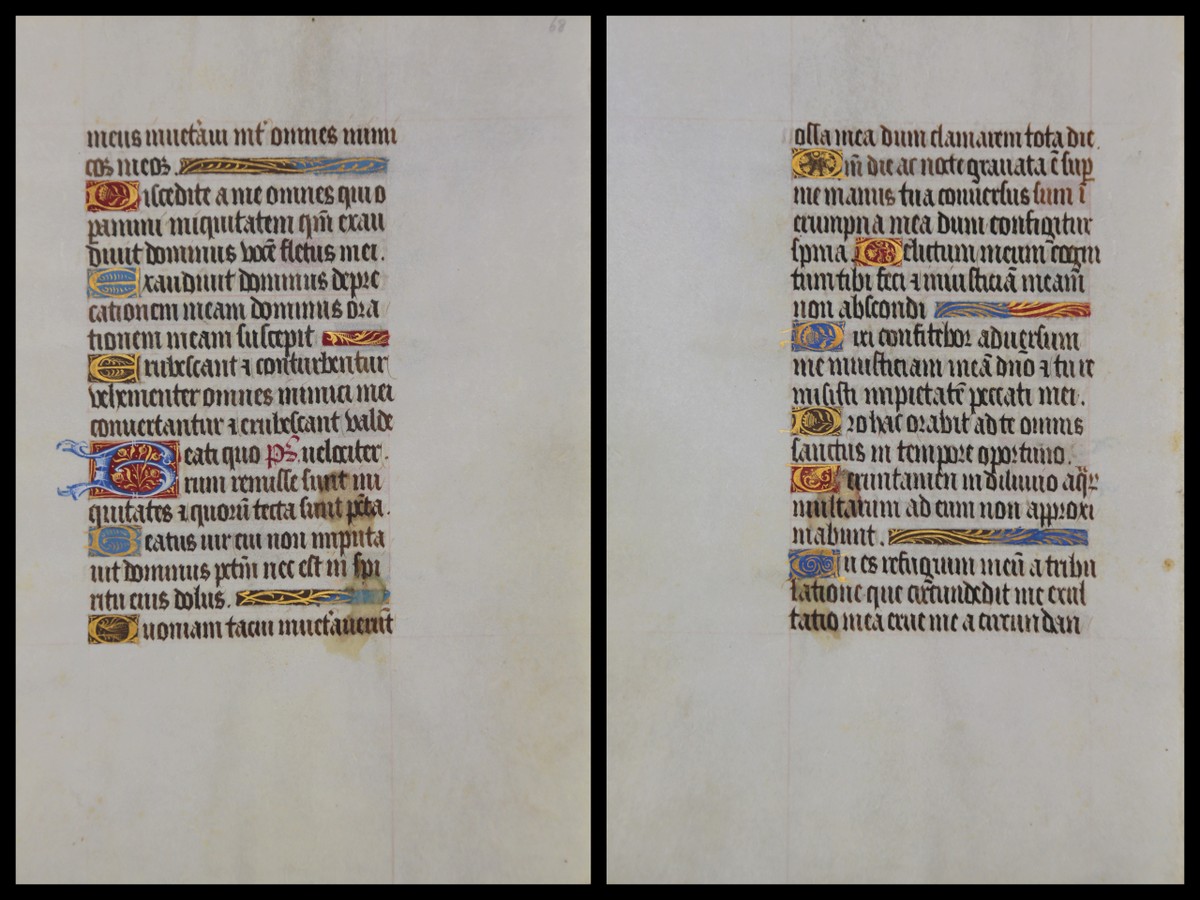
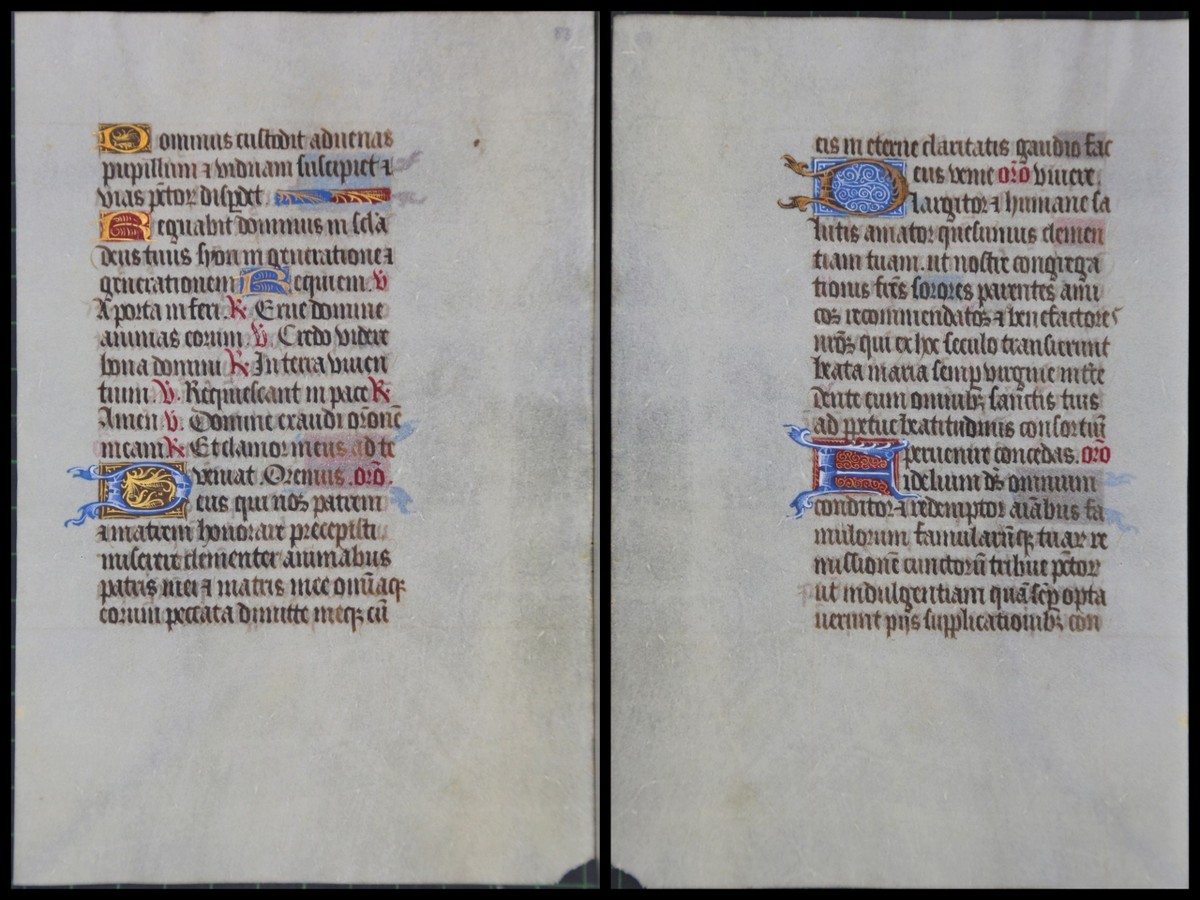
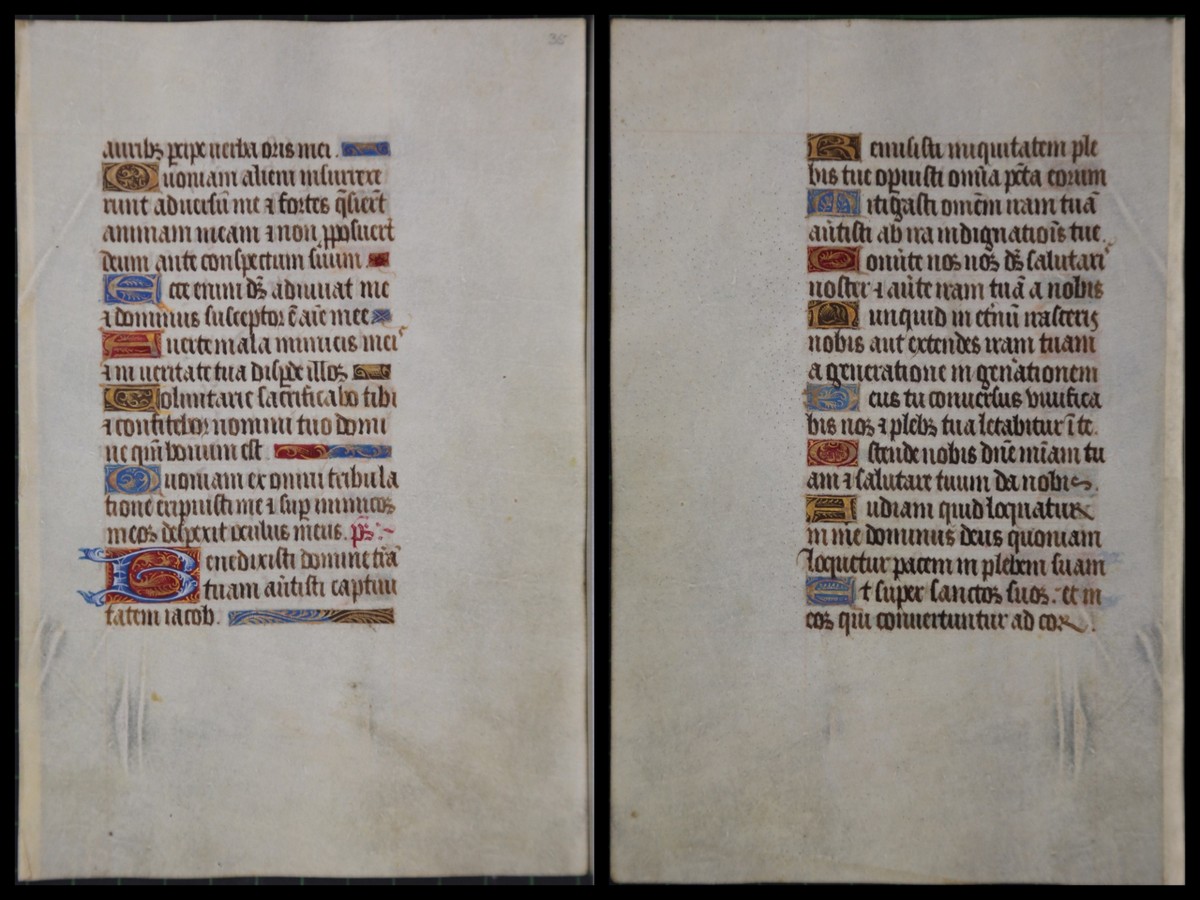
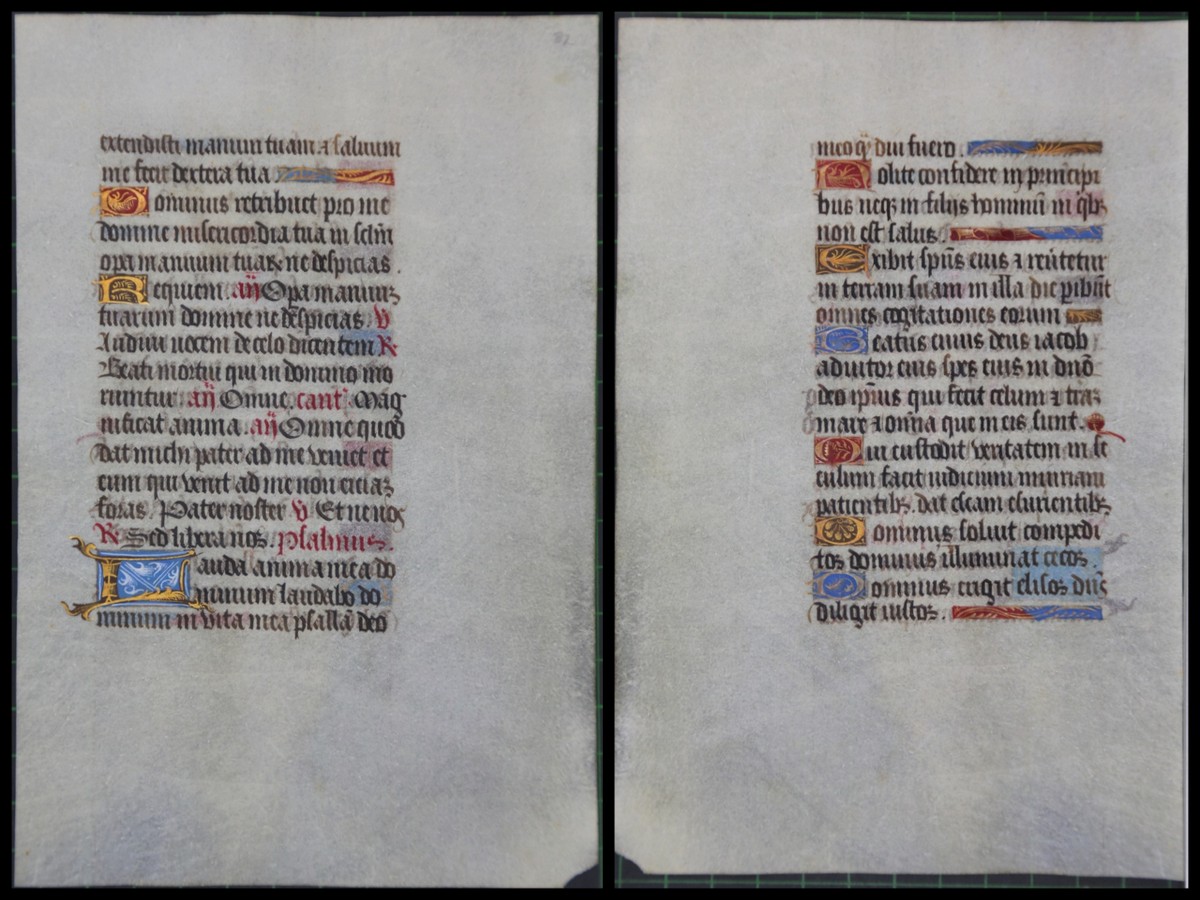
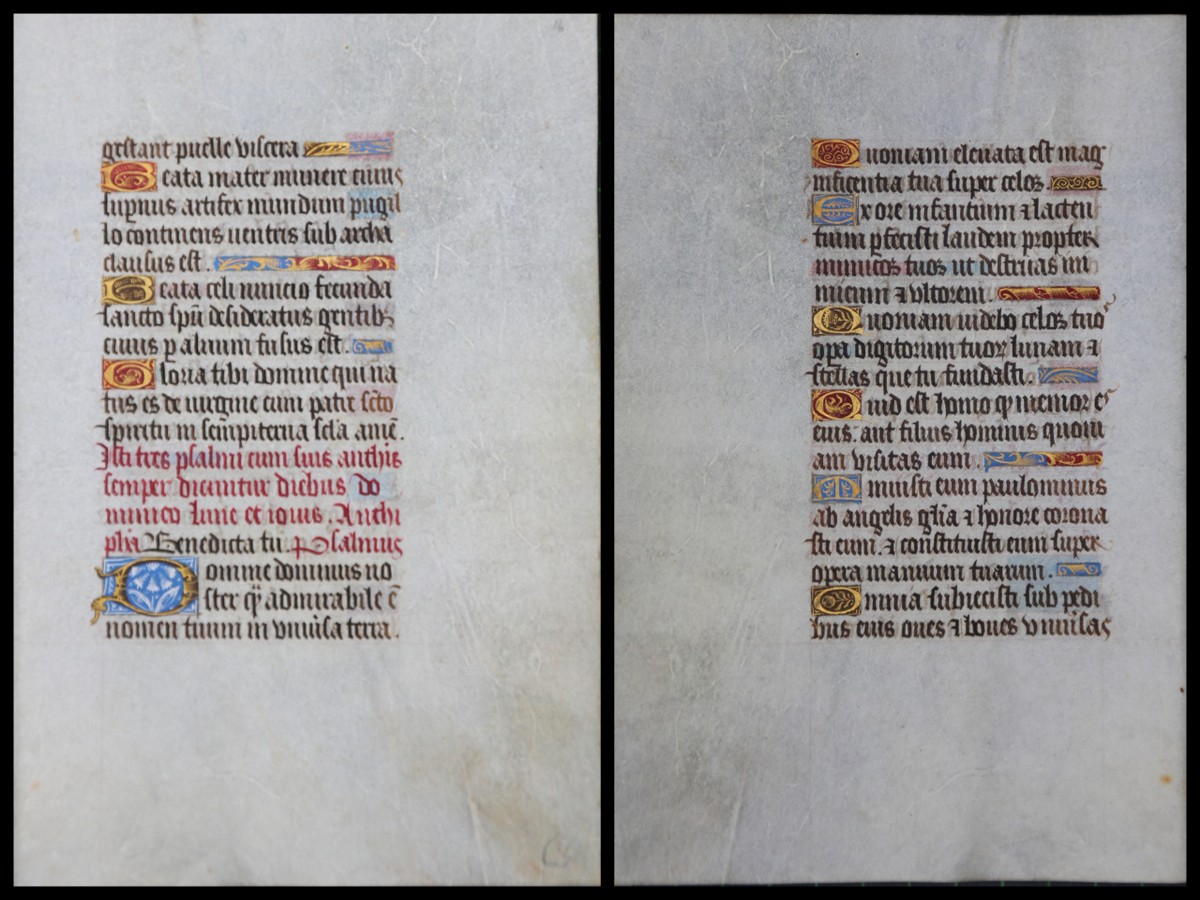
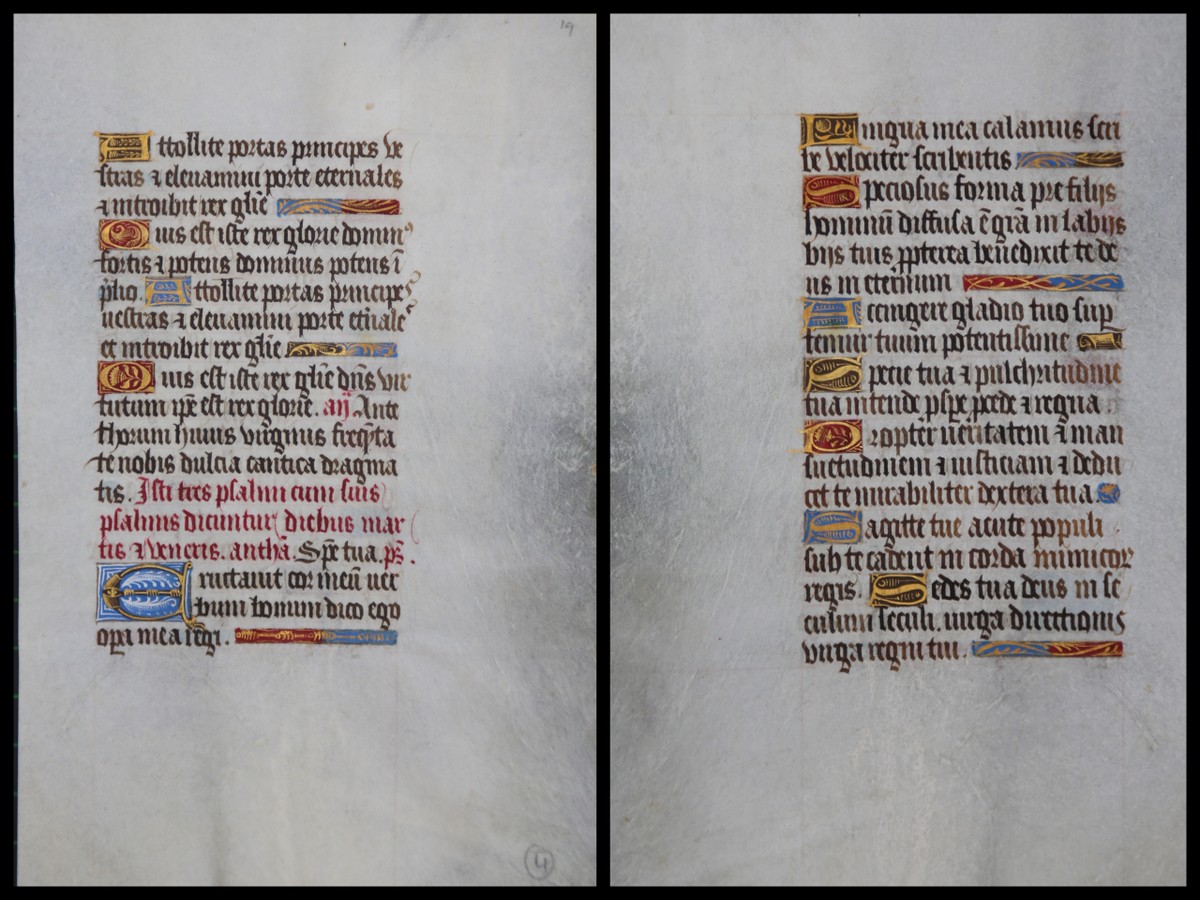
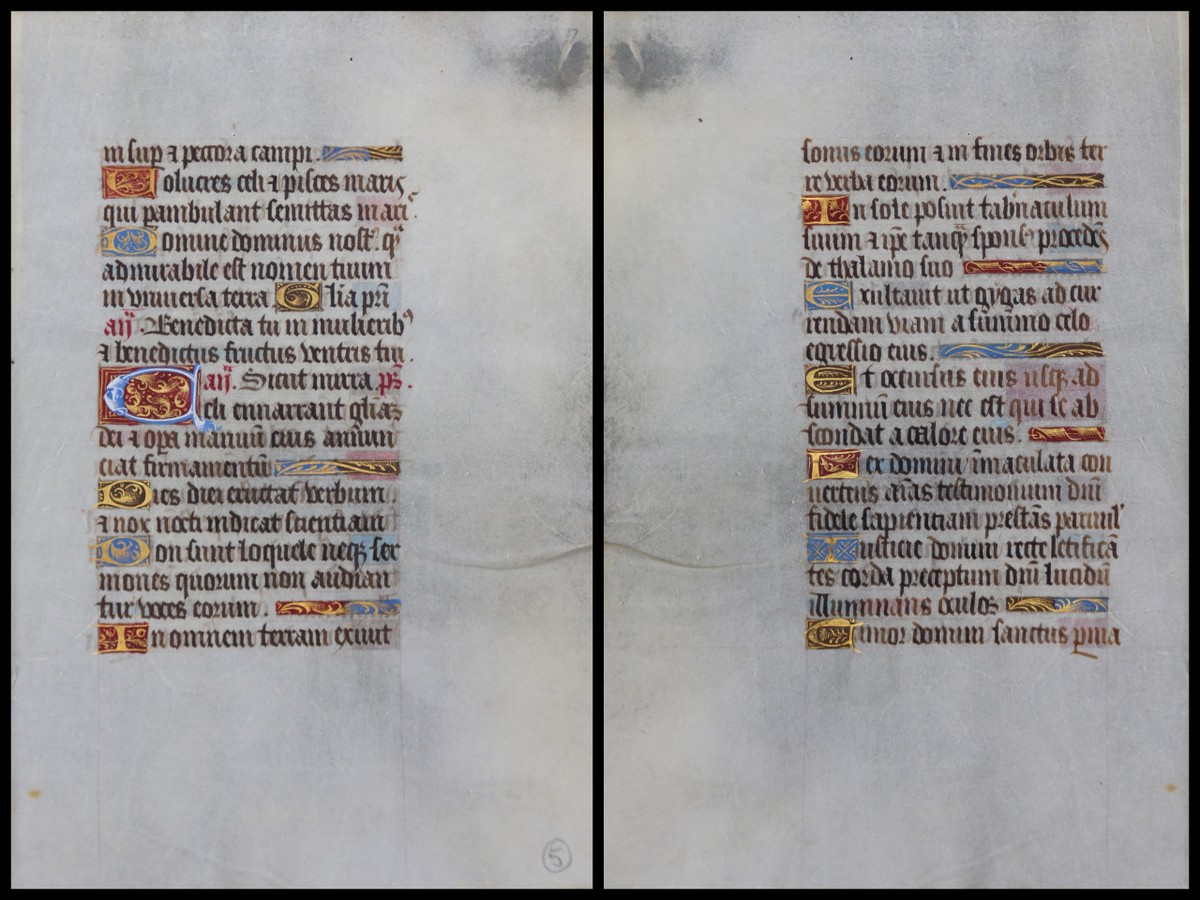
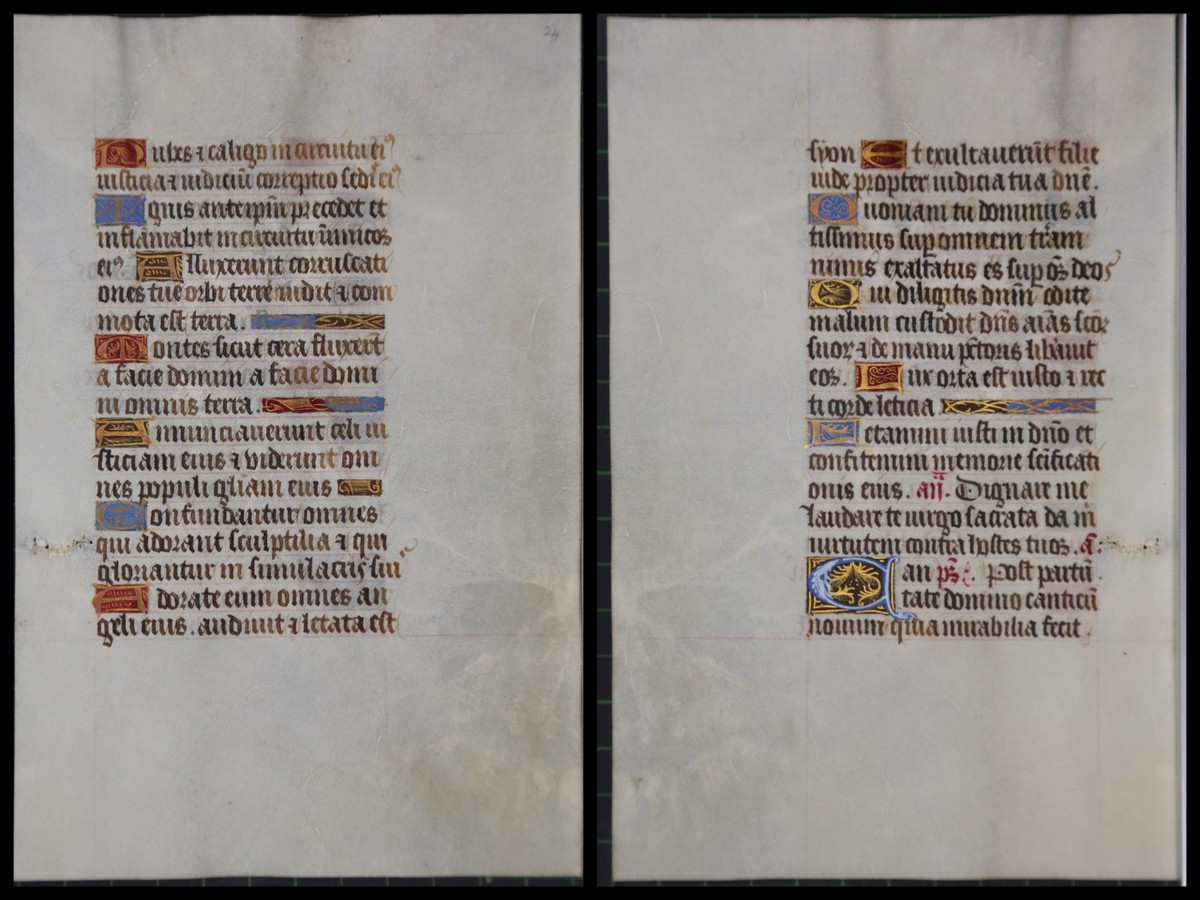
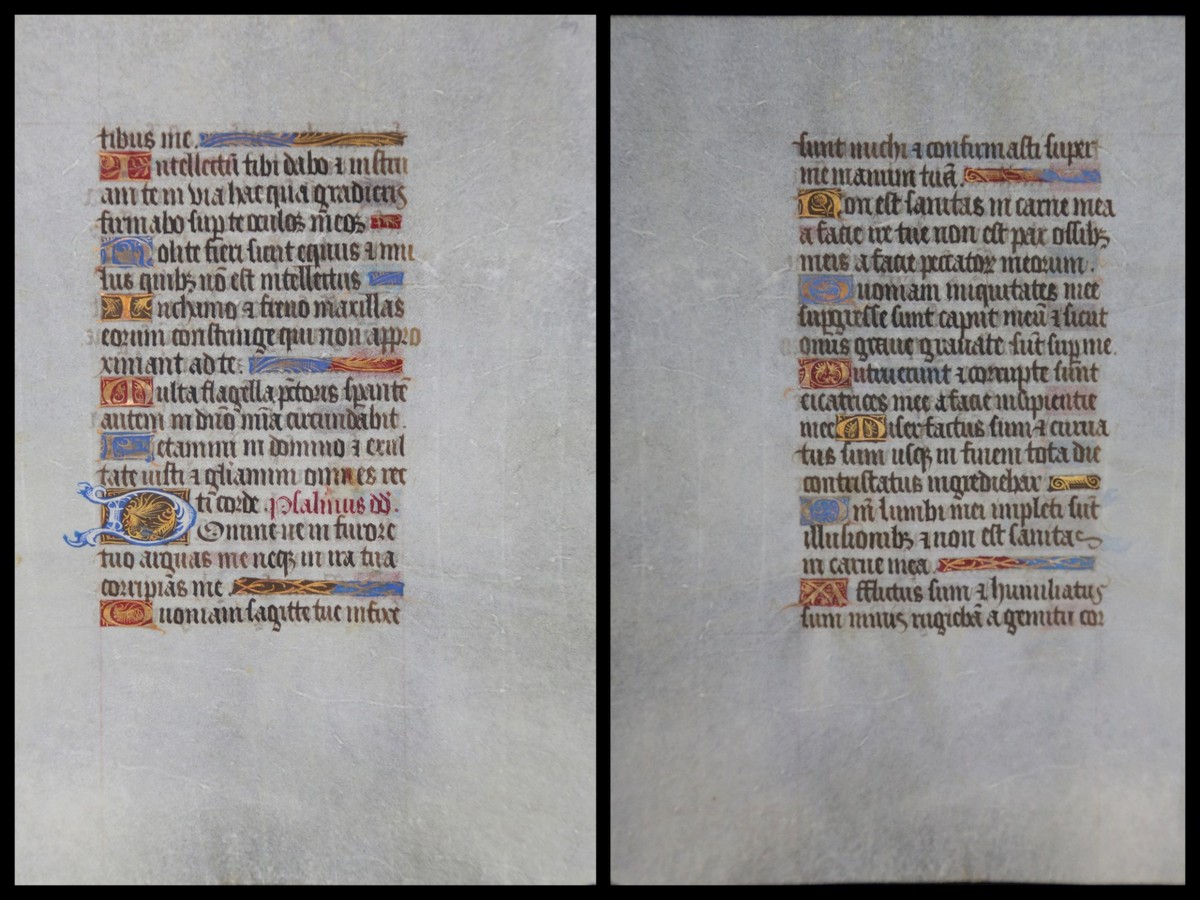
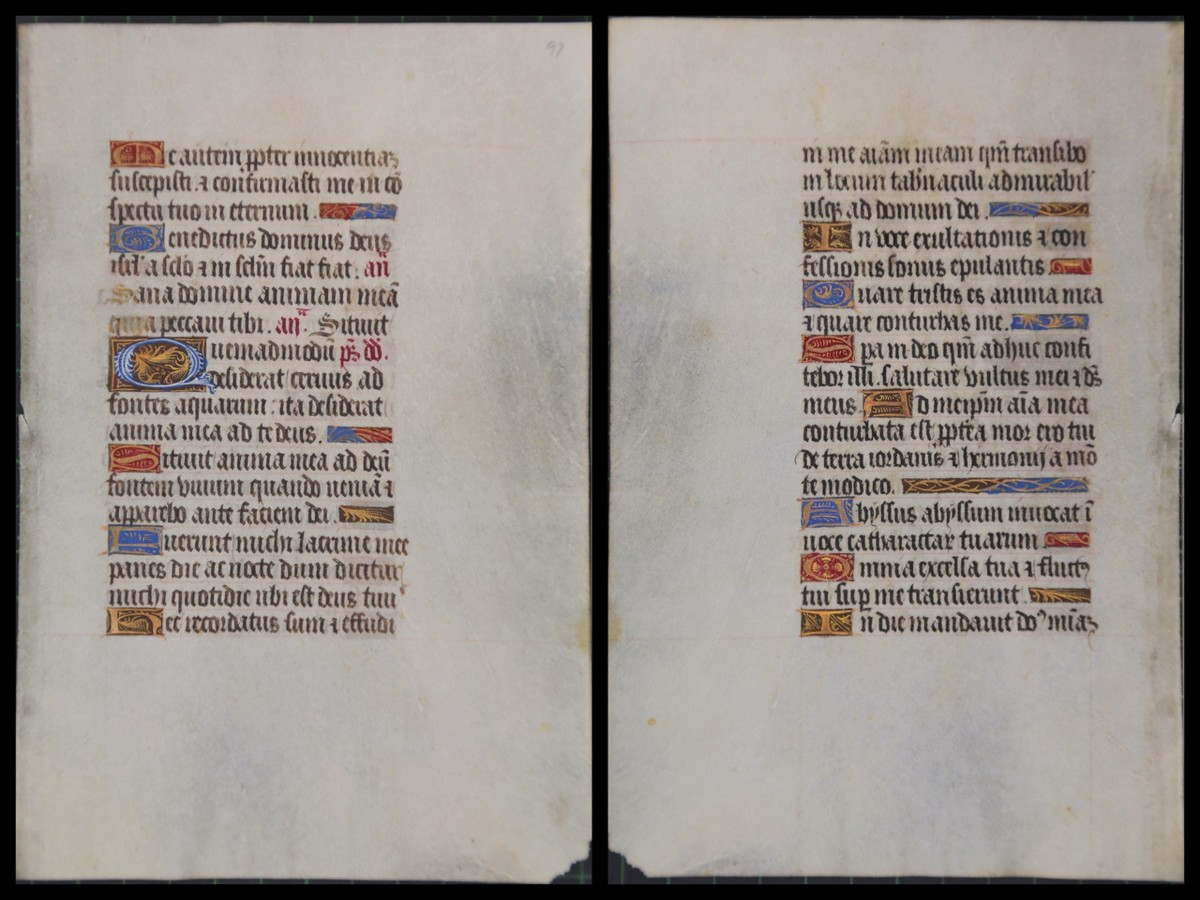
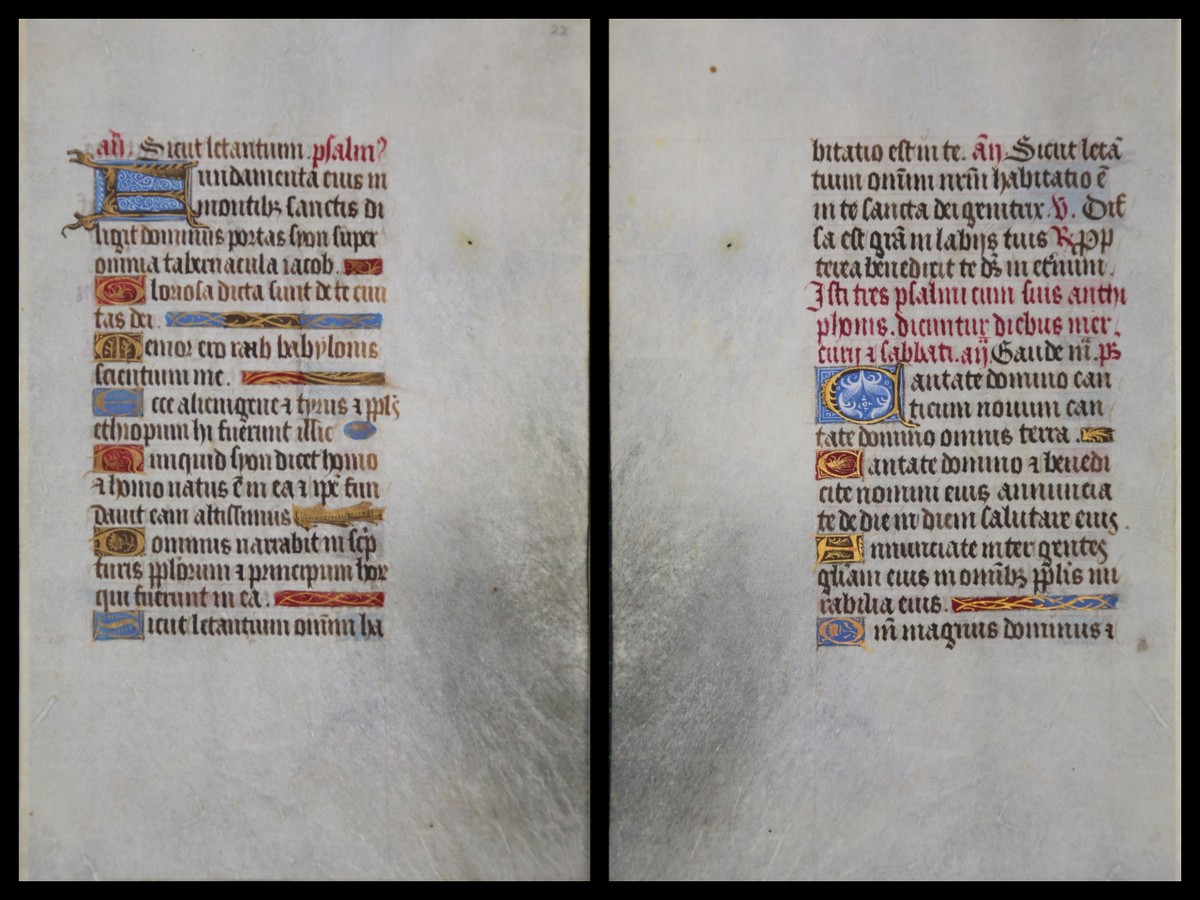
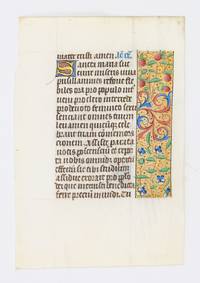
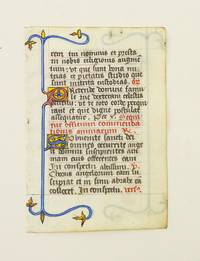
1500150794Frankreich (wohl Vienne-Lyon), ca. 1500. Blattgröße: 18,5 x 12,5 cm. Schriftspiegel: ca.10,5 x 6,5 cm. Blatt aus einem schönen französischen Stundenbuch um 1500 mit teils großen ausgeschmückten Initialen.
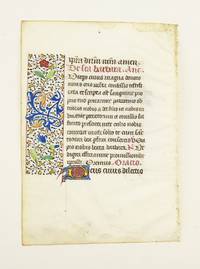
1500150782Frankreich (wohl Vienne-Lyon), ca. 1500. Blattgröße: 18,5 x 12,5 cm. Schriftspiegel: ca.10,5 x 6,5 cm. Blatt aus einem schönen französischen Stundenbuch um 1500 mit teils großen ausgeschmückten Initialen.
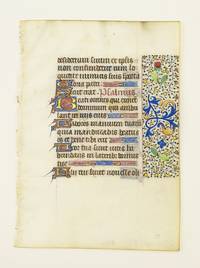
1500150792Frankreich (wohl Vienne-Lyon), ca. 1500. Blattgröße: 18,5 x 12,5 cm. Schriftspiegel: ca.10,5 x 6,5 cm. Blatt aus einem schönen französischen Stundenbuch um 1500 mit teils großen ausgeschmückten Initialen.
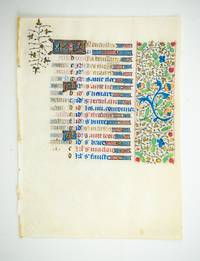
1500150818Frankreich (wohl Vienne-Lyon), ca. 1500. Blattgröße: 18,5 x 12,5 cm. Schriftspiegel: ca.10,5 x 6,5 cm. Blatt aus einem schönen französischen Stundenbuch um 1500 mit teils großen ausgeschmückten Initialen.
1500150791Frankreich (wohl Vienne-Lyon), ca. 1500. Blattgröße: 18,5 x 12,5 cm. Schriftspiegel: ca.10,5 x 6,5 cm. Blatt aus einem schönen französischen Stundenbuch um 1500 mit teils großen ausgeschmückten Initialen.
1500150790Frankreich (wohl Vienne-Lyon), ca. 1500. Blattgröße: 18,5 x 12,5 cm. Schriftspiegel: ca.10,5 x 6,5 cm. Blatt aus einem schönen französischen Stundenbuch um 1500 mit teils großen ausgeschmückten Initialen.
1500150841Frankreich (wohl Vienne-Lyon), ca. 1500. Blattgröße: 18,5 x 12,5 cm. Schriftspiegel: ca.10,5 x 6,5 cm. Blatt aus einem schönen französischen Stundenbuch um 1500 mit teils großen ausgeschmückten Initialen.
1500150843Frankreich (wohl Vienne-Lyon), ca. 1500. Blattgröße: 18,5 x 12,5 cm. Schriftspiegel: ca.10,5 x 6,5 cm. Blatt aus einem schönen französischen Stundenbuch um 1500 mit teils großen ausgeschmückten Initialen.
1500150842Frankreich (wohl Vienne-Lyon), ca. 1500. Blattgröße: 18,5 x 12,5 cm. Schriftspiegel: ca.10,5 x 6,5 cm. Blatt aus einem schönen französischen Stundenbuch um 1500 mit teils großen ausgeschmückten Initialen.
1500150815Frankreich (wohl Vienne-Lyon), ca. 1500. Blattgröße: 18,5 x 12,5 cm. Schriftspiegel: ca.10,5 x 6,5 cm. Blatt aus einem schönen französischen Stundenbuch um 1500 mit teils großen ausgeschmückten Initialen.
1500150783Frankreich (wohl Vienne-Lyon), ca. 1500. Blattgröße: 18,5 x 12,5 cm. Schriftspiegel: ca.10,5 x 6,5 cm. Blatt aus einem schönen französischen Stundenbuch um 1500 mit teils großen ausgeschmückten Initialen.
1500150806Frankreich (wohl Vienne-Lyon), ca. 1500. Blattgröße: 18,5 x 12,5 cm. Schriftspiegel: ca.10,5 x 6,5 cm. Blatt aus einem schönen französischen Stundenbuch um 1500 mit teils großen ausgeschmückten Initialen.
1500150813Frankreich (wohl Vienne-Lyon), ca. 1500. Blattgröße: 18,5 x 12,5 cm. Schriftspiegel: ca.10,5 x 6,5 cm. Blatt aus einem schönen französischen Stundenbuch um 1500 mit teils großen ausgeschmückten Initialen.
1475ST19653GNorthern France ca. 1475. 155 x 110 mm. 6 x 4 1/4". Single column 16 lines in a gothic book hand. <br/> Rubrics in dark pink some leaves with line fillers in pink and blue with white embellishment and gilt bezants each leaf with at least one and some with many one- to three-line initial either in gilt on a pink and blue ground with white embellishment or painted blue with white embellishment filled with flowers or ivy on a gilt ground most leaves with one panel border of hairline vines gilt ivy and bezants and painted flowers. Occasional light soiling wrinkling and other very minor imperfections but in fine fresh condition overall very clean and with wide margins.<br/> <br/> Undoubtedly the work of a top atelier these lovely manuscript leaves have been written and decorated with a high degree of skill. Many of the leaves feature numerous glittering initials and the delicate panel borders add a bit of extra sparkle to the page. unknown
148552035France c.1485-1515. Small8vo. 80 x 12 mm. 1 leaf in vellum single column with text to both verso and recte. Fine flower ornamentation in red blue and gold to outer margin both verso and recte. Horisontal catchword. Small worm-hole to upper right corner far from affecting text. hardcover
1480ST18547Northern France ca. 1480. 164 x 111 mm. 6 1/2 x 4 3/8". Single column 17 lines in a gothic book hand. <br/> Rubrics in blue many leaves with line fillers in pink and/or blue with gilt bezants and white tracery each leaf with at least one and often many one- or two-line initials in burnished gold on blue and pink ground with white tracery every side with a panel border consisting of colorful acanthus and different types of flowers on a ground that is either entirely painted gold or with a pattern of painted gold and bare vellum. A few leaves with light wrinkling or a hit of soiling or foxing a couple of leaves with inoffensive marginal repairs but IN VERY FINE CONDITION EXTREMELY CLEAN AND BRIGHT.<br/> <br/> Featuring both burnished and painted gold in their decoration and offering a multitude of border patterns to choose from these are extremely attractive leaves that are all the more appealing for their fine condition. unknown
1450ST11774DParis ca. 1450. 159 x 108 mm. 6 1/4 x 4 1/4". Single column 15 lines per page in an excellent gothic book hand. <br/> Rubrics in red each leaf with two or more two-line initials in burnished gold on red and blue ground with white tracery some also with one-line initials and line fillers similarly decorated one or both sides with a swirling panel border featuring flowers leaves strawberries and many burnished gold ivy leaves on hairline stems. Isolated trivial stains or imperfections but VERY BRIGHT CLEAN AND FRESH.<br/> <br/> In fine condition beautifully decorated and sparkling with gold these leaves are marvelous examples of a high-quality Parisian Book of Hours made for a person of means. The borders here are especially pleasing with skeins of hairline vines accented by burnished bezants and ivy bright blue and gold acanthus pale green leaves and cheerful red blossoms. For leaves at other price points please check our website. unknown
1450ST11774EParis ca. 1450. 159 x 108 mm. 6 1/4 x 4 1/4". Single column 15 lines per page in an excellent gothic book hand. <br/> Rubrics in red each leaf with line fillers and multiple one- and two-line initials in burinshed gold on red and blue ground with white tracery one or both sides with swirling panel border featuring flowers leaves strawberries and many burnished gold ivy leaves on hairline stems. Isolated trivial stains or imperfections but VERY BRIGHT CLEAN AND FRESH.<br/> <br/> In fine condition beautifully decorated and sparkling with gold these leaves are marvelous examples of a high-quality Parisian Book of Hours made for a person of means. The borders here are especially pleasing with skeins of hairline vines accented by burnished bezants and ivy bright blue and gold acanthus pale green leaves and cheerful red blossoms. For leaves at other price points please check our website. unknown
1440ST12158bAParis ca. 1440. 222 x 162 mm. 8 3/4 x 6 3/8". Single column 16 lines of text in a beautiful gothic book hand. <br/> Rubrics in red leaves with varying numbers of line fillers and one- and two-line initials in burnished gold blue and magenta highlighted with white tracery and WITH LOVELY RINCEAU BORDERS on one or both sides these composed of delicately twining hairline stems bearing red and blue blossoms and FEATURING A PROFUSION OF BURNISHED GOLD IVY LEAVES. IN OUTSTANDING CONDITION the vellum extraordinarily bright fresh and clean and WITH MARGINS AS VAST AS ONE COULD EVER HOPE FOR.<br/> <br/> Commissioned for use by a woman as indicated by the feminine form in the "Obsecro te" the Book of Hours from which these leaves come could only have been a manuscript of great beauty prepared for a household of very substantial wealth and importance. The level of achievement manifested here in both the scribal hand and the execution of the illuminated decoration clearly indicates that some of the best artisans money could buy were at work on this book and only a powerful family could afford to pay their price. Further corroboration of this fact is seen in the leaves' noticeable size and immense margins which are at least as wide as on any Book of Hours leaves we have ever owned. Such a conspicuous display of purchasing power those extra millimeters meant the slaughtering of extra animals and that meant greater cost announces an owner's self-congratulatory consequence that is uncommon except in the grandest of prayer books of the period. Happily the condition here matches the importance of the manuscript which was obviously considered from the beginning--and ever after--an object to be carefully preserved. For additional leaves from this Book of Hours at different price points please check our website. unknown
1440ST11459-11Paris ca. 1440. 121 x 89 mm. 4 3/4 x 3 1/2". Single column 15 lines of text in a very fine gothic book hand. <br/> Rubrics in red with multiple one-line initials and line fillers all in blue maroon and burnished gold and with two-line initials in the same colors and gold but also enclosing charming flowers on scrolling stems with marginal extension in the form of gilt ivy leaves on sinuous stems and WITH A FINE SWIRLING PANEL BORDER ON EACH SIDE featuring flowers leaves strawberries and many burnished gold ivy leaves on hairline stems. IN FINE CONDITION with the paint and gold bright fresh and entirely intact.<br/> <br/> This is a lovely little leaf from a fragment of a Book of Hours that obviously was produced for a client of considerable means by skilled craftsmen in a Parisian studio probably a little before the middle of the 15th century. This was clearly intended to be put into a book that could be carried easily on one's person and part of what makes it so charming is this portable size. unknown
1450ST12778-0485-05BFrance ca. 1450. 97 x 61 mm. 3 3/4 x 2 5/8". Single column 20 lines in an attractive gothic book hand. <br/> Each leaf with two or more one- to two-line initials painted in blue or maroon with delicate white tracery and charming enclosed flowers all on a field of burnished gold the left or right margin on one or both sides with a bar border of blue and white terminating in gold ivy leaves in the upper and lower margins. ◆The bar borders just slightly trimmed by the binder otherwise in excellent condition the text well preserved the vellum unusually clean the colors quite bright and the glistening gold without any erosion or loss of brilliance.<br/> <br/> Taken from an intact manuscript we sold in 2006 that was subsequently dismembered these lovely leaves have considerable aesthetic appeal and charm as well as notable interest because of their surprising size distinctive musical and textual content and peculiar hypothetical provenance. In origin the collectarium sometimes called a collectar collectarius collectaneum orationale or capitulare was a compilation of the collects or prayers said during the various hours of the Divine Office. But over time it came to comprise an ad hoc collection of the prayers and ceremonies not found in other service books that were specific to the uses of a particular house congregation or religious order. The presence of music throughout the original book indicates that our leaves were part of a choir book; however unlike most choir book leaves which range from very large to enormous in order to allow simultaneous use by a number of singers the present pocket-size manuscript is quite atypical in that it could only have been used by a single person at any one time. These leaves are also highly unusual and therefore most interesting in that we know from consulting other portions of the original that this collectarium was written not for a monastic house but for a community of religious women who are referred to in other parts of the manuscript as "sisters." Judging from the frequency with which she is mentioned in the original members of that community using the present choirbook seem clearly to have identified closely with the penitent Magdalene the original book containing a portion of the double feast they celebrated for her and her presumed sister Martha. This suggests a fascinating possibility in terms of the manuscript's provenance: beginning in the 13th century houses of penitential sisters known as Magdalens were established in many European cities often by wealthy lay persons with the aim of providing former prostitutes with a safe haven in a religious community. It is just possible that our manuscript leaves were part of a book that was used in such a convent. unknown
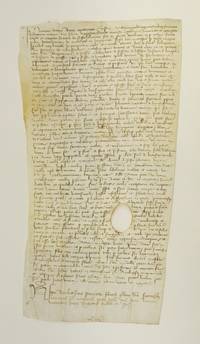
1429ST12778-0360Italy 1429. 323 x 173 mm. 12 3/4 x 6 3/4". Single column 60 lines in a neat cursive script. <br/> Notarial signature at lower left; verso with a date and notations in contemporary hands. ◆Vellum trimmed a little close four horizontal and three vertical fold creases slight darkening to verso five very small holes no text obscured and one larger naturally-occurring hole in the text otherwise in excellent condition with a very clear hand.<br/> <br/> This is a notarized document recording an agreement made between the chapel and convent i.e. the whole community of the house of St. John a group of female religious located in the parish of St. Peter and the brothers of Bonsignioribus another religious house in the parish of St. Laurence Major. The women of St. John agree to pay to the brothers of Bonsignioribus a sum of 11 libras 8 soldas and 9 denarios. The reason for this payment is unclear pending further investigation into some of the more abbreviated portions of the text. The document is of additional interest for the fact that several female members of the house of St. John are mentioned by name. Based on these names and that of the notary Ambrosius Spanzota . . . Parmensis it would appear that the document was written in Italy possibly in Parma and that the two houses were also located there. unknown
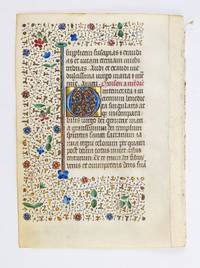
1475ST19653NNorthern France ca. 1475. 155 x 110 mm. 6 x 4 1/4". Single column 16 lines in a gothic book hand. <br/> Rubrics in dark pink ONE EXQUISITE FOUR-LINE INITIAL painted blue with white detailing filled with red and blue vines and leaves on a burnished gold ground with a painted and gilt bar border on one side each end capped with a flower the text surrounded on three sides with a border of acanthus leaves dense rinceaux colorful flowers gold ivy leaves and bezants. A couple negligible imperfections but IN VERY FINE CONDITION<br/> <br/> One of the most popular optional prayers in the 15th century Book of Hours "O Intemerata" "Oh immaculate virgin" is a brief supplication in which the Virgin is glorified for her purity as the "unspotted and forever blessed singular and incomparable Virgin Mary Mother of God." The present leaf is given special emphasis with the presence of a three-quarter rinceaux border surrounding the text and the opening of the prayer is marked by an especially pretty and finely detailed initial that glitters with burnished gold. The leaf is unusually beautiful precisely rendered and in very fine condition. unknown
14501058951450. Dutch school: c. 1450 or later. <br /> <br /> Single leaf 138 x 98 mm. Miniature without text image of Christ before Caiaphas being held by a soldier with a jester dancing behind him disciples and a cockerel seen through a doorway in the courtyard beyond within a three-sided border of simple flowers. In good condition.<br /> <br /> § Origin and provenance unknown; from a private California collection. unknown
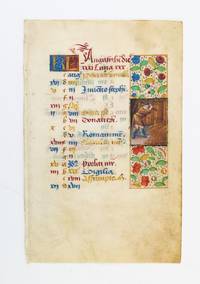
1470ST17245-09Northern France probably Rouen ca. 1470. 180 x 117 mm. 7 x 4 5/8". Single column 18 lines text in a bâtarde hand. <br/> Text in red blue and gold two-line "KL" in shell gold on blue and red ground both sides with panel border composed of flowers and ink dots WITH TWO SMALL MINIATURES each centered in the middle of the panel borders featuring the labor of the month Threshing and the zodiac sign a young woman for Virgo. Vellum a bit soiled and slight wrinkling in margins small area of rubbing at bottom of the Virgo miniature but in excellent condition overall the fine details in the miniatures well preserved.<br/> <br/> Situated among the flowers of the panel borders here are two small but charming miniatures depicting the labor of the month "Threshing" and the zodiac sign for August. According to Roger Wieck far fewer than half the Books of Hours of the period contain illustrated calendars "even in manuscripts with otherwise lavish cycles of miniatures"; when they do appear they are invariably charming as is the case here. In the threshing scene a young layman brings down his grain flail two hinged pieces of wood the longer one called a helve and the other a beater joined by a thong in an effort to separate the grain while neatly gathered bushels of straw appear just behind him. On the verso we see a representation of Virgo as a young woman holding appropriately two long stalks of grain in her hands. The rich palette used in these miniatures allows the delicate gold highlighting on the harvested crop and garments to shine through adding a fine sense of detail to each image. unknown