VariousBiblio.com

643 résultats
1788959P26London: C. Forster 1788-94. First edition. Cloth. Very Good. 8.5" by 5.5". Not Stated. A scarce complete run of this literary magazine an illustrated work including articles of historical interest. A scarce complete run of all published of 'The Literary Magazine and British Review' complete in twelve volumes. The magazine was published only from July 1788 to June 1794.This Georgian periodical published a wide array of pieces including poetry biographies and pieces on politics science travel natural history and more. Interestingly this magazine was published during the beginning of the French Revolution and the execution of the King and Queen of France. The issues include biographical notices of the figures of the revolution and notes the proceedings including a plate of the guillotine Volume X.Contents include brief biographies on figures such as Mary Queen of Scots Moliere John Locke Richard Steele Richelieu Benjamin Franklin Marquis de Lafayette Thomas Paine and Christina Queen of Sweden alongside articles on French fashion bathing in Turkey Spanish bull fights the Amazon River electricity how to polish silver plate the independence of America kangaroos the natives of New Zealand historical discoveries of rainbows the East India Company the invention of gunpowder the intelligence of animals Herschel"s astronomical discoveries volcanoes and more. This set contains:Volume I for July to December 1788 containing a total of six issues. Illustrated with an engraved title and eight plates. Collated bound without the plates to face pages 81 113 241 and 433.Volume II for January to June 1789 containing a total of six issues. Illustrated with an engraved title and nine plates. Collated bound without the plates to face pages 1 321 and 353.Volume III for July to December 1789 containing a total of six issues. Illustrated with an engraved title and eleven plates. Collated bound without the plate to face page 113.Volume IV for January to June 1790 containing a total of six issues. Illustrated with an engraved title one folding map and twelve plates. Collated complete.Volume V for July to December 1790 containing a total of six issues. Illustrated with an engraved title and twelve plates. Collated completeVolume VI for January to June 1791 containing a total of six issues. Illustrated with seven plates. Collated bound without the engraved title and contents leaves as well as the plates to face pages 15 26 176 281 and 329. Volume VII for July to December 1791 containing a total of six issues. Illustrated with an engraved title and eleven plates. Collated bound without the plate to face page 137. Pagination is erroneous as issued.Volume VIII for January to June 1792 containing a total of six issues. Illustrated with an engraved title and eleven plates. Collated bound without the contents leaves and the plate to face page 361.Volume IX for July to December 1792 containing a total of six issues. Illustrated with an engraved title one folding plate and ten plates. Collated bound without the plate to face page 241.Volume X for January to June 1793 containing a total of six issues. Illustrated with an engraved title one folding plate and eleven plates. Collated bound without the plates facing pages 105 and 281.Volume XI for July to December 1793 containing a total of six issues. Illustrated with an engraved title and ten plates. Collated bound without the plates facing pages 273 and 341Volume XII for January to June 1794 containing a total of six issues. Illustrated with an engraved title and twelve plates. Collated complete.From the General Theological Seminary Library Dean Hoffman fund rebound by the library with labels to the front paste downs and the occasional stamps. Rebound in an institutional cloth binding with renewed endpapers. Externally smart. A few light marks to the cloth. Institutional label to the front paste downs. Internally firmly bound. Pages are age-toned with scattered spots. Plate to face page 1 of Volume I is detached but present. Bound without a total of twenty plates and the contents leaves to Volumes VI and VIII. Loss to page 61/62 of Volume I and to the margin of the plate to face page 161 with no loss to the image. Neat repair to page 235/236 in Volume VI. Plate facing page 409 in Volume VI is edge worn and working loose. Loss to the margin of page 7/8 of Volume VIII and a tidemark to the plate facing page 241. Repair to the engraved title of Volume IX. Small tidemark to the head of the plate facing page 401 in Volume IX and loss to the folding plate. Large closed tear to page 99/100 of Volume XI. The occasional institutional stamp including to the plates. Very Good C. Forster hardcover
1765662L12London: Various Publishers 1765-1776. First edition. Leather. Very Good Indeed. 14.5" by 9.5". None. A sammelband of prominent eighteenth century legal cases which deal with cases of bigamy adultery and murder. These four uncommon publications form the account of proceedings during trial. The first edition of all pamphlets bound together in a lovely quarter calf binding with marbled boards. These trials were all important in society at the time with several remaining of historical importance. Comprising of: The Trial of William Lord Byron Printed for Samuel Billingsley 1765 The Trial of Lawrence Earl Ferrers for the Murder of John Johnson 1760 The Whole Proceedings at Large in a Cause on an Action Brought by The Rt Hon. Richard Lord Grosvenor against His Royal Highness Henry Frederick Duke of Cumberland for Criminal Conversation with Lady Grosvenor Printed for J Wheble 1770 The Trial of Elizabeth Duchess Dowager of Kingston for Bigamy Printed for Charles Bathurst 1776 Collated 'The Trial of Lawrence Earl Ferrers for the Murder of John Johnson' has been bound without the title page. The first trial regards William Byron the fifth Baron Byron and great uncle of famed poet George Gordon Byron. This account is of his trial for murder held on Tuesday the 16th and Wednesday the 17th April 1765. He was accused of murdering his cousin and neighbour William Chatworth in a duel that began from an argument over who had the most game on their estates. During this trial he was found guilty of manslaughter as stated to the title page. The second trial regards Larence Shirley the 4th Earl Ferrers who was accused of the murder of John Johnson his steward. As a result of this trial Laurence Shirley is noted as being the last peer to be hanged in England. Shirley drunkenly shot his steward Johnson following some business conversation and verbal abuse from Shirley. The sentence to be hanged became widely publicised and the tale of a nobleman being hanged and therefore the equality of the law continued to be told for centuries. Therefore this trial is of historical note. The third trial follows Lord Grosvenor suing Prince Henry Duke of Cumberland in 1769. He was suing the younger brother of George III for his affair with his wife Lady Grosvenor. The Duke and Lady Grosvenor were caught in the act of their affair and therefore Lord Grosvenor took the Duke to court. It contains evidence verbatim from the witnesses and includes all arguments and speeches from the counsel and court. The fourth and final trial printed to this collection is Elizabeth Duchess Dowager of Kingston's trial for bigamy. Elizabeth Pierrepont was noted by her contemporaries for her adventurous life style. Her trial was a popular event and attracted 4000 spectators. Elizabeth Chudleigh secretly married Augustus Hervey in 1744. Their marriage was kept a secret so that Chudleigh could continue her position at court and so that Hervey could rejoin his ship. Chudleigh was mistress to both Frederick the Great and of Evelyn Pierrepont 2nd Duke of Kingston Upon Hull. Hervey wished to divorce Chudleigh however she did not wish to acknowledge their marriage which lead to a trial in court. Chudleigh swore she was unmarried in court which then pronounced her a spinster and free to marry. She married Pierrepont in 1769 despite the fact her marriage to Hervey was legitimate. The trial to this pamphlet is a later 1776 trial whereby Pierrepont's nephew Evelyn Meadows brought a charge of bigamy against Elizabeth in order to establish a legal rationale for challenging his uncle's will. Elizabeth was found guilty of Bigamy and was tried as a peer in Westminster Hall. A fascinating collection of legal pamphlets bound together which provide an insight into popular trials during eighteenth century society as well as a wider understanding of the legal system at this time. In a quarter calf binding with marbled boards. Externally in an excellent condition with little to no shelfwear. Internally firmly bound. Pages are bright. Occasional scattered spots and handling marks to pages. Very Good Indeed Various Publishers hardcover
17643924Paris Grenoble and elsewhere 1764. Very good. Contemporary mottled calf; spine tooled in gold; red edges; marbled endpapers. The first Grenoble imprint lacking the first leaf half-title; both Grenoble imprints cropped close just shaving some text; occasional light foxing. Text block splitting from the bottom between two of the pamphlets roughly two-thirds into the volume. Modern armorial bookplate on the front paste-down. Later perhaps early 20th-century handwritten table of contents tipped in at front. An attractive Sammelband suitable for exhibition and study. SAMMELBAND OF 30 ANTI-JESUIT TRACTS ATTESTING TO THE "INTRACTABLE" RELATIONS BETWEEN THE FRENCH STATE AND THE JESUITS DOCUMENTING THE OFFICIAL SUPRESSION PROCESS. <br /> <br /> The earliest documents beginning in 1761 and running into 1762 demonstrate the French government's early steps toward suppression. Many of these edicts demand copies of the order's Constitutions for inspection. Of course it's clear the authorities had already made up their minds evidenced too by their numerous judgments against Jesuit books which appear to have provided abundant bonfire fuel in palace courtyards across the country. We find plenty of references to the Jesuits being kicked out of their homes the confiscation of their property and much on the closure of their schools and plans for their continued operation under state-sponsored control. The penultimate document in our volume is the French king's final blow to the Jesuit order followed by a final edict outlining conditions of Jesuit resettlement in France. If you're expecting sanitized administrative legalese from these documents the amount of invective animosity and hatred may surprise you. Endless referrals to the "so-called Jesuits" underscore a perception that the order must hardly be aligned with the teachings of Jesus. Grievance-laden dressing-downs are ubiquitous. The devastation to Jesuit lives seen here was enormous. Our brief commentaries below merely scratch the surface of what these contain. <br /> <br /> ¶ The suppression of the Jesuits was a global phenomenon that began with their expulsion from Portuguese territories in 1759. From there it spread not simply through the European continent but through its countries' vast overseas empires. The final blow landed with a papal decree of 21 July 1773 though the Jesuits found some sympathetic European pockets where they managed to continue their mission. The order's official restoration was enabled by a papal decree in 1814 from which the Jesuits eventually regained their European footing. <br /> <br /> ¶ The depths of blame for Jesuit suppression has been endlessly plumbed by scholars. The Enlightenment is an oft cited factor as was fear of outsize political influence from Rome and royal desires to seize control of Jesuit revenue sources. "Whichever way one analyses the surviving evidence any attempt to provide a single all-embracing explanation of the destruction and ultimate suppression of the Society is fruitless: there was a whole host of reasons which curiously coalesced into a wider international phenomenon" Whitehead. <br /> <br /> ¶ In France groundwork for Jesuit antipathy had been laid by a deep long-standing theological tension between them and the Jansenists. But everything came to a head with the well intentioned but ill advised trade dealings of one Father Lavalette in Martinique. In trying to improve the condition of his overseas community he found himself hopelessly indebted to French creditors. The Jesuits tried to cover the debts themselves but eventually found themselves in French courts. A Jesuit appeal to the French parlement stacked with individuals not favorably disposed to them was a fatal mistake. "The protracted court proceedings lasted from April to August 1761 and were to prove immensely damaging for the Jesuits as the Society's Institute was examined and ultimately denounced. During the winter of 1761 and the spring of 1762 the parlement of Paris and the fifteen provincial parlements of France deliberated independently on how to deal with the future of the Jesuits within their respective jurisdictions." This decentralized approach to their suppression is vital context for the broad geographic coverage of the volume here. "Enormous power struggles took place in various parlements but the detailed debates of their members were rendered largely irrelevant when on 1 April 1762 the parlement of Paris having found against the Society of Jesus forced the Jesuits to leave the thirty-eight colleges within its jurisdiction" Whitehead. Some provincial parlements continued to shelter the Jesuits-Artois for example from which we have a 1762 decree here-but Louis XV's edict of November 1764 ordered the Society's complete dissolution. <br /> <br /> ¶ The unusually broad geographic coverage of the volume is impressive. While eleven tracts were printed in Paris nineteen ! come from ten different provincial cities the latter often broadcasting the same language the same grievances and the same judgments as those issued from Paris. Even the spine title hints at the variety of origins: Arrets de divers parts Jesuites. The collection is a telling witness to how demotic anger towards the Jesuits developed into an official campaign of suppression in France.<br /> <br /> CONTENTS OF THE COLLECTION:<br /> <br /> 1. Declaration du roi qui ordonne que dans six mois pour tout délai les supérieurs de chacune des maisons de la Société des Jésuites seront tenus de remettre au greffe du conseil les titres de leurs établissements en France; donné a Versailles le 2 août 1761 - Paris: Pierre-Guillaume Simon 1761 - 8 p.<br /> 2. Arrest de la cour du parlement extrait des registres du parlement du 6 août 1761 - Paris: Pierre-Guillaume Simon 1761 - 16 p. - Opening in part "that the said priests and scholars of the said society Jesuits will be required to deliver within three days to the clerk of the said court a printed copy of the Constitutions of the said society."<br /> 3. Arrêt de la cour de parlement du 6 août 1761 - Paris: Pierre-Guillaume Simon 1761 - 12 p. - On the state examination of Jesuit literature. Includes a lengthy list of controversial Jesuit books with Claude Lacroix's expansion of Hermann Busenbaum's Theologia Moralis singled out: "They will be lacerated and burned in the courtyard of the palace" p. 7.<br /> 4. Arrest de la cour de parlement du trois septembre 1761 - Paris: Pierre-Guillaume Simon 1761 - 16 p. - Concerns the inspection of Jesuit books noting that Orazio Torsellini's "Historiae sacrae & profanae epitome" is also to be lacerated and burned in the palace courtyard p. 6.<br /> 5. Arreté du p. de Paris 26 mars 1762 - Manuscript copy of the printed text - 2 pp. 2 mostly blank pp. - More on Jesuit suppression.<br /> 6. Extrait des registres du parlement du 30 avril 1762 - Paris: Pierre-Guillaume Simon 1762 - 11 1 p. - On the seizure of Jesuit property.<br /> 7. Arrest de la cour de parlement - Paris: Pierre-Guillaume Simon 1762 - 105 1 p. - An extensive overview of Jesuit sins against the state including "dangerous and pernicious assertions of all kinds which the so-called Jesuits have at all times and perseveringly held taught and published in their books" p. 16.<br /> 8. Arrest de la cour de parlement extrait des régistres du parlement du six août 1762 - Paris: Pierre-Guillaume Simon 1762 - 16 p. - In part "concerning the keeping of schools and colleges by others than the aforementioned so-called Jesuits" p. 1.<br /> 9. Arrêt du parlement de Toulouse au sujet des Jésuites extrait des registres du parlement du 5 juin 1762 - Toulouse: Nicolas Caranove 1762 - 24 p. - Like many others opening with the requirement that the Jesuits are to provide a copy of their Constitutions to the court within three days.<br /> 10. Arrest de la cour de parlement qui juge l'apel comme d'abus . de l'institut de la Société se disant de Jesus; fait défenses aux soi-disant Jésuites & à tous autres de porter l'habit de la lite société; de vivre sous les loix de l'institut de ladite Société; d'entretenir aucune correspondance directe our indirecte avec le général & supérieure de ladite société . enjoint aux soi-disans Jésuites de vuider les maisons de ladite société dans quinzaine &c du 26 février 1763 - Toulouse: Widow of Bernard Pijon 1763 - 12 p. - Omitted from the above lengthy title is reference to the multiple the passages on the burning of Jesuit books deemed seditious and contrary to good Christian values p. 2.<br /> 11. Arrêt du parlement de Rouen rendu toutes les chambres assemblées du vendredi 12 février 1762 - Rouen: Jacques-Joseph Le Boullenger 1762 - 24 p. - Again demanding a copy of the Jesuits' constitution for inspection and again with a list of Jesuit books to be lacerated and burned in the palace courtyard p. 19-24.<br /> 12. Arrest du parlement de Rouen du samedi 27 mars 1762 - Rouen: Jacques-Joseph Le Boullenger 1762 - 7 1 p. - Remarks "that there is no way to reform a society that is essentially irreformable which counts among its strange privileges stated in its Constitutions that of being independent in its way of being" p. 3-4.<br /> 13. Arrêt definitif du parlement de Rouen contre les ci-devant soi-disans Jésuites du 21 juin 1762 - Rouen: Jacques-Joseph Le Boullenger 1762 - 19 1 p. - Referencing any government assistance the Jesuits might or might now receive.<br /> 14. Arrest et arretés de la cour de parlement seant a Rouen pour l'exécution des arrêts des 12 février 21 & 28 juin 1762 - Rouen: Jacques-Joseph Le Boullenger 1762 - 31 1 p. - On a letter sent by M. Plesse a Jesuit college official in Caen to the French authorities apparently in response to their indictment.<br /> 15. Arrêt du parlement de Rouen qui ordonne que dans un mois à compter du jour de la publication du présent arrêt tous les prêtres & ecoliers de la ci-devant société qui se disoit de Jesus seront tenus de sortir du royaume à peine d'être poursuivis extraordinairement si ce n'est qu'ils justifiassent avoir quitté ladite ci-devant société avant le douze février mil sept cent soixante-deux &c.; extrait des registres de la cour du 22 mars 1764 - Rouen: Jacques-Joseph Le Boullenger 1764 - 7 1 p. - Declaring that all Jesuits who do not renounce the Society before 12 February 1762 "will be required to leave the kingdom."<br /> 16. Arrest du parlement de Bretagne qui juge l'appel comme d'abus interjetté par Monsieur le Procureur Général du Roi des brefs bulles constitutions &c. concernant les sui-disans Jésuites; extrait des registres du parlement du 27 mai 1762 - Rennes: Guillaume Vatar 1762 - 24 p. - Requesting a copy of the Jesuit Constitutions from its college at Rennes plus more on the Jesuit college there. <br /> 17. Extrait des registres séant a Bordeaux du 8 mars 1762 - Bordeaux 1762 - 7 1 p. - Raises the question: "Does the Jesuit institution tend by its privileges to make this society independent of all spiritual and temporal authority such as it may be Have the views of dangerous politics taken in this institution and this regime the place of those of religion" A copy of the Jesuit Constitution is again requested.<br /> 18. Arrêt de parlement de Bordeaux qui reçoit le Procureur-Général apellant comme d'abus de la Bulle Regimini déclare le régime & l'institut de la société des soi-disans Jésuites attentatoire à toute autorité spirituelle temporelle & incompatible avec les principes & les regles de tout etat policé; & les voeux & faits par lesdits soi-disans Jésuites abusifs téméraires & inconsiderés; fait défense à tous sujets du roi de vivre déformais sous l'empire desdites régles; ordonne qu'au premier août prochain les soi-disans Jésuites vuideront toutes les maisons collèges & noviciats du ressort de la cour dudit parlement; & que lesd. prêtres & ecoliers soi-disans actuellement Jésuites ne pourront être admis à aucun bénefice aucunes charges civiles sans au préalable avoir prêté serment devant un juge royal d'être fidèles au roi de tenir & enseigner les quatre propositions du clergé de France de 1682; & ordonne la saisie & sequestration des biens de ladite société &c.; du 26 mai 1762 - Bordeaux: Jean-Baptiste Lacornée 1762 - 22 p. - The title summarizes the state's grievances against the Jesuits e.g. "incompatible with the principles and the rules of any policed state" and the hardships facing them during their suppression e.g. "priests and students who are currently called Jesuits cannot be admitted to any benefice or civil office without first having taken an oath before a royal judge to be faithful to the king".<br /> 19. Réquisitoire de M. le procureur-général du parlement de Metz au sujet des soi-disans Jésuites - Metz: Joseph Collignon 1762 - 28 p. - More on the Jesuit Constitutions. "The court has no doubt already seen with astonishment the horrible fabric of this body of Constitutions a monstrous work in all its content and which presents a society that one sees at birth humiliate itself" p. 2.<br /> 20. Arrêt du parlement de Dijon contre les soi-disans Jésuites du 11 juillet 1763 - Dijon: Chez Causse 1763 - 12 p. - Again declaring everything about the Society of Jesus incompatible with the French state. "The said court orders that on the first of next October the aforementioned Jesuits remaining within the jurisdiction of the court will empty each and every one of the houses colleges residences or other establishments which they occupy in order to withdraw to such places of the kingdom as they see fit other nevertheless than colleges seminaries or any other house intended for the instruction and education of youth" p. 3.<br /> 21. Avis dans l'affaire des Jesuites d'un conseiller du parlement seant en Bourgogne depuis la réunion à la couronne de cette ancienne pairie; du 11 juillet 1763 - Burgundy 1763 - 42 2 p. last leaf blank - A comprehensive account of the state's grievances against the Jesuits. <br /> 22. Arrêté du conseil souverain de Roussillon au sujet de l'edit du roit donné à Versailles au mois de mars 1762 tendant à modifier l'institut des Jésuites & à fixer leur état s'il étoit possible; du 17 mars 1762 - Roussillon 1762 - 3 1 p. - Demanding copies of the Jesuits' Constitutions and all other regulatory documents.<br /> 23. Arret du conseil souverain de Roussillon qui ordonne à tous les soi-disans Jésuites du ressort de la cour de sortir & vuider toutes leurs maisons dans huitaine &c.; extrait des registres de la cour du 12 juin 1762 - Perpignan: J.B. Reynier 1762 - 28 p. - Demanding the expulsion of Jesuits from their homes.<br /> 24. Arrest du conseil provincial et superieur d'Artois du 5 avril 1762 - Artois or Roussillon 1762 - 8 p. - Addressing the fate of Jesuit schools among other topics.<br /> 25. Arrest du parlement de Dauphiné rendu toutes les chambres assemblées le 21 mars 1763; extrait des registres du parlement - Grenoble: André Giroud 1763 - 12 p. - An exposition of the state's problems with the Jesuits and the fate that now awaits the Society including "seizure of all the goods furniture and buildings possessed by the said Jesuits" as well as "all the incomes and other annual products of the said houses" p. 11.<br /> 26. Arrest du parlement de Dauphiné du 29 août 1763 qui juge l'appel comme d'abus interjetté par M. le procureur général des bulles brefs constitutions & autres réglements de la Société de Jesus; fait défenses aux Jesuites & à tous autres de porter l'habit de ladite société de vivre sous l'obéissance au général & aux constitutions de ladite société & d'entretenir aucune correspondance directe ou indirected avec le général & les supérieurs de cette société ou autres par eux préposès; enjoint auxdits Jesuites de vuider les maisons de ladite société; leur fait défenses de vivre en commun; réservant d'accorder à chacun d'eux les pensions alimentaires nécessaires; comme aussi ordonne à tous ceux desdits Jesuites nés sous une domination étrangere de sortir du royaume au premier octobre prochain &c. &c. &c.; extrait des registres du parlement - Grenoble: André Giroud 1763 - 23 1 p. - "Enjoins the said Jesuits to empty the houses of the said society forbids them to live in common" &c. &c.<br /> 27. Arrest de la cour de parlement de Provence concernant les ci-devant Jésuites qui se trouvent dans le ressort; du 18 janvier 1764 - Aix-en-Provence 1764 - 16 p. - "Such gentlemen is the picture of this society which regards itself as dispersed rather than dissolved which claims to be persecuted and in not at all destroyed. The conduct of its children is consistent with their condition with their known character and with the spirit of their institution; each Jesuit who had some respect in his order reigns today in a circle of which he is the center" p. 4.<br /> 28. Arrest de la cour de parlement du 9 mars 1764 - Paris: Pierre-Guillaume Simon 1764 - 8 p. - More on the burning of Jesuit books not only for their seditious and morally destructive character but also for "teaching a murderous and abominable doctrine not only against the safety of the life of the citizens but even against sacred persons of the sovereigns" p. 4.<br /> 29. Edit du roi concernant la Société des Jésuites donné à Versailles au mois de novembre 1764 - Paris 1764 - 2 p. - Louis XV's final dissolution of the Jesuit order in France and the conditions for those who would remain.<br /> 30. Extrait des registres du parlement du premier décembre 1764 - Paris: Pierre-Guillaume Simon 1764 - 3 1 p. - Concerning the resettlement of the Jesuits ordering that they "will be required to reside in the diocese of their birth and nevetheless will not be able to approach the city of Paris closer than ten leagues" p. 1.<br /> <br /> CATALOGUER'S NOTE: We are grateful to Patrick Olsen for his detailed analysis of the present Sammelband. <br /> <br /> References: Maurice Whitehead "From Expulsion to Restoration: The Jesuits in Crisis 1759-1814" Studies: An Irish Quarterly Review 103.412 Winter 2014/2015 p. 448 454; Dorinda Outram The Enlightenment Cambridge University 2019 p. 36 "Jansenist concerns about returning to the simplicities of the early church fitted well with the concerns of governments struggling to diminish the power of the Catholic Church within their own dominion as is shown by the universal attack on the Jesuit order from 1759". unknown
17591512140030London : Royal Society 1759-01-01. First Edition. Hardcover. Good. Quarto. 481-876 index. Illustrated with eighteen folding plates including a large folding engraving of the streets of Peking. Bound in contemporary green 1/4 sheepskin over marbled boards. Wear to extremities. Tail of boards starting. Internally good with toning occurring. Contains Benjamin Franklin's "An Account of the Effects of Electricity in paralytic cases." <br> Benjamin Franklin was involved not only with the nature of electricity but with its possible medical utility. People of the 18th century hoped 'electrical fire' would provide a cure for paralysis. They believed that sending a charge through the affected limbs might increase blood flow regenerate muscle and restore movement or physical control. Franklin was doubtful about the usefulness of electrical treatment for palsy and paralysis and never promoted himself as an electrical therapist. Nonetheless because of his reputation as an electrical innovator he was from time to time contacted by people seeking electrical therapy. Using an electrostatic generator in which electrical charge was created by rubbing material against a mounted glass ball or cylinder turned by a crank and a Leyden jar which stored the electrical energy Franklin obliged those patients who came to him desiring electrical therapies though Franklin's patients found no permanent cure for their paralysis. London : Royal Society hardcover
170922241Frankfurt und Leipzig, "bey Johann Hoffmanns und Engelbert Strecks seel. Wittiben, 1709. 6 Bl., 1324, 120 S., 30 Bl. Mit gestochenem Titel, gestochenem Porträt, gestochener Zeichenerklärung und 48 Kupfertafeln. Fol. (34 x 23 cm). Pergament der Zeit mit geprägtem Deckelornament und Rückenschild.
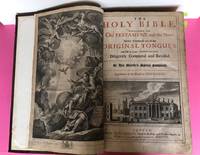
1717036073Oxford: printed by John Baskett 1717. Book. Very Good. Hardcover. 310mm x 485mm. This the famous and monumental Vinegar Bible also known as the Baskett full of errors and generally acknowledged as the most magnificent Bible printed in England. The volume is complete in all respects. It comprises the complete text of the Old Testament Apocrypha and New Testament along with the two title pages and the preliminaries. Both titles display beautiful engravings with the general title showing a particularly fine view of Oxford. Frontispiece engraved by Du-Bose representing Moses writing the first words of Genesis letterpress title printed in red & black and with engraved scene of Oxford both lined to verso. The bible has been expertly re-backed retaining the original calf leather boards with blind stamp decoration firm near fine. New Testament title dated 1716 with engraving of the Annunciation Apocrypha present numerous engraved head & tailpieces throughout Old Testament leaves P6 3B4 Z5 and New Testament leaves C4 H3 K2 M2 Q1 R1-3 S1 S6 T1 & T2 a few tears with expert paper repair and manuscript infill New Testament with a little worming to lower margins of Q1-R5. Fleur-de Lis water-marked paper trimmed. Herbert 942. This edition is often known as the 'Vinegar Bible' due to a misprint 'The parable of the vinegar for vineyard' in the headline above Luke xx. In this particular example the misprint is not present. 1 A very good example of this handsome and extraordinary bible. Strasburg Fleur-de Lis water-marked paper trimmed. printed by John Baskett Hardcover
17981409120001Philadelphia : Printed for John Thompson & Abraham Small 1798-01-01. Hardcover. Good. 2 Volumes. Folio. Bound in contemporary full calf. Gilt lettering and tooling on spine. Rebacked and restored. Owners name of James Andrews on SFEP of Vol. I dated 3rd month 1839 and Vol. II dated 10th month 1839. Includes some written paper ephemera found in the book. Hinge repaired. Foxing. Toning to frontis and title page of Vol. I. Repair to frontis. Lacking blank leaf and 2-page subscribers list which Sabin states was only in some copies. This is an oversized or heavy book that requires additional postage for international delivery outside of Canada and the US. Early Bibles in America p414. Shipton & Mooney Evans 33408. ESTC W4507 W4795.; Hills 62; O'Callaghan 1798.1; Sabin 5182. <br><br> It was issued originally in 40 numbers commencing June 1796 at half a dollar a number. Hence the division into volumes is altogether arbitrary. The text is from the Cambridge ed. published by John Baskerville with an index at the end of Volume II. This Bible represents a step forward in American printing technology. It was the first hot press Bible to be produced. Under this method of printing the ink was heated during the printing process causing it to bond more strongly to the paper. Philadelphia : Printed for John Thompson & Abraham Small hardcover
17827559CBParis u.a., Panckoucke, 1782?1991. 4°. Mit 1091 Kupfer-Tafeln (zum Teil doppelblattgross). Halblederbände der Zeit mit schlichter Rückenvergoldung und Rückensch. + Wichtig: Für unsere Kunden in der EU erfolgt der Versand alle 14 Tage verzollt ab Deutschland / Postbank-Konto in Deutschland vorhanden + 8 Text- und 8 Tafelbände.
17992512030048London: Joyce Gold 1799 - 1818 1799. First Edition. Hardcover. Very Good. 40 volume set. 8vo. Uniformly bound in brown buckram stamped in gilt. Good bindings and covers. Profusely illustrated with engraved and etched plates including maps plans portraits. Scattering foxing and offsetting to text and plates. <br> The Naval Chronicle was a monthly magazine published in London from January 1799 to 1818. The Naval Chronicle served as a source for contemporary reports of the affairs of the Royal Navy during the period from the Napoleonic Wars to the War of 1812. Published in London twice a year it offers first-person accounts were by officers as illustrious as Nelson and biographies of fascinating characters like Cochrane was a staple. Typical issues featured lists of vessels captured and wrecked promotions accounts of battles biographical sketches articles on technological advances and tidbits of naval gossip as well as copper engraved portraits of officers views of foreign ports and charts of harbors and battles. It was a major source for Patrick O'Brian in writing his Aubrey-Maturin series. Sabin 52076. <br> The engraved plates show portraits of naval officers views of overseas ports and local scenes charts of harbors and ship's battles charts related to science and technology including astronomy and maps. <br> Provenance: From the library of Ambassador Ogden R. Reid. Reid served as US Ambassador to Israel 1959-1961 and as US Congressman from 1963-1975. His family owned the New York Herald Tribune and he served as President and editor in the 1950s. <br> This is an oversized or heavy book which requires additional postage for international delivery outside the US. London: Joyce Gold, 1799 - 1818 hardcover
1752047070Williamsburg: William Hunter 1752. First Edition. Hardcover Full Leather. Very Good Condition. Rebacked and front board recovered in leather rear board retained. Title chipped at edges and rumpled and with top margin missing but not touching text light dampstain in right margin early on old tape mark in gutter in table of contents a few pages inexpertly opened just touching marginal notes in spots browning and foxing more or less uniformly throughout contemporary marginalia and underlining to table of contents scattered other minor flaws but very good overall. 2 vi 455 1pp. Errata at end pages 207 277 and 367 mispaginated 205 267 and 357. Lacking the list of subscribers that seems to have rarely been bound in. ESTC W7023 Evans 6941 Sabin 100388<br /> <br /> The first major work from William Hunter's press - he had become the official printer for Virginia the previous year. He was a friend of Benjamin Franklin with whom he split the postmaster general job for the colonies. Size: Folio. Quantity Available: 1. Shipped Weight: Under 1 kilo. Category: Americana; Law & Criminal Studies. Inventory No: 047070. William Hunter hardcover
1764CA11341764-1769 Oaxaca Manuscript. <br /><br />35 gatherings with approximately fourteen folded folio leaves 12 1/4"" x 10" in each gathering which are now stored in an archival protective sleeve. All hand written generally on recto and verso but in many different hands with seals stamped or embossed to documents. Now housed in a custom designed folio enclosure 15" x 12 1/2" along with the original velum.<br /><br />This work details the agricultural household and commercial operations as well as the daily life at the Hacienda. The manuscript includes business records legal documents and a variety of other historical material. Originally housed in a vellum binding which has become loose but enclosed within the custom enclosure for the document. This gives a glimpse of Oaxaca life at the end of New Spain's colonial reign in Mexico.<br /><br /><b>Condition:</b><br /><br />Worming throughout sometimes heavily. The terminal pages have heavy chipping and wear at extremities affecting text some pages damp-stained. Original vellum wormed at the spine center soiled and worn else a good item housed in custom designed archival closure. Self Published hardcover
1784014554Troppau : Joseph George Trasler 1784. First German Edition . Quarter Leather and Marbled Boards. Very Good/No Jacket. 12mo - over 6¾ - 7¾" tall. All 32 Volumes Are In Very Good Order With Handling Wear Consistent With Their Age . Edgeworn Bindings And Tanned Pages The Edition Label On Volume 26 Is Damaged And Some Loss On The Bottom Spine Ends Of Volumes 14 And 25 . Published Between 1784 And 1787 Rare! <br/> <br/> Joseph George Trasler hardcover
1800ST17757London: William Miller; T. M'Lean; William Bulmer 1800-18. 370 x 270 mm. 14 1/2 x 10 1/2". Seven volumes. <br/> Uniformly bound in stately contemporary dark burgundy straight-grain morocco covers with gilt palmette-and-wheat-sheaf border inner frame of blind-stamped grapevine raised bands spine compartments densely gilt with repeating botanical tools gilt lettering gilt-rolled turn-ins all edges gilt. Two engraved titles with hand-colored vignettes not included in plate count and 356 FULL-PAGE HAND-COLORED PLATES FEATURING COSTUMES OCCUPATIONS AND SOCIAL INTERACTION OF VARIOUS NATIONS. Volume I-III V and VI with text in French as well as English. Front pastedown with armorial bookplate of Edward Gordon Douglas-Pennant 1st Baron Penrhyn. Abbey Life 430; Abbey Travel 71 244 370 373 532 533. Joints and extremities lightly rubbed one board with a couple of faint scratches two rear boards with neat older repairs to short tears at tail edge but the bindings quite sound and most attractive on the shelf. Flyleaves a little foxed minor offsetting from plates to text leaves occasionally more pronounced but never offensive isolated minor marginal foxing to plates otherwise very fine WITH CLEAN BRIGHT PLATES.<br/> <br/> This is a collection of major early 19th century color plate books with well-drawn and richly-colored engravings in bindings that make a handsome appearance on the shelf. All of these works have appealing plates where the costumes of the various social strata are carefully and colorfully delineated. And two of the volumes--those showing British costumes and the book on Chinese punishments--contain in addition a good deal of diverting background detail that serves as a revealing context for each of the costumes depicted. The content of each of the volumes is worth noting. With a few exceptions the plates in the "Costumes of China" portray ordinary working-class men and women toiling at their trades. We see a bookseller with his wares spread out on a mat women sewing and embroidering a butcher a fisher a barber a man with a "magic lantern" show and a "man striking a small gong during an eclipse" an ancient ritual that the author tells us he was privileged to witness on 17 November 1789. The "Punishments of China" volume is filled with almost gleefully painful depictions of all degrees of disciplinary action from the relatively minor twisting of the ears or chaining to an iron pole to the humiliating ordeal of the wooden collar to methods of execution by beheading or by crucifixion using a cord. The opulent and brightly colored costumes in Dalvimart's volume on Turkey are mostly those of the ruling classes although also represented is a wide variety of native dress from the many regions of the vast Turkish empire of the day which included Bosnia Albania Syria Egypt and parts of Greece. It is particularly interesting to contrast the clothing of the very heavily veiled Turkish and Egyptian women with the much more relaxed style of the Greek women and the nearly immodest garb of the female Bedouin. We also are shown a eunuch an odalisque from the harem a grand vizier various royal functionaries and government officials all splendidly attired. The Russian costumes based on engravings done by C. W. Müller at the request of Empress Catherine the Great are focused on the ethnic dress of the empire's many holdings. The Laplanders and Finns wear clothing that would look familiar to most Europeans but the Mongols in their Oriental dress would be quite exotic. The clothing of the northern tribes such as the Kamchatkans Aleutians Koriaks and Tungoosi will impress the modern reader with their similarity to the traditional dress of Native American and First Nation peoples. The Tchutski woman is even depicted naked to display her tattoos. Bertrand de Moleville's Austrian costumes also illustrate the native dress of the empire's citizens but the illustrations here are less fashion plates than romanticized scenes: peasant couples are shown courting and dancing; Croatian women gossip beside a stream; and a wild-haired Bohemian gypsy whose "profession is not hard to guess" from her state of "déshabillé" flees with her naked and no doubt illegitimate child. Pyne's "Costumes of Great Britain" is one of the most highly praised works in this set and for good reason: the simple working men and women of Britain it depicts are always shown going about their daily tasks in the midst of a well-realized scene. The woman selling "salop" a hot morning beverage is seated at her cart with its urn judiciously located by the watchman's stall surrounded by customers including soldiers and a woman with her market basket. A fireman with an ax and a torch hurries toward his engine company while they unwrap their hose. The potter is at his wheel the tanner is cleaning skins and the bill-sticker posts the winning lottery numbers. The clothing while carefully detailed is almost secondary to the depictions of everyday life. The "Military Costumes of Turkey" illustrates the official regalia "uniform" is much too drab a word for these outfits worn by officers in various regions of the empire. Perhaps the most intriguing plate here is that of the Ladle Bearer a post that was also illustrated in "Costumes of Turkey." What appears to be a man with a giant spoon is in fact the holder of an important military position equivalent to the color-bearer in a western army. We are told that the loss of its ladles is the greatest disgrace that can befall a Turkish regiment: if the two great ladles the size of a grown man that are borne into battle at the head of the troops are captured the regiment must be disbanded and formed anew. Former owner Edward Gordon Douglas-Pennant 1st Baron Penrhyn 1800-86 was a leading figure in the Welsh slate industry; he owned the Penrhyn Quarry the largest slate quarry in the world at the end of the 19th century. He was known for his paternalistic attitude to his employees creating the "model village" of Llandegai to house the quarry workers. It was notable for having "no corrupting alehouse." He was ruthless enough to fire 80 men in 1868 because they did not vote for his son George who was running for a seat in Parliament. Single volumes from this set appear with frequency in the marketplace; full sets show up much less often; sets as handsome and well preserved as the present are rarely seen. William Miller; T. M'Lean; William Bulmer unknown
1729000182<p><strong>Twenty-five volumes comprising twenty titles</strong> all printed at the <strong>İbrahim Müteferrika Printing House</strong> between <strong>1141 and 1200 AH</strong> during the <strong>three operational phases</strong> of the press following its establishment.</p><p>1 <em>Vankulu Lugatı </em>Arabic-Turkish dictionary prepared by Mehmed al-Vani d. 1529 known as Vankulu from Cevheri's well-known Arabic dictionary. It was published as two volumes on 31 January 1729 500 copies.</p><p>2 <em>Tuhfetü'l</em>-<em>kibâr fî esfâri'l-bihâr </em>Kâtib Çelebi's work on Ottoman naval wars includes 5 maps and images. On 29 May 1729 1000 copies were published.</p><p>3 <em>Târîh-i Seyyâh der Beyân-ı Zuhûr-ı Ağvâniyân ve Sebeb-i İnhidâm-ı Binâ-i Devlet-i Şâhân-ı Safaviyân</em> The Afghan Invasion of Iran and the Reasons for the Downfall of Safavid Dynasty. Author J. T. Krusinski d. 1756. Although the translator from Latin to Turkish seems to have been done by İbrahim Müteferrika it has been asserted that it was translated by Krusinski himself. On 26 August 1729 1200 copies were published.</p><p>4<em> Târîhu'l-Hindi'l-garbî el-müsemmâ bi-Hadîsi nev</em> The History of Western India the New World. The first illustrated work to be published including 17 pictures maps and table. On 5 April 1730 500 copies were published. Lacking one map.</p><p>5<em> Acâibü'l-makdûr fî nevâîbi Timûr</em> The History of the Calamity of Timur. Translated into Turkish by Nazmizade Hüseyin Murteza d. 1720 from İbn Arabşâh's d. 1450 Arabic work relating the conquests of Timur. On 18 May 1730 500 copies were published.</p><p>6<em> Târîhu'l-Mısri'l-cedîd ve kadîm</em> The History of Old and New Egypt. The history of Egypt from its earliest days to 1515 and from the Ottoman conquest to 1628/1629. Written by Ahmed bin Hemdem d. 1632 known as Süheylî; 500 copies were published on 17 June 1730.</p><p>7<em> Gülşen-i Hulefâ</em> The Rose Garden of the Caliphs. The history of the Muslim dynasty from the time of the Abbasid caliphs to the Ottoman sultan Ahmed III. 500 copies were published on 16 August 1730.</p><p>8 <em>Grammaire turque ou méthode courte & facili pour apprende la langue turque</em> Turkish Grammar or the Shortest Path to Learn Turkish Easily. Prepared by Jean-Baptiste Holderman d. 1730 1000 copies of this book were published between March and November 1730.</p><p>9 <em>Usûlü'l-hikem fî nizâmi'l-ümem</em> Rational Suggestions on the Nation's Array. Written by İbrahim Müteferrika; 500 copies of this work was published on February 1732.</p><p>10 <em>Füyûzât-ı Mıknatisiyye</em> The Benefits of the Compass. 500 copies were published on 27th of February 1732. A picture of the compass was included in the book.</p><p>11<em> Cihannümâ</em> Observer of the World. On 3 July 1732 500 copies of this work were published by Kâtib Çelebi. Holding a special place in the Müteferrika publications this work presents 40 maps and images that were contemporarly colored by hand.</p><p>12 <em>Takvîmü't-tevârîh</em> The Almanac of Histories. 500 copies of this work by Kâtib Çelebi were published on 14 June 1733.</p><p>13<em> Târîh-i Naîmâ</em>. <em>Ravzatü'l-Hüseyin fî hulâsati ahbâri'l-hâfikeyn</em> The History of Mustafa Naîma d.1716. 500 copies of this work which consisted of two volumes and was concerned with events between 1574 and 1655 were published in October 1734.</p><p>14<em> Râşid Târihi</em> The History of Mehmed Raşid Efendi d. 1735. This work recounts the events between 1660 and 1721/1722. On 17 February 1741 500 copies were published in two volumes.</p><p>15 <em>Çelebizâde Târihi</em> The History of Küçükçelebizade İsmail Asım Efendi d. 1760. This work includes events between 1722 and 1727/1728. 500 copies were published on 17 February 1741.</p><p>16<em> Ahvâl-i Gazavât der Diyâr-ı Bosna</em> The Case of the Battles of Bosnia. 500 copies of this work by Qadi Ömer Efendi from Bosnia which is about the battles along the Bosnian front during the Austro-Turkish War 1736-1739 was published on 19 March 1741<em>. Bosna Tarihi</em> The History of Bosnia was the best-selling work published by Müteferrika.</p><p>17<em> Ferheng-i Şuûrî</em>: <em>Lisânü'l-Acem</em> The Persian Dictionary of Hasan Şuûrî d. 1693-94. It was the last book of the Müteferrika Press. 500 copies were published on 1 September 1742.</p><p>18 <em>Târîh-i Sâmi ve Şâkir ve Subhî.</em> Published in H. 1198 1783-1784.</p><p>19 <em>Târîh-i İzzî.</em> Published in H. 1199 1784-1785.</p><p>20 <em>İ'râbü'l-Kâfiye. </em>A book of Arabic grammar prepared by Güzelhisârî Zeynîzade Hüseyin b. Ahmed based on İbn Hacîb's work <em>el-Kâfiye</em>. In H. 1200 1785-1786 this work was the first Arabic book been published by Muslims.</p> Ibrahim Muteferrika hardcover