VariousBiblio.com
38 592 résultats
1729000182<p><strong>Twenty-five volumes comprising twenty titles</strong> all printed at the <strong>İbrahim Müteferrika Printing House</strong> between <strong>1141 and 1200 AH</strong> during the <strong>three operational phases</strong> of the press following its establishment.</p><p>1 <em>Vankulu Lugatı </em>Arabic-Turkish dictionary prepared by Mehmed al-Vani d. 1529 known as Vankulu from Cevheri's well-known Arabic dictionary. It was published as two volumes on 31 January 1729 500 copies.</p><p>2 <em>Tuhfetü'l</em>-<em>kibâr fî esfâri'l-bihâr </em>Kâtib Çelebi's work on Ottoman naval wars includes 5 maps and images. On 29 May 1729 1000 copies were published.</p><p>3 <em>Târîh-i Seyyâh der Beyân-ı Zuhûr-ı Ağvâniyân ve Sebeb-i İnhidâm-ı Binâ-i Devlet-i Şâhân-ı Safaviyân</em> The Afghan Invasion of Iran and the Reasons for the Downfall of Safavid Dynasty. Author J. T. Krusinski d. 1756. Although the translator from Latin to Turkish seems to have been done by İbrahim Müteferrika it has been asserted that it was translated by Krusinski himself. On 26 August 1729 1200 copies were published.</p><p>4<em> Târîhu'l-Hindi'l-garbî el-müsemmâ bi-Hadîsi nev</em> The History of Western India the New World. The first illustrated work to be published including 17 pictures maps and table. On 5 April 1730 500 copies were published. Lacking one map.</p><p>5<em> Acâibü'l-makdûr fî nevâîbi Timûr</em> The History of the Calamity of Timur. Translated into Turkish by Nazmizade Hüseyin Murteza d. 1720 from İbn Arabşâh's d. 1450 Arabic work relating the conquests of Timur. On 18 May 1730 500 copies were published.</p><p>6<em> Târîhu'l-Mısri'l-cedîd ve kadîm</em> The History of Old and New Egypt. The history of Egypt from its earliest days to 1515 and from the Ottoman conquest to 1628/1629. Written by Ahmed bin Hemdem d. 1632 known as Süheylî; 500 copies were published on 17 June 1730.</p><p>7<em> Gülşen-i Hulefâ</em> The Rose Garden of the Caliphs. The history of the Muslim dynasty from the time of the Abbasid caliphs to the Ottoman sultan Ahmed III. 500 copies were published on 16 August 1730.</p><p>8 <em>Grammaire turque ou méthode courte & facili pour apprende la langue turque</em> Turkish Grammar or the Shortest Path to Learn Turkish Easily. Prepared by Jean-Baptiste Holderman d. 1730 1000 copies of this book were published between March and November 1730.</p><p>9 <em>Usûlü'l-hikem fî nizâmi'l-ümem</em> Rational Suggestions on the Nation's Array. Written by İbrahim Müteferrika; 500 copies of this work was published on February 1732.</p><p>10 <em>Füyûzât-ı Mıknatisiyye</em> The Benefits of the Compass. 500 copies were published on 27th of February 1732. A picture of the compass was included in the book.</p><p>11<em> Cihannümâ</em> Observer of the World. On 3 July 1732 500 copies of this work were published by Kâtib Çelebi. Holding a special place in the Müteferrika publications this work presents 40 maps and images that were contemporarly colored by hand.</p><p>12 <em>Takvîmü't-tevârîh</em> The Almanac of Histories. 500 copies of this work by Kâtib Çelebi were published on 14 June 1733.</p><p>13<em> Târîh-i Naîmâ</em>. <em>Ravzatü'l-Hüseyin fî hulâsati ahbâri'l-hâfikeyn</em> The History of Mustafa Naîma d.1716. 500 copies of this work which consisted of two volumes and was concerned with events between 1574 and 1655 were published in October 1734.</p><p>14<em> Râşid Târihi</em> The History of Mehmed Raşid Efendi d. 1735. This work recounts the events between 1660 and 1721/1722. On 17 February 1741 500 copies were published in two volumes.</p><p>15 <em>Çelebizâde Târihi</em> The History of Küçükçelebizade İsmail Asım Efendi d. 1760. This work includes events between 1722 and 1727/1728. 500 copies were published on 17 February 1741.</p><p>16<em> Ahvâl-i Gazavât der Diyâr-ı Bosna</em> The Case of the Battles of Bosnia. 500 copies of this work by Qadi Ömer Efendi from Bosnia which is about the battles along the Bosnian front during the Austro-Turkish War 1736-1739 was published on 19 March 1741<em>. Bosna Tarihi</em> The History of Bosnia was the best-selling work published by Müteferrika.</p><p>17<em> Ferheng-i Şuûrî</em>: <em>Lisânü'l-Acem</em> The Persian Dictionary of Hasan Şuûrî d. 1693-94. It was the last book of the Müteferrika Press. 500 copies were published on 1 September 1742.</p><p>18 <em>Târîh-i Sâmi ve Şâkir ve Subhî.</em> Published in H. 1198 1783-1784.</p><p>19 <em>Târîh-i İzzî.</em> Published in H. 1199 1784-1785.</p><p>20 <em>İ'râbü'l-Kâfiye. </em>A book of Arabic grammar prepared by Güzelhisârî Zeynîzade Hüseyin b. Ahmed based on İbn Hacîb's work <em>el-Kâfiye</em>. In H. 1200 1785-1786 this work was the first Arabic book been published by Muslims.</p> Ibrahim Muteferrika hardcover
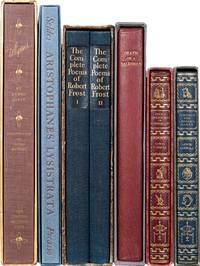
19851116New York: The Limited Editions Club 1985. Various places but mostly New York 1929-1985. A massive assemblage of 528 individual titles and 724 volumes. This collection stops in 1985 and the titles published in the successive years were greatly decreased with only 50 more titles published. Meaning that completing this collection might still be very difficult but certainly not impossible. The vast majority of the collection is in near fine to fine condition. The Limited Editions Club LEC was founded in 1929 by George Macy to publish high-quality illustrated books for a membership of 1500. The club successfully produced 12 books annually under George Macy and his wife Helen until 1971. However from 1971 to 1978 the LEC faced financial challenges and underwent five ownership changes losing the Heritage Press which had published trade editions of their books. Despite these challenges the LEC continued to produce beautiful books. The Limited Editions Club unknown
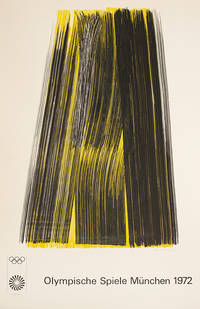
1095151972 . The extremely rare complete collection of 28 artists original graphics the first signed edition before the second poster edition of 4000 with varying edition numbers including Artist's Proofs from the total edition of 200 each hand signed and numbered or inscribed 1969 - 1972 printed on varying papers published by the Organising Committee for the Games of the XXth Olympiad and F. Bruckmann Germany with 2 additional screenprints of the Emblem by Victor Vasarely 1972 signed from the edition of 200 on wove paper each sheet various measurements. 1020 x 640mm 40¼ x 25¼ inches.<br /> <br /> 1972 unknown
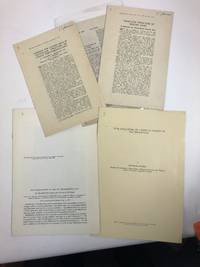
32458Highlights include: Seymour Benzer's revolutionary genetic mapping paper “Fine Structure of a Genetic Region in Bacteriophage†1955'; Albert Claude “Fractionation of Mammalian Liver Cells by Differential Centrifugation†1949;' Max Delbrück's seminal talk “A Physicist Looks at Biology†1949; Alexander L. Dounce “Duplicating Mechanism for Peptide Chain and Nucleic Acid Synthesis†1952 important early theoretical work on genetic coding and protein synthesis; H. Fraenkel-Conrat and Robley C. Williams “Reconstitution of Active Tobacco Mosaic Virus from its Inactive Protein and Nucleic Acid Components“ 1955 - the first reconstitution of a virus; J.C. Kendrew G. Bodo H.M. Dintzis R.G. Parrish H. Wyckoff and D.C. Phillips "A Three-dimensional Model of the Myoglobin Molecule Obtained by X-ray Analysis" 1958 - the first structural description of a protein.<br /> <br /> 20 papers by H.G. Khorana on nucleic acid synthesis and sequence analysis establishing the basic techniques of nucleotide chemistry 1954-1962; Joshua Lederberg “Gene Recombination and Linked Segregations in Escherichia Coli†1947 - the first genetic map of e. coli.; E.L. Tatum and Joshua Lederberg “Gene Recombination in the Bacterium Escherichia Coli†1947 is the first complete paper on the subject of bacterial mating. André Lwoff Louis Siminovitch and Niels Kjeldgaard “Microbiologie – Induction de la production de bactériophages chez une bactérie lysogèneâ€1950 - the discovery of induction and another dozen important papers from Lwoff and his group; Jacques Monod Germaine Cohen-Bazire and Melvin Cohn “Sur la biosynthese de la -galactosidase lactase chez Escherichia coli. La specificite de l’induction†1951 - the discovery of galactosides with other papers by Monod Linus Pauling and Robert B. Corey "A Proposed Structure for the Nucleic Acids†1953 - Pauling's incorrect "triple helix" theory and other Pauling papers.<br /> <br /> J.D. Watson and F.H. Crick “Molecular Study of Nucleic Acids: A Structure of Deoxyribose Nucleic Acidâ€.; M.F.H. Wilkins A.R. Stokes and H.R. Wilson. “Molecular Structure of Deoxypentose Nucleic Acids;†Rosalind E. Franklin and R.G. Gosling. “Molecular Configuration in Sodium Thymonucleate†1953. The rare three-paper offprint printed in a single column format from the single most important discovery in the biological sciences during the 20th century. <br /> <br /> M.H.F. Wilkins W.E. Seeds A.R. Stokes and H.R. Wilson “Helical Structure of Crystalline Deoxypentose Nucleic Acid†1953 and Rosalind E. Franklin and R.G. Gosling “Evidence for 2-Chain Helix in Crystalline Structure of Sodium Deoxyribonucleate†1953 - the first experimental confirmation of the Watson-Crick double helix hypothesis; M. Meselson and F.W. Stahl. "The Replication of DNA in Escherichia coli" 1958 - the first proof of semi-conservative replication of DNA as predicted by Watson and Crick’s double helix model termed "the most beautiful experiment in biology"<br /> <br /> Other authors represented include: Michael S. Brown and Joseph L. Goldstein Nobel Prize 1985 S.S. Cohen Arne Tiselius Nobel Prize 1948 Robert W. Holley Nobel Prize 1968 R. Dulbecco Nobel Prize 1975 Ugo Fano Leo Szilard.<br /> <br /> The majority of the items have the ownership stamp or signature of Eugene Goldwasser 1922-2010 biochemist at the University of Chicago. Before beginning his long-term project of purifying the hormone erythropoietin Goldwasser worked in the University of Chicago’s phage group 1948-49 and on enzymes and RNA synthesis at Hans Kalckar’s Institute for Cytophysiology in Copenhagen 1949-52. Almost all items are in fine condition. <br /> <br /> A complete list is available upon request. unknown
1842676K19London: The Illustrated London News 1842-1910. First edition. Cloth. Good. 16.5" by 12". Various. A vanishingly scarce continuous run of the highly influential Victorian periodical The Illustrated London News replete with many highly desirable folding plates and illustrations and covering some of the most important events of the nineteenth century. Folio. A vanishingly scarce continuous run being volumes 1-138 published between 1842 and 1910. In the original highly decorative publisher's cloth binding. Copiously illustrated throughout in colour and monochrome with many of the highly sought after city panoramas including Edinburgh Dublin Paris and Rome present. As is common with this work many of the folding plates have been removed however the work is still highly illustrated throughout with many of the folding plates and panoramas remaining. The highly sought after July-December 1878 volume known as the Cyprus volume is present. Please note that due to the scale of the set a complete collation is not available here although we would be happy to offer further information and collation as required. The Illustrated London News was the world's first illustrated weekly newspaper; the first issue appeared on Saturday 14 May 1842. Printer and newsagent Herbert Ingram moved from Nottingham to London in early 1842. Inspired by how the Weekly Chronicle always sold more copies when it featured an illustration he had the idea of publishing a weekly newspaper that would contain pictures in every edition. By 1863 The Illustrated London News was selling more than 300000 copies every week enormous figures in comparison to other British newspapers of the time. The work rose to fame following its publication of the designs for the Crystal Palace in 1851 and of the funeral of the Duke of Wellington.The work is credited with moving illustrations from purely a satirical device in mainstream news to a credible and factual reporting tool publishing over 750000 illustrations during its existence. Important historical moments to these volumes include The Great Exhibition of 1851 'The New Church of St Nicholas Hamburg' Queen Queen Victoria visiting Germany The Beethoven festival Pilbrow's atmospheric railway the burning of the Bowery Theatre New York the funeral of the Duke of Cambridge 'Visit of the Queen and Prince Consort to The Emperor Napoleon at Paris 1855 ' Sir Allen William Young's 1876 expedition on the 'Pandora' for which he received a knighthood in recognition of his services the death and funeral of the Prince Imperial Louis-Napoleon Bonaparte The Phoenix Park Murders and the departure of Sir John Franklin on what is now known as his 'Lost Expedition' to the second volume at page 328. There is also extensive coverage of the Zulu war and other military conflicts in addition to the sections of sheet music and general newspaper puzzles. Volume LVI contains notable articles including the plans for the proposed Channel Railway Ferry plans relating to The Amsterdam Ship Canal and the obituary for influential Private Secretary General Charles Grey. Volume LVII is notable for its discussion on the Franco-Prussian war of 1870 including a portrait and article relating to General Vogel Von Falkenstein a Prussian General der Infanterie. The work also contains an engraving of the Town of Mezieres which was greatly impacted by the conflict and wounded soldiers in the Gardens of Versailles. The work also contains a charming two page engraving showing the Opening of the Thames Embankment. An impressive continuous run of the highly influential Victorian periodical The Illustrated London News containing many highly important references to British history as well as many charming and highly desirable plates. In the original publisher's cloth binding with gilt detail. Volume 2 of 1874 has been rebound in morocco. Externally smart with rubbing to the joints and extremities. Marks to the occasional board. The very occasional volume including volume 55 is lacking the back strip although the majority remain present and very smart. The occasional patch of damp staining to the boards including to volumes 57 59 and 44. Due to the weight of the volumes hinges are strained. Text block detached from binding to volume 102. Internally most volumes are generally firmly bound. Pages are generally bright with age toning and scattered spotting heavier to the extremities and the fore edge. The occasional volume has significant closed tears including closed tears and loss to volumes 55. Writing to the fore edge of volume 55. The occasional tide mark including to volume 44. Loss and closed tears to several of the folding plates and panoramas. Many pages are closely cropped with the occasional loss to the text. Many plates including plates and panoramas have been removed. Additional condition notes can be sent across at request. Good The Illustrated London News hardcover
1999Manohar-9780521469265Cambridge University Press 1999. Hardcover. New. Cambridge University Press hardcover
1999Manohar-9780521469265Cambridge University Press 1999. Hardcover. New. Cambridge University Press hardcover
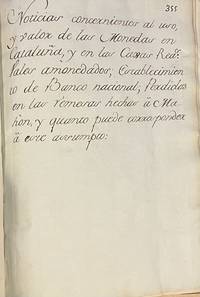
3352Spain Late 18th century. Compilation of partly manuscript partly printed documents. The manuscripts are written on various types of laid paper by multiple hands. The paper type and handwriting do not always correspond consistently throughout. Titles and condition reports of the printed section below. In fine contemporary vellum binding fastened by looped fabric thongs to wooden beads lower bead missing. Overall the book is in fine condition. Compilation of partly manuscript partly printed documents. The manuscripts are written on various types of laid paper by multiple hands. The paper type and handwriting do not always correspond consistently throughout. Titles and condition reports of the printed section below. In fine contemporary vellum binding fastened by looped fabric thongs to wooden beads lower bead missing. Mss.: ff. 40; printed content: see details below. <p><br /> A unique and important compilation of contemporary manuscripts and pivotal printed documents related to the founding of Banco Nacional Spain’s central bank including the foundation document itself.<br /> <p><p><br /> Banco de España the Spanish national bank originally founded as the Banco Nacional de San Carlos in 1782 was established to stabilize Spain's economy during a period of financial strain. Initiated by Francisco Cabarrús and supported by King Carlos III the bank aimed to address the depreciation of vales reales government-issued promissory notes used to fund public expenses. Over time the bank's role expanded becoming instrumental in managing public debt and regulating the country's finances. In 1856 it evolved into the Banco de España officially becoming Spain's central bank with a mandate to issue currency oversee monetary policy and support economic stability nationwide.<br /> <p><p><br /> This compilation of manuscripts and printed documents closely follows the founding process and broader goals of the Banco Nacional de San Carlos reflecting Spain's dependence on resources from its extensive territories. The printed pamphlets illustrate the financial strategies behind the bank's creation with detailed instructions on the circulation and management of vales reales and mandates requiring municipalities to invest surplus funds in the new bank. These documents reflect the Crown’s intention to consolidate financial control stabilize the economy and provide a structured way for local and national resources—including those from colonial holdings—to support public finances.<br /> <p><p><br /> The manuscripts provide a valuable regional perspective particularly from Catalonia revealing the practical challenges of currency management and tax collection. They highlight the role of American silver in Spain's financial system as the flow of precious metals from the colonies was vital to the country’s monetary stability. Local adaptations to Royal Decrees in Catalonia including currency equivalence between Catalonia and Castile and the handling of coinage in military and regional treasuries showcase the financial complexities that the Banco Nacional was meant to address. This indicates that the owner of this volume likely held a significant role within the Spanish financial or administrative system likely connected to the Royal Treasury military treasury or a regional financial authority in Catalonia.<br /> <p><p><br /> Together this compilation offers a detailed view of how Spain sought to unify and strengthen its financial system through the Banco Nacional capturing the interplay between regional and national interests as well as the influence of colonial resources. These documents not only outline the bank’s founding principles but also provide a glimpse into the economic challenges and solutions that shaped Spain’s efforts to modernize its financial landscape drawing on wealth from the Americas to support its ambitions.<br /> <p><p><br /> The manuscript section comprising some fifteen documents provides an in-depth look at Catalonia’s financial landscape during the founding of the Banco Nacional de San Carlos. It begins by examining how commerce and stable currency systems drive national wealth establishing the need for a centralized bank to regulate currency effectively. Other documents outline treasury practices and the exclusion of damaged coins underscoring the importance of maintaining currency integrity—a role well-suited to centralized oversight.<br /> <p><p><br /> The collection further explores currency conversion between Catalonia and Castile revealing regional discrepancies that highlight the benefits of a national bank to ensure consistent exchange rates. Adjustments to gold valuations and compliance inspections reflect the challenges of coordinating regional policies which a central institution could simplify. There are also critiques of fiscal practices and inefficiencies in tax collection illustrating a need for the standardized oversight that the Banco Nacional could provide.<br /> <p><p><br /> Final chapters discuss the drawbacks of currency notes and proposals to eliminate them suggesting that centralized regulation could reduce financial instability. Collectively these documents emphasize the importance of the Banco Nacional in standardizing currency practices maintaining fiscal integrity and supporting Spain’s economic stability by unifying regional practices under a central authority.<br /> <p><p><br /> The printed portion of this compilation consists of six documents that delve into the foundational principles and regulations surrounding the establishment of the Banco Nacional de San Carlos. Together these documents reveal the financial strategies critical to addressing Spain’s economic challenges in the late 18th century.<br /> The series begins with Antonio Pérez Rocha’s extremely scarce mid-17th-century political discourse which explores fundamental concepts of currency distinguishing between commercial and provincial coinage and emphasizing the need for a stable currency supply to support economic growth. His treatise underscores the pressing necessity for reliable currency alternatives—a key rationale behind the creation of the Banco Nacional.<br /> <p><p><br /> The subsequent Royal Decrees outline detailed directives for municipal investments into the Banco Nacional drawing surplus funds from local revenues to support the bank’s capital needs. This step was vital in establishing a stable financial base for the institution. Further decrees set conditions for the circulation of vales reales government promissory notes which were essential in raising funds to support the Crown’s obligations. By managing these notes the Banco Nacional would provide a regulated environment to address liquidity needs and control the depreciation of currency in circulation.<br /> <p><p><br /> Additional documents detail specific instructions for the military treasury’s handling of these vales illustrating the close integration of military and financial interests in Spain’s centralized banking strategy. Other decrees describe the issuance of further promissory notes to secure funds for public expenditure a move indicative of Spain’s growing reliance on credit instruments to meet its financial demands.<br /> <p><p><br /> The collection concludes with the final decree formally establishing the Banco Nacional de San Carlos marking the bank’s official role in stabilizing Spain’s currency system and supporting commercial activities both in the kingdom and its colonies. This foundational decree reflects the bank’s broader mission: to bring cohesion and oversight to Spain’s fragmented financial system thereby enhancing national economic stability. Collectively these printed documents offer a comprehensive overview of the policies and directives that underscored the Banco Nacional’s creation and highlight its pivotal role in Spain’s evolving financial landscape.<br /> <p><p><br /> <br /> <br /> <p><p><br /> List of the printed documents:<br /> <p><p><br /> <br /> <p><p><br /> Perez Rocha Antonio: Caption title: Al Rey nuestro Señor discurso politico en que se declaran los Assumptos y Medios siguientes. … Por Antonio Pérez Rocha natural de la ciudad de Compostela.<br /> <p><p><br /> Madrid: S.n. mid 17th century. ff. 14.<br /> <p><p><br /> First edition. Pagination in ink by a contemporary hand to upper corners 60–73. Foxing throughout otherwise in fine condition. <br /> <p><p><br /> We could trace only one copy in institutional holdings Real Academia de la Historia Madrid.<br /> IB 118905<br /> <p><p><br /> <br /> <p><p><br /> Charles III of Spain; Salazar Antonio Martinez: Caption title: Real Cedula de S. M. y Señores del Consejo Por la qual se mandan observar las reglas que van insertas para las Subscripciones que hagan los Pueblos del Reyno en el Banco Nacional de sus caudales sobrantes de Propios Arbitrios Encabezamientos y de los Pósitos. Año 1782.<br /> <p><p><br /> Madrid: S.n. 1782. 4 p.<br /> <p><p><br /> First edition. Few stains otherwise in fine condition.<br /> <p><p><br /> <br /> <p><p><br /> Charles III of Spain; Salazar Antonio Martinez: Real Cédula de S. M. y Señores del Consejo por la qual se manda observar las condiciones y prevenciones insertas para el curso de los vales que dimanen de la negociacion ajustada con varias Casas de Comercio acreditadas y establecidas en estos Reynos para el apronto efectivo de nueve millones de pesos en la forma que se declara.<br /> <p><p><br /> En Madrid: En la Imprenta de Don Pedro Marin Año 1780. 16 p.<br /> <p><p><br /> First edition. Foxing throughout otherwise in fine condition.<br /> <p><p><br /> <br /> <p><p><br /> Muzquiz Miguel de: Caption title: Instruccion y Reglas que ha resuelto el Rey se observen en la Tesorería mayor de la Guerra y en las de Exercito del Reyno para el manejo y circulacion de los Vales que se han de distribuir con motivo del prestamo de nueve millones de pesos de à 128 quartos que hacen à S. M. varias Casas de comercio establecidas en este Reyno y para el paga de los intereses que han de gozar los mismos Vales con arreglo à las Condiciones de este prestamo y à lo prevenido en Decreto de este dia comunicado al Consejo para que despache la Real Cedula correspondiente.<br /> <p><p><br /> Madrid: S.n. 1780. ff 4.<br /> <p><p><br /> First edition. Singed at the end in ink by Domingo Acuarcoleta. Trace of horizontal folding at the center. In fine condition.<br /> <p><p><br /> <br /> <p><p><br /> Charles III of Spain; Salazar Antonio Martinez: Real Cedula de S. M. y Señores del Consejo por la qual se sirve S. M. crear catorce millones setecientos noventa y nueve mil novecientos pesos de á ciento veinte y ocho quartos cada uno en medios Vales de á trescientos pesos en la conformidad que se expresa.<br /> <p><p><br /> En Madrid: En la Imprenta de Don Pedro Marin Año 1782. ff. 6 last blank.<br /> <p><p><br /> First edition. Trace of horizontal folding at the center. In fine condition.<br /> <p><p><br /> <br /> <p><p><br /> Charles III of Spain; Salazar Antonio Martinez: <br /> Real Cedula de S. M. y Señores del Consejo por la qual se crea erige y autoriza un Banco nacional y general para facilitar las operaciones del comercio y el beneficio público de estos Reynos y los de Indias con la denominación de Banco de San Carlos baxo las reglas que se expresan. Including: Real Cedula de S. M. y Señores del Consejo por la qual se mandan observar las reglas que van insertas para las Subscripciones que hagan los Pueblos del Reyno en el Banco Nacional de sus caudales sobrantes de Propios Arbitrios Encabezamientos y de lós Pósitos.<br /> <p><p><br /> En Madrid: En la Imprenta de Don Pedro Marin Año 1782. 3 2–34 2 title page of the second title 35–46p.<br /> <p><p><br /> First edition. In fine condition.<br /> <p><p><br /> Literature: Sarriá Muñoz A. 1994. Sobre la fundación del Banco Nacional de San Carlos y el cabildo malagueño. Isla de Arriarán: Revista Cultural y Científica 3 pp. 209–217.<br /> <p>. unknown
2014Manohar-9781108009027Cambridge University Press 2014. Paperback. New. Cambridge University Press paperback
2014Manohar-9781108009027Cambridge University Press 2014. Paperback. New. Cambridge University Press paperback
1901WALTER-FILM007038<p><em>Various. No binding. Near Fine. </em>A collection on lesbian and bisexual women in film theater and music. It spans a full century starting with Maud Adams in 1901 and working its way through a Chantal Akerman film of 2004.</p><p>The archive has two components:</p><ul><li>PART ONE deals with 68 women. It includes actresses and singers and also women whose books were adapted to film.</li><li>PART TWO documents 39 different plays films and television shows in which lesbian and bisexual women are portrayed.</li></ul><p>The archive contains a total of 1587 pieces. Please contact us for a detailed inventory.</p> Various
CBS 9780415450799USA Edition . New. Brand New! Fast Delivery US Edition and ship within 24-48 hours. Deliver by FedEx and Dhl & Aramex UPS & USPS and we do accept APO and PO BOX Addresses. Order can be delivered worldwide within 6-10 days and we do have flat rate for up to 2LB. Extra shipping charges will be requested if the Book weight is more than 5 LB. This Item May be shipped from India United states & United Kingdom. Depending on your location and availability. unknown
19031105020202Lakeside Press 1903. Hardcover. Very Good. Lakeside press collector's dream. An amazing run of Lakeside Press books from 1903 through 1989. in 1903 R.R. Donnelly & Son of Chicago began producing beautiful books as christmas gifts for employees stockholders and business customers that were never sold to the retail market. These beautifully crafted volumes have become available on the secondary market and are highly collectible. many are scarce and seldom seen for sale especially the first volume issued in 1903 The autobiography of Benjamin Franklin the 1904 volume Inaugural Addresses of the President of the United States from Washington to Lincoln the very scarce 1906 volume Fruits of Solitude by William Penn. and the 1915 reprint of 1903’s The Autobiography of Benjamin Franklin. The books are all in very good to fine to like new condition most of them having never been read. The copy of the1903 autobiography of Benjamin Franklin has a minor spot on the lower right cover. While not impossible an aggregate collection like this is extremely difficult to obtain.; 100% Satisfaction Guaranteed! Ships same or next business day! Lakeside Press hardcover
1800ST17757London: William Miller; T. M'Lean; William Bulmer 1800-18. 370 x 270 mm. 14 1/2 x 10 1/2". Seven volumes. <br/> Uniformly bound in stately contemporary dark burgundy straight-grain morocco covers with gilt palmette-and-wheat-sheaf border inner frame of blind-stamped grapevine raised bands spine compartments densely gilt with repeating botanical tools gilt lettering gilt-rolled turn-ins all edges gilt. Two engraved titles with hand-colored vignettes not included in plate count and 356 FULL-PAGE HAND-COLORED PLATES FEATURING COSTUMES OCCUPATIONS AND SOCIAL INTERACTION OF VARIOUS NATIONS. Volume I-III V and VI with text in French as well as English. Front pastedown with armorial bookplate of Edward Gordon Douglas-Pennant 1st Baron Penrhyn. Abbey Life 430; Abbey Travel 71 244 370 373 532 533. Joints and extremities lightly rubbed one board with a couple of faint scratches two rear boards with neat older repairs to short tears at tail edge but the bindings quite sound and most attractive on the shelf. Flyleaves a little foxed minor offsetting from plates to text leaves occasionally more pronounced but never offensive isolated minor marginal foxing to plates otherwise very fine WITH CLEAN BRIGHT PLATES.<br/> <br/> This is a collection of major early 19th century color plate books with well-drawn and richly-colored engravings in bindings that make a handsome appearance on the shelf. All of these works have appealing plates where the costumes of the various social strata are carefully and colorfully delineated. And two of the volumes--those showing British costumes and the book on Chinese punishments--contain in addition a good deal of diverting background detail that serves as a revealing context for each of the costumes depicted. The content of each of the volumes is worth noting. With a few exceptions the plates in the "Costumes of China" portray ordinary working-class men and women toiling at their trades. We see a bookseller with his wares spread out on a mat women sewing and embroidering a butcher a fisher a barber a man with a "magic lantern" show and a "man striking a small gong during an eclipse" an ancient ritual that the author tells us he was privileged to witness on 17 November 1789. The "Punishments of China" volume is filled with almost gleefully painful depictions of all degrees of disciplinary action from the relatively minor twisting of the ears or chaining to an iron pole to the humiliating ordeal of the wooden collar to methods of execution by beheading or by crucifixion using a cord. The opulent and brightly colored costumes in Dalvimart's volume on Turkey are mostly those of the ruling classes although also represented is a wide variety of native dress from the many regions of the vast Turkish empire of the day which included Bosnia Albania Syria Egypt and parts of Greece. It is particularly interesting to contrast the clothing of the very heavily veiled Turkish and Egyptian women with the much more relaxed style of the Greek women and the nearly immodest garb of the female Bedouin. We also are shown a eunuch an odalisque from the harem a grand vizier various royal functionaries and government officials all splendidly attired. The Russian costumes based on engravings done by C. W. Müller at the request of Empress Catherine the Great are focused on the ethnic dress of the empire's many holdings. The Laplanders and Finns wear clothing that would look familiar to most Europeans but the Mongols in their Oriental dress would be quite exotic. The clothing of the northern tribes such as the Kamchatkans Aleutians Koriaks and Tungoosi will impress the modern reader with their similarity to the traditional dress of Native American and First Nation peoples. The Tchutski woman is even depicted naked to display her tattoos. Bertrand de Moleville's Austrian costumes also illustrate the native dress of the empire's citizens but the illustrations here are less fashion plates than romanticized scenes: peasant couples are shown courting and dancing; Croatian women gossip beside a stream; and a wild-haired Bohemian gypsy whose "profession is not hard to guess" from her state of "déshabillé" flees with her naked and no doubt illegitimate child. Pyne's "Costumes of Great Britain" is one of the most highly praised works in this set and for good reason: the simple working men and women of Britain it depicts are always shown going about their daily tasks in the midst of a well-realized scene. The woman selling "salop" a hot morning beverage is seated at her cart with its urn judiciously located by the watchman's stall surrounded by customers including soldiers and a woman with her market basket. A fireman with an ax and a torch hurries toward his engine company while they unwrap their hose. The potter is at his wheel the tanner is cleaning skins and the bill-sticker posts the winning lottery numbers. The clothing while carefully detailed is almost secondary to the depictions of everyday life. The "Military Costumes of Turkey" illustrates the official regalia "uniform" is much too drab a word for these outfits worn by officers in various regions of the empire. Perhaps the most intriguing plate here is that of the Ladle Bearer a post that was also illustrated in "Costumes of Turkey." What appears to be a man with a giant spoon is in fact the holder of an important military position equivalent to the color-bearer in a western army. We are told that the loss of its ladles is the greatest disgrace that can befall a Turkish regiment: if the two great ladles the size of a grown man that are borne into battle at the head of the troops are captured the regiment must be disbanded and formed anew. Former owner Edward Gordon Douglas-Pennant 1st Baron Penrhyn 1800-86 was a leading figure in the Welsh slate industry; he owned the Penrhyn Quarry the largest slate quarry in the world at the end of the 19th century. He was known for his paternalistic attitude to his employees creating the "model village" of Llandegai to house the quarry workers. It was notable for having "no corrupting alehouse." He was ruthless enough to fire 80 men in 1868 because they did not vote for his son George who was running for a seat in Parliament. Single volumes from this set appear with frequency in the marketplace; full sets show up much less often; sets as handsome and well preserved as the present are rarely seen. William Miller; T. M'Lean; William Bulmer unknown
194248674New York.: Pierre Matisse. 1942. Original publisher's pale yellow printed wrappers with folding flap titles to front cover in green later green board slipcase. 8vo. 230 x 154 mm. Title to front cover verso and interior of folding flap with text 'Europe' by James Thrall Soby page also to interior of wrapper with 'Catalogue' with artist title and date of each work leaf of white paper with the text 'America' by Nicola Calas recto verso with blank leaf with notes here with numerous signatures see below following fold-out spread with monochrome reproduction photograph by George Platt Lynes of the participating artists see also below recto and verso also with the text 'America' concluding on the inner rear wrapper. PROVENANCE: Margaret and Alfred Barr; acquired from Barr's estate by Thomas Walther; private collection Berlin. Margaret and Alfred Barr's presentation copy of the catalogue for the exhibition they had done so much to enable signed by all of the participating artists and by the gallerist Pierre Matisse.Pierre Matisse's presentation is in black ink to the foot of the blank 'Notes' leaf bearing the signatures of the participating artists: 'THIS IS A SPECIALLY SIGNED COPY FOR MARGARET AND ALFRED BARR / Pierre Matisse / NEW YORK MARCH 3d 1942'.The copy is signed in various colour inks by all of the participants: Marc Chagall blue ink Pavel Tchelitchew turquoise Ossip Zadkine red Eugene Berman purple Yves Tanguy umber Fernad Léger red Max Ernst blue André Masson red André Breton turquoise Amedée Ozenfant blue Kurt Seligmann umber Piet Mondrian blue / black Roberto Matta Echaurren sepia and Jacques Lipchitz green.It is significant that Margaret Scholari Barr known as Marga is listed first in the presentation by Pierre Matisse as from 1940 she had taken charge of the ongoing operations to help artists and writers fleeing Europe. Each individual required 'a visa from the State Department an affidavit of financial support an affidavit of moral sponsorship vouching that he or she was in imminent danger and would not be inimical to U.S. interests biographical sketches and letters of reference proving identities and the above and at least $400 for ocean passage'. In conjunction with Curt Valentin himself a beneficiary of the Barrs' help Kay Sage she married Yves Tanguy another beneficiary in 1940 Kay Boyle and the Emergency Rescue Committee. Although no exact list of all of those who benefited from the help of the Barrs and the ERC remains extant the majority of those who exhibited in 'Artists in Exile' did and the present catalogue represents a remarkable testament to their work their efforts and their humanity.The exhibition - perhaps an unlikely one given the range of participants and their differing outlooks temperaments and sympathies - was held at Pierre Matisse 41 East 57th Street New York from 3rd - 28th March 1942; each of the artists contributed one work undertaken after their arrival in the US those by Masson and Lipchitz were courtesy of the Buchholz Gallery.'Pierre Matisse did not run after publicity but there were times when publicity ran after him. That is what happened in March 1942 when the Pierre Matisse Gallery in New York opened a show called 'Artists in Exile'. The title came fraught with pathos. So did the timing . The word 'exile' had sharp teeth . As he wrote to his father . 'I stayed in town to hang the exiles' show today instead of tomorrow. I took this precaution because all the exhibitors are right here in town. You know what they are like. They'd insist on giving me advice and making sure that their own painting had a very goood place . They number fourteen in all and I got them together for a group photograph. As most of them didn't speak to one another when they were in France I was afraid there would be trouble when they were all thrown together . '. Pierre Matisse quoted by John Russell.'In no sense were they a band of brothers. But they did all agree to huddle together before the camera . Given the variety of age instinct outlook nationality and relative achievement that was in question the show was necessarily the equivalent of alphabet soup. It was not likely that the fourteen artists in question would ever again be in the same room at the same time. Not only were they a tight fit in the space available but solidarity was minimal. And yet for an uneasy quarter of an hour along with other unlikely conjunctions André Masson sat next to Piet Mondrian and Marc Chagall sat between Max Ernst and Fernand Léger. There was zero eye contact. Unsmiling they sat stiff and still and stared straight ahead.' James Russell.' . as the situation became increasingly desperate across the Atlantic i.e. in Europe in the 1930s European artists scholars and arts workers began reaching out to MoMA for help. Working in concert with the Emergency Rescue Commitee ERC a group of New York-based activists MoMA staff including director Alfred H. Barr Jr. and his wife art historian Margaret Scholari Barr who led the initiative at the Museum helped their peers in Europe secure the papers and funds necessary to immigrate to the US . Scholari Barr made 'rescue' operations her full-time occupation in these years . Artists including André Breton Marc Chagall Max Ernst and Piet Mondrian were able to relocate here through the aid of the Barrs and the ERC.' MoMA catalogue.'Sometimes doing more than the government was willing to do MoMA was the final hope for many. The Barrs took advantage of their contacts and MoMA’s reputation to turn the museum into a literal protector and defender of modern art.' Christina Eliopoulos.see Christina Eliopoulos' 'In Search of MoMA’s “Lost†History: Uncovering Efforts to Rescue Artists and Their Patrons' MoMA 2016; see John Russell's 'Matisse: Father and Son' New York 1999 pp. 201 - 203. Pierre Matisse. unknown
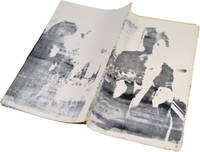
17592Nos. 1-14 Complete less No. 12 which was never published including BEHIND THE WHEEL "C" No. 14 by Michael Brownstein. New York: Lorenz Gude and Ted Berrigan 1963-1967. Side stapled mimeographed sheets with wrappers or selfwrappers 354x215 cm except for no. 14 which is 28x212 cm. In generally very good condition some near fine with only a little toning or edgewear. Some issues were also stapled from the backsidesome not completely penetrating. There was no number 12 issued this number omitted in the numbering is generally considered as having been replaced by C-Comics No. 1 which is included in the set: TOGETHER WITH: C-COMICS 1-2 cplt C-Comics Number 1. New York C-Press June 1964; folio mimeographed side- stapled small defect to left margin together with: Number 2. New York n.d. ca. 1966 Boke Press. Sm.folio; pictorial wrappers stapled in the spine. Landmark Beat magazine one of the cornerstones of the 1960's mimeo revolution and poetry scene. "C" was founded to replace the short-lived "Censored Review" which gathered work that had been banned from The Columbia Review. Edited by Ted Berrigan and Rond Padgett. "C" became the organ of 'Second- New York School' and served as a bridge between the older and younger branches of both The Beats and The New York School. Includes Ginsberg Burroughs O'Hara Koch Schuyler Ashbery Whalen Orlovsky Corso Pagdett Wieners Elmslie Lima Rothenberg Gysin SaroyanO'Hara Koch Schuyler Ashbery and others. No.4 was dedicated to Edwin Denby. The cover was designed by Andy Warhol and has on the covers the famed silk-screened images of Denby with Gerald Malanga. It marked the first time Warhol based a silkscreen on a poloroid a technique that would become one of his defining methods in the 1970's. Most of the other covers are by Joe Brainard. The Brownstein No. 14 was published in 200 copies. Light damage around staples. There was no Number 12. Jed Birmingham co-editor of Mimeo Mimeo has quoted Ron Padgett as suggesting that "C" Comics #1 was intended in the place of issue 12 of C-Magazine which given format and timing makes sense. "C" Comics #2 despite its title was issued under the Boke Press imprint. Numbers 6 and 10 have light soilage to the front cover; No 9 has last page detached and last ab.20 pages stapled upside down; No. 14 light damage around the staples; C-Comics No 1 with damage to left frontpage near the spine paper loss of ab. 2 cm. and some edgewearvery light soilage. unknown
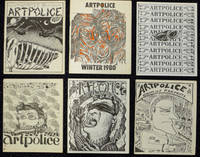
18799Collection/archive of Artpolice titles associated publications and related Frank Gaard ephemera: nos. 1 March 31 1974 through Artpolice International April 1994 64final issue. Sixty-four 64 variously numbered and titled fascicles of the artist’s serial lacking only seven issues from the complete run of Artpolice and the numerous associated titles issued by Gaard and his conspirators over the publication's 20 year run. Various sizes: 16mo to small tabloid. - ADDED: Eighteen 18 additional related items including - Man Bag nos. 3 1994 through 5 1996; - Losing Faith nos. 1 1986 through 2 1987;- Sub-Art vol. 1 no. 1 May 1979; - Art Moves vol. 1 no. 2 April1982 and a host of other Frank Gaard correspondence exhibition invites articles etc. Very good to near fine. Edited by Frank Gaard teacher at the Minneapolis College of Art and Design.Issues are comprised almost entirely of line drawings with constant variation in size printing methods titles and issue numbers .Art Police was an art zine collectively published by a dozen Minneapolis artists around the painter Frank Gaard. The zine lasted from 1974-1994. Combines Punk and Outsider Art a mixture of "low brow" humor and "high brow" sensibilities with political cartoons appearing next to pictures of blowjobs. It is described extensively in Aarons/Roths "In Numbers" publications by artists since 1955. With a fanciful numbering the publication schedule was highly irregular and our collation has been following the descriptions in this bibliography. The zine lasted from 1974-1994. Notable Zinesters who have contributed to Art Police were Frank Gaard Andy Baird Stuart Mead. Complete list of included ARTPOLICE titles with issue counts on request. unknown
21400Jahrgang 1-5 no 1 all published. Würzburg Frankfurt a/M. Bonn. 1961-1964. In the original decorated wrappers; 15 numbers. Extremely rare periodical on concrete poetry with text in German. The first years under editors Hannes Schwenger Horst Karsek and Gerd Peterknecht the magazine was subtitled 'lyrik prosa grafik plastik kunsttheorie’ and concentrated primarily on local artists and poetry. Under the editorial leadership of Karl Heinz Roth from issue 4/5 of 1962 and Volker Kahmen the magazine was subtitled 'Kunst und Versuch' art and experiment and expanded its outlook featuring new radical experiments in art and concrete poetry. - 1. Jahrgang Heft 1-6 Ab Heft 5 mit dem Untertitel “Zeitschrift für junge Kunst. Mit Textbeiträgen u.a. von Karl Heinz Roth Horst Karasek Gerd Peterknecht Gene G. Eppelein Hannes Schwenger Peter Tilmamnn Jochen Lobe Christian Litzberg Hans-Heinz Bartsch Wolfgang Heithoff Wolfgang Hildesheimer Walter Gontermann und Jochen Lobe. – Mit Illustrationen von Joachim Schlotterbeck Anton Zübert und Jochen Lobewithout no 2-3 - – 2. Jahrgang Heft 1-6 in 5 Heften. Ab Heft 5 mit dem Untertitel “Zeitschrift für Kunstâ€. Mit Textbeiträgen von u.a. Wolfgang Heithoff Walter Gontermann Joachim Schlotterbeck Jochen Lobe Horst Karasek und Gerd Peterknecht. – Mit Illustrationen u.a. von Schlotterbeck und Harold B. Helwig Thomas Meyer zur Capellen Dieter Brembs Gertraud Rostosky Raoul Dufy Pierre Bonnard und Kurt Sigel. - – 3. Jahrgang Heft 1-4 cplt. Mit Textbeiträgen u.a. von Hubert Gersch und Kurt Sigel. Mit Illustrationen u.a. von Joseph Fasbender Hann Trier Jochen Hiltmann Rupert Stöckl Miro Günther Stiller und Georges Mathieu. -– 4. Jahrgang Heft 1 2 und 3/4 cplt. Mit dem Untertitel “Zeitschrift für Kunst und Versuchâ€. – Mit beiliegender Bestellkarte. – Mit Beiträgen u.a. von Dieter Roth Wolf Vostell Ernst Jandl Ror Wolf Franz Mon Max Bense Heinz Gappmayr Vaclav Havel Jiri Kolar Unica Zürn Otto Mühl Walter Aue Bernd und Ursula Becher Konrad Bayer Gerhard Rühm Text und Umschlag Heft 3/4 Jochen Lobe Reinhard Döhl Chris Bezzel Claus Bremer Ferdinand Kriwet Karl Heinz Roth Konrad Boehmer Georg Heike H. G. Tillmann Dieter Hülsmanns und Lucienne Stassaert Konrad Balder Schäuffelen Gunter Falk und Chris Bezzel - – 5. Jahrgang Heft 1 all publ. Mit dem Untertitel “Zeitschrift für Kunst und Politikâ€. – Mit Beiträgen u.a. von Ernst Jandl Konrad Boehmer Hans G. Helms Friedrike Mayröcker Jörn Janssen Gottfried Michael Koenig und Stefan Themerson. – unknown
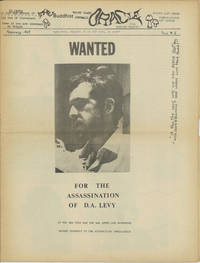
20286THE BUDDHIST THIRD CLASS JUNKMAIL ORACLE: Nos. 1-27 all publ. under this title; #27 also published under the new title: GREAT SWAMP ERIE DADA BOOM. Cleveland/ Ohio 1967- December 1969. Also numbered as: Nos. 1-13 which is also vol. 2 no 1 then the numbering continues from there becoming vol. 2 nos. 2-6 of which the last 4 were also named first to fourth last issue after which publication continued with the "last issue" numbering as 5th to 13th last issue then it stopped definitely. PLUS the Rare PRECURSOR: -SWAMP ERIE "Pipe Dream". Vol. 1 no 1 all publ. Cleveland: d. a. levy 1967.Tabloid 4 pp. incl. covers single folded sheet. Offset printed on newsprint. Old horizontal fold and additional creasing toning and some short marginal tears alloverl about very good. - Newsprint tabloids; illustrated throughout in b/w; light sunning on edges very mild edge wear a bit heavier for nos. 22-240 and incidentally a little wear over de folds. The newsprint paper taken into account this set is overall in quite good condition and very rare so. Absolutely complete set of this journal produced by d. a. levy in Cleveland. All published during his lifetime and edited by d. a. levy himself then after his death continued till no 27. The "Swamp Erie Pipe Dream" is the only issue of this remarkable journal the predecessor to the Buddhist Third Class Junkmail Oracle. This issue includes much Buddhist content as well as levy's poem "the bells of the Cherokee Ponies" a much-deserved attack on prosecutor George Moscarino and more information about the police raid on James Lowell's Asphodel Bookshop. The "Oracle"is profusely illustrated with collage art by d.a.levy and others. Heavily Buddhist influenced promoting drugs and reporting from the counter-culture underground scene of Cleveland and also news taken from papers of other cities. His radical collage art concrete poetry and publishing always put him in conflict with the powers that be in Cleveland: he was arrested and harassed constantly and died under mysterious circumstances suicide murder at the age of 26 in 1968 .Publication was continued by his friend Steve Ferguson until 24l Mar. 1970. Contribs. include Allen Ginsberg Gary Snyder John Sinclair Russell Atkins Charles Bukowski Doug Blazek Paul Puhle Michae Lesy photograph etc; interview with The Velvet Underground increasing attention to underground music and bands visiting Cleveland Syeve Miller Stone Poneys Jefferson Airplane The Who ; passages from The Tibetan Book of the Dead; typical d.a.levy collages throughout also in the advertising;Religious Collage North American Jewish Tantra;.In no. 15 a piece by Rudi Dutschke etc.; the last issues numbering started where Jim Ferguson took over; no. 18 being the 'Fourth Last Issue' published after the suicide of D. A. Levy with his photograph on the front page and the text 'Wanted for the assassination of D.A.Levy'. Very rare complete ongoing set from the beginning. Vol. 2 nos 5 and 6 also as 'The Barking Rabbit or the Buddhist Oracle" ed. by John Rose. Note: From Aug 1969 a second section KALEIDOSCOPE was published;we only have that section for the 12th last issue0. unknown
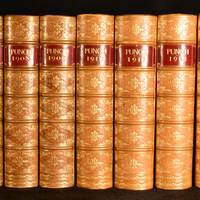
1894900P30London: Punch Office 1894-1914. Leather. Very Good. 11" by 9". Various. A brilliant continuous run of 'Punch' from the magazine's first issue up to the end of the 1914 a fantastic run of this satirical and illustrated magazine. An impressive continuous run of 'Punch' from Volumes I to CXLVII for the years 1841 to 1914. With one-hundred and forty-eight volumes bound in seventy-four.Volumes CVI to CXLVII are bound by Bickers.'Punch' was a popular satirical weekly magazine published from 1841 to 1992 first established by Henry Mayhew and Ebenezer Landells. It helped to coin and demonstrated the earliest examples of 'cartoon' in the modern sense of a humorous illustration. Several notable artists contributed to Punch such as John Leech Richard Doyle John Tenniel and Charles Keene. The first editor Lemon was a close friend with Charles Dickens and although Dickens never contributed to Punch allusions to him were often printed and illustrations from Dickens' novels were reprinted with well-known political figures substituted for Dickens' characters. For example in the 1851 volume of this set there is an allusion to Dickens' Oliver Twist and the character Fagin.The tongue in cheek commentary in which the contributors to Punch discuss the pressing issues of their era provide a unique look at history in particular of the build up to and first few months of World War.This is an important run containing the very first issues of the magazine as well as the issues regarding the deaths of Queen Victoria and Edward VI the sinking of the Titanic the Great Exhibition the Irish question and more.Illustrated with humorous illustrations and cartoons throughout all volumes.This set contains:Volumes I and II for 1841Volumes III and IV for 1842Volumes V and VI for 1843Volumes VII and VIII for 1844 and 45Volumes VIII and IX for 1845Volumes X and XI for 1846Volumes XII and XIII for 1847Volumes XIV and XV for 1848Volume XVI and XVII for 1849Volumes XVIII and XIX for 1850Volumes XX and XXI for 1851Volumes XXII and XXIII for 1852Volumes XXIV and XXV for 1853Volumes XXVI and XXVII for 1854Volumes XXVIII and XXIX for 1855Volumes XXX and XXXI for 1856Volumes XXXII and XXXIII for 1857Volumes XXXIV and XXXV for 1858Volumes XXXVI and XXXVII for 1859Volumes XXXVIII and XXXIX for 1860Volumes XL and XLI for 1861Volumes XLII and XLIII for 1862Volumes XLIV and XLV for 1863Volumes XLVI and XLVII for 1864Volumes XLVIII and XLIX for 1865Volumes L and LI for 1866Volumes LII and LIII for 1867Volumes LIV and LV for 1868Volumes LVI and LVII for 1869Volumes LVIII and LIX for 1870Volumes LX and LXI for 1871Volumes LXII and LXIII for 1872Volumes LXIV and LXV for 1873Volumes LXVI and LXVII for 1874Volumes LXVIII and LXIX for 1875Volumes LXX and LXXI for 1876Volumes LXXII and LXXIII for 1877Volumes LXXIV and LXXV for 1878Volumes LXXVI and LXXVII for 1879Volumes LXXVIII and LXXXIX for 1880Volumes LXXX and LXXXI for 1881Volumes LXXXII and LXXXIII for 1882Volumes LXXXIV and LXXXV for 1883Volumes LXXXVI and LXXXVII for 1884Volumes LXXXVIII and LXXXIX for 1885Volumes XC and XCI for 1886Volumes XCII and XCIIIfor 1887Volumes XCIV and XV for 1888Volume XCVI and XCVII for 1889Volumes XCVIII and XCIX for 1890Volumes C and CI for 1891Volumes CII and CIII for 1892Volumes CIV and CV for 1893Volumes CVI and CVII for 1894Volumes CVIII and CIX for 1895Volume CX and CXI for 1896Volumes CXII and CXIII for 1897Volumes CXIV and CXV for 1898Volumes CXVI and CXVII for 1899Volumes CXVIII and CXIX for 1900Volumes CXX and CXXI for 1901Volumes CXXII and CXXIII for 1902Volumes CXXIV and CXXV for 1903Volumes CXXVI and CXXVII for 1904Volumes CXXVIII and CXXIX for 1905Volumes CXXX and CXXXI for 1906Volumes CXXXII and CXXXIII for 1907Volumes CXXXIV and CXXXV for 1908Volumes CXXXVI and CXXXVII for 1909Volumes CXXXVIII and CXXXIX for 1910Volumes CXL and CXLI for 1911Volumes CXLII and CXLIII for 1912Volumes CXLIV and CXLV for 1913Volumes CXLVI and CXLVII for 1914 Volumes for 1841 to 1844 are in a half calf binding with marbled paper to the boards. Volumes for 1845 to 1893 are in a half calf binding with cloth to the boards. Volumes for 1894 to 1914 are in a half calf binding with marbled paper to the boards bound by Bickers. Externally generally smarts. Spines are faded with a few very light marks to the boards and spines. Minor bumping to the extremities. Marks are a little heavier to 1865. Light rubbing to the leather resulting in a very small amount of loss of leather to a few of the volumes the earlier volumes are understandably more rubbed in particular to the first 6 volumes. Rubbing has resulted in a small amount of loss of leather to Volume 1855 and to the rear board of Volume 1854 and to the head of the spine of Volume 1853 to the spine and joints of Volume 1852 1850 a small amount of loss to the paper to the front board of 1901 to the leather to the extremities of 1896 to the head of the front joint of 1895. Wear to the spine of 1891. Spots to the spine of 1885 and 1887. Label to the head of the spine of 1841. Loss to the rear board of 1842. A small amount of loss of cloth to the tail of the front board of 1883 and 1884 and to the head of the spine of 1869 Front joint of 1909 is starting but remains firm. Rear joint of 1903 is faded. Small crack to the tail of the front joint of 1889 and to the head of the front joint of 1886. Crack to the tail of the rear joint of 1882 with a little loss to the head of the spine and to the tail of the front board. Crack to the head of the front joint of 1870. Front board of 1881 is held by cords only rear joint is starting to the head. Damp stain to the front board of 1880. Lighter damp stain to the front board of 1879 rear joint and head of the front joint are cracked front joint is starting. Small damp stain to the tail of the front board and to the rear joint of 1864. Light damp stain to the rear joint of 1844. Damp stain and front endpaper to the front board of 1861. Hinges of 1882 starting but firm. Hinges of the first 6 volumes are starting but firm. Ink inscription to the front paste downs of the first 6 volumes. Internally firmly bound. Pages are bright and clean. The occasional scattered spot mostly to the endpapers. Neat repair to the gutter of the title page of Volume 1845 very minor discolouration to the margin due to the marbled fore edge. Ink inscription to the head of the title page of 1841. Title page of 1843 has been repaired to the reverse. Very Good Punch Office hardcover
1897SET56-60, 50 A-1London: Temple Chambers 1897-2011. Magazine. Very Good. Various. Various. A large collection of magazines regarding locomotive history. This set comprises of volumes 1-67 76-77 and 86-157 and covers the time period of 1897-2011. The Railway Magazine is still Britain's best-selling rail title. It was first published in 1897 and has been published continuously since. The work was launched by Joseph Lawrence and ex-railwayman Frank E Cornwall who believed there to be an amateur enthusiast market for material they were publishing in railway staff magazines. The first editor of the work was George Augustus Nokes who wrote under the pseudonym G A Sekton. Notable photographic contributors of the interwar period included Maurice W Earley W Leslie Good Frank R Hebron O J Morris and H Gordon Tidey . Volumes I-IV July-Dec 1897 - Jan-June 1899 are in the original Green Cloth bindings. Volumes IV- XIII are in uniform half calf bindings with cloth covered boards. Bound by J Falconer with the binder's stamp to the rear pastedowns. Volumes XIV-XV are in full burgundy cloth bindings. XVI-XXI are in half calf bindings with cloth covered boards by J Falconer. XXII to 157 are in mixed cloth bindings. Volumes I-LXVII and LXXVI-LXXVII have Roman Numerals to spines whereas all runs onwards 86-157 have arabic numerals to spine. Volume XLIII 1918 has original frontispieces from the parts and backstrips from the parts bound in to the rear. With the indexes of volumes 131-159 kept in a separate plastic-wallet folder. With two volume IV Jan-June 1899 one in original cloth and one in half calf. This collection covers a wide range of locomotive history. In mixed bindings. Majority of bindings are cloth. Others are in half calf bindings with cloth covered boards. Volumes IV-XIII in half calf and cloth covered boards are heavily rubbed to the spines. Loss to head and tail of spines to volumes IX-XIII due to heavy rubbing. Small losses to the head and tail of spines to volumes XXX and XXXI. Small losses to head and tail of spines to volumes XXXIV-XLV due to bumping. Several further volumes between XLVI and LXVII have small losses to the head and tail due to bumping on the cloth. Front hinge to volumes II 1898 XI and XII is strained but firm. Both hinges to volumes III 1898 XIII and XLV are strained but firm. Tape repair to the front hinge of volume LXIV. Loss to the head and tail of spine to clothbound volume IV 1899. Split to rear joint of volume XXXI resulting in the backstrip to lift slightly. Backstrip to both volume IVs 1899 are lifting. Backstrip to volume LI is lifting at the Rear hinge and joint to clothbound volume IV are weak and may detach with further handling. Backstrip to volume XIII has suffered large loss to the head and backstrip is lifting to the rear. Backstrip to XXXV is lifting slightly at the tail of rear joint. A few small ink spills to the tail of spine to volume XXII. Some minor light tidemarks to the spine of volumes XXIX XLIX . Damp staining to the spines of volumes 122 124 126. Prior owners' inscriptions to the recto of front endpaper to volumes XXXIV XLIX L. Stamp to the recto of front endpaper to volume L. Prior owner's inscription to the front pastedown of volume XLVI. Damp staining to front pastedown of volume XL does not affect rest of volume. Prior owner's notations to the front pastedown and recto of front endpaper to volumes LII LXVII. Frontispiece to volume IV is detached but present. Small amount of offsetting from binding staples to volume XXVIII. Advertisement removed neatly with scissors to verso of 'Contents for July and August' leaf to volume 89. Internally all volumes are otherwise firmly bound. Pages are slightly age toned to the older volumes due to paper used. Just the occasional light spots. Very Good Temple Chambers unknown
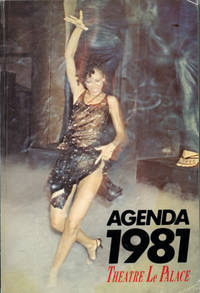
21198Numbers 1-13 all publ. ParisSociété de Presse et de Publications Artistiques 1980-1982 and the 3 AGENDAS Diaries. The numbers have various sizes and layouts. 21x24cm nos.1-4 29x21cm nos.5-13 ; folded sheets and stapled issuesca.104 pp each. Complete collection of the numbers and the 3 AGENDAS Diaries. Additions: - ADDED: Le Palace An 1: 1979. Small square quarto. 6 pages. Booklet issued to celebrate the first year of the Le Palace the Parisian Studio 54. The volume includes a text by Roland Barthes a list of an events of the first year and a fold-out pop-up depicting the main stage. A very good copy of this rare item. -ADDED 2: Le Palace: Au bout de la Nuit. Par LAUGA Dominique. Paris: Editions Seesam 1979. First edition. 4to. Preface by Michel Remy-Bibeth afterword by Fabrice Emaer. Scarce book of photographs of the artsy jet setters of 1979 taken at Le Palace night club the Paris equivalent of Studio 54. Some of the luminaries of the day who frequented this club included Andy Warhol Karl Lagerfeld Paloma Picasso Yves Saint Laurent Edwige and many more. A very good copy in glossy wrappers. Chief editors were Prosper Assouline and Jean Pierre Cerquant with Brigitte Cucherat Sylvie Grumbach Claude Aurensan. Textes d’Alain Pacadis Pierre Benain Jean Pierre Cerquant Roxanne Lowit Hugo Marsan Prosper Assouline. Illustrations by Jean Lagarrigue Gabriel Pascalini Gérard Garouste Gérard Failly Elisabeth Gabert Pierre Le Tan Alexandra Boulat Nadja Tristam et Hippolyte Romain. Almost all the photography 90% by François Dymant and also Alice Springs Jean Loup Sieff Bettina Rheims Jean Paul Goude Pierre Houlès Dominique Lauga Roxanne Lowit a.o. Le Palace"opens its doors on March 1 1978. The most explosive club of Europe. The leader Fabrice Emaer who succeeds in uniting aristocrat and punks homos and heteros white and tinted faces Jacno et Francis Bacon Isabelle Adjani et Yves Adrien The contents of the magazine-numbers contains a.o. the following names: Yves Mourousi Jean-Jacques Schuhl Grace Jones Paquita Paquin Jerry Hall Tina Aumont Mick Jagger Serge Gainsbourg Claude Montana Prince…Burroughs Pacadis Keith Richards Jack Lang Thierry Le Luron Edwige etc. And everybody fought to get a place in the magazine. The Agendas give a wonderful panorama of the events inf the club: -AGENDA 1980 Paris featuring Kiki Picasso Bette Midler Rod Stewart Yves St Laurent Roland Barthes Edwige Sonia Rykiel Mick Jagger Andrée Putman Hemut Newton Shirley Mac Laine Béjard Noureev Frédéric Mitterrand Andy Warhol Tom Waits B 52'S Kraftwerk Serge Gainsbourg Talking Heads Paloma Picasso Karl Lagerfeld Kenzo. Réalisation de J. Maillot participations ou photographies de l'Agence Angeli H. Bamberger C. Bricage Christopher O. Desbordes L. Froissard P. Hinous D. Lauga X. Lambours P. Morillon Kiki Picasso K. Pruszkowski. Pas d'exemplaires sur OCLC les deux années suivantes 1981 et 1982 ne figurant qu'à la BNF. - AGENDA 1981 Paris Photography by François Dymant and featuring Dominique Lauga Christopher Jean-François Gaté Lionel Froissard Roxanne Lowit jean Bricage Xavier Lambours Arnaud bazuman Antonio Freitas Julian Wasser Angeli Jean-Paul Goude K. Pruszkowski Andréa Blanch Pierre et Gilles Socrate Soulanges Deidi von Schaewen. - AGENDA 1982 Paris Featuring peronalities who had visited during that year; Léo Ferré Alain Delon William Burroughs Mick Jagger Yves St Laurent Thierry le Luron Divine Emile Aillaud Julien et Jean Pierre Kalfon Frédéric Mitterrand Karl Lagerfeld. And on the last pages the program for 1982 with no less than 96 manifestations with Tangerine Dream Frédérc Mitterrand Ian Dury Tom Waits William Klein Clash Dire Straits Siouxsie and the Banshees Pontus Hulten Urban Sax William Burroughs Grace Jones Karl Flinker Robert Mapplethorpe Helmut Newton UB 40 Klaus Nomi pour n'en citer que quelques uns. Photographies de François Dymant Dominique Lauga Lionel Froissard Roxanne Lowit X. unknown
00201374unknown
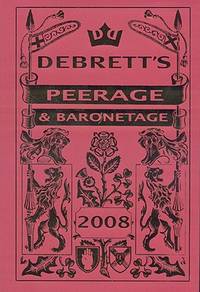
200893045Debrett's Limited Acc. New. 2008. HARDCOVER. 1870520807 . FREE UPGRADE to Courier/Priority Shipping Upon Request - IN STOCK AND IMMEDIATELY AVAILABLE FOR SHIPMENT - Flawless copy brand new pristine never opened -- HARDCOVER. 3500 pages; approximately 2000 illustrations in black and white. -- with a bonus offer-- . Debrett's Limited (Acc) hardcover
1784014554Troppau : Joseph George Trasler 1784. First German Edition . Quarter Leather and Marbled Boards. Very Good/No Jacket. 12mo - over 6¾ - 7¾" tall. All 32 Volumes Are In Very Good Order With Handling Wear Consistent With Their Age . Edgeworn Bindings And Tanned Pages The Edition Label On Volume 26 Is Damaged And Some Loss On The Bottom Spine Ends Of Volumes 14 And 25 . Published Between 1784 And 1787 Rare! <br/> <br/> Joseph George Trasler hardcover