"STENQUIST, DAVID.MareMagnum

219 626 résultats
Stockholm, R.W. Statlanders Boktryckeri, 1935 + 1930. Large 4to. 2 vols in original printed wrappers. 1st part with some spine wear and a bit of wear to corners. Wrappers of second part with a bit of light brownspotting. Both parts with stamps to front wrappers and title-pages, library markings to wrappers, and printed tape-strips across wrappers, all from the Danish Meteorological Institute (from the archive of which this set has been sold directly). 79 + 17 pp. Richly illustrated.
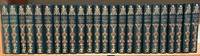
1900326807Philadelphia: George Barrie & Son 1900. Limited. hardcover. fine. 24 volumes. Frontispiece and other plates throughout each appearing in 2 states b/w and colored or sepiatone protected with lettered tissue guards. Thick 8vos handsomely bound by publisher's in 3/4 deep green morocco with ornately gilt-stamped spines all edges gilt. Philadelphia: George Barrie & Son no date circa 1900. Limited edition -- number 707 of 1000 copies. A fine set in lovely binding.<br/> <br/> George Barrie & Son unknown
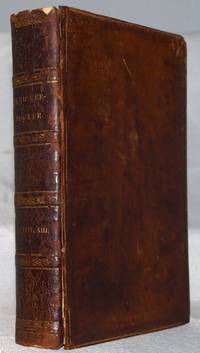
18391404080070New York: Clark and Edson 1839-01-01. Hardcover. Very Good. Bound in contemporary full leather. Gilt lettering to spine. Good binding and cover. Shelfwear. Clean unmarked pages. Foxing throughout. <br><br> The standout article in this publication is Mocha Dick: or The White Whale of the Pacific: A Leaf from Manuscript Journal by Jeremiah Reynolds. It is this article that most scholars agree is the origin of Melville's classic Moby Dick. New York: Clark and Edson hardcover
17591512140030London : Royal Society 1759-01-01. First Edition. Hardcover. Good. Quarto. 481-876 index. Illustrated with eighteen folding plates including a large folding engraving of the streets of Peking. Bound in contemporary green 1/4 sheepskin over marbled boards. Wear to extremities. Tail of boards starting. Internally good with toning occurring. Contains Benjamin Franklin's "An Account of the Effects of Electricity in paralytic cases." <br> Benjamin Franklin was involved not only with the nature of electricity but with its possible medical utility. People of the 18th century hoped 'electrical fire' would provide a cure for paralysis. They believed that sending a charge through the affected limbs might increase blood flow regenerate muscle and restore movement or physical control. Franklin was doubtful about the usefulness of electrical treatment for palsy and paralysis and never promoted himself as an electrical therapist. Nonetheless because of his reputation as an electrical innovator he was from time to time contacted by people seeking electrical therapy. Using an electrostatic generator in which electrical charge was created by rubbing material against a mounted glass ball or cylinder turned by a crank and a Leyden jar which stored the electrical energy Franklin obliged those patients who came to him desiring electrical therapies though Franklin's patients found no permanent cure for their paralysis. London : Royal Society hardcover
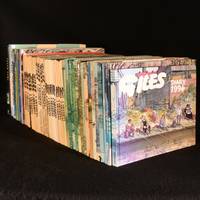
1955999G12DExeter; London: Pedigree Books; Headline; Express Books; Ebury Press; Beaverbrook Newspapers; Annual Concepts Limited 1955-1999. Paperback. Very Good Indeed/Fine. 8" by 11". Not Stated. A smart 46 volume set of Giles books featuring an abundance of the popular cartoons by notable British cartoonist Ronald 'Carl' Giles. A 46 volume set of Giles cartoons.In the original pictorial card wraps and hardback bindings. With two original unclipped dust wrappers.Ronald Giles' was a cartoonist whose work first appeared in the British newspaper the Daily Express. His cartoon style was a single topical highly detailed panel usually with a great deal more going on than the single joke.Certain recurring characters achieved a great deal of popularity particularly the extended Giles family which first appeared in a published cartoon on 5 August 1945 and featured prominently in the strip.Giles' works are a cherished British tradition filled with witty cartoons and gentle humour. This fantastic set includes 41 volumes of 'Giles: Sunday Express & Daily Express Cartoons' from the Ninth Series to the Fifty-Third Series published between 1955 and 1999.Not including the 11th 12th 13th 15th series. As well as 4 volumes by Peter Tory:1993 The Giles Family: The Illustrated History of Britain's Best Loved Family1993 Giles: A Life in Cartoons; The Authorised Biography of Britain's Leading Cartoonist1994 Giles at War1995 The Ultimate Giles: An Illustrated Tribute to the Legendary CartoonistAlso including: 1993 Giles Diary 1994 43 volumes in the original card wraps and 3 volumes in the original hardback bindings. With two original unclipped dust wrappers. Externally generally very smart. Occasional sunning to spines. Small mark to rear board of 'Giles at War'. Boards of the sixteenth series are fragile with creasing closed tears and a split to front joint. Bumping to tail of spine of the twentieth and twenty-seventh series and to head of spine of the twenty-second series. Ink inscription to front board of the twenty-first series. Damp staining to front board of the tenth series. Dust wrappers are very smart with occasional light sunning to spines. Internally firmly bound. Pages are bright and clean with frequent age toning. Title page of the twenty-first and the twenty-third series are price clipped. Damp staining and ink bleeding to title page and head of pages to the tenth series. Very Good Indeed Pedigree Books; Headline; Express Books; Ebury Press; Beaverbrook Newspapers; Annual Concepts Limited paperback
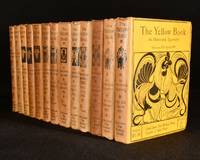
1894850A28London: Elkin Mathews and John Lane 1894-97. First edition. Cloth. Very Good. 8" by 6.5". Various. A complete collection of all thirteen volumes of the widely celebrated Victorian literary and artistic periodical 'The Yellow Book'. Each volume the first edition first impression with book lists and/or publisher's announcements to rear which did not appear in later impressions. Complete run with all thirteen volumes of The Yellow Book a leading British literary quarterly magazine in the 1890s running from 1894 to 1897 with notorious authors such as Kenneth Grahame H. G. Wells W. B. Yeats and Henry James contributing some first publications. The magazine contained a variety of literary and artistic genres and was often associated with the currents of aestheticism and decadence. Including poetry short stories essays book illustrations portraits and reproductions of paintings. John Lane and Elkin Mathews the founders of The Bodley Head published this artistic and often controversial periodical. The iconic yellow cover is credited to Aubrey Beardsley its first art editor an allusion to illicit French fiction of the period although Oscar Wilde notoriously dismissed it as 'not yellow at all.' Beardsley obtained works by such artists as Charles Conder William Rothenstein and Philip Wilson Steer among other.Volume I with fifteen illustrations. Collated complete. With advertisements and book lists to rear. Volume II with twenty-two illustrations. Collated complete. With advertisements and book lists to rear. Volume III with fifteen illustrations. Collated complete. With advertisements and book lists to rear. Volume IV with seventeen illustrations. Collated complete. With advertisements and book lists to rear. Volume V with fourteen illustrations. Collated complete. With advertisements and book lists to rear. Volume VI with sixteen illustrations. Collated complete. With book lists to rear.Volume VII with twenty illustrations. Collated complete. With advertisements and book lists to rear. Volume VIII with twenty-six illustrations. Collated complete. With advertisements and book lists to rear. Volume IX with seventeen illustrations. Collated complete. With advertisements and book lists to rear. Volume X with thirteen illustrations. Collated complete.With advertisements and book lists to rear. Volume XI with twelve illustrations including a colour plate. Collated complete. With advertisements and book lists to rear. Volume XII with fourteen illustrations. Collated complete. With publisher's book lists to rear. Volume XIII with eighteen illustrations. Collated complete. With publisher's book lists to rear. In the original publisher's uniform full cloth bindings with designs in black. Externally very smart with minor shelf wear only lightly bumped to head and tail of spine and extremities back strip gently darkened. Internally firmly bound. Light minor spotting to odd leaf pages otherwise generally bright and clean. Very Good Elkin Mathews and John Lane hardcover
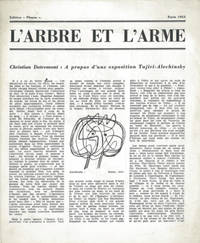
16924Série 1: Nos. 1-11 all. Paris janvier 1954-mai 1967. Original illustrated wrappers roy. 8vo. <I>Continued as:</I> Série 2: Nos. 1-5 <I>all and last publ.</I> Paris mai 1969-nov. 1975. Original illustrated wrappers; 4to. 15 issues no 5/6 is a double-issue with light soilage to some of the covers in particular to no .8 altogether a set in generally very good condition. Complete with all hors-textes. ADDED: -Pamphlet of the groupe PHASES dated 15 juin 1968; 4to printed b/w recto/verso. The signatories of the groupe take position in the May 1968 events. -Rétroviseur. Nice Galérie des Ponchettes 1972. 4to; illustrated wrappers Exhibition of Phases regular copy without the hors-textes. - Atélier Sesame. Galerie Le Passe Muraille. Exposition Phases à Lyon Nov. 1973 copy without the hors-textes. Directed by Edouard Jaguer. Contribs.: G. Henein M. Tapié G. BertiniP. Alechinsky R. Hausmann A. Joubert J. W. Schuster F. Picabia B. Atmani Dotremont a.o. Illustrations hors-texte by o.a.: <I>K.O. Götz Baumeister Corneille Lam Matta A. Dax J. Zimmerman C. Peverelli E.F. Granell R. Magritte O. Borda E. Baj A. Debie J. Perahim A.Tapiès Yves Tanguy o.a</I>. First series no 4 is the exhibition catalogue "Phasen" Phases - Stedelijk Museum Amsterdam 10 mei - 10 juni '57 .4to. stapled app. 50 pp. printed in bw on different kinds of paper incl. wrapping papers tissue paper etc. Texts in Dutch and French by E. Jaguer. Reprod. of works by Corneille Tajiri J. Herold E. Baj Alechinsky Soulages Rooskens Appel etc. unknown
2017__1138565377Routledge 2017. Hardcover. New. 5020 pages. 9.21x6.14x10.50 inches. Routledge hardcover
17643924Paris Grenoble and elsewhere 1764. Very good. Contemporary mottled calf; spine tooled in gold; red edges; marbled endpapers. The first Grenoble imprint lacking the first leaf half-title; both Grenoble imprints cropped close just shaving some text; occasional light foxing. Text block splitting from the bottom between two of the pamphlets roughly two-thirds into the volume. Modern armorial bookplate on the front paste-down. Later perhaps early 20th-century handwritten table of contents tipped in at front. An attractive Sammelband suitable for exhibition and study. SAMMELBAND OF 30 ANTI-JESUIT TRACTS ATTESTING TO THE "INTRACTABLE" RELATIONS BETWEEN THE FRENCH STATE AND THE JESUITS DOCUMENTING THE OFFICIAL SUPRESSION PROCESS. <br /> <br /> The earliest documents beginning in 1761 and running into 1762 demonstrate the French government's early steps toward suppression. Many of these edicts demand copies of the order's Constitutions for inspection. Of course it's clear the authorities had already made up their minds evidenced too by their numerous judgments against Jesuit books which appear to have provided abundant bonfire fuel in palace courtyards across the country. We find plenty of references to the Jesuits being kicked out of their homes the confiscation of their property and much on the closure of their schools and plans for their continued operation under state-sponsored control. The penultimate document in our volume is the French king's final blow to the Jesuit order followed by a final edict outlining conditions of Jesuit resettlement in France. If you're expecting sanitized administrative legalese from these documents the amount of invective animosity and hatred may surprise you. Endless referrals to the "so-called Jesuits" underscore a perception that the order must hardly be aligned with the teachings of Jesus. Grievance-laden dressing-downs are ubiquitous. The devastation to Jesuit lives seen here was enormous. Our brief commentaries below merely scratch the surface of what these contain. <br /> <br /> ¶ The suppression of the Jesuits was a global phenomenon that began with their expulsion from Portuguese territories in 1759. From there it spread not simply through the European continent but through its countries' vast overseas empires. The final blow landed with a papal decree of 21 July 1773 though the Jesuits found some sympathetic European pockets where they managed to continue their mission. The order's official restoration was enabled by a papal decree in 1814 from which the Jesuits eventually regained their European footing. <br /> <br /> ¶ The depths of blame for Jesuit suppression has been endlessly plumbed by scholars. The Enlightenment is an oft cited factor as was fear of outsize political influence from Rome and royal desires to seize control of Jesuit revenue sources. "Whichever way one analyses the surviving evidence any attempt to provide a single all-embracing explanation of the destruction and ultimate suppression of the Society is fruitless: there was a whole host of reasons which curiously coalesced into a wider international phenomenon" Whitehead. <br /> <br /> ¶ In France groundwork for Jesuit antipathy had been laid by a deep long-standing theological tension between them and the Jansenists. But everything came to a head with the well intentioned but ill advised trade dealings of one Father Lavalette in Martinique. In trying to improve the condition of his overseas community he found himself hopelessly indebted to French creditors. The Jesuits tried to cover the debts themselves but eventually found themselves in French courts. A Jesuit appeal to the French parlement stacked with individuals not favorably disposed to them was a fatal mistake. "The protracted court proceedings lasted from April to August 1761 and were to prove immensely damaging for the Jesuits as the Society's Institute was examined and ultimately denounced. During the winter of 1761 and the spring of 1762 the parlement of Paris and the fifteen provincial parlements of France deliberated independently on how to deal with the future of the Jesuits within their respective jurisdictions." This decentralized approach to their suppression is vital context for the broad geographic coverage of the volume here. "Enormous power struggles took place in various parlements but the detailed debates of their members were rendered largely irrelevant when on 1 April 1762 the parlement of Paris having found against the Society of Jesus forced the Jesuits to leave the thirty-eight colleges within its jurisdiction" Whitehead. Some provincial parlements continued to shelter the Jesuits-Artois for example from which we have a 1762 decree here-but Louis XV's edict of November 1764 ordered the Society's complete dissolution. <br /> <br /> ¶ The unusually broad geographic coverage of the volume is impressive. While eleven tracts were printed in Paris nineteen ! come from ten different provincial cities the latter often broadcasting the same language the same grievances and the same judgments as those issued from Paris. Even the spine title hints at the variety of origins: Arrets de divers parts Jesuites. The collection is a telling witness to how demotic anger towards the Jesuits developed into an official campaign of suppression in France.<br /> <br /> CONTENTS OF THE COLLECTION:<br /> <br /> 1. Declaration du roi qui ordonne que dans six mois pour tout délai les supérieurs de chacune des maisons de la Société des Jésuites seront tenus de remettre au greffe du conseil les titres de leurs établissements en France; donné a Versailles le 2 août 1761 - Paris: Pierre-Guillaume Simon 1761 - 8 p.<br /> 2. Arrest de la cour du parlement extrait des registres du parlement du 6 août 1761 - Paris: Pierre-Guillaume Simon 1761 - 16 p. - Opening in part "that the said priests and scholars of the said society Jesuits will be required to deliver within three days to the clerk of the said court a printed copy of the Constitutions of the said society."<br /> 3. Arrêt de la cour de parlement du 6 août 1761 - Paris: Pierre-Guillaume Simon 1761 - 12 p. - On the state examination of Jesuit literature. Includes a lengthy list of controversial Jesuit books with Claude Lacroix's expansion of Hermann Busenbaum's Theologia Moralis singled out: "They will be lacerated and burned in the courtyard of the palace" p. 7.<br /> 4. Arrest de la cour de parlement du trois septembre 1761 - Paris: Pierre-Guillaume Simon 1761 - 16 p. - Concerns the inspection of Jesuit books noting that Orazio Torsellini's "Historiae sacrae & profanae epitome" is also to be lacerated and burned in the palace courtyard p. 6.<br /> 5. Arreté du p. de Paris 26 mars 1762 - Manuscript copy of the printed text - 2 pp. 2 mostly blank pp. - More on Jesuit suppression.<br /> 6. Extrait des registres du parlement du 30 avril 1762 - Paris: Pierre-Guillaume Simon 1762 - 11 1 p. - On the seizure of Jesuit property.<br /> 7. Arrest de la cour de parlement - Paris: Pierre-Guillaume Simon 1762 - 105 1 p. - An extensive overview of Jesuit sins against the state including "dangerous and pernicious assertions of all kinds which the so-called Jesuits have at all times and perseveringly held taught and published in their books" p. 16.<br /> 8. Arrest de la cour de parlement extrait des régistres du parlement du six août 1762 - Paris: Pierre-Guillaume Simon 1762 - 16 p. - In part "concerning the keeping of schools and colleges by others than the aforementioned so-called Jesuits" p. 1.<br /> 9. Arrêt du parlement de Toulouse au sujet des Jésuites extrait des registres du parlement du 5 juin 1762 - Toulouse: Nicolas Caranove 1762 - 24 p. - Like many others opening with the requirement that the Jesuits are to provide a copy of their Constitutions to the court within three days.<br /> 10. Arrest de la cour de parlement qui juge l'apel comme d'abus . de l'institut de la Société se disant de Jesus; fait défenses aux soi-disant Jésuites & à tous autres de porter l'habit de la lite société; de vivre sous les loix de l'institut de ladite Société; d'entretenir aucune correspondance directe our indirecte avec le général & supérieure de ladite société . enjoint aux soi-disans Jésuites de vuider les maisons de ladite société dans quinzaine &c du 26 février 1763 - Toulouse: Widow of Bernard Pijon 1763 - 12 p. - Omitted from the above lengthy title is reference to the multiple the passages on the burning of Jesuit books deemed seditious and contrary to good Christian values p. 2.<br /> 11. Arrêt du parlement de Rouen rendu toutes les chambres assemblées du vendredi 12 février 1762 - Rouen: Jacques-Joseph Le Boullenger 1762 - 24 p. - Again demanding a copy of the Jesuits' constitution for inspection and again with a list of Jesuit books to be lacerated and burned in the palace courtyard p. 19-24.<br /> 12. Arrest du parlement de Rouen du samedi 27 mars 1762 - Rouen: Jacques-Joseph Le Boullenger 1762 - 7 1 p. - Remarks "that there is no way to reform a society that is essentially irreformable which counts among its strange privileges stated in its Constitutions that of being independent in its way of being" p. 3-4.<br /> 13. Arrêt definitif du parlement de Rouen contre les ci-devant soi-disans Jésuites du 21 juin 1762 - Rouen: Jacques-Joseph Le Boullenger 1762 - 19 1 p. - Referencing any government assistance the Jesuits might or might now receive.<br /> 14. Arrest et arretés de la cour de parlement seant a Rouen pour l'exécution des arrêts des 12 février 21 & 28 juin 1762 - Rouen: Jacques-Joseph Le Boullenger 1762 - 31 1 p. - On a letter sent by M. Plesse a Jesuit college official in Caen to the French authorities apparently in response to their indictment.<br /> 15. Arrêt du parlement de Rouen qui ordonne que dans un mois à compter du jour de la publication du présent arrêt tous les prêtres & ecoliers de la ci-devant société qui se disoit de Jesus seront tenus de sortir du royaume à peine d'être poursuivis extraordinairement si ce n'est qu'ils justifiassent avoir quitté ladite ci-devant société avant le douze février mil sept cent soixante-deux &c.; extrait des registres de la cour du 22 mars 1764 - Rouen: Jacques-Joseph Le Boullenger 1764 - 7 1 p. - Declaring that all Jesuits who do not renounce the Society before 12 February 1762 "will be required to leave the kingdom."<br /> 16. Arrest du parlement de Bretagne qui juge l'appel comme d'abus interjetté par Monsieur le Procureur Général du Roi des brefs bulles constitutions &c. concernant les sui-disans Jésuites; extrait des registres du parlement du 27 mai 1762 - Rennes: Guillaume Vatar 1762 - 24 p. - Requesting a copy of the Jesuit Constitutions from its college at Rennes plus more on the Jesuit college there. <br /> 17. Extrait des registres séant a Bordeaux du 8 mars 1762 - Bordeaux 1762 - 7 1 p. - Raises the question: "Does the Jesuit institution tend by its privileges to make this society independent of all spiritual and temporal authority such as it may be Have the views of dangerous politics taken in this institution and this regime the place of those of religion" A copy of the Jesuit Constitution is again requested.<br /> 18. Arrêt de parlement de Bordeaux qui reçoit le Procureur-Général apellant comme d'abus de la Bulle Regimini déclare le régime & l'institut de la société des soi-disans Jésuites attentatoire à toute autorité spirituelle temporelle & incompatible avec les principes & les regles de tout etat policé; & les voeux & faits par lesdits soi-disans Jésuites abusifs téméraires & inconsiderés; fait défense à tous sujets du roi de vivre déformais sous l'empire desdites régles; ordonne qu'au premier août prochain les soi-disans Jésuites vuideront toutes les maisons collèges & noviciats du ressort de la cour dudit parlement; & que lesd. prêtres & ecoliers soi-disans actuellement Jésuites ne pourront être admis à aucun bénefice aucunes charges civiles sans au préalable avoir prêté serment devant un juge royal d'être fidèles au roi de tenir & enseigner les quatre propositions du clergé de France de 1682; & ordonne la saisie & sequestration des biens de ladite société &c.; du 26 mai 1762 - Bordeaux: Jean-Baptiste Lacornée 1762 - 22 p. - The title summarizes the state's grievances against the Jesuits e.g. "incompatible with the principles and the rules of any policed state" and the hardships facing them during their suppression e.g. "priests and students who are currently called Jesuits cannot be admitted to any benefice or civil office without first having taken an oath before a royal judge to be faithful to the king".<br /> 19. Réquisitoire de M. le procureur-général du parlement de Metz au sujet des soi-disans Jésuites - Metz: Joseph Collignon 1762 - 28 p. - More on the Jesuit Constitutions. "The court has no doubt already seen with astonishment the horrible fabric of this body of Constitutions a monstrous work in all its content and which presents a society that one sees at birth humiliate itself" p. 2.<br /> 20. Arrêt du parlement de Dijon contre les soi-disans Jésuites du 11 juillet 1763 - Dijon: Chez Causse 1763 - 12 p. - Again declaring everything about the Society of Jesus incompatible with the French state. "The said court orders that on the first of next October the aforementioned Jesuits remaining within the jurisdiction of the court will empty each and every one of the houses colleges residences or other establishments which they occupy in order to withdraw to such places of the kingdom as they see fit other nevertheless than colleges seminaries or any other house intended for the instruction and education of youth" p. 3.<br /> 21. Avis dans l'affaire des Jesuites d'un conseiller du parlement seant en Bourgogne depuis la réunion à la couronne de cette ancienne pairie; du 11 juillet 1763 - Burgundy 1763 - 42 2 p. last leaf blank - A comprehensive account of the state's grievances against the Jesuits. <br /> 22. Arrêté du conseil souverain de Roussillon au sujet de l'edit du roit donné à Versailles au mois de mars 1762 tendant à modifier l'institut des Jésuites & à fixer leur état s'il étoit possible; du 17 mars 1762 - Roussillon 1762 - 3 1 p. - Demanding copies of the Jesuits' Constitutions and all other regulatory documents.<br /> 23. Arret du conseil souverain de Roussillon qui ordonne à tous les soi-disans Jésuites du ressort de la cour de sortir & vuider toutes leurs maisons dans huitaine &c.; extrait des registres de la cour du 12 juin 1762 - Perpignan: J.B. Reynier 1762 - 28 p. - Demanding the expulsion of Jesuits from their homes.<br /> 24. Arrest du conseil provincial et superieur d'Artois du 5 avril 1762 - Artois or Roussillon 1762 - 8 p. - Addressing the fate of Jesuit schools among other topics.<br /> 25. Arrest du parlement de Dauphiné rendu toutes les chambres assemblées le 21 mars 1763; extrait des registres du parlement - Grenoble: André Giroud 1763 - 12 p. - An exposition of the state's problems with the Jesuits and the fate that now awaits the Society including "seizure of all the goods furniture and buildings possessed by the said Jesuits" as well as "all the incomes and other annual products of the said houses" p. 11.<br /> 26. Arrest du parlement de Dauphiné du 29 août 1763 qui juge l'appel comme d'abus interjetté par M. le procureur général des bulles brefs constitutions & autres réglements de la Société de Jesus; fait défenses aux Jesuites & à tous autres de porter l'habit de ladite société de vivre sous l'obéissance au général & aux constitutions de ladite société & d'entretenir aucune correspondance directe ou indirected avec le général & les supérieurs de cette société ou autres par eux préposès; enjoint auxdits Jesuites de vuider les maisons de ladite société; leur fait défenses de vivre en commun; réservant d'accorder à chacun d'eux les pensions alimentaires nécessaires; comme aussi ordonne à tous ceux desdits Jesuites nés sous une domination étrangere de sortir du royaume au premier octobre prochain &c. &c. &c.; extrait des registres du parlement - Grenoble: André Giroud 1763 - 23 1 p. - "Enjoins the said Jesuits to empty the houses of the said society forbids them to live in common" &c. &c.<br /> 27. Arrest de la cour de parlement de Provence concernant les ci-devant Jésuites qui se trouvent dans le ressort; du 18 janvier 1764 - Aix-en-Provence 1764 - 16 p. - "Such gentlemen is the picture of this society which regards itself as dispersed rather than dissolved which claims to be persecuted and in not at all destroyed. The conduct of its children is consistent with their condition with their known character and with the spirit of their institution; each Jesuit who had some respect in his order reigns today in a circle of which he is the center" p. 4.<br /> 28. Arrest de la cour de parlement du 9 mars 1764 - Paris: Pierre-Guillaume Simon 1764 - 8 p. - More on the burning of Jesuit books not only for their seditious and morally destructive character but also for "teaching a murderous and abominable doctrine not only against the safety of the life of the citizens but even against sacred persons of the sovereigns" p. 4.<br /> 29. Edit du roi concernant la Société des Jésuites donné à Versailles au mois de novembre 1764 - Paris 1764 - 2 p. - Louis XV's final dissolution of the Jesuit order in France and the conditions for those who would remain.<br /> 30. Extrait des registres du parlement du premier décembre 1764 - Paris: Pierre-Guillaume Simon 1764 - 3 1 p. - Concerning the resettlement of the Jesuits ordering that they "will be required to reside in the diocese of their birth and nevetheless will not be able to approach the city of Paris closer than ten leagues" p. 1.<br /> <br /> CATALOGUER'S NOTE: We are grateful to Patrick Olsen for his detailed analysis of the present Sammelband. <br /> <br /> References: Maurice Whitehead "From Expulsion to Restoration: The Jesuits in Crisis 1759-1814" Studies: An Irish Quarterly Review 103.412 Winter 2014/2015 p. 448 454; Dorinda Outram The Enlightenment Cambridge University 2019 p. 36 "Jansenist concerns about returning to the simplicities of the early church fitted well with the concerns of governments struggling to diminish the power of the Catholic Church within their own dominion as is shown by the universal attack on the Jesuit order from 1759". unknown
1995BROWNGEO015795BABEL Schondorf Germany. 1995. First edition. Octavo. 18 pages. Sewn wrappers with flaps. A poem ''Carol'' by George Mackay Brown and poems for him by Seamus Heaney R.S. Thomas Catherine Fisher Christopher Jenkin-Jones K.A. Perryman the publisher of this book Sheenagh Pugh and Deborah Randall. Printed by Martino Mardersteig at the Stamperia Valdonega.Out of a total edition of 225 copies this is one of 25 signed by all the contributors apart from Brown himself and with a tipped-in photograph of Brown by Gunnie Moberg who also provides her signature. Loosely inserted is an Autograph Postcard Signed by George Mackay Brown and dated 3/xii/95: about 150 words to the publisher Kevin Perryman thanking him for the latest issue of BABEL magazine and reporting on the ''very bleak wintry weather'' and ''quite a bad cold the kind that drains the energy''. The card is in the original envelope hand-addressed by Brown.Fine. Among the scarcest of limited editions signed by either Heaney or Thomas. BABEL, Schondorf, Germany. unknown
- 1800, 17cmx22.8cm, (4) 84pp. 89p. non paginées, relié. - Manuscrit original réalisé vers 1800 et totalement inédit. Sans page de titre, le manucrit débute par la préface, paginé 1, puis la table des matières de la première partie. On distingue 3 écritures différentes. Cartonnage de papier dominoté brun d'époque. Manques en queue. Manque au coin droit bas. La thèse du manuscrit soutient que les convulsionnaires sont une oeuvre divine : "l'oeuvre de la croix", inscrite donc dans le plan de Dieu et de l'ordre du miracle ; les convulsionnaires se trouvant être les instruments de Dieu dans leurs prédictions. La bulle Ugenitus qui éradiqua le mouvement janséniste est racontée comme un complot réussi des jésuites, eux-mêmes décrits comment l'intrument du vice. Dans la première partie du manuscrit qui détaille les conséquences de la bulle Ugenitus et l'apparition des convulsionnaires, ces derniers sont amplement décrits par leur caractère extraordinaire et surnaturel dans des chapitres dénommés : impassibilité, invulnérabilité des convulsionnaires, miracles, discours et lumières surnaturelles, connaissances de l'avenir et des consciences... Les convulsionnaires prophétisent ainsi la Révolution française, la fin des rois et des nobles et le rappel des juifs. La seconde partie de l'ouvrage est consacrée à des citations prophétiques de convulsionnaires (Soeur Holda, soeur Lacroix), qui semblent, bien que dans le style biblique, incroyablement précises, l'auteur citant plusieurs fois des dates pendant lesquelles doit se passer "le commencement du grand bouleversement à la 33e année au delà de 1756, c'est-à-dire en 1789. Après avoir amplement prophétisé les événements de la Révolution Française, les convulsionnaires prévoient l'anéantissement de la république puis de la France, démembrée par des puissances étrangères (on songe à la période qui suit Napoléon), chaque série de citations étant encadrée de titres et de courtes explications. A la fin du manuscrit, il est écrit : Fin de la première partie de ce recueil, sans qu'on puisse savoir si autre chose fut écrit ensuite. Le dernier chapitre lie les prophéties contenues dans les prophètes de la Bible et ceux des convulsionnaires qui n'en sont que le renouvellement. Précieux et curieux essai sur les convulsionnaires, démontrant le caractère divin de leurs prophéties et inscrivant ainsi la révolution française et l'Empire comme des châtiments apocalyptiques. [ENGLISH DESCRIPTION ON DEMAND]
- Charles Chastellain, Lyon 1613, in-8 (11x18cm), (32 p.) 352 pp. ; 124 pp. ; 196 pp. (30), relié. - Histoire admirable de la possession et conversion d'une pénitente, séduite par un magicien, la faisant sorcière & princesse des sorciers au païs de Provence, conduite à la Scte Baume pour y estre exorcizée l'an M. DC. X. au mois de Nouembre [with] Discours des esprits en tant qu'il est de besoin, pour entendre & résoudre la matière difficile des Sorciers Charles Chastellain, Lyon 1613, 8° (11x18cm), (32 p.) 352 pp. ; 124 pp. ; 196 pp. (30), bound. First edition of this very rare work on demonology. Parchment binding with flaps, ink title on spine. Nudity of the cherubs in the first head piece hidden with pen strokes. Title page slightly restored, a few leaves with light spotting to the margins. "Curious study of witchcraft narrating how a priest from Marseille named Louys Gaufridy, magician for fourteen years, sold his body, his soul and his works to the Devil in exchange for the gift of being followed by every woman he would love, how this pact signed with his blood he raped a nine year old girl, Madgaleine de la Pallud and had her carried by the Devil to the Synagogue where she was made princess, etc. The details of the exorcism follow. A most curious and rare work nf demonology. (Caillet) Provenance: library of Guy Bechtel with his "bibliophobe" bookplate pasted to the first pastedown endpaper. Ownership inscription in Greek at the top of the title page. [FRENCH VERSION FOLLOWS] Edition originale de ce très rare ouvrage de démonologie. Reliure de l'époque en plein parchemin d'agneau, dos lisse orné d'un titre à la plume du temps, gardes changées, petits trous témoignant de lacets antérieurs. Les nudités des angelots du premier bandeau ont été masquées à la plume. Page de titre légèrement restaurée, quelques feuillets comportant de pâles mouillures marginales. "Curieux ouvrage de sorcellerie relatant comment en la ville de Marseille un prêtre nommé Louys Gaufridy magicien depuis quatorze ans vendit son corps, son âme et ses oeuvres au Diable en échange du don d'être suivi de toutes les femmes qu'il aimerait, comment ce pacte signé de son sang il viola une fillette de neuf ans, Madgaleine de la Pallud et la fit porter par le Diable en la Synagogue dont elle fut faite princesse, etc. Suivent les détails de l'exorcisme. Ouvrage de démonologie des plus curieux et fort rare." (Caillet) Provenance : de la bibliothèque de Guy Bechtel avec son ex-libris "bibliophobe" encollé au premier contreplat. Ex-libris manuscrit en grec en tête de la page de titre.
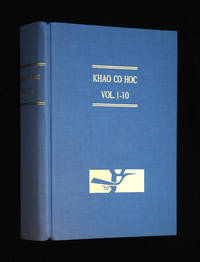
1969000122Hanoi: Vietnam Institute of Archaeology 1969. The official journal of archaeological research for the Democratic Republic of Vietnam a complete 30 year run from the inception of this mostly quarterly journal in June 1969 through to end 1998. The set includes 1272 articles in Vietnamese 664 of which are followed by brief abstracts in English and 38 additionally in French. Over 500 of the articles are illustrated in b&w and occasionally in later issues in colour and an additional 200 articles contain graphical information in the form of maps charts graphs and/or Sino-Vietnamese characters. This journal thus contains the complete published record of official archaeological activities in one of the last frontiers of archaeology in Asia. Until 1975 the journal of necessity covered only activities in the northern half of the country but shortly following unification activities are recorded throughout the territory of Vietnam as known today. Ancient Vietnam was home to some of the world's earliest agrarian settlements; excavated material remains indicate the presence of organized human habitation dating back more than 4000 years. Khao Co Hoc documents the archaeological exploration of these early cultures. Topics range from the description of paleolithic sites through neolithic early metal age proto-historic and historic era finds. Great attention has been focused on early cultures including the Hoabinhian Phung Nguyen Dong Dau Go Mun Dong Son Sa Hyunh and Oc'Eo as well as the period of the Hung Kings the formation of the state of Lac Viet the later reigns of the indigenous historic rulers and the development of Buddhism and Buddhist arts in Vietnam. The evolution of early technologies such as jade carving bronze casting pottery and later glazed ceramics is another area of focus for articles in the journal. This set is an essential tool for anyone researching this area whether archaeologist art historian or serious amateur scholar. Virtually unobtainable in western or Asian libraries or research institutes outside of Vietnam. 105 journal issues 9518 pp. bound into 11 volumes each gold stamped blue cloth text in Vietnamese many with Western language abstracts. Some number of earlier issues appear to be photo-reproduced possibly the manner in which they were originally distributed. Earlier issues printed on inferior paper quite rough and brown although remaining supple and robust and completely legible. Occasional marks and soiling on some pages. Some binding spines a little sunned. PLEASE NOTE : TOTAL 11 VOLUMES; ONLY SHIPPED BY AIRMAIL - WILL REQUIRE EXTRA POSTAGE - PLEASE EMAIL FOR POSTAL CHARGES TO YOUR DESTINATION . Cloth. Very Good. 26 x 19 cm. Vietnam Institute of Archaeology Hardcover
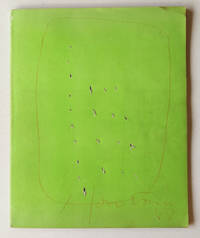
20184Nos. 1-54: cplt set all published. London Oct. 1950 - 1978. Original pictorial wrappers obl. folio later 4to.; numerous illustrations. Added: Index to volumes 1-48. Set overall in very good condition with all illustrated colourful wrappers. The important numbers all in excellent condition: No. 10 Len Deighton No. 24 Fontana 25 Brigitte Bardot cover and 3-page foldout 26 and 31 both in metallic wrappers No 40 embossed cover by Graham Percy. The set includes no. 51 in larger format tatty at spine and the rare December 1976 "blank cover" issue. Ed. by Jack Stafford John E.Blake Roger Coleman o.a.; journal of avant-garde design and the fine arts published three times per year by students of the Royal College of Art. ARK attracted international attention for its often bold and fast-changing design as well as the extraordinary cast of writers and artists who contributed to its pages including Ralph Rumney Lucio Fontana Alison and Peter Smithson Toni del Renzio and Reyner Banham in addition to College students and staff. Some numbers with lithos in colour; important for the current trends in avant-garde of the fifties and sixties of the postmodern and pop-art generation. Number 24 has the original wrap around banderolle intact laid in is on the spatial Technical manifesto by Fontana and has a green cover after a design by Fontana with handcrafted spatial holes. This issue which contains The Technical Manifesto with commentary by Lawrance Alloway and several photographs in 4 pages in excellent condition with only light soiling and a small stain in the right upper corner Note: there also exists a variant of the cover in orange with the same design; we offer the green cover only. Nos. 26 & 31 have metallic covers silver & gold both excellent condition. Essays and other contributions by Henry Moore Gordon Russell Hugh Casson Robert LemanDavid Hockney a.o. ; spine of no 20 slightly damaged and front wrapper a bit frayed; No. 25 slight soilage and faint fold in front wrapper. Number 10 incl. Ark Supplement "Dove" no. 1; added few inserts related to Ark. unknown
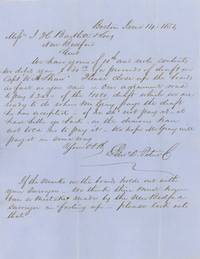
1855List3333Massachusetts New York Maine Pennsylvania and others 1855. Fifty letters with four empty envelopes or covers. Forty-four letters addressed to I.H. Bartlett & Sons: two from the 1830s eight from the 1840s and thirty-four from the 1850s. With five letters addressed to Capt. John C. Blanchard 1838 1839 1844 and 1849 and one to Cumston & Hatch N.d. Overall excellent to Near Fine. Ivory Hovey Bartlett 1794–1871 was a merchant and whale oil seller based in New Bedford Massachusetts. Bartlett moved to New Bedford from Plymouth in 1819 first dealing in grain and later transitioning to general merchandise and whaling.1 Whale oil and spermaceti were widely used in lamps and as lubricant and whalebone baleen was used for structure in items like umbrellas and corsets. In the nineteenth century whaling was the basis of New Bedford’s economy—supporting shipbuilding refineries toolworks and more—making it the wealthiest city in North America at the peak of the industry in the midcentury. Whaling declined in the 1860s with the rise of petroleum which could be both used as a lubricant and distilled into kerosene for lighting.<br /> <br /> Offered here is a collection of letters mainly to Bartlett’s company I.H. Bartlett & Sons with five to Captain John C. Blanchard of Searsport Maine and one to Cumston & Hatch. The latter is unknown; Blanchard was in the cotton and sugar trades sailing between the US Europe and West Indies.<br /> <br /> Letters to Bartlett are mainly from other mercantile firms; they pay bills make purchases discuss oil prices and occasionally complain. For instance Robert Robinson of Portland Maine writes:<br /> <br /> “I have just got 4 Casks of my oil 3 of the last and 1 of the invoice of 30th ult. I cannot understand why my oil should be keep back in this way. Hyde had seven casks by yesterdays Boat the same boat which mine came by it seem’s as if the fates where against this Oil as yesterday boat did not arrive untill late yesterday afternoon and this mornings boat has arrived without the balance there must be something wrong somewhere . I must say I think such neglect should be made known but perhaps it would be better to suffer for fear of the future. I shall not be able to get off any oil untill tomorrow as the oil was not out of the boat untill this morning. it is not thirteen days since that one cask left New Bedford .â€. October 13 1852<br /> <br /> Most of Bartlett’s customers buy whale oil though beef molasses and coal are also discussed but some are interested in whalebone; as are Wright Bros & Co a Philadelphian umbrella manufacturer who write to complain about market speculation:<br /> <br /> “The fact appears to us that speculation and the calculation of holders put the price kept it so high that it considerably lessened consumption – so much so of late that some have been disposed to slide it off below New Bedford rates very quietly.†October 23 1852<br /> <br /> The letters to all parties are generally all business except for two of the five to John Blanchard: one from his wife Caroline Houston and one from fellow Searsport captain David Nickels Jr. 1823–1888 who writes from Bangor:<br /> <br /> “I see by to day’s Mercantile gazette that you are in trouble I can sympathize with you God knows I have had a good share of it since I left the land of Gospel light and liberty as the good people say in their prayers I have been in this place fifteen days you doubtless knew I was chartered by Capt Pendleton to go from Leith to Bangor for a cargo of slates and from here to Boston I sailed from Leith on the 27th of November last for this place I got as far as the Orkney Islands on the 30th of November the wind blowing heavy from the westward and having a pilot belonging to the Orkneys on board I concluded to take the harbour of Longhope and lay till a shift of wind or till it moderated . in spite of all our endeavouring we were driven on shore broke the keel out of her filled as high as the lower deck which was on the 3d of December and on the 22d of March we left the Orkney Islands after having been near four months there When I got here I found the man who was to freight the Barque from here to Boston had neglected to place funds in the hands of the slate agent of this place consequently he refuses to put slates on board of the vessel till he receives funds from Boston .â€. May 13 1849<br /> <br /> Overall a look at the dealings of maritime merchants in the mid-nineteenth century particularly in the critical east coast whaling industry.<br /> <br /> 1 “Death of a Well-Known Merchant†The Standard-Times February 6 1871 2. unknown
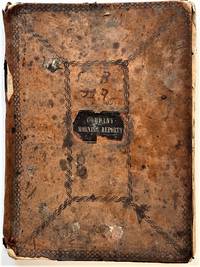
18620099951862. Book. Very Good. Leather. Signed by Authors. Folio - over 12" - 15" tall. A large Civil War archive dated 1862-1865 featuring a Company Morning Reports ledger for Company B 52nd Regiment of Indiana Volunteers with reports dated January 1862 to September 1863 and 22 separate documents including two discharge papers orders to conduct an investigation into missing medical supplies medical inventory lists travel documents orders establishing an ambulance corps manuscript letters sick and wounded reports a list of soldier's names a period newspaper clipping and an envelope. The documents Very Good Plus to Near Fine the Morning Reports book about Very Good a 2" hole to leather at spine loss of leather at spine ends and corners and hinges broken with 2 loose pages. "The 52nd Indiana Infantry was organized at Rushville and Indianapolis Indiana and mustered in for a three-year enlistment on February 1 1862. The regiment was attached to 1st Brigade 3rd Division Army of the Tennessee to March 1862. Garrison Forts Henry and Donelson Tennessee to April 1862. 1st Brigade 4th Division Army of the Tennessee to May 1862. 2nd Brigade 4th Division Army of the Tennessee to July 1862. 2nd Brigade 4th Division District of Memphis Tennessee to September 1862. Garrison Fort Pillow Tennessee to November 1862. District of Columbus Kentucky XIII Corps Department of the Tennessee to January 1863. District of Columbus Kentucky 6th Division XVI Corps to January 1864. 3rd Brigade 3rd Division XVI Corps to December 1864. 3rd Brigade 2nd Division detachment Army of the Tennessee Department of the Cumberland to February 1865. 3rd Brigade 2nd Division XVI Corps Military Division of West Mississippi to August 1865. The regiment lost a total of 205 men during service; 2 officers and 26 enlisted men killed or mortally wounded 2 officers and 175 enlisted men died of disease."Wikipedia . A fascinating collection that provides a substantial picture of the medical challenges and issues faced during the Civil War. Hardcover
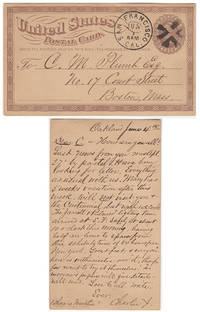
1876009587<p>The transcontinental <i>Lightning Express</i> captured the attention of the nation while transporting a theatrical troupe from New York to San Francisco in under 84 hours a record-breaking time for an opening night performance. <br /></p><p>The national excitement generated by the arrival of the <i>Lightning Express</i> in Oakland was incredible and not to be again matched until Charles Lindbergh landed the <i>Spirit of St. Louis</i> in Paris fifty years later. This grouping consists of <br /></p><p><p style="margin-left:5%; margin-right:10%;">A rare transcontinental cover franked with a 3-cent green Washington stamp Scott #158 that has been canceled with a circular postmark that reads "Jarrett - Palmer's / Special Fast Trans-Continental Train" and is dated "New York / June / 1-1876 / 12.10 A.M." It bears an oval "4 June / 1876 receiving handstamp from "E. Rass & Co. / San-Francisco". There is an advertising corner card from Leon & H. Blum New York City dry goods merchants. <br /></p><p><p style="margin-left:5%; margin-right:10%;">A postal card Scott #UX3 reporting the arrival of the Lightning Express which is dated "Oakland June 4th" and canceled with a 'circle of Vs' handstamp and a San Francisco postmark. and <br /></p><p><p style="margin-left:5%; margin-right:10%;">A newspaper clipping containing a reproduction of an original newspaper article information about the trip a map showing the location of Jarret and Palmer's Booth Theater across from Madison Square Park and a half-tone photograph of the train after it arrived in Oakland. The article was authored by Clark Kinnaird a long-time newspaper reporter who also wrote a syndicated 'history' column for the <i>New York Journal-American</i>. <br /></p><p><p>Although the envelope has no contents the text of the postal card reads in part: <br /></p><p><p style="margin-left:5%; margin-right:10%;">"Will not visit you and the Centennial but wish we could. The 'Jarrett & Palmer' lightning train arrived at S.F. Safely at about 10 o'clock this morning having half an hour to spare from their schedule time of 84 hours from New York. Great feat & everyone here is enthusiastic over it though few want to try it themselves! Tomorrow's papers will give details - will send." <br /></p><p><p>Lucious Beebe--the renowned author gourmand photographer railroad historian syndicated columnist and all-round social raconteur--vividly described the journey in his railroading classic <i>The Age of Steam <br /></i></p><p><p style="margin-left:5%; margin-right:10%;">"In 1876 . . . seven full days and nights with changes of cars at Chicago and Omaha were conventional time between New York and the Pacific Coast. When therefore a specially chartered train filled with theatrical celebrities . . . made the passage from coast to coast in the record time of eighty-four hours Americans followed the magnificently publicized event with awed enthusiasm. . . The Lightning Express was chartered by Henry Jarrett of Jarrett & Palmer managers of the Booth Theater in New York to transport the celebrated Lawrence Barrett and a distinguished supporting cast in time for the opening night of Henry V at McCullough's California Theater in San Francisco. The project instantly caught the fancy of the public and fantastic newspaper coverage was accorded the train's departure . . . over the rails of the Pennsylvania and then the Chicago & North Western--Union Pacific-Central Pacific route to California. The actors rode in ornate splendor aboard the Pullman Palace Hotel Car Marlborough while a commissary car carried appropriate food and drink and the scenery rode in a conventional baggage car. All across the continent the train's passing was the occasion for the wildest excitement and at Reno nearing the end of its run its approach was greeted with an exclamatory display of rockets and other artifices de feu. The run over the Central Pacific from Ogden to Oakland a relay of 875 miles including the High Sierra crossing was accomplished by a single engine and a single engineer Hank Small at the driver's side. No. 149 a sleek 4-4-0 achieved immortality overnight. The sooty actors weary but triumphant were met at San Francisco by Warren Leland the manager of the eye-popping Palace Hotel and taken to a breakfast of grilled salmon cucumber salad filet of Beef Bearnaise cutlets of Minden lamb escalloped veal partridges sautéed in champagne grilled Mallard duck asparagus strawberries and three kinds of eggs shirred with mushrooms and rum omelets. . ." <br /></p><p><p>That evening the night of June 4th Jarret & Palmer's <i>Henry V</i> opened on schedule in San Francisco to a sold-out house. <br /></p><p>Extremely scarce. At the time of this listing no other <i>Lightning Express</i> items are for sale in the trade. OCLC shows no institutions holding first-hand accounts of the Lightning Express nor any items or mail carried by it. Materials related to the <i>Lightning Express</i>--broadsides tickets passes stereoviews and especially carried mail--only infrequently appear at auction and they are quite expensive when they do generally bring prices between $3000 and $12000.</p> books
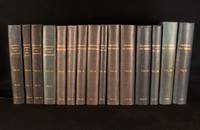
1946996H53London: Road Publications Ltd. for the Institute of Works and Highways Superintendents 1946-1959. First edition. Cloth. Very Good. 12 by 9. None Stated. An impressive mid-twentieth-century run of this very scarce leading British civil engineering periodical documenting the post-war transformation of British and international road bridge and civil engineering through authoritative weekly reporting. Uniformly bound in blue cloth.Illustrated throughout with photographs technical drawings charts and plans. Includes contemporary commercial advertisements that provide additional insight into mid-century engineering practice and materials. With the odd illustration in colour more so to later copies. An impressive near-continuous run of this leading British civil engineering periodical comprising numerous weekly journals bound together into fifteen volumes covering the period from July 1946 to December 1959. Collectively the set brings together approximately 640-650 individual journal issues based on the published issue numbering and weekly sequence. Published under the earlier title Highways Bridges & Aerodromes and later continued as Highways and Bridges and Engineering Works.Featuring technical papers project reports statistical analyses photographic plates diagrams and extensive advertising for contemporary engineering firms materials and machinery. Topics covered across the run include motorway and arterial road construction bridge design traffic planning aerodromes paving materials concrete and asphalt technology urban transport policy and major national and overseas engineering schemes and more. Compromising:Volume XIII: July 3rd 1946 No. 626 to October 15th 1947 No. 693Volume XIV: October 22nd 1947 No. 694 to May 19th 1948 No. 724 with further unnumbered issues to May 26th 1948Volume XV: June 2nd 1948 No. 726 to May 25th 1949 No. 777Volume XVI: June 2nd 1949 No. 778 to July 5th 1950 No. 835Volume XVII: July 5th 1950 No. 835 to June 13th 1951 No. 884 the first issue misprinted as Volume XVIVolume XVIII: June 29th 1951 No. 885 to June 4th 1952 No. 935Volume XIX: June 11th 1952 No. 936 to June 10th 1953 No. 987Volume XX: June 24th 1953 No. 989 to June 2nd 1954 No. 1038Volume XXI: June 9th 1954 No. 1039 to September 22nd 1954 No. 1054Volume XXII: September 29th 1954 No. 1055 to June 1st 1955 No. 1090Volume XXIII: June 8th 1955 No. 1091 to June 6th 1956 No. 1142Volume XXIV: June 13th 1956 No. 1143 to May 29th 1957 No. 1192Volume XXV: June 12th 1957 No. 1194 December 18th 1957 No. 1221Volume XXVI: January 1st 1958 No. 1222 to December 31st 1958 No. 1274Volume XXVII: January 7th 1959 to December 30th 1959 issues unnumbered Uniformly rebound in cloth. Externally generally smart. Road Research Laboratory Library stamps to the front free endpapers. Some fading to the boards most noticeable to the spines and perimeters particularly so to the later volumes; Volume 26 notably faded with heavier fading to spine and board edges. A few additional minor pale damp spots to the lower edges of the front board of Volume 13. Library bookplates to the front pastedowns of Volumes 19 21 24 25 and 27 with residue from partially removed bookplates to the final leaves of some issues. The front board of Volume 25 with a few marks and small areas of residue from unidentified sources. Slight damp staining to the boards of Volume 14 with occasional further small spots of damp staining across the set. Volume 21 with damp staining to the front board and some offsetting. Internally firmly bound. Hinges slightly strained in places from weight of volumes. Library stamps and occasional annotations to the title pages of individual issues. Slight damp staining to the upper corners of issues nos. 971987 in Volume 19 resulting in mild cockling and slight adhesion to a small number of pages. Pen inscriptions to the first leaf of Volume 25. Volume 17 misprinted as Volume 16 on the first issue with contemporary blue pencil corrections by a previous owner. One or two small closed tears to fore edges discreetly repaired with tape. Very Good Road Publications Ltd., for the Institute of Works and Highways Superintendents hardcover
1765662L12London: Various Publishers 1765-1776. First edition. Leather. Very Good Indeed. 14.5" by 9.5". None. A sammelband of prominent eighteenth century legal cases which deal with cases of bigamy adultery and murder. These four uncommon publications form the account of proceedings during trial. The first edition of all pamphlets bound together in a lovely quarter calf binding with marbled boards. These trials were all important in society at the time with several remaining of historical importance. Comprising of: The Trial of William Lord Byron Printed for Samuel Billingsley 1765 The Trial of Lawrence Earl Ferrers for the Murder of John Johnson 1760 The Whole Proceedings at Large in a Cause on an Action Brought by The Rt Hon. Richard Lord Grosvenor against His Royal Highness Henry Frederick Duke of Cumberland for Criminal Conversation with Lady Grosvenor Printed for J Wheble 1770 The Trial of Elizabeth Duchess Dowager of Kingston for Bigamy Printed for Charles Bathurst 1776 Collated 'The Trial of Lawrence Earl Ferrers for the Murder of John Johnson' has been bound without the title page. The first trial regards William Byron the fifth Baron Byron and great uncle of famed poet George Gordon Byron. This account is of his trial for murder held on Tuesday the 16th and Wednesday the 17th April 1765. He was accused of murdering his cousin and neighbour William Chatworth in a duel that began from an argument over who had the most game on their estates. During this trial he was found guilty of manslaughter as stated to the title page. The second trial regards Larence Shirley the 4th Earl Ferrers who was accused of the murder of John Johnson his steward. As a result of this trial Laurence Shirley is noted as being the last peer to be hanged in England. Shirley drunkenly shot his steward Johnson following some business conversation and verbal abuse from Shirley. The sentence to be hanged became widely publicised and the tale of a nobleman being hanged and therefore the equality of the law continued to be told for centuries. Therefore this trial is of historical note. The third trial follows Lord Grosvenor suing Prince Henry Duke of Cumberland in 1769. He was suing the younger brother of George III for his affair with his wife Lady Grosvenor. The Duke and Lady Grosvenor were caught in the act of their affair and therefore Lord Grosvenor took the Duke to court. It contains evidence verbatim from the witnesses and includes all arguments and speeches from the counsel and court. The fourth and final trial printed to this collection is Elizabeth Duchess Dowager of Kingston's trial for bigamy. Elizabeth Pierrepont was noted by her contemporaries for her adventurous life style. Her trial was a popular event and attracted 4000 spectators. Elizabeth Chudleigh secretly married Augustus Hervey in 1744. Their marriage was kept a secret so that Chudleigh could continue her position at court and so that Hervey could rejoin his ship. Chudleigh was mistress to both Frederick the Great and of Evelyn Pierrepont 2nd Duke of Kingston Upon Hull. Hervey wished to divorce Chudleigh however she did not wish to acknowledge their marriage which lead to a trial in court. Chudleigh swore she was unmarried in court which then pronounced her a spinster and free to marry. She married Pierrepont in 1769 despite the fact her marriage to Hervey was legitimate. The trial to this pamphlet is a later 1776 trial whereby Pierrepont's nephew Evelyn Meadows brought a charge of bigamy against Elizabeth in order to establish a legal rationale for challenging his uncle's will. Elizabeth was found guilty of Bigamy and was tried as a peer in Westminster Hall. A fascinating collection of legal pamphlets bound together which provide an insight into popular trials during eighteenth century society as well as a wider understanding of the legal system at this time. In a quarter calf binding with marbled boards. Externally in an excellent condition with little to no shelfwear. Internally firmly bound. Pages are bright. Occasional scattered spots and handling marks to pages. Very Good Indeed Various Publishers hardcover
Arntzen/Rainwater Q 345. - Covers British art, especially paintings from the Middle Ages on, with emphasis on the 18th and 19th centuries. A few vols.in reprint.
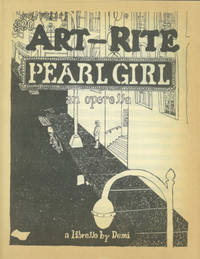
18069Nos. 1-21 all published New York 1973-1978 all original issues printed on newsprint 4to. in very good to excellent condition except for moderate mailing marks on no 3. The Number 13 Alan Suicide in the 2 versions red and black. No. 16 was never published. Edited by Edit DeAk Joshua Cohn Walter Robinson with contributions by John Harrington Edward Pursor Ela Troyano Vito Acconci Alan Kaprow Roger Welch John Howell Lucy Lippard Gordon Matta-Clark Barbara Radice Laurie Anderson John Baldessari Julian Schnabel Daniel Buren Jack Smith Sol LeWitt Al Moore Peter Frank a.o. Covers by William Wegman Richard Tuttle Robert Ryman Ed Ruscha Carl Andre and others of the seventies Conceptual and Minimal Art scene. Detail of the issues: No. 1 cover Les Levine; No. 2 William Wegman; No. 3 Richard Tuttle; No. 4 Yuri; No. 5 Christo; No. 6 Dorothea Rockburne; cover has diagonal fold as issued; No. 7 Vito Acconci; No. 8 Pat Steir with painted flowers as issued; No. 9 Robert Ryman; No. 10 Joseph Beuys; No. 11 - 12 Edward Ruscha; No. 13 2 issues with alternate Red and Black Covers by Alan Suicide and somewhat different cobtent; No. 14 Carl Andre; No. 15Rosemary Mayer; No. 17 Kim MacConnel; No. 18 Image Bank; No. 19 in collaboration with LAICA Journal Chris Burden; No. 20 Demi; No. 21 single folded sheet with Judy Rifka original cut-out drawing of Humpty Dumpty. unknown
20833Issues no. 0 and 1 - 4 all publ. Milano 1972. Alltogether 5 issues. Pictorial original wrappers as issuedthe first numbers in the form of a JOINT-cigarette. Fully illustrated in many colours. 49 x 17 cm. all issues also the zero number in exceptional good to fine condition. Published by Casa Editrice Lo Spinello. Editing: Ines Curatolo and Barnaba Fornasetti. Editor: Marcello Baraghini. Dedicated to rock'n'roll and underground culture. Issues no. 0 and 1 in the shape of a "joint". Remarkable different lay-outs photo-montages for each issue printed in colours. Contribs.: B. Fornasetti G. Cerquetti L. Vassallo. Comics by R. Crumb R. Hayes Dave Sheridan Gotlib. Interviews and articles on Zappa Santana Jimi Hendrix Miles Davis MC5 John Mc Laughlin Neil Young Jefferson Airplane Jethro Tull Rory Gallagher Bob Dylan Greateful Dead Alice Cooper a.o. Some of the contents: issue no.0 contains texts from S.I.M.A. Servizi Istituto Mass-media Art inviting to use drugs and calling for legalization; issue no. 1 contains an article on "Erotismo e rock"; issue no. 2 contains an interview with Allen Ginsberg; issue no. 3 an interview with William Burroughs; issue no. 4 contains a large interview with Pete Townshend on purple stock folding-in. unknown
16108Collection of 155 out of 164 issues published. all. London 14 Oct. 1966-Oct. 1973; <I>together with revival:</I> Vol. 2 nos. 1-3 all published under the original editors. London May/June-August 1974. Unbound folio tabloïd some issues 4to; illustrated. Collection lacks issues 12 57 69 93 108 125 134 156 159. ---Added: 22 issues published in later years. Present are: vol 3 nos 2 4; '76 issue no. Three 1977 no 5 6 8 10 11 12; vol. 4 nos 1-4 7-11; vol. 5 nos 1-5 plus 'Frivolous Summer Issue' 1980. The most important underground paper in Britain in the late sixties with caricature and satire innovatory design and art work. Founded as <I>International Times</I> but title abbreviated after threats of legal action from <I>The Times</I>. For seven years fortnightly except for occasional delays caused by police action or editorial changes. It was financed in periods by The Beatles and was central to the development of 1960's culture. Many of the most distinguished figures in the British underground press worked on <I>It</I> like: Tom McGrath John "Hoppy" Hopkins Mick Farren Roger Hutchinson David Mairowitz Peter Stansill Chris Rowley John Carding Sid Rawles Bill Dwyer John Peel. From outside Britain we find contributions by William Burroughs Allen Ginsberg Ezra Pound Alexander Trocchi Gary Snyder Norman Mailer Dick Gregory Simon Vinkenoog Kate Millett Jean Genet on the RAF previously publ. in Le Monde Claes Oldenburg a.o. The emphasis of the paper changed over the years varying from predomiantly sexual to predominantly political with a strong tendency to anarchism and with ties to the Dutch Provo Movement as well as to student-movements in France Germany and elsewhere in Europe. Also to Underground- and Anti-Vietnam-Movements in the USA. Typical topics were Living Theatre in Berlin Drugs Velvet Underground Pop Pirates Cannabis is Legal Jimi Hendrix Watergate Vietnam War Berlin Punk and interviews with Rudi Dutschke Fritz Teufel John Lennon & Yoko Ono Frank Zappa Bob Dylon. unknown
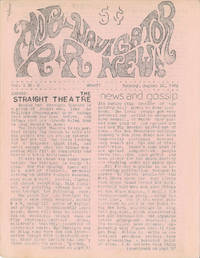
18601Nos. 1-14 all published also numbered as Vol. 1 no. 1 - Vol. 2 no 2 . San Francisco August 81966-August 1967. Mimeographed sheets in different colour and b/w printing on both sides the last two issues printed offset no. 9 and the last number with one colour added. Stapled in left upper corner only no.2 has been re-stapledothers are all original staples. First issue is in colour photocopy rest is in original issues as published excellent condition and clean. ADDED: - a multicoloured psychedelic drawing unsigned by Geoff Evans - three other related ephemeral pieces detail see below. The legendary "Mojo-Navigator Rock & Roll News" was a music zine by Greg Shaw and David Harris. MOJO was one of the earliest and most important music zines major news source for counterculture and alternative music in San Francisco. It ran for 14 issues and was a precursor to landmark rock magazines. Considered to be the precursor to later alternative journalism Crawdaddy and Rolling Stone and later fanzines. Issues between 3 and 34 pages and have become very rare now. The first issue was published August 8 1966 as a mimeographed newssheet of two pages with concert announcements at the Matrix Fillmore and Avalon. This issue in colour facsimile. ALL OTHERS ARE ORIGINAL FIRST PRINTS -No. 2 August 16 featured news of The Straight Theatre and Jim Gurley local musician from the band Big Brother & The Holding Co. -No. 3 August 23 is three sheets with news of SF Oracle launch band news rumours and gossip and record reviews Bob Dyland etc -No. 4 August 30 is now four sheets and is mainly devoted to an interview with the Grateful Dead plus a feature on Country Joe & The Fish by Greg Shaw. -No. 5 September 7 is given over to the second half of The Grateful Dead interview and a response to the SF Oracle's unsympathetic article on the SF rock scene. - No. 6 September 18 is three sheets reporting on record releases New York radio and upcoming concerts. Report of the publication of "The I.D. Band Book"; news that "the Velvet Underground has released a lousy single on Verve Records - Andy Warhol produced it Nico sings hah-hah on it. It's the musical equivalent of a painted Brillo box which sells for $400"; a report on NY radio; record reviews incl. "Sunshine Superman"; upcoming dates by The Byrds Grateful Dead etc. -No. 7 September 27 is four sheets and features an interview with SF DJ Tommy Saunders and Big Brother & The Holding Co. plus ads for upcoming concerts by Country Joe & The Fish Takoma and Freedom Highway. -No. 8 October 1966 is six mimeo'd sheets and features an interview with Janis Joplin and Big Brother & The Holding Co. plus news on The Doors a review of The Seeds and a full page ad "A Prophecy Of A Declaration Of Independence" for the "Love-Pageant" rally in the Haight-Ashbury a psychedelic celebration held on Oct. 6 to coincide with the outlawing of LSD and incl. Big Brother the Dead and Ken Kesey with his Prankster bus. - No. 9 October 17 is six sheets and features a Jim Kweskin interview Dootone Records new events and an original Stanley Mouse handbill announcing The Daily Flash with Country Joe & The Fish at the Avalon stapled in as last page.scarcer yellow and grey colour variant. Mick Jagger photo front cover. 3pp. Jim Kweskin interview; Dootone Records; news reviews gossip events. - No. 10 November 8 is nine sheets plus a printed photo cover. It incorporates an two colour Tom Weller handbill for Country Joe & The Fish at the Jabberworck and a two colour Steve Renick-designed handbill for the 13th Floor Elevators and Moby Grape at the Avalon and a photo of Jerry Garcia. Also featured was an interview with The Mystery Trend and news of Bill Graham banning Mojo-Navigator editor Dave Harris from The Fillmore.terming the paper "a rag" and screaming "I'm not mad you are beneath my anger"; full-page Stanley Mouse ad. for Big Brother & The Holding Co.'s first single on Mainstream Records; Jerry Garcia photo; record reviews - No. 11 November 22 is seven sheets and has part two of The Mystery Trend interview and an interview with Country Joe & The Fish who are also on the cover plus a two colour Tom Weller-designed handbill for the band's upcoming show at the Jabberworck. As well a photo of Bob Weir and an Victor Moscoso-designed handill for Country Joe & The Fish Bug Brother & The Holding Co and Quicksilver Messenger Service at the Avalon plus letters about the riot on Sunset Stripthe police heavy handedness and the differences between the scenes in LA and SF. Correspondence between Bill Graham and Chet Helms; photo of Bob Weir - No. 12 December 22 is eight sheets with a printed photo cover of Ed Saunders incorporating two Victor Moscoso-designed colour handbills with The Grateful Dead and Moby Grape at he Avalon and Country Joe & The Fish at the California Hall. Featured ar ethe conclusions of the Country Joe & The Fish and The Mystery Trends interviews and the article "The British Blues Scene" by David Harris. -No. 13 April 1967 is 30 page black and white printed with cover photo of James Gurley from Big Brother & The Holding Co. Featured is a Blues Magoos interview reviews by Greg Shaw and Gene Sculatti editorial on the ris of new rock criticism Mike Daly on Phil Spector Rick Griffin psychedelic artwork incorporating a photo by Gene Anthony of The Grateful Dead. - - No. 14 August 1967 is 38 pages with cover photo of Jimi Hendrix and an interview with The Doors coverage of the Monterey festival article of Eric Clapton record reviews news and a Tom Weller designed psychedelic ad for Country Joe & The Fish. ADDED MATERIAL: 1 an original multi-coloured psychedelic drawing entitled "The Mojo Navigator" 27.5x21.5cm. uncredited but probably by the magazine's artist Geoff Evans who hand-drew similar artwork on denim jackets worn by the editors; 2 a small card with a hand-drawn design by Greg Shaw in purple and green possibly an early idea for the magazine's logo stamped with his San Bruno address thus pre-dating the first issue; 3 an early Mojo-Navigator flyer featuring a b/w cartoon Crime/Justice 4 a vintage 10x8 b/w photo of Brian Jones onstage in Cincinnati 1965 sporting the look that Greg Shaw sought successfully to emulate caption to verso written out in Shaw's hand. unknown