VariousBiblio.com
219 080 résultats
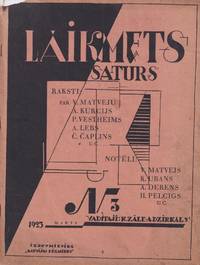
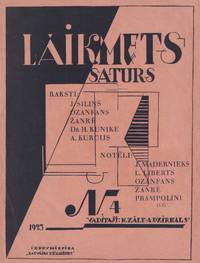
55505Berlin: IzdevniecÄ«ba "Latvijas telnieks" 1923. Quarto 28.5 × 21.5 cm. Original staple-stitched pictorial wrappers on light orange stock; 2 75-94 2 pp. Eighteen black and white reproductions including several full-page plates; printed on good paper stock. Wrappers with repair to spine fold; the original staples removed; paper lightly wavy to edges; else internally about very good. Single issue of this exceedingly uncommon yet highly important Latvian avant-garde journal published in Berlin which stands as one of the key documents on the Latvian avant-garde and a testament to the Latvian contribution to the dynamic international art world of 1920s Berlin. With four issues published from January to April 1923 the journal was edited by Karlis Zale also known as Zalite and Zalit; 1888-1942 and Arnolds Dzirkals 1896-1944. Zale was a Latvian sculptor who lived and studied in Moscow and worked in Berlin from 1921-23 before returning to Latvia. Both Zale and Dzirkals were part of the international community of avantgardists active in Berlin in the early 1920s which included Kandinsky El Lissitzky Puni and Archipenko among others: "in Berlin finden sich Anfang der zwanziger Jahre häufig lettische Künstler ein um sich an den dortigen Kunstaustellungen zu beteiligen . und um Gemeinschaftsausstellungen mit verschiedenen deutschen Avantgarde-Gruppen zu veranstalten zum Beispiel die "Rigaer Künstlergruppe" mit der "Novembergruppe". . Der Bildhauer Karlis Zale . der sich als Teilnehmer der ersten Ausstellung russischer Avantgarde-Kunst in der Van Diemen Galerie in Berlin aufhält. gründete die lettischsprachige Zeitschrift für Avantgarde-Kunst "Laikmets" Nr. 1-4/1923. Fast alle weltweit bedeutenden Künstler und Kunsttheoretiker die der synthetischen Avantgarde zuzurechnen sind wirkten daran mit. Bereits 1922 verteidigte Karlis Zale gemeinsam mit Jaan Ivan Puni diese Kunstkonzeption gegenüber den Vertretern der analytischen Avantgarde auf dem ersten und vorerst einzigen Weltkongreß der Avantgarde-Kunst in Düsseldorf" Baltinavietis 13. <br /> <br /> The issues all features the same accomplished Constructivist wrapper illustration as well as occasional smaller vignettes throughout most likely by Konrad Ubans 1893-1981 later known as a Latvian painter of the Academy. This issue contains articles on and reproductions of work by Ludolfs Liberts JÄnis Siliņš Ozenfant Ivan Puni Constructivist sculpture Julijs Madernieks Vinicio Paladini as well as a poem by A. Kurcijs the leftist art critic who had authored a Cubist manifesto the same year. <br /> <br /> As of January 2026 KVK OCLC only show one complete run in North America. Not held by the Berlin State Library. unknown
55504Berlin: Izdevniecība "Latvijas telnieks" 1923. Quarto 28.5 × 21.5 cm. Original staple-stitched pictorial wrappers on light orange stock; 2 51-69 3 pp. Nineteen reproductions including several full-page plates; printed on good paper stock. Wrappers somewhat soiled with chipping to upper left corner also affecting block; staples renewed; leaves somewhat wavy from old moisture damage; else internally clean and about very good. Single issue of this exceedingly uncommon yet highly important Latvian avant-garde journal published in Berlin which stands as one of the key documents on the Latvian avant-garde and a testament to the Latvian contribution to the dynamic international art world of 1920s Berlin. With four issues published from January to April 1923 the journal was edited by Karlis Zale also known as Zalite and Zalit; 1888-1942 and Arnolds Dzirkals 1896-1944. Zale was a Latvian sculptor who lived and studied in Moscow and worked in Berlin from 1921-23 before returning to Latvia. Both Zale and Dzirkals were part of the international community of avantgardists active in Berlin in the early 1920s which included Kandinsky El Lissitzky Puni and Archipenko among others: "in Berlin finden sich Anfang der zwanziger Jahre häufig lettische Künstler ein um sich an den dortigen Kunstaustellungen zu beteiligen . und um Gemeinschaftsausstellungen mit verschiedenen deutschen Avantgarde-Gruppen zu veranstalten zum Beispiel die "Rigaer Künstlergruppe" mit der "Novembergruppe". . Der Bildhauer Karlis Zale . der sich als Teilnehmer der ersten Ausstellung russischer Avantgarde-Kunst in der Van Diemen Galerie in Berlin aufhält. gründete die lettischsprachige Zeitschrift für Avantgarde-Kunst "Laikmets" Nr. 1-4/1923. Fast alle weltweit bedeutenden Künstler und Kunsttheoretiker die der synthetischen Avantgarde zuzurechnen sind wirkten daran mit. Bereits 1922 verteidigte Karlis Zale gemeinsam mit Jaan Ivan Puni diese Kunstkonzeption gegenüber den Vertretern der analytischen Avantgarde auf dem ersten und vorerst einzigen Weltkongreß der Avantgarde-Kunst in Düsseldorf" Baltinavietis 13. <br /> <br /> The issues all features the same accomplished Constructivist wrapper illustration as well as occasional smaller vignettes throughout most likely by Konrad Ubans 1893-1981 later known as a Latvian painter of the Academy. This issue contains articles on and reproductions of work by Voldemars Matvejs Hans Poelzig André Derain Konrad Ubans and Moise Kisling; Andrejs Kurcijs's text "Activism and Kantianism" an article on Charlie Chaplin and American film and reviews of books and exhibitions.<br /> <br /> As of January 2026 KVK OCLC only show one holding in the Netherlands and one complete run in North America. Not held by the Berlin State Library. unknown
1917001027San Francisco California: Standard Oil Company 1917 Standard Oil Bulletin Cover Art Illustration Inclusive of front/rear cover of magazine interior verso advertising and two select bi-sided advertising leaves at rear of each volume ONLY Volume I January 1917-June 1920 Volume II July 1920-December 1922 ending in December 1923; missing January 1923-November 1923. Cover Artists: McNeill Von Schmidt Dixon Delappe Starr Kelly and more. Description: Two volume set 'CUSTOM' dark brown leather hardbounds gilt title/dates of publication on spine cover. Dimensions: 10 1/8" x 7 1/8" x 3/4" each volume. Condition: Fine-Near Fine; 1/2" x 3/4" tear on first cover at lower right bottom; see image #4. IMPORTANT NOTE: NOT COMPLETE ISSUES; NO INTERIOR CONTENTS OUTSIDE OF SPECIFICALLY DETAILED INFORMATION. ARTIST/ILLUSTRATOR/PERIOD/# of COVER ILLUSTRATIONS- Raymond Bannister/20th Cent/3 Wesley Raymond De Lappe/1887-1952/17 Maynard Dixon/1875-1946/3 Clarence Keiser Hinkle/1880-1960/1 Robert Ryland Kearfott/1890-1969/ 7 George William Kegg/1884-1940/1 John Melville Kelly/1879-1962/6 Maurice George Logan/1886-1977/2 Stanley McNeill/20th Cent/16 Harold Von Schmidt/1893-1982/12 Judson Lewis Starr/1890-1960/1 Unsigned/20th Cent/2. Illus. by Various. 4to - over 9¾ - 12" tall. 1st Edition. Hardcover. Fine. Standard Oil Company hardcover
1822SET26-E-1London : John Murray 1822-1832. Leather. Very Good. 8.5" by 5.5". None. A scarce run - spanning one decade - of this literary and political periodical founded in 1809. Comprising: Volumes 26 October and January 1821-22 to 47 March and July 1832 lacking only Volume 40 May-June 1829. With political literary historical and topical articles concerning for instance the slave trade Australia discoveries in Africa cholera the poor laws universities and canals railways and locomotive steam engines. There is a fold-out 'Scale Shewing the Linear Proportion of the Different Branches of Public Expenditure for the Year 1825' to Volume 35. In decorative half calf bindings with marbled boards. Externally slightly rubbed to extremities with occasional wear to spines. Small label to rear board of Volume 28. Fifteen joints starting but firm with two joints cracked. Internally firmly bound. The front free-endpaper of Volume 28 is coming away. Remarkably bright with intermittent light foxing and the odd mark. Around one-third of the volumes have just occasional light foxing prominent to the first and last few pages. Very Good John Murray hardcover
177542903ABMannheim, 1775. Gr.-4°. 10 nn. Bll., 344 S., 12 nn. Bll., 368 S., 22 nn. Bll. 1 Kopfvignette, 4 von 5 Taf. u. 18 gef. Tabellen. Neu. Halbleder. Neuer Rücken, Ecken u. Deckel ber. u. best. Gebr. u. stockfl., einige S. u. Tab. etw. wasserrandig, neue Vorsatzbll., 1 Tab. stark stockfl. u. Textverlust. Sehr selten.
Due volumi di cm. 35, pp. 400 ca. complessive. Con moltissime illustrazioni a colori nel testo. Legatura editoriale in tela nera con titoli in oro ed illustrazioni a colori applicate. Entro custodie originali in tela. Esemplare fresco ed in eccellente stato di conservazione. Si tratta della più celebre pubblicazione dell'editore Franco Maria Ricci. L'opera riproduce la visionaria composizione artistico-poetica di Luigi Serafini. Edizione a tiratura limitata (n. 1889), numerata e firmata dall'autore.
1878041826John Wilson and Son 1878-01-01. Paperback. Acceptable. Front cover which is loose says "S. Austin Allibone LL.D. from Robert C. Winthrop." Book is in poor condition; Picture upon request. John Wilson and Son paperback
Sono disponibili i volumi dal I al XVIII (escluso il V). Su richiesta ri forniscono informazioni dettagliate sull’opera. Offerta speciale, i 18 voll escluso il V.
164812BBStettin, G. Götzke für J. Mamphras, 1648. 4° Mit gestochenem Titel, (26 Bl.), 594 S., (5 Bl.). Pergamentband der Zeit mit handschriftlichem Rückentitel.
Primo saggio di un nuovo carattere della Officina Bodoni detto Zeno, stampato nel torchio in 50 copie, Reginetta di Valdonega, Verona. Come nuovo, legatura cartonata originale con etichetta titolo applicata al piatto ed al dorso. Molto raro
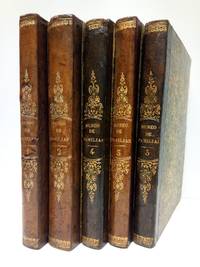
183847654PRIMERA EDICION.- Barcelona: Imp. de A. Bergnes 1838-1841.- 5 VOLS. 3 h. 384 p.; 511 p.; 382 p. 1 h.; 384 p.; 383 p.: Ilustrado con grabados en madera intercalados en el texto algunos a toda plana; 4º 24 x 17 cm; Impresión a dos columnas; Enc. original de la época en Media Piel lomo liso dorado.- RARO. La encuadernación con normales señales del tiempo. El Tomo 4º con una pequeña restauración en la cabeza del lomo. Con dispersas señales de oxidación en general que no afectan a la firmeza y textura del papel. Ejemplar en un muy aceptable estado. Esta revista empezó llamándose El Museo de Familias en sus dos primeros tomos. A partir del tomo tercero hasta el quinto se denmomino como El Museo de Familias o Revista Universal. LITERATURA Y FILOSOFÃA ESPAÑOLAS DE LOS SIGLOS XIX-XXI Y SU HISTORIA EN GENERAL Libro en español El Museo de Familias hardcover
Z1-C-078-01445Portikus. Used - Good. Ships from UK in 48 hours or less usually same day. Your purchase helps support Sri Lankan Children's Charity 'The Rainbow Centre'. Ex-library so some stamps and wear but in good overall condition. 100% money back guarantee. We are a world class secondhand bookstore based in Hertfordshire United Kingdom and specialize in high quality textbooks across an enormous variety of subjects. We aim to provide a vast range of textbooks rare and collectible books at a great price. Our donations to The Rainbow Centre have helped provide an education and a safe haven to hundreds of children who live in appalling conditions. We provide a 100% money back guarantee and are dedicated to providing our customers with the highest standards of service in the bookselling industry. Portikus unknown
Ohleder. 3 Kupfer, Frontispiz und 2 gefaltete Kupfer mit physikalischen Abildungen., , Einband etwas berieben und bestossen,, sonst in gutem Zustand., ., [OSB18,5].
1815EXP1-G-7London: Ordered by the House of Commons 1815. Leather. Very Good. 13" by 8". None. A collection of the reports of 1815 and 1816 on the reformation of mental asylums of England in the nineteenth century. Containing the first report ordered to be printed 25 May 1815 the second report 2nd June 1815 the third report 12th June 1815 the fourth report 26th June 1815 the first report of 1816 26th April 1816 and the third report of 1816 11th June 1816. Bound from the parts. This was an important investigation into the treatment of patients in psychiatric institutions bringing the distressing conditions to public attention and marking a revolution in the treatment of the mentally ill in the country. Illustrated with ten engraved plates seven of which are folding Rebound in half-calf. Externally smart with just a few marks. Internally firmly bound. Pages have some faint marginal tidemarks and just the odd spot. Tidemarks to the plates. No title page present. Very Good Ordered by the House of Commons hardcover
- Chez Jean Daniel Beman, à Rotterdam 1737, petit in-8 (9,5x15,5cm), (1p. tit.) 338pp. ; 96pp., relié. - Deuxième édition en partie originale, rare. L'originale a paru à Paris en 1723, l'auteur insatisfait de son travail proposa cette seconde édition revue et augmentée d'une seconde partie, Suplémant au projet de taille tarifée, dans laquelle il répond aux objections de ses détracteurs. Reliure en pleine basane brune mouchetée de l'époque. Dos à cinq nerfs richement orné de caissons et fleurons dorés, pièce de titre de maroquin blond. Roulettes dorées sur les coupes et les coiffes. Toutes tranches mouchetées rouges. Coiffe de tête élimée, premier nerf très légèrement apparent à la jointure, un petit travail de vers affectant le dernier caisson ainsi que le mors de queue du plat inférieur. Important ouvrage dans lequel l'auteur expose l'idée novatrice d'un système fiscal censé à la fois endiguer la mendicité et enrichir l'Etat et les particuliers. Les théories développées par Castel dans ce texte constituent une première approche des solutions qui seront mises en oeuvres par les physiocrates sous le ministère Turgot. L'orthographe du volume est très surprenante : elle reflète les conceptions révolutionnaires de l'abbé qui souhaitait réformer phonétiquement l'orthographe française. [ENGLISH DESCRIPTION ON DEMAND]
- Chez Chatelain, à Amsterdam 1757, in-12 (9,5x16cm), (1 f. de faux tit.) (1f. tit.) (2f. édit.) xxxviij 244p. xxiv, relié. - First edition, rare. Published with initials only, masking the identity of Chevalier Ange Goudar. Manuscript ex libris 'Daumas' to ffep. Contemporary sheep, spine in six compartments with gilt fleurons as well as a red titlepiece (partly faded). Significant repairs to joints, speckled edges. This plan for peace in Europe by the economist and philosopher Ange Goudar lays out the origins and impact of conflicts on European nations, putting the emphasis on their economic consequences. The author then proposes a European entente and a supranational army that would punish any country that engaged in warfare, making the point that the blessings of peace first and foremost result from a change in behavior and that European nations therefore needed to experience a period of peace in order to understand its benefits fully. [FRENCH VERSION FOLLOWS] Edition originale, rare, parue sous initialisme dissimulant l'identité du chevalier Ange Goudar. Ex-libris manuscrit Daumas sur la première garde. Reliure de l'époque en pleine basane. Dos à cinq nerfs orné de fleurons dorés ainsi que d'une pièce de titre rouge en partie passée. Importantes restaurations au niveau des mors. Toutes tranches mouchées. Ce projet pour la paix en Europe de l'économiste et philosophe Ange Goudar établit les origines des conflits et leur impact sur les nations européennes, en metttant l'accent sur les conséquences économiques. L'auteur propose une entente européenne et une armée supranationale sanctionant toute nation qui s'engagerait dans la guerre, préconisant que les bénéfices de la paix sont d'abord une question d'habitudes et que les nations européennes doivent connaître une période de paix pour en comprendre tous les bénéfices.
- Typis Jacobi Collombat (Jacob Collombat), LutetiaParisiorum [Paris] 1724 - 1726, in-4 (19,5x26cm), xlv (17) 632pp. et cj (15) 767pp. (1), 2 volumes reliés. - Édition originale, rare, des deux tomes parus respectivement en 1724 et 1726. Elle est illustrée de 2 vignettes en-tête, 8 pages de partitions musicales, un arbre cabalistique hors-texte, l'Alphabet Samaritain, 2 planches de monnaies et 2 figures également hors-texte. Exemplaire aux armes frappées sur les plats et au sein de chaque caisson de la bibliothèque de l'abbaye Saint-Victor. L'abbaye Saint-Victor fut l'une des plus anciennes abbayes de Paris (à l'emplacement de l'université de Jussieu et du Jardin des Plantes) et l'un des grands foyers intellectuels de l'occident médiéval, sa riche bibliothèque fut ouverte au public au XVIIIème avec l'ajout de nouveaux bâtiments. L'abbaye fut détruite à la Révolution et l'essentiel de ses collections rejoignirent la Bibliothèque nationale. Reliures de l'époque en plein veau blond glacé. Dos à nerfs ornés. Pièces de titre en maroquin rouge, tomaisons frottées, ainsi que l'étiquette de bibliothèque en queue. Coiffe de tête du tome I élimée avec mors supérieur fendus en tête. Un manque en tête du tome II ; mors supérieur dénudé avec un manque en queue. Quelques coins émoussés. Malgré les défauts, exemplaire très appréciable, aux fers fins et aux belles armes. Étude de Dom Guarin, bénédictin, qui exhorte dans sa préface les religieux à la connaissance de la Sainte écriture pour entendre parfaitement ses messages. Le premier tome contient la grammaire hébraïque et la première partie de la syntaxe, le second étudie la syntaxe figurée de l'hébreu (véritable rhétorique de l'écriture sainte). Une ample dissertation suit sur divers sujets concernant les Hébreux, leur poésie, les accents, l'arithmétique, leur calendrier ; on y trouve en outre des traités de la cabale et du Talmud et plusieurs tableaux de mots chaldéens et hébraïques. Guarin continua ses études sur cette langue en faisant paraître un dictionnaire de la langue hébraïque et chaldaïque en 1747, mais sa mort ne lui permit pas d'achever cet ouvrage qui fut poursuivi par d'autres savants. [ENGLISH DESCRIPTION ON DEMAND]
- De l'Imprimerie de Guillaume Desprez, à Paris 1770, in-4 (21,5x28cm), (4) 276pp. (2) xxiij, relié. - Nouvelle édition, rare, en partie originale et la plus complète parue, car revue et augmentée jusqu'à 1770. L'ouvrage est illustré de deux portraits, le premier - non signé - d'Armand-Jérôme Bignon, le prévôt des marchands, le second du colonel Augustin-Eugène Hay par Lambert. 43 planches gravées sur cuivre in-fine représentant des officiers ; la troisième n'a jamais été gravée, la première est rehaussée à la main à l'aquarelle. Certains exemplaires, fort rares, ont été imprimés in-folio et possèdent des planches coloriées. Reliure en plein veau blond moucheté d'époque. Dos à cinq nerfs orné de caissons et fleurons dorés, ainsi que d'une pièce de titre de maroquin rouge. Plats aux armes de la ville de Paris. Toutes tranches rouges. Infimes frottements. Quelques rousseurs affectant principalement les premiers feuillets. Une page de faux-titre manquante avant « Instruction ou Ecole du soldat ». Très bel exemplaire. Recueil établi par deux colonels de la garde de la ville successifs. François Drouart fit paraître l'édition originale en 1658, et Augustin-Eugène Hay publia en 1770 la présente édition complétée d'ajouts concernant le siècle écoulé et augmentée d'un traité illustré, Instruction ou Ecole du soldat. L'appendice contient une description de la garde de Paris et des nouveaux uniformes. [ENGLISH DESCRIPTION ON DEMAND]
- chez Jean Thioly, à Lyon 1669, in-12 (8,3x14,1cm), (8) 198pp. (2), relié. - Rare édition originale bien complète de son plan dépliant. Reliure de l'époque en pleine basane brune, dos à quatre nerfs orné de caissons et fleurons dorés, toutes tranches mouchetées de rouge. Un petit travail de vers au mors de tête du premier plat, petits manques de cuir sur la coupe et le coin de queue du plat inférieur, quelques frottements sur la reliure. Quelques rousseurs et mouillures sans gravité. Ex-libris de l'époque à la plume sur le premier contreplat et la page de titre. Il est stipulé que ce journal fut écrit par un des 500 volontaires qui composèrent l'expédition commandée par François d'Aubusson, duc de La Feuillade, dans le but d'aider la république de Venise à contenir l'assaut des turcs contre la Crête. Cette expédition fut entreprise sous le seul chef de La Feuillade qui fut aidé par le pape Clément IX. La Feuillade s'était auparavant distingué au combat de Saint-Gothart contre les Turcs, il sera fait plus tard maréchal de France et vice-roi de Sicile. C'est à lui que l'on doit la statue de Louis XIV sur la place des victoires, pour lequel il éprouvait une réelle admiration. [ENGLISH DESCRIPTION ON DEMAND]
19823950CBGraz, Akademische Verlagsanstalt, 1982. 4°. (2) l. Bl., 105 Bl., 3 l. Bl. mit Textillustr. nach Tuschzeichnungen; Kommentar: 108 S., 4 Bl. Roter Orig.-Lederband in solidem Pappschuber.
179030433BB3 Bände. Leipzig, Weidmann, 1790. Gross-8°. VIII, 324 S.; VI, 314 S.; IV, 372 S. Halblederbände der Zeit mit blindgeprägten Rückenschildern.
179030433BBLeipzig, Weidmann, 1790. Gross-8°. VIII, 324 S.; VI, 314 S.; IV, 372 S. Halblederbände der Zeit mit blindgeprägten Rückenschildern. 3 Bände.
200039709Cambridge: Cambridge University press 2000. A beautiful set of the year 2000 reprint of the original 1985 publication. 2 volumes have a small light mark to closed pages and the dust wrappers are ever so slightly bumped to top and bottom edges else immaculate. 3rd Reprint. Hard. Near Mint/Near Mint. 8vo. Cambridge University press Hardcover
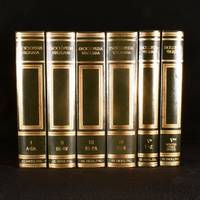
844A68Roma : Istituto della Enciclopedia Italiana 1984-90. Leather. Fine. 11" by 8". Not Stated . A beautiful six-volume large paper edition of this comprehensive Virgilian Encyclopaedia in the original Italian a scarce work. Complete in six volumes. A scarce work rarely seen on the market.A beautiful comprehensive encyclopaedic study dedicated to the work and times of Publio Virgilio Marone Virgil covering subjects from A to Z. In the original Italian language. Published by the Istituto della Enciclopedia Italiana founded by Giovanni Treccani former Senator of Italy and famous publisher of the Enciclopedia Italiana di scienze lettere ed arti and of the Dizionario Biografico degli Italiani.A great guide to the critical-hermeneutic study of the work of Virgil as well as a support to extend the knowledge of his world. Volume VI contains an extensive Index. In the original publisher's striking quarter morocco bindings. Each volume illustrated with numerous black and white illustrations in text as well as lovely colourful plates. With fifty-two full page plates to vol. I; sixty to vol. II; sixty-four to vol. III; sixty-four to vol. IV; forty-four to vol. V; forty-eight to vol. VI with five coloured maps to rear. Collated complete. In the original publisher's uniform quarter morocco bindings over cloth covered boards. Externally lovely. Internally firmly bound. Pages bright and clean. Fine Istituto della Enciclopedia Italiana hardcover
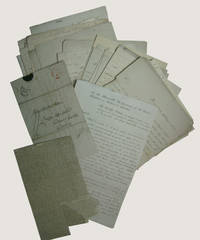
181958631819 - 1833. 1819. Collection of 53 manuscript letters detailing the construction of the Byers Green Branch Line in County Durham including copies of petitions dating from 1819 and 1825 and the Engineer's Report of 1819. Of these 28 are addressed to Robert Surtees while most of the others are addressed to Dear Sir without a given name and given the consistent content Robert Surtees appears to have been the recipient. Also with 4 related contemporary newspaper clippings. Various sizes from 12mo to foolscap the majority standard octavo and various lengths the majority 1 or 2 pp. Various hands all legible. The Byers Green Branch of the Clarence Railway Co. was proposed to best develop a reliable means of connecting the South West Durham Coalfield with the River Tees. Two letters in this collection 6th March 1829 and 13th June 1830 are from Christopher Tennant of the Clarence Railway Company a Stockton resident Tennant paid for the expenses of George Leather in 1819 to survey a canal to compete with the Rivers Tyne and Wear making the Tees a major exporter of coal; plans were later adapted to promote a railway instead of the canal and the Clarence Railway Company was the result. Robert Surtees opposed the construction of the branch railway as it affected part of his estate at Mainsforth; in common with Lord Londonderry and the Stockton and Darlington Railway Company. Each were active in attempting to obstruct and prevent its construction and the letters here are concerned with their concerted campaign. There had been antagonism between the Stockton and Darlington Railway Company and the Clarence Railway Company dating back to the foundation of the latter in 1818 owing to conflicting business interests in County Durham. Several of the letters are from the Stockton and Darlington Railway Company's legal representative Francis Mewburn of Darlington who saw the Bill for the creation of the Stockton and Darlington Railway through parliament and in spite of the considerable opposition financial difficulties and court cases the branch opened in 1836. Mewburn is notable for being the very first railway solicitor also acting for the firm of Stephenson Pease and Mewburn. Robert Surtees 1779-1834 of Mainsforth in County Durham is best known as an author historian and antiquarian who regularly corresponded with Sir Walter Scott; the Surtees Society was founded in his memory and many publications of local historical manuscripts have resulted since its foundation. A unique archive of letters providing an insight into the commercial political financial and engineering hurdles required in the establishment of a coal carrying railway during the heady early days of industrial expansion in the Durham Coalfield. ODNB. 1819 - 1833. hardcover