DAILY NATIONAL INTELLIGENCERBiblio.com
225 résultats
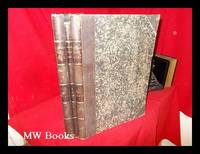
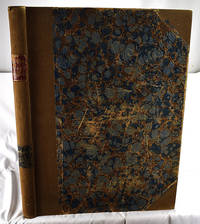
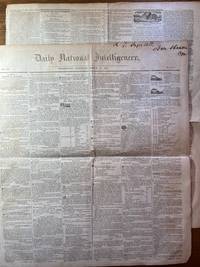
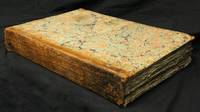
182322153.02<p><b>DAILY NATIONAL INTELLIGENCER.</b>Bound Volume <i>Daily National Intelligencer</i> Washington D.C. January 1 to December 31 1823. Approximately 312 issues including one 4 pp. The only issues lacking are December 2 and December 3 the days pertaining to the Monroe Doctrine. </p><b>An issue of note </b>May 30 1823 reports on the <b>First Intersectional Horse Race</b> which took place on May 27 1823. <i>Eclipse</i> represented the North and <i>Henry</i> represented the South. <i>"The third heat won also by eclipse by four lengths- and of course he took the purse of 40000 dollars. It was a tight race certainly and must have afforded the highest degree of interest to those who witnessed it."</i><p><b>Historical Background</b></p><p>The <i>Daily National Intelligencer</i> was founded as the <i>National Intelligencer and Washington Advertiser</i> by Samuel Harrison Smith in 1800. The paper became the tri-weekly <i>National Intelligencer</i> in 1810 and became the <i>Daily</i>in 1813. In its early years it served as the voice of the Jefferson Madison Monroe and J. Q. Adams administrations. Its editors Joseph Gales Jr. and William W. Seaton were well known and associated with the <i>National Intelligencer</i> from 1813 until its demise in 1869. The <i>Intelligencer</i> served as the voice of the federal government until the election of Andrew Jackson when it switched to the Whig party. The <i>Intelligencer</i>was primarily a political newspaper though it did move sometimes between being "friendly" to administrations and taking a more neutral approach. Like most political newspapers in the partisan press period the <i>Intelligencer</i> always relied heavily on lucrative Congressional printing contracts for its financial support. The paper was noted for its full coverage of Congress and other government information including proclamations notices and advertisements. Seaton and Gales employed shorthand reporters including themselves occasionally to take down verbatim reports of Congressional debates and speeches. Because of its depth of political coverage the <i>Intelligencer</i>was one of the more popular exchange newspapers during the early part of the 19th century. Many other newspapers took their coverage of national politics and government directly from the <i>Intelligencer.</i></p><p><b>Condition</b></p><p>Original marbleized paper covers and leather spine. Spine in poor condition separated from many of the bound issues. "Com Ins Co Salem Mas" written in ink on the first page of each issue. Bookplates of the Essex Institute on inside of front cover.</p> hardcover
182322153.02<p><b>DAILY NATIONAL INTELLIGENCER.</b>Bound Volume <i>Daily National Intelligencer</i> Washington D.C. January 1 to December 31 1823. Approximately 312 issues including one 4 pp. The only issues lacking are December 2 and December 3 the days pertaining to the Monroe Doctrine. </p><b>An issue of note </b>May 30 1823 reports on the <b>First Intersectional Horse Race</b> which took place on May 27 1823. <i>Eclipse</i> represented the North and <i>Henry</i> represented the South. <i>"The third heat won also by eclipse by four lengths- and of course he took the purse of 40000 dollars. It was a tight race certainly and must have afforded the highest degree of interest to those who witnessed it."</i><p><b>Historical Background</b></p><p>The <i>Daily National Intelligencer</i> was founded as the <i>National Intelligencer and Washington Advertiser</i> by Samuel Harrison Smith in 1800. The paper became the tri-weekly <i>National Intelligencer</i> in 1810 and became the <i>Daily</i>in 1813. In its early years it served as the voice of the Jefferson Madison Monroe and J. Q. Adams administrations. Its editors Joseph Gales Jr. and William W. Seaton were well known and associated with the <i>National Intelligencer</i> from 1813 until its demise in 1869. The <i>Intelligencer</i> served as the voice of the federal government until the election of Andrew Jackson when it switched to the Whig party. The <i>Intelligencer</i>was primarily a political newspaper though it did move sometimes between being "friendly" to administrations and taking a more neutral approach. Like most political newspapers in the partisan press period the <i>Intelligencer</i> always relied heavily on lucrative Congressional printing contracts for its financial support. The paper was noted for its full coverage of Congress and other government information including proclamations notices and advertisements. Seaton and Gales employed shorthand reporters including themselves occasionally to take down verbatim reports of Congressional debates and speeches. Because of its depth of political coverage the <i>Intelligencer</i>was one of the more popular exchange newspapers during the early part of the 19th century. Many other newspapers took their coverage of national politics and government directly from the <i>Intelligencer.</i></p><p><b>Condition</b></p><p>Original marbleized paper covers and leather spine. Spine in poor condition separated from many of the bound issues. "Com Ins Co Salem Mas" written in ink on the first page of each issue. Bookplates of the Essex Institute on inside of front cover.</p> hardcover books
1894283605Cambridge Mass.: The Harvard Daily News 1894. First Edition. Hardcover. Near fine set bound in half leather over marble boards with gilt blocked titles to the spines. Remains well preserved overall; tight bright clean and sharp cornered. Physical description; three volumes. Subjects; The Harvard Daily News. 19th century periodicals. Cambridge, Mass.: The Harvard Daily News hardcover
182038311Valencia: Imprenta y LibrerÃa de Manuel López Calle de Bordadores nº 1 e Imprenta de Brusola Plaza del Patriarca 1820.- 21 fascÃculos de unas 4 páginas cada uno alguno de 8 páginas; 4º 22 cm.- Noticiario diario de la ciudad de Valencia de corte general satÃrico burlesco militar de orden público de sociedad de polÃtica religión etc etc. Variado y singular se ofrece este diario con números no seguidos que cubren buena parte de 1820 destacando que el suplemento del martes 22 de Septiembre de 1820 es una importante noticia polÃtico-militar circular titulada asi: "El Sr. Gefe PolÃtico superior de esta Provincia recibió anoche por extraordinario lo siguiente: REPRESENTACION PUESTA EN LAS REALES MANOS DE S. M. POR LOS GEFES MILITARES DE LOS CUERPOS QUE EXISTEN EN MADRID à NOMBRE DE TODOS SUS INDIVIDUOS"; en este aviso los Gefes polÃtico-militares constitucionalistas se reafirman en su defensa de la Constitución nuevamente jurada por el rey Fernando VII el dÃa 7 de Marzo de 1820 pues parece ser que hubo nuevas vacilaciones y revueltas cuando comenzaba lo que se dará a conocer como el Trienio Liberal 1820-1823 firmando el manifiesto un buen grupo de liberales que vienen expresados en este suplemento que referimos. Importante resaltar que aunque los números van correlativos y el nombre del diario es el mismo parece ser que las fechas no siguen un orden cronológico con la numeración que llevan los fascÃculos por lo que pensamos que son tiradas diferentes. Se ofrecen todos los números incluÃdo el suplemento del que hemos tratado especialmente de forma conjunta y como unidad documental. GUERRA DE LA INDEPENDENCIA-FERNANDO VII Libro en español Imprenta y Librería de Manuel López (Calle de Bordadores nº 1) paperback
18832111902160201163Yamanaka Ichibei Oku Kichigoro Calligraphy Matsuzaki Hanzo 1883. Soft Cover. Fine. Volume: 1 Yamanaka Ichibei Oku Kichigoro Calligraphy Matsuzaki Hanzo paperback
19006369<p>12 full size 11" x 14" b&w photos. Photos separate from previous page by tissue paper.Text unmarked. Set shows usuage. a popular series Text unmarked. rear volume 12 shows crease from bottom to middle of rear cover</p> Charles T Daily & Co paperback
18612602080001Stone & Huse Lowell Mass 1861. First Edition. Hardcover. Acceptable. 6 months of a Civil War-era Daily newspaper from Lowell Middlesex County Massachusetts Rare 19th century Newspapers bound in a large folio. 3/4 cloth over blue marbled boards. Shelf wear. Many of the newspapers have loss tears and brittleness. Please note: this book is SOLD WITH ALL FAULTS. Many of the first pages have tears with some loss at the center. Not collated. <br> The Lowell Daily Courier was Whig in orientation. Numerous local ads. A newspaper of the industrialization much of the coverage deals with the business of textiles railroads commerce etc. <br> Important note: Due to the size and fragility of the paper this is sold not subject to returns. Please ask questions before purchase. Stone & Huse, Lowell, Mass hardcover
190017379Charles T. Daily & Co. Very Good. 1900. First Edition. Softcover. To copies are very good to very good the rest are "fine". The price is for 10 parts of a 12 part set. ; Folio 13" - 23" tall . Charles T. Daily & Co. paperback
1890013395Northampton 1890. Book measures 68x47.cm. From Wednesday January 1st to Monday June 30th 1890 circa 4 issues each week each issue has 4 pages. Might possibly be the odd issue missing. Bound in modern cloth with black title lettering. Binding in good clean firm condition. Internally pages clean throughout. A good solid clean copy. OTHER VOLUMES DATED AVAILABLE . Hardcover. Very Good. Folio. Hardcover
183236785Washington DC: Gales & Seaton 1832. Newspaper. Good. Newspaper. Approx. 21" x 18." 4 pages. Two folds. Sheets are detached. Newspaper has light toning. Name of R. J. Ingersoll New Haven Con" written top of issue. Possibly the same Ingersoll that served 4 terms in Congress from 1825-1833. <br /> <br /> Entire contents of page 2 concern "The Cherokee Case. Opinion of the Supreme Court delivered by Mr. Chief Justice Marshall January Term 1832. Samuel A. Worcester vs. The State of Georgia." The case is also printed on the first column of page 3. Supreme Court case of Samuel Worcester. From the Brittannica website: <br /> <br /> Worcester v. Georgia involved a group of white Christian missionaries including Samuel A. Worcester who were living in Cherokee territory in Georgia. In addition to their missionary work the men were advising the Cherokee about resisting Georgia's attempts to impose state laws on the Cherokee Nation a self-governing nation whose independence and right to its land had been guaranteed in treaties with the United States government. In an effort to stop the missionaries the state in 1830 passed an act that forbade "white persons" from living on Cherokee lands unless they obtained a license from the governor of Georgia and swore an oath of loyalty to the state. Worcester and the other missionaries had been invited by the Cherokee and were serving as missionaries under the authority of the U.S. federal government. They did not however have a license from Georgia nor did they swear a loyalty oath to that state. Georgia state authorities arrested Worcester and several other missionaries. After they were convicted at trial in 1831 and sentenced to four years of hard labour in prison Worcester appealed to the U.S. Supreme Court.<br /> <br /> Worcester argued that Georgia had no right to extend its laws to Cherokee territory. He contended that the act under which he had been convicted violated the U.S. Constitution which gives to the U.S. Congress the authority to regulate commerce with Native Americans. The Constitution also bars the states from passing laws that alter the obligations of contracts-in this case treaties. Several treaties between the Cherokee and the U.S. government recognized the independence and sovereignty of the Cherokee Nation. Furthermore Worcester argued that the Georgia laws violated an 1802 act of Congress that regulated trade and relations between the United States and the Indian tribes.<br /> <br /> The Supreme Court agreed with Worcester ruling 5 to 1 on March 3 1832 that all the Georgia laws regarding the Cherokee Nation were unconstitutional and thus void. Writing for the court Chief Justice John Marshall held that "the Indian nations had always been considered as distinct independent political communities retaining their original natural rights as the undisputed possessors of the soil." Even though Native Americans were now under the protection of the United States he wrote that "protection does not imply the destruction of the protected." Marshall concluded:<br /> The Cherokee Nation then is a distinct community occupying its own territory.in which the laws of Georgia can have no force and which the citizens of Georgia have no right to enter but with the assent of the Cherokees themselves or in conformity with treaties and with the acts of Congress. The whole intercourse between the United States and this Nation is by our Constitution and laws vested in the Government of the United States.<br /> <br /> Georgia however ignored the decision keeping Worcester and the other missionaries in prison. Eventually they were granted a pardon and were released in 1833. Pres. Andrew Jackson declined to enforce the Supreme Court's decision thus allowing states to enact further legislation damaging to the tribes. The U.S. government began forcing the Cherokee off their land in 1838. In what became known as the Trail of Tears some 15000 Cherokee were driven from their land and were marched westward on a grueling journey that caused the deaths of some 4000 of their people.<br /> <br /> The Supreme Court agreed with Worcester ruling 5 to 1 on March 3 1832 that all the Georgia laws regarding the Cherokee Nation were unconstitutional and thus void. Writing for the court Chief Justice John Marshall held that "the Indian nations had always been considered as distinct independent political communities retaining their original natural rights as the undisputed possessors of the soil." Even though Native Americans were now under the protection of the United States he wrote that "protection does not imply the destruction of the protected." Marshall concluded:<br /> The Cherokee Nation then is a distinct community occupying its own territory.in which the laws of Georgia can have no force and which the citizens of Georgia have no right to enter but with the assent of the Cherokees themselves or in conformity with treaties and with the acts of Congress. The whole intercourse between the United States and this Nation is by our Constitution and laws vested in the Government of the United States.<br /> <br /> Georgia however ignored the decision keeping Worcester and the other missionaries in prison. Eventually they were granted a pardon and were released in 1833. Pres. Andrew Jackson declined to enforce the Supreme Court's decision thus allowing states to enact further legislation damaging to the tribes. The U.S. government began forcing the Cherokee off their land in 1838. In what became known as the Trail of Tears some 15000 Cherokee were driven from their land and were marched westward on a grueling journey that caused the deaths of some 4000 of their people. Gales & Seaton unknown
185123643Paris "LE CHARIVARI" 1851 -in-folio demi-basane un fort volume, reliure demi basane bleu-marine in-folio (37 x 26 cm), dos long (spine without raised bands), titre et tomaison frappés "or", filet large à froid en place des nerfs avec un double filet "or" de part et d'autre, roulette chainette "or" en tête et en pied, papier bleu-marine granité imitation percale aux plats, toutes tranches lisses, gardes glacées jaunes, timbre fiscal de la seine en noir en haut à droite en 1ère page sur tous les 173 journaux, Le JOURNAL SATIRIQUE ILLUSTRE : "LE CHARIVARI" est un quotidien satirique de 4 pages dont une page de dessin par jour lithographié en noir . le 1er semestre 1851 comprend un ensemble de 173 numéros se décomposant comme suit : du N° 1 au N°180 (Manque les Nos 55-74-107-111-120-125-126) : l'ensemble comprend 51 lithographies hors-texte en noir d'Honoré DAUMIER, 44 lithographies hors-texte en noir de Charles VERNIER, 50 lithographies hors-texte en noir de CHAM, 25 lithographies hors-texte en noir d' E. DE BEAUMONT et 3 lithographies hors-texte en noir d'artistes inconnus non-signés, 20ème Année du N°1 du 1er Janvier 1851 au N°180 du Dimanche 29 Juin 1851 Paris "LE CHARIVARI" Editeur,
184925759Paris "LE CHARIVARI" 1849 -in-folio demi-basane un volume, reliure demi basane violet foncé in-folio à coins (37 x 26 cm), dos long (spine without raised bands), titre, année et tomaison frappés "or", double filets "or" en place des nerfs et en tête et en pied, papier peigné crème, marron et violet aux plats, toutes tranches lisses, Le JOURNAL : "LE CHARIVARI" est un quotidien satirique de 4 pages dont une page de dessin par jour lithographié en noir . le 2ème trimestre 1849 comprend un ensemble de 90 numéros se décomposant comme suit : du N° 91 au N°181 : l'ensemble comprend 40 lithographies hors-texte en noir d'Honoré DAUMIER, 13 lithographies hors-texte en noir de Charles VERNIER, 34 lithographies hors-texte en noir de CHAM + 2 Lithographies hors-texte en noir de BOUCHOT , 18ème Année du N°91 du 1er Avril 1849 au N°181 du 30 Juin 1849, Paris "LE CHARIVARI" Editeur,
19009720London c. 1900. Second Anglo-Boer War souvenir handkerchief 45 x 45 cm printed in blue ink on fine linen a couple of trivial spots blank verso. Set in the borders of a map showing the contested regions of South Africa chiefly Orange Free State and Transvaal is the text of Rudyard Kipling's poem 'The Absent-Minded Beggar' with the music of Arthur Sullivan. The map is further adorned with portraits of Queen Victoria and Field Marshal Lord Roberts who was commander of British forces in the field between December 1899 and December 1900. It was published by the Daily Mail then a relatively new but highly successful British newspaper: established in 1896 its circulation had soared to over a million - the largest in the world - by the war's end in 1902. Kipling presented his poem to the Mail which established a charitable fund soon known as the Absent Minded Beggar Fund to provide comforts for British troops on campaign and support for their families at home. Sullivan was prevailed upon to set it to music and it was first sung in public in November 1899. It caught the public mood and was reproduced in many forms. The handkerchiefs were in circulation by March 1900. Local newspapers carry advertisements from wholesalers and retailers around the country all promising to donate a portion of the profits to the fund. Advertising in the Bradford Daily Telegraph 8 March 1900 one vendor described them as the latest novelty a work of art further suggesting that they could make a useful present everybody pleased with them. An Exeter draper excitedly advertised another delivery in the March 28 issue of the Western Echo. They seem to have sold for between twopence and threepence each. Map unknown
1892013397Northampton: Northampton 1892. Book measures 68x46.cm. From Saturday January 2nd to Tursday June 30th 1892. circa 4 issues each week each issue has 4 pages. Might possibly be the odd issue missing. Bound in modern cloth with black title lettering. Binding in good sold condition. Internally light tanning to pages pages slightly brittle need carefull handling. Pages in good condition. A good solid copy. OTHER VOLUMES AVAILABLE. Hardcover. Very Good. Folio. Northampton Hardcover
1891013398Northampton: Northampton 1891. Book measures 68x46.cm. From Wednesday July 1st to Thursday December 31st.circa 4 issues each week each issue has 4 pages. Might possibly be the odd issue missing. Bound in modern cloth with black title lettering. Binding in good sold condition. Internally light tanning to pages pages slightly brittle some tears/repairs need carefull handling. Pages in good condition. A good solid copy. OTHER VOLUMES AVAILABLE. Hardcover. Very Good. Folio. Northampton Hardcover
1880ZB335270Portland Maine: 1880. small oblong octavo one sheet folded with three pages of text; light age toning margin chips and tears complete but good only. - If you are reading this this item is actually physically in our stock and ready for shipment once ordered. We are not bookjackers. Buyer is responsible for any additional duties taxes or fees required by recipient's country. Photos available upon request. Portland (Maine): unknown
185535883Chicago: Scripps Bross & Spears.Democratic Press 1855. Original printed wrappers stitched 76pp. Text printed in double columns. Light dusting. Narcissistic and repetitive name-scribbling on wrappers and endpapers else Very Good. <br/><br/> "Following wrapper title is advertisement of Rees and Kerfoot real estate agents and stockholders. Text ends on p.32; remaining pages given over to index and advertising. The first 32 pages consist of 'Annual Review of the Commerce of Chicago for 1854.'" Byrd. Over 70 Chicago merchants advertised and there is an Index to the advertisers. Tanner's modifications to some of Byrd's commentary are informative. <br/>FIRST EDITION. Byrd 2259 3. Not in Ante-Fire Imprints Decker Eberstadt. Scripps, Bross & Spears...Democratic Press unknown books
184923659Paris "LE CHARIVARI" 1849 -in-folio demi-basane un volume, reliure demi basane violet foncé in-folio à coins (37 x 26 cm), dos long (spine without raised bands), titre, année et tomaison frappés "or", double filets "or" en place des nerfs et en tête et en pied, papier peigné crème, marron et violet aux plats, toutes tranches lisses, Le JOURNAL : "LE CHARIVARI" est un quotidien satirique de 4 pages dont une page de dessin par jour lithographié en noir . le 4ème trimestre 1849 comprend un ensemble de 91 numéros se décomposant comme suit : du N° 274 au N°365 : l'ensemble comprend 30 lithographies hors-texte en noir d'Honoré DAUMIER, 11 lithographies hors-texte en noir de Charles VERNIER, 36 lithographies hors-texte en noir de CHAM, 14 lithographies hors-texte en noir d' E. DE BEAUMONT , 18ème Année du N°274 du 1er octobre 1849 au N°365 du lundi 31 décembre 1849 Paris "LE CHARIVARI" Editeur,
187123662Paris "LE CHARIVARI" 1871 -in-4 demi-basane un volume, reliure demi-basane marron in-folio (43,6 x 31 cm), dos long (spine without raised bands), Titre + Année et tomaison frappés "or"avec un filet "or", un filet large et un filet fin à froid de part et d'autre, dos trés légèrement épidermé, papier couleur "chocolat" aux plats, toutes tranches lisses, Le JOURNAL : "LE CHARIVARI" est un quotidien satirique de 4 pages dont une 1/2 page de dessin par jour lithographié en noir, l'Année 1871 (du 6 Mars 1871 au 31 Décembre 1871) comprend un ensemble de numéros tous illustrés d'une lithographie in-texte en noir par de trés nombreux illustrateurs dont : Honoré DAUMIER 42 Lithos), CHAM (112 lithos), GREVIN (17 lithos), HADOL (11 lithos), DRANER (24 lithos), NARCY (1 litho), STOP (18 lithos), gG. LAFOSSE (1 litho) et MORLAND (1 litho), Année 1871 Paris "LE CHARIVARI" Editeur,
184925760Paris "LE CHARIVARI" 1849 -in-folio demi-basane un volume, reliure demi basane violet foncé in-folio à coins (37 x 26 cm), dos long (spine without raised bands), titre, année et tomaison frappés "or", double filets "or" en place des nerfs et en tête et en pied, papier peigné crème, marron et violet aux plats, toutes tranches lisses, Le JOURNAL : "LE CHARIVARI" est un quotidien satirique de 4 pages dont une page de dessin par jour lithographié en noir . le 2ème trimestre 1849 comprend un ensemble de 91 numéros se décomposant comme suit : du N° 182 au N°273 : l'ensemble comprend 30 lithographies hors-texte en noir d'Honoré DAUMIER, 14 lithographies hors-texte en noir de Charles VERNIER, 36 lithographies hors-texte en noir de CHAM + 8 lithographies hors-texte en noir d'E. DE BEAUMONT + 4 Lithographies hors-texte en noir de BOUCHOT, 18ème Année du N°182 du 1er Juillet 1849 au N°273 du 30 Septembre 1849, Paris "LE CHARIVARI" Editeur,
189957593London:: Privately Printed for F. Corman 1899. First edition. publisher's cloth with printed paper label rubbed to illegibility. Cloth lightly rubbed; endsheets tanned; contents fine. 8vo. Illustrated throughout with some hand-coloring and some hand-lettering. Privately Printed for F. Corman, hardcover
18989834London George Philip &: Son Ltd c. 1898. Lithographed folding map 64 x 55.5 cm printed in colours scattered foxing blank verso folding into printed card wraps. The cover title adds: showing the Cape-Cairo Railway: present and future railway systems principal steamer routes European possessions & treaty boundaries forest regions chief products mining districts etc. Insets on the map depict Africa before the scramble and England on same scale showing main railway lines. Text at the foot of the map explores the progress of the proposed Cape to Cairo route and helps us date this edition of the map to 1898. The railway in Sudan was extended rapidly by the British to support Kitcheners military operations against Mahdist forces. The Aswan to Wadi Halfa gap show here as under construction was never plugged but the Abu-Hamed to Atbara section was completed in 1898. The Atbara to Khartoum section was built 1898-1900 after the Battle of Omdurman. The map also predates the second Anglo-Boer War. Worldcat locates three examples of the second edition: OCLC: 316609820 NLS; OCLC: 1227088208 Staatsbibliothek Berlin; OCLC: 431687494 BNE Madrid. Map Son Ltd paperback
1886015449Great Britain: Great Brtitain 1886. Book measures 62x46.cm. From January 2nd to December 30th 1886. Issued 4 times weekly each issue circa 4 pages. Bound in linen backed marble boards. Binding rubbed worn on edges some other abrasion wear. Generally binding in good firm condition. Internally pages slightly brittle some issues torn. Generally pages in good condition. A good clean copy in a solid binding. OTHER VOLUMES AVAILABLE. Hardcover. Near Very Good. Folio. Great Brtitain Hardcover
1893015451Great Britain 1893. Book measures 68x47.cm. From January 3rd to December 30th 1893. Issued 4 times weekly each issue circa 4 pages. Bound in linen backed boards. Binding rubbed some abrasion wear dust dirt marked. Binding in good firm condition. Internally some light tanning a few issues damages or pages creased slightly brittle. Generally pages in good clean condition. A good copy in a solid binding. OTHER VOLUMES AVAILABLE. Cloth. Near Very Good. Folio. Hardcover
1847000492New Orleans: The Daily Picayune 1847. No Binding. Fair/not applicable. 53x40 cm. folded twice. - 4 pages. - Edges worn; many brown spots. - Examples of ads: 1. "17 valuable NEGROES comprising choice washers ironers cooks house women good house man laborers mechanics etc." - 2. ". the following desirable family: the mistress CELIA 30 years an excellent cook pastry cook washer ironer and good house woman trusty and intelligent and her four children: Frank 9 years Henry; 7 years and two infants twins 6 months". - Also many other intriguing ads such as: "LEECHES first received by late arrivals from Europe a well selected stock of Hungarian and Spanish leeches with ILLUSTRATION Link to additional photos available on request. <br/> <br/> The Daily Picayune unknown