Fleury, AntoineBiblio.com

1 833 résultats
124637661X.Gpaperback. Good. Access codes and supplements are not guaranteed with used items. May be an ex-library book. paperback
2329399960.Gpaperback. Good. Access codes and supplements are not guaranteed with used items. May be an ex-library book. paperback
0365812153.Gpaperback. Good. Access codes and supplements are not guaranteed with used items. May be an ex-library book. paperback
0366423363.Ghardcover. Good. Access codes and supplements are not guaranteed with used items. May be an ex-library book. hardcover
1145933858.Gpaperback. Good. Access codes and supplements are not guaranteed with used items. May be an ex-library book. paperback
1019486600.Ghardcover. Good. Access codes and supplements are not guaranteed with used items. May be an ex-library book. hardcover
6208993644.Gpaperback. Good. Access codes and supplements are not guaranteed with used items. May be an ex-library book. paperback
2294782216.Gpaperback. Good. Access codes and supplements are not guaranteed with used items. May be an ex-library book. paperback
20092-2294704320Elsevier Masson 2009. Paperback. New. 288 pages. French language. 9.80x6.81x0.59 inches. Elsevier Masson paperback
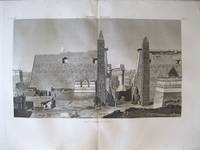
1973Middle East: Paris Impremerie de C.L.F.Pancoucke 1820-1829. Large double page copper engraved view entrance to the Templeof Luxor Thebes from the third volume of the "Antiquities "of the "Description de l'Egypte" 2nd Edition; black & white; verso blank. Blind stamp of the publisher Panckoucke to margin. The view shows the entrance to the temple with the two obelisks the one on the right now stands in the Place de la Concorde in Paris with two defaced heads of statues buried in the sand in front of the pylons of the temple with their decorated walls; just glimpsed through the entrance can be seen the hall of columns. Good dark impression; some light foxing. mainly to upper margin. "Description de l'Egypte ou Recueil des observations et des recherches qui ont été faites en Egypte pendant l'expédition de l'armée française." When Napoleon Bonaparte invaded Egypt in 1798 he brought with him an entourage of more than 160 scholars and scientists. Known as the French Commission on the Sciences and Arts of Egypt these experts undertook an extensive survey of the country's archeology topography and natural history. . For four years more than 150 artists engineers linguists and scientists traveled throughout the country examining almost every aspect of ancient and contemporary Egypt. They recorded and measured in meticulous detail Egypt's topography flora and fauna and its ancient and contemporary architecture. A soldier who was part of the expedition found the famous Rosetta Stone which the French linguist and scholar Jean-François Champollion 1790-1832 later used to unlock many of the mysteries that long had surrounded the language of ancient Egypt. The Egyptian expedition ended with a total military failure. The French left Egypt in 1801 with the honors of war but defeated; yet military failure remains a significant event in the history of knowledge because it is the first time a military expedition was accompanied by a scientific expedition. In 1802 Napoleon authorized the publication of the commission's findings in a monumental multi-volume work that included plates maps scholarly essays and a detailed index. Publication of the original Imperial edition began in 1809 and continued to 1822 sold by subscription. It proved so popular that a second edition was published under the post-Napoleonic Bourbon Restoration. The "Royal edition" published in Paris by C.L.F. Panckoucke from 1820-1830. The Second edition consists of 11 or 12 volumes of plates in folio and 24 of text bound as 26 8vo. Brunet:II 617; Blackmer/Navari: 476 1st edition Middle East Egypt Luxor Thebes Paris Impremerie de C.L.F.Pancoucke 1820-1829 unknown
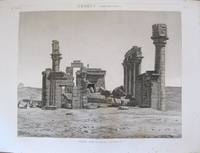
1983Middle East: Paris Impremerie de C.L.F.Pancoucke 1820-1829. Copper engraved view of the temple of Hermopolis Magna Achmouneyn. from the fourth volume of the "Antiquities "of the "Description de l'Egypte" 2nd Edition; black & white; verso blank. Blind stamp of the publisher Panckoucke to margin. The view shows the ruins of the temple of Hermopolis which was dedicated to the Ibis-headed god. The emblems the Ibis and the Cynocephalus or ape are the most conspicuous among the sculptures upon the great portico of the temple. Good dark impression; generally clean; some spotting to margins; remains of glue and tissue guard to upper margin. "Description de l'Egypte ou Recueil des observations et des recherches qui ont été faites en Egypte pendant l'expédition de l'armée française." When Napoleon Bonaparte invaded Egypt in 1798 he brought with him an entourage of more than 160 scholars and scientists. Known as the French Commission on the Sciences and Arts of Egypt these experts undertook an extensive survey of the country's archeology topography and natural history. . For four years more than 150 artists engineers linguists and scientists traveled throughout the country examining almost every aspect of ancient and contemporary Egypt. They recorded and measured in meticulous detail Egypt's topography flora and fauna and its ancient and contemporary architecture. A soldier who was part of the expedition found the famous Rosetta Stone which the French linguist and scholar Jean-François Champollion 1790-1832 later used to unlock many of the mysteries that long had surrounded the language of ancient Egypt. The Egyptian expedition ended with a total military failure. The French left Egypt in 1801 with the honors of war but defeated; yet military failure remains a significant event in the history of knowledge because it is the first time a military expedition was accompanied by a scientific expedition. In 1802 Napoleon authorized the publication of the commission's findings in a monumental multi-volume work that included plates maps scholarly essays and a detailed index. Publication of the original Imperial edition began in 1809 and continued to 1822 sold by subscription. It proved so popular that a second edition was published under the post-Napoleonic Bourbon Restoration. The "Royal edition" published in Paris by C.L.F. Panckoucke from 1820-1830. The Second edition consists of 11 or 12 volumes of plates in folio and 24 of text bound as 26 8vo. Brunet:II 617; Blackmer/Navari: 476 1st edition Middle East Egypt Hermopolis Magna Achmouneyn Paris Impremerie de C.L.F.Pancoucke 1820-1829 unknown
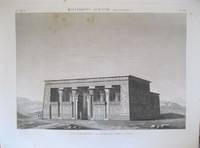
1981Middle East: Paris Impremerie de C.L.F.Pancoucke 1820-1829. Copper engraved view of the temple of Esna from the first volume of the "Antiquities "of the "Description de l'Egypte" 2nd Edition; black & white; verso blank. Blind stamp of the publisher Panckoucke to margin. The view shows a reconstruction of the temple of Khnum. at Esné The tutelary deities of Latopolis seem to have been the triad – Khnum and Neith and Heka their offspring. The temple of Esna dedicated to this triad was remarkable for the beauty of its site and the magnificence of its architecture. It was built of red sandstone and its portico consisted of six rows of four columns each with lotus-leaf capitals all of which however differ from each other Good dark impression; some foxing to sky and spotting to margins. "Description de l'Egypte ou Recueil des observations et des recherches qui ont été faites en Egypte pendant l'expédition de l'armée française." When Napoleon Bonaparte invaded Egypt in 1798 he brought with him an entourage of more than 160 scholars and scientists. Known as the French Commission on the Sciences and Arts of Egypt these experts undertook an extensive survey of the country's archeology topography and natural history. . For four years more than 150 artists engineers linguists and scientists traveled throughout the country examining almost every aspect of ancient and contemporary Egypt. They recorded and measured in meticulous detail Egypt's topography flora and fauna and its ancient and contemporary architecture. A soldier who was part of the expedition found the famous Rosetta Stone which the French linguist and scholar Jean-François Champollion 1790-1832 later used to unlock many of the mysteries that long had surrounded the language of ancient Egypt. The Egyptian expedition ended with a total military failure. The French left Egypt in 1801 with the honors of war but defeated; yet military failure remains a significant event in the history of knowledge because it is the first time a military expedition was accompanied by a scientific expedition. In 1802 Napoleon authorized the publication of the commission's findings in a monumental multi-volume work that included plates maps scholarly essays and a detailed index. Publication of the original Imperial edition began in 1809 and continued to 1822 sold by subscription. It proved so popular that a second edition was published under the post-Napoleonic Bourbon Restoration. The "Royal edition" published in Paris by C.L.F. Panckoucke from 1820-1830. The Second edition consists of 11 or 12 volumes of plates in folio and 24 of text bound as 26 8vo. Brunet:II 617; Blackmer/Navari: 476 1st edition Middle East Egypt Esne Esna Latopolis Paris Impremerie de C.L.F.Pancoucke 1820-1829 unknown
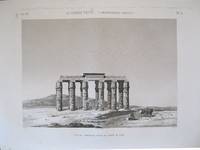
1984Middle East: Paris Impremerie de C.L.F.Pancoucke 1820-1829. Copper engraved view of the temple of Hermonthis. from the first volume of the "Antiquities "of the "Description de l'Egypte" 2nd Edition; black & white; verso blank. Blind stamp of the publisher Panckoucke to margin. The view shows the ruins of the temple of Hermonthis. The temple was dedicated to Menthu a god whose name means "nomad". Menthu was associated with raging bulls strength and war. He was also said to manifest himself in a white bull with a black face which was referred to as the Bakha. Egypt's greatest general-kings called themselves Mighty Bulls the sons of Menthu. Good dark impression; generally clean; some spotting to margins; remains of glue and tissue guard to upper margin. "Description de l'Egypte ou Recueil des observations et des recherches qui ont été faites en Egypte pendant l'expédition de l'armée française." When Napoleon Bonaparte invaded Egypt in 1798 he brought with him an entourage of more than 160 scholars and scientists. Known as the French Commission on the Sciences and Arts of Egypt these experts undertook an extensive survey of the country's archeology topography and natural history. . For four years more than 150 artists engineers linguists and scientists traveled throughout the country examining almost every aspect of ancient and contemporary Egypt. They recorded and measured in meticulous detail Egypt's topography flora and fauna and its ancient and contemporary architecture. A soldier who was part of the expedition found the famous Rosetta Stone which the French linguist and scholar Jean-François Champollion 1790-1832 later used to unlock many of the mysteries that long had surrounded the language of ancient Egypt. The Egyptian expedition ended with a total military failure. The French left Egypt in 1801 with the honors of war but defeated; yet military failure remains a significant event in the history of knowledge because it is the first time a military expedition was accompanied by a scientific expedition. In 1802 Napoleon authorized the publication of the commission's findings in a monumental multi-volume work that included plates maps scholarly essays and a detailed index. Publication of the original Imperial edition began in 1809 and continued to 1822 sold by subscription. It proved so popular that a second edition was published under the post-Napoleonic Bourbon Restoration. The "Royal edition" published in Paris by C.L.F. Panckoucke from 1820-1830. The Second edition consists of 11 or 12 volumes of plates in folio and 24 of text bound as 26 8vo. Brunet:II 617; Blackmer/Navari: 476 1st edition Middle East Egypt Hermonthis Erment Paris Impremerie de C.L.F.Pancoucke 1820-1829 unknown
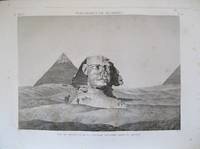
1978Middle East: Paris Impremerie de C.L.F.Pancoucke 1820-1829. Copper engraved view of the Great Sphinx between the Pyramids of Giza from the fifth volume of the "Antiquities "of the "Description de l'Egypte" 2nd Edition; black & white; verso blank. Blind stamp of the publisher Panckoucke to margin. The view shows the Sphinx full face emerging from the sand with the Pyramid of Khafre behind. Good dark impression; some spotting mainly to margins a few to image. "Description de l'Egypte ou Recueil des observations et des recherches qui ont été faites en Egypte pendant l'expédition de l'armée française." When Napoleon Bonaparte invaded Egypt in 1798 he brought with him an entourage of more than 160 scholars and scientists. Known as the French Commission on the Sciences and Arts of Egypt these experts undertook an extensive survey of the country's archeology topography and natural history. . For four years more than 150 artists engineers linguists and scientists traveled throughout the country examining almost every aspect of ancient and contemporary Egypt. They recorded and measured in meticulous detail Egypt's topography flora and fauna and its ancient and contemporary architecture. A soldier who was part of the expedition found the famous Rosetta Stone which the French linguist and scholar Jean-François Champollion 1790-1832 later used to unlock many of the mysteries that long had surrounded the language of ancient Egypt. The Egyptian expedition ended with a total military failure. The French left Egypt in 1801 with the honors of war but defeated; yet military failure remains a significant event in the history of knowledge because it is the first time a military expedition was accompanied by a scientific expedition. In 1802 Napoleon authorized the publication of the commission's findings in a monumental multi-volume work that included plates maps scholarly essays and a detailed index. Publication of the original Imperial edition began in 1809 and continued to 1822 sold by subscription. It proved so popular that a second edition was published under the post-Napoleonic Bourbon Restoration. The "Royal edition" published in Paris by C.L.F. Panckoucke from 1820-1830. The Second edition consists of 11 or 12 volumes of plates in folio and 24 of text bound as 26 8vo. Brunet:II 617; Blackmer/Navari: 476 1st edition Middle East Egypt Sphinx Pyramids of Giza Memphis Paris Impremerie de C.L.F.Pancoucke 1820-1829 unknown
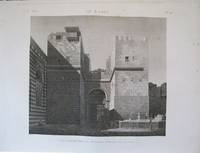
1963Middle East: Paris Impremerie de C.L.F.Pancoucke 1820-1829. Copper engraved view of one of the gateways to Cairo from the first volume of the "Etat Modene "of the "Description de l'Egypte" 2nd Edition; 1822; black & white; verso blank. Blind stamp of the publisher Panckoucke to margin. The view shows the massive gateway to the city with some small workshops & shops built against the walls. Good dark impression; a few some spotting mainly to margins but also a few in image. "Description de l'Egypte ou Recueil des observations et des recherches qui ont été faites en Egypte pendant l'expédition de l'armée française." When Napoleon Bonaparte invaded Egypt in 1798 he brought with him an entourage of more than 160 scholars and scientists. Known as the French Commission on the Sciences and Arts of Egypt these experts undertook an extensive survey of the country's archeology topography and natural history. . For four years more than 150 artists engineers linguists and scientists traveled throughout the country examining almost every aspect of ancient and contemporary Egypt. They recorded and measured in meticulous detail Egypt's topography flora and fauna and its ancient and contemporary architecture. A soldier who was part of the expedition found the famous Rosetta Stone which the French linguist and scholar Jean-François Champollion 1790-1832 later used to unlock many of the mysteries that long had surrounded the language of ancient Egypt. The Egyptian expedition ended with a total military failure. The French left Egypt in 1801 with the honors of war but defeated; yet military failure remains a significant event in the history of knowledge because it is the first time a military expedition was accompanied by a scientific expedition. In 1802 Napoleon authorized the publication of the commission's findings in a monumental multi-volume work that included plates maps scholarly essays and a detailed index. Publication of the original Imperial edition began in 1809 and continued to 1822 sold by subscription. It proved so popular that a second edition was published under the post-Napoleonic Bourbon Restoration. The "Royal edition" published in Paris by C.L.F. Panckoucke from 1820-1830. The Second edition consists of 11 or 12 volumes of plates in folio and 24 of text bound as 26 8vo. Brunet:II 617; Blackmer/Navari: 476 1st edition Middle East Egypt Cairo Paris Impremerie de C.L.F.Pancoucke 1820-1829 unknown
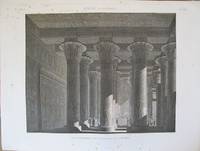
1980Middle East: Paris Impremerie de C.L.F.Pancoucke 1820-1829. Copper engraved view of the interior of the temple of Esna from the first volume of the "Antiquities "of the "Description de l'Egypte" 2nd Edition; black & white; verso blank. Blind stamp of the publisher Panckoucke to margin. The view shows the highly decorated columns and ceiling of the entrance to the temple with a procession moving through to the main temple The tutelary deities of Latopolis seem to have been the triad – Khnum and Neith and Heka their offspring. The temple of Esna dedicated to this triad was remarkable for the beauty of its site and the magnificence of its architecture. It was built of red sandstone and its portico consisted of six rows of four columns each with lotus-leaf capitals all of which however differ from each other Good dark impression; spotting mainly to margins. "Description de l'Egypte ou Recueil des observations et des recherches qui ont été faites en Egypte pendant l'expédition de l'armée française." When Napoleon Bonaparte invaded Egypt in 1798 he brought with him an entourage of more than 160 scholars and scientists. Known as the French Commission on the Sciences and Arts of Egypt these experts undertook an extensive survey of the country's archeology topography and natural history. . For four years more than 150 artists engineers linguists and scientists traveled throughout the country examining almost every aspect of ancient and contemporary Egypt. They recorded and measured in meticulous detail Egypt's topography flora and fauna and its ancient and contemporary architecture. A soldier who was part of the expedition found the famous Rosetta Stone which the French linguist and scholar Jean-François Champollion 1790-1832 later used to unlock many of the mysteries that long had surrounded the language of ancient Egypt. The Egyptian expedition ended with a total military failure. The French left Egypt in 1801 with the honors of war but defeated; yet military failure remains a significant event in the history of knowledge because it is the first time a military expedition was accompanied by a scientific expedition. In 1802 Napoleon authorized the publication of the commission's findings in a monumental multi-volume work that included plates maps scholarly essays and a detailed index. Publication of the original Imperial edition began in 1809 and continued to 1822 sold by subscription. It proved so popular that a second edition was published under the post-Napoleonic Bourbon Restoration. The "Royal edition" published in Paris by C.L.F. Panckoucke from 1820-1830. The Second edition consists of 11 or 12 volumes of plates in folio and 24 of text bound as 26 8vo. Brunet:II 617; Blackmer/Navari: 476 1st edition Middle East Egypt Esne Esna Latopolis Paris Impremerie de C.L.F.Pancoucke 1820-1829 unknown
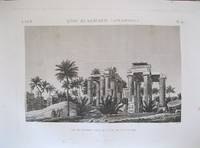
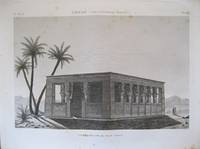
1982Middle East: Paris Impremerie de C.L.F.Pancoucke 1820-1829. Copper engraved view of the temple of Qau el-Kebir from the fourth volume of the "Antiquities "of the "Description de l'Egypte" 2nd Edition; black & white; verso blank. Blind stamp of the publisher Panckoucke to margin. The view shows the ruins of the temple Qau or Qau el-Kebir surrounded by palm trees Qau is located by the site of ancient Tjebu known in ancient Greek records as Antaeopolis 'city of Antaeus' on the east bank of the Nile midway between the towns of Akhmim and Asyut The temple was built by Ptolemy IV. substantial parts of which were still standing at the beginning of the 19th century sadly it was swept away by the Nile flood of 1821 Good dark impression; some light foxing to sky and spotting to margins. "Description de l'Egypte ou Recueil des observations et des recherches qui ont été faites en Egypte pendant l'expédition de l'armée française." When Napoleon Bonaparte invaded Egypt in 1798 he brought with him an entourage of more than 160 scholars and scientists. Known as the French Commission on the Sciences and Arts of Egypt these experts undertook an extensive survey of the country's archeology topography and natural history. . For four years more than 150 artists engineers linguists and scientists traveled throughout the country examining almost every aspect of ancient and contemporary Egypt. They recorded and measured in meticulous detail Egypt's topography flora and fauna and its ancient and contemporary architecture. A soldier who was part of the expedition found the famous Rosetta Stone which the French linguist and scholar Jean-François Champollion 1790-1832 later used to unlock many of the mysteries that long had surrounded the language of ancient Egypt. The Egyptian expedition ended with a total military failure. The French left Egypt in 1801 with the honors of war but defeated; yet military failure remains a significant event in the history of knowledge because it is the first time a military expedition was accompanied by a scientific expedition. In 1802 Napoleon authorized the publication of the commission's findings in a monumental multi-volume work that included plates maps scholarly essays and a detailed index. Publication of the original Imperial edition began in 1809 and continued to 1822 sold by subscription. It proved so popular that a second edition was published under the post-Napoleonic Bourbon Restoration. The "Royal edition" published in Paris by C.L.F. Panckoucke from 1820-1830. The Second edition consists of 11 or 12 volumes of plates in folio and 24 of text bound as 26 8vo. Brunet:II 617; Blackmer/Navari: 476 1st edition Middle East Egypt Qau el-Kebir Qâou El Kebyreh Antæopolis. Paris Impremerie de C.L.F.Pancoucke 1820-1829 unknown
1979Middle East: Paris Impremerie de C.L.F.Pancoucke 1820-1829. Copper engraved view of the small temple or Birth House at Edfu from the first volume of the "Antiquities "of the "Description de l'Egypte" 2nd Edition; black & white; verso blank. Blind stamp of the publisher Panckoucke to margin. The view shows a reconstrucion of the small temple or Birth house described in the Antiquites. Opposite the large temple of Horus is another much smaller temple in a rather poorer state of preservation - the mammisi Birth House. The floral columns are crowned with sculptures of the god Bes a disfigured domestic god considered the guardian of expectant mothers and newborn infants. Since the scenes on the outside had been destroyed the French artists executed an imaginary reconstruction of the temple with all the decoration typical of similar monuments. Good dark impression; some spotting mainly to margins a few to image. "Description de l'Egypte ou Recueil des observations et des recherches qui ont été faites en Egypte pendant l'expédition de l'armée française." When Napoleon Bonaparte invaded Egypt in 1798 he brought with him an entourage of more than 160 scholars and scientists. Known as the French Commission on the Sciences and Arts of Egypt these experts undertook an extensive survey of the country's archeology topography and natural history. . For four years more than 150 artists engineers linguists and scientists traveled throughout the country examining almost every aspect of ancient and contemporary Egypt. They recorded and measured in meticulous detail Egypt's topography flora and fauna and its ancient and contemporary architecture. A soldier who was part of the expedition found the famous Rosetta Stone which the French linguist and scholar Jean-François Champollion 1790-1832 later used to unlock many of the mysteries that long had surrounded the language of ancient Egypt. The Egyptian expedition ended with a total military failure. The French left Egypt in 1801 with the honors of war but defeated; yet military failure remains a significant event in the history of knowledge because it is the first time a military expedition was accompanied by a scientific expedition. In 1802 Napoleon authorized the publication of the commission's findings in a monumental multi-volume work that included plates maps scholarly essays and a detailed index. Publication of the original Imperial edition began in 1809 and continued to 1822 sold by subscription. It proved so popular that a second edition was published under the post-Napoleonic Bourbon Restoration. The "Royal edition" published in Paris by C.L.F. Panckoucke from 1820-1830. The Second edition consists of 11 or 12 volumes of plates in folio and 24 of text bound as 26 8vo. Brunet:II 617; Blackmer/Navari: 476 1st edition Middle East Egypt Edfu Paris Impremerie de C.L.F.Pancoucke 1820-1829 unknown
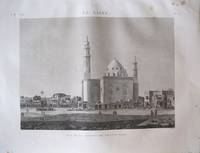
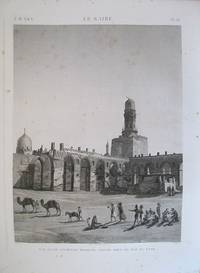
1966Middle East: Paris Impremerie de C.L.F.Pancoucke 1820-1829. Copper engraved view of the mosque of Sultan Hasan Cairo from the first volume of the "Etat Modene "of the "Description de l'Egypte" 2nd Edition; 1822; black & white; verso blank. Blind stamp of the publisher Panckoucke to margin. The view shows the mosque towering over the nearby buildings with small shops and workshops in and around the Square. Good dark impression; some foxing to platemainly to blank margins. "Description de l'Egypte ou Recueil des observations et des recherches qui ont été faites en Egypte pendant l'expédition de l'armée française." When Napoleon Bonaparte invaded Egypt in 1798 he brought with him an entourage of more than 160 scholars and scientists. Known as the French Commission on the Sciences and Arts of Egypt these experts undertook an extensive survey of the country's archeology topography and natural history. . For four years more than 150 artists engineers linguists and scientists traveled throughout the country examining almost every aspect of ancient and contemporary Egypt. They recorded and measured in meticulous detail Egypt's topography flora and fauna and its ancient and contemporary architecture. A soldier who was part of the expedition found the famous Rosetta Stone which the French linguist and scholar Jean-François Champollion 1790-1832 later used to unlock many of the mysteries that long had surrounded the language of ancient Egypt. The Egyptian expedition ended with a total military failure. The French left Egypt in 1801 with the honors of war but defeated; yet military failure remains a significant event in the history of knowledge because it is the first time a military expedition was accompanied by a scientific expedition. In 1802 Napoleon authorized the publication of the commission's findings in a monumental multi-volume work that included plates maps scholarly essays and a detailed index. Publication of the original Imperial edition began in 1809 and continued to 1822 sold by subscription. It proved so popular that a second edition was published under the post-Napoleonic Bourbon Restoration. The "Royal edition" published in Paris by C.L.F. Panckoucke from 1820-1830. The Second edition consists of 11 or 12 volumes of plates in folio and 24 of text bound as 26 8vo. Brunet:II 617; Blackmer/Navari: 476 1st edition Middle East Egypt Cairo Sultan Hasan Mosque Paris Impremerie de C.L.F.Pancoucke 1820-1829 unknown
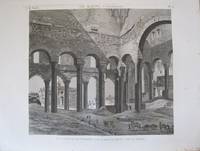
1970Middle East: Paris Impremerie de C.L.F.Pancoucke 1820-1829. Copper engraved view the interior of a mosque Cairo from the first volume of the "Etat Modene "of the "Description de l'Egypte" 2nd Edition; 1822; black & white; verso blank. Blind stamp of the publisher Panckoucke to margin. The view shows the interior of an abandoned mosque within the Citadel of Cairo. Engineers are excavating whilst a canon is brought forward by 2 camels. Good dark impression; some foxing to blank margins. "Description de l'Egypte ou Recueil des observations et des recherches qui ont été faites en Egypte pendant l'expédition de l'armée française." When Napoleon Bonaparte invaded Egypt in 1798 he brought with him an entourage of more than 160 scholars and scientists. Known as the French Commission on the Sciences and Arts of Egypt these experts undertook an extensive survey of the country's archeology topography and natural history. . For four years more than 150 artists engineers linguists and scientists traveled throughout the country examining almost every aspect of ancient and contemporary Egypt. They recorded and measured in meticulous detail Egypt's topography flora and fauna and its ancient and contemporary architecture. A soldier who was part of the expedition found the famous Rosetta Stone which the French linguist and scholar Jean-François Champollion 1790-1832 later used to unlock many of the mysteries that long had surrounded the language of ancient Egypt. The Egyptian expedition ended with a total military failure. The French left Egypt in 1801 with the honors of war but defeated; yet military failure remains a significant event in the history of knowledge because it is the first time a military expedition was accompanied by a scientific expedition. In 1802 Napoleon authorized the publication of the commission's findings in a monumental multi-volume work that included plates maps scholarly essays and a detailed index. Publication of the original Imperial edition began in 1809 and continued to 1822 sold by subscription. It proved so popular that a second edition was published under the post-Napoleonic Bourbon Restoration. The "Royal edition" published in Paris by C.L.F. Panckoucke from 1820-1830. The Second edition consists of 11 or 12 volumes of plates in folio and 24 of text bound as 26 8vo. Brunet:II 617; Blackmer/Navari: 476 1st edition Middle East Egypt Cairo Citadel Paris Impremerie de C.L.F.Pancoucke 1820-1829 unknown
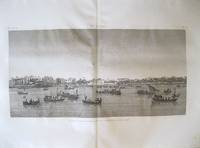
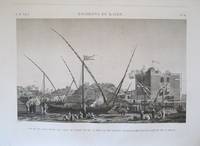
1968Middle East: Paris Impremerie de C.L.F.Pancoucke 1820-1829. Large double page copper engraved view of the area of Ezbekyeh North West Cairo from the first volume of the "Etat Modene "of the "Description de l'Egypte" 2nd Edition; 1822; black & white; verso blank. Blind stamp of the publisher Panckoucke to margin. The view shows the area of Ezbekieh in Cairo as seen from the Nile with many boats in the foreground. Ezbekieh is part of modern Cairo close to the gardens of the same name and popular with foreign visitors. Good dark impression; foxing to sky and blank margins. "Description de l'Egypte ou Recueil des observations et des recherches qui ont été faites en Egypte pendant l'expédition de l'armée française." When Napoleon Bonaparte invaded Egypt in 1798 he brought with him an entourage of more than 160 scholars and scientists. Known as the French Commission on the Sciences and Arts of Egypt these experts undertook an extensive survey of the country's archeology topography and natural history. . For four years more than 150 artists engineers linguists and scientists traveled throughout the country examining almost every aspect of ancient and contemporary Egypt. They recorded and measured in meticulous detail Egypt's topography flora and fauna and its ancient and contemporary architecture. A soldier who was part of the expedition found the famous Rosetta Stone which the French linguist and scholar Jean-François Champollion 1790-1832 later used to unlock many of the mysteries that long had surrounded the language of ancient Egypt. The Egyptian expedition ended with a total military failure. The French left Egypt in 1801 with the honors of war but defeated; yet military failure remains a significant event in the history of knowledge because it is the first time a military expedition was accompanied by a scientific expedition. In 1802 Napoleon authorized the publication of the commission's findings in a monumental multi-volume work that included plates maps scholarly essays and a detailed index. Publication of the original Imperial edition began in 1809 and continued to 1822 sold by subscription. It proved so popular that a second edition was published under the post-Napoleonic Bourbon Restoration. The "Royal edition" published in Paris by C.L.F. Panckoucke from 1820-1830. The Second edition consists of 11 or 12 volumes of plates in folio and 24 of text bound as 26 8vo. Brunet:II 617; Blackmer/Navari: 476 1st edition Middle East Egypt Cairo Ezbekieh Paris Impremerie de C.L.F.Pancoucke 1820-1829 unknown
1969Middle East: Paris Impremerie de C.L.F.Pancoucke 1820-1829. Copper engraved view of an old mosque Cairo from the first volume of the "Etat Modene "of the "Description de l'Egypte" 2nd Edition; 1822; black & white; verso blank. Blind stamp of the publisher Panckoucke to margin. The view shows the mosque close to the gate of Bab el Nasr and the city walls. In the foreground are travelers arriving in the city by camel and donkey. Two French soldiers seem to be moving on a group of musicians and healers. Good dark impression; foxing to sky and blank margins. "Description de l'Egypte ou Recueil des observations et des recherches qui ont été faites en Egypte pendant l'expédition de l'armée française." When Napoleon Bonaparte invaded Egypt in 1798 he brought with him an entourage of more than 160 scholars and scientists. Known as the French Commission on the Sciences and Arts of Egypt these experts undertook an extensive survey of the country's archeology topography and natural history. . For four years more than 150 artists engineers linguists and scientists traveled throughout the country examining almost every aspect of ancient and contemporary Egypt. They recorded and measured in meticulous detail Egypt's topography flora and fauna and its ancient and contemporary architecture. A soldier who was part of the expedition found the famous Rosetta Stone which the French linguist and scholar Jean-François Champollion 1790-1832 later used to unlock many of the mysteries that long had surrounded the language of ancient Egypt. The Egyptian expedition ended with a total military failure. The French left Egypt in 1801 with the honors of war but defeated; yet military failure remains a significant event in the history of knowledge because it is the first time a military expedition was accompanied by a scientific expedition. In 1802 Napoleon authorized the publication of the commission's findings in a monumental multi-volume work that included plates maps scholarly essays and a detailed index. Publication of the original Imperial edition began in 1809 and continued to 1822 sold by subscription. It proved so popular that a second edition was published under the post-Napoleonic Bourbon Restoration. The "Royal edition" published in Paris by C.L.F. Panckoucke from 1820-1830. The Second edition consists of 11 or 12 volumes of plates in folio and 24 of text bound as 26 8vo. Brunet:II 617; Blackmer/Navari: 476 1st edition Middle East Egypt Cairo Bab el Nasr Paris Impremerie de C.L.F.Pancoucke 1820-1829 unknown
1971Middle East: Paris Impremerie de C.L.F.Pancoucke 1820-1829. Copper engraved view of Festival of the Nile flood and the opening of Khaleej dike Cairo from the first volume of the "Etat Modene "of the "Description de l'Egypte" 2nd Edition; 1822; black & white; verso blank. Blind stamp of the publisher Panckoucke to margin. The view shows the festival celebrated at the opening of the Khaleej dike so that the flood waters of the Nile can enter the canal. Since ancient times the Nile has played a vital role in Egypt to the point that it is the river that the Egyptians attributed the birth and existence of their country. As the waters of the Nile rose the Egyptians prepared to let them through for irrigation etc thus a most important moment each year to be celebrated. the sultan would proceed to the Misr point to open the dike. Called the cavalcade of the opening of the Khaleej. it was was one of the most important festivals of the year. Good dark impression; some light foxing; glue and remains of tissue guard to upper margin. "Description de l'Egypte ou Recueil des observations et des recherches qui ont été faites en Egypte pendant l'expédition de l'armée française." When Napoleon Bonaparte invaded Egypt in 1798 he brought with him an entourage of more than 160 scholars and scientists. Known as the French Commission on the Sciences and Arts of Egypt these experts undertook an extensive survey of the country's archeology topography and natural history. . For four years more than 150 artists engineers linguists and scientists traveled throughout the country examining almost every aspect of ancient and contemporary Egypt. They recorded and measured in meticulous detail Egypt's topography flora and fauna and its ancient and contemporary architecture. A soldier who was part of the expedition found the famous Rosetta Stone which the French linguist and scholar Jean-François Champollion 1790-1832 later used to unlock many of the mysteries that long had surrounded the language of ancient Egypt. The Egyptian expedition ended with a total military failure. The French left Egypt in 1801 with the honors of war but defeated; yet military failure remains a significant event in the history of knowledge because it is the first time a military expedition was accompanied by a scientific expedition. In 1802 Napoleon authorized the publication of the commission's findings in a monumental multi-volume work that included plates maps scholarly essays and a detailed index. Publication of the original Imperial edition began in 1809 and continued to 1822 sold by subscription. It proved so popular that a second edition was published under the post-Napoleonic Bourbon Restoration. The "Royal edition" published in Paris by C.L.F. Panckoucke from 1820-1830. The Second edition consists of 11 or 12 volumes of plates in folio and 24 of text bound as 26 8vo. Brunet:II 617; Blackmer/Navari: 476 1st edition Middle East Egypt Cairo Festival of the Khaleej Paris Impremerie de C.L.F.Pancoucke 1820-1829 unknown
0259830968.Gpaperback. Good. Access codes and supplements are not guaranteed with used items. May be an ex-library book. paperback
0666428387.Ghardcover. Good. Access codes and supplements are not guaranteed with used items. May be an ex-library book. hardcover