1 833 résultats
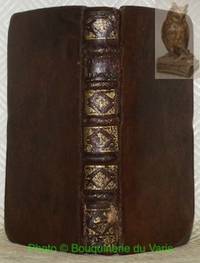
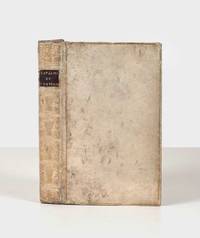
2649Dont la Vente commencera le 4 Mars 1756. vi 63 pp. 8vo cont. vellum over boards single gilt fillet round sides flat spine gilt gilt wheat sheaves in five of the compartments red morocco lettering piece on spine. Paris: G. Martin & P.G. Simon 1756. <br/> <br/> bound with:<br/> <br/> SIREJACOB J.A.J. Catalogue d’une très-belle Collection d’Estampes de Rubens Van Dyck Jordaens Teniers Callot & autres fameux Maîtres Italiens François & Flamands. Assemblées depuis longues Années & Délaissées par Monsieur J.A.J. Sirejacob Ecuyer. Qui se Vendront…a Bruxelles Lundi le 27. Août 1764. & jours suivans… 1 p.l. 76 pp. 8vo. Brussels: H.V. Lemincks 1764. <br/> <br/> bound with:<br/> <br/> LE BRUN. Catalogue de Tableaux Estampes Desseins Bronzes Figures de marbre Bustes & Gaînes de marbre Procelaines d’ancien Japon de France & de Saxe montées en Bronze doré d’or moulu & non montées du Cabinet de Monsieur; dont la vente se fera le Mardi 19 Juin 1764…& jours suivans… 21 pp. 8vo. Paris: Merifot Fils 1764. <br/> <br/> bound with:<br/> <br/> COLLIN DE VERMONT Hyacinthe. Catalogue des Tableaux Desseins Estampes et Bosses provenans du Cabinet de M. Hyacinthe Collin de Vermont Peintre ordinaire du Roi & Adjoint à Recteur de son Académie Royale de Peinture & Sculpture dans lesquels sont compris des Tableaux Desseins & Estampes de M. Rigaud Peintre duRoi… 35 1 pp. 8vo. Paris: Didot l’aîné 1761. <br/> <br/> bound with:<br/> <br/> ROBYNS Martin. Catalogue de Tabeleaux de Cabinet de feu Monsieur Martin Robyns; qui se Vendront publiquement en Argent de change Lundi 22. Mai 1758. & jours suivans… 24 pp. Brussels: P.J. De Grieck 1758. <br/> <br/> bound with:<br/> <br/> COSTA Benjamin da. Catalogue d’un Magnifique & très Renommé Cabinet de Tableaux des plus grands Maitres Italiens Francois & du Pais-Bas; Recueillis avec beaucoup de fraix…par Monseeur Benjamin da Costa Lesquels seront Vendu publiquement…le Lundi 13 Août 1764. 14 pp. 8vo. The Hague: P. Gosse & D. Pinet 1764. <br/> <br/> bound with:<br/> <br/> NOAILLES — Maréchal de. Catalogue des Tableaux qui composent le Cabinet de feu Mr. le Marechal de Noailles. 41 pp. 8vo. Paris: Didot 1767. <br/> <br/> bound with:<br/> <br/> SYDERVELT Antoine. Catalogue du beau & précieux Cabinet de Tableaux des principaux Maîtres Hollandois; de Desseins…d’Estampes…de divers Instrumens pour des Expériences de Phisique & d’Optique…de Medailles d’argent…de feu Monsieur Antoine Sydervelt dont la Vente se fera le Mercredi 23. Avril 1766 & jours suivans chez Arnoldus Dankmeyer…par Henri de Winter Couretier. 1 p.l. 132 pp. 8vo. Amsterdam: P. Yver 1766.<br/> <br/> A remarkable and most attractive sammelband of eight French Dutch and Belgian art auction catalogues. All of them are rare. <br/> <br/> I. Jean Omer Joly de Fleury 1700-55 a member of a prominent and wealthy family was an important collector of prints drawings books scientific instruments and natural history objects. We learn from Gabriel Martin’s preface that due to the collector’s sudden death the prints and drawings would be sold “as found†in portefeuilles and the large collection of specimens again would be sold “as found†in the drawers. Nevertheless the collection is quite well catalogued and we can gather an excellent idea of the contents. Dezallier d’Argenville described Joly’s collection in 1755 calling it “famous.†He illustrates some of the specimens. <br/> <br/> II. A fine sale of 847 lots of prints and 19 lots of books with plates. Very rare; no copy in OCLC. <br/> <br/> III. 116 lots. OCLC locates only one copy at the BN. <br/> <br/> IV. A painter’s collection of art. 443 lots including paintings drawings prints and reliefs. Collin de Vermont 1693-1761 was “a pupil of Rigaud and Jouvenet. He studied in Rome and entered the Académie in 1725. In 1727 he was one of the artists to work on decorations for the Apollo Gallery in the Louvre.â€â€“Benezit III p. 1244. OCLC locates only one copy at the BN. <br/> <br/> V. 300 lots of paintings by Rubens van Dyck Breughel Wouwermans and Teniers. Very rare; no copy in OCLC. <br/> <br/> VI. Benjamin da Costa a member of the prominent Anglo/Dutch Jewish family formed a small but important collection of paintings. 90 lots. Very rare; no copy in OCLC. <br/> <br/> VII. Adrien Maurice duc de Noailles 1678-1766 had a brilliant military career and served in the wars of Louis XV in Italy and Germany. He was appointed a marshal of the French Army in 1734. The duc de Noailles was also a fiscal advisor to Louis XV and unsuccessfully recommended financial prudence. This catalogue contains only 88 lots but we find paintings by Leonardo da Vinci Michelangelo Titian Raphael Carracci Dürer Breughel Rembrandt etc. OCLC locates only one copy at the BN. <br/> <br/> VIII. One of the most important art sales in Holland of the period. 117 lots of paintings Wouwerman Ruysdael and others 172 lots of drawings 227 lots of prints 85 lots of illustrated books 20 lots of instruments 192 lots of medals and 29 lots of “Diverses Raretés.†Not in OCLC. <br/> <br/> Fine copies. <br/> <br/> ⧠I. Lugt 906. N.B.G. Vol. 26 col. 861. <br /> <br> <br> II. Lugt 1404. <br /> <br> <br> III. Lugt 1395. <br /> <br> <br> IV. Lugt 1181. <br /> <br> <br> V. Lugt 1006. <br /> <br> <br> VI. Lugt 1400. <br /> <br> <br> VII. Lugt 1654. <br /> <br> <br> VIII. Lugt 1528. unknown
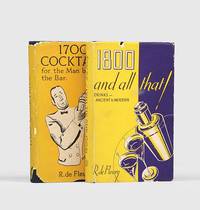
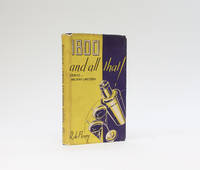
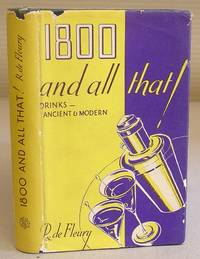
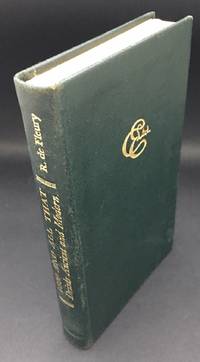
1934190147London: William Heinemann; The St Catherine's Press 1934 & 1937. First editions first impressions both of de Fleury's scarce but classic cocktail recipe books presented together with the very scarce dust jackets over the publisher's full leather bindings. At the time de Fleury's 1700 Cocktails was the most comprehensive to be included in one book. The author's note in his follow up volume 1800 and all that reads "This volume though complete in itself is intended as a companion to my previous book. the two together forming a complete library of all kinds of drinks through the ages to the present day. Up to now I do not know of any book which gives the formulae and methods of preparation of the drinks that were so popular during the 18th and 19th centuries and I have therefore traced a good number of these and included them in this volume as I feel sure there would be a demand for them if people only knew how to prepare them." A handsome pairing rare thus. Two works small octavo. A few advertisement illustrations within. Original navy leather titles to spines gilt. With the illustrated dust jacket. Excellent copies with the dust jacket of 1700 somewhat chipped around ends and corners and somewhat dust-soiled and 1800 price-clipped but with a few much smaller chips or closed tears a split starting at the foot of front joint notably bright. hardcover
1878SAV158Rouen: E. Augé 1878. Hardcover. Very Good. 8vo 245 x 160mm. xvi preface 418pp. with tables. Pictorial printed wrappers and title printed in red and black. Double etched frontispiece by Jules Adeline. Preface by Champfleury the pseudonym of writer Jean Fleury 1821-1889. Édition de luxe numbered 2 of 220 and initialed by Jules Adeline JA; issued as the first 20 on papier de Chine with a double suite of etchings in black and white and sepia. 127 vignettes forming the 100 pages of vignettes stated on the title depicting monumental sculpture capitals vaults reliefs gargoyles in-text. Bound by E. Quinet in 1883 in full medieval-style cuir-ciselé binding depicting two reliefs on the Cathedral of Rouen: a gothic grotesque hooded man holding staff front cover and hybrid dog-like centaur playing fiddle back cover spine blind-lettered SCULPTURES GROTESQUES marbled endpapers green gold and purple silk endbands gilt edges; A fine deluxe printing in impeccable form the binding is a treasure and was made especially for the text nothing else is quite like it. Ex-libris and oval gilt morocco bookplate of Estelle Doheny on front pastedown. <br/><br/>This is a deluxe issue of the famous monograph written and illustrated by Jules Adeline on the grotesque Gothic sculptures and gargoyles in the region of Rouen. Amply illustrated on fine papier de Chine it is numbered 2 in the first set of 20 and is initialed by Jules Adeline on the edition leaf. The deluxe edition of this monograph printing is quite rare. This was the tirage tout spécial destined for distribution between the author and printers circle. By Adelines initials we conclude this copy enjoyed that privileged circulation. Adeline was a fixture in his hometown of Rouen. His career began in architectural sketching where he developed a keen eye for depicting the monumental sculpture in his native French medieval city. Adeline also worked as a caricaturist and artistic columnist for several newspapers including the "Journal de Rouen" "Rouen Nouvelliste" and "Le Progrès de Rouen." In particular this publication dealt with the satirical and symbolic sculptures that he encountered on the winding avenues of Rouen. With contributions from Champfleury a trailblazer of Realism in painting and literature this work was celebrated for its conclusions in medieval art iconography mainly that hybrid characters embodied complex nuanced and understated ideas that often resist exact interpretation. The custom presentation binding of cuir-ciselé cut-leatherwork is most exceptional. Not only is it unusual in treatment but also it incorporates two relief panels from the Cathedral of Rouen in the form of characteristic medieval grotesques. Not much is known about the Parisian binder Quinet but he can be linked to other bindings of the late-nineteenth century many described as magnificently gilt. This artisanal binding is unparalleled in its distinctive medieval-revival leather craftsmanship; it is period to five years of the printing and would have circulated through Jules Adeline himself perhaps even by his commission. E. Augé hardcover
2010835362Hatje Cantz. New. 2010. Hardcover. 3775725822 . FREE UPGRADE to Courier/Priority Shipping Upon Request - IN STOCK AND IMMEDIATELY AVAILABLE FOR SHIPMENT - Flawless copy brand new pristine never opened -- Text in German and English. 248 pages; 123 illus. -- with a bonus offer-- . Hatje Cantz hardcover
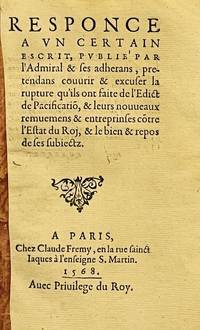
15682565A Paris: Chez Claude Fremy en la rue sainct Jaques à l’enseigne S. Martin 1568. First edition. Papered spine. Light water stain throughout the second half of the book. Last leaves chipped the very last somewhat damaged at the outer corners with no effect on the print space. Otherwise in very good condition. First edition. Papered spine. ff. 36. Scarce Wars of Religion document related to the Peace of Longjumeau.<br /> <br> <br /> The Peace of Longjumeau marked the end of the brief second French Wars of Religion signed by the Crown on 23 March 1568. On the Huguenot party Admiral of France Gaspard II de Coligny was Louis de Bourbon Prince of Condé’s delegate during the negotiation. After the conclusion of the treaty the The Admiral published his “Remonstrance au Roy Par Monsieur l'Admiral sur les calamitez aduenues depuis l'Edict de la Paix†and the present pamphlet is Antoine Fleury’s fierce response to it from a royalist Catholic point of view. <br /> <br> <br /> Besides the present Paris edition the text appeared in several major cities throughout France in the same year. <br /> USTC 4049. Chez Claude Fremy, en la rue sainct Jaques à l’enseigne S. Martin unknown
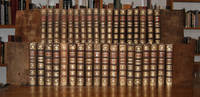
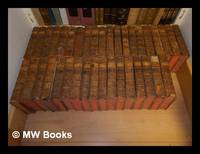
1691707691691. Fleury Claude and Jean Claude Fabre. HISTOIRE ECCLESIASTIQUE par Mr. Fleury Pretre Abbe de Loc-Dieu sous-precepteur de Monseigneur le Duc de Bourgogne & de Monseigneur le Duc d'Anjou. Paris: Pierre Emery etc. 1691-1738. Quarto. 36 volumes. First edition. A beautiful set in full mottled calf gilt with lettering-pieces and five raised bands to spines. Probably bound at publication of the final volume. Title woodcut and copper-engraved headpiece with history scene to each volume mostly by Sebastien LeClerc. Volumes 21-36 by Fabre are subtitled "Pour servir decontinuation a celle de Monsieur l'Abbe Fleury." Beginning with Volume 20 the imprints vary to include Jean Mariette Saugrain Pierre Martin and Hippolyte-Louis Guerin. A thorough theological historical and anecdotal chronicle of the Catholic Church from the time of the Evangelists to 1595. A standard work first published in 1691 and reprinted many times. Small losses to three spine ends wear to extremities and small superficial cracks to hinges of six volumes; occasional light waterstaining but on the whole a very good copy. The OCLC shows only one other copy of the first edition at Yale. unknown
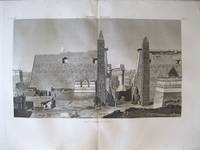
1973Middle East: Paris Impremerie de C.L.F.Pancoucke 1820-1829. Large double page copper engraved view entrance to the Templeof Luxor Thebes from the third volume of the "Antiquities "of the "Description de l'Egypte" 2nd Edition; black & white; verso blank. Blind stamp of the publisher Panckoucke to margin. The view shows the entrance to the temple with the two obelisks the one on the right now stands in the Place de la Concorde in Paris with two defaced heads of statues buried in the sand in front of the pylons of the temple with their decorated walls; just glimpsed through the entrance can be seen the hall of columns. Good dark impression; some light foxing. mainly to upper margin. "Description de l'Egypte ou Recueil des observations et des recherches qui ont été faites en Egypte pendant l'expédition de l'armée française." When Napoleon Bonaparte invaded Egypt in 1798 he brought with him an entourage of more than 160 scholars and scientists. Known as the French Commission on the Sciences and Arts of Egypt these experts undertook an extensive survey of the country's archeology topography and natural history. . For four years more than 150 artists engineers linguists and scientists traveled throughout the country examining almost every aspect of ancient and contemporary Egypt. They recorded and measured in meticulous detail Egypt's topography flora and fauna and its ancient and contemporary architecture. A soldier who was part of the expedition found the famous Rosetta Stone which the French linguist and scholar Jean-François Champollion 1790-1832 later used to unlock many of the mysteries that long had surrounded the language of ancient Egypt. The Egyptian expedition ended with a total military failure. The French left Egypt in 1801 with the honors of war but defeated; yet military failure remains a significant event in the history of knowledge because it is the first time a military expedition was accompanied by a scientific expedition. In 1802 Napoleon authorized the publication of the commission's findings in a monumental multi-volume work that included plates maps scholarly essays and a detailed index. Publication of the original Imperial edition began in 1809 and continued to 1822 sold by subscription. It proved so popular that a second edition was published under the post-Napoleonic Bourbon Restoration. The "Royal edition" published in Paris by C.L.F. Panckoucke from 1820-1830. The Second edition consists of 11 or 12 volumes of plates in folio and 24 of text bound as 26 8vo. Brunet:II 617; Blackmer/Navari: 476 1st edition Middle East Egypt Luxor Thebes Paris Impremerie de C.L.F.Pancoucke 1820-1829 unknown
1850322242A Paris: chez P.G. Le Mercier rue S. Jacques au Livre d'or et al. 1850. First Edition. Hardcover. Worn set bound in the original leather binding. Gilt decoration to the spines. Wear and tear as with age with some boards loosely attached. Remains well preserved overall; bright clean and sharp-cornered. Physical description 36 volumes. Contents; Tome Premier ; Tome Second ; Tome Troisieme ; Tome Quatrieme ; Tome Cinquieme ; Tome Sixieme ; Tome Septieme ; Tome Huitieme ; Tome Neuvieme ; Tome Dixieme ; Tome Onzieme ; Tome Douzieme ; Tome Treizieme ; Tome Quatorzieme ; Tome Quinzieme ; Tome Seizieme ; Tome Dix-Septieme ; Tome Dix-Huitieme ; Tome Dix-Neuvieme ; Tome Vingtieme ; Tome Vingt-Unieme ; Tome Vingt-Deuxieme ; Tome Vingt-Troisieme ; Tome Vingt-Quatrieme ; Tome Vingt-Cinquieme ; Tome Vingt-Sixieme ; Tome Vingt-Septieme ; Tome Vingt-Huitieme ; Tome Vingt-Neuvieme ; Tome Trentieme ; Tome Trente-Unieme ; Tome Trente-Deuxieme ; Tome Trente-Troisieme ; Tome Trente-Quatrieme ; Tome Trente-Cinquieme ; Tome Trente-Sixieme ; Table Genérale des Matieres. Subjects; Catholic Church History. Church history. A Paris: chez P.G. Le Mercier, rue S. Jacques, au Livre d'or [et al.] hardcover
1655101512Lyon : Chez A. Besson sans date vers 1655. 145x85mm. 3 ff. 228 pages 5 ff. 1 planches dÂŽpliante lettrines bandeaux culs-de-lampe reliure veau-marbrÂŽ de lՎpoque. Trou sur le bas du dos et piÂce de titre manquant autrement bon ÂŽtat intÂŽrieur propre. Ex-libris. 148 Chez A. Besson unknown
193411111112222233441The First UK printing published by William Heinemann Ltd London In 1934. The BOOK is in Very Good or better condition. Slight splaying of the boards. The gilt titling remains very bright. Light offsetting to the end papers. Mild toning to the text-block and page edges. Free from inscriptions. Light crease to the upper corner of the first 30 pages. The WRAPPER is complete and is in Very Good condition. A little edge wear with some small closed tears and light rubbing in places. A small chip to the lower front cover edge. Light fading of colouring to the spine. Mild age related markings to the flaps and covers. The wrapper is protected in a removable Brodart archival cover. A very scarce British cocktail guide in which the front flap states: 'The largest collection of formulae ever included in one book. 1262 Sweet Cocktails 287 Dry Cocktails'. De Fleury would go on to publish only one other guide in which he added 100 cocktails to this collection. A very attractive copy of a title which rarely turns up in collectible condition. Ashton Rare Books welcomes direct contact. William Heinemann Ltd, London hardcover
13652London: The St. Catherine Press. 1937. First edition first printing. First edition first printing. Publisher's dark green leather with gilt titles to the spine in dustwrapper. An excellent near fine copy the binding square firm and unworn. The contents are entirely complete and without previous owner's inscriptions or stamps. There is a little spotting to the endpapers and some darkening to the top edge of the text block otherwise the pages are clean and bright throughout. Complete with the rubbed nicked and darkened original dustwrapper which has a couple of short closed tears to the extremities. Price-clipped to the front flap. Scarce in the original dustwrapper. The second of the author's classic cocktail books containing over 2000 different drinks recipes. Further details and images for any of the items listed are available on request. Lucius Books welcomes direct contact with our customers. London: The St. Catherine Press. 1937 hardcover
1891044409Lancaster: Eaton & Bulfield 1891. 1st Edition. Hardcover. Very Good. Clean With No Remarks Or Highlights Inside. Hardcover With No Dust Jacket. Original Copy Not A Reprint This Is An 1891 Book. Inscription From 1910 At The Verso Of The Front Cover. Pages Are Yellow From The Age.- Specializing in academic collectible and historically significant providing the utmost quality and customer service satisfaction. For any questions feel free to email us. Eaton & Bulfield hardcover
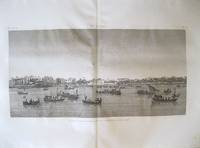
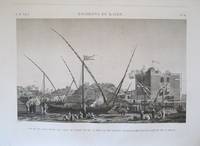
1968Middle East: Paris Impremerie de C.L.F.Pancoucke 1820-1829. Large double page copper engraved view of the area of Ezbekyeh North West Cairo from the first volume of the "Etat Modene "of the "Description de l'Egypte" 2nd Edition; 1822; black & white; verso blank. Blind stamp of the publisher Panckoucke to margin. The view shows the area of Ezbekieh in Cairo as seen from the Nile with many boats in the foreground. Ezbekieh is part of modern Cairo close to the gardens of the same name and popular with foreign visitors. Good dark impression; foxing to sky and blank margins. "Description de l'Egypte ou Recueil des observations et des recherches qui ont été faites en Egypte pendant l'expédition de l'armée française." When Napoleon Bonaparte invaded Egypt in 1798 he brought with him an entourage of more than 160 scholars and scientists. Known as the French Commission on the Sciences and Arts of Egypt these experts undertook an extensive survey of the country's archeology topography and natural history. . For four years more than 150 artists engineers linguists and scientists traveled throughout the country examining almost every aspect of ancient and contemporary Egypt. They recorded and measured in meticulous detail Egypt's topography flora and fauna and its ancient and contemporary architecture. A soldier who was part of the expedition found the famous Rosetta Stone which the French linguist and scholar Jean-François Champollion 1790-1832 later used to unlock many of the mysteries that long had surrounded the language of ancient Egypt. The Egyptian expedition ended with a total military failure. The French left Egypt in 1801 with the honors of war but defeated; yet military failure remains a significant event in the history of knowledge because it is the first time a military expedition was accompanied by a scientific expedition. In 1802 Napoleon authorized the publication of the commission's findings in a monumental multi-volume work that included plates maps scholarly essays and a detailed index. Publication of the original Imperial edition began in 1809 and continued to 1822 sold by subscription. It proved so popular that a second edition was published under the post-Napoleonic Bourbon Restoration. The "Royal edition" published in Paris by C.L.F. Panckoucke from 1820-1830. The Second edition consists of 11 or 12 volumes of plates in folio and 24 of text bound as 26 8vo. Brunet:II 617; Blackmer/Navari: 476 1st edition Middle East Egypt Cairo Ezbekieh Paris Impremerie de C.L.F.Pancoucke 1820-1829 unknown
193750409St Catharine Press 1937. 1st edition. Hardback. Green Calf dj VG/VG. xii336pp dustjacket a little tanned to the spine & slightly chipped along the edges internally fine small chip to the leather at the head of the spine a nice near fine copy. The second of De Fleury's cocktail books containing 2094 drink recipes from the 18th century onwards. St Catharine Press hardcover
1937biblio352<p>First UK Printing published by The St. Catherine Press London in 1937. The BOOK is in Very Good condition. It would be near fine apart from the fact that there are some penned notes written on one page at the rear in the allotted blank notes section. The black Leather binding is in very good condition and the gilt titling is very bright. Light toning to text block and the page edges. Two small stains to the lower text block which do not encroach onto the pages. Presentation copy with the company details of Edwards and Cleave Ltd. to the verso of the blank front end paper. There is also the Company's gilt motif to the front book cover. Lacking the very scarce dustjacket. The book is protected in a loose mylar cover. The follow up to R de Fleury's 1934 book titled '1700 Cocktails for the Man behind the Bar' in which he attempted to compile recipes for every known cocktail to date. Very Scarce. Ashtonrarebooks welcomes direct contact. </p> St. Catherine Press, London hardcover
1975Middle East: Paris Impremerie de C.L.F.Pancoucke 1820-1829. Copper engraved view of the painted interior of the temple of Mnemnon Thebes from the third volume of the "Antiquities "of the "Description de l'Egypte" 2nd Edition; black & white; verso blank. Blind stamp of the publisher Panckoucke to margin. The view shows the highly decorated interior of the palace and temple of Remeses II. erroneously called the Memnonium. Good dark impression; some light foxing mainly to margins. "Description de l'Egypte ou Recueil des observations et des recherches qui ont été faites en Egypte pendant l'expédition de l'armée française." When Napoleon Bonaparte invaded Egypt in 1798 he brought with him an entourage of more than 160 scholars and scientists. Known as the French Commission on the Sciences and Arts of Egypt these experts undertook an extensive survey of the country's archeology topography and natural history. . For four years more than 150 artists engineers linguists and scientists traveled throughout the country examining almost every aspect of ancient and contemporary Egypt. They recorded and measured in meticulous detail Egypt's topography flora and fauna and its ancient and contemporary architecture. A soldier who was part of the expedition found the famous Rosetta Stone which the French linguist and scholar Jean-François Champollion 1790-1832 later used to unlock many of the mysteries that long had surrounded the language of ancient Egypt. The Egyptian expedition ended with a total military failure. The French left Egypt in 1801 with the honors of war but defeated; yet military failure remains a significant event in the history of knowledge because it is the first time a military expedition was accompanied by a scientific expedition. In 1802 Napoleon authorized the publication of the commission's findings in a monumental multi-volume work that included plates maps scholarly essays and a detailed index. Publication of the original Imperial edition began in 1809 and continued to 1822 sold by subscription. It proved so popular that a second edition was published under the post-Napoleonic Bourbon Restoration. The "Royal edition" published in Paris by C.L.F. Panckoucke from 1820-1830. The Second edition consists of 11 or 12 volumes of plates in folio and 24 of text bound as 26 8vo. Brunet:II 617; Blackmer/Navari: 476 1st edition Middle East Egypt Memnonium. Thebes Paris Impremerie de C.L.F.Pancoucke 1820-1829 unknown
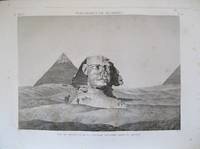
1978Middle East: Paris Impremerie de C.L.F.Pancoucke 1820-1829. Copper engraved view of the Great Sphinx between the Pyramids of Giza from the fifth volume of the "Antiquities "of the "Description de l'Egypte" 2nd Edition; black & white; verso blank. Blind stamp of the publisher Panckoucke to margin. The view shows the Sphinx full face emerging from the sand with the Pyramid of Khafre behind. Good dark impression; some spotting mainly to margins a few to image. "Description de l'Egypte ou Recueil des observations et des recherches qui ont été faites en Egypte pendant l'expédition de l'armée française." When Napoleon Bonaparte invaded Egypt in 1798 he brought with him an entourage of more than 160 scholars and scientists. Known as the French Commission on the Sciences and Arts of Egypt these experts undertook an extensive survey of the country's archeology topography and natural history. . For four years more than 150 artists engineers linguists and scientists traveled throughout the country examining almost every aspect of ancient and contemporary Egypt. They recorded and measured in meticulous detail Egypt's topography flora and fauna and its ancient and contemporary architecture. A soldier who was part of the expedition found the famous Rosetta Stone which the French linguist and scholar Jean-François Champollion 1790-1832 later used to unlock many of the mysteries that long had surrounded the language of ancient Egypt. The Egyptian expedition ended with a total military failure. The French left Egypt in 1801 with the honors of war but defeated; yet military failure remains a significant event in the history of knowledge because it is the first time a military expedition was accompanied by a scientific expedition. In 1802 Napoleon authorized the publication of the commission's findings in a monumental multi-volume work that included plates maps scholarly essays and a detailed index. Publication of the original Imperial edition began in 1809 and continued to 1822 sold by subscription. It proved so popular that a second edition was published under the post-Napoleonic Bourbon Restoration. The "Royal edition" published in Paris by C.L.F. Panckoucke from 1820-1830. The Second edition consists of 11 or 12 volumes of plates in folio and 24 of text bound as 26 8vo. Brunet:II 617; Blackmer/Navari: 476 1st edition Middle East Egypt Sphinx Pyramids of Giza Memphis Paris Impremerie de C.L.F.Pancoucke 1820-1829 unknown
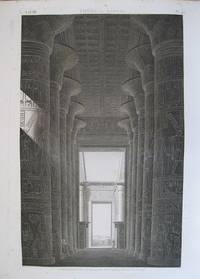
1974Middle East: Paris Impremerie de C.L.F.Pancoucke 1820-1829. Copper engraved view view of the great hypostyle hall in the Precinct of Amun Re Karnak Thebes from the third volume of the "Antiquities "of the "Description de l'Egypte" 2nd Edition; black & white; verso blank. Blind stamp of the publisher Panckoucke to margin. The view shows the great hypostyle hall in the Precinct of Amun Re with the massive carved columns. Good dark impression; some light foxing. "Description de l'Egypte ou Recueil des observations et des recherches qui ont été faites en Egypte pendant l'expédition de l'armée française." When Napoleon Bonaparte invaded Egypt in 1798 he brought with him an entourage of more than 160 scholars and scientists. Known as the French Commission on the Sciences and Arts of Egypt these experts undertook an extensive survey of the country's archeology topography and natural history. . For four years more than 150 artists engineers linguists and scientists traveled throughout the country examining almost every aspect of ancient and contemporary Egypt. They recorded and measured in meticulous detail Egypt's topography flora and fauna and its ancient and contemporary architecture. A soldier who was part of the expedition found the famous Rosetta Stone which the French linguist and scholar Jean-François Champollion 1790-1832 later used to unlock many of the mysteries that long had surrounded the language of ancient Egypt. The Egyptian expedition ended with a total military failure. The French left Egypt in 1801 with the honors of war but defeated; yet military failure remains a significant event in the history of knowledge because it is the first time a military expedition was accompanied by a scientific expedition. In 1802 Napoleon authorized the publication of the commission's findings in a monumental multi-volume work that included plates maps scholarly essays and a detailed index. Publication of the original Imperial edition began in 1809 and continued to 1822 sold by subscription. It proved so popular that a second edition was published under the post-Napoleonic Bourbon Restoration. The "Royal edition" published in Paris by C.L.F. Panckoucke from 1820-1830. The Second edition consists of 11 or 12 volumes of plates in folio and 24 of text bound as 26 8vo. Brunet:II 617; Blackmer/Navari: 476 1st edition Middle East Egypt Karnak Thebes Paris Impremerie de C.L.F.Pancoucke 1820-1829 unknown
1664304531664. A Lyon chez AndrÂŽ Olyer 1664. Un vol. au format gd in-16 ÂŽtroit 138 x 78 mm de 3 ff. n.fol. 228 pp. et 5 ff. n.fol. Reliure XIXÂme de demi-basane glacÂŽ fauve dos lisse ornÂŽ de quadruples filets dorÂŽs titre dorÂŽ palette et date dorÂŽes en queue tranches mouchetÂŽes/ Edition en partie originale ''qui doit Âtre terminÂŽe par un Ballet des proverbes dansÂŽ par Louis XIV en 1654''. in Barbier. Ce qui est ici le cas. L'exemplaire n'est en revanche ici par pourvu de sa planche gravÂŽe. ''Ce joli exemplaire est ornÂŽ d'une grande planche pliÂŽe que je n'ai jamais vue dans aucun autre et qui reprÂŽsente une vingtaine de proverbes en action assez joliment gravÂŽs''. Nodier. 'Il se trouve dans cette premiÂre publication de Bellingen quelques explications graveleuses que l'auteur n'a pas admises dans la seconde''. in Brunet. Barbier II Dictionnaire des ouvrages anonymes 892-d - Brunet III Manuel du libraire et de l'amateur de livres 408 pour des ÂŽditions millÂŽsimÂŽes 1665 chez PÂŽpinguÂŽ ou Guignard ou P. David - Nodier MÂŽlanges tirÂŽs d'une petite bibliothÂque p. 128 - Absent de Rochambeau Bibliographie des Oeuvres de La Fontaine. Dos passÂŽ. Petit manque angulaire affectant quatre feuillets. Un autre prÂŽsente quelques t‰ches. Papier oxydÂŽ. Rousseurs et t‰ches claires dans le corps d'ouvrage. Quelques feuillets rognÂŽs un peu court. Du reste bonne condition. b42961 unknown
1971Middle East: Paris Impremerie de C.L.F.Pancoucke 1820-1829. Copper engraved view of Festival of the Nile flood and the opening of Khaleej dike Cairo from the first volume of the "Etat Modene "of the "Description de l'Egypte" 2nd Edition; 1822; black & white; verso blank. Blind stamp of the publisher Panckoucke to margin. The view shows the festival celebrated at the opening of the Khaleej dike so that the flood waters of the Nile can enter the canal. Since ancient times the Nile has played a vital role in Egypt to the point that it is the river that the Egyptians attributed the birth and existence of their country. As the waters of the Nile rose the Egyptians prepared to let them through for irrigation etc thus a most important moment each year to be celebrated. the sultan would proceed to the Misr point to open the dike. Called the cavalcade of the opening of the Khaleej. it was was one of the most important festivals of the year. Good dark impression; some light foxing; glue and remains of tissue guard to upper margin. "Description de l'Egypte ou Recueil des observations et des recherches qui ont été faites en Egypte pendant l'expédition de l'armée française." When Napoleon Bonaparte invaded Egypt in 1798 he brought with him an entourage of more than 160 scholars and scientists. Known as the French Commission on the Sciences and Arts of Egypt these experts undertook an extensive survey of the country's archeology topography and natural history. . For four years more than 150 artists engineers linguists and scientists traveled throughout the country examining almost every aspect of ancient and contemporary Egypt. They recorded and measured in meticulous detail Egypt's topography flora and fauna and its ancient and contemporary architecture. A soldier who was part of the expedition found the famous Rosetta Stone which the French linguist and scholar Jean-François Champollion 1790-1832 later used to unlock many of the mysteries that long had surrounded the language of ancient Egypt. The Egyptian expedition ended with a total military failure. The French left Egypt in 1801 with the honors of war but defeated; yet military failure remains a significant event in the history of knowledge because it is the first time a military expedition was accompanied by a scientific expedition. In 1802 Napoleon authorized the publication of the commission's findings in a monumental multi-volume work that included plates maps scholarly essays and a detailed index. Publication of the original Imperial edition began in 1809 and continued to 1822 sold by subscription. It proved so popular that a second edition was published under the post-Napoleonic Bourbon Restoration. The "Royal edition" published in Paris by C.L.F. Panckoucke from 1820-1830. The Second edition consists of 11 or 12 volumes of plates in folio and 24 of text bound as 26 8vo. Brunet:II 617; Blackmer/Navari: 476 1st edition Middle East Egypt Cairo Festival of the Khaleej Paris Impremerie de C.L.F.Pancoucke 1820-1829 unknown
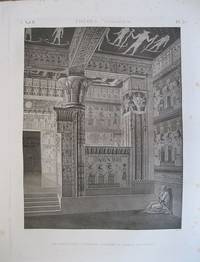
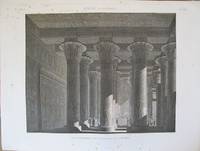
1980Middle East: Paris Impremerie de C.L.F.Pancoucke 1820-1829. Copper engraved view of the interior of the temple of Esna from the first volume of the "Antiquities "of the "Description de l'Egypte" 2nd Edition; black & white; verso blank. Blind stamp of the publisher Panckoucke to margin. The view shows the highly decorated columns and ceiling of the entrance to the temple with a procession moving through to the main temple The tutelary deities of Latopolis seem to have been the triad – Khnum and Neith and Heka their offspring. The temple of Esna dedicated to this triad was remarkable for the beauty of its site and the magnificence of its architecture. It was built of red sandstone and its portico consisted of six rows of four columns each with lotus-leaf capitals all of which however differ from each other Good dark impression; spotting mainly to margins. "Description de l'Egypte ou Recueil des observations et des recherches qui ont été faites en Egypte pendant l'expédition de l'armée française." When Napoleon Bonaparte invaded Egypt in 1798 he brought with him an entourage of more than 160 scholars and scientists. Known as the French Commission on the Sciences and Arts of Egypt these experts undertook an extensive survey of the country's archeology topography and natural history. . For four years more than 150 artists engineers linguists and scientists traveled throughout the country examining almost every aspect of ancient and contemporary Egypt. They recorded and measured in meticulous detail Egypt's topography flora and fauna and its ancient and contemporary architecture. A soldier who was part of the expedition found the famous Rosetta Stone which the French linguist and scholar Jean-François Champollion 1790-1832 later used to unlock many of the mysteries that long had surrounded the language of ancient Egypt. The Egyptian expedition ended with a total military failure. The French left Egypt in 1801 with the honors of war but defeated; yet military failure remains a significant event in the history of knowledge because it is the first time a military expedition was accompanied by a scientific expedition. In 1802 Napoleon authorized the publication of the commission's findings in a monumental multi-volume work that included plates maps scholarly essays and a detailed index. Publication of the original Imperial edition began in 1809 and continued to 1822 sold by subscription. It proved so popular that a second edition was published under the post-Napoleonic Bourbon Restoration. The "Royal edition" published in Paris by C.L.F. Panckoucke from 1820-1830. The Second edition consists of 11 or 12 volumes of plates in folio and 24 of text bound as 26 8vo. Brunet:II 617; Blackmer/Navari: 476 1st edition Middle East Egypt Esne Esna Latopolis Paris Impremerie de C.L.F.Pancoucke 1820-1829 unknown
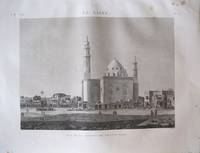
1966Middle East: Paris Impremerie de C.L.F.Pancoucke 1820-1829. Copper engraved view of the mosque of Sultan Hasan Cairo from the first volume of the "Etat Modene "of the "Description de l'Egypte" 2nd Edition; 1822; black & white; verso blank. Blind stamp of the publisher Panckoucke to margin. The view shows the mosque towering over the nearby buildings with small shops and workshops in and around the Square. Good dark impression; some foxing to platemainly to blank margins. "Description de l'Egypte ou Recueil des observations et des recherches qui ont été faites en Egypte pendant l'expédition de l'armée française." When Napoleon Bonaparte invaded Egypt in 1798 he brought with him an entourage of more than 160 scholars and scientists. Known as the French Commission on the Sciences and Arts of Egypt these experts undertook an extensive survey of the country's archeology topography and natural history. . For four years more than 150 artists engineers linguists and scientists traveled throughout the country examining almost every aspect of ancient and contemporary Egypt. They recorded and measured in meticulous detail Egypt's topography flora and fauna and its ancient and contemporary architecture. A soldier who was part of the expedition found the famous Rosetta Stone which the French linguist and scholar Jean-François Champollion 1790-1832 later used to unlock many of the mysteries that long had surrounded the language of ancient Egypt. The Egyptian expedition ended with a total military failure. The French left Egypt in 1801 with the honors of war but defeated; yet military failure remains a significant event in the history of knowledge because it is the first time a military expedition was accompanied by a scientific expedition. In 1802 Napoleon authorized the publication of the commission's findings in a monumental multi-volume work that included plates maps scholarly essays and a detailed index. Publication of the original Imperial edition began in 1809 and continued to 1822 sold by subscription. It proved so popular that a second edition was published under the post-Napoleonic Bourbon Restoration. The "Royal edition" published in Paris by C.L.F. Panckoucke from 1820-1830. The Second edition consists of 11 or 12 volumes of plates in folio and 24 of text bound as 26 8vo. Brunet:II 617; Blackmer/Navari: 476 1st edition Middle East Egypt Cairo Sultan Hasan Mosque Paris Impremerie de C.L.F.Pancoucke 1820-1829 unknown
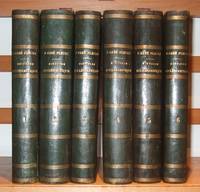
1836099928Paris: Au Bureau Du Moniteur Des Villes et Des Campagnes 1836. Books measure 26x18cm. 740pp921pp668pp816pp740pp648pp. Bound in period quarter calf marble boards flat gilt bands gilt title lettering. Bindings lightly rubbed occasional minor nick or abrasion mark tail of one spine chipped with loss one hinge joint split but board firmly attached. Generally all bindings in good clean firm condition. Internally a couple of pages working loose light tanning or foxing. Pages in good clean condition. A nice set in attrcative period bindings. . Quarter Calf. Very Good. Large 8 Vo. Au Bureau Du Moniteur Des Villes et Des Campagnes Hardcover
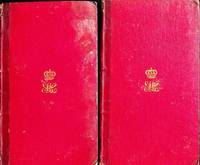
1820aa736Paris: Hubert Libraire Palais-Royal 1820. First. Very Good. This very scarce novel written by a popular comic French actress is in red morocco with gilt titles on spines and the gilt monogram of the Empress Marie-Louise on both covers indicating that the volumes are from her personal library. Other volumes from her library with similar bindings are held at Cambridge University and at Princeton.<br /> <p>The set is in very good condition overall. Vol. 1 does have some old water damage to front edges of covers half title and endpapers but the rest of the covers and the text are unaffected with only slight age toning and uneven page edges as is sometimes typical for books of this period. Vol. 2 shows none of the issues of Vol. 1 and has only minor scuffing at the corners. Modest foxing primarily at half title and title pages Both bindings are tight and sound. An internet search yields no other originals currently available just modern print-to-order copies. So the novel itself is scarce but its association with the Empress makes this set unique.</p> <br /> <p>Marie-Anne-Florence Bernardy-Nones 1766 - 1818 known as Mademoiselle Fleury was a Belgian actress active in France Her father Louis-Joseph Nones known as Fleury and mother Marie-Anne-Denise Bernardy daughter of Charles Bernardy were comic actors in the provinces who often appeared in the Austrian Netherlands. Mademoiselle Fleury debuted at the Comédie-Française in 1786 and became a sociétaire in 1791 retiring in 1807.</p> <br /> <p>Marie Louise 1791–1847 was Napoleon's second wife and as such Empress of the French and Queen of Italy from their marriage in 1810 until his abdication in April 1814. She was the eldest child of Francis II Holy Roman Emperor and Emperor of Austria and his second wife Maria Theresa of Naples and Sicily. Despite Napoleon’s abdication her royal parentage was recognized by the Congress of Vienna and she became the Duchess of Parma from 1814 until her death.</p> . Hubert, Libraire, Palais-Royal unknown
mon0000013325Hardcover ivory boned. Good. in x in x in. 6 Volume set on ivory hard very collectable Volume 1-37-380 Volume 2-381-681 Volume 3-679-975 Volume 4-984a985-1197 Volume 5-1198-1312 Volume 61313-1517. From the Eton library hardcover