3 709 résultats
500321388Ab Video 13 6x17 1x1 2cm. Sans date. blu_ray.
500323242Ab Video 13 6x17 1x1 2cm. Sans date. blu_ray.
A clean, unmarked book with a tight binding. 446 pages. Full dark red cloth boards. Slight edge wear to dust jacket. Attractive small format: 4 3/4"w x 7 1/2"h. Modern Library #158. Rockwell Kent torch bearer design on endpapers and embossed on cover.
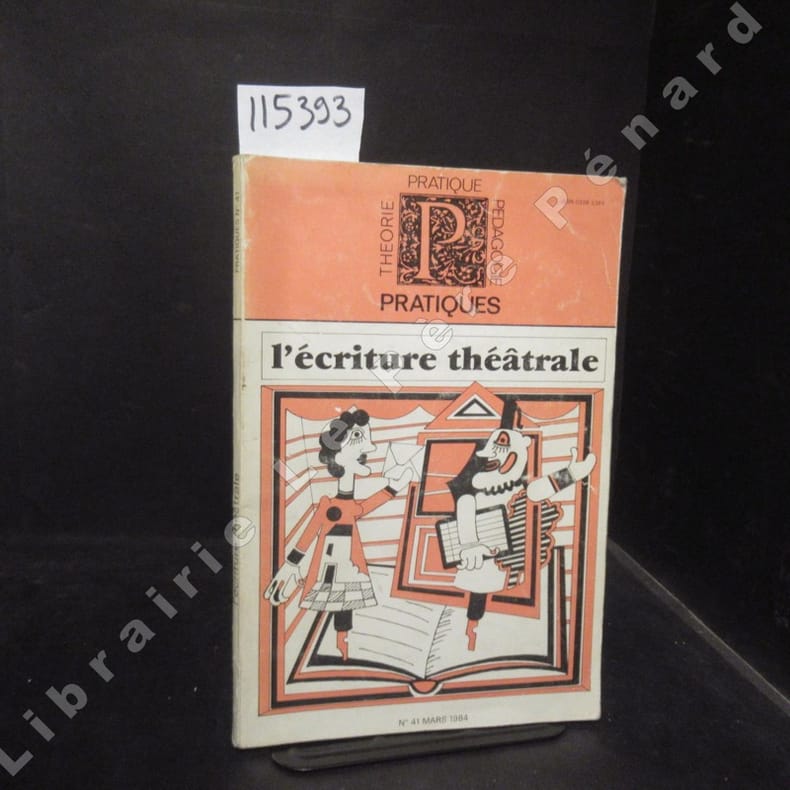
19841153931984 N° 41 - Mars 1984 - Revue militante publiée par le CRESEF, publiée avec le concours du Centre National des Lettres - In-8, broché couverture illustrée - 128 pages
500326569Fip 13 4x1 2x17cm. Sans date. blu_ray.
500269198Gaumont 13 7x17 1x1 2cm. Sans date. blu_ray.
500329375France Televisions Distribution 13 76x18 03x1 48cm. Sans date. Broché.
500326523Bac Films Distribution 13 76x1 48x18 03cm. Sans date. blu_ray.
in-12, 253 p., ill. h.t. n., tabl. et listes en ap [CL-1]
Scholars' name to halftitle (Mark Golden). Very light shelfwear. ; In this volume William S. Anderson sets Plautus, who wrote Rome's earliest surviving poetry, in his rightful place among the Greek and Roman writers of what we know as New Comedy (fourth to second centuries). Anderson begins by defining major innovations that Plautus made on inherited Greek New Comedy (Menander, Philemon, and Diphilus) , transforming it from romantic domestic drama to a celebration of rollicking family anarchy. He shows how Plautus diminished the traditional importance of love and replaced it with a new major theme: 'heroic badness,' especially embodied in the rogue slave (ancestor of the impudent servant, valet, or maid). Anderson then examines the unique verbal texture of Plautus' drama and demonstrates his revolt against realism, his drive to have his characters defy everyday circumstances and pit their intrepid linguistic wit against social order, their Roman extravagant impudence against Greek self-control. Finally, Anderson explores the special form of metatheatre that we admire in Plautus, by which he undermines the assumptions of his Greek models' and replaces them with a new, confident Roman comedy. ; Robson Classical Lectures; 194 pages
Faint creasing to spine. Light shelfwear. Scholar's name to half-title (Robert Brown). ; In this volume William S. Anderson sets Plautus, who wrote Rome's earliest surviving poetry, in his rightful place among the Greek and Roman writers of what we know as New Comedy (fourth to second centuries). Anderson begins by defining major innovations that Plautus made on inherited Greek New Comedy (Menander, Philemon, and Diphilus) , transforming it from romantic domestic drama to a celebration of rollicking family anarchy. He shows how Plautus diminished the traditional importance of love and replaced it with a new major theme: 'heroic badness,' especially embodied in the rogue slave (ancestor of the impudent servant, valet, or maid). Anderson then examines the unique verbal texture of Plautus' drama and demonstrates his revolt against realism, his drive to have his characters defy everyday circumstances and pit their intrepid linguistic wit against social order, their Roman extravagant impudence against Greek self-control. Finally, Anderson explores the special form of metatheatre that we admire in Plautus, by which he undermines the assumptions of his Greek models' and replaces them with a new, confident Roman comedy. ; Robson Classical Lectures; 194 pages
Creasing to spine. Light edgewear. Minor shelfwear. ; Parallel text in French and Greek. ; Collection Des Universités De France. Association Guillaume Budé; Vol. 2; 156 pages
Browning to spine. Small chips and light creasing to spine. Pages tanned. Scholars' name to half-title (Daniel de Montmollin). ; Parallel text in French and Greek. ; Collection Des Universités De France. Association Guillaume Budé; Vol. 2; 156 pages
Creasing to spine. Pages tanned. ; Parallel text in French and Greek. ; Collection Des Universités De France. Association Guillaume Budé; Vol. 2; 156 pages
Creasing to spine. Tape to head and base of spine with Tape stains to wraps. Scholar's bookplate to inner cover (Robert Brown). ; Parallel text in French and Greek. ; Collection Des Universités De France. Association Guillaume Budé; Vol. 2; 156 pages
Creasing to wraps spine and tears to backstrip. Spine and Wraps have been crudely repaired with cellotape. Scuffing to wraps. Scholars' bookplate to inner cover. Pencil marginalia on a few pages. ; Parallel text in French and Greek. ; Collection Des Universités De France. Association Guillaume Budé; Vol. 4; 157 pages
Book has been rebound in maroon coloured buckram with gilt lettering to spine. Non-circulating ex-library copy with call numbers to spine and institution plate to inner cover (Dept. Of Classics, Univ. Of Toronto). Internally clean and bright. ; Parallel text in French and Greek. ; Collection Des Universités De France. Association Guillaume Budé; Vol. 4; 157 pages
Book has been rebound in plain yellow wrappers. Minor pencil marginalia. ; Parallel text in French and Greek. ; Collection Des Universités De France. Association Guillaume Budé; Vol. 4; 157 pages
Minor Creasing to wraps. Spine and Wraps have been crudely repaired with cellotape with tape stains. Small torn corner to front wrap. Scholar's bookplate to inner cover (Robert Brown). Pencil marginalia on a few pages. ; Parallel text in French and Greek. ; Collection Des Universités De France. Association Guillaume Budé; Vol. 4; 157 pages
Nicely printed, title page in red and black. Some browning to spine and edges of wraps. Faint soiling to wraps. ; Ii+116pp. ; 116 pages
Creasing to spine. Chipping to spine ends. Tear to base of spine cover (3 cm). Scholar's bookplate to inner cover (Robert Brown). Scholar's name to ffep (Robert Brown). Else VG. ; 280 pages; Professor Dover's book is designed for those who are interested in the history of comedy as an art form but who are not necessarily familiar with the Greek language. The eleven surviving plays of Aristophanes are treated as representative of a genre. Old Attic Comedy, which was artistically and intellectually homogeneous and gave expression to the spirit of Athenian society in the late fifth and early fourth centuries B. C. Aristophanes is regarded primarily not as a reformer or propagandist but as a dramatist who sought, in competition with his rivals, to win the esteem both of the general public and of the cultivated and critical minority. He succeeded in this effort by making people laugh, and the book pays more attention than has generally been paid to the technical means, whether of language or of situation, on which Aristophanes' humor depends. Particular emphasis is laid on his indifference-positively assisted by the physical limitations of the Greek theatre and the conditions of the Athenian dramatic festivals-to the maintenance of continuous "dramatic illusion" or to the provision of a dramatic event with the antecedents and consequences which might logically be expected. More importance is attached to Aristophanes' adoption of popular attitudes and beliefs, to his creation of uninhibited characters with which the spectators could identify themselves, and to his acceptance of the comic poet's traditional role as a mordant but jocular critic of morals, than to any identifiable and consistent elements in his political standpoint.
Light wear to corners of wraps. Former owner's name to half-title. Minor shelfwear. ; The study of roman Comedy is a study of the work of two comic poets, Titus Maccius Plautus and Publius Terentius Afer. Looks at the twenty extant plays of Plautus and the six by Terence. Also looks at Greek Comedy and Roman Comedy's influence on later authors. ; 501 pages
Rubbing to extremities has caused light colour loss. Minor shelfwear. ; The study of roman Comedy is a study of the work of two comic poets, Titus Maccius Plautus and Publius Terentius Afer. Looks at the twenty extant plays of Plautus and the six by Terence. Also looks at Greek Comedy and Roman Comedy's influence on later authors. ; 501 pages
Very light shelfwear to book. DJ is price-clipped with light chipping to extremities. ; 50 pages