BECKETT, Samuel, & Georges DuthuitBiblio.com

5 143 résultats
1965183839London: John Calder 1965. The Proustian equation is never simple Signed limited edition number 67 of 100 copies signed by Beckett and specially bound. Proust Beckett's epistemological and aesthetic manifesto was first published in 1931. Three Dialogues a series of letters between Beckett and Duthuit concerning contemporary art was first published in the literary journal Transition in 1949. Federman & Fletcher note that Beckett found writing Proust "a hard job"; he reread "the sixteen volumes of Proust's novel twice" in order to write this work. Octavo. Original quarter calf spine and front cover lettered in gilt green cloth sides gilt edges. Housed in the original green cloth slipcase. Faintly toned spine with a few tiny spots trivial foxing to endpapers: a near-fine copy in fine slipcase. Federman & Fletcher 7.2. hardcover
020332New York NY: Limited Editions Club 1989. Book. Near fine condition. Hardcover. Signed by Author and Illustrator. First thus edition. Quarto 4to. 128 pages of text. Bound in full black Nigerian goatskin lettered in gilt on spine and front cover. Complete with the black cloth clamshell box lined in gray suede with gilt lettered leather spine label; in near fine condition. Illustrated with 6 white/off-white aquatint etchings by Ryman on Arches and handmade Japanese paper each protected with the original tissue guard. Number 232 of 550 copies signed by Beckett and Ryman on a limitation page. A trilogy of three novellas including Company Ill Seen Ill Said and Worstward Ho. One tiny scuff on the spine; otherwise fine condition. Book height measures 10 13/16" 275mm. Box height is 12 1/4" 311mm. First thus edition. Limited Editions Club Hardcover
198254723Paris: Les Editions de Minuit 1982. Fine. Les Editions de Minuit Paris 1982 10 x 18 cm broché BECKETT Samuel. Berceuse suivi de l'Impromptu d'Ohio Rockaby and Ohio Impromptu Les éditions de minuit Paris 1982 10 x 18 cm original wrappers First edition one of 99 numbered copies on vélin d'Arches this one of some hors commerce copies justified H.C. the only grand papier deluxe copies. Autograph inscription from Samuel Beckett to a close friend. A good copy. Les Editions de Minuit unknown
196160478Paris: Les Editions de Minuit 1961. Fine. Les Editions de Minuit Paris 1961 12 x 19 cm broché First edition on ordinary paper. Autograph inscription signed by Samuel Beckett to Gaetan Picon. Spine sunned. Les Editions de Minuit unknown
196660477Paris: Les Editions de Minuit 1966. Fine. Les Editions de Minuit Paris 1966 12 x 19 cm broché First edition on ordinary paper. Autograph inscription signed by Samuel Beckett to Gaetan Picon. Les Editions de Minuit unknown
196651870Paris: Les Editions de Minuit 1966. Fine. Les Editions de Minuit Paris 1966 11.50 x 18 cm broché First edition on ordinary paper. Precious copy inscribed by Beckett to his friend the painter Geer Van Velde and his wife Lise. Small holes on the first cover. What to say of the sliding planes the shimmering contours the cut-out figures in the fog the balance that any little thing can break breaking and re-forming themselves under our very eyes How to talk about the colors that breathe and pant Of the swarming stasis Of this world without weight without force without shadow Here everything moves swims fells comes back falls apart re-forms. Everything stops non-stop. One would say it's the revolt of the internal molecules of a stone a split second before its disintegration. That is literature The van Veldes' Art or the World and the Trousers in Cahiers d'Art n°11-12 Paris 1945. Beckett here is not talking despite how it may appear about his literary oeuvre but about the paintings of Geer Van Velde going on to add a few lines later Bram Van Velde paints distance. Geer Van Velde paints succession. This elegy published on the occasion of the double exhibition of the Van Veldes Geer at Maeght's and Bram at the Galerie Mai is the first important text on these painters more or less unknown to the public at the time: We've only just started spouting nonsense about the Van Velde brothers and I'm the first. It's an honor. This is also the first critical text written directly in French by a young Irish writer who had not as yet published anything in France. Thus the first and most important of Beckett's writings on art composed at the dawn of his literary career establishes right from the start a fundamental relationship between his developing work and his friends' art: Thus this text has often been read in a hollow or in the mirror as one of the rare designations of Beckett's poetry to come by the man himself a sort of anamorphic program of writing Un pantalon cousu de fil blanc : Beckett et l'épreuve critique by Pierre Vilar. A real statement of dramaturgical intent this fundamental text whose introspective value Beckett lays out from the introduction on one does nothing but tell stories with words ushers in the writer's most fruitful creative period. In essence like Apollinaire and Cendrars Beckett draws from the artistic problems of his contemporaries the catalyst of his own future writing through the deepest questioning of narrative figurative or poetical presuppositions Pascale Casanova in Beckett l'abstracteur. The major influence of modern painting on the narrative structure or destructuring of Beckett's drama and novels would be pointed out and examined by a number of thinkers among them Gilles Deleuze Julia Kristeva and Maurice Blanchot. It was in fact with the art of the Van Veldes first Geer then Bram that Beckett began to formalize this desire to translate the pictorial question into dramaturgical terms. Thus it was that he rejected Nicolas de Staël's set design for Godot since: the set must come out of the text without adding anything to it. As for the visual comfort of the audience you can imagine how much I care. Do you really think you can listen with the backdrop of Bram's set or see anything other than him Letter to Georges Duthuit 1952. When he met Geer in 1937 Beckett was going through a major existential crisis and had just been reworking his first novel Murphy which had been rejected by a great many publishers. He was lost in alcohol leaving Ireland and moving once and for all to Paris Le Pictural dans l'uvre de Beckett Lassaad Jamoussi. He returned from a long artistic journey in Germany where he was marked by classical works as well as contemporary art it was during this journey that he discovered Caspar David Friedrich's Two Men Contemplating the Moon his source for Waiting for Godot. Art was thus at the heart of his creative thinking and t Les Editions de Minuit unknown
197246804Paris: Les Editions de Minuit 1972. Fine. Les Editions de Minuit Paris 1972 14.50 x 19.50 cm broché First edition of 342 numbered copies on vélin d'Arches this one of 50 hors commerce copies. Autograph inscription from Samuel Beckett to Ludovic Janvier. Spine slightly sunned not serious. Les Editions de Minuit unknown
198148471Paris: Editions de Minuit 1981. Fine. Editions de Minuit Paris 1981 14 x 19.50 cm broché Editions de Minuit Paris 1981 14x195cm original wrappers. First edition one of 114 numbered copies on alfa mousse this one of 15 hors commerce advance copies. Signed and inscribed by Samuel Beckett to a friend. A very good copy. Editions de Minuit unknown
197554724Paris: Les Editions de Minuit 1975. Fine. Les Editions de Minuit Paris 1975 10.50 x 18 cm broché First edition one of 150 numbered copies on vélin d'Arches paper this copy not justified the only large paper copies along with 92 on vélin supérieur and a few hors commerce. Autograph inscription signed by Samuel Beckett to a close friend. A good copy. Les Editions de Minuit unknown
197546802Paris: Les Editions de Minuit 1975. Fine. Les Editions de Minuit Paris 1975 10 x 18 cm broché Les éditions de minuit Paris 1975 10x18cm original wrappers. First edition one of a few hors commerce advance copies on vélin supérieur the tirage de tête along with 92 numbered copies on the same paper. Inscribed copy signed by Samuel Beckett to Ludovic Janvier. A good copy. Les Editions de Minuit unknown
196946806Paris: Les Editions de Minuit 1969. Fine. Les Editions de Minuit Paris 1969 14.50 x 19.50 cm broché Les éditions de minuit Paris 1969 145x195cm original wrappers. First edition one of 742 copies on vélin cuve B.F.K. de Rives paper this one of 100 hors commerce advance copies. Inscribed copy signed by Beckett to Ludovic Janvier. Top of upper cover and spine slightly sunned. Les Editions de Minuit unknown
19821804108Lord John Press 1982. Special Edition. Hardcover. Fine. Fine presentation copy one of only 299 specially bound numbered copies and twenty-six lettered copies. Signed by the author on half-title. Housed in custom-made case. Lord John Press hardcover books
1957499484London: Faber and Faber 1957. Softcover. Fine. First English edition. Octavo. 37pp. Pictorial wrappers. A fine bright copy. Signed by Samuel Beckett on the title page and scarce thus. Faber and Faber unknown
1957499486London: Faber and Faber 1957. Softcover. Near Fine. First English edition. Octavo. 37pp. Pictorial wrappers. A fine copy. Inscribed by Beckett: "for Steven Charish from Samuel Beckett 30.7.82" on the title page and scarce thus. Faber and Faber unknown
1804108Lord John Press 1982. Special Edition. Hardcover. Fine. Fine presentation copy one of only 299 specially bound numbered copies and twenty-six lettered copies. Signed by the author on half-title. Housed in custom-made case. Lord John Press hardcover
7932Paris, Minuit, nov. 1972-sept. 1981. 45 volumes in-8, brochés, couvertures illustrées. / 45 8vo vol., pict. covers.
196421236671964. London: John Calder. 1964. 8vo. Original full fawn morocco lettered and lined in gilt to spine printed on handmade paper top edge gilt others untrimmed publisher's fawn paper slipcase; pp. 160; spine a touch faded pages predominantly uncut slipcase with a few surface marks and marginal fading; a crisp very near fine copy.One of 100 numbered copies signed by Samuel Beckett hors commerce bound in full morocco and printed on handmade paper Series B; this is copy no. 8.How It Is translated by the author was issued three years after the original French Comment C'est. In three parts a precis of which appears in the opening words - ""how it was I quote before Pim with Pim after Pim how it is three parts I say it as I hear it"" - the work unfolds in a series of short unpunctuated ""paragraphs"" they are not paragraphs any more than the work is what we think of as a novel. The unnamed narrator lying in dark and mud relates what he hears or remembers from a different voice: the story obliquely of a life his life and predicament before during and after the pivotal encounter with Pim though we can't be sure about any of this.Beckett began writing How It Is in December 1958 while staying at his country retreat a small house near the village of Ussy-sur-Marne sixty kilometres away from Paris. Edouard Magessa O'Reilly the work's most recent editor notes that early drafts include references to the details of the author's daily life to the moles for example tearing up his plant beds and mentioned in letters from this time. Such quotidian detail however was strategically excised from the finished text. Abstract and enigmatic the work is nevertheless unflinching in its account of violence and cruelty; the unpunctuated yet measured prose rendering its graphic descriptions of mutilation even more disturbing. Certainly the bleakest and among the most ""difficult"" of Beckett's works it is one of the great prose works of the last century.In addition to the morocco edition of 100 copies B1-100 100 copies were issued in vellum signed and numbered A1-100. The UK trade edition was published by John Calder on April 30th 1964 in an edition of 4000 copies. See How It Is edited by Edouard Magessa O'Reilly London: Faber and Faber 2009.Federman and Fletcher 384.101 hardcover
0486282376New. Brand new and still unused unknown
0199142602New. Brand new and still unused unknown
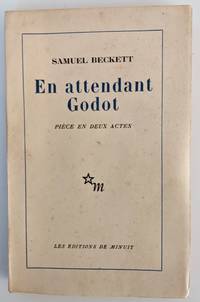
1952965Paris: Les Éditions de Minuit 1952. 8vo. 187 x 120 mm. 7 ¼ x 4 ¾ inches. 163 iv pp. Original printed wrappers with small portrait of the author on the rear wrapper. Wrappers a bit dusty but in very good condition. Discreet bookseller's stamp in the lower corner of the inside back wrapper. House in a half morocco clamshell box.<br /> <br /> First edition with colophon which reads "Il a été tire de cet ouvrage trente-cinq exemplaire sur velin supérieur numérotés de 1 a 35 et constituent l'édition original." On the following leaf the imprint reads "Achevé d'imprimer sur les presses de L'Imprimerie Habauzit a Aubenas Ardéche en Septembre mil neuf cent cinquante deux. Dépôt legal 3e trimestre 1952.". Les Éditions de Minuit unknown
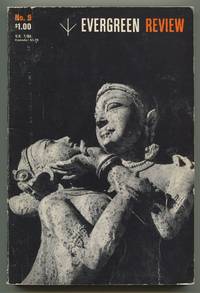
1959518902New York: Evergreen Review 1959. Softcover. Near Fine. First edition. Octavo. 224pp. Pictorial wrappers. Illustrated. Light wear at extremities of spine and front cover faint crease on front cover else a bright very good or better copy. Inscribed by Beckett on pge 21 at his contribution: "The publication of author's English translation of 'texte pour rien' best wishes from Sam. 1960". An unusually long inscription from Beckett whose inscriptions are usually terse. Contains Beckett's Text for Nothing I F&F 378. Additional contributions by Henry Miller Frank O'Hara Denise Levertov Gary Snyder et al. Evergreen Review unknown
185194242London: Bradbury Agnew and Co. Ld 1851. leather edges gilt five raised bands gilt lettering on spine. Guild of Women-Binders. 8vo. leather edges gilt five raised bands gilt lettering on spine. iv xii 308 pages. First edition Tooley 298. Not in Field. Illustrated by John Leech with 10 full-colored etchings and 98 woodcut vignettes. John Leech was a staff artist for "Punch" from its early issues in 1841. Gilbert Abbott à Beckett was one of the original staff members for "Punch." One of the Victorian era's best-known comedies. This particular copy is bound in full Chocolate Crushed Morocco both covers blind ruled with five raised bands. Marbled endpapers and pastedowns. Title in gilt lettering on the spine between the first and second band from the top. Guild of Women-Binders ticket in gilt on the lower leather turnin on the front pastedown. Two faint scratches on the front cover. Spine lightly sunned. Leather offsetting onto free endpapers. Moderate foxing on preliminary pages with a majority of the text and colored plates being uneffected. Title page has small chip in top right corner. The binding while austere but as one would expect from the Guild of Women-Binders it is well executed. Bradbury, Agnew and Co. Ld unknown books
1964WRCLIT71560London: John Calder 1964. Large octavo. Publisher's tan morocco lettered in gilt t.e.g. others untrimmed. Minute fleck of darkening on spine otherwise fine in a very good publisher's slipcase with small label ghost on one panel. First edition limited issue of Beckett's translation of COMMENT C'EST. Copy #51 of one hundred numbered copies in series 'B' hors commerce specially bound from a total of two hundred copies specially printed on handmade paper and signed by the author. F&F 384.1. John Calder unknown books
1965311731London: Calder and Boyars 1965. Number 11 of 100 copies signed by the author. 14pp. 8vo. Grey cloth in slipcase. Fine some foxing on colophon page. Number 11 of 100 copies signed by the author. 14pp. 8vo. ONE OF 100 SIGNED COPIES ADDITIONALLY INSCRIBED. Additionally inscribed on title-page "For/ Bill & Roslyn/ their friend/ Sam." William Targ 1907-1999 was an editor and then head of Putnam's before founding his own imprint Targ Editions; he was also a noted bibliophile and Beckett collector. His wife Roslyn Targ 1925-2017 was Beckett's literary agent. Federman & Fletcher 385 Calder and Boyars unknown books
19560104654Faber and Faber 1956. First Edition. Hardcover. Very Good/Very Good. Published in London by Faber and Faber Limited in 1956. "First published in England in mcmlvi" stated on copyright page indicating First UK Edition. Publisher's note tipped in following copyright page. Book very good some foxing and usual browning on free endpapers. DJ very good. Book comes in specially made cloth slip cover. DJ price reads "9s 6d net. Faber and Faber hardcover books