450 résultats
166420537BBCologne, Chez Pierre van Dyck. (d.i. Bruxelles), Foppens) 1664. 12°. 2 Bl., 400 S. Geglätteter, hellbrauner Kalblederband mit rotem Rückenschild, reicher Rückenvergoldung und doppelter Deckelfiletierung.
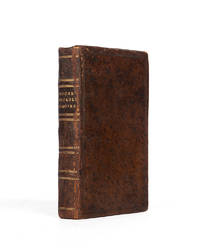
13033Toulouse, Marin Fouchac et Guill. Bely, 1688 ; in-12 (13,6 x 7,8 cm). 16 ff. n. ch. 140 pp.-6 ff. n. ch. Basane brune, dos à nerfs non orné, pièce de tritre bordeaux (Reliure de l'époque).
13205Paris, Académie des Bibliophiles (impr. D. Jouaust), 1867 / 1868. In-8, (6)-XVIII-309-(3) pp. et (4)-XXXIII-(3)-226-(2) pp., reliures modernes plein veau noir (Claude Darrieux), dos ornés, sous étui.
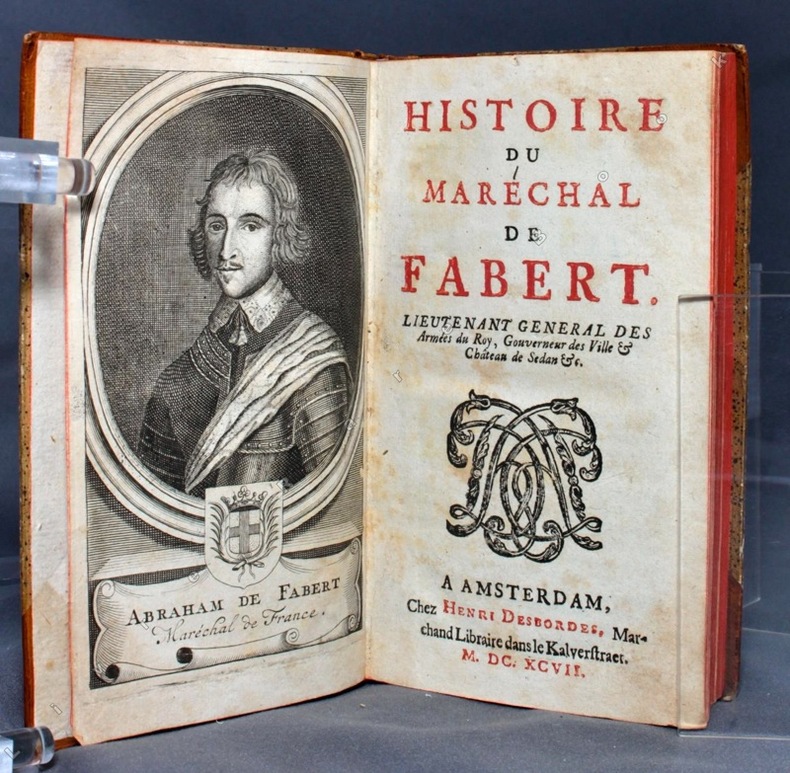
9258A Amstedam / A Villefranche, Chez Henri Desbordes / Chez Jean de Paul, 1697 / 1690. In-12 de [4]-186-[24]-428-[2] pages, demi-basane brune à coins, dos orné du titre et de filets en noir, tranches rouges.Petits accrocs en tête, coins inf. frottés, petite étiquette muette au second plat.
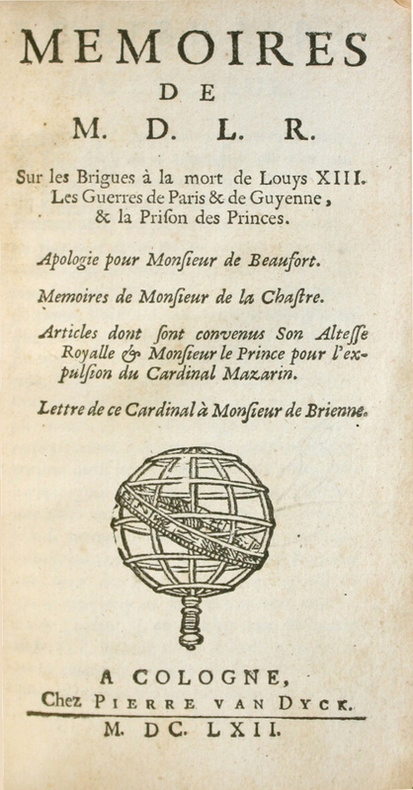
1662129376à Cologne, chez Pierre Van Dyck, M. DC. LXII. 1662 Reliure de l’époque veau havane marbré,dos à nerfs encadrés de fers dorés, pièce de titre maroquin grenat, sphère au titre, [6]-326 pp. Ex-libris autographe. Coiffe de pied arasée, couns émoussés et frottés, intérieur correct.
BN105085Editions du Rocher. Softcover. Maximes et pensées <br/><br/>Maximes et pensées Editions du Rocher paperback
195965011959 Paris, Club du Livre, coll. Gravure contemporaine, imp. Daragnès, 1959. En feuillets sous double emboîtage: 26.5 x 34 cm, 253-[6] pp. Ouvrage illustré de 20 gravures originales de Decaris, imprimées à pleine page. Édition limitée à 500 exemplaires. Le nôtre, l'un des 400 sur Rives (no. 300). Chemise-étui et emboiatge recouverts de toile grise; auteurs, titre et édition en noir sur le dos. En parfait état.
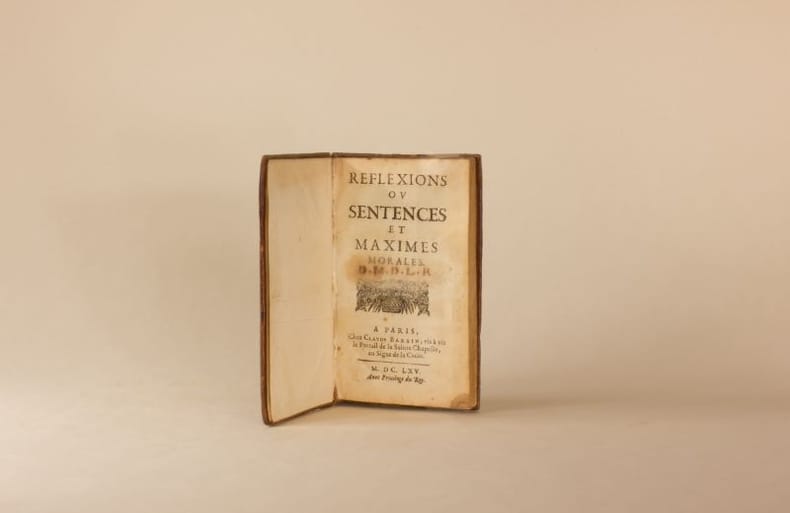
16651206Paris, Barbin, [Grenoble, Provensal ?], 1665 ; petit in- 12 de [23] ff., 135 pp., [9] pp., basane brune de l’époque très usée.
1662173101662 un volume, reliure plein vélin ivoire parcheminé (binding full white vellum) in-douze (duodecimo) (58 X 14 cm), Plein Velin à rabats Janséniste d'Epoque, titre à l'encre brune au dos illisible, toutes tranches lisses (smooth edges) , sans illustration (no illustration) excepté une marque d'Imprimeur gravée sur bois (engraving-wood) en noir sur la page de titre (engraved title page) "à la Sphère", marque de l'éditeur Pierre Van Dick [François Foppens], IV + 400 pages, 1662 A Cologne [Bruxelles] Chez Pierre Van Dick [François Foppens] Editeur,
188038704Londres London: Louys Glady Éditeur 1880. An outstanding beautiful and unusual production by Louys Glady an underestimated yet key figure in the British Fine Press Movement. XX 1 111 pp. PRINTED THROUGHOUT IN RED AND GREEN. The text is printed in red with the punctuation in green--an extremely impressive accomplishment as anyone who has used a handpress will attest. From a total edition of 303 numbered copies this is ONE OF ONLY 15 COPIES PRINTED ON EXTREMELY FINE WHATMAN LAID PAPER. 8vo. Bound in original art vellum also printed in red and green. Light wear to binding internally UNCUT BRIGHT AND FINE. Extremely rare. <br/><br/> Louys Glady, Éditeur hardcover
50672Académie des Bibliophiles.1868.In-8 demi-maroquin rouge à coins.Tête dorée.Dos à 5 nerfs avec caractères dorés.226 p.Ex.152.Bon état.
1869182041869 un volume, reliure plein maroquin rouge in-douze oblong (full morocco in-12 oblong), (19,2 x 11 cm), Reliure d'Epoque signée "Capé Masson-Debonnelle", dos à nerfs (spine with raised bands), décoration or (gilt decoration) à filets et roulettes or (gilt lines and fillets), titre frappé or dans un encadrement d'un filet or, entre-nerfs à fleuron à la "Du Seuil" au fer plein (between the raised bands floweret with full blocking stamp) avec rinceaux aux angles, filet perlé "or" en place des nerfs, rinceaux en tête et en pied (top and at the foot of spine with foliages carried out with the curved line), plats décorés "or" d'un encadrement d'un triple filet or et dentelle sur les chasses (lace-like decoration on the turn-ins), toutes tranches dorées (gilt edges), Tirage limité à 333 Exemplaires comme suit : 3 exemplaires sur parchemin, 15 exemplaires sur Chine, 15 exemplaires sur Whatman et 300 exemplaires sur papier Vergé (Ici Exemplaire N°26 sur Whatman), EX-LIBRIS manuscrit à la mine de plomb en haut de la première page de garde : " Baron G. (gaëtan) de Wismes Nantes ", sans illustrations (no illustration) excepté une vignette "marque de l'Editeur" en bas de la page de titre gravée sur bois en noir + Bandeaux, lettrines et cul-de-lampe gravés sur bois en noir, plats trés légèrement décolorés, XII-140 pages, 1869 Paris : D. Jouaust Editeur,
166553870Paris Claude Barbin 1665 1 vol. Relié petit in-12, basane havane granitée, dos à nerfs muet avec incises à froid se prolongeant sur les plats, 23 ff. + 135 pp. + (4 ff.). Rare édition parue l'année de l'originale et que Brunet considérait comme la première. D'après Rochebilière, "il est avéré maintenant que cette édition à 22 lignes n'est que la copie de celle à 23 lignes, puisqu'elle ne donne pas le texte primitif, mais le texte des exemplaires cartonnés et contient 317 maximes". Notre exemplaire présente la variante décrite dans le "discours préliminaire" et la lettre P dans le fleuron final qui indique la marque de l'imprimeur grenoblois François Provensal, ce qui en fait une "contrefaçon très bien imprimée en caractères neufs". Dos entièrement refait. Ex-libris gravé Wenman Coke Esq.
181733362Paris Ant. Aug. Renouard 1817 In-12 illustré, 2 parties reliées en 1 volume : xv et 98p.; x, 329p. et 4f. (catalogue de l'éditeur).
7148745Short description: In Russian. La Rochefoucauld Francois de. Memoirs. Leningrad: Science. Leningrad detachment 1971. The image is provided for reference only. It may reflect condition of one of the available copies or only help in identifying the edition. Please feel free to contact us for a detailed description of the copies available. SKU7148745 unknown
STAB0014Parma Bodoni 1811. 5 nn. Bl. XIX 3 117 Seiten Halblederband d. Zt. auf 6 hohen Bünden Kapitale berieben u. stellenweise rissig Kanten berieben Ecken bestoßen. Mit dem schönen Exlibris von Alfredo Baruffi für den Kunsthistoriker Julius v. Schlosser. Auflage von nur 125 Exemplaren auf hochwertigem Papier. Vgl. Brooks 1104; Kat. Weiss 466. Erste Folio-Ausgabe erschienen in lediglich 125 Exemplaren; prächtiger Druck auf Bütten breitrandig und unbeschnitten; Druckwidmung von Jean-Baptiste Bodoni für den Grafen Ferdinand Marescalchi. Zeitgleich erschien in verändertem Satz eine Quart-Ausgabe des Textes. Vgl. Brooks 1104 Parma, Bodoni 1811. unknown
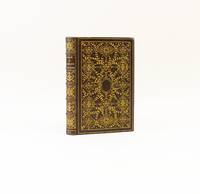
1892ST17001Paris: Imprimé par D. Jouaust Librairie Des Bibliophiles E. Flammarion Successeur 1892. 188 x 104 pp. 6 3/4 x 4 1/4". XL 290 pp. 1 leaf.Preface and notes by J.-F. Thénard. With the autobiographical essay "Self-Portrait by Himself" from the 1665 first edition the introductions to the 1665 and the 1678 fifth editions maxims removed from earlier editions and the posthumously published essays "Reflections." <br/> EXQUISITE DARK BROWN MOROCCO EXUBERANTLY GILT IN THE FANFARE STYLE BY ZAEHNSDORF stamp-signed in gilt on front turn-in blind Exhibition stamp on rear doublure covers with fillet border enclosing a panel with central oval strapwork medallion surrounded by rows of geometric ornaments with sprays of leafy fronds connecting them and filling the space between raised bands spine compartments with central geometric ornament with leafy cornerpieces gilt lettering turn-ins with gilt fillets accented with leaf sprigs crimson silk doublures and free endleaves all edges gilt. Printer's device on title page. Front flyleaf with quote in French from the text "It is more necessary to study men than to study books" and "Christmas 1895" written in ink; recto of rear free endleaf with Taplow Court library label of William Grenfell Baron Desborough. ◆Minor soiling to flyleaves very faint browning to edges of leaves otherwise very fine the text clean and fresh and in a virtually unworn binding bright with gilt.<br/> <br/> This comprehensive edition of the French moralist's famed collection of epigrams is offered here in a binding done in the fanfare style popular when this work was first printed. After a turbulent youth of court intrigue and aristocratic rebellions against King Louis XIII François Duc de La Rochefoucauld 1613-80 settled into a quiet life in the Parisian salons of Madame de Sablé Madame de Sévigné and Madame de La Fayette. It was among this intellectual witty society that he honed the pithy epigrams that would have such an influence on French literature and culture. As the Oxford Companion notes "The high degree of polish in the phrasing of the 'Maximes' which excel in conciseness precision and appropriateness of expression is to some extent due to discussions among his friends . . . . The work is a collection of some 500 gnomic sentences in which the author analyses the motives of human conduct with merciless penetration. While he recognizes in rare cases the existence of pure virtue and disinterested sentiments he finds them tainted almost universally with some element of self-love or interested motive." Voltaire drew on La Rochefoucauld's views when writing "Candide" and the "Maximes" impacted the works of French writers from Stendhal to André Gide as well as philosopher Friedrich Nietzsche and English novelist Thomas Hardy. The duke's worldview would have resonated with former owner William Grenfell Baron Desborough 1855-1945 a sportsman and indefatigable public servant who was one of the founding members of The Souls fl. 1886-1900 an elite group of friends whose social gatherings for intellectual discussions were perhaps Victorian London's closest approximation of a Parisian salon. Although other members included prominent and accomplished men and women it was the parties given by Grenfell's wife and fellow Soul Ettie that attracted guests like Vita Sackville-West H. G. Wells Edith Wharton Oscar Wilde Edward VII when Prince of Wales and Winston Churchill. One can easily imagine one of the Souls presenting this volume to the Grenfells for Christmas in 1895.<br /> <br /> By one of the great London workshops the binding here is a modified example of the fanfare style of decoration popular in France from the late 16th to mid-17th century. The main features of this style in Glaister's words "are interlacing ribbons" that form "compartments of various shapes with emphasis given to a central compartment." Ornaments made with small hand tools "fill all the compartments except the central one and almost completely cover the sides." The fanfare style is perhaps most frequently associated with the work of Nicolas and Clovis Eve court binders and booksellers to successive kings of France from about 1578 to 1634. It is generally believed that the term "fanfare" actually took its name from an early 17th century music book the title of which begins with the word "fanfare" acquired by the bibliophile Charles Nodier in 1829. The book was bound for Nodier by the famous Parisian binder Joseph Thouvenin using an appropriately retrospective design in imitation of the Eves' style which from that point forward came to be known as "fanfare." The Zaehnsdorf bindery produced a number of bindings in this genre with their usual expertise. Hungarian-born Joseph Zaehnsdorf 1816-86 served his apprenticeship in Stuttgart worked at a number of European locations as a journeyman and then settled in London where he was hired first by Westley and then by Mackenzie before opening his own workshop in 1842. His son and namesake took over the business at 33 when the senior Joseph died and the firm flourished under the son's leadership becoming a leading West End bindery. Over the years Zaehnsdorf employed a considerable number of distinguished binders including the Frenchman Louis Genth who was chief finisher from 1859-84 and trained a number of others including Roger de Coverly and Sarah Prideaux. A family-run business until 1947 the Zaehnsdorf bindery continued to produce consistently attractive tasteful and innovative designs executed with unfailing skill. It is generally understood that the Zaehnsdorf firm reserved the use of its oval stamp showing a binder at work for their finest bindings including those entered in exhibitions. [Imprimé par D. Jouaust] Librairie Des Bibliophiles, E. Flammarion, Successeur unknown
2016125746Acc Publishing Group Ltd. New. 2016. Hardcover. 1851498370 . FREE UPGRADE to Courier/Priority Shipping Upon Request - IN STOCK AND IMMEDIATELY AVAILABLE FOR SHIPMENT - Flawless copy brand new pristine never opened. -- with a bonus offer-- . Acc Publishing Group Ltd hardcover
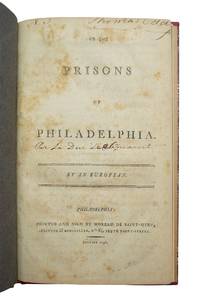
179669290Philadelphia: Moreau De Saint-Mery 1796. EDDY Thomas. . By A European. Philadelphia: Moreau De Saint-Mery 1796.<br> <br> Full Description:<br> <br> LA ROCHEFOUCAULD LIANCOURT author. EDDY Thomas Association. On the Prisons of Philadelphia. By A European. Philadelphia: Moreau De Saint-Mery January 1796.<br> <br> First American edition. printed at the same time as the first edition on French of a treatise on the Philadelphia prison system Both registered for publication on Jan. 2 1796. Octavo 7 13/16 x 4 13/16 inches; 198 x 120 mm. 46 2 blank pp. With two pages of tables. Title-page with ownership signature of Thomas Eddy a New York politician charged with the oversight of the construction of the first State Prison in New York and its first Director.<br> <br> Pamphlet bound in quarter red cloth over marbled boards. Remnants of a bookplate that has been removed to front pastedown. Some general foxing and toning to leaves. Title-page and table leaves trimmed close. Touching Eddy's signature and a portion of the chart. Final three leaves with small tears to upper outer corners not affecting text. A one-inch closed tear to leaf B just touching a few letters but with no loss. Overall a very good copy.<br> <br> This anonymous treatise is attributed to La Rochefoucauld-Liancourt "a French social reformer who was forced to flee to England in 1792 due to his support of King Louis XVI during the French Revolution. Arriving in America in 1794 La Rochefoucauld-Liancourt toured the northern United States and Canada for several years before leaving for Hamburg in 1797 and returning to France in 1799." He also wrote "Travels through the United States of North America." This work focuses on the economic and social conditions of the United States and Canada. Lehigh University.<br> <br> "In the late 1700s on the heels of the American Revolution Philadelphia emerged as a national and international leader in prison reform and the transformation of criminal justice practices. More than any other community in early America Philadelphia invested heavily in the intellectual and physical reconstruction of penal philosophies and the region's jails and prisons reflected these evolving principles. Throughout the 1800s global and local observers looked to Philadelphia-particularly the Pennsylvania system of solitary confinement pioneered at Eastern State Penitentiary-as they modeled penal practices in their communities." Annie Anderson The Encyclopedia of Greater Philadelphia. It is often argued that Walnut Street Prison in Philadelphia is the first prison in the United States.<br> <br> "One of Thomas Eddy's most noted philanthropic achievements was the reform of New York's penal laws. In the early 1790s he began a campaign to end branding whipping and solitary confinement in the state prisons. In 1796 he shepherded a bill through the state legislature that established new standards for the penitentiary system. He was appointed to oversee the construction of the first state prison and served from 1797 to 1801 as its first director."<br> <br> Evans 30674. Sabin 39054.<br> <br> HBS 69290.<br> <br> $2250. Moreau De Saint-Mery unknown
122410London Printed for James Partridge at the Post-Office between Charing-Cross and Whitehal 1683. . First edition in English; 8vo 18 x 11.5 cm; ownership inscription in pen to title verso 1f. ads to rear title a little browned light waterstain to margin of quire U sprung endpapers; contemporary mottled calf covers ruled in blind later gilt-rules and contrasting morocco lettering-piece to spine marbled edges abraded with areas neatly restored with leather in-fill a little rubbed very good; 436 12pp.<br /> The first edition in English of the Mémoires de M. D.L.R. sur les brigues à la mort de Louys XIII 1662. Scarce.<br /><br />La Rochefoucauld 1613-1680 began writing his memoirs whilst recovering from a head-injury sustained at the battle of the Faubourg Saint-Antoine in Paris in 1652. They survive as an important record of life at the court of Louis XIII the infamous Cardinal Mazarin's rise to power and the period of aristocratic discontent that culminated in the Fronde rebellion of 1648-1653.<br /><br />The Mémoires were initially circulated privately before their unauthorised publication in 1662. La Rochefoucauld disowned this book and the modern academic consensus is that 'Less than half the work is by him and that very defective. The "Wars of Paris" is spurious; the "Retreat of the Duke de Longueville" pp 113-128 is by Saint-Evremond; the "Apologie for the Duke de Beaufort" is by Guillaume Girard' ESTC.<br /> ESTC R12738. London, Printed for James Partridge, at the Post-Office between Charing-Cross and Whitehal, 1683. hardcover
1782(LCPCMED-0007)(Un très rare texte du XVIII siècle sur l'odontolgie et sur les soins des dents des enfants. Un séduisant exemplaire aux armes du Duc de La Rochefoucauld) L'ECLUSE DU THILLOY Louis. (1711-1792) "L'ART DU DENTISTE, JOINT A L'ANATOMIE DE LA BOUCHE, AVEC DES OBSERVATIONS POUR LA CONSERVATION DES DENTS, & DES INSTRUCTIONS TRES-INTERESSANTES, POUR REMEDIER AUX ACCIDENTS QUI ACCOMPAGNENT LA SORTIE DES DENTS DE LAIT, & AUXQUELS LA PLUPART DES ENFANTS SUCCOMBENT, FAUTE DE SECOURS SUFFISANTS. CE TRAITE EST NON SEULEMENT UTILE ET NECESSAIRE AUX ELEVES EN CHIRURGIE, QUI SE DESTINENT A L'ART DU DENTISTE, MAIS ENCORE AUX MERES DE FAMILLE...". 1782, Paris, Guillot. 2 parties en 1 volume in-12° (166x103 mm) (dimensions pages 161x97 mm) VIII pp. (titre et avertissement), 222 pp., 6 planches gravées sur cuivre h.t. ; 42 pp. (y compris titre et avis), (3) ff. (table), (1) f. b. (a8, A-I12, K4 ; (2) ff., A6, (1) f., L12, (4) ff.) Reliure de l'époque en veau marbré. Encadrement d'un filet à froid sur les plats et armoiries dorées au centre. Dos lisse avec fleurons et décorations dorés et pièce de titre en maroquin bordeaux. Filet doré sur les coupes. Tranches décorées. gardes de papier décoré. Edition en partie originale, très rare. Remise en vente sous ce titre du texte des "Nouveaux élémens d'odontologie" (1754), sans les ff. d'approbation et de privilège et avec la seconde partie sur les dents des enfants en édition originale. Superbe exemplaire, très bien conservé. L'auteur était dentiste du Comte de Saxe et de Stanislas Lezczynsky, beau-père de Louis XV. Il soigna aussi Mlle Denis, nièce de Voltaire. "J'ai réuni dans ce Volume un petit Ecrit sur les <Maladies des Dents des Enfans>. J'ai fait cet ouvrage en Lorraine, pour l'usage de cette Province... ici plus correct. Enfin j'ai joint... la Déscription de plusieurs instrumens que j'ai nouvellement inventé, & dont le succès m'est confirmé tous les jours par l'usage et l'expérience. (...) vingt années d'application & de travaux... cinq campagnes consécutives faites dans la dernière guerre en Flandres, ou plus de huit mille bouches m'ont passé par les mains...". Provenance : Exemplaire aux armoiries dorées du Duc François-Alexandre de La Rochefoucauld-Liancourt (1747-1827). Un ex libris manuscrit ancien "Bediagiae" sur une page de garde. (LCPCMED-0007) (4.500,00 €)
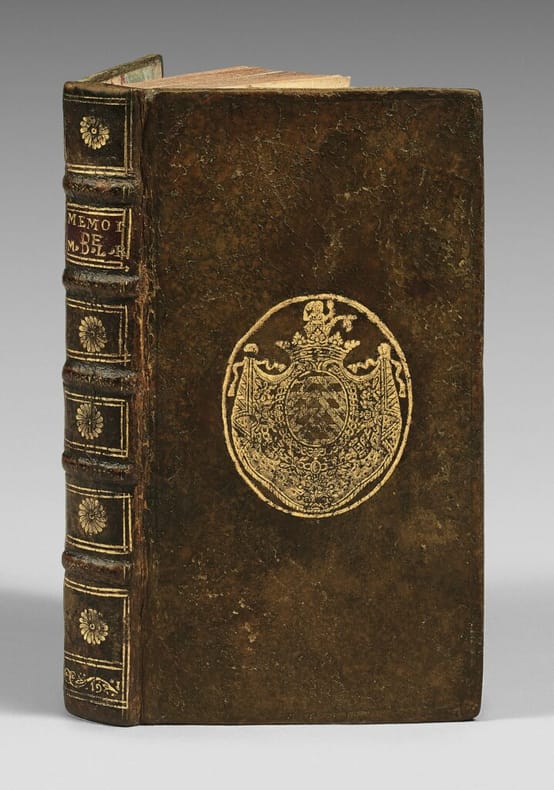
LCS-18618Première édition des Mémoires de La Rochefoucauld, publiée de son vivant, dans laquelle les noms propres ont été imprimés en italique. Cologne, P. Van Dyck (Bruxelles, Foppens, à la Sphère), 1677. Petit in-12, de (2) ff. et 360 pp., plein veau brun granité, filet à froid autour des plats, armoiries de François-Alexandre-Frédéric de La Rochefoucauld, Duc de La Rochefoucauld, né le 11 janvier 1747, dos à nerfs orné, coupes décorées, tranches granitées, petite découpe sur le feuillet de titre sans atteinte au texte. Reliure armoriée de l’époque. 142 x 78 mm.
LCS-17631Précieux exemplaire particulièrement grand de marges de cette édition originale recherchée. Cologne, Pierre Van Dyck, 1662.In-12 de (2) ff., 400 pp. Relié à l’époque sans le f. d’errata. Relié en maroquin citron de l’époque, triple filet doré encadrant les plats, dos à nerfs finement orné, roulette dorée sur les coupes, roulette intérieure dorée, tranches dorées. Reliure de l’époque.128 x 67 mm.
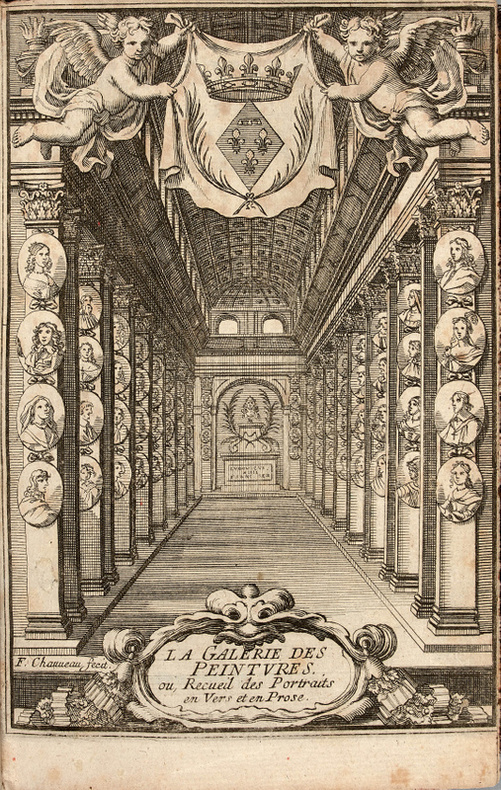
LCS-17847Unique exemplaire conservé dans sa reliure de l’époque passé sur le marché depuis plus d’un demi-siècle. Paris, Charles de Sercy et Claude Barbin, 1659. 2 volumes in-8 de : I/ (16) ff. dont 1 frontispice, 452 pp. mal chiffrées 454 (la pagination saute de 16 à 25, de 40 à 31, de 258 à 257, de 355 à 362) ; pp. 455-916 mal chiffrée 912 (la pagination saute de 758 à 755), 3 pp. pour la Clef des noms des portraits qui sont abregez dans la galerie de peintures. Veau brun granité, filet à froid encadrant les plats, dos à quatre nerfs ornés à la grotesque, filet doré sur les coupes, tranches jaspées. Reliure de l’époque. 166 x 102 mm.