VERDIZOTTI Gio : MarioLivre Rare Book

38 résultats
1661003051On Venezia, per Francesco ****, 1661
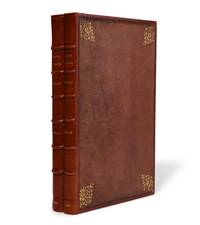
1668A-110<p>Volume I--Second Edition The Fables of Aesop Paraphras'd in Verse: Adorn'd with Sculpture. London: Printed by Thomas Roycroft for the Author 1668. Second edition with new title page a re-issue of the 1665 edition sheets. This volume contains the frontispiece engraved vignettes and initials missing Ogilby portrait and has all eighty-one full-paged plates in fabulous condition. Light yellowing/browning of initial few pages as regular. Volume II--Second Edition Aesopics or a Second Collection of Fables illustrated with sixty-eight full-paged plates in early issue before captions were added. Pages are remarkably clean without any browning. Large folio volumes both illustrated throughout; Wenceslaus Hollar 1607-1677 engraved eighty-eight of the illustrations for these works the others were executed by Dirck Stoop c. 1610-1686 and Francis Barlow c. 1626-1704. Both volumes are uniformly re-bound with original leather panels inset in full brick morocco bindings with gilt titles.</p> Thomas Roycroft for the Author, 1668 hardcover
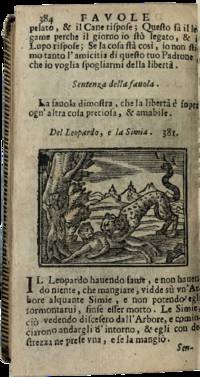
17004112Venice and Bassano: Gio. Antonio Remondini 1700. 12mo 134 x 67 mm. Collation: A-R12. 394 14 pp. 2 parts separately titled second title-page on F5r. Woodcut printer’s device on titles 120 text woodcuts a very few repeated. A few cuts with black dots e.g. on p. 257 apparently from wormed blocks. Fol. K12 with short closed tear touching a woodcut a few headlines shaved; some light discoloration. Late 18th-century English green calf covers with gilt intertwining feather and pointillé border smooth spine gold-paneled and tooled with 3 different all-over patterns red calf lettering piece gilt edges marbled endleaves worn: spine cracked headcaps gone. Provenance: a member of the Fletcher family: engraved armorial bookplate two gryphons as supporters motto “Dieu pour nous†the shield described by Burke as “sable a cross flory argent between four escallops. Crest a bloodhound azure ducally gorged or.â€<br/> <br/> An illustrated pocket edition of 400 fables from Aesop and other traditions specifically intended for children preceded by Giulio Landi’s life of the semi-mythic fabulist. The charming simple but decisively cut woodcut illustrations are typical of the early productions of the Remondini firm who used the blocks as well in several Latin editions of the fables.<br/> <br/> Giovanni Antonio Remondini 1634-1711 an enterprising businessman whose earliest commercial successes were in wool production was the founder of the long-lived Bassano print publishing firm later known for its paper production. Specialized at first in the production of popular prints mainly engravings the firm’s typographic activities were circumscribed until the mid-18th century by the Venetian monopoly of book production; thus the Remondinis’ earlier typographical output was limited to popular chapbooks and devotional works for a local readership usually in small formats and often illustrated with quickly but skillfully cut woodcuts as here. <br/> <br/> This undated edition corresponds with the below-cited ICCU record in its pagination and fingerprints but several mispaginations described in ICCU were here corrected. The ICCU editors note two variants one with the place of publication given as Bassano only and this state or issue with imprint “In Venetia et in Bassano†dubbed variant B. ICCU ITICCULO1E04628; cf. M. Infelise I Remondini di Bassano 1980 pp. 23-33 and 132-3. Gio. Antonio Remondini unknown
165919381Jean Du Bray 1659 102+IV+712+V+102 pages Fort In-12. 1659. Demi-Cuir titré au dos en lettres dorées (Reliure XIXème). 102+IV+712+V+102 pages. Les Fables de Philelphe sont traduites et moralisées par I. Baudoin. Complet des cent gravures en noir hors-texte concernant les Fables d'Esope Phrygien. Bandeaux lettrines et culs-de-lampe
166970641669 Bruxelles françois foppens 1669 (Jean de Bonnot 1988 In8 reliure éditeur dos et plats ornés 343 pages illustration à chaque page et index illustré 116 gravures
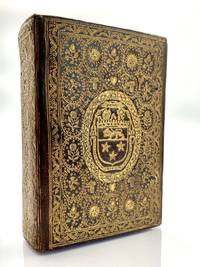
160275949Anvers Antwerp: Jean MoretusEx officina plantiniana apud Ioannem Moretum 1602. Fine. Jean Moretus Ex officina plantiniana apud Ioannem Moretum Anvers Antwerp 1602 8.20 x 12.60 cm relié New Plantin press editions in portable format of these three works. Ruled throughout in red ink. Copy with the arms of Nicolas de Villars clerical councillor at the Parlement of Paris and treasurer of the Sainte-Chapelle later bishop of Agen. Contemporary full soft brown morocco a fanfare binding with the rare Duodo-type decoration: smooth spine gilt with six medallions each containing a flower gilt foliage border covers fully gilt with 24 medallions some emblematic sun heart acorn bouquet sheaf of wheat arms stamped in the centre edges gilt. Discreet restorations to joints corners and headcaps; upper and lower borders with minor wear to leather 0.5 cm; lacking ties; pinhole at head of spine. From the first title-leaf a wormhole in the lower margin extending through to the final leaves of the Fables of Aesop gradually diminishing. A magnificent copy of the utmost rarity. The singular decoration of this style of binding representing one of the pinnacles of the art of French bookbinding is today identified as Duodo after Pierre Duodo Venetian ambassador to Paris from 1594 to 1597. About 150 small volumes were uniformly bound for a portable library only part now known probably towards the end of his stay. It is unlikely he ever enjoyed these treasures which fell into oblivion for nearly two centuries. When they reappeared on the English market at the end of the eighteenth century they were mistakenly attributed to Marguerite de Valois an error that persisted until the 1920s. Although the name Duodo remains attached to this style of decoration another great collector commissioned similar bindings: Nicolas de Villars bishop of Agen. Duodos bindings are now well identified while those of Nicolas de Villars are considerably rarer on the market. While the spine here is very close to the Duodo examples with flowers and foliage borders though in a finer and denser design the covers show 24 medallions compared to only 14 on Duodo bindings and the tools employed are not limited to floral motifs but include a variety of emblems such as the sun and the heart. Jean MoretusEx officina plantiniana, apud Ioannem Moretum hardcover
1607271841607. Antverpiae Anvers / Antwerpen ex Officina plantiniana / apud Joannem Moretum 1607 - Antverpiae ex Officina plantiniana / apud Joannem Moretum 1607 - Antverpiae ex Officina plantiniana / apud Joannem Moretum 1607. 3 ouvrages reliÂŽs en un volume au format in-16 133 x 92 mm de 351 pp. ; 29 pp. et 1 f. n.fol. ; 90 pp. et 1 f. n.fol. Reliure de l'ÂŽpoque de plein veau glacÂŽ blond double filet dorÂŽ encadrant les plats dos ˆ nerfs ornÂŽ de filets gras ˆ froid roulette dorÂŽe sur les nerfs doubles caissons d'encadrement dorÂŽs fleurons dorÂŽs filet en pointillÂŽs dorÂŽs en tÂte et queue titre dorÂŽ tranches rouges. RÂŽunion - en un volume - de trois ouvrages rares sortis des presses de Christophe Plantin et Jean Moretus. L'Officina Plantiniana est considÂŽrÂŽe comme l'entreprise d'ÂŽdition et d'imprimerie la plus importante qui ait jamais ÂŽtÂŽ ÂŽtablie en Belgique. Vignette au ''Compas d'or'' en page de titre troisiÂme et derniÂre marque qu'utilisa l'imprimeur. Lequel - ˆ lÕinstar de Robert Estienne - exposait devant sa porte ses ÂŽpreuves en promettant une rÂŽcompense ˆ ceux qui y dÂŽcouvriraient quelque faute. ''En raison de ses origines alexandrines Claudien assimile le gožt pour le Ç baroque È de son temps reprÂŽsentÂŽ par exemple par le poÂte Nonnos de Panopolis. PoÂte de cour et mondain c'ÂŽtait aussi un pa•en convaincu. Avec Prudence il est l'un des derniers grands poÂtes latins de l'Empire romain. Les deux ouvrages de Claudien sont ici accompagnÂŽs des notes estimÂŽes de Martin Antonio Del Rio. Graesse II TrÂŽsor de livres rares et prÂŽcieux p. 193 - Brunet II Manuel du libraire et de l'amateur de livres 88 pour une ÂŽdition de 1602. Angles ÂŽmoussÂŽs. Petites altÂŽrations superficielles ÂŽparses affectant par ailleurs la reliure. Papier oxydÂŽ prÂŽsentant en outre de claires rousseurs. Infime manque en marge infÂŽrieure d'un feuillet. Nonobstant ensemble en belle condition. b42961 unknown
160275949Jean Moretus Ex officina plantiniana, apud Ioannem Moretum | Anvers 1602 | 8.20 x 12.60 cm | relié
160727184Antverpiae [Anvers / Antwerpen], ex Officina plantiniana / apud Joannem Moretum, 1607 - Antverpiae, ex Officina plantiniana / apud Joannem Moretum, 1607 - Antverpiae, ex Officina plantiniana / apud Joannem Moretum, 1607. 3 ouvrages reliés en un volume au format in-16 (133 x 92 mm) de 351 pp. ; 29 pp. et 1 f. n.fol. ; 90 pp. et 1 f. n.fol. Reliure de l'époque de plein veau glacé blond, double filet doré encadrant les plats, dos à nerfs orné de filets gras à froid, roulette dorée sur les nerfs, doubles caissons d'encadrement dorés, fleurons dorés, filet en pointillés dorés en tête et queue, titre doré, tranches rouges.
166648718London.: Printed by William Godbid for Francis Barlow and are to be sold by Ann Seile at the Black-Boy against St. Dunstan's Church in Fleetstreet and Edward Powell at the Swan in Little Britain. 1666. Full contemporary calf boards ruled in blind later spine with red morocco label with gilt title and blind rules in seven compartments marbled edges. Folio. 356 x 242 mm. Printed title within double rules engraved title by Barlow with central title within elaborate cartouche and surrounded by an eagle leopard boar fox wolf and lion leaf with large decorative woodcut inhabited ten-line initial and Barlow's dedication to Sir Francis Pruijan or Prujean leaf with Barlow's 'To the Reader' leaf with engraved frontispiece of Aesop with animals and additional engraving with text beneath 20 leaves with 'A Brief Prospect of the Life of Aesop' 16 leaves with 'La Vie d'Esope' 9 leaves with 'Aesopi Philosophice Fabulantis Vita' and Aesop's 110 fables illustrated with 110 engravings final leaves with 'La Table' and 'The Table' decorative woodcut initials and tail-pieces throughout; sheet size: 350 x 228 mm. A very rare large paper copy of the scarce first edition of Francis Barlow's undoubted masterpiece of English book illustration.By the time of the Restoration Francis Barlow had achieved a measure of success with his suites of prints of animals - engraved by the best such as Hollar Griffier and Place - and his decoration of houses and by the mid-1660s had contributed to the Aesop of Ogilby and Hollar. It is not entirely clear why he would wish to issue another edition of the Fables Hofer suggests a competitive nature and a different projected audience but by 1665 he had engraved a superb title it bears that date and by the time of publication in 1666 the date to the letterpress title had engraved a frontispiece of Aesop surrounded by animals and 110 half-page vignettes after his own drawings to illustrate the Fables. Each of the Fable engravings is accompanied by lines of verse by Thomas Philipott; the translations of Aesop's life into French and Latin was by Robert Codrington. Whatever Barlow's motivation the result is one of the most extensive and beautiful English illustrated books of the seventeenth century and one of the scarcest the scarcity often attributed to the loss of the sheets in the Great Fire of London. Large paper copies of this first edition are identifiable see ESTC through various issue points all present here but also as per Philip Hofer the transposition of some of Barlow's engravings. In the present copy the engraving for 'Fab. XLVIII' 'The Ant and Fly' is in fact that for 'Fab. XLXIX' 'The Ant and Grasshopper'. Hofer indicates too that the engravings for 'Fab. LXX' 'The Tortoise and Hare' and 'Fab. LXXI' The Young Man and His Cat' are also transposed however in the present copy they are not the margins headlines etc. conform to the remaining large paper leaves although 'The Young Man and His Cat' features the erroneous title 'The Nurse and Her Child' 'Fab. LXIX' albeit with the correct page number. Large paper copies also feature 'FINIS' beneath the signature Ppp at the foot of the leaf with the final engraving for 'FAB. CX' 'The Tortoise & Eagle'; in addition the spacing of the text in the large paper copy also suggests that the text on this leaf was reset.A second edition was published in 1687 with additional plates to illustrate the life of Aesop and with Philipott's verse replaced with new verse by Aphra Behn. A third edition was issued in 1703 and a posthumous French edition appeared in 1714 published in Amsterdam; Philip Hofer suggests that the third edition was really made up of unused sheets from the two earlier editions but with a new title and that the edition in French - it makes use of some of Barlow's plates - is not a Barlow edition.'This seventeenth-century polyglot English-French-Latin Aesop is handsomely illustrated with engravings after designs by Francis Barlow 1626 - 1702 an English painter renowned for his pictures of country life and field sports. He was perhaps the finest English draughtsman of animal scenes in the seventeenth century. Barlow who published the book at his own expense explains in his preface that he intends the work to contribute to the education of young people. This is the first edition; the relatively few copies known are all survivors of the Great Fire of London which swept over the printer's premises in 1666.' Early Children's Books and Their Illustration.'No artist has responded with more sensitivity and less sentimentality to the gentle grace of deer . The least of creatures the frog the hare the snake and the swallow and the least favoured of them the ass the boar and the wolf -- he draws them all with an intimacy charm and inviolable integrity never surpassed in an English book . '. Edward Hodnett.'Francis Barlow was the first native English book illustrator - indeed the leading interpretative illustrator in England before 1800 . Otto Benesch of the Albertina Museum Vienna has called him 'one of the greatest illustrators of all time'.' Edward Hodnett.This large paper issue of the 1666 Aesop is very scarce: while ESTC lists 17 copies for the small paper issue see ESTC R21542 it notes only two of the large: the copy at the Huntington and that at the Morgan Library and Museum New York; Harvard also holds a copy.ESTC R477463; see 'Francis Barlow' by Edward Hodnett 1978; see #9 in the Morgan Library and Museum's 'Early Children's Books and Their Illustration' 1975; see Philip Hofer's 'Francis Barlow's Aesop' printetd in the Harvard Library Bulletin Autumn 1948. Printed by William Godbid for Francis Barlow, and are to be sold by Ann Seile at the Black-Boy against St. Dunstan's Church in F hardcover
168747459London.: H. Hills jun. for Francis Barlow. 1687. Full contemporary midnight blue morocco by the 'Barlow's Aesop Binder' boards ruled in gilt to surround gilt tooled decorative panels with foliate decorative corner pieces banded spine with elaborate decorative tooling and title 'BARLOWs AESOP' gilt turn ins and board edges with gilt roll tool decoration marbled endpapers a.e.g. black morocco-backed velvet-lined buckram box. Folio. 372 x 242 mm. Engraved title printed title engraving with the Devonshire arms dedication leaf 'to the Right Honourable William of Devonshire' leaf 'to the Reader' engraved frontispiece and 31 engraved plates illustrating the 'Life of Aesop' and 110 half-page vignette engravings to the 'Fables'. A superlative large paper copy in a contemporary English binding by the Barlow's Aesop Binder of Barlow's undoubted masterpiece of English book illustration.This copy - printed on excellent paper - is in a beautiful contemporary binding the binding in a beautiful state of preservation by the ‘Barlow’s Aesop Binder’. Few bindings by the 'Barlow’s Aesop Binder' are known and the present copy identifiable by the lettering to the spine and the comparable decorative tooling is one of only a handful. Active in the 1680s and 1690s the bindery worked certainly for William and Mary although the identified copies of Barlow’s masterpiece from the bindery include too the Devonshire dedication copy from Chatsworth the Cracherode copy both these now at the British Library Pepys’ copy at Magdalene Cambridge the present copy and one other in a private collection in the US.This second edition of Francis Barlow's masterpiece adds 31 plates 32 including the frontispiece to illustrate the life of Aesop including the often mutilated 'obscene' plate here untouched and includes verse by Aphra Behn 1640 - 1689 commissioned especially for each of the 'Fables'. The unsigned plates are engraved by Barlow and the remainder by Thomas Dudley a student of Wenceslaus Hollar. Barlow himself drew and engraved all of the illustrations for the 'Fables' themselves.'The Ingenious Mrs. A. Behn has been so obliging as to perform the English Poetry which in short comprehends the Sense of the Fable and Moral: Whereof to say much were needless since it may sufficiently recommend it self to all Persons of Understanding.' Francis Barlow.'Francis Barlow was the first native English book illustrator - indeed the leading interpretative illustrator in England before 1800 . Otto Benesch of the Albertina Museum Vienna has called him 'one of the greatest illustrators of all time'.' Edward Hodnett.Complete copies of Barlow's work in good condition are scarce the present copy however a large paper example in its original binding by theh Barlow’s Aesop Binder printed on a different thick paper stock and entirely unsophisticated is of the utmost rarity. This is borne out if it is necessary to provide evidence by the fact that this copy featured in two sophisticated collections of illustrated books of the last 50 years: firstly that of Arthur and Charlotte Vershbow secondly that of Robert S. Pirie; the latter collector rarely if ever settled for second best and would certainly have bought another copy if he had found one. That he had to wait for the present copy is telling.Wing 703; see ‘English Restoration Bindings’ by Howard Nixon pg. 40 nos. 98 / 99; see 'Francis Barlow' by Edward Hodnett 1978. H. Hills jun. for Francis Barlow. hardcover
1690034148Amsterdam: Antoins Michils 1690. Book. Very Good. Full Leather. First Edition. 12mo. The very rare first edition; pp. 3-14 15-360 9. Title page printed in red and black preface Esope in Belle Humeur printed in red and black La Vie D'Esope The life of Aesop; Censure de L'Ordinaire. Numerous woodcut vignette illustrations in the text plus head and tail pieces the first vignette to the La Vie D'Esope page shows Aesop dancing between apes playing stringed instruments and in the background his murder is depicted. There is no frontispiece plate in this copy but otherwise complete. Later Victorian full mottled sheep binding with burgundy title label to the spine; binding very good with a little gentle wear and rubbing. Contents clean and tight; a little edge-wear to the title page which has a small old paper repair to the base a few pages with short edge-tears. A very good copy of the scarce first edition. Antoins Michils Hardcover
168730747London: H. Hills jun. for Francis Barlow 1687. Second Barlow Edition. Hardcover. Good . Folio 30.8 by 19.4 cm. 10 40 40 17 2-221 3: table pp; engraved title letterpress title engraved arms of the dedicatee William Cavendish Earl of Devonshire; engraved portrait of Aesop; 30 of 31 numbered full page copperplate engraved plates in the Life; 110 half page engraved plates accompany the fables. 18th-century paneled calf expertly rebacked retaining original backstrip borders and spine tooled in gilt. Light staining and scuffs to covers. Occasional light stains and smudges throughout mostly marginal; a few careful repairs at torn margins; professional repair at margin plate 2 just encroaching on printed surface; 3 cm perforation in plate Fable XII; moderate staining at plate Fable XLVIII; Text block good with otherwise clean plates complete but for the so-called 'indecent' or 'scandalous' plate 17 often defaced or lacking. A good or better copy handsomely bound.<br /> <br /> Second Barlow edition of these superbly illustrated Fables of Aesop first published in 1666. Each of the 110 fables include a half-page engraving text fable and moral in both French and Latin along with new captions in English by Aphra Behn. The English Life of Aesop is likely a reissue of the original sheets from the small-paper copies of the 1666 edition; the French Life is a new version. They are interspersed with thirty full-page plates mostly signed by Thomas Dudley the unsigned plates were engraved by Barlow. <br /> <br /> According to his contemporary the engraver and antiquary George Vertue Francis Barlow d. 1704 came from Lincolnshire and apprenticed in London to the portrait painter William Shepherd. Early and late in his career Barlow designed sets of natural history plates which were etched by Wenceslaus Hollar Richard Gaywood Jan Griffier and Francis Place. These prints proved to be an important source for artists and craftsmen of succeeding generations. Along with his engravings for Edward Benlowes's Theophilia 1652 the present suite of illustrations for Aesop's Fables are considered to be Barlow's finest. The preliminary drawings reside in the British Museum. While Barlow's house at "the Golden Eagle in New-Street near Shoo-lane" was burnt in the great fire the copper plates for the volume survived. ODNB.<br /> <br /> Provenance and annotations: "The Gift of Rich. Wesley Esq to his Son Garret Wesley Year of Christ 1741" entered in black ink at the front endleaf; Garret's entry appears beside the imprint at the title and his "cypher" substitution chart for Greek and English letters appears beneath the gift dediction. A later owner "E.R." has noted in pencil at the pastedown that this book belonged to R. and G. Wesley "ancestors of the Wellesley Family see the autographs for the letter afterwards to the Marquis Wellesley Revnd Dr Wellesley at whose sale I bought it." At the front pastedown is the bookplate of George Aiken Batchelder 1860-1936 who was Vice President E. H. Rollins & Sons Bonds San Francisco California. The bookplate partially obscures another note in pencil which appears to mention the absence of the 'indecent' plate. References: ESTC R22991; S. O'Connell "Barlow Francis" in: ODNB online; Press Reference Library Western Edition Notables of the West vol. I p. 163 International News Service 1913.<br /> <br /> Full title and imprint: AEsop's fables with his life: in English French and Latin. Newly translated. Illustrated with one hundred and twelve sculptures. To this edition are likewise added thirty one New figures representing his life. By Francis Barlow. London: Printed by H. Hills jun. for Francis Barlow and are to be sold by Chr. Wilkinson at the Black-boy against St. Dunstan's Church in Fleet-street Tho. Fox in Westminster-hall and Henry Faitborne at the Rose in St. Paul's Church-yard. M.DC.LXXXVII. 1687. H. Hills jun. for Francis Barlow hardcover
1607009842Lugduni : Apud Petrum Rigaud 1607. Book. Very Good. Leather. 32mo - over 4" - 5" tall. 412 pps. 3 leafs. 4 1/2" h x 3" w. Title page portrait of Aesop woodcut illustrations in text. "Gabriae Graeci Fabellae XLIII. Batrachomyomachia Homeri hoc est ranarum et murium pugna. Galeomyomachia hoc est felium et murium pugna tragoedia Graeca". Bound in contemporary leather Very Good top cover nearly detached light pencil notations at paste downs. Text in Greek and Latin in opposing columns or pages. SCARCE OCLC locates only the ST GALLER BIBLIOTHEKSNETZ in Switzerland with a copy. Apud Petrum Rigaud Hardcover
1667WRCLIT79851Amsterdam: Johannem Janssonium à Waesberge & viduam Elizei Weyerstraet 1667. 62462204pp. Octavo 18.5 x 12 cm. Contemporary vellum short-title in manuscript on spine. Engraved frontis by Christopher Ganes and 103 engraved half-page illustrations in text. Vellum somewhat handsoiled and darkened bookplate frontis trimmed close along fore- edge short marginal tear in H2 without loss otherwise very good. First and only printing of this well- illustrated edition of the adaptations by the Latin fabulist Phaedrus of the Greek fables of Aesop as edited by Johannes Laurentius. Two engravings at pages 133 and 194 have been supplanted by other tipped in engravings. The Fables are followed by an "index vocabularum" and an "index rerum & verborum." BRUNET IV:588. Landwehr EMBLEM BOOKS Low Countries F143. Johannem Janssonium à Waesberge & viduam Elizei Weyerstraet hardcover books
166912293312mo. Bruxelles: François Foppens 1669. 12mo engraved general title trimmed with slight loss at foot 8 412 8 indexpp. With 147 engravings in the text by Pieter Van der Borcht. Recent full calf marbled edges gilt backstrip black label. A good clean copy though trimmed a little close to the top edge but not touching text. Ownership signature at front in ink of Joseph Heughan dated 1899 and an earlier note in ink: "Edition très jolie et très rare." and two ink initials on the title-page. § Well represented in libraries but a scarce little edition in commerce. It was translated by Pierre de Boissat who was probably also responsible for the moral reflections attributed to Jean Baudoin. The text and illustrations were reprinted in 1920 as a private press book in Germany. François Foppens unknown books
16671229198vo. Amsterdam: Johannem Janssonium & Viduam Elizei Wyerstraet 1667. 8vo engraved title trimmed at foot touching the imprint 62 1-462 blank leaf index 204pp. With 103 engraved plates in the text most 1/4 or 1/3 page. 18th-century polished calf panelled covers red morocco label and shelf mark on backstrip subtly rebacked. Large armorial bookplate of Washington Sewallis Earl Ferrers probably bound for him. § First illustrated edition of Phaedrus to be published in the Netherlands and the first edition edited by Laurentius. It contains the text of 92 Phaedrus fables with extensive annotations the first edition of 1596 had only 64 fables. In this copy the plates to pages 133 194 and 205 are not the cancellanda i.e. have not been cancelled. Also Landwehr records that the 'brothel scene' on page 276 has often been defaced or removed but is untouched in this copy. Landwehr F143. Phaedrus 15 BC - AD 50 Italy was a "Roman fabulist the first writer to Latinize whole books of fables producing free versions in iambic metre of Greek prose fables then circulating under the name of Aesop." Ency. Brit. Johannem Janssonium & Viduam Elizei Wyerstraet unknown books
16051704209Tornaesium 1605. 5th or later Edition. Hardcover. Very Good. A very good early 1605 edition of Aesop's Fables. In protective case. Tornaesium hardcover
16687514<p>Engraved frontispiece portrait of Ogilby by P. Lombart after P. Lely engraved plate of Aesop among his animals and eighty-one engraved plates illustrating the fables by Cleyn most of which were cut by Hollar. The work first appeared in folio in 1665 with 82 fables each with its own full-page illustration save one plate representing two fables printed on a separate leaf with accompanying letterpress text. Hollar was responsible for 57 of the illustrations & the print depicting Aesop. Period debossed full calf with handsome recasing in a fine morocco. Engraved frontispiece portrait cut and mounted with small paper repair in the lower right corner of the image. Some browning and occasional foxing; a few short marginal tears or paper flaws. Title in red and black Portrait of Aesop Dedication to Charles II. 211 1 blank 82 engraved plates pages. Large folio 10.5 x 16.125 inches; 410 x 265 mm.<br /><br /><br /><br /><br /><br /><br /><br /><br /></p> Printed by Thomas Roycroft, for the Author hardcover
1689044668Paris: Pierre Aubouyn Pierre Emery et Charles Clouzier. Printed By Laurent Rondet 1689. In French. Worn. New edition title page dated 1689. Beautifully illustrated includes 139 fables each with the written fable on the left hand page and a wood engraving on the right with the moral below. Full brown leather frontis 12 279p two page colophon errata 1 page advertisement. Rear cover and rear free endpaper detached covers work spine dried but stabilized front hinge cracked front free endpaper and frontis loosened but not detached pages lightly age-toned but clean old dampstain to lower inner margins of first 100 pages and then again toward the end of the book not affecting printed areas different bookplates on either side of front free endpaper second one is from E. Coster Wilmerding name of Richard Creed Paris 1700 inside front cover with an 1814 notation that the book belonged to Richard Creed who was slain at the Battle of Blenheim and was being presented to Miss Katherine Simcoe signed Wililam Walcot names may actually be different that is what we could make out from the handwriting. Hard Cover. Fair. 8vo - over 7¾" - 9¾" tall. Pierre Aubouyn, Pierre Emery et Charles Clouzier. Printed By Laurent Rondet Hardcover
1653000384Amsterdam: Joannem Janssonium 1653. Period Calf. Fair. 12mo - over 6¾" - 7¾" tall. Amsterdam: Joannem Janssonium 1653 dated in apostrophic Roman numerals. Engravings. 12mo; full calf with some tooling see scan. Accompanied by two simple later handmade paper protective jackets. Rubbed soiling shelfwear; binding broken exposing interior of spine. Two previous owner's inscriptions on ffep Josephus Stephani Dedit Hosepho de Villis 1675; Matt Kenrid 1748. Fair to About Good. See scans. Also: 'Eae item quas Avienus carmine espresit. Accedit Ranarum & Murium Pugna Homero olim ascripta. Cum elegantisimis in utroque libello Figuris & utriusque Interpretatione plurimus in Iocisemendata. Exdecreto D.D. Hollandae Ordinum in ufum Scholarum.' Rare 17th century specimen of Aesop's fables published by 17th Century Amsterdam publisher Joannem Janssonium. Fables here presented in Greek and Latin on opposing pages with engraving illustrations. Fragile and precious example no doubt one for the children of the time judging from the illustrations. See scans. L51 <br/> <br/> Joannem Janssonium unknown
16435227Trevigi: Girolamo Righettini 1643. Contemporary sheepskin parchment. 12mo. With 137 small woodcuts in text illustrating the fables including some repeats. 2 parts in 1 volume. Rare edition of the Italian translation by the philosopher Giulio Landi 1498-1579 of Aesop's fables and the Life of Aesop including no less than 400 animal fables some collected from other sources. The fables are illustrated with numerous small anonymous woodcuts that appeared for the first time in 1569 in the fables collected by Cesare Pavesi and became very popular through Landis translations of Aesop beginning in 1580. They have been attributed to Johann Krieger a German working in Italy where he was known as Giovanni Chrieger. Several woodcuts are repeated especially at the end for the fables taken from other sources. All fables close with a moral here called "Sentenza" intended for the instruction and amusement of the youth.With 2 holes in the last few pages some water stains throughout and some restorations with now discoloured tape. With the binding slightly stained partly detached from the bookblock and with 2 holes in the back board.l WorldCat 2 copies; cf. Fabula docet 14. Girolamo Righettini, unknown
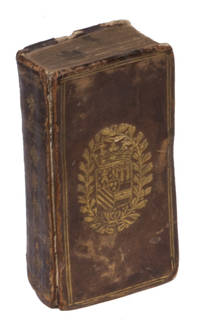
1623ABC_45188Paris: Jean Libert 1623. Contemporary French gold-tooled calf sewn on 2 supports each board with the coat-of-arms of Henri de La Tour 1555-1623 Duc de Bouillon and Prince of Sedan who married the daughter of William the Silent founding father of the Dutch Republic with a French Ducal crown the whole in a wreath of 2 laurel branches with berries the flat spine divided into 4 fields each with a central decoration gilt edges. Marbled paste-downs fine-toothed combed pattern in red blue and white. 16mo. With a woodcut decoration on the title-page and woodcut decorated initials in the text. Very rare 24º edition of 150 prose fables by Aesop and 43 verse fables by Babrius here called Gabrius in Greek and Latin on facing pages remotely based on the text of the illustrated humanistic editions published by Jean de Tournes in Lyons. While the existence of Aesop ca. 620-ca. 584 BCE as a story teller is attested in many early sources the canon that appears under his name contains fables passed down orally and rendered in literary form by many authors over the centuries. Babrius wrote verse fables shortly before 200 CE that were later rendered in Greek prose and added to the Aesop canon. Although the title-page indicates that the fables are illustrated the present edition never contains woodcuts: Libert apparently copied his title from one of the illustrated editions. He does include Maximus Planudess extensive account of Aesops life preceding the fables. Although the earliest European marbled papers appear to have been made in or around southern Germany they were not combed. Wolfe notes that the French first used marbled paper for bookbindings and the present paste-downs closely resemble his earliest example of combed marbled paper. The arms on the binding are quartered with an inescutcheon. The Counts of Auvergne had born the quartered arms of La Tour and the Counts of Auvergne with the inescutcheon of the Counts of Boulogne since 1389. With the Counts of Boulogne extinct the arms passed to another branch of the family descending to Henri de La Tour 1555-1623 who took the title Duc de Bouillon by marriage in 1591 and later inherited the title Vicomte de Turenne from his father. In 1595 he married Elisabeth van Oranje Nassau daughter of William the Silent 1533-1584. Their second son was the famous Marshal Turenne 1611-1675. Early owners inscription on title-page in ink. Lacking the last leaf of the index title-page cut short at the head not affecting the text and a small worm hole in the second half sometime affecting a letter in the first line but otherwise in good condition. Binding rubbed not affecting the arms and backstrip worn a few small chips and holes and hinges cracked.l KVK & WorldCat 2 or 3 copies; cf. Bodemann 29.2 similar 1570 De Tournes ed. Jean Libert, unknown
16051704209Tornaesium 1605. 5th or later Edition. Hardcover. Very Good. A very good early 1605 edition of Aesop's Fables. In protective case. Tornaesium hardcover books
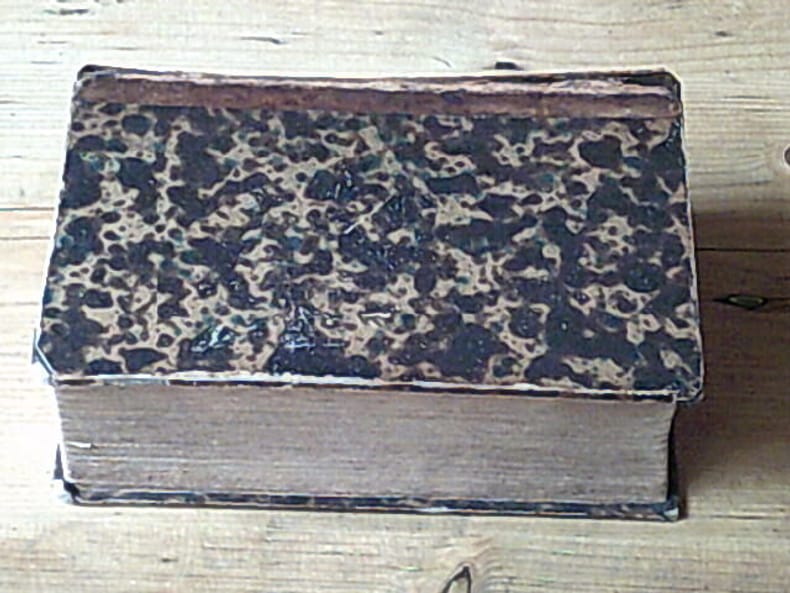
1667745Amsterdam: Laurentius 1667. Hardcover. Fair. 1st edition thus of Aesop's Fables as printed by Laurentius in 1667 and including over 100 engravings; this copy with the explicit engravings pages 276 and 279 depicting a brothel unaltered which is rare due to centuries of censorship to the rather coarse illustrations. The completeness of this edition is often mentioned for its completeness as it contains ninety-two of the Phaedrus fables. Each fable is richly annotated. About Aesop's Fables - Aesop's Fables or the Aesopica is a collection of fables credited to Aesop a slave and storyteller who lived in ancient Greece between 620 and 564 BCE. Bibliographic Details - Universal Short Title Catalogue USTC number 1804349 found in 13 of the world's best libraries. Richly referenced. One of my favorites for its simplicity comes from Greg Carlson the Carlson Fable Collection online and he writes of this edition: We have a title-page and the glorious frontispiece featuring a Roman Emperor Phaedrus and Aesop. Bodemann #75.1 notes the number of dedications that open the book. The illustrations for each fable are uniformly just over 3½"" by 2¾"". According to Bodemann they have few known sources. They tend to portray several phases of a fable at once; for example on 43 we see in the foreground the stag admiring his image in the water. Further back and to the right we see the dogs catching the stag as the hunter stands by. Similarly we see both phases of FS on 78. The illustrations are strong and well preserved. They were printed in a separate phase from the texts as is clear for example on 25 where the illustration overlaps the bottom of the title. I seem to remember many of the images from various sources like the dramatic pose of the Aesop statue on 128. Page 194 has a second illustration pasted in over the original illustration for III 12 ""Pullus ad Margaritam."" The same on 205 for ""Canis ad Agnum"" III 15. Several fables like V 2 seem to have some lines expurgated and replaced with asterisks. I am unsure why. The fables are followed by significant sections of ""Variae Lectiones"" ""Notae Guyeti"" ""Vocabulorum"" and an ""Index Rerum et Verborum."" The final page has a list of errata. Physical Attributes - Measures approx. 11.5 x 19 x 3.5 cm. Mottled leather binding of the 18th century style. Boards with a single gilt fillet frame. Spine with four raised bands; four compartments with a central gilt flower stamp and one with the title in gilt but the gilt is largely lost as the mottling has reduced the outer layer of the leather. The text block edges are sprinkled red. Top-edge is darkened. Double endbands of white and blue. Illustrated; bibliographies record 103 engravings. I did personally check the collation signed numbers at the bottom of each page and this copy is complete including the often lost two blank leaves at the rear I shined a light through to make sure they matched the 6th leaf in the gathering. Pages - 32 leaves of prefatory material signed to 8 462 numbered pages ending on Ff7verso leaves signed Ff8 to end TT8 are index. Collation - to 8 A-Z8 Aa-Tt8 Condition - See pictures. Some loss of leather where mottled some loss of gilt. Still the binding is performing well. Some small wear to leather at board edges. Rubbing on back board. Start of a crack at ends of joints. Hinge is cracked inside exposing ties/crash at gutter. Pastedown and flyleaf with pasted stamped written and erased bibliographic and shelf mark annotations. Blank bookbinder's endpaper shaken slightly loose and proud. Text block with some toning and occasional rust spots candle ember mark and thumb throughout. Top corner Y3 chipped away no text affected. Small ink spot along fore-edge at rear; just shows on printed page fore-edge margin. Mostly a nice copy; very few thumbs I saw just several no page edge chips and no annotations. Laurentius