CONTE - INGOUF JEUNE (sculpsit)Biblio.com

1 208 résultats
180926344Paris: Imprimerie Impériale 1809. Fine. Imprimerie Impériale Paris 1809-1829 53.50 x 71 cm une feuille Original etching in plano untrimmed extracted from the so-called ""Imperial"" edition of the Description de l'Égypte ou Recueil des observations et recherches faites en Égypte pendant l'expédition française publié par les ordres de Sa Majesté l'Empereur Napoléon le Grand. Produced between February 1802 and 1829 by order of Napoleon Bonaparte and published from 1809 actually 1810 it was printed in 1000 copies on watermarked laid paper ""Égypte ancienne et moderne"" and offered to institutions. Light and marginal foxing not affecting the engraving otherwise very fine state of freshness and preservation. Volume ETAT MODERNE II: The genius of the Institute's scholars is particularly revealed through the plates of the section called Egypte Moderne. Architecture industry social structures health conditions water management music craftsmanship are presented with exceptional precision and graphic quality. The spirit of Diderot and d'Alembert's L'Encyclopédie remains underlying in the approach of the draughtsmen of the Description de L'Egypte who accompany the text volumes with numerous detailed plates striving to create a portrait of the populations imbued with beauty and respect. Wealthy pashas or simple potter craftsmen are represented with sensitivity going about their occupations amid aesthetic compositions without falling into idealism or caricature. LA DESCRIPTION DE L'EGYPTE IMPERIAL edition 1809-1829: La Description de l'Egypte is one of the masterpieces of French publishing and the starting point of a new science: Egyptology. A titanic exposition of Egypt at the time of Bonaparte's conquests between 1798 and 1799 it is divided into 23 volumes including 13 volumes of engravings gathering nearly 1000 plates in black and 72 in color. The 6 volumes of plates entitled Antiquités are devoted to the splendors of pharaonic Egypt. L'Histoire naturelle is distributed across 3 volumes of engravings. One volume is devoted to Cartes géographiques et topographiques while the 3 volumes : Etat Moderne present a striking portrait of Coptic and Islamic Egypt as it was seen by Bonaparte's Oriental armies. The ""Egyptian campaign"" a military disaster reveals through the engravings of the Description de l'Egypte the scientific success it became thanks to the approximately 167 scholars members of the Commission of Sciences and Arts of the Institute of Egypt who followed Napoleon's army. The Institute brought together in Egypt the mathematician Monge the chemist Berthollet the naturalist Geoffroy Saint-Hilaire as well as numerous artists engineers architects doctors. They were charged with rediscovering modern and ancient Egypt showing its natural riches and the know-how of its inhabitants. The first edition called ""Imperial"" of the Description de l'Egypte was produced in four large formats two of them specially created for it and named ""Moyen-Egypte"" and ""Grand-Egypte"" formats. A specific press was built for its printing which stretched over twenty years between 1809 and 1829. The Imperial edition proved so popular that a second edition in 37 volumes entirely in black and without the watermark ""Egypte ancienne et moderne"" called the ""Panckoucke"" edition was published from 1821 by the C.-L.-F. Panckoucke printing house Paris. The realization of this monument of erudition owes much to Baron Dominique Vivant Denon illustrator diplomat collector and subsequently director of the Napoleon Museum of the Louvre who accompanied Napoleon to Egypt with numerous other scholars but decided alone to venture into the South of the country while the other invited scientists remained confined to the Cairo region. The fabulous sketches brought back by Denon during his romantic ride gave Bonaparte the idea to send the other members of the Institute there and thus draw a faithful and complete portrait of the territory. Following Denon it was there Imprimerie Impériale unknown
180925376Paris: Imprimerie Impériale 1809. Fine. Imprimerie Impériale Paris 1809-1829 53.50 x 70 cm une feuille Original unshaved full-page etching from the Imperial edition of the Description de l'Égypte or Recueil des observations et recherches faites en Égypte pendant l'expédition française publié par les ordres de Sa Majesté l'Empereur Napoléon le Grand A Collection of the observations and research carried out in Egypt during the French expedition published on the orders of his Majesty the Emperor Napoleon the Great'.Produced between February 1802 and 1830 on the orders of Naopleon Bonaparte and published between 1809 and 1828 1000 copies were printed and distributed to institutions on vergé paper with an 'Égypte ancienne et moderne' watermark visible when held up to the light. Light marginal spotting not touching image otherwise in very fresh fine condition. An engraving from the Description de l'Egypte one of the masterpieces of French printing and the birth of a new field: Egyptology. A gigantic survey of Egypt at the time of Bonaparte's conquests in 1798 and 1799 the work is divided into 13 volumes of engravings making up 892 plates of which 72 colored as well as presenting the splendors of the Egypt of the Pharaohs in 9 volumes. The other volumes discuss natural history and present a fascinating portrait of Coptic and Islamic Egypt as it was seen by Bonaparte's Eastern Armies. The Egyptian campaign' militarily a disaster demonstrates through the engravings of the Description d'Egypte the scientific success it nonetheless became thanks to the 167 expert members of the Commission of the Sciences and Arts of the Institut d'Egypte Egyptian Institute who followed Napoleon's army. The Institut gathered together in Egypt the mathematician Monge the chemist Berthollet the naturalist Geoffroy Saint-Hilaire as well as numerous artists engineers architects and doctors. They were tasked with re-discovering modern and ancient Egypt and displaying its natural treasures as well as the know-how of its inhabitants.This edition the so-called Imperial edition of the plates for the Description de l'Egypte was printed in four large formats two of which were specially created for it and christened Moyen-Egypte and Grand-Egypte. A special press was built to print it the process extending over 20 years from 1809 to 1829. The Imperial edition proved so popular that a second edition this time in black and white and without the Egypte ancienne et moderne watermark known as the Royal Edition was published during the Restoration by the printing house of C.-L.-F. Panckoucke Paris.The engravings of the Description d'Egypte owe a great deal to Baron Dominique-Vivant Denon illustrator diplomat collector and later Director of the Musée Napoléon the Louvre. His exploration of the South of Egypt gave Bonaparte the idea of sending the experts of the Institut there thus creating a faithful and complete portrait of the area. This was the research gathered together from 1802 in the mammoth Description de L'Egypte.Denon embarked on this story of archeological exploration at the age of 51 reaching first Alexandria and then Cairo before exploring Upper Egypt. Along with the members of the Institut d'Egypte the Natural History Museum's painter H.J. Redouté brother of Pierre-Joseph Redouté author of Roses the mineralogist Dolomiue and the draughtsman Joly Denon then explored the Nile Delta and Lower Egypt. When however he joined the 21st Light Infantry Regiment as it marched across Upper Egypt in pursuit of the retreating Mameluks in November 1798 he found himself the only civilian. In the very midst of the battle itself he reeled off sketches of the works of art that peppered his path right up to the threshold of the Sudan. He said that he had crossed a country that is apart from its name entirely unknown to Europeans and therefore everything was worth describing Voyages dans la Basse et la Haute Egypte pendant les campagnes Imprimerie Impériale unknown
180926348Paris: Imprimerie Impériale 1809. Fine. Imprimerie Impériale Paris 1809-1829 53.50 x 71 cm une feuille Original etching in plano format untrimmed extracted from the so-called ""Imperial"" edition of the Description de l'Égypte ou Recueil des observations et recherches faites en Égypte pendant l'expédition française publié par les ordres de Sa Majesté l'Empereur Napoléon le Grand. Produced between February 1802 and 1829 by order of Napoleon Bonaparte and published from 1809 actually 1810 it was printed in 1000 copies on laid paper watermarked ""Égypte ancienne et moderne"" and presented to institutions. Light and marginal foxing not affecting the engraving otherwise very fine state of freshness and preservation. VOLUME ETAT MODERNE II: The genius of the scholars of the Institute is particularly revealed through the plates of the section called Egypte Moderne. Architecture industry social structures health conditions water management music craftsmanship are presented with exceptional precision and graphic quality. The spirit of L'Encyclopédie by Diderot and d'Alembert remains underlying in the approach of the draftsmen of the Description de L'Egypte who accompany the text volumes with numerous detailed plates endeavoring to create a portrait of the populations imbued with beauty and respect. Rich pashas or simple potter craftsmen are represented with sensitivity going about their occupations in the midst of aesthetic compositions without falling into idealism or caricature. LA DESCRIPTION DE L'EGYPTE IMPERIAL edition 1809-1829: La Description de l'Egypte is one of the masterpieces of French publishing and the starting point of a new science: Egyptology. A titanic exposition of Egypt at the time of Bonaparte's conquests between 1798 and 1799 it is divided into 23 volumes including 13 volumes of engravings gathering nearly 1000 black plates and 72 in color. The 6 volumes of plates entitled Antiquités are devoted to the splendors of pharaonic Egypt. L'Histoire naturelle is divided into 3 volumes of engravings. One volume is devoted to Cartes géographiques et topographiques while the 3 volumes : Etat Moderne present a striking portrait of Coptic and Islamic Egypt as it was seen by Bonaparte's Army of the Orient. The ""Egyptian campaign"" a military disaster reveals through the engravings of the Description de l'Egypte the scientific success it became thanks to the some 167 scholars members of the Commission of Sciences and Arts of the Institute of Egypt who followed Napoleon's army. The Institute brought together in Egypt the mathematician Monge the chemist Berthollet the naturalist Geoffroy Saint-Hilaire as well as numerous artists engineers architects doctors. They were charged with rediscovering modern and ancient Egypt showing its natural riches and the know-how of its inhabitants. The first edition called ""Imperial"" of the Description de l'Egypte was produced in four large formats two of them specially created for it and named ""Moyen-Egypte"" and ""Grand-Egypte"" formats. A specific press was built for its printing which extended over twenty years between 1809 and 1829. The Imperial edition proved so popular that a second edition in 37 volumes entirely in black and without the watermark ""Égypte ancienne et moderne"" called the ""Panckoucke"" edition was published from 1821 by the C.-L.-F. Panckoucke printing house Paris. The realization of this monument of erudition owes much to Baron Dominique Vivant Denon illustrator diplomat collector and subsequently director of the Napoleon Museum at the Louvre who accompanied Napoleon to Egypt with numerous other scholars but decided alone to venture into the South of the country while the other invited scientists remained confined to the Cairo region. The fabulous sketches brought back by Denon from his romantic ride gave Bonaparte the idea to send the other members of the Institute there and thus create a faithful and complete portrait of the territory. Following Denon it Imprimerie Impériale unknown
18700913636London: Bell & Daldy 1870. Bound in green cloth stamped in gold and black. All edges gilt top edge faded a bit. Some scuffing to spine but type still very readable. A handsome early copy in English of this 542 pp. book of Fairy Tales by the master storyteller. Handsome tight copy. . Early Reprint. Hard Cover. Very Good /No Jacket. 8vo - over 7¾" - 9¾" tall. Bell & Daldy Hardcover
185112402Garnier, sd. 1851 in-8 demi-chagrin rouge, dos à nerfs, caissons richement ornés, X- 292 pp. 25 vignettes in-texte et 80 planches hors-texte gravées par Cherrier, Lacoste, Dujardin, etc. Rousseurs éparses.
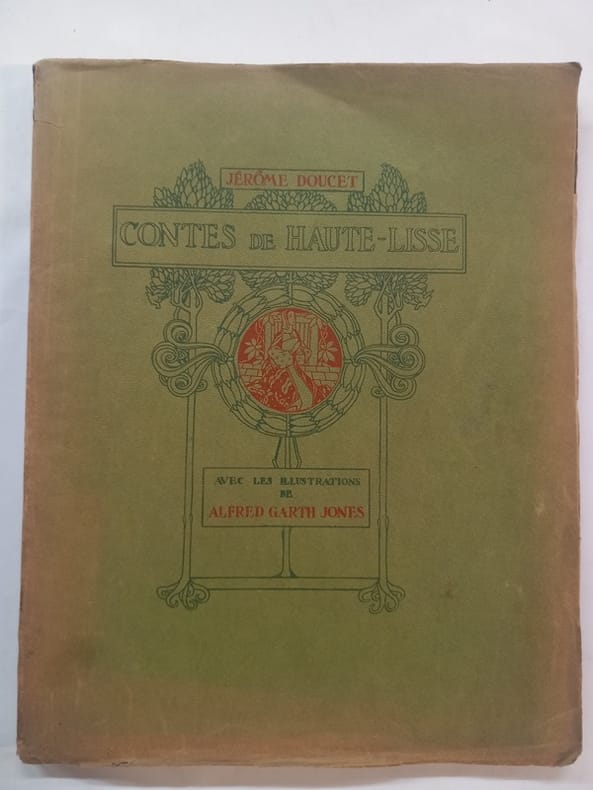
1899141043Bernoux et Cumin 1899 Édition originale. Tirage à 600 exemplaires, celui-ci un des 306 exemplaires sur papier vélin du Marais. Belle édition illustrée par l'artiste anglais Alfred Garth Jones. Intérieur propre et frais. Avec des illustrations en couleurs in et hors texte de Alfred Garth Jones et encadrements du texte. Elle réunit six contes : "Le Sommeil", "Le Ramier", "Le Serment", "Le Missel", "La Main", "La Cicatrice". In-8 broché sous couverture vert pistage, non paginé, prés de 41 pages, légèrement insolé, le second plat un peu corné, mors fendillés en pied, Bo exemplaire
184688362H. Fournier 1846 In-8. Cartonnage éditeur pleine percaline bleu marine, dos orné, figures polychromes sur le premier plat, figure or sur le deuxième plat, VIII-386 pp., tranches dorées, 50 planches hors texte, 200 vignettes dans le texte. Cartonnage frotté, coins emoussés et frottés, mors fragilisés en tête et en pied, rousseurs marginales.
1824CCC-822111. edition Paris : P. Blanchard, 1824. 3e édetion, complet de ces six gravures hors texte, reliure plein cuirs marron, les 4 coins ,le haut et le bas du dos tres rapessssss, interieur bon, in-8 (113,5 cm X 8,5 cm), 176 pages, taces d'humidite, photos possibles
1823tu117A Paris, chez Louis Janet, libraire - éditeur, rue Saint-Jacques, n° 59 Relié 1823 "Quatre volumes in-8 (13 x 20,5 cm.), reliure d'époque en demi-veau, tome I, II, III de l'édition Janet (1823) ainsi qu'un 4e volume complet des 120 figures à la grotesque (Les Songes drôlatiques de Pantagruel) que Janet joint à sa propre édition (tome neuvième de cette rare édition dite ""variorum"" publiée à Paris chez Dalibon, en 1823), 615, 580, 672 et 482 pages, auteur et tomaisons dorés sur le dos, signet, gravures, 3 planches dépliables (tome 1) décrivant l'intérieur de et l'extérieur de la maison de Rabelais, 75 gravures d'après celles de l'édition de Fernand Bastien de 1798 dans les 3 premiers volumes ; bords, coins, coiffes et mors un peu frottés, quelques rousseurs dans le texte, par ailleurs bon état général pour cette série de 4 volumes. Livraison a domicile (La Poste) ou en Mondial Relay sur simple demande."
18858996N.p.: Privately Printed 1885. First edition. 7x5" 19pp. Vignette on title page. String bound in beige printed card wrappers. Light chipping to edges of wraps clean internally and very good. <br /> <br /> Rare booklet from one of the early pioneers of the Puget Sound Edward Jay Allen 1830-1915. Unusual for immigrants heading west Allen was college-educated and single. He settled near Olympia in 1852 after his overland journey from Pennsylvania. Interestingly Allen negotiated with the local Native Americans to pay for the land before he took up residence. He played an important role in early surveys and road building in the area before returning east in 1855.<br /> <br /> This story likely written for his children is told by a fater to his 7-year-old and begins "Once upon a time there was a Prince." An epic battle ensues between the Fairy Godmother and the Great White King to preserve the wildflowers the Prince loved so well. "If you build these Walls of Sand around the Prince's flowers the power of the Great White King shall be naught and the flowers may bloom on forever."<br /> <br /> OCLC cites a single holding at the University of Pittsburgh and we find no mention of this booklet elsewhere. <br /> <br /> . Privately Printed unknown
1888009536London: Eyre & Spottiswoode 1888 48 pgs. Grey-green cloth pictorially stamped in red ink cloth rubbed gift inscription thumbing to pages 2 pin holes through a number of pages. A facsimile of Doyle's 1842 manuscript which was sold at auction by Christie's and eventually published by Eyre & Spottiswoode in 1888. Each page contains hand-lettered text and color artwork reproduced from Doyle's manuscript. Scarce. Osborne pg 29. . Pictorial Cloth. Near Very Good/No Jacket. Illus. by Richard Doyle. 4to. Eyre & Spottiswoode hardcover
1840008542Finsbury London: A. Park 47 Leonard Street 1840 Circa 1840 publisher was at this address from 1835-1863. 7 x 4 inches 18 x 12 cm . Pictorial blue paper wraps with some wear and corner creasing amazingly clean but with some offsetting. 8 leaves containing an abbreviated version of the familiar humorous verse about Mother Hubbard and her talented dog with equally amusing engravings colored by hand as issued. . Original Wraps. Very Good/No Jacket. Illus. by Archibald Alexander Park Engraver. 12mo. Chap Book. A. Park, 47 Leonard Street paperback
1864R160201672J. HETZEL. 1864. In-4. Relié demi-cuir. Bon état, Couv. convenable, Dos satisfaisant, Intérieur frais. 380 pages - Nombreuses illustrations en noir et blanc dans et hors texte - Coins, tranches et coiffes frottés - Auteurs, titre et filets dorés au dos - Plats et contreplats jaspés - 2 photos disponibles. . . . Classification Dewey : 398.2-Conte populaire
188512496AB1885. Tokyo Hasegawa 1885. 15 : 105 cm. 9 leaves With many coloured illustrations by Eitaku Kobayashi. Coloured illustrated original wrappers. First German edition. - Japanische Märchen. - Printed on crepe-paper. - Catallogue Crepe-Paper Books and Woodblock Prints no. 132. unknown
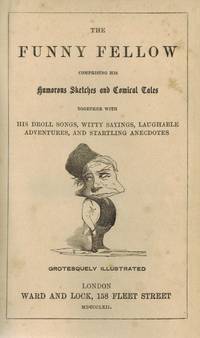
186241698AB1862. First Edition of a comic-style publication. London Ward And Lock 158 Fleet Street / Printed by Levey Robson and Franklyn 1862. 11 x 17cm. IV 220 pages with numerous grotesque illustrations. Original Hardcover with patterned cloth. Binding slightly shaky only. Otherwise in very good condition with only minor signs of external wear. With illustrations in "Punch - Style". Includes for example the following chapters: The Opium Dream / Hippodrollery / Speculations Upon Masquerades / Shakesperian Fancies / Shakesperian Fancies / etc. hardcover
1852379901London : R. Bentley 1852. First Edition. Hardcover. Provenance: Initialed bookplate. Spine bands worn. Good copy in the original gilt-blocked cloth. Slight suggestion only of dust-dulling to the spine bands and panel edges. Remains particularly well-preserved overall; tight bright clean and strong. Physical description : 2 volumes 20 cm. Notes : ""I have here and there omitted some passages which did not appear essential to the narrative.""--Pref. p. viii.""I have here and there omitted some passages which did not appear essential to the narrative.""--Pref. p. viii. Donated by John Forster. Includes bibliographical references. Contents : Vol. 1 -- Vol. 2. Subjects :Dante Alighieri 1265-1321 Biography. Italy. Homes and haunts Italy. London : R. Bentley hardcover
180926326Paris: Imprimerie Impériale 1809. Fine. Imprimerie Impériale Paris 1809-1829 71 x 53.50 cm une feuille Original etching in plano untrimmed extracted from the so-called ""Imperial"" edition of the Description de l'Égypte ou Recueil des observations et recherches faites en Égypte pendant l'expédition française publié par les ordres de Sa Majesté l'Empereur Napoléon le Grand. Executed between February 1802 and 1829 by order of Napoleon Bonaparte and published from 1809 actually 1810 it was printed in 1000 copies on watermarked laid paper ""Égypte ancienne et moderne"" and presented to institutions. Slight marginal foxing not affecting the engraving otherwise very fine condition and preservation. Volume ETAT MODERNE II: The genius of the Institute's scholars is particularly revealed through the plates of the section called Egypte Moderne. Architecture industry social structures health conditions water management music and craftsmanship are presented with exceptional precision and graphic quality. The spirit of Diderot and d'Alembert's Encyclopédie remains underlying in the approach of the Description de L'Egypte draftsmen who accompany the text volumes with numerous detailed plates endeavoring to create a portrait of the populations imbued with beauty and respect. Wealthy pashas or simple pottery craftsmen are represented with sensitivity going about their occupations amid aesthetic compositions without falling into idealism or caricature. LA DESCRIPTION DE L'EGYPTE IMPERIAL edition 1809-1829: La Description de l'Egypte is one of the masterpieces of French publishing and the starting point of a new science: Egyptology. A titanic exposition of Egypt at the time of Bonaparte's conquests between 1798 and 1799 it is divided into 23 volumes including 13 volumes of engravings gathering nearly 1000 plates in black and 72 in color. The 6 volumes of plates entitled Antiquités are devoted to the splendors of pharaonic Egypt. L'Histoire naturelle is divided into 3 volumes of engravings. One volume is devoted to Cartes géographiques et topographiques while the 3 volumes : Etat Moderne present a striking portrait of Coptic and Islamic Egypt as it was seen by Bonaparte's Eastern armies. The ""Egyptian campaign"" a military disaster reveals through the engravings of the Description de l'Egypte the scientific success it became thanks to the 167 scholars who were members of the Commission of Sciences and Arts of the Institute of Egypt who followed Napoleon's army. The Institute brought together in Egypt the mathematician Monge the chemist Berthollet the naturalist Geoffroy Saint-Hilaire as well as numerous artists engineers architects doctors. They were charged with rediscovering modern and ancient Egypt showing its natural riches and the expertise of its inhabitants. The first edition called ""Imperial"" of the Description de l'Egypte was produced in four large formats two of them specially created for it and named ""Moyen-Egypte"" and ""Grand-Egypte"" formats. A specific press was built for its printing which stretched over twenty years between 1809 and 1829. The Imperial edition proved so popular that a second edition in 37 volumes entirely in black and without the ""Egypte ancienne et moderne"" watermark called the ""Panckoucke"" edition was published from 1821 by the C.-L.-F. Panckoucke printing house Paris. The realization of this monument of erudition owes much to Baron Dominique Vivant Denon illustrator diplomat collector and later director of the Napoleon Museum at the Louvre who accompanied Napoleon to Egypt with many other scholars but decided alone to venture into the South of the country while the other invited scientists remained confined to the Cairo region. The fabulous sketches brought back by Denon during his romantic ride gave Bonaparte the idea to send the other members of the Institute there and thus create a faithful and complete portrait of the territory. Following Denon the greatest French scientists and artists ve Imprimerie Impériale unknown
180926376Imprimerie Impériale | Paris 1809-1829 | 71 x 53.50 cm | une feuille
180926337Imprimerie Impériale | Paris 1809-1829 | 71 x 53.50 cm | une feuille
180926339Imprimerie Impériale | Paris 1809-1829 | 71 x 53.50 cm | une feuille
180926388Imprimerie Impériale | Paris 1809-1829 | 71 x 53.50 cm | une feuille
1876pq2448Lemerre Alphonse Relié 1876 "Quinze volumes in-12 (9,5 x 16,5 cm.), joliment reliés demi-chagrin marron, liserés, titres et auteur dorés au dos lisse, têtes dorées, papier à la cuve aux gardes, couvertures conservées, 15 volumes sur 17 (il manque ""poésies 1864-1881"" et ""théâtre 1878-1881""), bandeaux et culs-de-lampes, tranchefiles et signets ; certains dos légèrement insolés, coins de certains volumes un peu frottés, parfois quelques rousseurs sur les tranches, griffure sur la tête dorée du 1er tome, très bel état d'ensemble pour cette série incomplète de 15 tomes. Livraison a domicile (La Poste) ou en Mondial Relay sur simple demande."
184620373Paris, Lavigne (imprimerie de Lacour), 1846 ; in-12 (173 mm), demi-chagrin maroquiné rouge, dos à nerfs décoré et doré, titre doré (Bruyère) ; XII, 419 pp.
1893162993NY MCLOUGHLIN 1893 1893. GILT STAMPED NAVY BLUE CLOTH OVER GLAZED BLUE PICTORIAL BOARDS FRONT FREE ENDPAPER DETACHED. VERY GOOD. Hardcover. NY, MCLOUGHLIN, 1893 hardcover