CONTE - DELAUNAYBiblio.com

1 208 résultats
180926394Paris: Imprimerie Impériale 1809. Fine. Imprimerie Impériale Paris 1809-1829 53.50 x 71 cm une feuille Original etching in plano uncut from the so-called ""Imperial"" edition of the Description de l'Égypte ou Recueil des observations et recherches faites en Égypte pendant l'expédition française publié par les ordres de Sa Majesté l'Empereur Napoléon le Grand. Executed between February 1802 and 1829 by order of Napoleon Bonaparte and published from 1809 actually 1810 it was printed in 1000 copies on watermarked laid paper ""Égypte ancienne et moderne"" and offered to institutions. Slight marginal foxing not affecting the engraving otherwise in very fine fresh condition and well preserved. Volume ETAT MODERNE II: The genius of the Institute's scholars is particularly revealed through the plates of the section called Egypte Moderne. Architecture industry social structures health conditions water systems music crafts are presented with exceptional precision and graphic quality. The spirit of Diderot and d'Alembert's L'Encyclopédie remains underlying in the approach of the draughtsmen of the Description de L'Egypte who accompany the text volumes with numerous detailed plates endeavoring to create a portrait of the populations imbued with beauty and respect. Wealthy pashas or simple pottery artisans are represented with sensitivity going about their occupations amid aesthetic compositions without falling into idealism or caricature. LA DESCRIPTION DE L'EGYPTE IMPERIAL edition 1809-1829: La Description de l'Egypte is one of the masterpieces of French publishing and the starting point of a new science: Egyptology. A titanic exposition of Egypt at the time of Bonaparte's conquests between 1798 and 1799 it is divided into 23 volumes including 13 volumes of engravings gathering nearly 1000 plates in black and 72 in color. The 6 volumes of plates entitled Antiquités are devoted to the splendors of pharaonic Egypt. L'Histoire naturelle is divided into 3 volumes of engravings. One volume is devoted to Cartes géographiques et topographiques while the 3 volumes : Etat Moderne present a striking portrait of Coptic and Islamic Egypt as it was seen by Bonaparte's armies of the East. The ""Egyptian campaign"" a military disaster reveals through the engravings of the Description de l'Egypte the scientific success it became thanks to the some 167 scholars members of the Commission of Sciences and Arts of the Institute of Egypt who followed Napoleon's army. The Institute brought together in Egypt the mathematician Monge the chemist Berthollet the naturalist Geoffroy Saint-Hilaire as well as numerous artists engineers architects physicians. They were charged with rediscovering modern and ancient Egypt showing its natural riches and the know-how of its inhabitants. The first edition called ""Imperial"" of the Description de l'Egypte was produced in four large formats two of them specially created for it and named ""Moyen-Egypte"" and ""Grand-Egypte"" formats. A specific press was built for its printing which spread over twenty years between 1809 and 1829. The Imperial edition proved so popular that a second edition in 37 volumes entirely in black and without the ""Egypte ancienne et moderne"" watermark called the ""Panckoucke"" edition was published from 1821 by the C.-L.-F. Panckoucke printing house Paris. The realization of this monument of erudition owes much to Baron Dominique Vivant Denon illustrator diplomat collector and later director of the Napoleon Museum of the Louvre who accompanied Napoleon to Egypt with numerous other scholars but decided alone to venture into the South of the country while the other invited scientists remained confined to the Cairo region. The fabulous sketches brought back by Denon from his romantic ride gave Bonaparte the idea to send the other members of the Institute there and thus create a faithful and complete portrait of the territory. Following Denon it was therefore the greatest French scientists and Imprimerie Impériale unknown
180926330Paris: Imprimerie Impériale 1809. Fine. Imprimerie Impériale Paris 1809-1829 53.50 x 71 cm une feuille Original etching in plano untrimmed extracted from the so-called ""Imperial"" edition of the Description de l'Égypte ou Recueil des observations et recherches faites en Égypte pendant l'expédition française publié par les ordres de Sa Majesté l'Empereur Napoléon le Grand. Executed between February 1802 and 1829 by order of Napoleon Bonaparte and published from 1809 actually 1810 it was printed in 1000 copies on watermarked laid paper ""Égypte ancienne et moderne"" and offered to institutions. Light and marginal foxing not affecting the engraving otherwise very fine condition and preservation. Volume MODERN STATE II: The genius of the scholars of the Institute is particularly revealed through the plates of the section called Modern Egypt. Architecture industry social structures sanitary conditions water management music craftsmanship are presented with exceptional precision and graphic quality. The spirit of Diderot and d'Alembert's Encyclopedia remains underlying in the approach of the draughtsmen of the Description de L'Egypte who accompany the text volumes with numerous detailed plates endeavoring to draw a portrait of the populations imbued with beauty and respect. Wealthy pashas or simple potter craftsmen are represented with sensitivity going about their occupations in the midst of aesthetic compositions without falling into idealism or caricature. THE DESCRIPTION OF EGYPT IMPERIAL edition 1809-1829: The Description of Egypt is one of the masterpieces of French publishing and the starting point of a new science: Egyptology. Titanic exposition of Egypt at the time of Bonaparte's conquests between 1798 and 1799 it is divided into 23 volumes including 13 volumes of engravings gathering nearly 1000 plates in black and 72 in color. The 6 volumes of plates entitled Antiquities are devoted to the splendors of Pharaonic Egypt. Natural History is divided into 3 volumes of engravings. One volume is devoted to Geographical and topographical maps while the 3 volumes : Modern State draw a striking portrait of Coptic and Islamic Egypt as it was seen by Bonaparte's armies of the Orient. The ""Egyptian campaign"" military disaster reveals through the engravings of the Description of Egypt the scientific success it became thanks to the some 167 scholars members of the Commission of Sciences and Arts of the Institute of Egypt who followed Napoleon's army. The Institute brought together in Egypt the mathematician Monge the chemist Berthollet the naturalist Geoffroy Saint-Hilaire as well as numerous artists engineers architects physicians. They were charged with rediscovering modern and ancient Egypt showing its natural riches and the know-how of its inhabitants. The first edition called ""Imperial"" of the Description of Egypt was executed in four large formats two of them specially created for it and baptized ""Middle-Egypt"" and ""Grand-Egypt"" formats. A specific press was built for its printing which stretched over twenty years between 1809 and 1829. The Imperial edition proved so popular that a second edition in 37 volumes entirely in black and without the watermark ""ancient and modern Egypt"" called the ""Panckoucke"" edition was published from 1821 by the C.-L.-F. Panckoucke printing house Paris. The realization of this monument of erudition owes much to Baron Dominique Vivant Denon illustrator diplomat collector and subsequently director of the Napoleon Museum at the Louvre who accompanied Napoleon to Egypt with numerous other scholars but decided alone to venture into the South of the country while the other invited scientists remained confined in the Cairo region. The fabulous sketches brought back by Denon from his romantic cavalcade gave Bonaparte the idea to send the other members of the Institute there and thus draw a faithful and complete portrait of the territory. Following Denon it was therefore the greatest Fre Imprimerie Impériale unknown
180926342Paris: Imprimerie Impériale 1809. Fine. Imprimerie Impériale Paris 1809-1829 53.50 x 71 cm une feuille Original etching in plano untrimmed extracted from the so-called ""Imperial"" edition of the Description de l'Égypte ou Recueil des observations et recherches faites en Égypte pendant l'expédition française publié par les ordres de Sa Majesté l'Empereur Napoléon le Grand. Executed between February 1802 and 1829 by order of Napoleon Bonaparte and published from 1809 actually 1810 it was printed in 1000 copies on laid paper watermarked ""Égypte ancienne et moderne"" and presented to institutions. Slight and marginal foxing not affecting the engraving otherwise very fine condition and preservation. Volume ETAT MODERNE II: The genius of the Institute's scholars is particularly revealed through the plates of the section called Egypte Moderne. Architecture industry social structures sanitary conditions water systems music craftsmanship are presented with exceptional precision and graphic quality. The spirit of Diderot and d'Alembert's Encyclopédie remains underlying in the approach of the draughtsmen of the Description de L'Egypte who accompany the text volumes with numerous detailed plates endeavoring to create a portrait of the populations imbued with beauty and respect. Rich pashas or simple potter craftsmen are represented with sensitivity going about their occupations amid aesthetic compositions without falling into idealism or caricature. LA DESCRIPTION DE L'EGYPTE IMPERIAL edition 1809-1829: La Description de l'Egypte is one of the masterpieces of French publishing and the starting point of a new science: Egyptology. A titanic exposition of Egypt at the time of Bonaparte's conquests between 1798 and 1799 it is divided into 23 volumes including 13 volumes of engravings gathering nearly 1000 plates in black and 72 in color. The 6 volumes of plates entitled Antiquités are devoted to the splendors of pharaonic Egypt. L'Histoire naturelle is distributed across 3 volumes of engravings. One volume is devoted to Cartes géographiques et topographiques while the 3 volumes : Etat Moderne present a striking portrait of Coptic and Islamic Egypt as it was seen by Bonaparte's armies of the Orient. The ""Egyptian campaign"" a military disaster reveals through the engravings of the Description de l'Egypte the scientific success it became thanks to the some 167 scholars members of the Commission of Sciences and Arts of the Institute of Egypt who followed Napoleon's army. The Institute brought together in Egypt the mathematician Monge the chemist Berthollet the naturalist Geoffroy Saint-Hilaire as well as numerous artists engineers architects physicians. They were charged with rediscovering modern and ancient Egypt showing its natural riches and the know-how of its inhabitants. The first edition called ""Imperial"" of the Description de l'Egypte was produced in four large formats two of them specially created for it and named ""Moyen-Egypte"" and ""Grand-Egypte"" formats. A specific press was built for its printing which stretched over twenty years between 1809 and 1829. The Imperial edition proved so popular that a second edition in 37 volumes entirely in black and without the watermark ""Egypte ancienne et moderne"" called the ""Panckoucke"" edition was published from 1821 by the C.-L.-F. Panckoucke printing house Paris. The realization of this monument of erudition owes much to Baron Dominique Vivant Denon illustrator diplomat collector and subsequently director of the Napoleon museum at the Louvre who accompanied Napoleon to Egypt with numerous other scholars but decided alone to venture into the South of the country while the other invited scientists remained confined to the Cairo region. The fabulous sketches brought back by Denon during his romantic ride gave Bonaparte the idea to send the other members of the Institute there and thus draw a faithful and complete portrait of the territory. Following Denon it was therefore the g Imprimerie Impériale unknown
180926393Paris: Imprimerie Impériale 1809. Fine. Imprimerie Impériale Paris 1809-1829 71 x 53.50 cm une feuille Original unshaved full-page etching from the Imperial edition of the Description de l'Égypte or Recueil des observations et recherches faites en Égypte pendant l'expédition française publié par les ordres de Sa Majesté l'Empereur Napoléon le Grand A Collection of the observations and research carried out in Egypt during the French expedition published on the orders of his Majesty the Emperor Napoleon the Great'.Produced between February 1802 and 1830 on the orders of Naopleon Bonaparte and published between 1809 and 1828 1000 copies were printed and distributed to institutions on vergé paper with an 'Égypte ancienne et moderne' watermark visible when held up to the light. Light marginal spotting not touching image otherwise in very fresh fine condition. An engraving from the Description de l'Egypte one of the masterpieces of French printing and the birth of a new field: Egyptology. A gigantic survey of Egypt at the time of Bonaparte's conquests in 1798 and 1799 the work is divided into 13 volumes of engravings making up 892 plates of which 72 colored as well as presenting the splendors of the Egypt of the Pharaohs in 9 volumes. The other volumes discuss natural history and present a fascinating portrait of Coptic and Islamic Egypt as it was seen by Bonaparte's Eastern Armies. The Egyptian campaign' militarily a disaster demonstrates through the engravings of the Description d'Egypte the scientific success it nonetheless became thanks to the 167 expert members of the Commission of the Sciences and Arts of the Institut d'Egypte Egyptian Institute who followed Napoleon's army. The Institut gathered together in Egypt the mathematician Monge the chemist Berthollet the naturalist Geoffroy Saint-Hilaire as well as numerous artists engineers architects and doctors. They were tasked with re-discovering modern and ancient Egypt and displaying its natural treasures as well as the know-how of its inhabitants.This edition the so-called Imperial edition of the plates for the Description de l'Egypte was printed in four large formats two of which were specially created for it and christened Moyen-Egypte and Grand-Egypte. A special press was built to print it the process extending over 20 years from 1809 to 1829. The Imperial edition proved so popular that a second edition this time in black and white and without the Egypte ancienne et moderne watermark known as the Royal Edition was published during the Restoration by the printing house of C.-L.-F. Panckoucke Paris.The engravings of the Description d'Egypte owe a great deal to Baron Dominique-Vivant Denon illustrator diplomat collector and later Director of the Musée Napoléon the Louvre. His exploration of the South of Egypt gave Bonaparte the idea of sending the experts of the Institut there thus creating a faithful and complete portrait of the area. This was the research gathered together from 1802 in the mammoth Description de L'Egypte.Denon embarked on this story of archeological exploration at the age of 51 reaching first Alexandria and then Cairo before exploring Upper Egypt. Along with the members of the Institut d'Egypte the Natural History Museum's painter H.J. Redouté brother of Pierre-Joseph Redouté author of Roses the mineralogist Dolomiue and the draughtsman Joly Denon then explored the Nile Delta and Lower Egypt. When however he joined the 21st Light Infantry Regiment as it marched across Upper Egypt in pursuit of the retreating Mameluks in November 1798 he found himself the only civilian. In the very midst of the battle itself he reeled off sketches of the works of art that peppered his path right up to the threshold of the Sudan. He said that he had crossed a country that is apart from its name entirely unknown to Europeans and therefore everything was worth describing Voyages dans la Basse et la Haute Egypte pendant les campagnes Imprimerie Impériale unknown
188747782Paris, Librairie des Bibliophiles 1887 In-4 22 x 30 cm. Reliure de l’époque demi-chagrin vert, couverture conservée, dos à nerfs et caissons ornés, auteur et titre doré, plats verts à tourbillons, tête dorée, 196 pp., nombreuses gravures dans le texte. coins légèrement frottés. Bel exemplaire. Félicien Myrbach 1853-1940 est un peintre, illustrateur de livres et graphiste autrichien. L'étrange histoire de “Peter Schlemihl ou l’homme qui a perdu son ombre” est un récit fantastique écrit par l’écrivain et botaniste franco-allemand Adelbert von Chamisso durant l’été 1813. Ses Œuvres, la plupart en allemand, se composent d'écrits des genres les plus divers, botanique, linguistique, romans, poésies; elles ont eu un grand succès en Allemagne. Il règne dans ses poésies un sentiment de tristesse qui semble naître de l'éloignement du sol natal. Cet internationaliste avant la lettre mériterait mieux en France que la courte mention qui attache son nom à celui du malheureux Pierre Schlémil. - Préface de Henry FOUQUIER
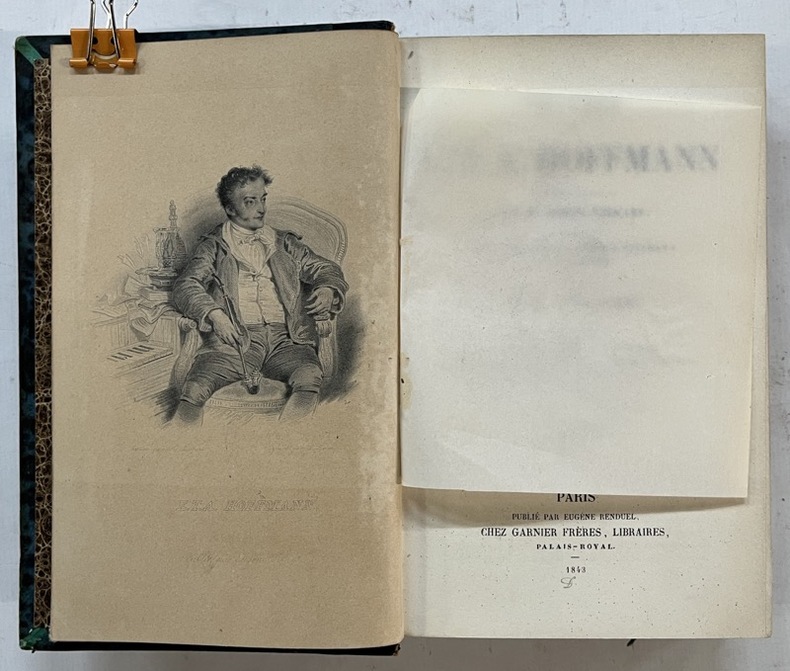
1843131087publié par E. Renduel chez Garnier frères, coll. « Paris » 1843 2 volumes. In-12 18 x 11 cm. Reliures demi-chagrin bleu-marine, dos à nerfs, caissons ornés de cadres à froid, portrait de Hoffmann en frontispice, 399-375 pp., tables. Exemplaires en très bon état.
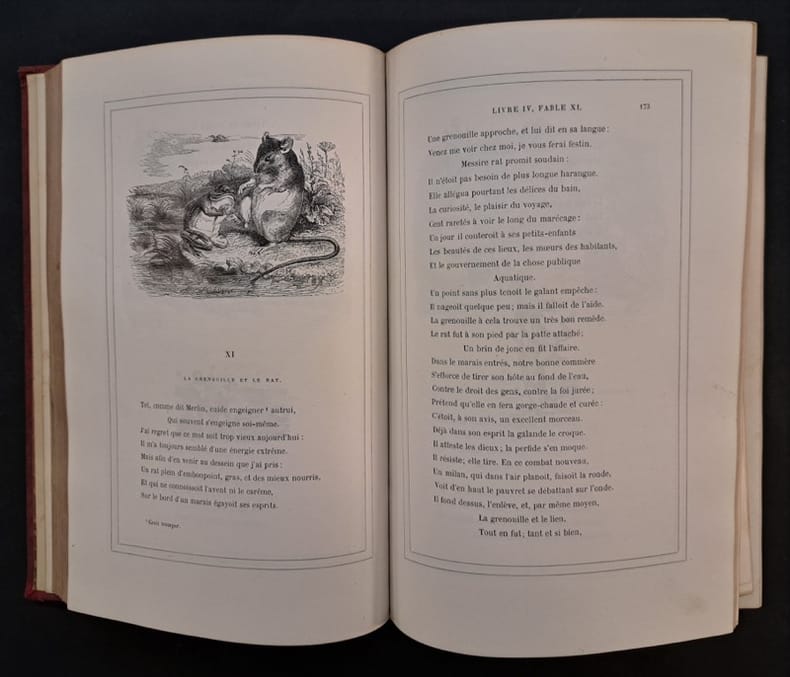
183947904Paris, Armand Aubrée, éditeur 1839 In-8 22 x 15 cm. Reliure moderne demi-basane rouge, plats jaspés rouges, dos lisse, tranche dorée, 588 pp., frontispice en couleurs rehaussé d’or et portrait de La Fontaine gravé sur acier, 400 vignettes dans le texte, gravées sur bois d’après Jules David. Rousseurs éparses, gouttière légèrement et partiellement irrégulière. Bel exemplaire.
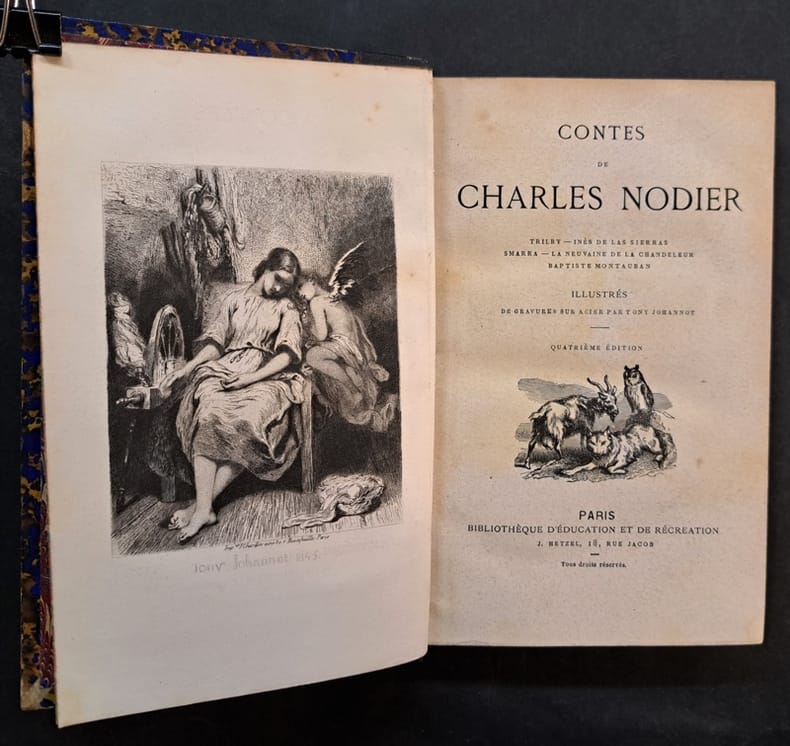
1864127457Paris, J. Hetzel, coll. « Bibliothèque d’éducation et de récréation » 1864 2 volumes. In-12 18,5 x 11 cm. Reliures demi-chagrin bleu-marine, Dos à nerfs encadrés de fers dorés, 347-324 pp., 5-5 gravures hors texte par Tony Johannot, table des matières. Exemplaires en bon état.
1893SPN-1020Paris : Édouard Dentu, Collection "Guillaume", 1893. Pour les 8 premiers fascicules : demi-reliure in-8 (21 x 12 cm), dos titré sur pièce de cuir noir, filets dorés et pointillés, illustrations en noir et blanc in et hors-texte. Pour les 4 derniers fascicules : demi-reliure in-8 (20 x 12 cm) à coins et filets dorés; titrage doré et fleuronné, illustrations en noir et blanc in et hors-texte. 12 fascicules en 8 volumes : I et II (2 fascicules en 1 volume) : Avertissement - Notes et croquis de Sourya. A l'ombre et au soleil : Petits théâtres et grandes baraques - J. H. Rosny. Eyrimah, roman lacustre - Jacques Soldanelle. Chronique + Notes et croquis de Sourya. Petits théâtres et grandes baraques (suite) - J. H. Rosny. Eyrimah (suite) - Jacques Soldanelle. Chronique : La Grande tueuse. III et IV (2 fascicules en 1 volume) : Notes et croquis de Sourya. A l'ombre et au soleil : Les Halles - Rosny. Eyrimah (suite) - Henri de Villebois. Idylle (nouvelle) - Soldanelle. Chronique : Le mystère de l'eau + Notes et croquis de Sourya. A l'ombre et au soleil : Jardins - Rosny. Eyrimah (suite) - J. Acheroni. Salon de 1893 : Le triomphe de l'étain - Soldanelle. Chronique : L'avenir de l'alcool. V et VI (2 fascicules en 1 volume) : Notes et croquis de Sourya. A l'ombre et au soleil : Les Courses - Rosny. Eyrimah (suite) - Prince Bojidar Karageorgevitch. Impressions de désert - William Ritter, traduction. La Fille de l'Empereur et le fils de la veuve (conte roumain) - Soldanelle. Chronique : Les maladies artificielles + Notes et croquis de Sourya. A l'ombre et au soleil : Le 14 Juillet - Paul Margueritte. Une Flaque (nouvelle) - Rosny. Le Miracle (nouvelle) - Soldanelle. Chronique : Le langage des singes. VII et VIII (2 fascicules en 1volume) : Notes et croquis de Sourya. A l'ombre et au soleil : La Seine - Rosny. Nymphée (roman) - Gustave Geffroy. Le Coeur et l'esprit : Les Ombres - Jérôme Doucet. la Chanson des choses (courts poèmes) - Soldanelle. Chronique : Le cheval en bicyclette + Notes et croquis de Sourya. La Seine (suite) - Rosny. Nymphée (suite) - Gustave Geffroy. Le Coeur et l'esprit : Les Ombres (suite) - Jérôme Doucet. La Chanson des choses (courts poèmes) - Soldanelle. Chronique : Le chauffage par le pôle. IX : Notes et croquis de Sourya. A l'ombre et au soleil : Notre Dame - Paul Margueritte. A la mer (nouvelle) - Paul Radiot. Isolette (nouvelle) - Gustave Geffroy. Le Coeur et l'esprit : Les Ombres (suite et fin) - Jacques Soldanelle. Chronique : Les guerres de demain. X : Notes et croquis de Sourya. A l'ombre et au soleil : La Seine (Les Misérables) - André Theuriet. Deuil de veuve (nouvelle) - William Ritter. Sang viennois (nouvelle) - Soldanelle. Chronique : La cyclomanie. XI : Notes et croquis de Sourya. A l'ombre et au soleil : Le Marché de La Villette - André Theuriet. Deuil de veuve (suite et fin) - Armand Charpentier. L'Abonnement funéraire (nouvelle) - Alexandre Piedagnel. Trois croquis d'Espagne (poèmes) - Rosny. L'Epreuve (nouvelle) - Soldanelle. Chronique : Le ciel inconnu. XII : Notes et croquis de Sourya. A l'ombre et au soleil : Les Abattoirs - Jean Rameau. La Bonne fortune de Cadet (nouvelle) - V. Korolenko. Une Nuit de Pâques (nouvelle) - Rosny. Le Monstre (nouvelle) - Soldanelle. Chronique : Chiens parisiens - A nos lecteurs - Collection BAMBOU : Table générale des 12 fascicules formant la collection. Nota : un dessin sur étain du sculpteur Jules Desbois (1851-1935), réalisé pour le Salon du Champ-de-Mars de 1893 fut livré en supplément dans le fascicule IV, en préambule de l'article d'Acheroni sur ce même salon ("Salon de 1893 : Le Triomphe de l'étain"). La revue innovait en fournissant au lecteur-collectionneur le conseil de l'artiste : comment patiner en vieil étain la planche incluse. Ce dessin manque malheureusement dans notre exemplaire. [TBE, quelques rousseurs, ex-libris à l'encre. Le dessin sur étain manque dans le fascicule 4. Par ailleurs, le relieur des 4 derniers volumes n'a pas jugé opportun de reprendre les couvertures des fascicules. Il manquent donc et le texte commence directement avec la feuille de titre et tomaison, sommaire au revers]
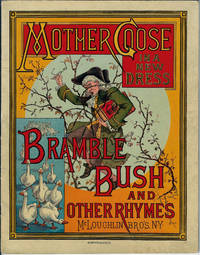
1882010134<p>New York: McLoughlin Bros 1882 Circa 1882. 10.75 x 8.5 in. 27 x 21 cm. Color printed card covers with light soil and surface wear 2 inch tear to rear cover. Mother Goose rhymes illustrated with four full-page chromolithographs a dual-page sepia centerfold and in-text artwork in sepia throughout. Illustrated by Walter Satterlee per American Antiquarian Society. Pictorial Wraps. Very Good/No Jacket. Illus. by W. Bruton Attrib cover & Walter Satterlee . 4to.</p> McLoughlin Bros
1880121122Paris, Garnier frères, libraires-éditeurs, impr. Paul Dupont, à Clichy 1880 In-4 27,5 x 17 cm. Reliure éditeur demi-chagrin rouge, dos à faux-nerfs encadrés de fers dorés, tranches dorées, XXXII-667 pp., frontispice, page de tire orné d’ne vignette, table des fables. Décolorations sur le premier plat, intérieur frais.Exemplaire en bon état.
18376150Agréable édition, bien reliée à l’époque. 1/2 veau à coins marbré, dos long orné, pièces de titre et de tomaison noires. Paris Furne 1837 3 volumes in-8°
188915174AB1889. Tokyo Kobunsha 1889. 19 : 13 cm. 10 leaves with many coloured woodcuts partly full-page. Coloured illustrated original wrappers. Plain paper edition of 'Japanische Märchen' no. 10. unknown
1858RO20200457DELAHAYS ADOLPHE. 1858. In-8. Relié demi-cuir. Etat passable, Coins frottés, Dos à nerfs, Mouillures. 96 + 96 + 96 + 100 pages - nombreuses gravures bicolores hors texte - 1 manque sur la page de titre - nombreuses traces de crayon de papier sur la page de titre et dans l'ouvrage en marge du texte - mouillures dans le texte sans consequence pour la lecture - quelques dechirures sur les pages - coins rognés - 1 manque en coin en pied sur le 1er plat - dos à 4 nerfs - titre et fleurons dorés au dos.. . . . Classification Dewey : 398.2-Conte populaire
1842RO30070811ERNEST BOURDIN. 1842. In-8. Relié demi-cuir. Etat d'usage, Couv. convenable, Manque en coiffe de tête, Quelques rousseurs. 828 pages. Frontispice : gravures en noir et blanc avec serpente. Nombreuses gravures en noir et blanc dans le texte et hors texte, avec serpente. Ornements dorés sur le dos cuir noir. Tranches mouchetées. Petites épidermures.. . . . Classification Dewey : 840.08-XIX ème siècle
181663912Chez Ledentu | Paris 1816 | 12.50 x 20 cm | 4 volumes reliés
181264035Chez Antoine-Augustin Renouard | Paris 1812 | 12 x 20.50 cm | 3 volumes reliés
1856115621856 Paris, MIchel Lévy, 1856; In -18 de (4) - IV - 313pp. - ( 1) f.; demi-percaline orange à la bradel, filet à froid, date dorée en pied, titre doré sur étiquette vert foncé. Edition originale rare.
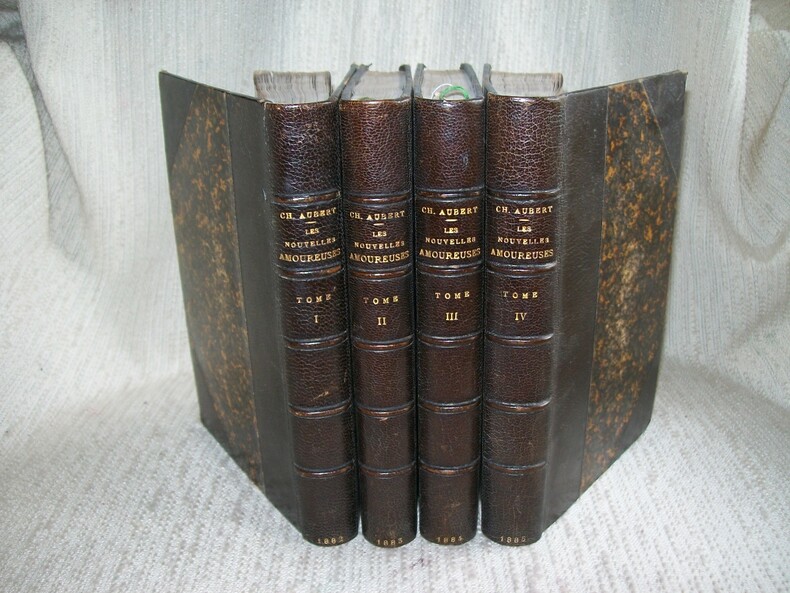
1882GITj112Paris chez tous les Libraires 1882-1885. 20 livraisons réunies en 4 volumes in-12 *Tome I: 61pp, 61pp, 61pp, 63pp, 64pp *Tome II: 64pp, 72pp, 61pp, 62pp, 60pp *Tome III: 61pp, 60pp, 59pp, 61pp, 64pp *Tome IV: 63pp, 64pp, 62pp, 63pp, 63pp. Demi maroquin brun à coins, dos à nerfs janséniste, 1er plat de la couverture joliment illustrée en couleurs conservée pour chaque livraison, tête dorée, non rogné, reliure de l'époque. Orné d'une vignette sur le titre (Tome I), 1 cul de lape (Tome III), 8 têtes de chapitre en rose, bleu, ocre, rouge ou brun et 20 délicates eaux fortes hors texte par J Hanriot, Ch Morose et Mesplée. Exemplaire sur beau papier (les livraisons I à XIV couleur chamois, les livraisons XVI à XX blanc). surimpression du cul de lampe sur la page de texte en regard, rousseurs dans les marges des gravures. La livraison XV a été numérotée II par erreur. bel exemplaire, chaque livraison est complète de son texte et de sa gravure. Reliure sobre de qualité, en bon état, constituant un écrin discret pour ces historiettes charmantes et légères typiques de l'époque.
185520869Paris Société Générale de Librairie 1855 1 vol. Relié in-8, demi-chagrin rouge, dos à nerfs orné de filets dorés, XXXI + 614 pp. Cinquième édition, la première illustrée, avec 425 vignettes et grandes compositions gravées sur bois en premier tirage d'après les dessins de Gustave Doré. Petites rousseurs, sinon bon exemplaire de ce classique en reliure d'époque avec ex libris gravé "De tout un peu".
185520869Paris Société Générale de Librairie 1855 1 vol. Relié in-8, demi-chagrin rouge, dos à nerfs orné de filets dorés, XXXI + 614 pp. Cinquième édition, la première illustrée, avec 425 vignettes et grandes compositions gravées sur bois en premier tirage d'après les dessins de Gustave Doré. Petites rousseurs, sinon bon exemplaire de ce classique en reliure d'époque avec ex libris gravé "De tout un peu".
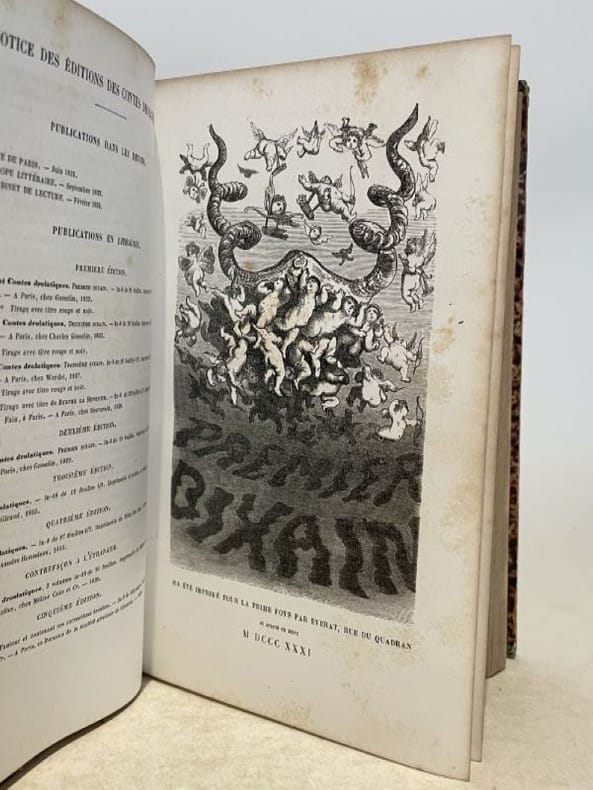
183297711Paris Charles Gosselin 1832-1833 1 vol. relié 2 vol. in-8, demi-chagrin rouge, dos à nerfs, tranches mouchetées, 396 et 416 pp. Edition originale des deux premiers volumes parus chez Gosselin (le troisième suivra en 1838 chez Werdet). Bon exemplaire en reliure d'époque.
183297711Paris Charles Gosselin 1832-1833 1 vol. relié 2 vol. in-8, demi-chagrin rouge, dos à nerfs, tranches mouchetées, 396 et 416 pp. Edition originale des deux premiers volumes parus chez Gosselin (le troisième suivra en 1838 chez Werdet). Bon exemplaire en reliure d'époque.
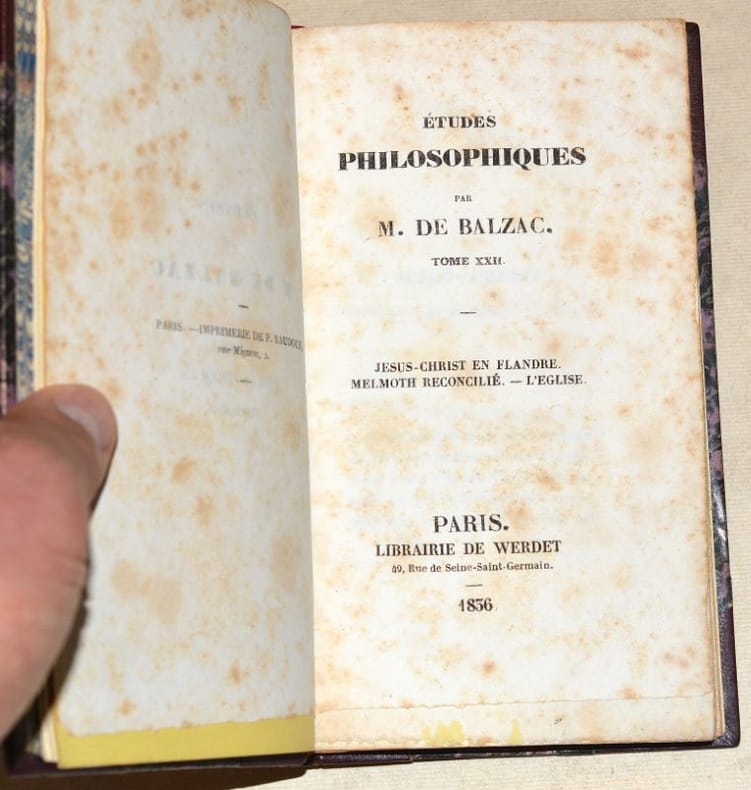
18360054911836 Paris, Werdet, 1836. In-12 étroit (186 X 112 mm) maroquin à coins aubergine à grain long, dos lisse orné en long de fers rocaille, titre doré, tête dorée, couverture (doublée avec petits manques) conservée (Ad. Lavaux). Teinte du dos uniformément éclaircie en teinte havane, rousseurs éparses plus marquées au faux-titre et titre.
188448252Jouaust, Librairie des Bibliophiles | Paris 1884 | 11 x 18 cm | relié