978 résultats
192659557London, Frederick Warne&Co., 1926. origi.Leinenband, 8°, 27 Seiten.
1392508Anvers: Edition du Conservatoire de la Tradition Populaire, 1901 In4, 58 feuillets non chiffrés. Broché cousu à la japonaise, couv, illustrée, impression entièrement xylographiée, bois dessinées et gravés de Max Elskamp. Tiré à 215 ex. num. Un des 100 sur Hollande. imprimé en noir bleu et jaune. Très bel exemplaire.
1901wq668Édition du Conservatoire de la tradition populaire. Anvers Broché 1901 Rare tirage de tête dont les gravures sur bois, mises en couleurs, sont réalisées sur une face des feuillets de papier Hollande. In-4 (26,8 x 21,2 cm). 58 feuillets. Abécédaire entièrement orné, dessiné et gravé par le poète symboliste belge Max Elskamp (1862-1931). Tirage limité à 215 exemplaires : 5 sur Japon, 10 sur Chine, 100 sur Hollande et 100 sur vélin. Un des rares exemplaires sur Hollande n° 58. Est jointe, une lettre de l’éditeur G. Van Oest de Bruxelles, datée du 6 juin 1921, adressée à un ambassadeur et relative au livre dont Elskamp vient de retrouver deux exemplaires ; dos jauni, couverture légèrement salie, intérieur très frais, bon exemplaire. Livraison a domicile (La Poste) ou en Mondial Relay sur simple demande.
1901kk2994Édition du Conservatoire de la tradition populaire. Anvers Broché 1901 RARE. L’Alphabet de Notre-Dame la Vierge. Édition du Conservatoire de la tradition populaire. Anvers, 1901. In-4 (26,8 x 21,2 cm), broché, 29 feuillets doubles repliés sur eux-mêmes, couverture de papier vélin rempliée. Abécédaire entièrement orné, dessiné et gravé par le poète symboliste belge Max Elskamp (1862-1931). TIRAGE LIMITE à 215 exemplaires : 5 sur Japon, 10 sur Chine, 100 sur Hollande et 100 sur vélin. Le présent exemplaire est le n°184 sur vélin. Chaque page présente un encadrement de rubans bleus et coeurs roses, avec pour chaque lettre de l'alphabet le nom d'un symbole religieux, (Arche d'Alliance, Bâton du pèlerin, Consolatrice des affligés, etc.) dont l'initiale est placée au centre de la page, avec en regard un bois gravé illustrant ces symboles ; rares et pâles rousseurs, par ailleurs intérieur très frais, bel exemplaire. Livraison a domicile (La Poste) ou en Mondial Relay sur simple demande.
Very Good French Paperback. Large demy 8vo. (23 x 14 cm). In French. 308, [2] p. Aventures merveilleuses sous terre et ailleurs de Er-Töshtük: Le geant des steppes. (Collection Caucase). Epopee du cycle de Manas. Traduit du Kirghiz par Pertev Boratav. Introduction et notes de Pertev Boratav et Louis Bazin.
Very Good Turkish, Ottoman (1500-1928) Original color map of Eastern Anatolia, Dogu Beyazit, Bayazid, Bargiri, Nakhchevan, Karakilise, Van, etc. 50x60 cm. In Ottoman script (Enverî). 1 p. Scale: 1:200.000. Slightly toned, several small holes on paper. Otherwise a very good copy. Enverî script is the war minister Enver Pasha's alphabet and writing amendment, which he tried to implement within the Ministry of War between 12 March 1914 and 10 August 1914. Starting from the Tanzimat (Westernization) period in the Ottoman Empire, the discussions on simplification in language, writing, alphabet and reading-writing had increased and at the end of the 19th century, military necessities also became one of the concerns. The problems such as the low rate of literacy among the recruited soldiers, the need to teach the soldiers how to read and write in a short time, and their misconceptions about the spelling of proper nouns led Enver Pasha to add the writing problem to his reform agenda, once he took office. Enver Pasha's reform is based on the principle of writing the Ottoman letters, which take different forms in the beginning, in the middle and at the end according to their unification with the other letters, separately in their original state without merging them. While this new alphabet was being created, the existing 32 letters in the Ottoman were preserved. The 8 vowels in the Turkish language, which could not be written with the old letters, was shown by placing small marks on the existing vowels and by doing so a new alphabet consisting of a total of 40 letters was created. With this alphabet, officially called 'Ordu Elifbasi', rules were adopted such as writing of the letters without merging them, writing the words as they are pronounced. At first glance, Enver Pasha's writing reform, which appeared as a definite solution to the theory of the solution of the ongoing debates on the alphabet and the spelling, formed a wide experiment field in the military. It was not possible to use Ordu Elifbasi, which essentially is a transliteration alphabet that allows transferring the sounds of these three different languages (Turkish, Arabic, Persian) to a single alphabet, in the daily life. Thanks to this new alphabet and spelling, learning to read and write were accelerated to some extent. However, it was seen that the literacy rate of the well-educated, literate people fell to the spelling and did not even progress. This alphabet and spelling reform, which Enver Pasha thought of spreading to the whole country, caused much more problems as it was experienced in the army. Although it was postponed until the end of the mobilization period following the declaration of the mobilization, Ordu Elifbasi, which remained in force for 152 days, eventually failed to be realized. (Source: Karakus: Enver Pasha's Alphabet And Spelling Attempt: Ordu Elifbasi (Army Alphabet)).In this extremely rare document, there are some articles and thoughts on a case. This is one the serie of the Bonn projection maps which are the first map series in modern techniques in Turkey and the Ottoman Empire. In order to produce these maps covering Turkish territory, Reconnaissance Branch was incorporated into The Mapping Commission. The maps were produced in the datum based on the latitude and longitude of Ayasofya Mosque in equal area Bonn Projection. The field works for the 123 sheets covering the country were conducted by 76 staff. The production was completed in 18 years starting from east west. Field works continued without stopping except in years 1914 and 1920. This map series called also reconnaissance maps contributed a lot to producing 1:25.000 scale maps. Extremely rare. KW: "Harfleri Islah Cemiyeti" Hurûf-i munfasila Reform Turkish Letter revolution First World War WW 1 Map Geography Military maps.
This is a set of three 8 3/8" x 10 7/8" staple-bound books of black and white photographs of street images containing lettering. The images depicted on the covers of the three books are an ampersand, a thermometer, and a manhole cover. Approx. 30 pages each book. Printed on heavy paper. "Errol Herbert Russel ?tienne (1941 - 2011) was an artist in many media including watercolor, oil and acrylic painting. His watercolors can be found in museums, travelling exhibitions as well as in private collections. Much of his bright and animated work was inspired by his time living in the Florida Keys." [Wikipedia]
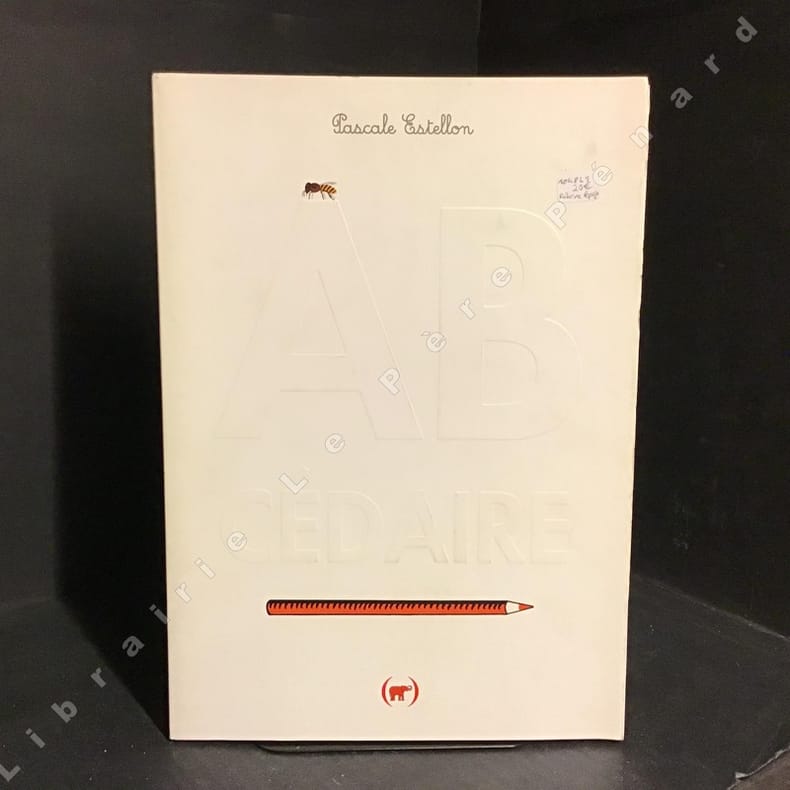
20111048292011 Ed. Les Grandes Personnes - 2011 - In-4 broché (21x30cm), couv. accordéon illustrée en couleurs, jaquette illustrée - Sans pagination - Nombreuses illustrations en couleurs - Reliure centrale + mécanismes pop-up en rabat, pont + effet miroir
New English Paperback. Pbo. Roy. 8vo. (24 x 17 cm). In English. 108 p. PREFACE PART ONE: TURKISH-SPEAKING ORTHODOX ANATOLIANS ? Les codices karamanlis et turcs du Centre d' Études d'Asie Mineure II. Gerçi Rum isekde rumca bilmez. The Adventures of an Identity in the Triptych: Vatan, Religion and Language III. Turkish-speaking Anatolian Rums and the Karamanlidika Book Production ?V. Cries and Whispers in Karamanlidika Books Before the Doom of Silence PART TWO: KARAMANLIDIKA PRESS V. Karamanlidika Press (Smyrna 1845 - Athens 1926) VI. Catalogue of the Karamanlidika Press VII. La revue karamanlie Aktis [= le Rayon lumineux] Revue périodique hebdomadaire traitant de sujets religieux, politiques et scientifiques 135 VIII. La revue karamanlie I Aréti (Fazilet) IX. Le journal karamanli Mikra Asia yani Anatoli d'Evangélinos Misailidis dans la tourmente du Schisme Bulgare PART THREE: OTTOMAN EVIDENCE ON KARAMANLIDIKA EDITIONS X. Ottoman Evidence About the Greek and Karamanli Editions of Evangelinos Misailidis, I XI. Karamanlidika editions on Cholera Years, 1848-1854 XII. Bibliographic notes on Karamanlidika publications.
New French Original bdg. HC. 4to. (28 x 20 cm). In French and Turkish. 472 p., color ills. Karamanlidika bibliographie analytique, Tome I: 1718-1839.= Karamanlica kitaplar çözümlemeli bibliyografya, Cilt I: 1818-1839.
New English Paperback. Pbo. Roy. 8vo. (24 x 17 cm). In French. 172 p. Abréviations En guise de préface Introduction I. DANS L'EUBÉE DES RÉFUGIÉS D'ASIE MINEURE (1956) Préliminaires Rapport sur une mission en Eubée (2-11 août 1956) ANNEXES - Liste des Annexes - Annexe n° 17 : photographies prises au cours d'une mission à l'île d'Eubée - Homiros - Chants turcs chantés par les élèves des écoles grecques de Cappadoce - Compte des frais d'une mission à l'île d'Eubée LETTRES - Lettre à Sévérien Salaville (13 sept. 1956) - Lettre de Madame Melpo Merlier (6 oct. 1956) II. EN TURQUIE (1957) Préliminaires Mission de Constantinople (1957) - Ier Rapport (9-18 avril 1957) - IIème Rapport (19 avril-4 mai 1957) Annexe 1: Entretien avec Papa Eftim Annexe 2 : Institutions américaines protestantes en Asie Mineure - IIIème Rapport (5-15 mai 1957) Annexe 1: Les livres arrivés d'Athènes par la poste Annexe 2: Liste des publications de l'Institut Français d'Archéologie d'Istanbul - IVème Rapport (Ankara, 16-22 mai 1957) - Vème Rapport (23 mai-8 juin 1957) Annexe 1: Liste des ouvrages offerts à l'Université d'Istanbul Annexe 2: Extrait du Répertoire des Archives du Partriarcat - VIème Rapport (9-15 juin 1957) Annexe 1: Liste des ouvrages nouveaux entrant dans la Bibliographie Karamanlie Annexe 2: Ouvrages karamanlies reçus en don Annexe 3: Achat de livres Karamanlis Annexe 4: Achat de livres Annexe 5: Liste de divers ouvrages reçus en don Annexe 10: Vues de Talasprises par Kimon Pilafidis en 1954 - Conclusion LETTRES III. DANS LES QUARTIERS DE RÉFUGIÉS D'ATHÈNES ET DU PIRÉE (1958) Préliminaires Chez les réfugiésde Kokkinia (août 1958) ANNEXES -Lot d'Archives du Monastère de Saint-Jean-Prodrome à Zindjidéré - Liste des documents - Les Livres karamanlis En guise d'épilogue Index Table des photographies.
A clean, unmarked book with a tight binding. Dust jacket is tattered. Previous owner's very neatly lettered name inside. 7 1/2"w x 10"h. 87 pages. Black and white illustrations. Age-toning to end papers.
In-4 (cm. 29.60), cartonato editoriale, pp. 269, (1), con numerose illustrazioni, soprattutto a colori, nel testo. Macchioline a risguardi e guardie. In buono stato di conservazione (good copy).
ill., cart. "ABC a chiare lettere" è un originale alfabetiere che presenta ogni lettera fustellata e riprodotta in grande formato. Ad ogni lettera è poi dedicata una pagina con una parola-guida illustrata e una pagina con cinque parole che iniziano ognuna con la lettera presentata, seguita ogni volta da una vocale differente. Età di lettura: da 3 anni.
ill., br. Questo quaderno propone tante attività piacevoli e allegre che permetteranno ai bambini di esercitare la mano alla scrittura e di riconoscere le lettere dell'alfabeto ed associarle ai rispettivi suoni. Età di lettura: da 5 anni.
ill. Età di lettura: da 5 anni.
ill., br. Questo quaderno propone ai bambini un percorso graduale e guidato verso l'acquisizione delle competenze manuali necessarie per sviluppare una maggiore sicurezza nel tratto grafico, ponendo in questo modo le basi per un corretto avviamento alla scrittura. Età di lettura: da 5 anni.
ill. 100 attività utili per esercitarsi nella scrittura di lettere e parole in stampatello e corsivo, maiuscolo e minuscolo. Età di lettura: da 5 anni.
ill., br. Questo libro propone tante attività piacevoli e giocose che permetteranno al bambino di consolidare le proprie competenze. Età di lettura: da 5 anni.
ill., br. Questo quaderno propone un interessante percorso rivolto ai bambini in età prescolare. Le attività presentate al suo interno li condurranno in modo graduale e piacevole ad affinare la coordinazione della mano all'interno di uno spazio delimitato e li avvieranno alla conoscenza delle lettere dell'alfabeto. Età di lettura: da 5 anni.
ill. Una scatola di pratico formato, ma adatto ai bambini di età prescolare, che contiene 50 schede con superficie riscrivibile, per un totale di 100 attività sulle lettere. Il pennarello ad inchiostro cancellabile è fornito nella scatola. Età di lettura: da 4 anni.
ill. Questo volume è rivolto ai bambini di età tra i 4 e i 6 anni e attraverso un percorso ricco di giochi e attività divertenti fornisce loro gli stimoli e gli strumenti adatti per condurli ad affinare il movimento della mano, ad acquisire la conoscenza delle lettere come segno grafico e ad avviarli alle prime forme di scrittura e lettura e gli strumenti adatti per condurli ad acquisire la conoscenza dei numeri come segno grafico e a comprendere la corretta associazione numero-quantità.
ill., cart. Una scatola che contiene ben ventidue piccoli libri dedicati ognuno ad una lettera dell'alfabeto. All'interno di ogni libro parole e illustrazioni avvicinano il bambino al riconoscimento del suono della lettera e della sua forma grafica. Le pagine spesse e resistenti rendono i libri adatti a essere maneggiati ed esplorati anche dai piccolissimi. Una prima piccola biblioteca per fare scoprire ai lettori di domani tutto il fascino dei libri e della lettura. Età di lettura: da 2 anni.
ill., br. Direttamente dai nostri testi per la scuola primaria, ecco un libro che prepara il bambino ad approfondire i temi della scrittura in corsivo partendo dalle vocali, proseguendo con le consonanti, le sillabe e i gruppi sillabici complessi. Volume testato "sul campo" per imparare in modo facile e divertente. Età di lettura: da 5 anni.
ill., br. Un quaderno per muovere i primi passi nel mondo della pre-scrittura e dei numeri. A ogni lettera dell'alfabeto è dedicata una pagina: il bambino gradualmente potrà sperimentare il grafismo in stampatello e in corsivo. Le pagine dedicate ai numeri fino a dieci invitano al riconoscimento del segno grafico e alla sua rappresentazione come quantità. Le illustrazioni, accattivanti e colorate, accompagnano e sostengono l'apprendimento. Età di lettura: da 5 anni.