971 résultats
Very Good Turkish, Ottoman (1500-1928) Contemporary quarter leather bdg. Handsomely bound. Six raised bands to spine, the second compartment has the title, the fifth has "issue 1-104", and the sixth has ex-owner's name of the volume, "Semseddin" lettered gilt. Original end-papers of the period. Slightly age-toned on the lower pages, fading on extremities of boards, overall a very good volume. Folio. (41 x 29 cm). In Ottoman script (Old Turkish with Arabic letters) and Turkish with Latin letters. This folio volume consists of 104 issues of the periodical, each issue has 4 pages, which has mostly color illustrated covers as well as several b/w ones. A rare togetherness of the first 104 issues of this Turkish satirical magazine, richly illustrated with thousands of attractive illustrations and caricatures, was published in Istanbul twice a week every Wednesday and Saturday with at least four, at most eight pages, during the Letter Revolution 1928, when the transition from the Arabic alphabet to new Latin letters was ensured. The collection provides an invaluable resource, reflecting the changes in society during and after the Letter Revolution in New Turkey, 1928, placing the new Latin alphabet instead of old Arabic letters and contributing to the development of reading and writing skills of the new Turkish society, as well as "creating the basis for the rapid social evolution in the young Turkish Republic Revolution" soon after the proclamation of the Republic in 1923. The newspaper had a printing house with the same name headquartered in Bab-i Ali (The Sublime Porte of Constantinople), the place where the heart of the Ottoman press was. Burhan Cahid Morkaya left Karagöz Newspaper and founded Köroglu Newspaper in 1928 and wanted the people living in Istanbul and Anatolia to be able to read and write new letters. Indeed, during the period of its publication, Köroglu Newspaper reached the most remote corners of the New Turkish Republic with its attractive cartoons covering local and mostly international subjects. In addition to this news and cartoons, Morkaya also published Turkish reading passages with Arabic letters that were transcripted into Latin letters. Therefore, he created a great positive effect that facilitated the transition to new letters during the Turkish Alphabet Revolution. Duman 1155.
Very Good Turkish, Ottoman (1500-1928) Original color map of Eastern Anatolia, Dogu Beyazit, Bayazid, Bargiri, Nakhchevan, Karakilise, Van, etc. 50x60 cm. In Ottoman script (Enverî). 1 p. Scale: 1:200.000. Slightly toned, several small holes on paper. Otherwise a very good copy. Enverî script is the war minister Enver Pasha's alphabet and writing amendment, which he tried to implement within the Ministry of War between 12 March 1914 and 10 August 1914. Starting from the Tanzimat (Westernization) period in the Ottoman Empire, the discussions on simplification in language, writing, alphabet and reading-writing had increased and at the end of the 19th century, military necessities also became one of the concerns. The problems such as the low rate of literacy among the recruited soldiers, the need to teach the soldiers how to read and write in a short time, and their misconceptions about the spelling of proper nouns led Enver Pasha to add the writing problem to his reform agenda, once he took office. Enver Pasha's reform is based on the principle of writing the Ottoman letters, which take different forms in the beginning, in the middle and at the end according to their unification with the other letters, separately in their original state without merging them. While this new alphabet was being created, the existing 32 letters in the Ottoman were preserved. The 8 vowels in the Turkish language, which could not be written with the old letters, was shown by placing small marks on the existing vowels and by doing so a new alphabet consisting of a total of 40 letters was created. With this alphabet, officially called 'Ordu Elifbasi', rules were adopted such as writing of the letters without merging them, writing the words as they are pronounced. At first glance, Enver Pasha's writing reform, which appeared as a definite solution to the theory of the solution of the ongoing debates on the alphabet and the spelling, formed a wide experiment field in the military. It was not possible to use Ordu Elifbasi, which essentially is a transliteration alphabet that allows transferring the sounds of these three different languages (Turkish, Arabic, Persian) to a single alphabet, in the daily life. Thanks to this new alphabet and spelling, learning to read and write were accelerated to some extent. However, it was seen that the literacy rate of the well-educated, literate people fell to the spelling and did not even progress. This alphabet and spelling reform, which Enver Pasha thought of spreading to the whole country, caused much more problems as it was experienced in the army. Although it was postponed until the end of the mobilization period following the declaration of the mobilization, Ordu Elifbasi, which remained in force for 152 days, eventually failed to be realized. (Source: Karakus: Enver Pasha's Alphabet And Spelling Attempt: Ordu Elifbasi (Army Alphabet)).In this extremely rare document, there are some articles and thoughts on a case. This is one the serie of the Bonn projection maps which are the first map series in modern techniques in Turkey and the Ottoman Empire. In order to produce these maps covering Turkish territory, Reconnaissance Branch was incorporated into The Mapping Commission. The maps were produced in the datum based on the latitude and longitude of Ayasofya Mosque in equal area Bonn Projection. The field works for the 123 sheets covering the country were conducted by 76 staff. The production was completed in 18 years starting from east west. Field works continued without stopping except in years 1914 and 1920. This map series called also reconnaissance maps contributed a lot to producing 1:25.000 scale maps. Extremely rare. KW: "Harfleri Islah Cemiyeti" Hurûf-i munfasila Reform Turkish Letter revolution First World War WW 1 Map Geography Military maps.
Very Good Serbo-Croatian Paperback. Roy. 8vo. (23 x 15 cm). In Aljamiado (Serbo-Croatian in Arabic letters), Arabic, and Persian with an introduction in Arabic. The third revised edition of the Waqf Directorate in Sarajevo. 104 p., 4 unnumbered b/w plates. "Ilmihal" [i.e. Catechism] recommended to all who want to know and learn Islamic ceremonies and practice. Learn how to pray, what are basic principles of the Islamic faith, what are the Islamic duties, what are the Islamic holidays, what constitutes proper Islamic behavior, and lots more. This extremely rare catechism book printed in Sarajevo in Croatian with Arabic letters (Aljamiado). This book is one of the late examples of Aljamiado literature beginning in early Andalusia and constitutes one of the rarest examples of the Ottoman book tradition. Aljamiado or Aljamía texts are manuscripts that use the Arabic script for transcribing European languages, especially Romance languages such as Mozarabic, Portuguese, Spanish or Ladino, and Bosnian with its Arebica script. According to Anwar G. Chejne, Aljamiado or Aljamía is "a corruption of the Arabic word ?ajamiyah (in this case it means foreign language) and, generally, the Arabic expression ?ajam and its derivative 'Ajamiyah are applicable to peoples whose ancestry is not of Arabian origin". During the Arab conquest of Persia, the term became a racial pejorative. In linguistic terms, the Aljamía is the use of the Arabic alphabet to transcribe a Romance language. It was used by some people in some areas of Al-Andalus as an everyday communication vehicle, while Arabic was reserved as the language of science, high culture, and religion. The systematic writing of Romance-language texts in Arabic scripts appears to have begun in the fifteenth century, and the overwhelming majority of such texts that can be dated belong to the sixteenth century. A key aljamiado text was the mufti of Segovia's compilation Suma de los principales mandamientos y devediamentos de nuestra santa ley y sunna, of 1462. In later times, Moriscos were banned from using Arabic as a religious language and wrote in Spanish on Islamic subjects. Examples are the Coplas del alhichante de Puey Monzón, narrating a Hajj, or the Poema de Yuçuf on the Biblical Joseph (written in Aragonese). Aljamiado played a very important role in preserving Islam and the Arabic language in the life of the Moriscos. After the fall of the last Muslim kingdom on the Iberian peninsula, the Moriscos (Andalusian Muslims in Granada and other parts of what was once Al-Andalus) were forced to convert to Christianity or leave the peninsula. They were forced to adopt Christian customs and traditions and to attend church services on Sundays. Nevertheless, some of the Moriscos kept their Islamic belief and traditions secretly through the usage of Aljamiado. In 1567, Philip II of Spain issued a royal decree in Spain, which forced Moriscos to abandon using Arabic on all occasions, formal and informal, speaking and writing. Using Arabic in any sense of the word would be regarded as a crime. They were given three years to learn the language of the Christian Spanish, after which they would have to get rid of all Arabic written material. Moriscos translated all prayers and the sayings of their prophet Mohammed into Aljamiado transcriptions of the Spanish language while keeping all Qur'anic verses in the original Arabic. Aljamiado scrolls were circulated amongst the Moriscos. Historians came to know about Aljamiado literature only in the early nineteenth century. Some of the Aljamiado scrolls are kept in the Spanish National Library in Madrid. The word aljamiado is sometimes used for other non-Semitic languages written in Arabic letters. For example, Bosnian and Albanian texts written in Arabic script during the Ottoman period have been referred to as aljamiado. However, many linguists prefer to limit the term to Romance languages, instead of using Arebica to refer to the use of Arabic script for Slavic languages... Not in OCLC.
Very Good Turkish Original posters. Double elephant folio. (100 x 70 cm). Descriptive texts in Turkish. 9 plates set, b/w photographic plates and runic scripts. Plates show Kül Tigin and Bilge Kagan's scripts and photographic plates of their west, east, north and south frontlines; and plates and scripts of Tonyuquq's stone with their all maps comprising area of inscriptions (Orkhon Valley, region on the western Orkhon River in Mongolia, near Ögii Lake. More specifically, they stand about fifty miles north of the Erdene Zuu Monastery, and approximately twenty-five miles northwest of the Ordu-Baliq). In addition last plate shows photographic plates of researches and archaeological area of period excavations. Not Yenisey inscriptions on plates. Orhon Inscriptions, and the Khöshöö Tsaidam monuments are two memorial installations erected by the Göktürks written in Old Turkic alphabet in the early 8th century in the Orkhon Valley in Mongolia. They were erected in honor of two Turkic princes, Kul Tigin and his brother Bilge Khagan. The inscriptions, in both Chinese and Old Turkic, relate the legendary origins of the Turks, the golden age of their history, their subjugation by the Chinese, and their liberation by Ilterish Qaghan. According to one source, the inscriptions contain "rhythmic and parallelistic passages" that resemble that of epics. The inscriptions were discovered by Nikolay Yadrintsev's expedition in 1889, published by Vasily Radlov. The original text was written in the Old Turkic alphabet and was deciphered by the Danish philologist Vilhelm Thomsen in 1893. Thomsen first published the translation in French in 1899. He then published another interpretation in Danish in 1922 with a more complete translation. They were erected by the Göktürks in the early 8th century. They commemorate the brothers Bilge Khagan (683-734) and Kul-Tegin (684-731), one a politician and the other a military commander. Both were descendants of Ilterish Qaghan of the Second Turkic Khaganate, which was a prominent Turkic nomadic society during the Tang dynasty. The Göktürks have left artifacts and installations all over their domain, from China to Iran. But only in Mongolia have any memorials to kings and other aristocrats been found. The ones in Khöshöö Tsaidam consist of tablets with inscriptions in Chinese and Old Turkic characters. Both monuments are stone slabs originally erected on carved stone turtles within walled enclosures. Bilge Khagan's stone shows a carved ibex (the emblem of Göktürk Kagans) and a twisted dragon. In both enclosings, evidence of altars and carved depictions of human couples were found, possibly depicting the respective honorary and his spouse. The Old Turkic inscriptions on these monuments were written by Yollug Tigin who was nephew of Bilge Khagan. These inscriptions together with the Tonyukuk inscription, are the oldest extant attestation of that language. The first portion of the Turkic translations seems to be Bilge Khagan discussing the commemoration of the tablet, as well as mentioning the extent of the empire. One passage reads, "To the East I have made campaigns as far as the Shantung plain, and almost reached the sea; to the South I have made campaigns as far as Tokuz-Ersin and almost reached Tibet; to the West I have made campaigns beyond Yenchii-Iigiiz (Pearl River) as far as Timir-Kapig (The Iron Gate); to the North I have made campaigns as far as the land of the Yer-Bayirku's. To all these lands have I led (the Turks). The forest of Mount Otiikin has no [foreign] overlord; the forest of Mount Otiikin is the place where the kingdom is held together." Continuing on, the inscriptions discuss the conquests of the Bilge Khagan and the struggles that he and his people face with the Chinese. The inscriptions even describe the Turks being enslaved by the Chinese. However, the inscriptions also highlight Bilge Khagan's accomplishment of uniting his people. As one passage reads...
1973006710Washington D. C., Dumbarton Oaks Research Library and Collection, 1973. vii, 226 S. Orig.-Leinenband. Ein gut erhaltenes Exemplar mit nur leichten Gebrauchsspuren.
Very Good French Original wrappers. Demy 8vo. (22 x 14 cm). In French. 33, [1] p., tables, and plates. First and only edition of this extremely rare treatise on How Kufic script is applied to print, a brief history of Kufic script, its use in ancient and modern times, examples of writing accompanied by illustrations, typesetting on the keyboard for linotype printing, its use on typewriters, its use in telegraphy (with Arab and international typesettings), etc. Ali Kenan (?-1962), married Emine Nemika Sultan (1888-1969) in 191 and became a groom to the Ottoman palace and the royal family. Only one copy can be traced in OCLC 1065045158, in The British Library, St. Pancras.
Very Good Turkish, Ottoman (1500-1928) Full leather bdg. Cr. 8vo. (19 x 13 cm). In Karamanlidika (Ottoman Turkish with Greek letters). 104 p. Partly uncut. Ai Kuriakai tou Etous: Yani senenin her kiryakisinde okunan Evangelion'un izahati içün. Phylladion (Juz): 5. Prep. by Savvas Dimitriadis. [In Greek] Sundays of the year: [In Turkish with Greek alphabet] Exegesis of the Gospel which is read every Sunday of the year. Sermons delivered by the doctor E. Emmanuelidis. Printed and published with the approval of the Patriarchate Ecclesiastical Commission. [In Greek:] "Act reasonably and speak practically" (S. Isidore de Peluse). Publisher: Savvas Dimitriadis. Paper 5: Imprimerie du Patriarchat, March 1902. [Published] 12 fascicles, nos 1-12 (November 1901- October 1902). 56 to 128 pages per booklet, with serial number and indication of the month of the year at the bottom of each title page. Contents: P. 1: Title.; P. 2: Notice saying that the Greek translation of these "Homilies" is reserved to the author (E. Emanuelidis).; P. 3: Preface by S. Dimitriadis which explains the need for each Christian to devote Sunday to meditate "these fragrant flowers of the Holy Orthodoxy". By publishing from November 1901 under the title "Ai Kuriakai tou Etous", Emmanuel Emmanuel's sermons, he rendered his orthodox brothers an appreciable service. Procopi (Ürgüb), March 1, 1902.; Homilies. Fifth of Twelve. First and Only Edition. Balta (XX Siecle) 5.; Dallegio & Salaville IV, 337.
4to., with a folding frontispiece and numerous illustrations and type samples in the text; original printed wrappers, sewed as issued, a very good, clean copy. Scarce. The advisory panel includes Francis Meynell, Stanley Morison and Mortimer Wheeler.
Very Good Russian Very attractive early Russian edition of this famous Georgian national poem 'The knight in the panther skin', richly illustrated in very well binding. This is a Georgian medieval epic poem, written in the 12th century by Georgia's national poet Shota Rustaveli, and a definitive work of the Georgian Golden Age, the poem consists of over 1600 Rustavelian Quatrains and is considered to be a "masterpiece of the Georgian literature". Original decorative green cloth bdg. with Rustaveli's embossed portrait. Art-nouveau borders on board. Faded titles and decorations on spine. A very good copy. 4to. (27 x 20 cm). In Russian. [5], 315, [7] p., [18] b/w full-paged plates. Shalva Nutshubidze, (1888-1969), was a Georgian philosopher, translator, and public benefactor, one of the founders of the Tbilisi State University (TSU), founder of Alethology. The main fields of scientific activity of Shalva Nutsubidze were: alethology, history of Georgian philosophy, history of the old Georgian literature, Rustvelology, problems of the oriental renaissance. He was also a well-known translator: he translated The Knight in the Panther's Skin of Shota Rustaveli, Visramiani, and other outstanding literary works in Russian. Nutsubidze is co-author of a well-known theory about the identity of Pseudo-Denys Areopagite and Georgian philosopher of the 5th century Peter the Iberian (Theory of Nutsubidze-Honigmann).
Very Good Croatian Paperback. Demy 8vo. (21 x 15 cm). In Croatian. 52 p. Kasim Hadzic (Zaostar near Priboj (Novopazarski Sandzak, 1917 - Sarajevo 1990)) was a sharia judge and teacher, graduated from the Great Madrasa in Skopje in 1937, and graduated from "Visem islamskom serijatsko-bogoslovnom ucilistu" [i.e. the Higher Islamic Sharia Theological College] in Sarajevo in 1941. In the summer of 1941 he served as mayor of Priboj during the short-lived rule of the Independent State of Croatia in Sandzak, and since 1942 he has been an intern at the District Sharia Court in Sarajevo. From 1942 to 1945 he was the editor of the Sarajevo Croatian Muslim weekly 'Osvit' [i.e. Dawn]. He has been a teacher at the Gazi Husrev-Beg Madrasa in Sarajevo since 1957. He died in Sarajevo.
Very Good Turkish Paperback. Cr. 8vo. (20 x 14 cm). In Armenian. 20 p., b/w and color ills. [Ancient Armenian script]. ARMENIAN.
19302004270395xbvkMinden, im Selbstverlage (Textdruck: Grimmesche Hofbuchdruckerei, Bückeburg / Bilddruck: Robert Mühlbach, Minden), ohne Jahr (ca. 1930). (8) 39 (1) Seiten. - Kartonierter Originalumschlag mit Deckeltitel; 8vo.(ca. 22 x 15 cm).
193026198Frankfurt Anciennes Editions MONROCQ Frères, LIGEL 1930 -in-8 oblong broché un album, broché crème in-octavo à l'italienne Editeur (32 x 23,7 cm), dos muet, Titre imprimé en noir, blanc et jaune sur fond bleu, vert et jaune sur toute la première de couverture, toutes tranches lisses, Album orné de 32 planches d'Alphabets imprimées d'un seul côté en noir, rouge, et marron-foncé sur fonds en couleurs (vert, jaune ou orange), sans date (1930) Paris Anciennes Editions MONROCQ Frères, Maison BERVILLE Editeur,
197651821ABMünchen, Callwey, 1976. 2. Aufl. ; 27 cm. 280 S. Werkstoff Sauber u. gut erhalten. 1 Biblioth.-Stemp. a. Tit.-Bl. 2
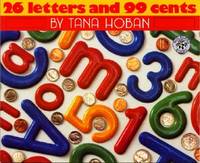
001086Greenwillow Books 1987 Book. As New. Hardcover. Signed by Authors. F. Cloth. As New. Presentation By Author. 8vo - over 7¾" - 9¾" tall. ISBN:0-688-06361-6. First edition seventh printing presentation by the author. Greenwillow Books, 1987 Hardcover books
001086Greenwillow Books 1987 Book. As New. Hardcover. Signed by Authors. F. Cloth. As New. Presentation By Author. 8vo - over 7¾" - 9¾" tall. ISBN:0-688-06361-6. First edition seventh printing presentation by the author. Greenwillow Books, 1987 Hardcover
384 p., 43 fig. n/b. Inv. 39923
Paris, Aubert, 1870 c.a, album cart. in-4° cop. muta, con 25 tavole (A/Z + J, K, X, Y) inc. e tutte con le usuali fioriture diffuse della carta di quell'epoca. In fine l'indice e due cc. di pubblicità editoriale dell'editore. Il frontespizio non è presente come in tutte le copie riscontrate in letteratura o in vendita.
1877AUB-9185Toulouse, société des livres religieux 1881 (4e éd. et 1877). Bon exemplaire relié, reliure demi parchemin, pet in-8 carré (17x14), 47 pages + planches et 72 pages + planches.
Lotto di diciotto quadrati (cm. 2 c.a) in rilievo ciascuno con una lettera al centro e bell'ornato di contorno.
Lotto di ventidue quadrati (cm. 2 c.a) in rilievo ciascuno con una lettera al centro e bell'ornato di contorno : mancano la M, X e Y.