5 131 résultats
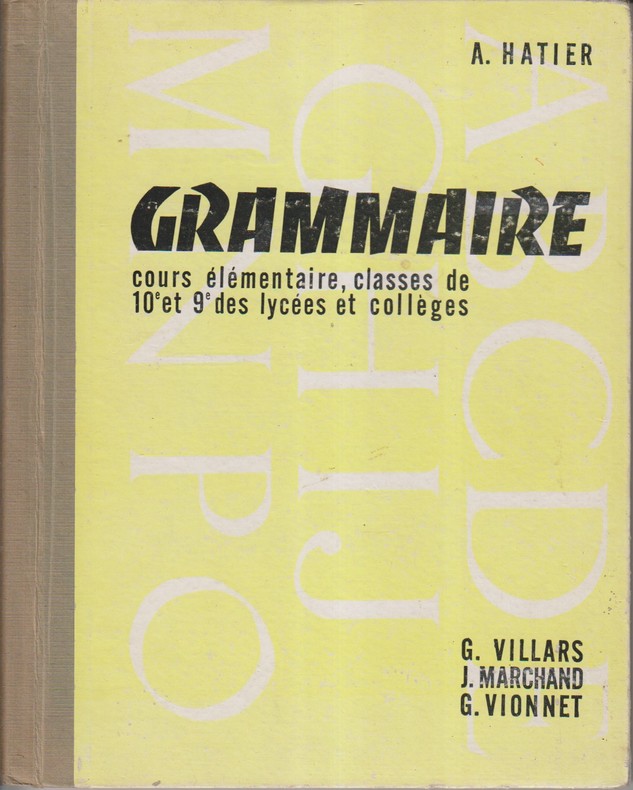
1967139294Couverture rigide. Cartonnage de l'éditeur. 255 pages. Perforation "Spécimen" aux premières pages.
189643962Couverture rigide. Cartonnage de l'éditeur légèrement défraîchi. 215 pages. Graffitis sur les pages de garde, quelques graffitis à l'intérieur.
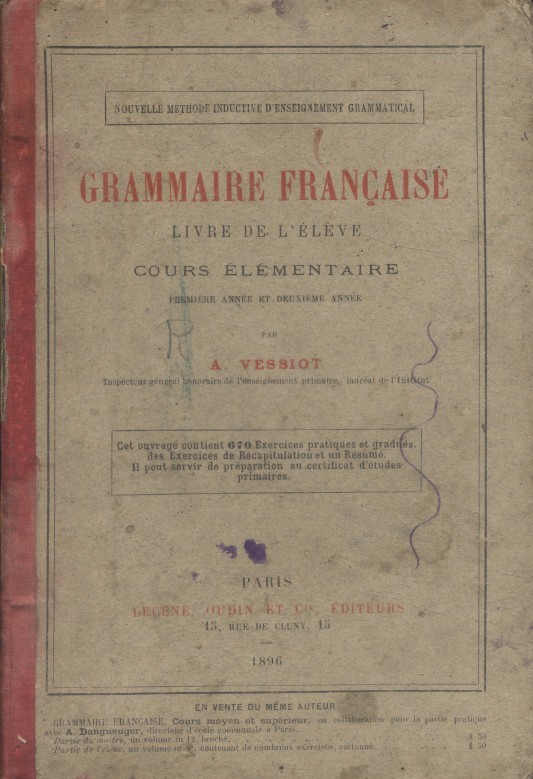
196837819Couverture rigide. Cartonnage de l'éditeur. 127 pages.
1961121810Couverture rigide. 18 x 23 cm. Cartonnage de l'éditeur. 128 pages.
Good+ Hardback without dust jacket. Slight wear to top and bottom of spine. Binding is cracked inside rear board but holding firm. Some browning to first and last few pages. Some pencil markings to pages. 542p. Used
A book covering the Examinations set by the Civil Service Commissioners, Chartered Institute of Secretaries and other professional bodies. Wear to top of spine, less at bottom; cover corners a little worn.
The Title 'Santali Beako?ro?n Part I: Based on P. O. Bodding's Materials for a Santali Grammar written/authored/edited by Alakj???? Murmu and R?ghunath Hãsdak? ', published in the year 2019. The ISBN 9788121219600 is assigned to the Paperback version of this title. This book has total of pp. 294 (Pages). The publisher of this title is Gyan Publishing House. This Book is in Santali. The subject of this book is Santali Grammar. Size of the book is 13.34 x 21.59 cms Vol:-
The Title 'Santali Beako?ro?n Part II: Based on P. O. Bodding's Materials for a Santali Grammar written/authored/edited by Alakj???? Murmu and R?ghunath Hãsdak? ', published in the year 2020. The ISBN 9788121219952 is assigned to the Paperback version of this title. This book has total of pp. 303 (Pages). The publisher of this title is Gyan Publishing House. This Book is in Santali. The subject of this book is Santali Grammar. Size of the book is 13.34 x 21.59 cms Vol:-
Fine Turkish Paperback. Roy. 8vo. (24 x 16 cm). In Turkish and Arabic. [viii], 282 p. Arapça dilbilgisi (Sarf-nahiv). A study on Arabic grammar.
ABOUT THE BOOK:- The first edition of "New flow of General English" is in your hands. For preparing this book we have surveyed many students, understood their problem with English language and tried to sort them out as per the modern requirements. Today in spite of the fact that maximum time is devoted to the teaching of English; our schools have hardly succeeded in equipping the students with ability of speaking and writing even few correct sentences of their own. English, the most fastidious language of the world, has been reduced merely to Hinglish by the unwanted admixture of Hindi & English. This book is an endeavour to supply the students at school and college level with various constructions of Grammar and its usage in easy and idiomatic language. Covering nearly all the aspects of applied Grammar with exhaustive exercises, the book is expected to teach the scholar correct English with the exactness of mathematical formulae. A definite plan has been followed in its compilation. The book clarifies different kinds of sentence and explains how to convert a direct statement into indirect one and vice-versa. Comprehensive exercises and examination papers at the end of the chapters will give a good practice to the scholars. Every method of 'synthesizing and transforming the sentences has been clarified with the help of up to date rules in the form of formulae. Syntax, the essence of entire grammatical portion, is the special attraction of this book. Synonyms, antonym, paronyms one word substitution and idioms and phrases from common parlance of the Indian people in different walks of life have been selected and explained with the help of easy usage. The book is fully based on the latest amended syllabus notified. I decide to come out with the first edition, with some additions such as book language and tips for an effective communication to make it further learner friendly. I am confident, the edition of the book will be further useful to it users and all those who are using it on their journey of excellence in the area on effective communication. We hope that more advanced learners and teachers will also find it useful. Any suggestions or feedback for further improvement of the book may please be directly sent at. We wish to thank all who have assisted in the preparation of the first addition. We would also like to thank all colleagues for their friendly and helpful suggestions. ABOUT THE AUTHOR:- Name : Jagram Singh Mother's Name : Late Shrimati Gomti Devi Father's Name : Late Shri Indal Singh Education : Postgraduate - English Teaching : Teaching of English Language in Gwalior District (from 1989 to 1994) Working Space : Rashtriya Swyam Sevak Sangh Pracharak in M.P, Since 1994 Literary Service : Original Interest : Poetry writing in English Language (Poetry Collection over a 100) : In English Grammar : (1) New Flow of Spoken English (2) New Flow of General English Poetry Books in Hindi language : (1) Kavyanjali-Bhor (2) Kavyanjali-Uday (3) Kavyanjali-Kiran (4) Kavyanjali-Prabhat Prose Books in Hindi language : (1) Bharat Darshan (2) Maa (3) Samajik Kranti Ke Shilpi (4) Samrasta Ke Bhagirath (5) Utsav Hamare Pran (6) Rashtra Ke Gaourav (7) Hamari Prarthna CONTENTS:- Messages. 13 Preface. 15 Golden Rules for Spoken English. 17 Chapter – 1. 19 1. Printing Capital Letters ???? ?? ???? ?????------------------------------------- 19 2. Printing Small Letters ???? ?? ???? ?????-------------------------------------- 19 3. Writing Capital Letters ????? ?? ???? ?????---------------------------------- 19 4. Writing Small Letters ????? ?? ???? ?????----------------------------------- 19 5. Vowels ????-----------------------------------------------------------------------------------------19 6. Consonant ??????------------------------------------------------------------------------------------ 19 Chapter – 2. 20 1.????????? ???? Vowels. 20 2. ?????? Consonant. 20 3. ???? ????------------------------------------------------------------------------------------------------- 21 4. ???? ?????? ????? Join vowels & consonants. 21 5.???? ?????? ????? Join vowels & consonants. 21 Chapter – 3. 22 1. Vowels Part (???????)---------------------------------------------------------------------22 2. Consonants Part. 24 Chapter – 4. 28 1. Number (???). 28 2. Articles (????????). 29 1. Indefinite Article. 30 2. Definite Article. 31 3. Gender (????). 31 1. Masculine Gender (????????). 31 2. Feminine Gender (??????????). 32 3. Neuter Gender (??????????). 32 4. Common Gender (???????). 32 5. Person (?????). 32 Chapter – 5. 33 Case (????). 33 1. Nominative Case (?????????). 33 2. Objective Case (????????). 33 3. Possessive Case (?????????). 33 Case Chart ???? ?????------------------------------------------------------------------------------ 34 Important Rules. 34 Mood (???). 35 1. Indicative Mood (???? ??? ???). 35 2. Subjective Mood (????????? ??? ???). 35 3. Imperative Mood (???????? ??? ???). 35 4. Infinitive Mood (?????????? ??? ???). 35 Chapter – 6. 36 (1) . 36 1.Word (????)---------------------------------------------------------------------------------------- 36 2.Sentence (?????)-------------------------------------------------------------------------------- 36 3.Phrase (????????)-------------------------------------------------------------------------------- 36 4.Clause (???????) ------------------------------------------------------------------------------ 36 5.Syllables (????????/??????)------------------------------------------------------- 37 (2) . 37 1. Subject ?????-------------------------------------------------------------------------------------- 37 2.Object ????------------------------------------------------------------------------------------------ 37 3.Verb ??????------------------------------------------------------------------------------------------- 38 Forms of some verbs ??? ???????? ?? ???------------------------------- 40 Chapter – 7. 41 Parts of Speech ???? ?????/???? ????. 41 1. Noun ??????------------------------------------------------------------------------------------------ 41 2. Pronoun ???????------------------------------------------------------------------------------- 41 3. Adjective ??????----------------------------------------------------------------------------- 41 4. Verb ??????------------------------------------------------------------------------------------------- 42 5.Adverb ?????? ??????---------------------------------------------------------------------- 42 6.Preposition ???????????----------------------------------------------------------------- 42 7.Conjunction –??????/???????----------------------------------------------- 45 Chapter - 8. 48 Active Voice ?????????--------------------------------------------------------------------------------- 48 Tense (???)----------------------------------------------------------------------------------------------------- 48 Chapter – 9. 79 Auxiliaries (Verbs) ????? ?????????---------------------------------------------------------- 79 Chapter – 10. 100 Sentence ?????-----------------------------------------------------------------------------------------------100 1. Kinds of Sentences(??????? ?? ???)----------------------------------------------------100 1.Assertive Sentences ?????? ?????/???????? ?????---------100 2.Interrogative Sentences ?????? ???? ?????---------------------------------101 3.Imperative Sentences ????? ???? ?????----------------------------------101 4.Exclamatory Sentences ??????????? ?????-------------------------------103 5.Optative Sentences ????????? ?????-----------------------------------------103 6.Habitual Sentences ???/?????????? ?????------------------------104 7.Causative Sentences ??????????? ?????/???????------------------------105 8.Simple Sentences ??????? ?????--------------------------------------------------106 9.Compound Sentences ??????? ?????-------------------------------------------107 10.Complex Sentences ????/??????? ?????-------------------------------108 11. Conditional Sentences ??????????------------------------------------------- 111 12.General Sentences ???????/?? ?????------------------------------------ 111 13.Double Parts of Speech ?????? ?? ????? ???----------------------------- 113 14.Determinatives ???????? ?????--------------------------------------------------118 15.Common signs of Punctuation ??????? ????? ?????------------123 Chapter – 11. 125 Passive voice ???? ?????. 125 Tense. 125 Modal Auxiliaries ????? ????? ???????---------------------------------------------141 12. Chapter. 146 1. Short form negatives ????????? ????????? ?????--------------------------146 2. Question Tag ?????? ?????-------------------------------------------------------147 3.Present Simple (for Future) ??????? ??????? (?????? ?? ???)----------------------------------------------------148 4.Sentence Pattern ????? ????----------------------------------------------------------149 5.Degree of Adjective ?????? ?????????--------------------------------------151 6.Mind. 155 7.Get/Got. 159 8.Made from / Made of. 160 9.Kind of/Type of. 162 10.It (Anticipatiory). 164 11. It (In Complex Sentence) . 166 12.There (Introductory) ??????????. 167 13.Be Sure / Be afraid. 168 14.Going to. 170 15.About to. 171 16.Pronoun – Self (Emphatic). 171 17.Let. 172 18.Unreal Past Had – would have (??? ??? ????)--------------------173 19.Transformation of Sentences. 174 Chapter – 13. 175 Compound Sentences ??????? ?????. 175 1. Coorelative Conjunctions ???? ??????? ???? ?????? 175 2. Adversative Conjunctions ?????????/???????????? 180 3. Alternative Conjunctions ???????/?????????????? 184 4. Illative Conjunctions ?????? ????/??????. 188 Chapter – 14. 191 Complex Sentences ??????? ????? 1. Adjective Clause. 191 2. Noun Clause. 193 3. Adverb Clause. 194 3. Adverb clause of Purpose. 203 4. Adverb clause of Reason / Case ????/????. 205 5. Adverb clause of Result ??????/??????. 206 6. Adverb clause of Condition ????. 208 7. Adverb clause of Manner ???.210 8. Adverb clause of Comparision ?????.211 9. Adverb clause of Supposition ????? ?? ??????. 213 Chapter – 15. 234 Direct and Indirect Narration Or Direct and Indirect Speech ????????? ?? ?????????? ???. 234 Direct ?? Indirect ??? ???????? ???? ???? ?????. 234 Parts of Direct Narration / Speech ????????? ??? ?? ???. 234 Direct ls Indirect ??? ???????? ???? ???? ?????. 234 Memory Chart for Tense change. 236 Kinds. 238 Chapter – 16. 248 Affix ???????. 248 Kinds ??????. 248 Antonyms (????? ????). 249 Synonyms (?????????? ????) . 255 One word ????? ?? ??? ?? ????. 259 Proverbs (???????????). 261 Idioms (???????) . 264 Figures of Speech (??????). 267 Chapter – 17. 270 1. Name of edible things ????? ?? ????? ?? ???. 270 2. Name of Fruits & Trees ?????? ?? ???? ?? ??? . 272 3. Human Limbs vknEkh ds ???? ?? ???? ?? ????? ?? ???. 275 4. Court related words ????? ?????? ????. 278 5. Name of Metals ?????? ?? ???. 280 6. Time ???;. 281 7. Name of Jewels / ornaments ??????? ?? ???. 282 8. Name of Ornaments/Jewels ??????? ?? ???. 282 9. Name of Colors ???? ?? ???. 283 10. Name of Days ????? ?? ??? . 283 11. Name of Direction ?????? ?? ???. 283 Chapter – 18. 284 Hindi – English Dictoinary ?????? ???????? ???????. 284 The Title 'New Flow of General English written/authored/edited by Jagram Singh', published in the year 2019. The ISBN 9789353240684 is assigned to the Paperback version of this title. This book has total of pp. 381 (Pages). The publisher of this title is Kalpaz Publications. This Book is in Hindi-English. The subject of this book is English Grammar / Education. Size of the book is 13.34 x 21.59 cms Vol:-
ABOUT THE BOOK:- I have seen many people speak English in a self-conscious way. It is apparent that they are not sure of themselves. No doubt that they have the required stock of words yet they fumble. In their inner mind they think they can strike up and keep on a conversation but they are found to be withdrawn. If this is the case with you too, this book will help you provide the needed assistance. People who have a little knowledge of English can have a great deal of exposure to English if they take conscious effort to study this book. That is the reader of this book ought to speak each conversation rhythmically at least ten thimes aloud and his/her fluency is certain to develop. When we emotionally uttar sentences like. "Haven't I told you umpteen number of times not indulge in such acts of back-biting", our organs of speech require more blood supply. When sufficient blood is not supplied, our communication becomes a written style. In other words there is lack fluency of What I mean is simply this. Emotion connotes rhythm and vice-versa. That is, don't just read the conversation, for form's sake, speak it, that too aloud raising and bringing down your voice wherever required. The benefits will be doubled if it is practised in front of a life-size mirror. If this speaking aloud is followed by making at least 4 similar conversations wherever possible, our aim of speaking English becomes further easier since our critical faculties are likely to be sharpened. Result, our faculty will be adapted to the language we are learning: We hope that more advanced learners and teachers will also find it useful. I have attained every nerve to develop my fluency because I studied in vernacular medium. This book is based on my experience of teaching Spoken English over a long period. At least I fervently hope that this book helps one to speak good English if not an impeccable variety. Suggestions if any to enhance the Quality of this book are always welcome. We wish to thank all who have assisted in the preparation of the first addition. We would also like to thank all colleagues for their friendly and helpful suggestions. ABOUT THE AUTHOR:- Name : Jagram Singh Mother's Name : Late Shrimati Gomti Devi Father's Name : Late Shri Indal Singh Education : Postgraduate - English Teaching : Teaching of English Language in Gwalior District (from 1989 to 1994) Working Space : Rashtriya Swyam Sevak Sangh Pracharak in M.P, Since 1994 Literary Service : Original Interest : Poetry writing in English Language (Poetry Collection over a 100) : In English Grammar : (1) New Flow of Spoken English (2) New Flow of General English Poetry Books in Hindi language : (1) Kavyanjali-Bhor (2) Kavyanjali-Uday (3) Kavyanjali-Kiran (4) Kavyanjali-Prabhat Prose Books in Hindi language : (1) Bharat Darshan (2) Maa (3) Samajik Kranti Ke Shilpi (4) Samrasta Ke Bhagirath (5) Utsav Hamare Pran (6) Rashtra Ke Gaourav (7) Hamari Prarthna CONTENTS:- Messages. 13 Preface. 15 Golden Rules for Spoken English. 17 1st Day. 19 2nd Day. 22 3rd Day. 25 4th Day. 28 Correct, Incorrect. 28 5th Day. 30 ?????? ?? ???????--------------------------------------------------------------------------------------------- 30 6th Day. 31 ?????? ?? ???????---------------------------------------------------------------------------------------------- 31 7th Day. 33 ???????? ?? ??????? Pronunciation of Consonants-------------------33 8th Day. 35 9th Day. 36 10th Day. 38 11th Day. 42 12th Day. 43 13th Day. 45 14th Day. 46 15th Day. 48 16th Day. 50 17th Day. 50 1. Present Indefinite Tense. 50 1. Positive Sentences. 50 2. Negative Sentences. 50 18th Day. 54 3. Interrogative Positive Sentences . 54 4. Interrogative Negative Sentences. 54 19th Day. 56 5. Interrogative Positive Sentences . 56 6. Interrogative Negative Sentences. 56 20th Day. 58 2. Past Indefinite Tense. 58 1. Positive Sentences. 58 2. Negative Sentences. 58 21th Day. 60 3. Interrogative Positive Sentences . 60 4. Interrogative Negative Sentences. 60 22nd Day. 62 5. Interrogative Positive Sentences . 62 6. Interrogative Negative Sentences. 62 23rd Day. 64 3. Future Indefinite Tense. 64 1. Positive Sentences. 64 2. Negative Sentences. 64 24th Day. 66 3. Interrogative Positive Sentences . 66 4. Interrogative Negative Sentences. 66 25th Day. 68 5. Interrogative Positive Sentences . 68 6. Interrogative Negative Sentences. 68 26th Day. 70 4. Present Continuous / Imperfect / Progressive Tense. 70 1. Positive Sentences. 70 2. Negative Sentences. 70 27th Day. 72 3. Interrogative Positive Sentences. 72 4. Interrogative Negative Sentences. 72 28th Day. 74 5. Interrogative Positive Sentences. 74 6. Interrogative Negative Sentences. 74 29th Day. 76 5. Past Continuous / Imperfect / Progressive Tense. 76 1. Positive Sentences. 76 2. Negative Sentences. 76 30th Day. 78 3. Interrogative Positive Sentences. 78 4. Interrogative Negative Sentences. 78 31th Day. 80 5. Interrogative Positive Sentences. 80 6. Interrogative Negative Sentences. 80 32nd Day. 82 6. Future Continuous / Imperfect / Progressive Tense. 82 1. Positive Sentences. 82 2. Negative Sentences. 82 33th Day. 84 3. Interrogative Positive Sentences. 84 4. Interrogative Negative Sentences. 84 34th Day. 86 5. Interrogative Positive Sentences. 86 6. Interrogative Negative Sentences. 86 35th Day. 88 7. Present Perfect Tense. 88 1. Positive Sentences. 88 2. Negative Sentences. 88 36th Day. 90 3. Interrogative Positive Sentences. 90 4. Interrogative Negative Sentences. 90 37th Day. 92 5. Interrogative Positive Sentences. 92 6. Interrogative Negative Sentences. 92 38th Day. 94 8. Past Perfect Tense. 94 1. Positive Sentences. 94 2. Negative Sentences. 94 39th Day. 96 3. Interrogative Positive Sentences. 96 4. Interrogative Negative Sentences. 96 40th Day. 98 5. Interrogative Positive Sentences. 98 6. Interrogative Negative Sentences. 98 41st Day. 100 9. Future Perfect Tense. 100 1. Positive Sentences. 100 2. Negative Sentences. 100 42nd Day. 102 3. Interrogative Positive Sentences. 102 4. Interrogative Negative Sentences. 102 43rd Day. 104 5. Interrogative Positive Sentences. 104 6. Interrogative Negative Sentences. 104 44th Day. 106 10. Present Perfect Continuous Tense. 106 1. Positive Sentences. 106 2. Negative Sentences. 107 45th Day. 108 3. Interrogative Positive Sentences. 108 4. Interrogative Negative Sentences. 109 46th Day.110 5. Interrogative Positive Sentences.110 6. Interrogative negative sentences.111 47th Day.112 11. Past Perfect Continuous Tense.112 1. Positive Sentences.112 2. Negative Sentences.113 48th Day.114 3. Interrogative Positive Sentences.114 4. Interrogative Negative Sentences.115 49th Day.116 5. Interrogative Positive Sentences.116 6. Interrogative negative sentences.117 50th Day.118 12. Future Perfect Continuous Tense.118 1. Positive Sentences.118 2. Negative Sentences.119 51th Day. 120 3. Interrogative Positive Sentences. 120 4. Interrogative Negative Sentences. 121 52th Day. 122 5. Interrogative Positive Sentences. 122 6. Interrogative negative sentences. 123 53th Day. 124 54th Day. 126 55th Day. 128 56th Day. 129 57th Day. 131 58th Day. 134 59th Day. 135 60th Day. 137 61th Day. 139 62nd Day. 142 63rd Day. 143 64th Day. 145 65th Day. 147 66th Day. 149 67th Day. 151 68th Day. 153 69th Day. 155 70th Day. 157 71th Day. 159 72nd Day. 161 73rd Day. 163 74th Day. 165 75th Day. 166 76th Day. 169 77th Day. 171 78th Day. 173 79th Day. 174 80th Day. 175 81th Day. 177 Prefix (??????)-----------------------------------------------------------------------------------------------177 Suffix (???????) ------------------------------------------------------------------------------------------------177 82nd days. 179 Verbs. 179 83rd days. 184 Homonyms & ?????????? ????-----------------------------------------------------------------184 84th days. 187 Synonyms — ?????????? ????-------------------------------------------------------------------187 85th days. 191 Antonyms & ????? ????----------------------------------------------------------------------------191 86th days. 197 Vocabulary —???? ???---------------------------------------------------------------------------------------------- 197 The Title 'New Flow of Spoken English written/authored/edited by Jagram Singh', published in the year 2019. The ISBN 9789386397195 is assigned to the Paperback version of this title. This book has total of pp. 241 (Pages). The publisher of this title is Kalpaz Publications. This Book is in Hindi-English. The subject of this book is English Grammar / Education / English Spoken. Size of the book is 13.34 x 21.59 cms Vol:-
pp. ix, 293. Penciled ownership of Carl A. Sutliff. Text in German and English. 12mo. Original full cloth binding. Gilt lettered spine. Slightly worn at extremities. Hardbound. PA72
in-8, cartonné Cartonnage fort usagé, intérieur en bon état. [SO-8]
196913BqParis Bordas 1969 15,5x22 416 pages - broché - trés bon etat
196914BqParis Bordas 1969 15,5x22 400 pages - broché - trés bon etat
196712AcParis Larousse 1967 14x20,5 218 pages - annotations au stylo sur les premieres et dernieres pages - couverture defraichie
Crisp, clean, bright and tight. Used
in-8°, 291 pages, ill. in-t., index, broche, couverture illustree (TOPOR). (TOPOR). Bel exemplaire. [CL-6]
in-8°, 440 pp., cartonnage illustre plastifie.- ISBN 2724215745 Bel exemplaire. [MI-4][CL-8-]
in-8°, 440 pp., cartonnage illustre.- ISBN 2724215745 Très bel exemplaire. [CA-9]
37411Turnhout, Brepols, 1988 Microfiche, 1610 p., on 6 microfiche., 140 x 225 mm. ISBN 9780888449252.
193126247Couverture rigide. Cartonnage de l'éditeur. 318 pages.