REDOUTE & CAZENAVE (sculpsit)MareMagnum

3 888 résultats
- Imprimerie Impériale, Paris 1809-1829, 71x53,5cm, une feuille. - Original, unshaved, full-page etching from the "Imperial edition" of the Description de l'Égypte, or 'Recueil des observations et recherches faites en Égypte pendant l'expédition française, publié par les ordres de Sa Majesté l'Empereur Napoléon le Grand [A Collection of the observations and research carried out in Egypt during the French expedition, published on the orders of his Majesty the Emperor Napoleon the Great]'. Produced between February 1802 and 1830 on the orders of Naopleon Bonaparte and published between 1809 and 1828, 1,000 copies were printed and distributed to institutions, on vergé paper with an 'Égypte ancienne et moderne' watermark, visible when held up to the light. Light marginal spotting not touching image, otherwise in very fresh, fine condition. An engraving from the Description de l'Egypte, one of the masterpieces of French printing and the birth of a new field: Egyptology. A gigantic survey of Egypt at the time of Bonaparte's conquests in 1798 and 1799, the work is divided into 13 volumes of engravings making up 892 plates, of which 72 colored, as well as presenting the splendors of the Egypt of the Pharaohs in 9 volumes. The other volumes discuss natural history and present a fascinating portrait of Coptic and Islamic Egypt as it was seen by Bonaparte's Eastern Armies. The 'Egyptian campaign', militarily a disaster, demonstrates, through the engravings of the Description d'Egypte, the scientific success it nonetheless became thanks to the 167 expert members of the Commission of the Sciences and Arts of the Institut d'Egypte [Egyptian Institute] who followed Napoleon's army. The Institut gathered together in Egypt the mathematician Monge, the chemist Berthollet, the naturalist Geoffroy Saint-Hilaire as well as numerous artists, engineers, architects and doctors. They were tasked with re-discovering modern and ancient Egypt and displaying its natural treasures as well as the know-how of its inhabitants. This edition, the so-called "Imperial" edition of the plates for the Description de l'Egypte was printed in four large formats, two of which were specially created for it and christened "Moyen-Egypte" and "Grand-Egypte". A special press was built to print it, the process extending over 20 years, from 1809 to 1829. The "Imperial" edition proved so popular that a second edition, this time in black and white and without the "Egypte ancienne et moderne" watermark - known as the "Royal Edition" - was published during the Restoration by the printing house of C.-L.-F. Panckoucke (Paris). The engravings of the Description d'Egypte owe a great deal to Baron Dominique-Vivant Denon, illustrator, diplomat, collector and later Director of the Musée Napoléon (the Louvre). His exploration of the South of Egypt gave Bonaparte the idea of sending the experts of the Institut there, thus creating a faithful and complete portrait of the area. This was the research gathered together from 1802 in the mammoth Description de L'Egypte. Denon embarked on this story of archeological exploration at the age of 51, reaching first Alexandria and then Cairo before exploring Upper Egypt. Along with the members of the Institut d'Egypte, the Natural History Museum's painter H.J. Redouté (brother of Pierre-Joseph Redouté, author of Roses), the mineralogist Dolomiue, and the draughtsman Joly, Denon then explored the Nile Delta and Lower Egypt. When, however, he joined the 21st Light Infantry Regiment as it marched across Upper Egypt in pursuit of the retreating Mameluks in November 1798, he found himself the only civilian. In the very midst of the battle itself, he reeled off sketches of the works of art that peppered his path right up to the threshold of the Sudan. He said that he had crossed "a country that is, apart from its name, entirely unknown to Europeans, and therefore everything was worth describing" (Voyages dans la Basse et la Haute Egypte pendant
- Imprimerie Impériale, Paris 1809-1829, 53,5x70cm, une feuille. - Gravure originale à l'eau-forte in plano, non rognée, extraite de l'édition dite « Impériale » de la Description de l'Égypte ou Recueil des observations et recherches faites en Égypte pendant l'expédition française, publié par les ordres de Sa Majesté l'Empereur Napoléon le Grand. Réalisée entre février 1802 et 1829 sur ordre de Napoléon Bonaparte et publiée à partir de 1809 [en réalité 1810], elle fut tirée à 1000 exemplaires sur Vergé filigrané « Égypte ancienne et moderne » et offerte aux institutions. Planche appartenant à la série des Poissons, dont l'étude fut réalisée par Étienne Geoffroy Saint-Hilaire (1772-1844), naturaliste français qui participa à la campagne d'Égypte, et recueillit à cette occasion de nombreuses observations sur les mammifères, les reptiles et les poissons notamment. Infimes et marginales rousseurs sans atteinte à la gravure, un petit trou de ver en marge supérieure, une petite déchirure restaurée en bordure de la marge gauche, sinon excellent état de fraîcheur et de conservation. Volume HISTOIRE NATURELLE, poissons : Ces gravures montrent le génie scientifique des savants français à l'uvre sur le sol égyptien, préparant celui-ci à devenir une colonie française. Ce projet colonisateur en gestation depuis le règne de Louis XIV s'accompagne avec l'arrivée de Bonaparte d'une étude approfondie de la faune et la flore à travers les travaux des plus grands naturalistes, minéralogistes, entomologistes de l'époque. La Description de l'Egypte révèle l'intégralité de cette immense entreprise scientifique au fil de ses gravures, d'après les dessins des membres de l'Académie des sciences dont Etienne Geoffroy Saint-Hillaire, Alire Raffenau-Delile ou Henri-Joseph Redouté. Selon les mots de Geoffroy Saint-Hilaire « Nous avons recueilli les matériaux du plus bel ouvrage qu'une nation ait pu faire entreprendre. En déplorant le sort de tant de braves guerriers, qui après tant de glorieux exploits ont succombé en Egypte, on se consolera par l'existence d'ouvrages aussi précieux. » LA DESCRIPTION DE L'EGYPTE, édition IMPERIALE (1809-1829) : La Description de l'Egypte est un des chefs d'uvre de l'édition française et le point de départ d'une nouvelle science : l'égyptologie. Titanesque exposé de l'Egypte au temps des conquêtes de Bonaparte entre 1798 et 1799, elle est répartie en 23 volumes dont 13 volumes de gravures rassemblant près de 1000 planches en noir et 72 en couleur. Les 6 volumes de planches intitulées Antiquités sont consacrés aux splendeurs de l'Egypte pharaonique. L'Histoire naturelle est répartie en 3 volumes de gravures. Un volume est consacré aux Cartes géographiques et topographiques tandis que les 3 volumes : Etat Moderne dressent un portrait saisissant de l'Egypte copte et islamique telle qu'elle était vue par les armées d'Orient de Bonaparte. La « campagne d'Egypte », désastre militaire, dévoile à travers les gravures de la Description de l'Egypte la réussite scientifique qu'elle est devenue, grâce aux quelques 167 savants membres de la Commission des sciences et des arts de l'Institut d'Egypte qui suivaient l'armée de Napoléon. L'Institut a réuni en Egypte le mathématicien Monge, le chimiste Berthollet, le naturaliste Geoffroy Saint-Hilaire, ainsi que de nombreux artistes, ingénieurs, architectes, médecins... Ils eurent la charge de redécouvrir l'Egypte moderne et antique, d'en montrer les richesses naturelles, et le savoir-faire de ses habitants. L'édition originale, dite « Impériale », de la Description de l'Egypte fut réalisée sur quatre formats de grande taille, deux d'entre eux spécialement créés pour elle et baptisés formats « Moyen-Egypte » et « Grand-Egypte ». On construisit une presse spécifique pour son impression, qui s'étala sur vingt ans, entre 1809 et 1829. L'édition Impériale s'avéra si populaire qu'une deuxième édition en 37 volumes entièrement en noir et sans le filigrane « Egypte ancienne et moderne », d
- Imprimerie Impériale, Paris 1809-1829, 53,5x70cm, une feuille. - Gravure originale à l'eau-forte in plano, non rognée, extraite de l'édition dite « Impériale » de la Description de l'Égypte ou Recueil des observations et recherches faites en Égypte pendant l'expédition française, publié par les ordres de Sa Majesté l'Empereur Napoléon le Grand. Réalisée entre février 1802 et 1829 sur ordre de Napoléon Bonaparte et publiée à partir de 1809 [en réalité 1810], elle fut tirée à 1000 exemplaires sur Vergé filigrané « Égypte ancienne et moderne » et offerte aux institutions. Planche appartenant à la série des Poissons, dont l'étude fut réalisée par Étienne Geoffroy Saint-Hilaire (1772-1844), naturaliste français qui participa à la campagne d'Égypte, et recueillit à cette occasion de nombreuses observations sur les mammifères, les reptiles et les poissons notamment. Infimes et marginales rousseurs sans atteinte à la gravure, un petit trou de ver en marge supérieure, sinon excellent état de fraîcheur et de conservation. Volume HISTOIRE NATURELLE, poissons : Ces gravures montrent le génie scientifique des savants français à l'uvre sur le sol égyptien, préparant celui-ci à devenir une colonie française. Ce projet colonisateur en gestation depuis le règne de Louis XIV s'accompagne avec l'arrivée de Bonaparte d'une étude approfondie de la faune et la flore à travers les travaux des plus grands naturalistes, minéralogistes, entomologistes de l'époque. La Description de l'Egypte révèle l'intégralité de cette immense entreprise scientifique au fil de ses gravures, d'après les dessins des membres de l'Académie des sciences dont Etienne Geoffroy Saint-Hillaire, Alire Raffenau-Delile ou Henri-Joseph Redouté. Selon les mots de Geoffroy Saint-Hilaire « Nous avons recueilli les matériaux du plus bel ouvrage qu'une nation ait pu faire entreprendre. En déplorant le sort de tant de braves guerriers, qui après tant de glorieux exploits ont succombé en Egypte, on se consolera par l'existence d'ouvrages aussi précieux. » LA DESCRIPTION DE L'EGYPTE, édition IMPERIALE (1809-1829) : La Description de l'Egypte est un des chefs d'uvre de l'édition française et le point de départ d'une nouvelle science : l'égyptologie. Titanesque exposé de l'Egypte au temps des conquêtes de Bonaparte entre 1798 et 1799, elle est répartie en 23 volumes dont 13 volumes de gravures rassemblant près de 1000 planches en noir et 72 en couleur. Les 6 volumes de planches intitulées Antiquités sont consacrés aux splendeurs de l'Egypte pharaonique. L'Histoire naturelle est répartie en 3 volumes de gravures. Un volume est consacré aux Cartes géographiques et topographiques tandis que les 3 volumes : Etat Moderne dressent un portrait saisissant de l'Egypte copte et islamique telle qu'elle était vue par les armées d'Orient de Bonaparte. La « campagne d'Egypte », désastre militaire, dévoile à travers les gravures de la Description de l'Egypte la réussite scientifique qu'elle est devenue, grâce aux quelques 167 savants membres de la Commission des sciences et des arts de l'Institut d'Egypte qui suivaient l'armée de Napoléon. L'Institut a réuni en Egypte le mathématicien Monge, le chimiste Berthollet, le naturaliste Geoffroy Saint-Hilaire, ainsi que de nombreux artistes, ingénieurs, architectes, médecins... Ils eurent la charge de redécouvrir l'Egypte moderne et antique, d'en montrer les richesses naturelles, et le savoir-faire de ses habitants. L'édition originale, dite « Impériale », de la Description de l'Egypte fut réalisée sur quatre formats de grande taille, deux d'entre eux spécialement créés pour elle et baptisés formats « Moyen-Egypte » et « Grand-Egypte ». On construisit une presse spécifique pour son impression, qui s'étala sur vingt ans, entre 1809 et 1829. L'édition Impériale s'avéra si populaire qu'une deuxième édition en 37 volumes entièrement en noir et sans le filigrane « Egypte ancienne et moderne », dite édition « Panckoucke », fut publiée à partir de 1821 par l
- Imprimerie Impériale, Paris 1809-1829, 53,5x70cm, une feuille. - Gravure originale à l'eau-forte in plano, non rognée, extraite de l'édition dite « Impériale » de la Description de l'Égypte ou Recueil des observations et recherches faites en Égypte pendant l'expédition française, publié par les ordres de Sa Majesté l'Empereur Napoléon le Grand. Réalisée entre février 1802 et 1829 sur ordre de Napoléon Bonaparte et publiée à partir de 1809 [en réalité 1810], elle fut tirée à 1000 exemplaires sur Vergé filigrané « Égypte ancienne et moderne » et offerte aux institutions. Planche appartenant à la série des Poissons, dont l'étude fut réalisée par Étienne Geoffroy Saint-Hilaire (1772-1844), naturaliste français qui participa à la campagne d'Égypte, et recueillit à cette occasion de nombreuses observations sur les mammifères, les reptiles et les poissons notamment. Infimes et marginales rousseurs sans atteinte à la gravure, un petit trou de ver en marge supérieure, sinon excellent état de fraîcheur et de conservation. Volume HISTOIRE NATURELLE, poissons : Ces gravures montrent le génie scientifique des savants français à l'uvre sur le sol égyptien, préparant celui-ci à devenir une colonie française. Ce projet colonisateur en gestation depuis le règne de Louis XIV s'accompagne avec l'arrivée de Bonaparte d'une étude approfondie de la faune et la flore à travers les travaux des plus grands naturalistes, minéralogistes, entomologistes de l'époque. La Description de l'Egypte révèle l'intégralité de cette immense entreprise scientifique au fil de ses gravures, d'après les dessins des membres de l'Académie des sciences dont Etienne Geoffroy Saint-Hillaire, Alire Raffenau-Delile ou Henri-Joseph Redouté. Selon les mots de Geoffroy Saint-Hilaire « Nous avons recueilli les matériaux du plus bel ouvrage qu'une nation ait pu faire entreprendre. En déplorant le sort de tant de braves guerriers, qui après tant de glorieux exploits ont succombé en Egypte, on se consolera par l'existence d'ouvrages aussi précieux. » LA DESCRIPTION DE L'EGYPTE, édition IMPERIALE (1809-1829) : La Description de l'Egypte est un des chefs d'uvre de l'édition française et le point de départ d'une nouvelle science : l'égyptologie. Titanesque exposé de l'Egypte au temps des conquêtes de Bonaparte entre 1798 et 1799, elle est répartie en 23 volumes dont 13 volumes de gravures rassemblant près de 1000 planches en noir et 72 en couleur. Les 6 volumes de planches intitulées Antiquités sont consacrés aux splendeurs de l'Egypte pharaonique. L'Histoire naturelle est répartie en 3 volumes de gravures. Un volume est consacré aux Cartes géographiques et topographiques tandis que les 3 volumes : Etat Moderne dressent un portrait saisissant de l'Egypte copte et islamique telle qu'elle était vue par les armées d'Orient de Bonaparte. La « campagne d'Egypte », désastre militaire, dévoile à travers les gravures de la Description de l'Egypte la réussite scientifique qu'elle est devenue, grâce aux quelques 167 savants membres de la Commission des sciences et des arts de l'Institut d'Egypte qui suivaient l'armée de Napoléon. L'Institut a réuni en Egypte le mathématicien Monge, le chimiste Berthollet, le naturaliste Geoffroy Saint-Hilaire, ainsi que de nombreux artistes, ingénieurs, architectes, médecins... Ils eurent la charge de redécouvrir l'Egypte moderne et antique, d'en montrer les richesses naturelles, et le savoir-faire de ses habitants. L'édition originale, dite « Impériale », de la Description de l'Egypte fut réalisée sur quatre formats de grande taille, deux d'entre eux spécialement créés pour elle et baptisés formats « Moyen-Egypte » et « Grand-Egypte ». On construisit une presse spécifique pour son impression, qui s'étala sur vingt ans, entre 1809 et 1829. L'édition Impériale s'avéra si populaire qu'une deuxième édition en 37 volumes entièrement en noir et sans le filigrane « Egypte ancienne et moderne », dite édition « Panckoucke », fut publiée à partir de 1821 par l
- Imprimerie Impériale, Paris 1809-1829, 70x53,5cm, une feuille. - Gravure originale à l'eau-forte in plano, non rognée, extraite de l'édition dite « Impériale » de la Description de l'Égypte ou Recueil des observations et recherches faites en Égypte pendant l'expédition française, publié par les ordres de Sa Majesté l'Empereur Napoléon le Grand. Réalisée entre février 1802 et 1829 sur ordre de Napoléon Bonaparte et publiée à partir de 1809 [en réalité 1810], elle fut tirée à 1000 exemplaires sur Vergé filigrané « Égypte ancienne et moderne » et offerte aux institutions. Planche appartenant à la série des Poissons, dont l'étude fut réalisée par Étienne Geoffroy Saint-Hilaire (1772-1844), naturaliste français qui participa à la campagne d'Égypte, et recueillit à cette occasion de nombreuses observations sur les mammifères, les reptiles et les poissons notamment. Légères et marginales rousseurs sans atteinte à la gravure, deux petits trous de ver en marge supérieure, une petite déchirure restaurée en marge inférieure (1 cm), sinon excellent état de fraîcheur et de conservation. Volume HISTOIRE NATURELLE, poissons : Ces gravures montrent le génie scientifique des savants français à l'uvre sur le sol égyptien, préparant celui-ci à devenir une colonie française. Ce projet colonisateur en gestation depuis le règne de Louis XIV s'accompagne avec l'arrivée de Bonaparte d'une étude approfondie de la faune et la flore à travers les travaux des plus grands naturalistes, minéralogistes, entomologistes de l'époque. La Description de l'Egypte révèle l'intégralité de cette immense entreprise scientifique au fil de ses gravures, d'après les dessins des membres de l'Académie des sciences dont Etienne Geoffroy Saint-Hillaire, Alire Raffenau-Delile ou Henri-Joseph Redouté. Selon les mots de Geoffroy Saint-Hilaire « Nous avons recueilli les matériaux du plus bel ouvrage qu'une nation ait pu faire entreprendre. En déplorant le sort de tant de braves guerriers, qui après tant de glorieux exploits ont succombé en Egypte, on se consolera par l'existence d'ouvrages aussi précieux. » LA DESCRIPTION DE L'EGYPTE, édition IMPERIALE (1809-1829) : La Description de l'Egypte est un des chefs d'uvre de l'édition française et le point de départ d'une nouvelle science : l'égyptologie. Titanesque exposé de l'Egypte au temps des conquêtes de Bonaparte entre 1798 et 1799, elle est répartie en 23 volumes dont 13 volumes de gravures rassemblant près de 1000 planches en noir et 72 en couleur. Les 6 volumes de planches intitulées Antiquités sont consacrés aux splendeurs de l'Egypte pharaonique. L'Histoire naturelle est répartie en 3 volumes de gravures. Un volume est consacré aux Cartes géographiques et topographiques tandis que les 3 volumes : Etat Moderne dressent un portrait saisissant de l'Egypte copte et islamique telle qu'elle était vue par les armées d'Orient de Bonaparte. La « campagne d'Egypte », désastre militaire, dévoile à travers les gravures de la Description de l'Egypte la réussite scientifique qu'elle est devenue, grâce aux quelques 167 savants membres de la Commission des sciences et des arts de l'Institut d'Egypte qui suivaient l'armée de Napoléon. L'Institut a réuni en Egypte le mathématicien Monge, le chimiste Berthollet, le naturaliste Geoffroy Saint-Hilaire, ainsi que de nombreux artistes, ingénieurs, architectes, médecins... Ils eurent la charge de redécouvrir l'Egypte moderne et antique, d'en montrer les richesses naturelles, et le savoir-faire de ses habitants. L'édition originale, dite « Impériale », de la Description de l'Egypte fut réalisée sur quatre formats de grande taille, deux d'entre eux spécialement créés pour elle et baptisés formats « Moyen-Egypte » et « Grand-Egypte ». On construisit une presse spécifique pour son impression, qui s'étala sur vingt ans, entre 1809 et 1829. L'édition Impériale s'avéra si populaire qu'une deuxième édition en 37 volumes entièrement en noir et sans le filigrane « Egypte ancienne et moderne »
- Imprimerie Impériale, Paris 1809-1829, 53,5x71cm, une feuille. - Original, unshaved, full-page etching from the "Imperial edition" of the Description de l'Égypte, or 'Recueil des observations et recherches faites en Égypte pendant l'expédition française, publié par les ordres de Sa Majesté l'Empereur Napoléon le Grand [A Collection of the observations and research carried out in Egypt during the French expedition, published on the orders of his Majesty the Emperor Napoleon the Great]'. Produced between February 1802 and 1830 on the orders of Naopleon Bonaparte and published between 1809 and 1828, 1,000 copies were printed and distributed to institutions, on vergé paper with an 'Égypte ancienne et moderne' watermark, visible when held up to the light. Light marginal spotting not touching image, otherwise in very fresh, fine condition. An engraving from the Description de l'Egypte, one of the masterpieces of French printing and the birth of a new field: Egyptology. A gigantic survey of Egypt at the time of Bonaparte's conquests in 1798 and 1799, the work is divided into 13 volumes of engravings making up 892 plates, of which 72 colored, as well as presenting the splendors of the Egypt of the Pharaohs in 9 volumes. The other volumes discuss natural history and present a fascinating portrait of Coptic and Islamic Egypt as it was seen by Bonaparte's Eastern Armies. The 'Egyptian campaign', militarily a disaster, demonstrates, through the engravings of the Description d'Egypte, the scientific success it nonetheless became thanks to the 167 expert members of the Commission of the Sciences and Arts of the Institut d'Egypte [Egyptian Institute] who followed Napoleon's army. The Institut gathered together in Egypt the mathematician Monge, the chemist Berthollet, the naturalist Geoffroy Saint-Hilaire as well as numerous artists, engineers, architects and doctors. They were tasked with re-discovering modern and ancient Egypt and displaying its natural treasures as well as the know-how of its inhabitants. This edition, the so-called "Imperial" edition of the plates for the Description de l'Egypte was printed in four large formats, two of which were specially created for it and christened "Moyen-Egypte" and "Grand-Egypte". A special press was built to print it, the process extending over 20 years, from 1809 to 1829. The "Imperial" edition proved so popular that a second edition, this time in black and white and without the "Egypte ancienne et moderne" watermark - known as the "Royal Edition" - was published during the Restoration by the printing house of C.-L.-F. Panckoucke (Paris). The engravings of the Description d'Egypte owe a great deal to Baron Dominique-Vivant Denon, illustrator, diplomat, collector and later Director of the Musée Napoléon (the Louvre). His exploration of the South of Egypt gave Bonaparte the idea of sending the experts of the Institut there, thus creating a faithful and complete portrait of the area. This was the research gathered together from 1802 in the mammoth Description de L'Egypte. Denon embarked on this story of archeological exploration at the age of 51, reaching first Alexandria and then Cairo before exploring Upper Egypt. Along with the members of the Institut d'Egypte, the Natural History Museum's painter H.J. Redouté (brother of Pierre-Joseph Redouté, author of Roses), the mineralogist Dolomiue, and the draughtsman Joly, Denon then explored the Nile Delta and Lower Egypt. When, however, he joined the 21st Light Infantry Regiment as it marched across Upper Egypt in pursuit of the retreating Mameluks in November 1798, he found himself the only civilian. In the very midst of the battle itself, he reeled off sketches of the works of art that peppered his path right up to the threshold of the Sudan. He said that he had crossed "a country that is, apart from its name, entirely unknown to Europeans, and therefore everything was worth describing" (Voyages dans la Basse et la Haute Egypte pendant
- Imprimerie Impériale, Paris 1809-1829, 53,5x71cm, une feuille. - Original, unshaved, full-page etching from the "Imperial edition" of the Description de l'Égypte, or 'Recueil des observations et recherches faites en Égypte pendant l'expédition française, publié par les ordres de Sa Majesté l'Empereur Napoléon le Grand [A Collection of the observations and research carried out in Egypt during the French expedition, published on the orders of his Majesty the Emperor Napoleon the Great]'. Produced between February 1802 and 1830 on the orders of Naopleon Bonaparte and published between 1809 and 1828, 1,000 copies were printed and distributed to institutions, on vergé paper with an 'Égypte ancienne et moderne' watermark, visible when held up to the light. Light marginal spotting not touching image, otherwise in very fresh, fine condition. An engraving from the Description de l'Egypte, one of the masterpieces of French printing and the birth of a new field: Egyptology. A gigantic survey of Egypt at the time of Bonaparte's conquests in 1798 and 1799, the work is divided into 13 volumes of engravings making up 892 plates, of which 72 colored, as well as presenting the splendors of the Egypt of the Pharaohs in 9 volumes. The other volumes discuss natural history and present a fascinating portrait of Coptic and Islamic Egypt as it was seen by Bonaparte's Eastern Armies. The 'Egyptian campaign', militarily a disaster, demonstrates, through the engravings of the Description d'Egypte, the scientific success it nonetheless became thanks to the 167 expert members of the Commission of the Sciences and Arts of the Institut d'Egypte [Egyptian Institute] who followed Napoleon's army. The Institut gathered together in Egypt the mathematician Monge, the chemist Berthollet, the naturalist Geoffroy Saint-Hilaire as well as numerous artists, engineers, architects and doctors. They were tasked with re-discovering modern and ancient Egypt and displaying its natural treasures as well as the know-how of its inhabitants. This edition, the so-called "Imperial" edition of the plates for the Description de l'Egypte was printed in four large formats, two of which were specially created for it and christened "Moyen-Egypte" and "Grand-Egypte". A special press was built to print it, the process extending over 20 years, from 1809 to 1829. The "Imperial" edition proved so popular that a second edition, this time in black and white and without the "Egypte ancienne et moderne" watermark - known as the "Royal Edition" - was published during the Restoration by the printing house of C.-L.-F. Panckoucke (Paris). The engravings of the Description d'Egypte owe a great deal to Baron Dominique-Vivant Denon, illustrator, diplomat, collector and later Director of the Musée Napoléon (the Louvre). His exploration of the South of Egypt gave Bonaparte the idea of sending the experts of the Institut there, thus creating a faithful and complete portrait of the area. This was the research gathered together from 1802 in the mammoth Description de L'Egypte. Denon embarked on this story of archeological exploration at the age of 51, reaching first Alexandria and then Cairo before exploring Upper Egypt. Along with the members of the Institut d'Egypte, the Natural History Museum's painter H.J. Redouté (brother of Pierre-Joseph Redouté, author of Roses), the mineralogist Dolomiue, and the draughtsman Joly, Denon then explored the Nile Delta and Lower Egypt. When, however, he joined the 21st Light Infantry Regiment as it marched across Upper Egypt in pursuit of the retreating Mameluks in November 1798, he found himself the only civilian. In the very midst of the battle itself, he reeled off sketches of the works of art that peppered his path right up to the threshold of the Sudan. He said that he had crossed "a country that is, apart from its name, entirely unknown to Europeans, and therefore everything was worth describing" (Voyages dans la Basse et la Haute Egypte pendant
- Imprimerie Impériale, Paris 1809-1829, 54x71cm, une feuille. - Original, unshaved, full-page etching from the "Imperial edition" of the Description de l'Égypte, or 'Recueil des observations et recherches faites en Égypte pendant l'expédition française, publié par les ordres de Sa Majesté l'Empereur Napoléon le Grand [A Collection of the observations and research carried out in Egypt during the French expedition, published on the orders of his Majesty the Emperor Napoleon the Great]'. Produced between February 1802 and 1830 on the orders of Naopleon Bonaparte and published between 1809 and 1828, 1,000 copies were printed and distributed to institutions, on vergé paper with an 'Égypte ancienne et moderne' watermark, visible when held up to the light. Light marginal spotting not touching image, otherwise in very fresh, fine condition. An engraving from the Description de l'Egypte, one of the masterpieces of French printing and the birth of a new field: Egyptology. A gigantic survey of Egypt at the time of Bonaparte's conquests in 1798 and 1799, the work is divided into 13 volumes of engravings making up 892 plates, of which 72 colored, as well as presenting the splendors of the Egypt of the Pharaohs in 9 volumes. The other volumes discuss natural history and present a fascinating portrait of Coptic and Islamic Egypt as it was seen by Bonaparte's Eastern Armies. The 'Egyptian campaign', militarily a disaster, demonstrates, through the engravings of the Description d'Egypte, the scientific success it nonetheless became thanks to the 167 expert members of the Commission of the Sciences and Arts of the Institut d'Egypte [Egyptian Institute] who followed Napoleon's army. The Institut gathered together in Egypt the mathematician Monge, the chemist Berthollet, the naturalist Geoffroy Saint-Hilaire as well as numerous artists, engineers, architects and doctors. They were tasked with re-discovering modern and ancient Egypt and displaying its natural treasures as well as the know-how of its inhabitants. This edition, the so-called "Imperial" edition of the plates for the Description de l'Egypte was printed in four large formats, two of which were specially created for it and christened "Moyen-Egypte" and "Grand-Egypte". A special press was built to print it, the process extending over 20 years, from 1809 to 1829. The "Imperial" edition proved so popular that a second edition, this time in black and white and without the "Egypte ancienne et moderne" watermark - known as the "Royal Edition" - was published during the Restoration by the printing house of C.-L.-F. Panckoucke (Paris). The engravings of the Description d'Egypte owe a great deal to Baron Dominique-Vivant Denon, illustrator, diplomat, collector and later Director of the Musée Napoléon (the Louvre). His exploration of the South of Egypt gave Bonaparte the idea of sending the experts of the Institut there, thus creating a faithful and complete portrait of the area. This was the research gathered together from 1802 in the mammoth Description de L'Egypte. Denon embarked on this story of archeological exploration at the age of 51, reaching first Alexandria and then Cairo before exploring Upper Egypt. Along with the members of the Institut d'Egypte, the Natural History Museum's painter H.J. Redouté (brother of Pierre-Joseph Redouté, author of Roses), the mineralogist Dolomiue, and the draughtsman Joly, Denon then explored the Nile Delta and Lower Egypt. When, however, he joined the 21st Light Infantry Regiment as it marched across Upper Egypt in pursuit of the retreating Mameluks in November 1798, he found himself the only civilian. In the very midst of the battle itself, he reeled off sketches of the works of art that peppered his path right up to the threshold of the Sudan. He said that he had crossed "a country that is, apart from its name, entirely unknown to Europeans, and therefore everything was worth describing" (Voyages dans la Basse et la Haute Egypte pendant le
Fine English Paperback. Pbo. Roy. 8vo. (24 x 17 cm). In Turkish. [8], 94 p. With some examples of Kharezm texts. Harezm Türkçesi.
Fine English Paperback. Pbo. Roy. 8vo. (24 x 17 cm). In Turkish. [v], 111 p. Khorezm Turkish language. Harezm Türkçesi.
New Turkish Paperback. Roy. 8vo. (24 x 17 cm). In Turkish. 290 p., ills. Ihsan Abdulkuddus'un romanlarinda kadin imaji. Women image in the novels by Ihsan Abdalquddus, (1919-1990).
Small quarto in green-grey-blue coated paper boards; 511 pages ; 25 cm; bibliographical references (pages 495-496) In Arabic. Uncommon. / Oaths (Islamic law) Criminal procedure (Islamic law) Murder (Islamic law) Serments (Droit islamique) ProcÈdure pÈnale (Droit islamique) Criminal procedure (Islamic law) Murder (Islamic law) Oaths (Islamic law). Mass murder. / "Shumarah-'i kitab, 1352; musalsal-i intishar 2825"--Page facing title page.
Quarto in custom green faux-leather boards ; original wraps bound in and gilt titles to spine; 557 p. : ill., bibliographical references and index; 24 cm In Arabic. Presumably very scarce in hardcover. Title on t.p. verso: Other side of history ; travels of a journalist. || Rayyis, Riyad Najib, 1937- Rayyis, Riyad Najib, 1937- -- Biography. Rayyis, Riyad Najib, 1937- -- Travel.
- Extrait de la Revue des deux mondes, s.l. (Paris) (1852), 15,5x25cm, agrafé. - First edition. Plain paper cover. Rare. [FRENCH VERSION FOLLOWS] Edition originale. Sous couverture muette. Rare.
QWA-20127Sindbad, 1985, in-8 br. (14 x 22,5), 389 p., coll. "La Bibliothèque arabe", 33 cartes et plans, couverture à rabats, bon état.
- Alexis Rédier, Paris s.d. (circa 1930), 16,5x21cm, broché. - Edition originale sur papier courant numérotée à la presse. Ouvrage illustré de bois gravés et de très belles photographies reproduites en héliogravures, une carte en tête de volume, couverture en couleurs de Charles Fouqueray. Envoi de Jean des vallières qui se cache probablement sous le pseudonyme de Jean Ravennes. Bel exemplaire. [ENGLISH DESCRIPTION ON DEMAND]
89317Paris, Autrement, 2001. 15 x 23, 287 pp., broché, très bon état.
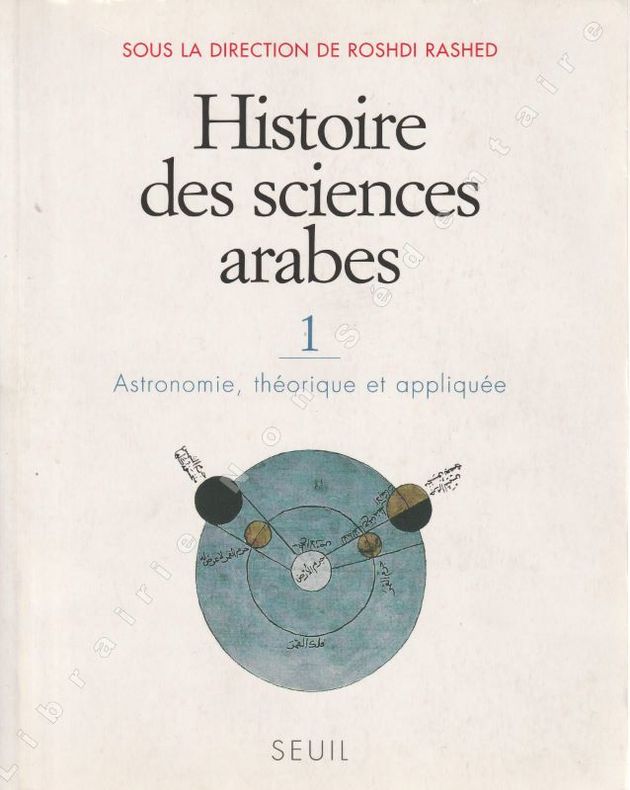
15522Seuil, 1997 - Fort grand in octavo, broché, 383 pages, léger défaut de massicotage in fine sur 4 pages, bel exemplaire par ailleurs.
- Delagrave, Paris s.d. (1902), 15,5x24cm, relié. - Edition illustrée de nombreuses reproductions photographiques in et hors-texte. Reliure en pleine basane noisette, dos à cinqs nerfs sertis de filets dorés orné de caissons dorés ornementés de motifs floraux dorés, pièce de titre et nom de l'auteur de maroquin cerise, quelques traces de frottements sur les coiffes et les mors, roulettes dorées estompées sur les coiffes, triples filets et motifs floraux en écoinçons sur les plats, pontillés dorés sur les coupes, encadrement d'une dentelle dorée sur les contreplats, gardes et contreplats de papier à la cuve, coins légèrement émoussés, tête dorée, couvertures conservées, élégante reliure non signée de l'époque et qui pastiche celles habillant les ouvrages des XVIIè et XVIIè siècles. Un petit manque en tête d'un garde, quelques traces de frottements sur la reliure. [ENGLISH DESCRIPTION ON DEMAND]
Very Good English Original dark green cloth bdg. Brief title and "Stirps Arabica Vicit" with a saber and crescent moon gilded on the front board. A very good copy. 4to. (30 x 24 cm). In English. 66 p., 5 engraved plates. First and only edition of this handsome and illustrated book of the first Arabian horses presented by Ottoman Sultan Abdulhamid II, bred by Huntington in North America. Arabian horse breeding in North America properly began with the world tour taken by General Ulysses S. Grant after he served as president of America, it is that in March of 1878 the General and his son Jesse arrived in Istanbul (Constantinople ), after the day the Grants toured the private stables of Sultan Abdul Hamid II are distinctly contradictory. Randolph Huntington was an American horse breeder who demonstrated the possibilities inherent in the Arab horse for the purpose of developing a new breed of saddle and road horses. During his first years on the farm, he bought and sold many colts and fillies as coach horses in New York City. He soon came to recognize the value of the Clay stock in that community which was largely the result of the breeding of a horse called Henry Clay which was brought to the nearby Genesee valley and whose stock was distributed through the valley. On May 31, 1879, there arrived in America two very fine stallions which were presented to General U.S. Grant by the Sultan of the Ottoman Empire. These stallions were named Leopard and Linden Tree. It is generally acknowledged that Linden Tree was a Barb-Arabian while Leopard was a pure Arabian. Prior to the time that these horses arrived in America, the very favorable results from inbreeding to produce typical Clay horses were shown to be practical. After seeing the stallions, Leopard and Linden Tree, Randolph Huntington at once started negotiations to breed three virgin Clay mares to each of these stallions. He hoped thereby to improve the road horse quality of his horses. In the following years, he called them Clay-Arabs. Since Huntington wanted to breed only virgin mares. Leopard was a Seglawi Jedran, desert-bred by the Anazeh, foaled in 1873 and presented by Jedaan Ibn Mheyd of the Fedaan Anazeh to the Turkish governor of Syria. (Some accounts list Ibn Mheyd as the breeder, while Carol Mulder, with typical caution, makes the distinction that we only know he presented the horse) The governor then presented the horse to Abdul Hamid II, who in turn gave him to General Grant.
103.411Paris, Editions Galilée, 2005. 14 x 22, 201 pp., broché, couverture à rabats, très bon état.
- Revue des deux mondes, Paris 1885, 15,5x25cm, agrafé. - Extrait de la Revue des deux mondes. Edition originale. Sous couverture muette. Rare. [ENGLISH DESCRIPTION ON DEMAND]
97085Paris, Presses du Châtelet, 2014. 14 x 22, 222 pp., broché, très bon état.